A grow light mover is worth buying in specific situations, and a waste of money in others. The short answer: if you have a fixed-footprint grow space under 8 feet wide and you're running one or two high-output fixtures, a linear rail mover like the LightRail 3.5 IntelliDrive can genuinely improve canopy uniformity and reduce hotspots without adding another light. If your space is already well-covered by a properly sized fixture, or you're growing in a small tent, a mover probably won't move the needle enough to justify the setup. This guide walks through the real-world performance differences, how to read mover reviews critically, which types pair well with which fixtures, and how to install and maintain one safely.
Grow Light Mover Reviews: Best Movers, What to Buy, and Fit Guide

Marcus Caldwell
24 Mar 2026
What a Grow Light Mover Is and When You Actually Need One
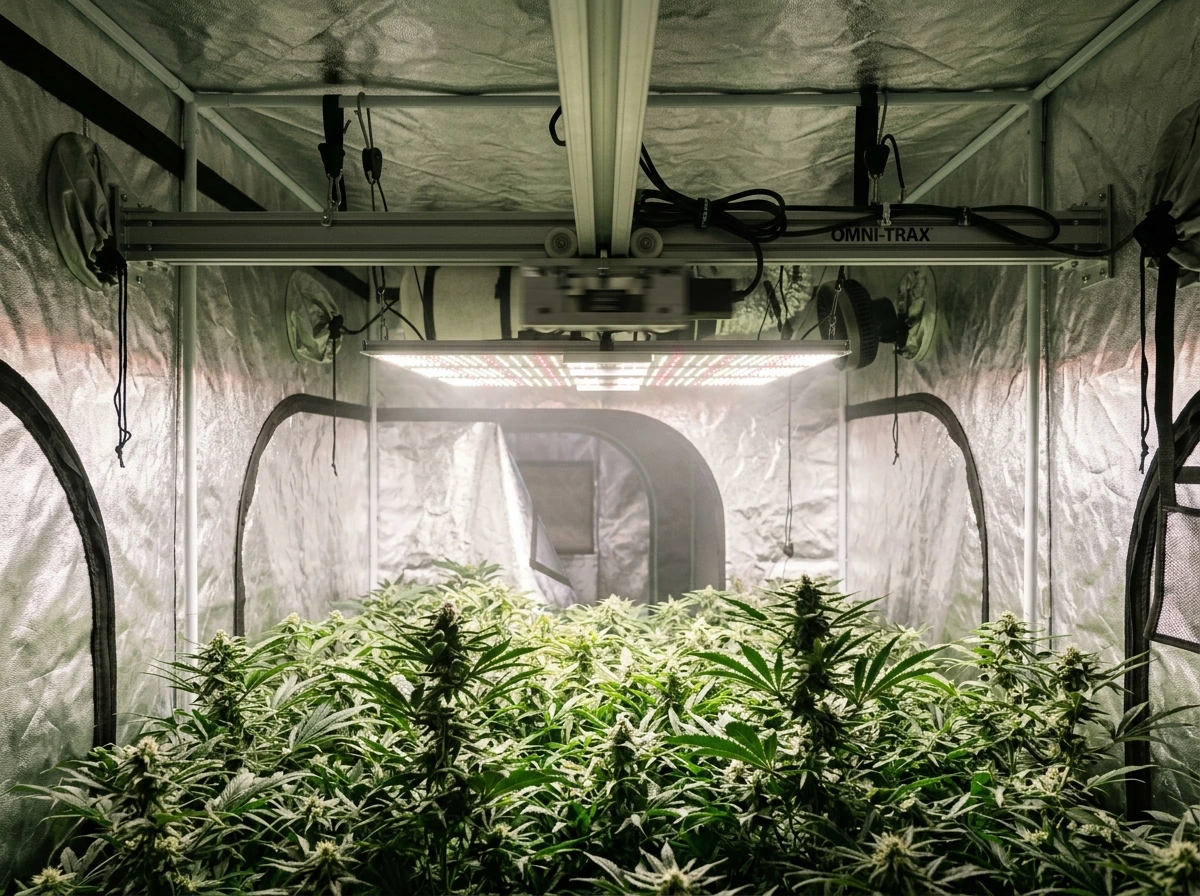
A grow light mover is a motorized system that physically moves your grow light back and forth (or in a circle) across your canopy on a track or rotating arm. The most common type is a linear rail mover: a motor drives a trolley along a steel rail mounted to the ceiling or a cross-beam, and your light hangs from that trolley. The light travels the length of the rail, hits a stop, reverses, and repeats. The Suncircle, a less common alternative made by American Hydroponics, rotates the light in a 360-degree arc instead.
The core problem movers solve is uneven PPFD distribution. Even the best LED panels and HID fixtures create intensity gradients: bright at the center, dimmer at the edges. When you map PAR readings across a canopy footprint, you get peaks and valleys. A mover evens those out by sweeping the light so every point on the canopy receives high-intensity light during part of the cycle and lower-intensity light during the rest, averaging out to a more uniform PPFD over time. LightRail describes this specifically as achieving "perfect PPFD distribution" and eliminating "hot spots and shadow patterns," which is accurate as a description of the mechanism, even if the word "perfect" is doing some marketing work.
You actually need one in three scenarios: you're growing a wide bed (4 feet or wider) with a single fixture that doesn't fully cover the edges at the intensity your plants need; you're running a high-wattage HID or LED panel that creates a pronounced hotspot in the center of your canopy; or you want to cover more floor area with your existing light instead of buying an additional fixture. Outside of these scenarios, a mover adds mechanical complexity without a proportional yield benefit.
Mover vs. Fixed Light vs. Just Moving the Light Manually
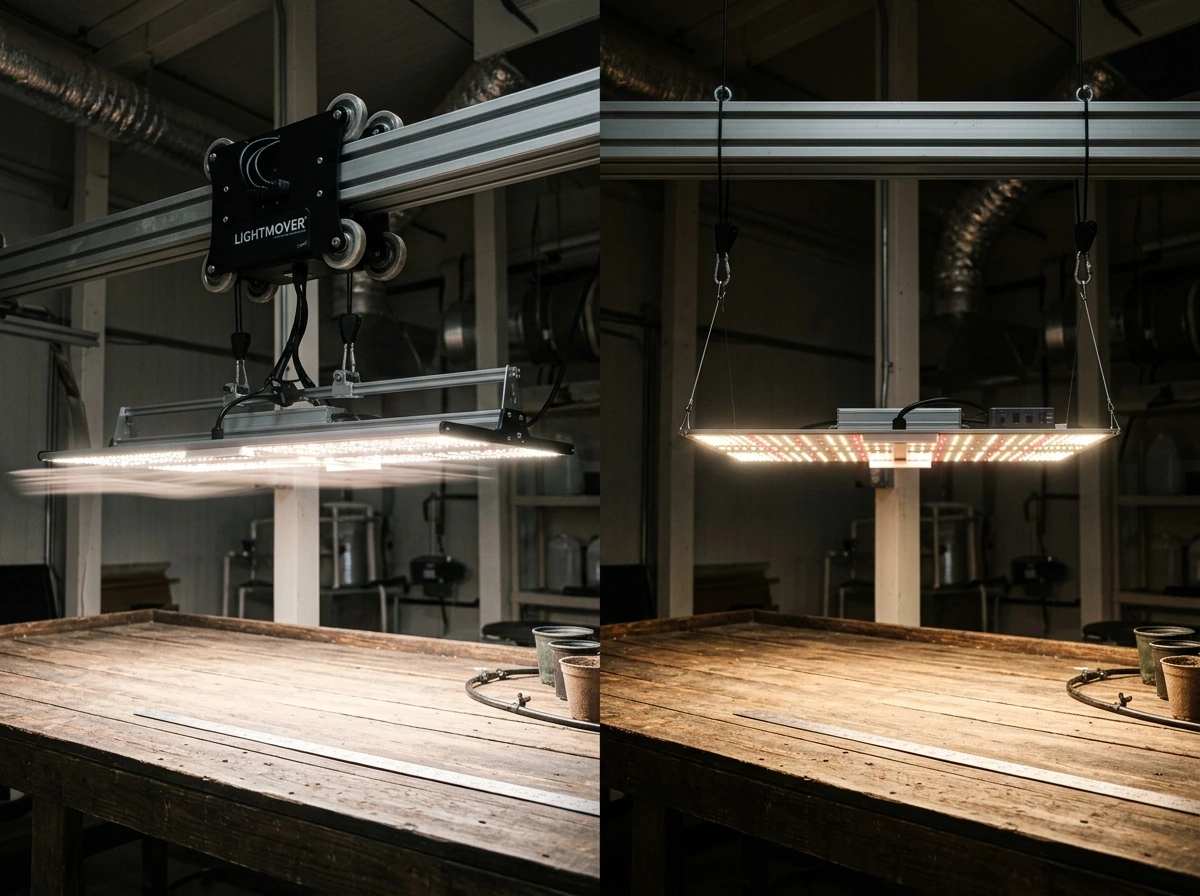
The comparison that matters most before buying a mover is whether the same money spent on a better static light, or simply repositioning what you already have, would do the same job. Here's how these three approaches actually differ in practice.
| Approach | Coverage Uniformity | PPFD at Edges | Cost | Effort/Complexity | Best For |
|---|---|---|---|---|---|
| Linear Rail Mover (e.g., LightRail 3.5) | High: sweeps light across full rail travel | Significantly improved vs. fixed | $150–$300 for mover kit | One-time setup, low ongoing effort | Single wide beds, large HID setups, extending footprint |
| Fixed Well-Sized LED Array | Good if fixture is matched to space | Depends on fixture PAR map | $200–$800+ for quality fixture | Minimal: hang, adjust height | Tents, standard 4×4 to 5×5 spaces with modern LEDs |
| Manual Light Repositioning | Low: static between adjustments | Poor unless you adjust constantly | $0 extra | High: requires frequent manual moves | Very small spaces, occasional supplemental use |
| Circular Mover (Suncircle) | Moderate: rotational arc coverage | Improved in arc path only | $200–$350 | Moderate setup, ceiling mount required | Square rooms, single central fixture setups |
Manual repositioning sounds appealing but it fails in practice. Moving a heavy LED or HID fixture every day or two to avoid persistent hotspots is realistic only in the smallest, most accessible setups. The difference in canopy uniformity between a properly calibrated rail mover and a static fixture running the same wattage is measurable: one manufacturer's own testing found average PPFD increased by 6% and uniformity improved by 30% when moving from a fixed to a dynamic distribution setup. Those numbers should be taken with some skepticism since they come from marketing materials, but the directional finding matches what PAR mapping consistently shows: movers reduce the variance between peak and minimum PPFD readings across the canopy.
The case for a better static light is strongest when your current fixture is simply undersized or has a poor PAR map to begin with. If the fixture's own uniformity ratio (the ratio of minimum to maximum PPFD across the coverage footprint) is already low, a mover smooths out the distribution but doesn't add raw photon output.
A well-matched modern LED bar array with a good PAR map often outperforms a mediocre fixture on a mover, particularly in smaller spaces like 3×3 or 4×4 tents. If you're comparing grow lights across brands and wattages for your specific space, the broader grow light reviews 2020 on this site cover uniformity data and PAR maps for specific fixtures.
If you want a fast way to compare fixtures before choosing a setup, check our grow lights reviews for uniformity and PAR map data by model broader grow light reviews 2020. If you want to sanity-check what these coverage and uniformity claims look like on a real model, this grow light science progrow 1800 review is a useful adjacent reference point. grow light reviews 2020
How to Actually Read Grow Light Mover Reviews
Most grow light mover reviews online are either unboxing impressions or surface-level "it works" confirmations. Here's what to look for when evaluating a mover review or spec sheet to know whether a system will actually perform in your space. grow laser cap reviews.
Coverage and Travel Range
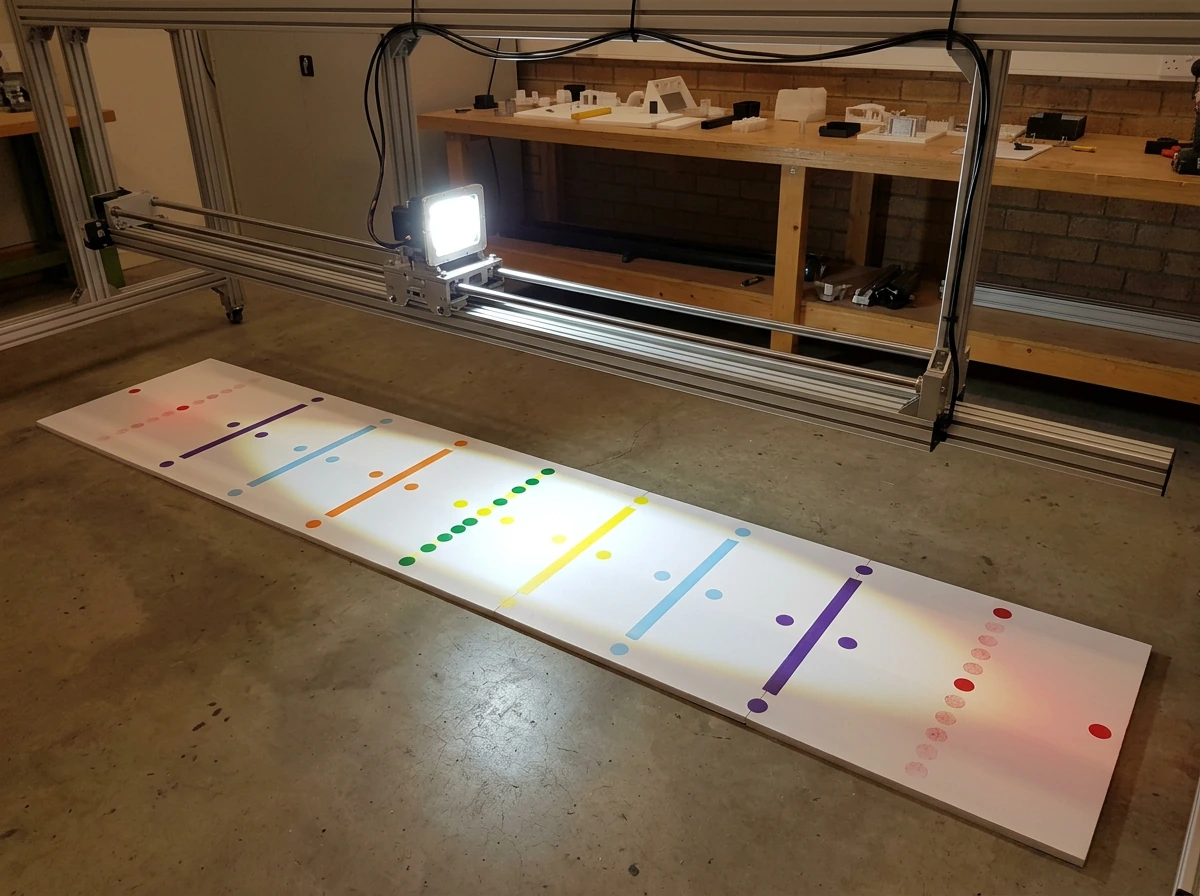
The rail length determines your maximum travel distance, but effective coverage is actually wider than the rail itself. LightRail's own FAQ explains that half the grow light physically extends beyond the stopper position at each end of travel, so a light with a 2-foot wingspan on a 6. LightRail explains that [half the grow light physically extends beyond the stopper position at each end of travel](https://www. lightrail3.
com/how-far-to-move-a-grow-light/), so effective coverage extends past the rail travel and stopper positions. 5-foot rail effectively covers more than 6. 5 feet of canopy. When reading reviews, check whether the reviewer measured actual canopy coverage (with PAR meter readings at multiple points) or just reported the rail length.
Rail length alone tells you very little about real-world uniformity.
Weight Capacity and Duty Rating
This is where mover reviews often skip the most important detail. Weight capacity isn't just about whether the motor can move the fixture: it directly affects how long the trolley wheels last. LightRail's own testing shows trolley wheel life of 12 to 16 months when moving a 35-pound load under normal use. Their Extreme Duty trolley wheels (rated to 60 lbs per set of four) carry a lifetime warranty. If a reviewer is running a 40-pound double-ended HID fixture on a system rated for 20 pounds, the bearings will wear out fast and the motion will become erratic. Always check the fixture's actual hanging weight against the mover's rated capacity, and give yourself a comfortable margin.
Motor Specs: Speed, Noise, and Power Draw
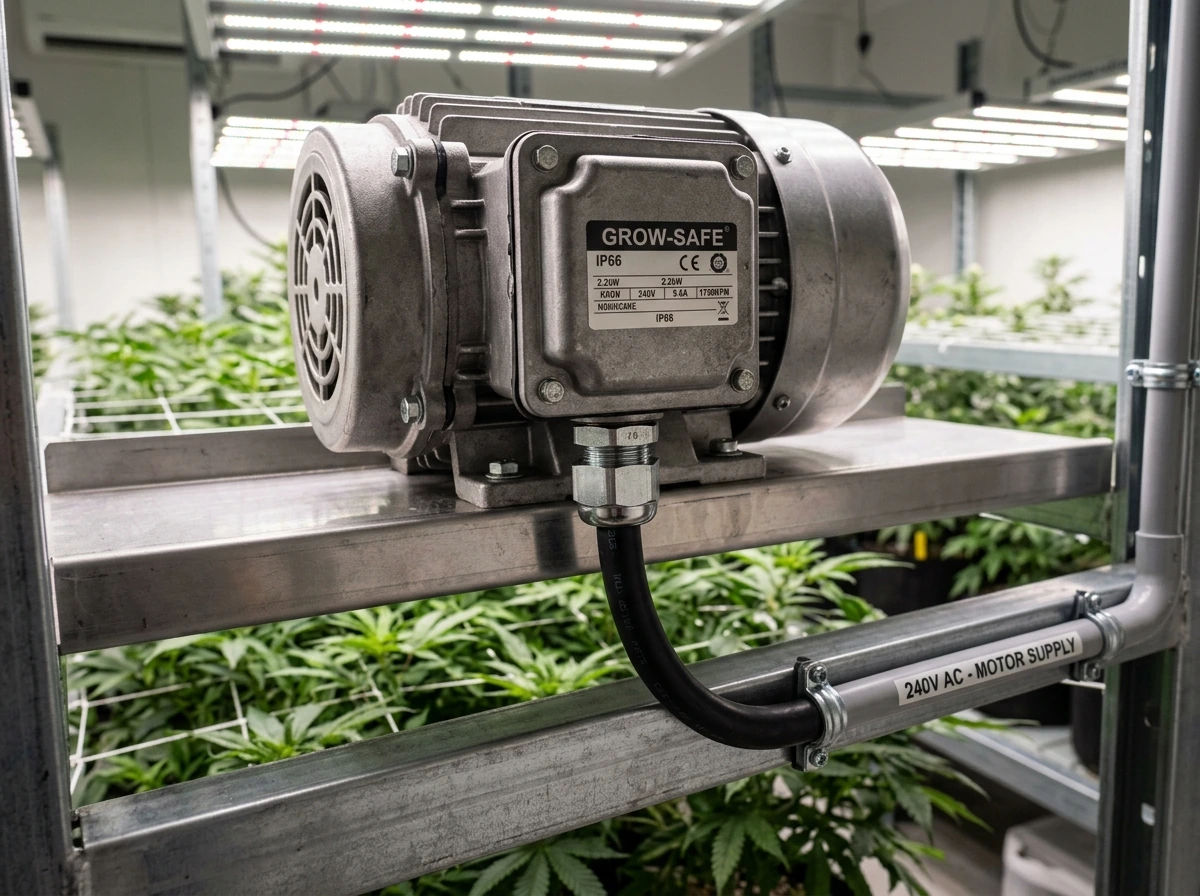
The LightRail 3.5 IntelliDrive motor runs at 10 RPM and draws only 5 watts, which is negligible on any circuit. The motor housing is sealed, which matters for humid grow room environments. In reviews, noise complaints usually come from three sources: a fixture that isn't balanced evenly on the hanger (causing wobble), trolley wheels that are worn or loaded beyond their rating, and rails that aren't perfectly level. If a review mentions noise, look for whether the reviewer addressed any of these factors before writing it off as a product defect.
Electrical Safety Certifications
Grow rooms are wet, warm, and often cramped. Any motorized electrical equipment needs legitimate safety certifications, not just stated compliance. The LightRail 3.5 carries CSA US or CE certification, UL 5 VB flammability ratings, and is RoHS compliant. When reading reviews, if a reviewer doesn't mention certifications and you're looking at a no-name mover from an unfamiliar brand, that's worth researching separately before purchase. A 5-watt motor that's not properly certified in a humid grow space is a real risk.
Build Provenance and Longevity
Gualala Robotics has manufactured LightRail systems in the USA since 1986. That longevity matters when evaluating whether a mover will hold up across multiple grow cycles. For newer or less-established brands, look for reviews that cover multiple months of continuous use, not just initial setup impressions.
The Main Mover Types and What to Pair Them With
There are three main configurations worth knowing, and fixture compatibility varies between them.
Linear Rail Movers (Single Fixture, Single Rail)
This is the most common type and the one most reviews cover. A single motor drives a single trolley along a straight rail, and one fixture hangs from the trolley. Standard rail length is around 6.5 feet (2 meters). This works well with single LED panels, full-size HID hoods, and compact LED bars. It's the right choice for rectangular beds up to about 4 feet wide and 8 to 10 feet long. For LED bars specifically, balance is critical: a bar that hangs unevenly will wobble at the stops and stress the trolley wheels disproportionately. LightRail confirms that large wingspan or long light bar fixtures work with their systems provided they are evenly balanced for hanging.
RoboBar / Multi-Fixture Configurations
LightRail's RoboBar concept is designed for larger 4×4 and wider LED fixtures, essentially extending the linear rail approach to accommodate bigger footprints. RoboBar assembly instructions also provide the mounting guidance for attaching RoboBar to the LightRail drive motor assembly, including the recommended hanging and eye-screw approach blank" rel="noopener noreferrer">RoboBar mounting to the LightRail drive motor assembly. This is relevant if you're running a flagship LED panel (600W+) on a single mover. The compatibility principle is the same: balanced load, within rated weight capacity, properly leveled rail.
Circular / Rotating Movers (Suncircle Style)
The Suncircle from American Hydroponics rotates a fixture in a 360-degree arc around a central ceiling mount. It's designed for square rooms and works best with a single centrally-hung fixture. Wiring and ceiling mounting are more involved than a rail install, and maintenance (the arm bearings and wiring connections) requires more attention over time. It's a niche product and harder to find current stock on, but it remains a real option for growers with square rooms who want circular coverage improvement.
Fixture Pairing Quick Reference
| Fixture Type | Best Mover Type | Key Compatibility Note |
|---|---|---|
| Single LED panel (200–600W) | Linear rail mover | Check hanging weight; center the fixture on the hanger for balance |
| Double-ended HID (600W–1000W) | Extreme Duty linear rail | Fixture weight often 35–45 lbs; use Extreme Duty trolley wheels |
| LED bar arrays (multi-bar) | Linear rail or RoboBar config | Requires even distribution across bar wingspan; use spreader bar if needed |
| Single CMH / LEC fixture | Standard linear rail | Typically under 20 lbs; standard duty trolley wheels sufficient |
| Single central fixture, square room | Circular mover (Suncircle) | Requires ceiling mount; more complex install than rail |
Hands-On Review Comparison: What Each Type Delivers in Practice
Below is a practical comparison of the most commonly reviewed mover configurations. This is based on documented specifications, real-world user feedback patterns, and what consistent PAR mapping tells us about each approach.
LightRail 3.5 IntelliDrive (Standard Kit)
This is the benchmark in the category and the system most reviewers are comparing against, directly or implicitly. The 10 RPM sealed motor, 6.5-foot rail, and IntelliDrive electronics (which handle pause times and speed adjustments) come as a complete kit. Setup is straightforward: mount the rail to a ceiling track or crossbar, attach the motor, hang your fixture from the trolley, plug in, and set your stop positions. The 5-watt power draw is genuinely negligible.
- Pros: Proven 40-year track record, genuine electrical certifications (CSA/CE), sealed motor handles humidity well, Extreme Duty wheels rated to 60 lbs with lifetime warranty, good PAR distribution improvement on wide beds
- Cons: Rail length is fixed at 6.5 feet (extensions available separately but add cost), no speed modes beyond the IntelliDrive's built-in adjustment, stop positions require manual physical adjustment, higher cost than generic alternatives ($150–$250 depending on kit)
- Best for: Single LED panels or HID fixtures in 4×4 to 4×8 spaces, growers who want a set-and-forget system they don't have to babysit
Generic / Budget Linear Rail Movers
There are several lower-cost linear rail movers available from unnamed or less-established brands, typically priced in the $60–$120 range. In general, these follow the same mechanical principle as the LightRail but cut costs on bearing quality, motor sealing, and certifications. Reviews for these systems are mixed in a predictable pattern: they work fine under light loads (under 20 lbs) for the first few months, then become noisy or stall as the bearings wear. The lack of verified electrical certifications is the bigger concern for a grow room environment.
- Pros: Lower upfront cost, adequate for small LED panels under 20 lbs, available with quick delivery from major retailers
- Cons: Bearing and motor longevity significantly shorter under heavier loads, typically no verifiable electrical safety certifications, limited or no warranty support, inconsistent motion speed over time
- Best for: Light-duty temporary use or testing the mover concept before committing to a premium system — not recommended for permanent setups with fixtures over 20 lbs
Suncircle Circular Mover
The Suncircle covers a circular arc rather than a linear path. For square rooms (think 8×8 or 10×10 with a single central fixture), it's an interesting option. The install is more complex: ceiling mounting, wiring through the rotating arm, and balancing the fixture on the arc all require more attention than a rail mount. Maintenance is also higher: the arm bearings and wiring connections need periodic inspection. If you're in a rectangular room or running multiple fixtures, this isn't the right tool.
- Pros: Unique rotational coverage useful for square rooms, covers a different footprint geometry than linear rail movers, American-made product with documented history
- Cons: More complex install and maintenance, harder to source currently, not compatible with multi-fixture setups, overkill for standard rectangular grow beds
- Best for: Large square grow rooms with a single central HID fixture and growers comfortable with a more involved install
Value Assessment
For most growers, the LightRail 3.5 IntelliDrive is the correct choice if you've already determined a mover makes sense for your setup. The premium over budget alternatives is real, but the difference in bearing longevity, motor reliability, and safety certifications justifies it for a grow room running continuous cycles. If you're still deciding whether a mover is the right approach at all versus a better fixture, check the individual fixture reviews and PAR maps for your specific light on this site before committing to a mover purchase.
Installation, Safety, and Setup Checklist
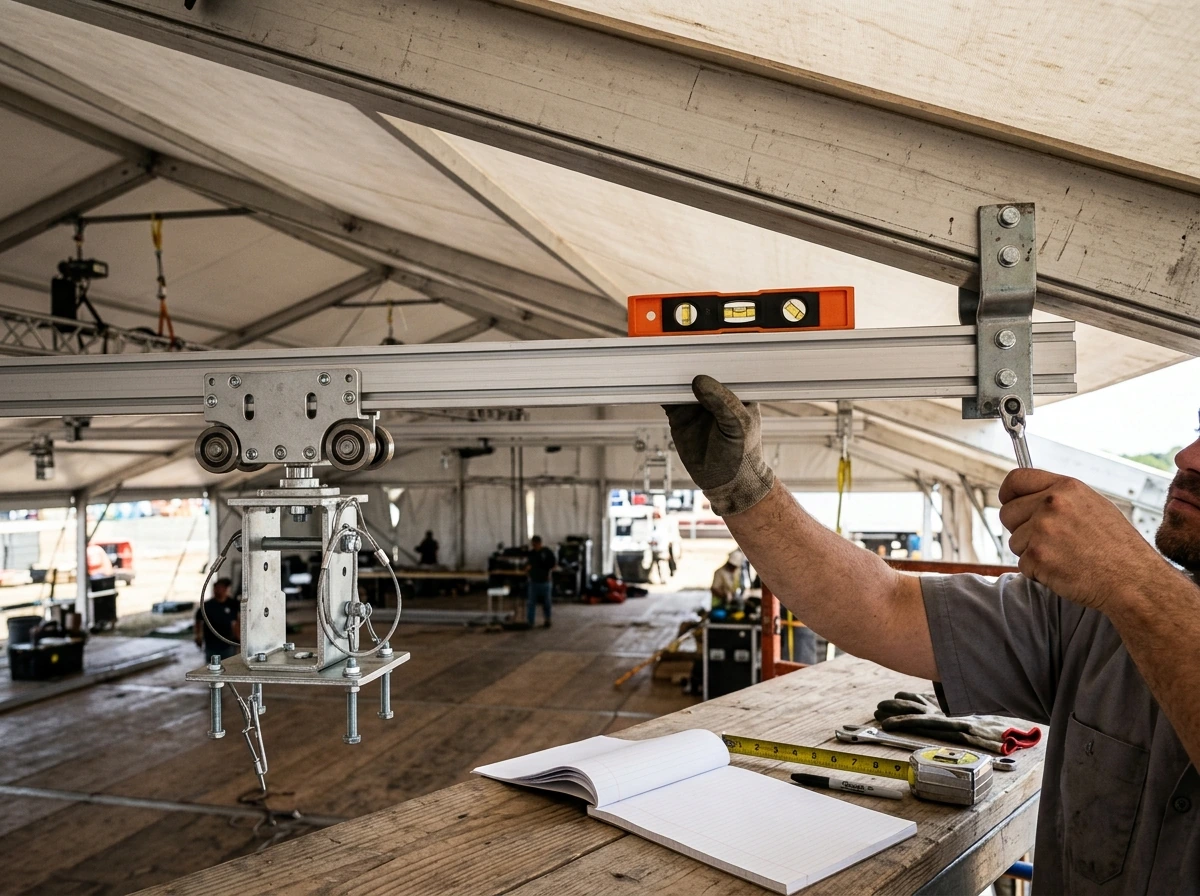
A mover that's improperly installed will either deliver uneven coverage or become a safety risk. These are the steps and checks that matter, in the order you should address them.
- Weigh your fixture before you buy a mover. Hanging weight includes the fixture body, any attached cords, and the hanger hardware. Compare this to the mover's rated capacity and choose Extreme Duty wheels if you're within 15 lbs of the standard limit.
- Measure your ceiling height and confirm rail clearance. The rail needs to be mounted high enough that the light hangs at the correct distance for your plants at canopy level, factoring in that the fixture will be moving and shouldn't swing close to walls or reflective surfaces at the stops.
- Mount the rail parallel to your longest bed dimension. For a 4×8 bed, the rail runs along the 8-foot axis. The light travels the length of the rail and the fixture's wingspan covers the width.
- Level the rail carefully. An unlevel rail causes the trolley to drift toward one end under gravity, wearing one set of wheels faster and producing uneven travel speed.
- Set stop positions to account for fixture overhang. Per LightRail's own guidance, half the fixture extends beyond the stop position at each end. Set your stops so the fixture edge reaches the edge of your bed at each stop point, not the fixture center.
- Balance the fixture symmetrically on the hanger. An off-center fixture creates lateral stress on the trolley wheel bearings. Use a spreader bar for wide LED bar arrays.
- Route the power cord so it doesn't pull taut at either stop. The cord needs enough slack to follow the full travel range without tension. Use a cord management clip or chain to create a controlled loop.
- Check electrical connections and certifications. Use a properly rated extension cord for the mover's circuit. The LightRail motor draws 5 watts, but your fixture may draw 400–1000 watts; make sure the circuit is rated for the combined load.
- Run a full travel cycle before adding plants. Watch for wobble at the stops, uneven speed, or any mechanical noise. These are easier to fix before you've got plants and irrigation lines underneath.
- Log your stop positions and timing settings. When you adjust for a new grow cycle or swap fixtures, you'll want to return to your baseline settings quickly.
On the safety side: dust buildup on the motor housing is the most common overlooked maintenance item. Grow rooms accumulate particulate from soil, coco coir, perlite, and pollen. A sealed motor handles this better than an unsealed one, but the rail channel and trolley wheels still need periodic cleaning to avoid abrasion wear. Heat is rarely an issue for the motor itself at 5 watts, but the fixture generating heat while moving over the canopy means adequate vertical clearance and ventilation remain important, the same requirements as for any fixed light.
Troubleshooting, Maintenance, and When to Skip a Mover Entirely
Common Issues and Fixes
| Problem | Likely Cause | Fix |
|---|---|---|
| Uneven travel speed (faster in one direction) | Rail not level, or uneven wheel wear | Re-level rail; inspect and replace worn wheels |
| Motor stalls at one stop | Stop position set too tight, or fixture overweight | Adjust stop position; verify fixture weight is within rated capacity |
| Excessive noise during travel | Debris in rail channel, unbalanced fixture, or worn bearings | Clean rail channel; re-center fixture on hanger; inspect trolley wheels |
| Fixture swinging at stops | Too much cord slack creating pendulum effect, or abrupt stop setting | Reduce cord loop length; adjust stop buffer if system allows |
| Inconsistent PPFD at canopy edges | Stop positions not set to allow fixture overhang at bed edges | Reset stop positions per fixture wingspan overhang principle |
| Motor running but trolley not moving | Trolley wheel seized or drive connection failure | Inspect trolley wheels and drive engagement; replace worn components |
Maintenance Schedule
Every two to four weeks, wipe down the rail channel with a dry cloth to remove particulate buildup. Every three months, inspect the trolley wheels for flat spots or roughness and check the cord routing for wear at the attachment points. Wheel replacement interval under a 35-pound load averages 12 to 16 months based on LightRail's own testing data; with Extreme Duty wheels at 60-pound rating, lifetime warranty coverage applies. Keep a spare set of standard trolley wheels on hand if you're running a continuous production cycle so a worn wheel doesn't stop your grow.
When to Skip the Mover
A mover is the wrong solution if: you're growing in a standard 2×4 or 3×3 tent where a properly sized modern LED already covers the footprint uniformly; your fixture is already producing acceptable edge PPFD at your target canopy height; you're running multiple fixtures tiled to cover a large area (each fixture is already covering a defined zone); or your ceiling height is too low to mount the rail and still achieve the correct light-to-canopy distance for your plants. In these cases, the money spent on a mover is better directed at a fixture upgrade. If you are still deciding whether your current reflector or fixture design is the limiting factor, use this grow light reflector comparison to guide your upgrade choice. The grow light reflector comparison and individual fixture reviews elsewhere on this site can help you evaluate whether your current fixture is the actual limiting factor before adding moving hardware.
The mover also won't fix a fixture that's fundamentally underpowered for your space. If your center PPFD is at the low end of your target range, moving that light around just distributes the deficiency more evenly. You need more photons first, more uniform distribution second.
FAQ
Can I install a grow light mover on a non-structural ceiling, like drywall or a simple ceiling panel?
Yes, but only if you confirm the ceiling mount is solid. The rail should attach to rated structural members, not just drywall or thin framing, and you need to verify the hanging height so the fixture stays at the same distance from the canopy throughout travel (stops and trolley travel affect clearance).
If the mover has a long rail, will it automatically cover the whole canopy uniformly?
Measure coverage, not just rail length. If the wingspan or fixture overhang makes the ends of the canopy effectively covered less than the center, you can still end up with edge fade, even though the mover “travels the full rail.” Use PAR readings at multiple points (center, near-edge, far-edge) at canopy height to confirm uniformity.
Does a grow light mover still help if I keep changing the light height during the grow cycle?
Uniformity improvements depend on how your target canopy height maps to the light’s beam spread. If you adjust the light-to-canopy distance significantly, the hotspot behavior can change, sometimes reducing the mover’s benefit. Re-check PPFD after any height change, especially if you raise or lower the fixture during veg to flower.
Can I use two grow light movers in the same room to cover a larger area?
Typically, yes, but it should be planned. You cannot simply overlap multiple movers at random, because each fixture’s motion cycle can create moving interference patterns in PPFD. A safer approach is to offset zones (or use a single mover per defined canopy section) so any overlap is intentional and you verify uniformity with PAR mapping.
How can I tell which grow light mover reviews are actually useful?
Look for review evidence that includes setup details and measured results. If the reviewer only says “it works” or posts photos without stating fixture weight, rail level, stop positions, and whether PAR mapping was done, you should treat it as low signal. High-value reviews mention wobble checks, wheel noise troubleshooting, and what changed after adjusting the stops.
What happens if my fixture is already underpowered for my space?
Not necessarily. A mover can’t create usable intensity where your fixture does not deliver enough photons. If your center PPFD is already below target, moving the light mainly redistributes a deficiency, leading to uniformly “low” plants rather than strong, even growth.
Do I just match the mover’s rated capacity, or do I need to account for anything else?
Follow load limits using the fixture’s real hanging weight, including any hardware like hoods, reflectors, dimmer drivers, and additional cords. Also consider dynamic effects, because an unbalanced bar can increase stress on the trolley wheels even within the rated static load.
Are wheel replacement intervals from reviews realistic if I run lights continuously?
For continuous runs, plan wheel and inspection intervals around your duty cycle. Reviews often ignore long-term outcomes like gradual noise increases and small bearing flat spots. If you run 18 to 24 hours daily, inspect rail channels and trolley wheels more frequently than occasional hobby use, and keep a spare wheel set if downtime would hurt production.
Can I hang my existing fixture on a mover using custom straps or chain instead of the manufacturer’s hanger?
Generally, yes, but you need to verify the mover is compatible with your specific suspension method. If you use chains, straps, or a custom hanger, confirm the fixture is balanced at the intended hanging points, because uneven suspension is a common cause of stop wobble and increased noise.
Is a circular mover a better choice for certain room shapes or only for square rooms?
Suncircle-style circular movers can be harder for tall or bulky fixtures, because the arc geometry changes the effective distance to different parts of the canopy. You may also need more ceiling clearance and more attention to cable routing during rotation. If your room is not perfectly suitable (square layout, adequate clearance), a linear rail setup is usually more forgiving.