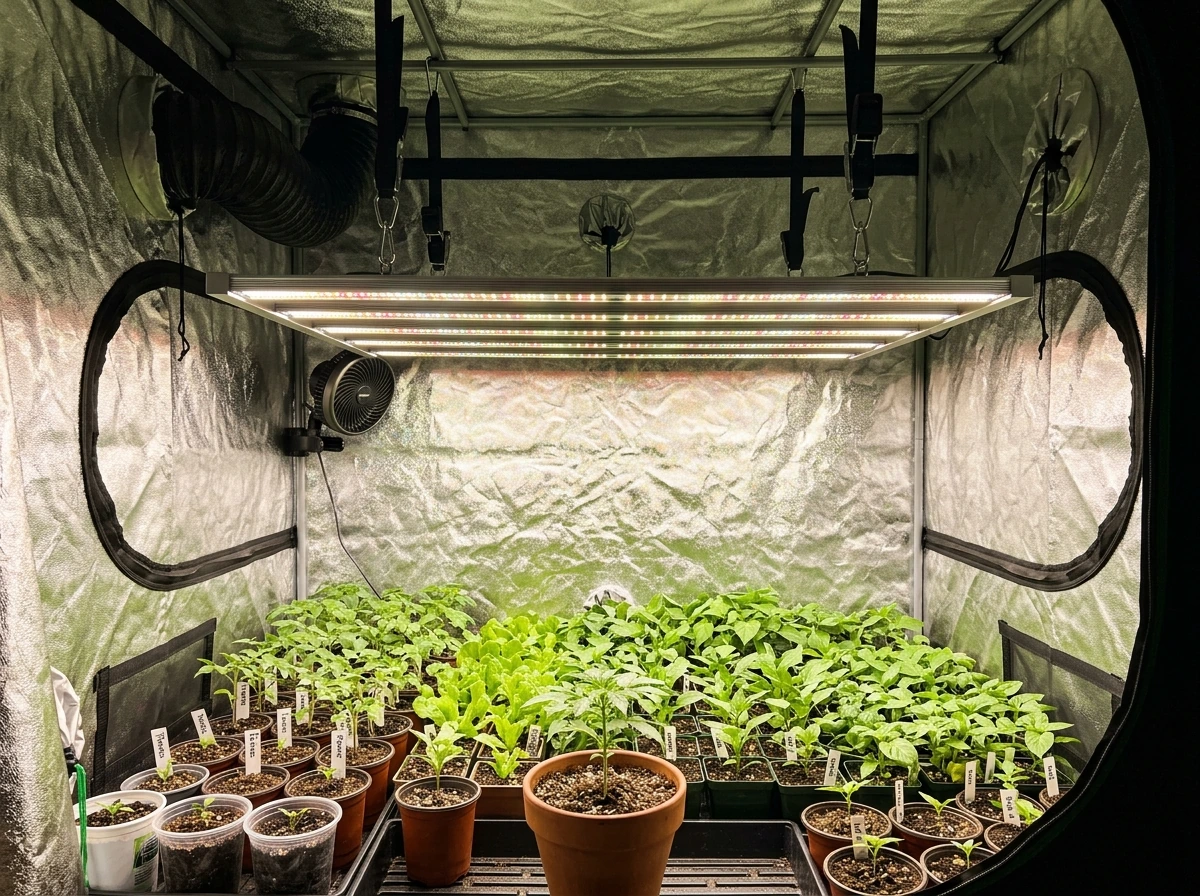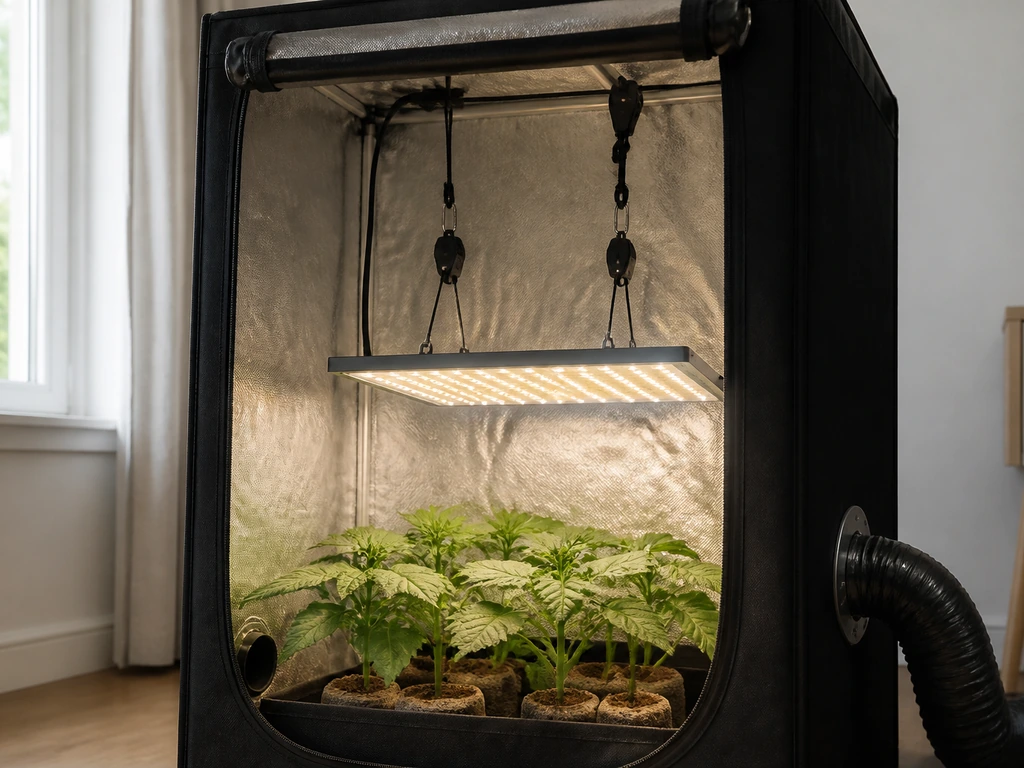
A grow light reflector is not magic, but it is one of the cheapest efficiency upgrades you can make to an existing grow setup. The right reflector redirects photons that would otherwise scatter into your tent walls or ceiling back down toward your canopy, increasing usable PPFD without touching your electrical draw. The wrong one causes hot spots, uneven coverage, or heat buildup that offsets any light gain. This guide walks through exactly what to look for, which models perform well for specific spaces, and how to avoid the most common setup mistakes.
Best Grow Light Reflector Reviews: Top Reflectors Compared

Marcus Caldwell
24 Mar 2026
Why a grow light reflector matters (and what it can't do)
Every photon your lamp emits that doesn't land on a leaf is wasted. Open-bulb HID setups (HPS or MH) can throw light in every direction, and even LED fixtures with wide beam angles lose usable light to side scatter and tent walls. A reflector hood redirects that stray output downward, improving what's called photon efficiency: more of what you're already paying for actually reaches your plants. In practice, this shows up as a meaningful bump in canopy PPFD, especially near the edges of your footprint where intensity typically drops off.
That said, a reflector cannot compensate for an underpowered light, a poorly matched spectrum, or inadequate ventilation. It is a delivery improvement, not a source upgrade. If you're consistently falling short of your target PPFD across the whole canopy, the fix is a better or higher-wattage light, not a reflector swap. Where reflectors genuinely earn their price is in improving uniformity: instead of a hot center and dim edges, you get more consistent intensity across the footprint, and uniform coverage is what actually drives even yields.
For LED setups, the case for a separate reflector hood is narrower since most modern LED fixtures already integrate reflective housings or lens arrays into their design. Where reflectors remain most impactful is with HID lights (HPS and MH), bare-bulb COB setups, and any configuration where a significant portion of the lamp's output is escaping sideways or upward rather than going straight down.
Key specs to compare when choosing the best grow light reflector
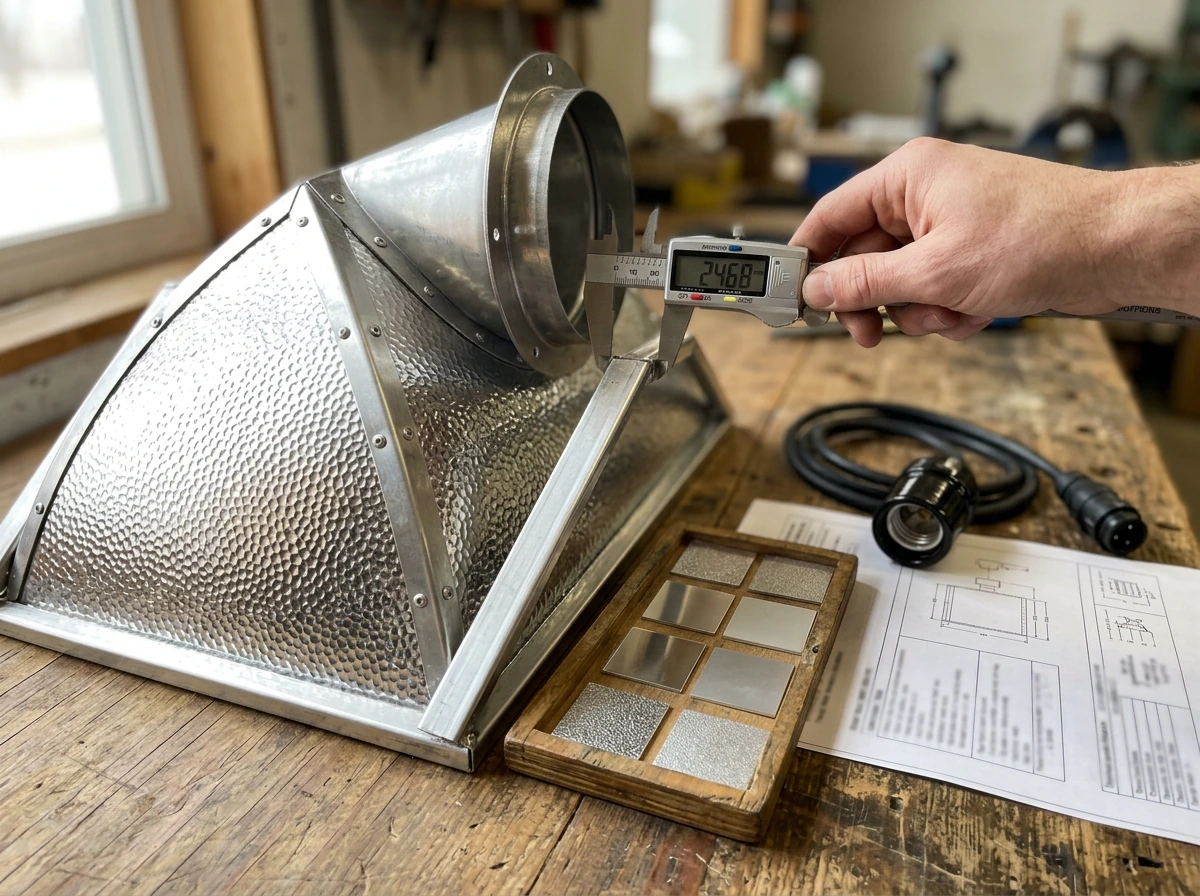
Not all reflector specs are created equal, and marketing copy tends to overstate the numbers that matter most. Here's what to actually pay attention to.
Reflectivity and material
Reflectivity is measured as a percentage of incoming light redirected rather than absorbed. High-grade anodized aluminum (such as Anolux or MIRO-series material) can hit total reflectivity figures in the 95% range, with a meaningful split between specular (mirror-like, directional) and diffuse (scattered) components. Specular reflectors concentrate light more precisely; diffuse finishes spread it more evenly. For most tent grows, a mix of both is ideal: high overall reflectivity with enough diffuse component to avoid harsh hot spots. If a product lists no reflectivity figure or only vague language like 'highly reflective aluminum,' treat that as a red flag. A 95% reflectivity claim backed by a specific material grade (like the kind listed on a Melbourne Hydro Cool Tube product) is more trustworthy than an unspecified number.
Hood geometry and shape
Hood shape determines how light is distributed across your footprint. Wide horizontal reflectors push light outward to cover a larger area, making them the right choice for 2x4 ft and larger footprints. Narrower parabolic hoods concentrate output more directly downward, which suits smaller 2x2 or 2.5x3 ft spaces where you want intensity over coverage. Cool Tube reflectors use a sealed cylindrical geometry that restricts the spread angle significantly, trading coverage area for excellent heat management. Knowing your tent dimensions before choosing a hood shape is the single most practical step you can take.
Air cooling and ducting compatibility
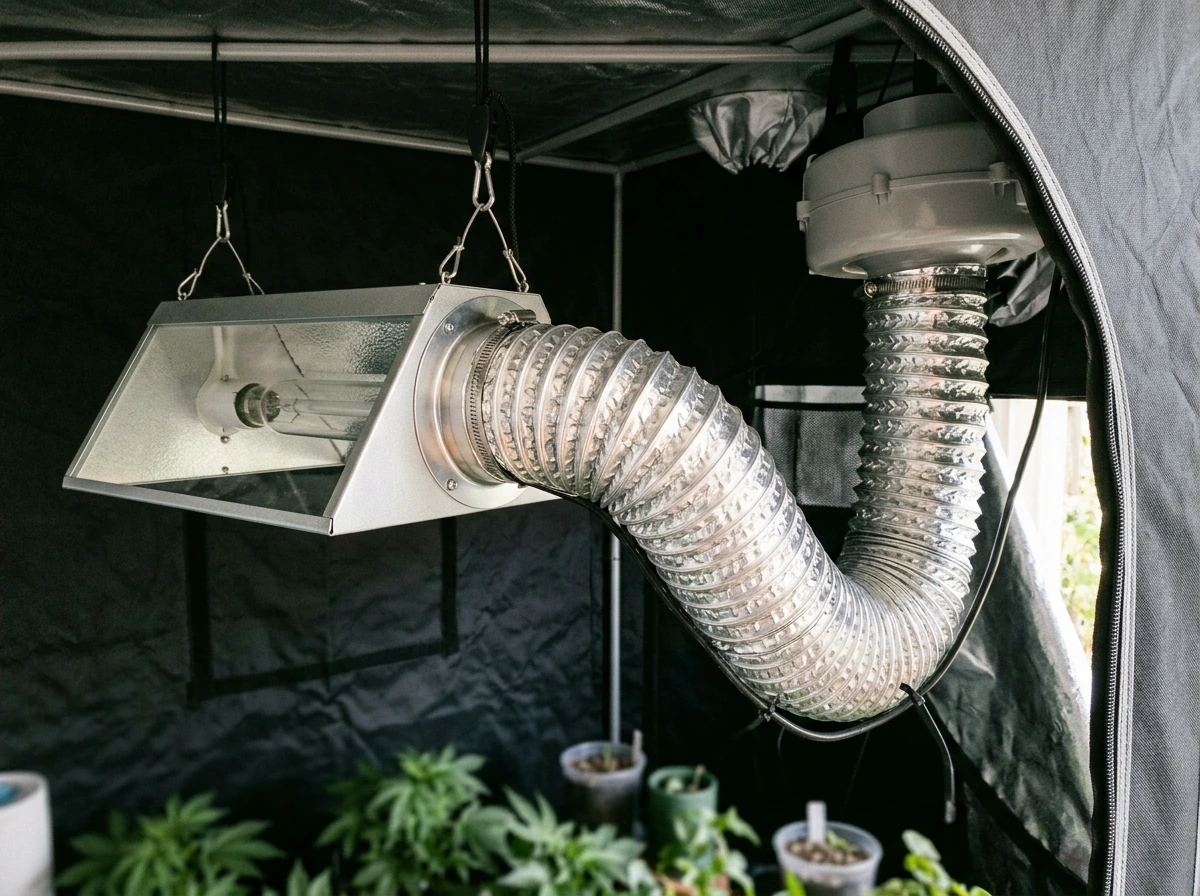
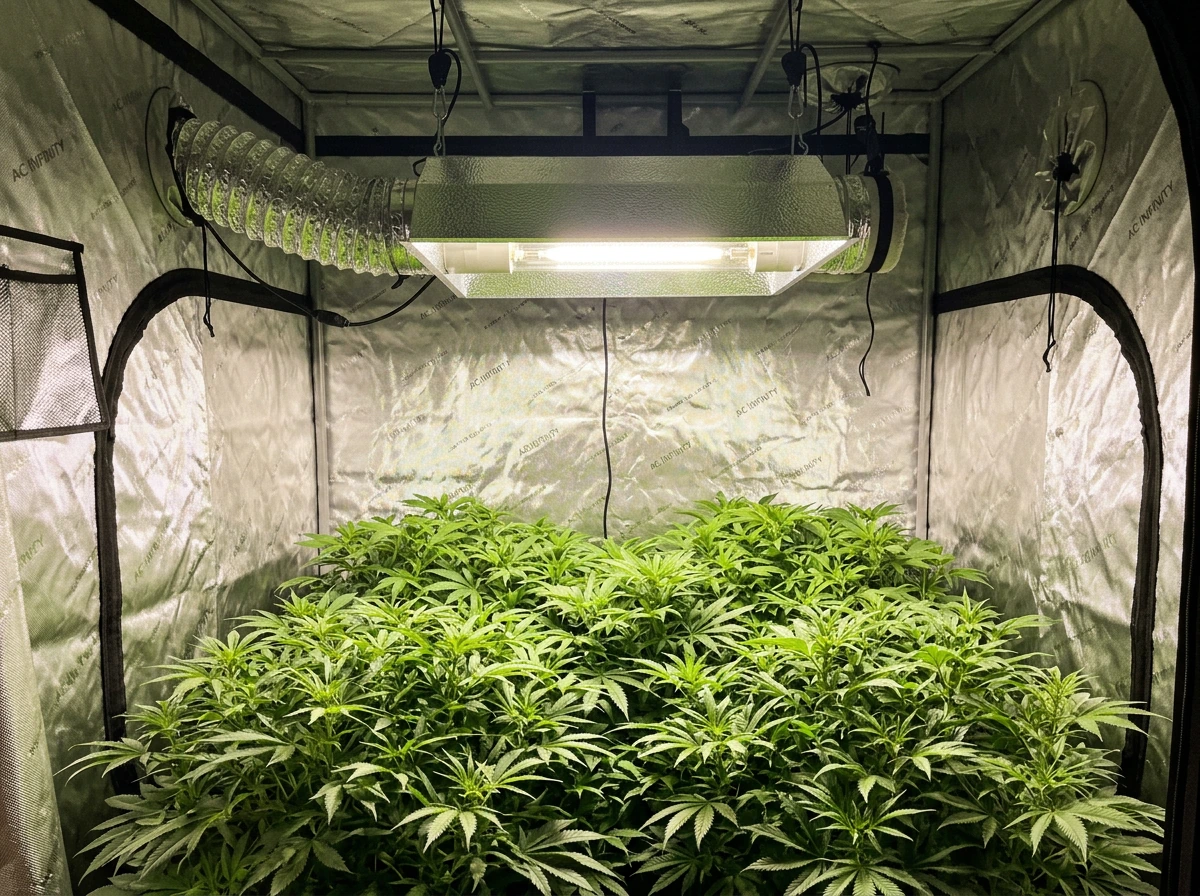
For HID lights especially, thermal management is not optional. Air-cooled hoods use ducting connections (typically 6-inch or 8-inch flanges) to pull heat away from the bulb and out of the tent before it reaches the canopy. The ducting size matters because it has to match your inline fan and exhaust setup. Most growers running 600W to 1000W HPS in enclosed tents need the sealed, glass-panel air-cooled design rather than an open wing reflector. Open wing reflectors can trap heat in smaller tents and create temperature problems that cancel out the light gain. Check the duct port diameter before buying anything.
Size, mounting, and ballast compatibility
Physical size affects both coverage and tent fit. The Sun System Yield Master II 6-inch, for example, measures 19 inches in length, which works well in most medium and large tents but can be awkward in a 2x2 or small closet grow. Mounting typically involves adjustable hangers or ratchet straps from the tent's top bars, and you want at least several inches of clearance between the hood and the tent canopy to avoid focusing heat on one spot. Also check whether the reflector requires a separate ballast or comes as part of a kit. Ballast-included kits cost more upfront but remove the compatibility guesswork; bare hoods require matching socket type and wattage rating to your existing ballast.
Glass quality and build
On air-cooled hoods with glass panels, tempered safety glass matters. A standard glass panel that cracks under thermal stress near a 1000W HPS is a serious hazard. Look for hoods that specifically list tempered glass and an air-tight gasket, like those featured in Sun System's Yield Master Classic II design. Also inspect the glass-to-frame connection point when the product arrives; some budget hoods have had reported issues with glue failure at the glass-tube junction or denting around the duct openings. These are quality-control failures worth checking on unboxing.
Best reflector picks by grow space and light type
The right reflector depends on three things: your tent size, your light type and wattage, and whether you need integrated air cooling. Here are the categories that cover most real-world setups.
Small spaces (2x2 to 2.5x3 ft): narrow parabolic or compact cool tube
In a 2x2 tent with a 250W to 400W HPS or MH bulb, a narrow-profile parabolic hood is the practical choice. You don't need wide coverage; you need intensity concentrated over a small footprint, and a narrow hood geometry delivers that without overwhelming the space. A 6-inch Cool Tube is also a strong option here because the sealed tube design keeps heat out of the tent entirely, which is a real advantage in small enclosed spaces where temperatures spike quickly. The trade-off is that the cylindrical geometry restricts coverage angle, so you need to hang it at the right height to avoid a tight hotspot directly under the tube.
Medium spaces (2x4 to 4x4 ft): 6-inch air-cooled wide hood
This is where most growers live, and where the Sun System Yield Master II 6-inch earns its reputation. It's a wide-footprint air-cooled hood with 6-inch flanges, a sealed glass panel, and a geometry that pushes light outward to cover the kind of area you'd find in a standard 3x3 or 4x4 tent. The Hydro Crunch 6-inch Extra Large Air-Cooled reflector targets the same footprint with a focus on coverage uniformity, making it a viable alternative if availability or price favors it. If you want to choose between specific brands and setups, grow lights reviews can help you compare real-world performance and pricing. If you want to narrow down options and avoid wasted purchases, grow laser cap reviews can point you toward models that better match your tent and goals. Both require a 6-inch inline fan and ducting already in your ventilation setup.
Larger or multi-light setups (4x4 ft and up): 8-inch air-cooled or multiple hoods
For bigger footprints running 1000W HPS or multiple lights, upgrading to an 8-inch air-cooled hood improves heat removal capacity significantly. Alternatively, running two 6-inch air-cooled hoods side by side on a light mover (referenced separately in our grow light mover reviews) can produce more uniform coverage than a single oversized hood. At this scale, the uniformity argument becomes especially important: a single reflector centered in a large space will still produce significantly lower PPFD at the corners than at the center, no matter how good the hood is.
| Reflector Type | Best Footprint | Duct Size | Heat Control | Coverage Pattern | Best For |
|---|---|---|---|---|---|
| Narrow Parabolic Hood | 2x2 to 2.5x3 ft | 6 in. | Moderate (open) | Focused, centered | Small HID setups, closet grows |
| Cool Tube (sealed) | 2x2 to 3x3 ft | 6 in. | Excellent (sealed) | Narrow cone | Heat-sensitive small tents, 400-600W HPS |
| 6" Wide Air-Cooled Hood (e.g., Yield Master II) | 3x3 to 4x4 ft | 6 in. | Very good (sealed glass) | Wide, even spread | Most common tent grows, 600-1000W HPS/MH |
| Extra Large Air-Cooled Hood (e.g., Hydro Crunch 6" XL) | 4x4 to 5x5 ft | 6 in. | Very good (sealed glass) | Wide, uniform | Medium-large tents, uniformity-focused growers |
| 8" Air-Cooled Hood | 5x5 ft+ | 8 in. | Excellent | Very wide spread | High-wattage HID, large rooms |
How we test and rate reflector performance
Evaluating a reflector's real-world performance requires measuring PPFD at the canopy level across the full footprint, not just directly under the center of the hood. The standard approach is a grid map: place a calibrated quantum sensor (such as the LI-COR LI-190R, which LI-COR identifies as consistently accurate across a range of light sources) at multiple points in a defined grid pattern at a fixed canopy height, record PPFD at each point, and calculate both average PPFD and the uniformity ratio (minimum to maximum reading). A reflector that raises average PPFD while also tightening the min-to-max spread is doing its job. A reflector that raises the center reading while dropping the corners is making your coverage worse, not better.
For practical testing, keeping all variables fixed except the reflector itself is essential: same lamp, same wattage, same hanging height, same room/tent conditions. We test each hood at the manufacturer's suggested hang height and then at two additional heights to characterize how sensitive coverage is to position. Air-cooled hoods are also run with a fan pulling air at the rated duct diameter to reflect real operating conditions, since reflectivity degrades slightly when glass surfaces accumulate heat without airflow.
Value scoring weighs measured canopy PPFD improvement against purchase price, installation complexity, and cooling infrastructure cost. A reflector that requires an $80 inline fan upgrade to work properly needs that cost factored in. We also note build quality observations: glass fit, gasket seal, finish consistency, and any shipping damage patterns.
Installation, placement, and getting the most out of your canopy light
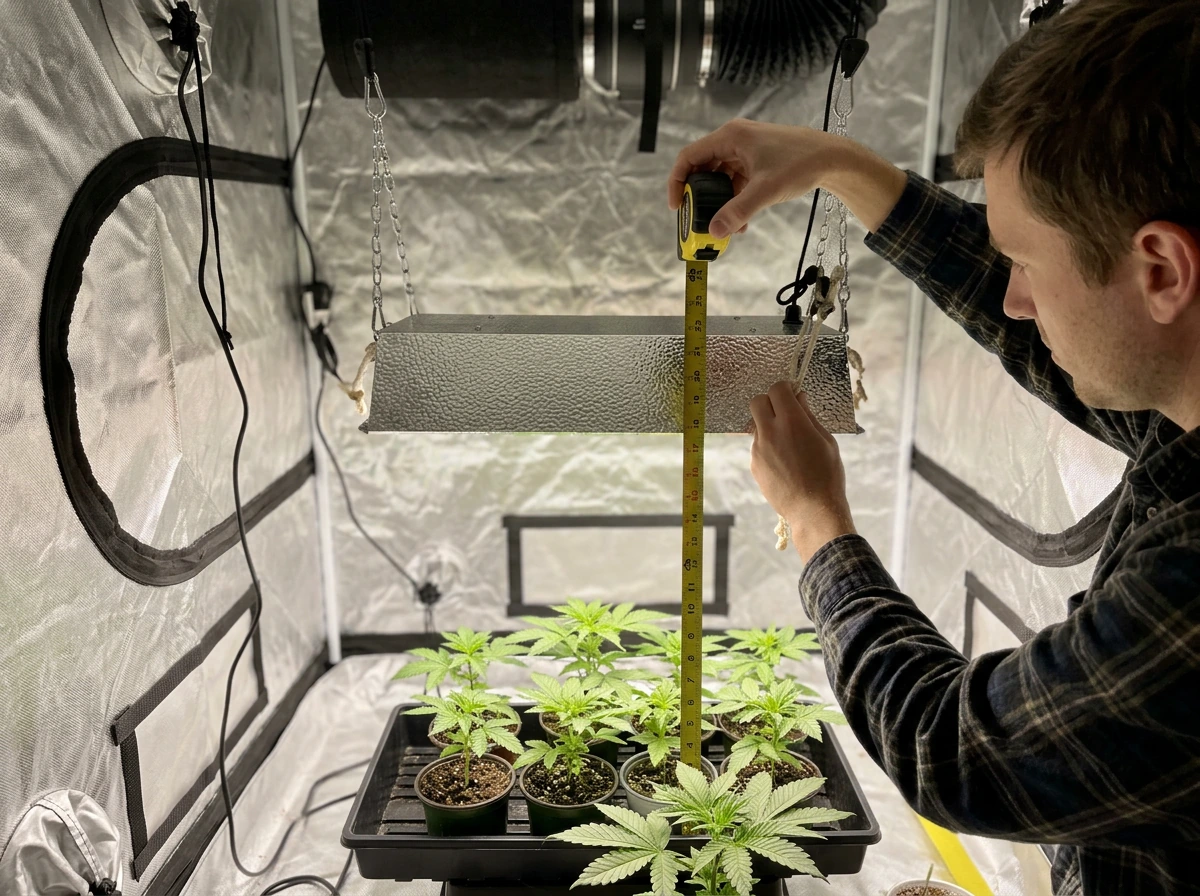
Hang height is the most important tunable variable once a hood is installed. Hang too low and you create a hot spot directly under the center of the hood with rapidly diminishing intensity at the edges. Hang too high and you reduce peak PPFD across the board. For a standard 6-inch wide air-cooled hood with a 600W HPS bulb, a starting point of 18 to 24 inches above the canopy is reasonable, but you should use a PPFD meter to verify your actual readings at multiple canopy points rather than relying on a chart.
For air-cooled hoods, the ducting run matters. Shorter runs with fewer bends reduce resistance and keep your inline fan working efficiently. Use the same duct diameter from hood to exhaust without reducing it mid-run, since stepping down from 6-inch to 4-inch duct negates most of the cooling benefit. Seal all duct connections with foil tape rather than duct tape, which degrades quickly near heat sources.
Tilt angle is an underused adjustment. Some wide hoods allow slight angular positioning. In rectangular tents (like a 2x4 ft), angling the hood slightly lengthwise can help push more light toward the short edges of the footprint where coverage typically drops off. Test before committing by mapping PPFD with and without the tilt.
Mylar or white poly tent walls already do a decent job of bouncing side-scatter back toward plants, so don't expect a reflector hood to eliminate the benefit of reflective walls. They work together: the hood concentrates downward output, the walls recapture and redirect whatever escapes to the sides.
Common mistakes and how to fix them
Hot spots and uneven coverage
The most common complaint after installing a new reflector is a harsh hot spot in the center of the canopy. This almost always means the hood is hung too close to the plants, or the hood geometry is too narrow for the tent size. The fix is to raise the hood, or to switch to a wider reflector if you're at the maximum safe hang height already. A PPFD map will confirm which problem you're dealing with: if the center reading is dramatically higher than the edges even at a reasonable height, the hood shape is wrong for your footprint.
Heat buildup in the tent
An open wing reflector in a small sealed tent with a high-wattage HID bulb is a reliable way to cook your plants. Wing reflectors are not air-cooled; they radiate heat into the tent environment. If your tent runs hot and you're using an open reflector, switching to an air-cooled sealed hood with proper ducting will make a bigger temperature difference than any other single change. The sealed glass panel on quality air-cooled hoods like the Yield Master II intercepts the heat before it enters the grow space, not after.
Compatibility problems
Reflector hoods are not universal. Socket type (mogul base for most HPS/MH), wattage rating, and duct diameter all have to match your existing ballast and ventilation. Buying a 1000W-rated hood and running a 400W bulb in it isn't dangerous, but the geometry will be optimized for a larger footprint than you need and the coverage will be less efficient. Going the other direction (putting a higher-wattage bulb than the hood is rated for) risks damaging the glass or socket. Check the wattage compatibility spec before purchasing.
Expecting too much from a reflector alone
A reflector upgrade is worth doing, but it doesn't transform a marginal light into a high-performer. If your PPFD readings are already well below target and simply adding a reflector doesn't close that gap, the underlying light output is the problem. Adding a reflector to an undersized 150W HPS in a 4x4 tent will give you a marginal improvement at best. A reflector upgrade is worth doing, but it doesn't transform a marginal light into a high-performer. If your PPFD readings are already well below target and simply adding a reflector doesn't close that gap, the underlying light output is the problem. Adding a reflector to an undersized 150W HPS in a 4x4 tent will give you a marginal improvement at best. At some point, checking out a broader grow light reflector comparison makes more sense than optimizing a setup that's fundamentally underpowered. If you want to compare options side by side, a grow light reflector comparison can help you pick the best match for your tent and light type.
Reflectivity degradation over time
Aluminum reflective surfaces accumulate dust, residue, and oxidation over time, all of which reduce reflectivity. Air-cooled hoods with sealed glass panels tend to keep the reflective inner surface cleaner longer because contaminants don't flow directly across the aluminum. Open hoods need periodic gentle cleaning with a microfiber cloth. Never use abrasive materials on anodized or polished aluminum surfaces; even fine scratches change the reflective characteristics by increasing diffuse scatter at the wrong angles.
Care, durability, and whether the cost is worth it
A quality air-cooled hood is a long-term purchase if you treat it right. The glass panels on hoods like the Yield Master Classic II use tempered safety glass with an air-tight gasket, which holds up well across multiple grows if you avoid mechanical stress on the glass. The reflective surface inside typically retains most of its performance for several years under normal conditions, provided it stays clean and dry. Budget hoods with vague material specs tend to yellow or oxidize faster, and the reflectivity loss shows up in PPFD readings within a few cycles.
On cost: a bare 6-inch air-cooled hood for a 600W to 1000W HID setup runs in the $40 to $100 range depending on build quality and brand. All-in-one kits that include the ballast bring the total up significantly, but if you're starting from scratch, a kit removes compatibility guesswork. If you already have a ballast and want to add or upgrade a reflector only, the bare hood is the better value. Factor in the cost of any ducting, hangers, and fan upgrades needed to make the hood work properly; these aren't always obvious from the product listing alone.
On unboxing: inspect the glass-to-frame seal immediately. There are documented cases of budget hoods arriving with broken glue joints at the glass-tube connection or dented duct flanges that prevent a proper seal. Both issues are worth catching before the first run rather than after. If the seal is compromised, heat and moisture bypass the glass panel and defeat the purpose of an air-cooled design.
The bottom line on value is straightforward: if you're running a 600W or higher HID light in an enclosed tent and you don't have an air-cooled hood, getting one is almost always worth it, both for the PPFD gain and for the temperature management benefit. If you're running a modern LED fixture that already has a well-designed reflective housing, a separate hood adds little and may complicate mounting. And if you're comparing specific models head-to-head, the And if you're comparing specific models head-to-head, the grow light reflector comparison guide on this site covers those side-by-side metrics in more detail. Grow light reviews 2020 grow light science progrow 1800 review
FAQ
How can I tell whether a reflector is improving coverage uniformity versus just boosting the center reading?
Use a PPFD map that samples points near each footprint corner, not just the center. If your uniformity ratio (min-to-max) improves but average PPFD changes only slightly, you mostly bought better distribution, not more total light.
Should I measure PPFD before and after cleaning a new reflector, and how often should I clean it?
For a new reflector, clean it before your first test run and again after the first few weeks. Compare PPFD before and after cleaning, especially with open-bulb HID hoods, since dust and oxidation can reduce reflectivity and skew your expectations.
Can I reuse my reflector with a different inline fan or exhaust setup?
Yes, but only if the hood system is designed to stay sealed and receive forced airflow. If you swap an air-cooled hood onto a different fan size or exhaust setup without matching duct diameter and airflow, glass temperatures can rise and PPFD gains can be partly lost through heat-related geometry changes.
Is it okay to use 6-inch hood ducting on a system that has some 4-inch duct sections?
Avoid stepping down duct diameter anywhere along the run. If you must adapt (for example, from hood flange to existing duct), use a proper reducer sized to the closest compatible ducting and minimize bends, then verify performance with a quick temperature check at the canopy.
What’s the safest way to adjust hang height when my tent runs hot after installing a reflector?
It depends on how the fixture mounts and the heat load at the canopy. If the reflector forces a higher hanging height to stay safe, you can lose intensity. The best approach is to map PPFD at multiple heights with your exact tent, airflow, and light, then choose the lowest safe height.
Do reflective tent walls and floors make a separate reflector hood unnecessary?
A reflective wall helps, but it can also amplify hotspots if your hood creates a concentrated beam. If you see a strong center spike, do not rely on wall bounce as the fix, raise the hood first or choose a geometry with a wider distribution.
Will switching from MH to HPS bulbs (or changing bulb brands) affect reflector performance enough to warrant re-testing?
Check the bulb type and base compatibility, not just the wattage. Some hoods are optimized for specific lamp lengths or focal positions, so changing from MH to HPS, or swapping to a different brand bulb, can shift where the reflector’s brightest zone lands.
What durability or safety checks matter most for glass-panel air-cooled hoods, and do they apply the same way to LED setups?
For HID air-cooled hoods, tempered glass and an intact gasket are critical because thermal stress and moisture can bypass the glass-to-frame seal. With LEDs, integrated optics can reduce the need for a separate hood, but if you add one, ensure airflow does not interfere with the fixture’s own cooling design.
My PPFD corners are still low even after raising the hood. What should I change first?
If you’re at your maximum safe hanging height and still have dim corners, the solution is usually geometry, spacing, or number of lights. That means selecting a wider horizontal reflector, adding a second hood and coordinating placement, or using a light mover for uniformity.
Are there common installation mistakes with hood kits that include ballasts, versus bare hoods?
If your ballast is remote, confirm that the hood’s mounting and ducting do not create cable stress or restrict bulb access during maintenance. Also check whether the hood kit includes the correct socket and wiring accessories for your specific ballast model to avoid installation delays and misalignment.
How do humidity and grow-room moisture affect reflector lifespan and performance?
Yes. Even with the right reflector, extreme humidity and frequent wetting can shorten reflective life and degrade gaskets over time. Use dehumidification and avoid splashing on the hood interior, then do periodic gasket inspections.
If I still get a harsh center hotspot, how do I know whether it’s a hang-height issue or a focal-geometry mismatch?
If the reflector is truly sized correctly, the center hotspot should move or soften as you change height slightly. If hotspots persist in the same spot regardless of height, the focal geometry or lamp position is mismatched, so re-check lamp centering and confirm the correct model for your lamp size.
What buyer checks help me avoid getting a reflector that degrades quickly and wastes money?
Budget models often use unspecified aluminum and inconsistent surface finishing, which can look good out of the box but lose PPFD faster. A practical decision aid is to prioritize products that state reflectivity material grade and provide clear duct flange specs, then verify gasket and glass fit on arrival.