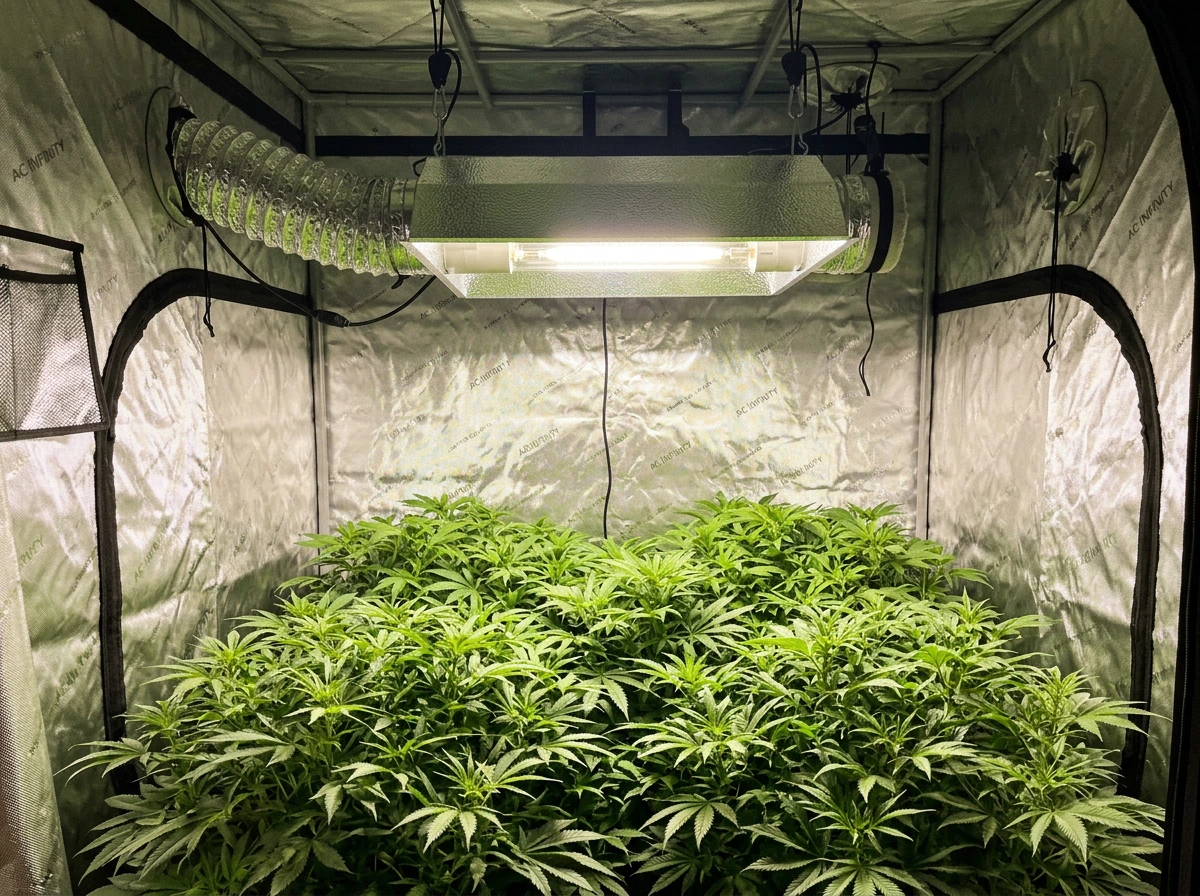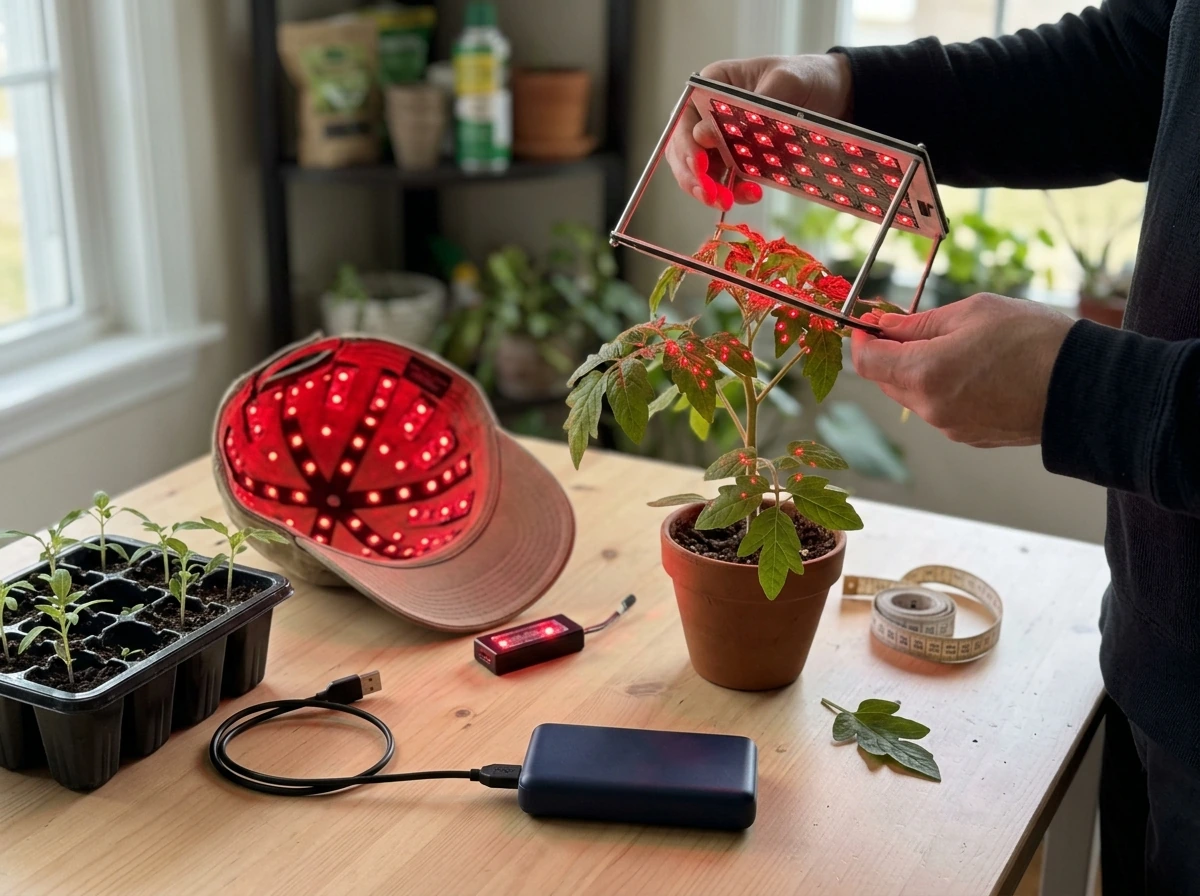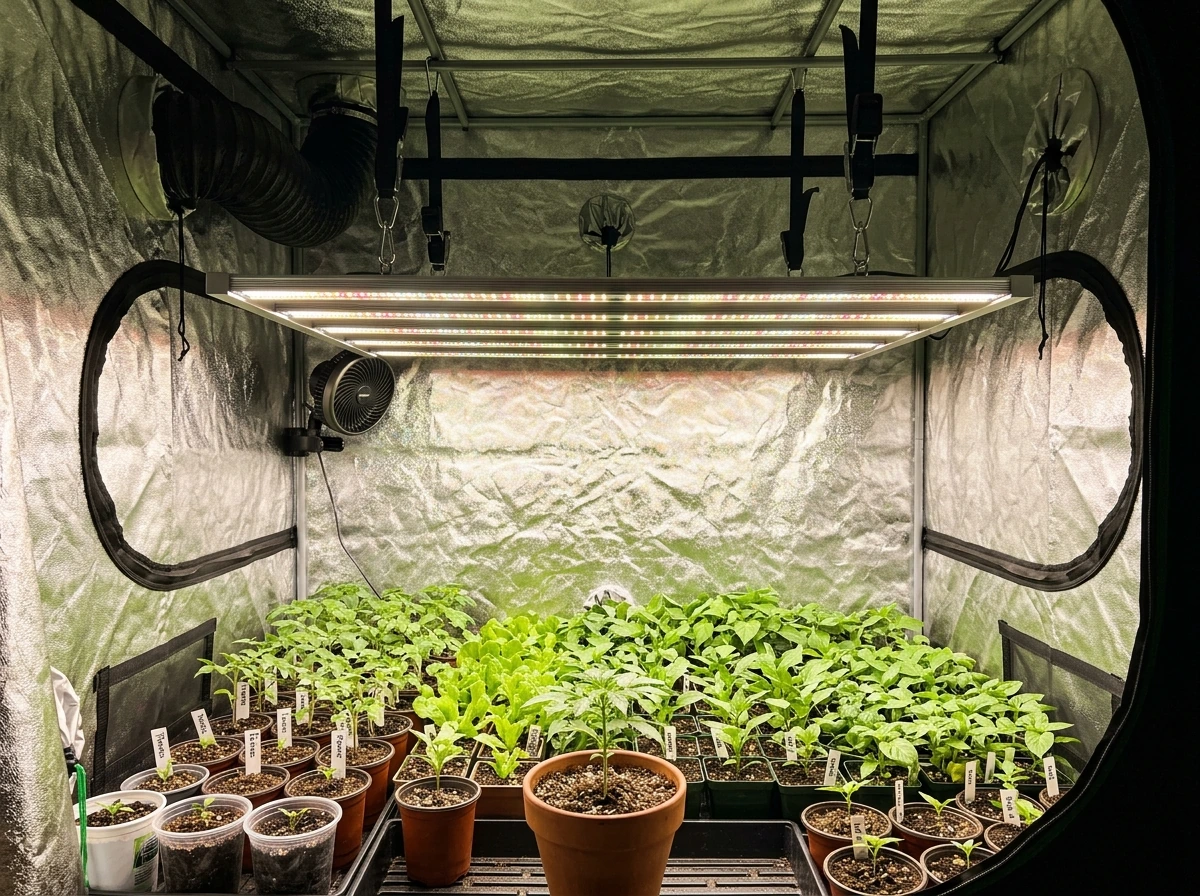
If you searched 'If you searched 'grow light reviews 2024,' you're probably looking at one of three things: a curated best-of list from that year, a specific product review published in 2021, or a way to figure out whether a light that was popular back then is still worth buying today. grow light reviews 2024,' you're probably looking at one of three things: a curated best-of list from that year, a specific product review published in 2021, or a way to figure out whether a light that was popular back then is still worth buying today. All three are valid, and this guide covers all of them. The short version: the 2021 market was dominated by quantum board LEDs, and many of those models are still competitive in 2026. The evaluation framework used to rank them then is the same one you should use to verify a light for your space right now.
Grow Light Reviews 2021: Best Picks and How to Choose

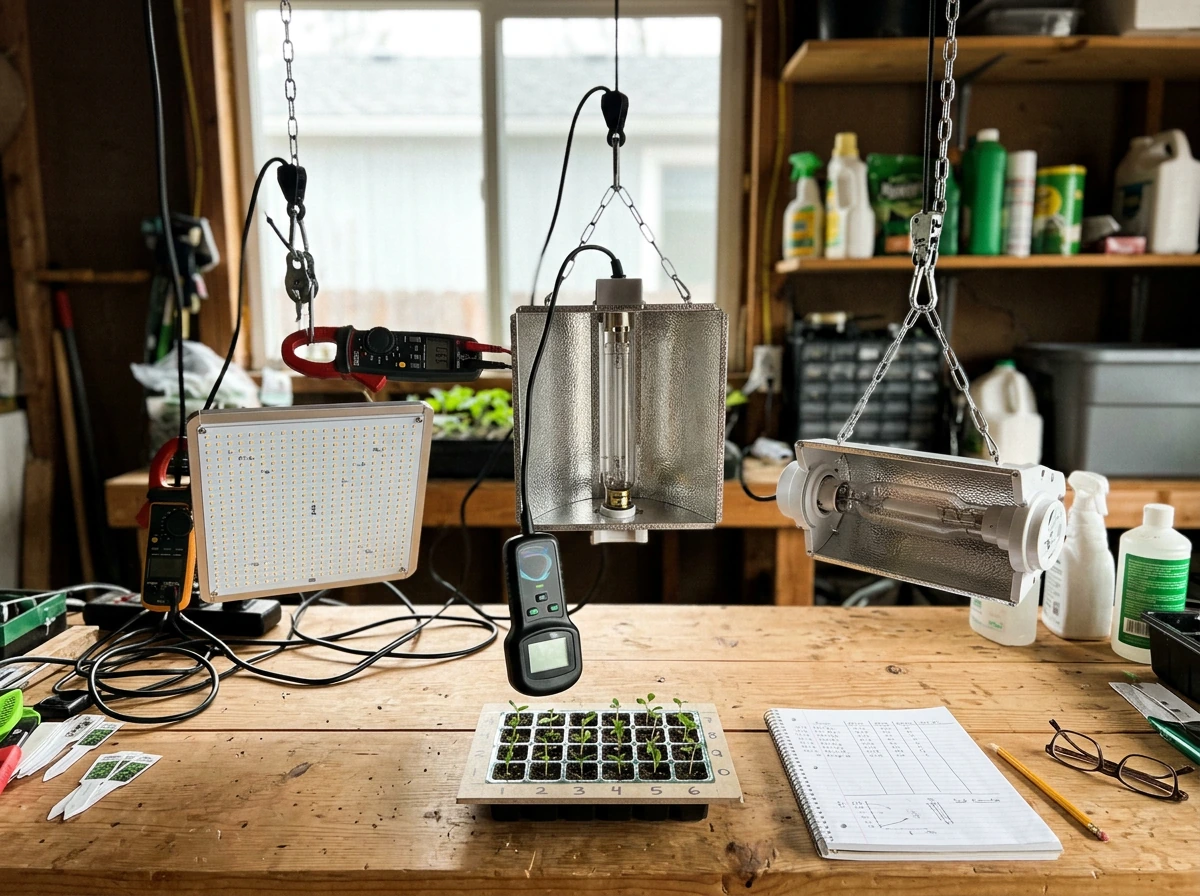
What 'grow light reviews 2021' actually covers and how to use it
When you see a '2021 grow light review,' it typically falls into one of three categories: a roundup post like GrowersHouse's 'Best LED Grow Lights of 2021' that ranks several models against each other, a single-product teardown covering build, driver quality, PPFD output, and coverage, or a forum thread where growers document real results over a full grow cycle. Each type gives you something different. Roundups are good for shortlisting. Single-product reviews are good for confirming what you've already shortlisted. Forum threads are good for catching reliability issues that lab numbers miss.
The way to use 2021 reviews today is to treat the evaluation criteria as timeless and the specific model rankings as a starting point. A light that scored well in 2021 on PPFD uniformity, efficacy, and build quality has likely held up. One that scored well mostly on price and raw wattage claims is more suspect. Use the review to understand what the light was tested against, not just where it placed.
The specs that actually matter in any grow light review
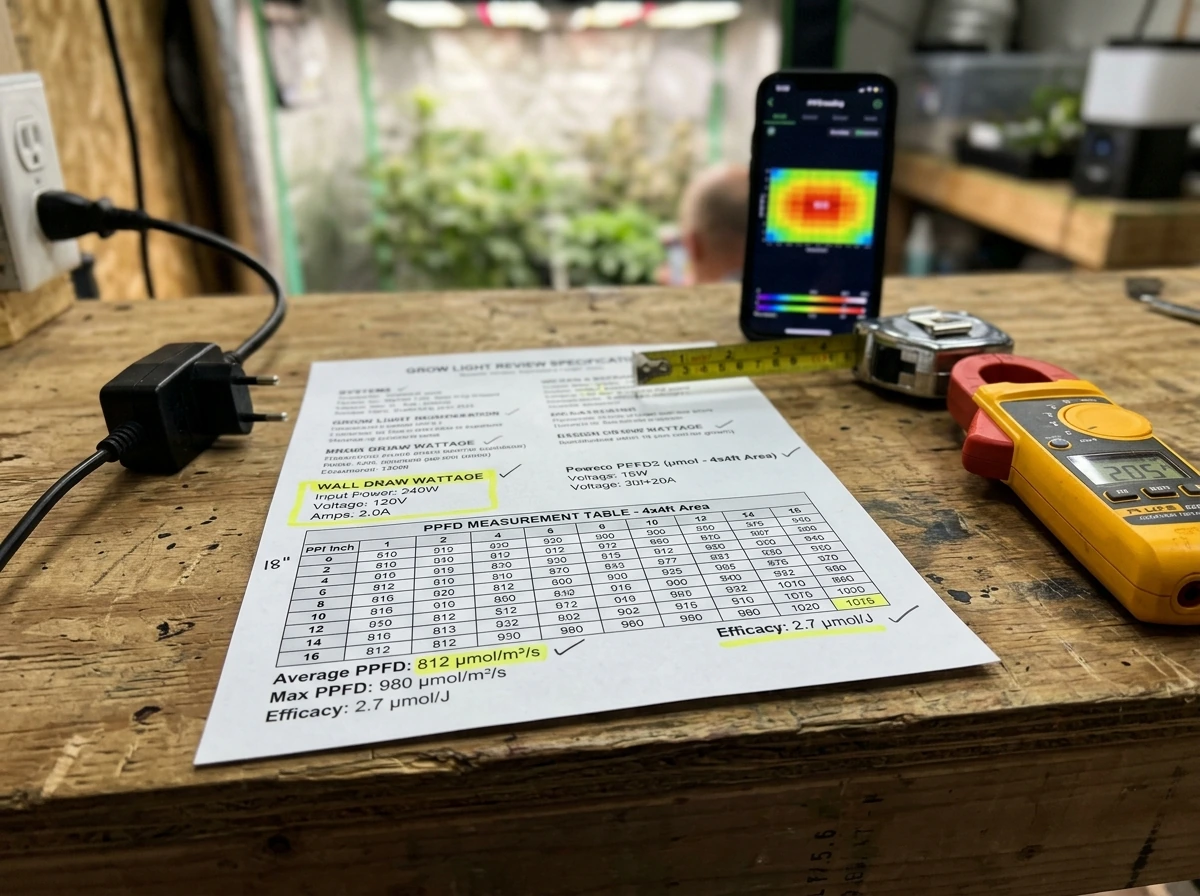
Good reviews from the 2021 era shared a consistent methodology. The first thing to look for is whether actual wall-draw wattage was measured, not the advertised 'maximum LED wattage.' A light sold as '1000W' might only pull 200–230W from the wall. GrowersHouse's 2021 comparison made a point of this explicitly, measuring real power draw rather than relying on manufacturer specs. That number matters because it directly affects your running costs and lets you make fair comparisons between models.
The second thing is PPFD (photosynthetic photon flux density), measured in µmol/m²/s. This tells you how much usable light is hitting the canopy per second. PPFD is meaningless without a measurement map, though. A single center-point reading tells you the peak, not the coverage. What you want is a grid of readings across the full canopy footprint so you can see whether the light is uniform or has a hot center that burns plants while the edges starve. Coco for Cannabis uses an Apogee SQ-500 quantum sensor at a fixed 45 cm (18 in) hanging height with reflective walls at the test boundary, which gives a reproducible baseline for comparing lights fairly.
Beyond PPFD, the specs worth checking are efficacy (µmol/J, essentially lumens per watt for plant-usable light), spectrum (full-spectrum white or targeted red/blue ratios), dimming capability, and thermal management. A light with a good efficacy rating (1.8–2.7 µmol/J was considered strong in 2021) will cost noticeably less to run over a season than one at 1.4 µmol/J, especially at scale.
| Spec | What to look for | Why it matters |
|---|---|---|
| Actual wall draw (W) | Measured at the wall, not marketing wattage | Real running cost and apples-to-apples comparison |
| PPFD (µmol/m²/s) | Grid map, not just center-point peak | Tells you coverage uniformity across the canopy |
| Efficacy (µmol/J) | 1.8+ for 2021-era LEDs; 2.0+ for top-tier | Determines energy cost per unit of plant-usable light |
| Spectrum | Full-spectrum white, or R:B ratio with UV/IR add-ons | Affects vegetative growth rate and flowering quality |
| Dimming | 0–100% analog dimming preferred | Lets you dial PPFD for seedlings vs. flower |
| Thermal management | Passive cooling (no fan) or quiet fan at low RPM | Noise, dust accumulation, and long-term reliability |
| Warranty | 3–5 years minimum for 2021-era reputable brands | Proxy for build confidence and driver quality |
LED vs. HPS vs. CMH: the main categories from 2021
By 2021, full-spectrum LED quantum boards had become the dominant choice for most new indoor grows, but HPS (high-pressure sodium) and CMH (ceramic metal halide) were still widely used and appeared in plenty of 2021 reviews. Here's how they stack up on the metrics that count.
| Technology | Efficacy (µmol/J) | Heat output | Initial cost | Running cost | Best use case |
|---|---|---|---|---|---|
| Full-spectrum LED (quantum board) | 1.8–2.7 | Low to moderate | Higher upfront | Lowest | All stages; small to large tents |
| Blurple/older LED panels | 0.8–1.4 | Moderate | Low to moderate | Moderate | Budget entry; limited coverage |
| HPS (600W / 1000W) | 1.3–1.7 | Very high | Low | Moderate-high | Large flower rooms, established growers |
| CMH / LEC (315W / 630W) | 1.4–1.9 | Moderate-high | Moderate | Moderate | Veg and flower; good spectrum quality |
| T5 fluorescent | 0.6–1.0 | Low | Low | Low | Seedlings and clones only |
The honest take: if you're a hobbyist with a tent up to 5x5 ft, a 2021-era quantum board LED almost certainly beats the alternatives on total cost of ownership. HPS still makes economic sense at scale (4+ lights in a dedicated room) where the infrastructure already exists and the higher heat output can be managed with proper HVAC. CMH earned a loyal following for its broad, natural spectrum and remains a legitimate option, but it doesn't close the efficacy gap against top-tier LEDs from 2021 onward.
Which 2021-reviewed lights fit which grow scenarios
Rather than treating every grow as identical, good 2021 reviews segmented recommendations by grow stage and tent size. That structure still holds. Below are the common scenarios and what to look for in each.
Seedlings and clones
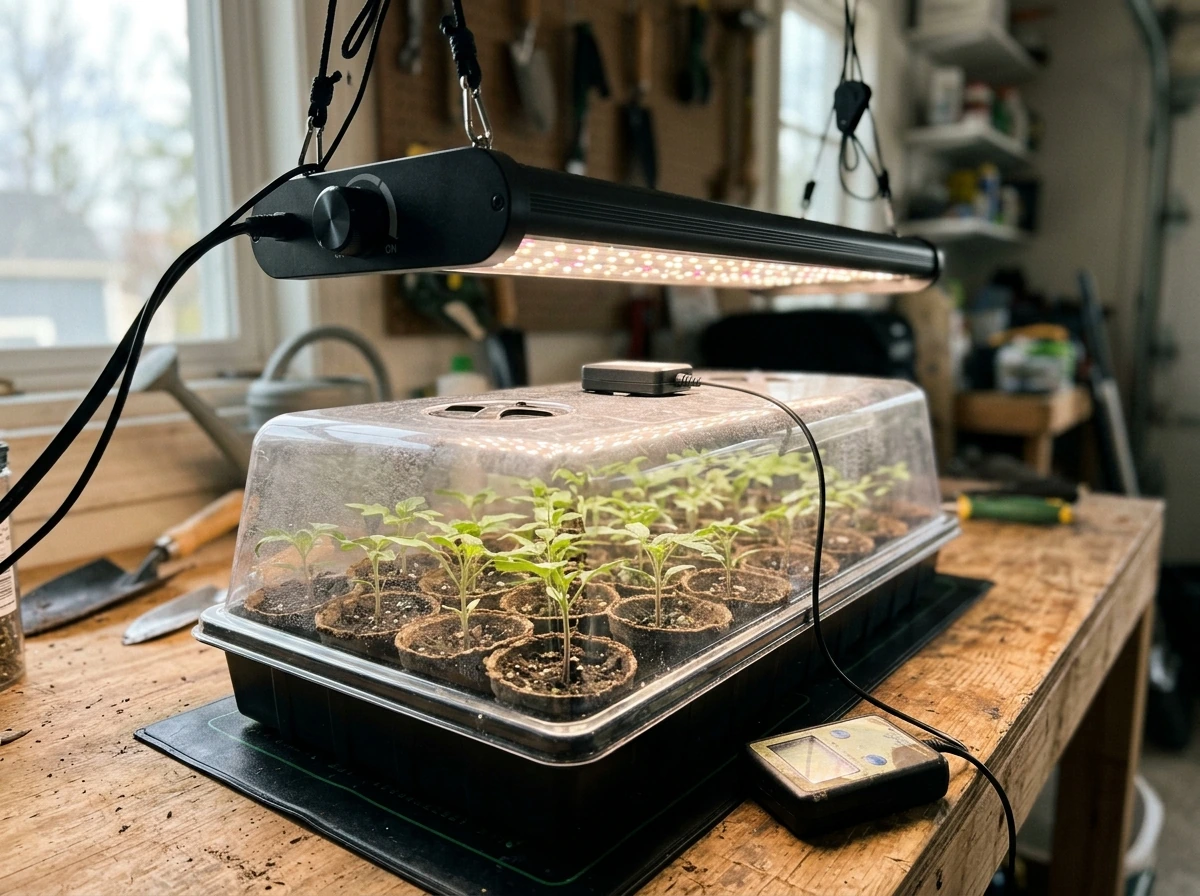
Seedlings need low PPFD, roughly 100–300 µmol/m²/s, with an 18-hour photoperiod. A dimmable LED at 20–30% output, or a T5 strip, covers this well. The mistake most beginners make is hanging a powerful light too close at full power and bleaching or stunting early growth. Any quality 2021-era quantum board with dimming handles seedlings fine; just raise it to 24–30 inches and dial it down.
Vegetative growth
Veg targets 400–600 µmol/m²/s for most leafy crops and cannabis in the vegetative phase. A 200–240W actual draw quantum board covers a 3x3 ft footprint comfortably at this range. For a 4x4 tent, you want 300–400W actual draw, or a light explicitly rated for that footprint in its PPFD map, not just its marketing copy.
Flowering and fruiting
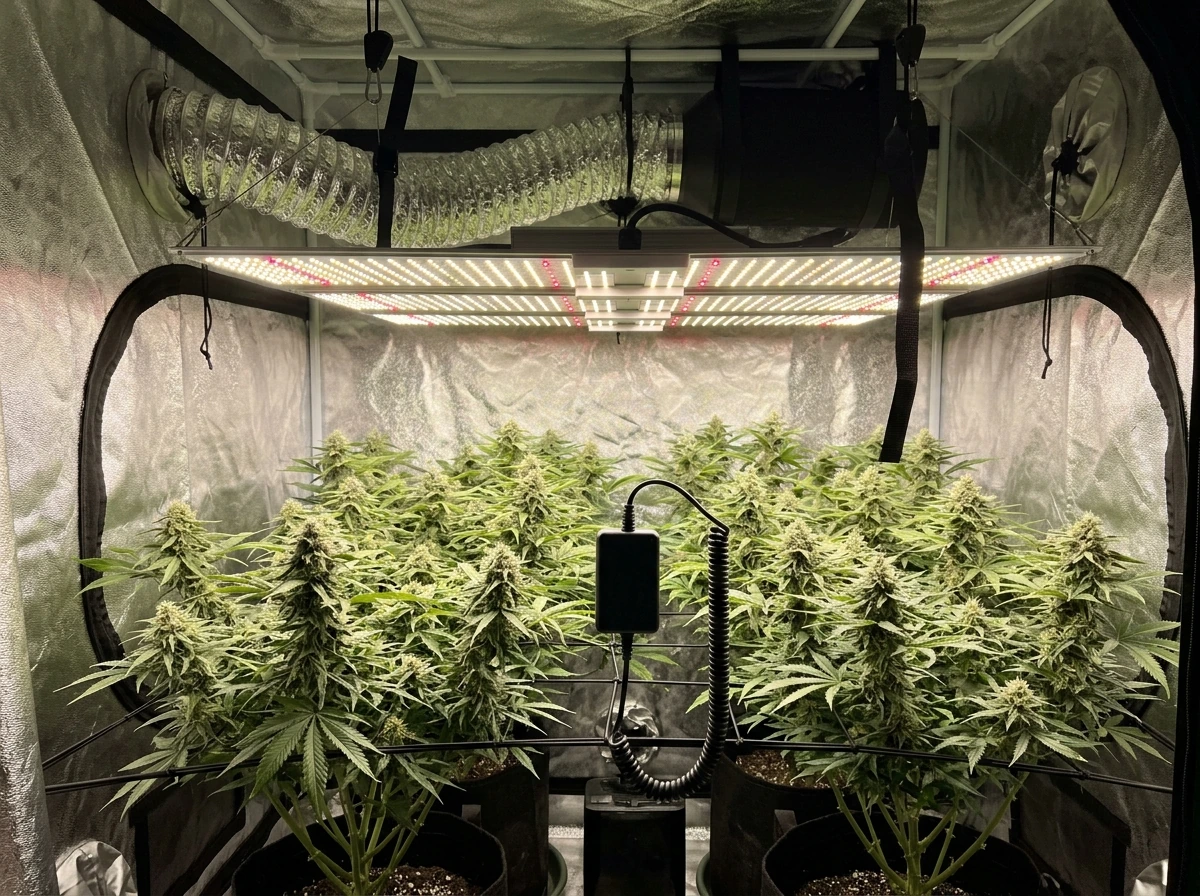
Flowering demands more: 600–900 µmol/m²/s at the canopy is the sweet spot for most crops, with diminishing returns above 1,000 µmol/m²/s unless you're supplementing CO2. This is where coverage uniformity matters most. A light hitting 900 µmol/m²/s in the center but dropping to 300 µmol/m²/s at the corners is underselling itself. MIGRO's canopy photon delivery framing makes this point clearly: you're targeting a consistent average across the full canopy, not a peak reading.
Small tents (2x2 to 3x3 ft)
For a 2x2 tent, a 100–120W actual draw quantum board is sufficient for flowering. For a 3x3, 200–250W actual draw is the target. In 2021, lights in this category from Spider Farmer (SF-2000), Mars Hydro (TSW 2000), and HLG (Quantum Board 200 Rspec) were frequently reviewed and all landed in this power range with efficacy figures between 2.0 and 2.7 µmol/J. If a 2021 review recommended one of these for a 3x3 flowering setup, that recommendation is still sound in 2026.
Larger areas (4x4 to 5x5 ft and beyond)
A 4x4 flowering tent needs roughly 400–500W actual draw to hit 600–900 µmol/m²/s across the full canopy with a quality quantum board. In the 2021 market, the HLG 600 Rspec, Gavita 1700e LED, and Spider Farmer SF-4000 were regularly cited for this footprint. For 5x5 coverage, you're looking at 600–700W actual draw, or two smaller lights for better uniformity. You can find our broader assessments of top performers in the general grow lights reviews section for context.
How to interpret and compare review results fairly
The most common mistake when reading grow light reviews is comparing peak PPFD numbers without accounting for the coverage area and hanging height at which they were measured. A light tested at 12 inches will always show a higher center-point PPFD than the same light at 24 inches, but the 24-inch measurement often tells you more about real-world use because the coverage footprint is larger and more uniform. When you're reading a 2021 review, check whether the reviewer specifies hanging height and whether the PPFD numbers come from a grid or a single point.
Uniformity is the metric most reviews underreport. A light with a center PPFD of 900 µmol/m²/s and edge readings of 400 µmol/m²/s is not a 900 µmol/m²/s light for a full 4x4 footprint. It's maybe a 650 µmol/m²/s average light. The Apogee-based testing protocol used by reviewers like Coco for Cannabis uses reflective walls at test boundaries and a 45 cm fixed height specifically to create consistent, reproducible comparisons. If a review doesn't describe a methodology at all, treat its numbers skeptically.
Distance and dimming interact. Many 2021 quantum boards allow you to hit your target PPFD either by adjusting height or dimming level. For a seedling tray, raising the light and reducing power to 30% gets you the same low PPFD as hanging it high at full power, but dimming also reduces heat output at the fixture, which matters in tight spaces. Use the PPFD map from the review to work backwards: find the height and dim level that delivers your target range across your actual canopy footprint.
Running costs and long-term value
This is the part most buyers underweight. A $150 light with a poor efficacy rating will cost more to run over two years than a $350 light with a high one. Here's a quick way to think about it: if you run a 400W actual draw light for 12 hours per day at $0.15/kWh, that's about $26/month. A 300W light with the same canopy PPFD output (higher efficacy) costs roughly $19.50/month. Over a two-year grow cycle, that $6.50/month difference adds up to $156, which effectively erases the price gap between a budget and mid-tier option.
Lifespan matters too. Reputable 2021-era LED drivers (Meanwell in particular) are rated for 50,000+ hours, meaning the driver outlasts most grow setups by years. Lights using off-brand or unnamed drivers were a known weak point in 2021 reviews. Check the review for driver brand callouts; if it isn't mentioned, that's often a red flag in itself. Warranty length is a related proxy: brands offering 3–5 year coverage were signaling confidence in component quality. Brands with 1-year warranties on an otherwise premium-priced light were worth scrutinizing.
Heat is both a comfort and a cost issue. HPS and CMH lights generate substantial radiant heat that requires active air management, adding fan and duct costs. Quality LED quantum boards run warm but rarely require dedicated cooling beyond a well-ventilated tent. In a small 2x2 or 3x3 grow space, switching from HPS to a comparable LED can reduce the cooling load enough to eliminate a dedicated exhaust upgrade.
| Cost factor | 2021 Budget LED | 2021 Mid-tier LED | HPS 600W |
|---|---|---|---|
| Purchase price (approx.) | $80–$150 | $250–$450 | $100–$200 (fixture + ballast) |
| Actual wall draw | 120–200W | 240–480W | 660W (with ballast loss) |
| Monthly running cost (12h/day at $0.15) | $6.50–$10.80 | $13–$26 | $35.60 |
| Efficacy (µmol/J) | 0.8–1.5 | 2.0–2.7 | 1.3–1.7 |
| Expected driver lifespan | Varies (often unknown) | 50,000+ hrs (Meanwell) | Bulb: 10,000–24,000 hrs |
| Warranty | 1 year typical | 3–5 years | Varies by brand |
Your pre-purchase checklist and setup steps
Before you buy anything based on a 2021 review (or any review), run through these steps to confirm it will actually work for your setup.
- Measure your actual grow space: floor footprint in feet or meters, and ceiling-to-canopy height available for hanging. This determines your required coverage footprint and minimum hanging distance.
- Decide your target PPFD by grow stage: 100–300 µmol/m²/s for seedlings, 400–600 for veg, 600–900 for flower. Write this down before looking at any product.
- Pull the PPFD map from the review, not just the headline number. Check that the map covers your footprint size and was measured at a hanging height you can actually achieve in your space.
- Verify the actual wall-draw wattage. If the review only lists 'equivalent wattage,' skip it or find a review that tested real draw.
- Check the efficacy figure (µmol/J). Anything below 1.6 in 2021 was considered mid-range at best; 2.0+ was competitive; 2.5+ was among the top tier.
- Confirm the driver brand if mentioned. Meanwell HLG or ELG series is the widely trusted benchmark. Unnamed drivers are a flag.
- Calculate your monthly running cost using actual wattage, your daily light hours, and your electricity rate. Compare this across your shortlisted options.
- Check the current warranty terms directly with the manufacturer or retailer. Some 2021 models have been superseded or had warranty terms updated.
- Shortlist 2–3 lights based on the above, then look for grower forum threads or more recent grow light reviews from 2024 to see if any reliability patterns have emerged since 2021.
One thing worth emphasizing: you don't need a PAR meter to use this process. The 2021-era reviews that did systematic testing (using calibrated quantum sensors at fixed heights and documented conditions) did the measurement work for you. Your job is to match their test conditions to your actual space. If a review tested at 18 inches height over a 3x3 footprint and that's your setup, the numbers translate directly. If your tent is smaller or your ceiling is lower, you need to adjust expectations or find a review that tested closer to your conditions.
For deeper comparisons on specific product categories, the reflector comparison and grow light mover reviews sections on this site cover accessories that can significantly extend the effective coverage of a well-chosen light, which is worth knowing if you're trying to squeeze a 3x3-rated light over a 4x4 footprint on a tight budget. grow light mover reviews
Common mistakes to avoid
- Buying on wattage claims alone without checking actual wall draw or PPFD maps
- Using a single center-point PPFD reading to judge full-canopy coverage
- Assuming a '2021 best of' ranking means the light is still in production or still available with the same specs (check current listings)
- Ignoring hanging height requirements: a light that needs 24 inches of clearance won't work in a tent with 18 inches of usable vertical space
- Underestimating running costs when comparing a cheap upfront option against a more efficient one
- Skipping the grow stage consideration: a light ideal for flowering may be overkill (and damaging) for seedlings without a dimmer
- Treating any single review as definitive without cross-referencing methodology
The bottom line on 2021 grow light reviews: the best ones from that year are still useful today because they tested to real metrics, not marketing claims. Quantum board LEDs dominated for good reason, and the top-tier models from 2021 remain competitive, see our grow light science progrow 1800 review for how to evaluate one in practice. Use the evaluation framework here to verify any recommendation against your specific space, and you'll avoid the most common buying mistakes regardless of when the review was written.
FAQ
How do I translate a 2021 PPFD test (height and wattage) to my tent if my ceiling and hanging distance are different?
Use the reviewer’s stated test height (or hanging height assumption) as the anchor, then adjust using dimming or height changes to hit your target PPFD range at the canopy. If a review only lists “recommended tent size” without a measurement map, treat it as a rough guide and verify coverage using uniformity data (edge readings, not just center).
Does LED efficacy from a 2021 review still apply if I plan to run the light mostly dimmed?
For most LED quantum boards, efficacy does not automatically stay equal at every dimming level. If the review shows both full-power and dimmed performance, prefer that. If it does not, assume real-world efficacy can drop slightly when you run very low power, and plan your dimming range to stay closer to the manufacturer’s tested operating point.
If I use CO2, should I push higher PPFD than the typical 600 to 900 µmol/m²/s flowering target mentioned in the reviews?
Yes, the choice can change your target PPFD because CO2 and plant stress tolerance affect how plants respond. A light that looks “short” on paper (for example, average PPFD around 650 instead of 800) may still perform well if you supplement properly, while a high PPFD plan can backfire if you cannot support ventilation, humidity control, or CO2.
What’s the best way to choose between one larger light versus two smaller lights when tent size and uniformity don’t line up?
Look for a PPFD map that reports both average or grid results and edge readings, then compare the reviewer’s coverage target to your actual canopy area. If you are right at the limit (for example, a light marketed for 3x3 used in a 4x4), uniformity will be your bottleneck, and two smaller lights or a mover will usually outperform a single “bigger” fixture.
Do grow light reviews assume the canopy is at a certain height, and how can I account for plant height differences?
Check whether the review focuses on the canopy output at your crop height, not just “fixture brightness.” If your plants sit high (tall trellis, sativa structure, or long veg before flip), the effective PPFD can drop faster than expected. Prefer reviews that discuss hanging height adjustments or include multiple heights in testing.
How should I calculate total operating cost if I include HVAC and fans, not just the light’s watt draw?
Track the whole system power, not the headline fixture wattage. If you will add equipment like fans, controllers, or a dehumidifier, the fixture’s operating cost becomes a smaller part of the total, but the fixture’s heat can still change HVAC usage. A light that improves efficacy may still be less economical if it forces extra cooling.
If two lights have similar PPFD and efficacy, what warranty details should I check to predict real longevity?
A warranty that is short can be a warning sign, but so can missing details about the driver, brand identification, and replaceable components. If a 2021 review calls out driver make and offers clear warranty terms, it is easier to trust long-term reliability. If it does not mention driver branding, assume more risk and prioritize higher warranty length or easy service access.
Are there common dimming-related problems that show up in real use, even if a 2021 review rates the light highly?
Not always. Some lights spec dimming ranges or minimum output differently, and edge cases can include flicker at certain dimming levels or uneven dimming across channels. If you need very low output for seedlings, look specifically for dimming performance notes, controller behavior, and any mention of channel behavior at low percentages.
What signs in older grow light reviews suggest the testing method is not trustworthy?
It is a red flag if a “quantum board” review never clarifies whether it is measured as actual wall draw, and it is more suspect if PPFD is single-point. If driver type and measurement method are vague, you cannot reliably compare to your target canopy PPFD. In that case, narrow your search to reviews that show grid data and document sensor setup.
What is a safe step-by-step way to start with a 2021-recommended light if my conditions are not an exact match?
If you cannot match the reviewer’s exact height and footprint, build a buffer: plan to run slightly below the review’s maximum tested PPFD and correct with dimming, then observe plant response. Start seedlings conservatively, then step up weekly. This avoids bleaching from “peak reading” optimism and reduces risk when your reflectivity or airflow differs.