The Feit Electric 2ft LED grow light (GLP24H/V/60W/LED) is a competent, no-frills fixture for small-scale indoor growing. A Reddit thread in r/SavageGarden also includes a user discussing using a Feit Electric 2-ft LED grow light and linking to a Home Depot product page for it blank" rel="noopener noreferrer">Reddit user in an r/SavageGarden thread references buying/using a Feit Electric 2-ft LED grow light. If you still want to see how it stacks up against other options, these feit electric grow light reviews walk through the same real-world strengths and tradeoffs Feit Electric 2ft LED grow light. It covers a 2×2 ft footprint, runs full-spectrum with a red-heavy bias suited to flowering and budding, and retails at a price point that makes it genuinely accessible. It works well for herbs, leafy greens, and seedling starts in tight spaces, but it has real limits: no dimming, a modest PPF claim of up to 90, and a fixed spectrum mean it isn't the right tool if you need flexible control or are pushing a larger grow area. For a windowsill herb garden or a small seed-starting shelf, it does the job. For anything more demanding, you'll want to keep reading before committing.
Feit Electric 2ft LED Plant Grow Light Review: Test Results

What this fixture actually is
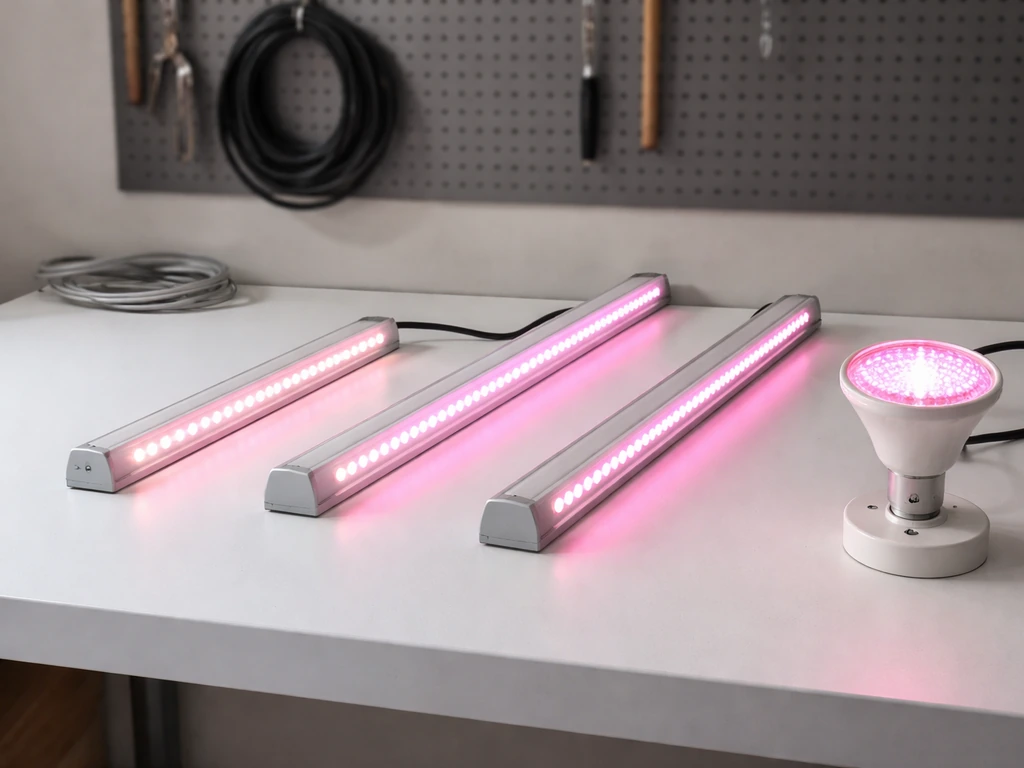
The model number is GLP24H/V/60W/LED, and it's Feit Electric's 2-foot LED grow light in their high-output vertical/hanging lineup. The fixture measures 23.8 inches long, 2 inches wide, and 4.3 inches tall, so it's slim and light enough to hang above a shelf or countertop without much fuss. It runs on 120–277V, which means it's compatible with standard US household outlets and also works in commercial voltage environments. Feit markets it as a full-spectrum fixture, though the spectrum leans hard toward 655 nm red with blue at 450 nm, a combination described by the manufacturer as optimized for budding and flowering rather than purely vegetative growth. The fixture is rated at 60 watts and carries a 3-year warranty.
What it comes with matters too: you get a 2.5-foot plug-in cord and a 6-inch hanging wire harness in the box. That 6-inch drop limits how high above the canopy you can position it without additional rigging, which is worth knowing before you set up a taller grow space. The fixture is linkable, and you can chain up to 5 units together off a single outlet, which makes it practical for longer shelf runs or growing more plants without running extra cords. There's no dimming, no smart control, and no app integration. It's a plug-in, hang-it, and run-it light.
Unboxing and build quality
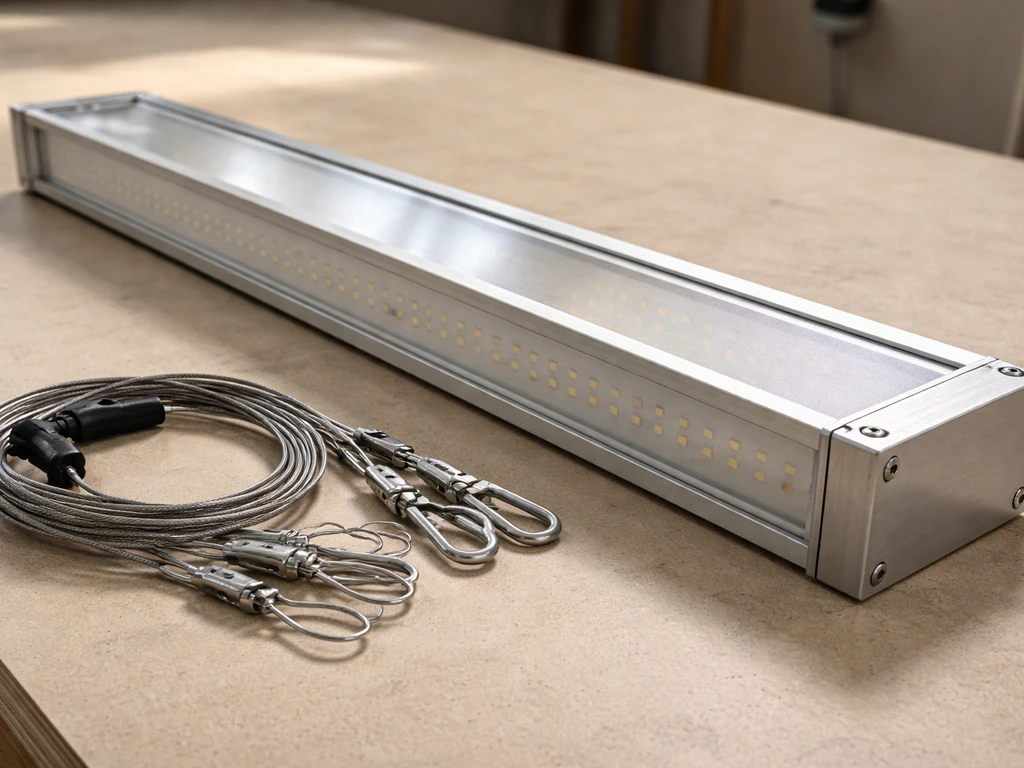
Out of the box, the GLP24H/V/60W/LED feels like what it is: a mid-range retail grow light, not a professional horticultural fixture. The housing is lightweight aluminum with a plastic lens cover, and while it doesn't feel flimsy, it also doesn't have the heft or finish of something like a Mars Hydro or a commercial double-ended fixture. If you're specifically considering a double-ended grow light setup, it helps to compare how that design handles power, wiring, and canopy coverage versus simpler plug-in bars double-ended fixture. The included hanging wire harness is basic, a simple 6-inch loop, and if you want more height adjustment or a cleaner mount, you'll be buying your own adjustable hangers or hooks separately.
The LED strip inside is clearly visible through the diffuse lens, and the overall construction is tidy. There are no exposed wires, the cord connector is solid, and the plug-in mechanism for linking multiple units is straightforward. For a fixture sold at hardware stores and big-box retailers, the build quality is appropriate. It won't win awards for materials, but nothing about it suggests early failure under normal indoor use. The 3-year warranty backs that up to a reasonable degree.
Light performance: what the numbers actually show
Feit claims a PAR/PPF of "up to 90" for this fixture, which is a fairly modest number in the context of grow lights. Feit also says it lists PAR and PPF values on every grow light product page to help shoppers match the light to plants PAR/PPF values on every grow light product page. For reference, seedlings and leafy greens generally need PPFD values in the 100–250 µmol/m²/s range at canopy level, while flowering plants want 400–600 µmol/m²/s or more. Hitting those numbers depends heavily on hanging height and how uniformly the light distributes across its coverage area.
In practice, the fixture performs best when kept close to the canopy, in the 6- to 12-inch range for seedlings and low-light herbs. Measured across the claimed 2×2 ft coverage area, light intensity drops noticeably toward the edges and corners, which is typical for a single-bar LED strip design. The center of the footprint gets the strongest light, and anything in the outer 4–6 inches of the coverage zone receives meaningfully less. For a single tray of seedlings or a compact herb garden positioned directly under the fixture, this works fine. For a full 2×2 ft canopy of plants that all need uniform intensity, the distribution isn't ideal, and you'll see uneven growth between plants in the center versus the edges.
The "full-spectrum" label is technically accurate but leans red. The 655 nm red-dominant output with 450 nm blue means it's weighted toward the end of the spectrum that drives flowering and budding rather than the balanced spectrum that's more effective through all vegetative stages. It will support vegetative growth, but a fixture with more green and a broader white spectrum would be more efficient for purely vegetative plants.
Real plant results by crop type
Seedlings
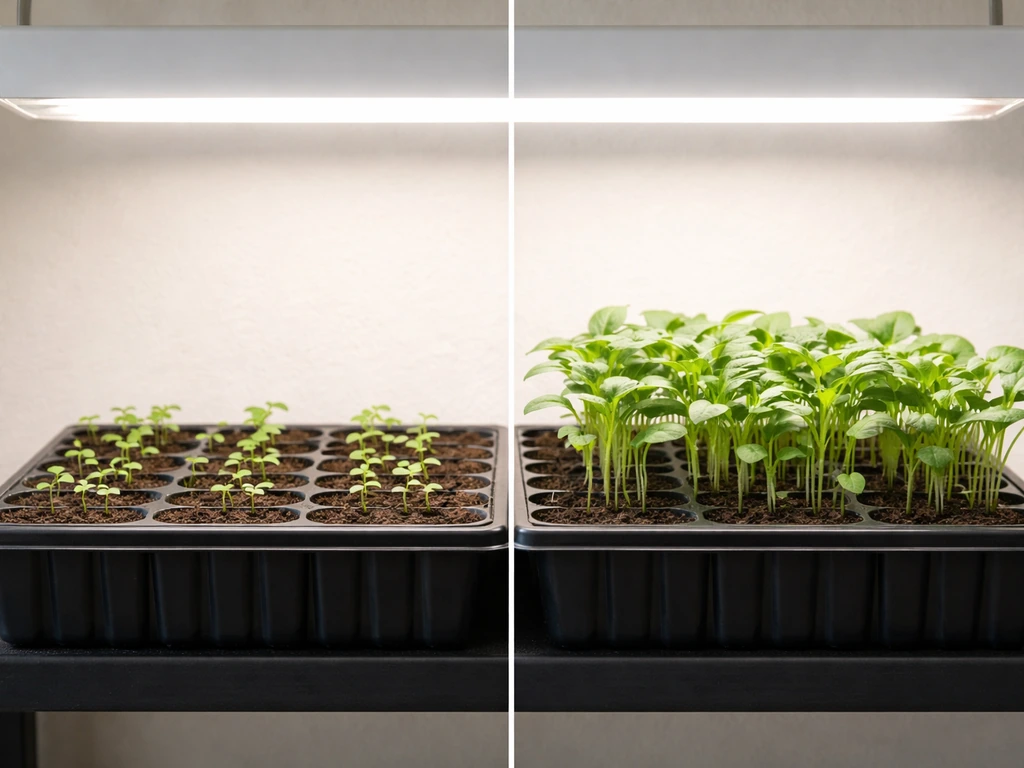
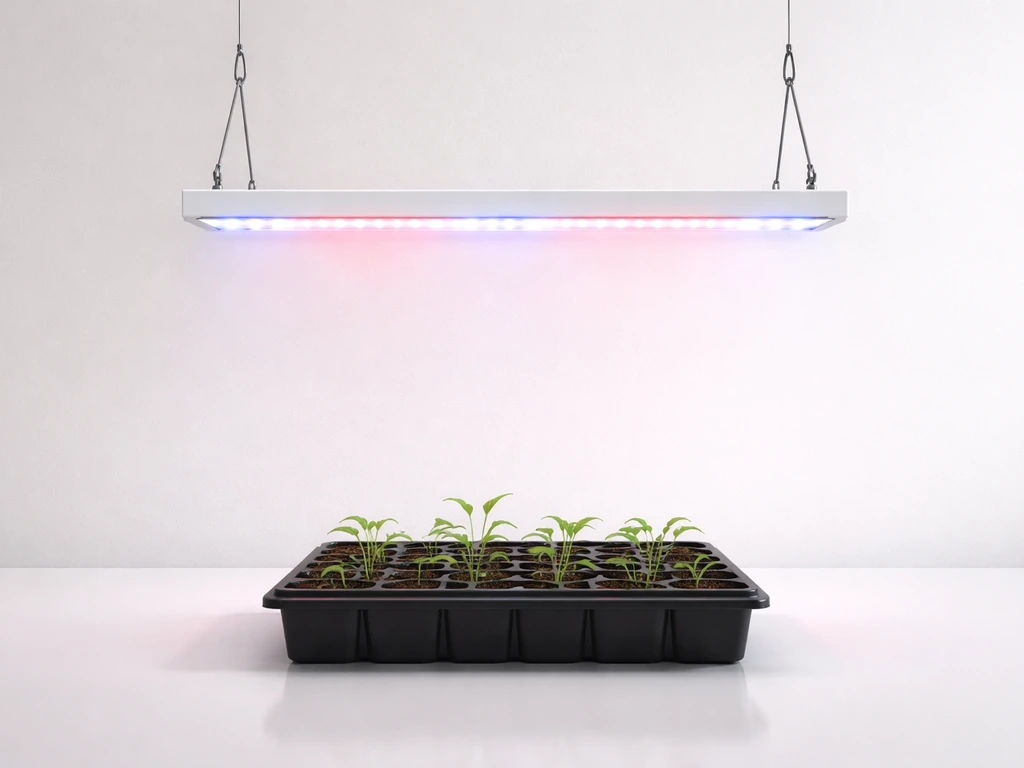
This is where the Feit 2ft light performs most reliably. Starting seeds at 6 inches below the fixture for the first two weeks, as Feit's own FAQ recommends, gives seedlings enough light intensity without burning tender young growth. Germination and early cotyledon development are strong, and the low heat output means you're not drying out soil or stressing seedlings with radiant heat. Tomatoes, peppers, basil, and flowers all start well here.
Herbs and leafy greens
Herbs like basil, cilantro, parsley, and chives do well under this fixture when positioned 12–18 inches above the canopy and given 14–16 hours of light per day (with an external timer, since the fixture has no built-in timer). Lettuce, spinach, and other leafy greens also respond positively. These are low-to-medium light-demand crops, and the fixture's output is well-matched to them. Expect compact, healthy growth with good leaf color. You won't get the same density or speed as a higher-output light, but for a kitchen shelf or a small growing rack, the results are genuinely usable.
Flowering plants
The red-heavy spectrum makes flowering plants an intended use case, and small flowering plants like compact tomatoes, strawberries, or ornamental flowers can benefit from the 655 nm output. However, the PPF ceiling limits how productive this light will be for serious flowering crops. A single 2ft Feit fixture isn't going to drive heavy yields from fruiting or flowering plants that need high PPFD values at canopy level. Think compact, low-demand flowers or a small supplemental boost rather than a primary flowering light for anything vigorous.
Spectrum and controls
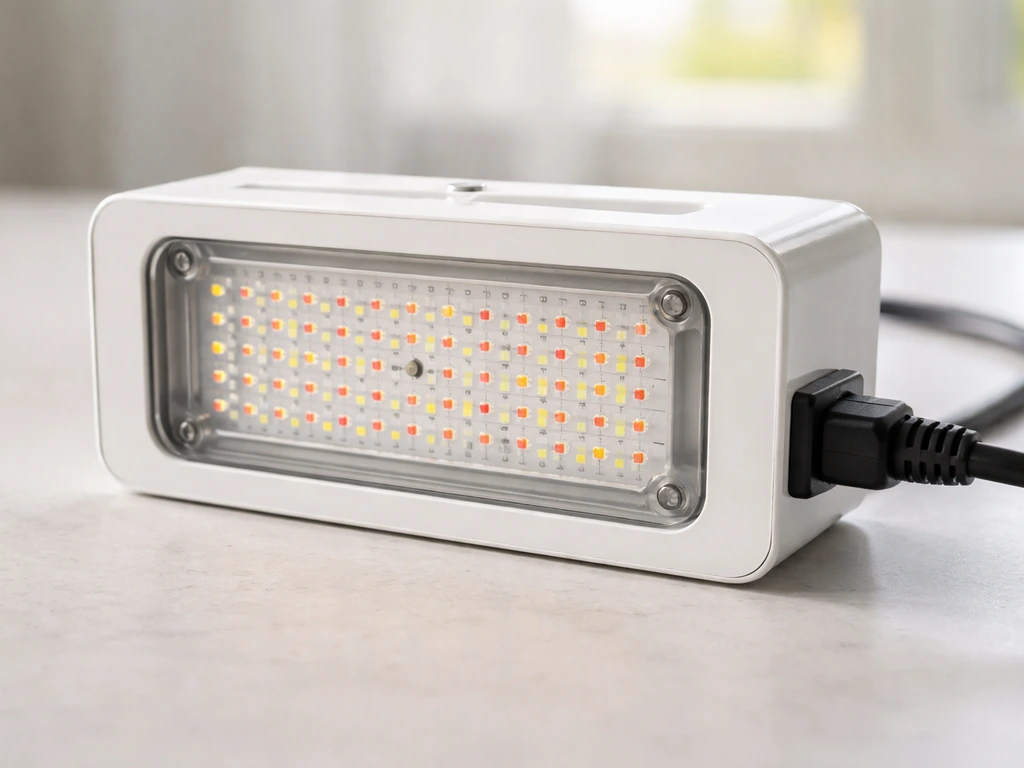
There's not a lot to say here, and that's both the simplicity and the limitation. The GLP24H/V/60W/LED is not dimmable, has no spectrum switching, no programmable modes, and no smart connectivity. You plug it in and it runs at full output. The spectrum is fixed at its red-dominant full-spectrum configuration. If you want to adjust intensity for different growth stages or dial in a more vegetative spectrum for young plants, this fixture can't do that. For growers who want one light that does everything from seed to harvest with spectrum flexibility, this isn't the right product.
On the positive side, the fixed full-spectrum output with its red bias isn't a bad default for a grower who wants a single setting that supports plants from seedling through flowering without touching any controls. It's plug-and-play simplicity, which is genuinely useful for hobbyists who don't want to think about spectrum optimization.
How to set it up for best results
Feit's FAQ gives clear height guidance: start seedlings at 6 inches below the fixture for the first two weeks, then move to 16–30 inches for vegetative and flowering stages. That 16–30 inch range is wide, and the practical answer is to start lower in the range (around 16–18 inches) if you're growing plants that want more intensity, and move toward 24–30 inches if you see light stress symptoms like bleaching or curling. Given the fixture's modest PPF output, you're unlikely to see light stress from hanging it too close unless seedlings are literally touching the lens.
The 6-inch hanging wire harness included in the box is too short for most practical setups unless you're mounting directly to a shelf underside. Buy an adjustable rope ratchet hanger (they cost a few dollars) to give yourself the flexibility to dial in height properly. For a 2×2 ft coverage area, center the fixture above your tray or plant grouping and keep plants clustered near the center of the footprint to take advantage of the stronger central intensity.
Since the fixture has no built-in timer, you'll need an external outlet timer. For seedlings and leafy greens, 16 hours on and 8 hours off is a reliable starting point. For flowering plants, a 12/12 schedule is standard. Feit's claim that the fixture "puts out little heat" is accurate in practice; you can run it close to plants without significant heat stress, and ventilation is not a major concern for a single unit in a normal room environment. If you're running 5 linked units in an enclosed space, some airflow is sensible but still not critical.
Is it worth buying? Honest pros, cons, and comparisons
At its price point, the Feit Electric 2ft grow light delivers solid value for low-demand indoor growing. It's not trying to be a high-performance horticultural light, and judged by realistic expectations for its category, it performs honestly. The 50,000-hour rated lifespan and 3-year warranty are genuine advantages at this price. The linkable design makes it expandable without adding outlet clutter. And the low heat output and simple plug-in operation make it genuinely accessible for beginners.
| Feature | Feit GLP24H/V/60W/LED | Typical competing 2ft LED grow light |
|---|---|---|
| Wattage | 60W | Varies (often 20–45W at this size) |
| PPF claim | Up to 90 | Varies; some competitors publish higher |
| Coverage | 2×2 ft | Typically 2×2 ft |
| Spectrum | Full-spectrum, red-dominant (655nm + 450nm) | Full-spectrum or tunable on higher-end models |
| Dimming | No | Some competitors offer dimming |
| Linkable units | Up to 5 | Varies by brand |
| Warranty | 3 years | 1–3 years typical |
| Heat output | Low | Low to moderate |
Where this light falls short relative to alternatives is control and raw output. If you compare it to adjustable-spectrum or dimmable fixtures in a similar price range from other brands, you're giving up flexibility. Growers who want to tweak spectrum for different growth stages, or who need a higher PPFD for fruiting crops, will hit the ceiling of what this fixture can do. It's also worth noting that the Great Value 2-foot grow light and similar budget options exist at an even lower price point, though typically with lower output and shorter warranties. On the other end, more advanced 2ft bar-style LED fixtures from dedicated horticultural brands offer higher efficacy and better uniformity at meaningfully higher prices.
Buy it if:
- You're growing herbs, leafy greens, or starting seeds in a 2×2 ft space or smaller
- You want a simple, plug-in light with no settings to manage
- You plan to link multiple units along a shelf or rack
- You're a beginner who wants a low-risk, reasonably warrantied entry point
- Heat and ventilation are concerns in your grow space
Skip it if:
- You need dimming or spectrum control for different growth stages
- You're growing high-light-demand flowering or fruiting crops seriously
- Your coverage area is larger than 2×2 ft
- You want the highest possible efficacy (µmol/J) for your dollar
- You're looking for smart home integration or programmable schedules
The Feit Electric 2ft LED grow light is a honest, well-priced fixture for what it is. If your grow is small, your crops are low-to-medium demand, and you want something reliable without a learning curve, it's worth buying. If your grow is small, your crops are low-to-medium demand, and you want something reliable without a learning curve, it's worth buying mars 2 led grow light review. If you're growing anything that pushes the limits of what 60W and a fixed red-dominant spectrum can support, look at what else is available before committing, including more capable options from dedicated grow light brands that serve growers who need more output, better uniformity, or flexible spectrum control.
FAQ
Is the Feit Electric 2ft LED plant grow light review light strong enough for flowering, or is it mostly for seedlings and greens?
It can help small or low-demand flowering plants, but it is not ideal as the primary light for high-PPFD fruiting crops (like heavy tomato or dense pepper canopies). If you plan to flower at scale, you will usually get better results by using multiple fixtures to stack intensity and improve uniformity, since this model has a modest “up to 90” PPF claim and a fixed red-leaning spectrum.
Can I use it for a full 2×2 ft canopy, or will the edges underperform?
Expect edge and corner drop-off. Even though it is marketed for a 2×2 ft footprint, the strongest output is centered under the bar, so crops that need even intensity should be clustered toward the middle or supported with extra units to balance the corners. A single wide mat of plants spread across the whole area will likely show uneven growth.
How high should I hang it if I do not have a PPFD meter?
Start in the manufacturer-recommended range, then use plant response as your gauge. For seedlings, keep it around 6 inches below for the first two weeks, then move toward 16 to 18 inches for stronger light without immediately risking stress. If you see bleaching, curling, or overly tight internodes, raise it a few inches. If growth looks slow with pale leaves, lower it slightly within the 16 to 30 inch window.
What is the best way to handle timing since it has no built-in timer?
Use an external outlet timer and consider electricity safety and reliability. For most leafy greens, 16 hours on and 8 hours off is a solid starting point, and for flowering many growers use 12/12. If you are running multiple linkable fixtures, use one timer that controls the whole chain, and confirm the timer’s outlet rating can handle the total wattage of all linked units.
Can I dim it or switch the spectrum for different growth stages?
No. This fixture is fixed-output with a red-heavy “full spectrum” balance and no dimming or spectrum switching. If you need to dial intensity down to prevent stress during sensitive stages, you will have to adjust hanging height instead, which is slower and less precise than electronic dimming.
How many of these can I realistically link together, and what spacing issues might show up?
Feit states you can chain up to 5 units off one outlet, but spacing still matters for uniformity. With 5 bars, you reduce edge drop-off compared to a single fixture, but you also increase total heat load and airflow needs in tight enclosed areas. Practical next step, map your plant layout so the bars overlap in coverage, rather than placing plants right at the extremes of each fixture’s footprint.
Will the included hanging wire harness work for my setup, or do I need to buy adjustable hangers?
The included 6-inch hanging harness is usually too short for many rack and tent setups unless you are mounting to a shelf underside with a very specific distance. Most growers will want adjustable rope ratchet hangers or hooks so they can land in the 16 to 30 inch band for veg and bloom, and make fine corrections based on plant response.
Is 120–277V compatibility a guarantee it will work anywhere internationally?
It covers a wide voltage range, but compatibility also depends on plug type and local electrical standards. In the US you can use standard outlets, but if you are outside the US you must ensure the plug style matches, and verify your local supply and any wiring method meet safety requirements. If the fixture is used with an adapter, choose one rated for the fixture’s wattage.
What should I do if I see light stress symptoms under this light?
First, raise the fixture a few inches and extend the acclimation period rather than keeping intensity constant. Light bleaching or leaf curl can happen because output is strongest at the center and because the light has no dimming. Second, check whether your plants are clustered under the center, if they are too far outward they may be receiving less intensity and compensating by stretching, which can look like stress from the “wrong” direction.
Is it safe to run it close to plants, given the claim of low heat?
In normal indoor conditions, the low heat claim is generally consistent with being able to run it relatively close without scorching. However, “low heat” does not mean no-risk, since the lens and local hot spots can still be warm. If plants are touching the lens or sitting extremely close, increase clearance and prioritize airflow, especially if you link multiple fixtures in a confined space.