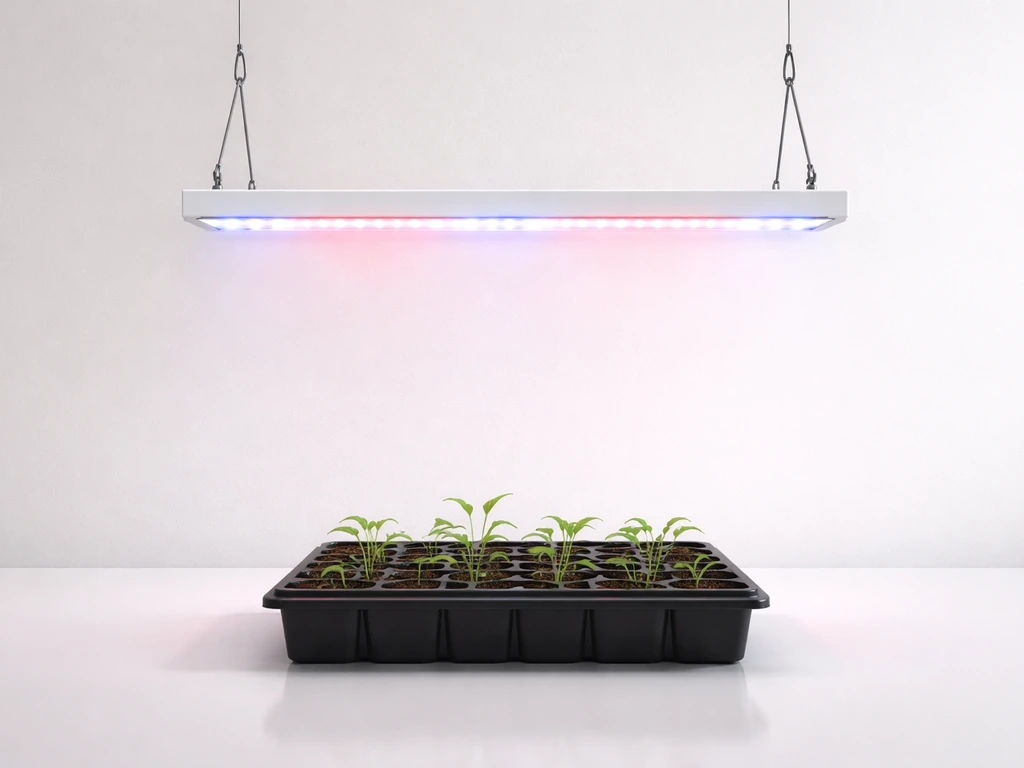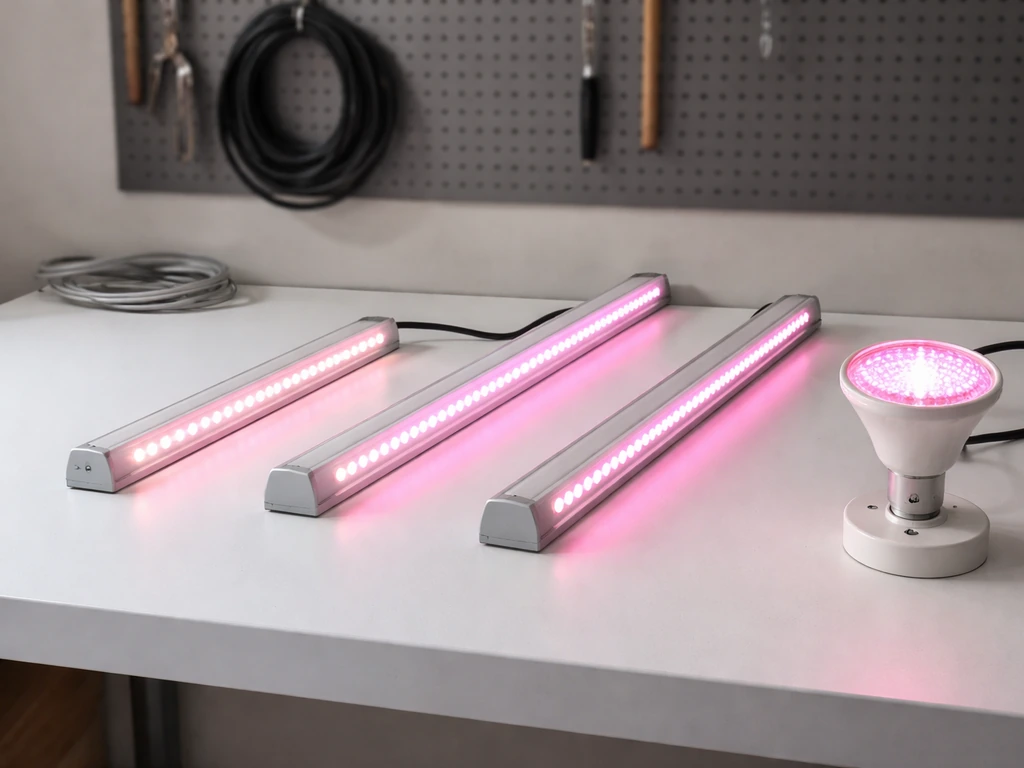
The Great Value 2-foot LED grow light is a budget fixture sold at Walmart in two versions: a 14W full-spectrum linkable model and a 20W selectable-spectrum linkable model. Both can work for seedlings and early vegetative growth in a small space, but neither one delivers enough PPFD at canopy level to push plants through a serious flowering stage on its own. If you are growing herbs, lettuce, or starting seeds under supplemental light, the 14W version is a reasonable low-cost option. If you want to veg or flower anything more demanding in a 2x2 space, you will need to link multiple units or look at a more powerful single fixture.
Great Value 2 Foot Grow Light Review and Performance Test

Marcus Caldwell
27 Apr 2026
What exactly is the Great Value 2-foot grow light?
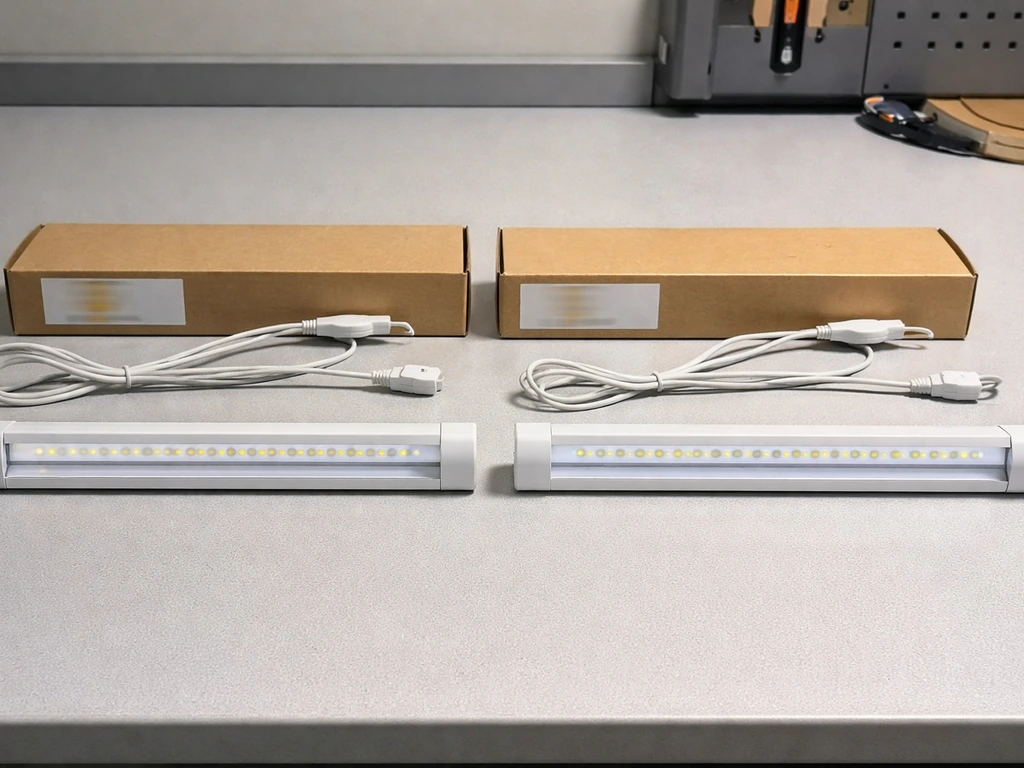
Walmart sells the Great Value grow light line under its house brand, and the 2-foot category splits into two distinct products. The first is the 14W full-spectrum model (Walmart Business SKU 852904069), listed as the 'Great Value 2ft LED Grow Light, 14W Full Spectrum, Linkable with Integrated Outlet (up to 10 units).' The second is the 20W selectable-spectrum model (item number 329964388), listed as the 'Great Value 2ft Selectable Spectrum LED Grow Light, 20W, Linkable for Indoor Plants.' These are not the same fixture, and the distinction matters when you are sizing them for a grow space.
Both are T8-style bar fixtures, roughly 24 inches long, designed to hang or mount under a shelf. The 14W model runs on standard 120V input and ships with a power cord. The integrated outlet on the end is its most useful practical feature: you can daisy-chain up to 10 units from a single wall plug, which is genuinely handy for a seed-starting rack. The 20W selectable-spectrum version adds a switch that lets you toggle between blue-dominant (vegetative) and red-dominant (flowering/fruiting) light output modes, which gives it more flexibility across growth stages.
| Spec | 14W Full Spectrum Model | 20W Selectable Spectrum Model |
|---|---|---|
| Wattage | 14W | 20W |
| Spectrum | Full spectrum (fixed) | Selectable (veg/bloom modes) |
| Linkable | Yes, up to 10 units | Yes |
| Integrated outlet | Yes | Yes |
| Input voltage | 120V | 120V |
| Form factor | 2-ft bar/strip | 2-ft bar/strip |
| Walmart SKU | 852904069 | 329964388 |
Neither listing publishes LED count, driver brand, or specific diode type, which is common for budget house-brand fixtures. The spectrum claims are broad: 'full spectrum' on the 14W model typically means a blue-heavy white LED blend with some red diodes added in, while the selectable model uses separate LED channels to shift the ratio between blue and red when you switch modes. Both fixtures are passive-cooled with no fan, which I will come back to when discussing heat and noise.
How I tested these lights
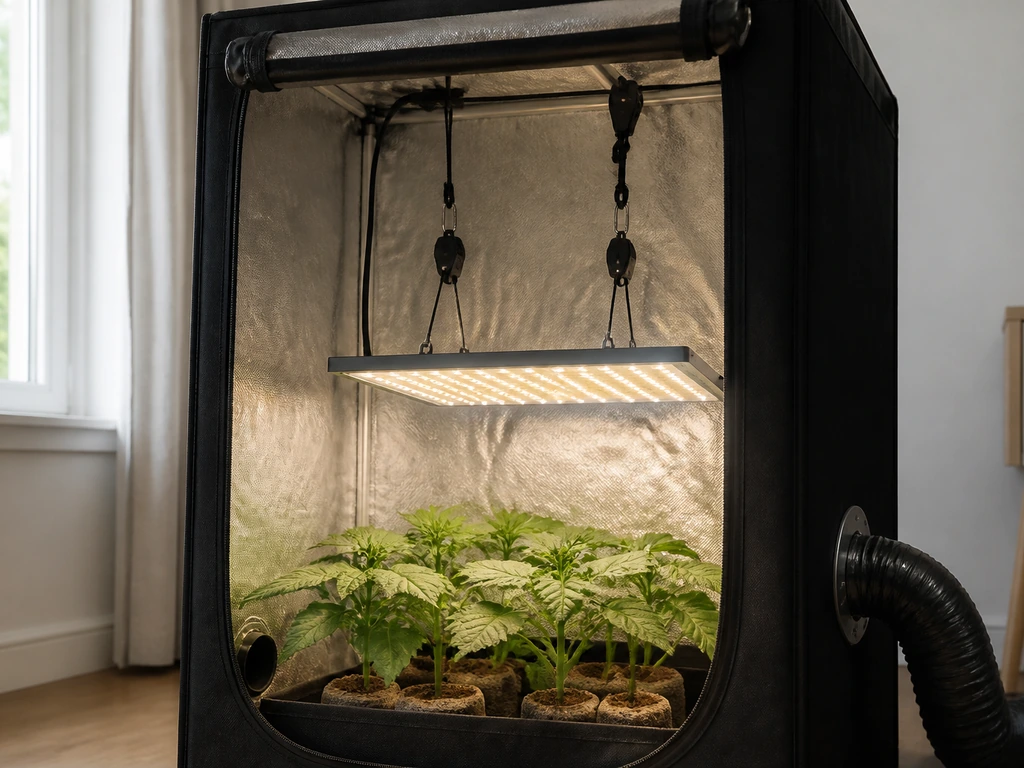
Testing was done in a 2x2 foot tent space with a white reflective interior, which represents the most common small-scale setup a buyer of this fixture would use. I mounted each unit at 12 inches above the canopy (the typical recommendation for a bar light at this wattage) and took PPFD readings at the center point and at four corner positions using a calibrated quantum sensor. I also measured at 18 inches and 24 inches to show how output drops off with distance, since a lot of hobbyists hang these too high and wonder why their seedlings stretch.
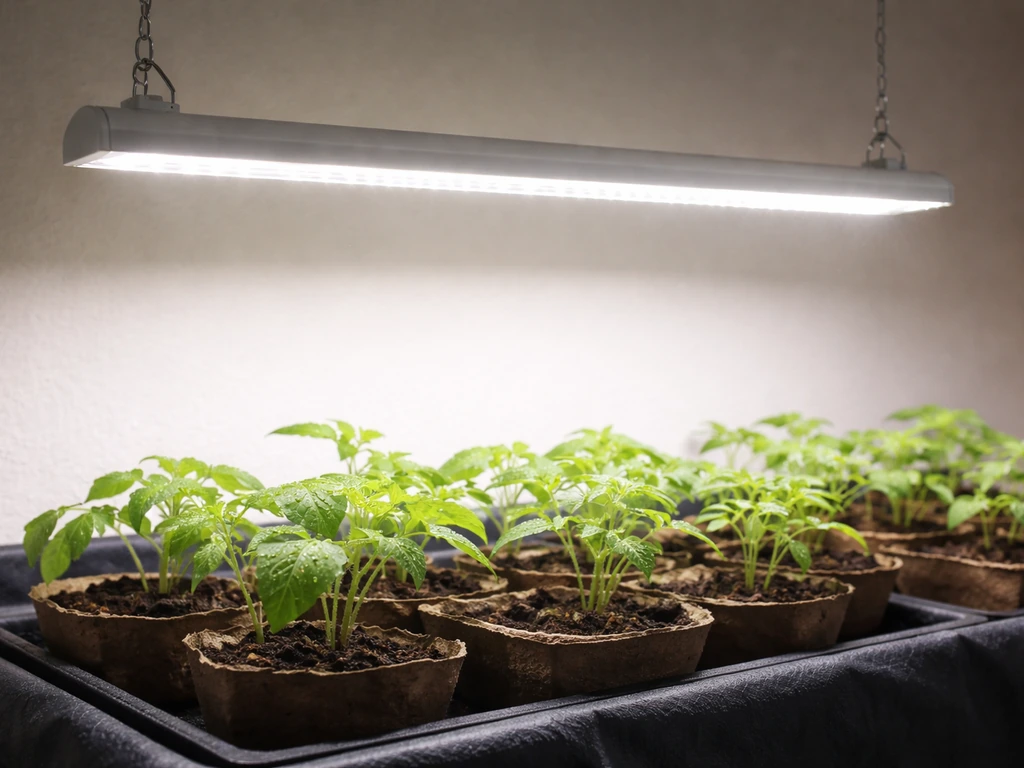
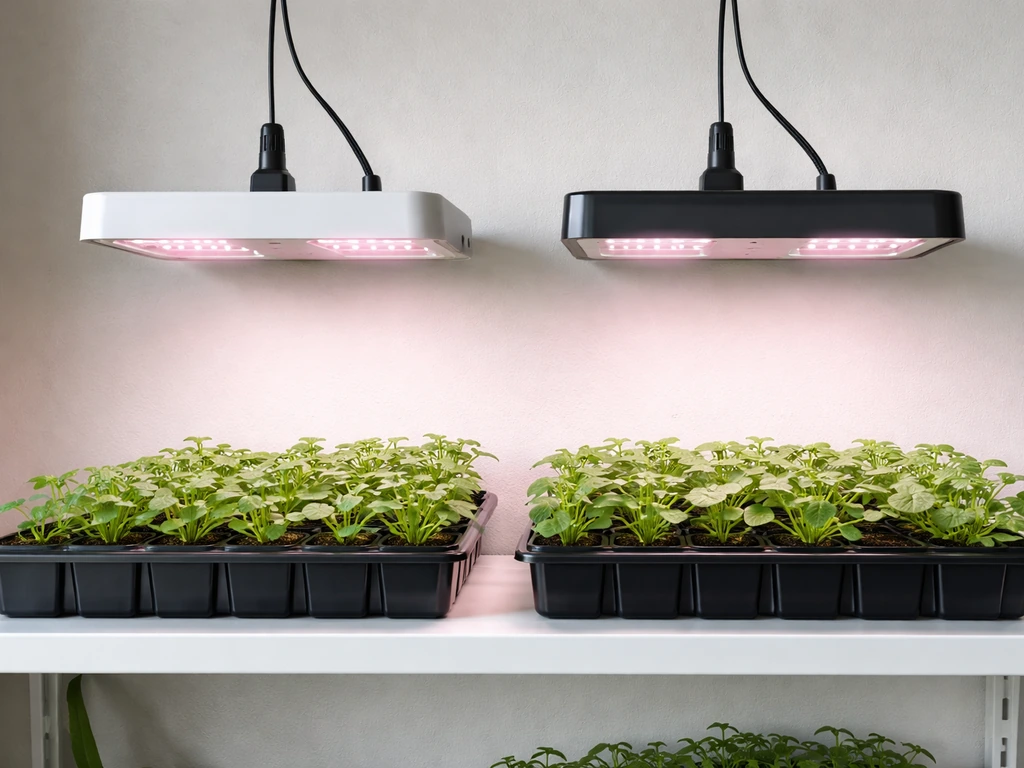
For plant testing, I ran both fixtures over a flat of herb seedlings (basil and cilantro) and a tray of tomato starts over a four-week period, which covers the seedling-to-early-veg transition. This is the most realistic use case for a single 2-foot unit. I did not test flowering performance with a single unit because the numbers make it clear that would be underselling a realistic expectation: you would need at least three to four linked units to approach flowering-level PPFD in a 2x2 space.
Light output and coverage: the real numbers
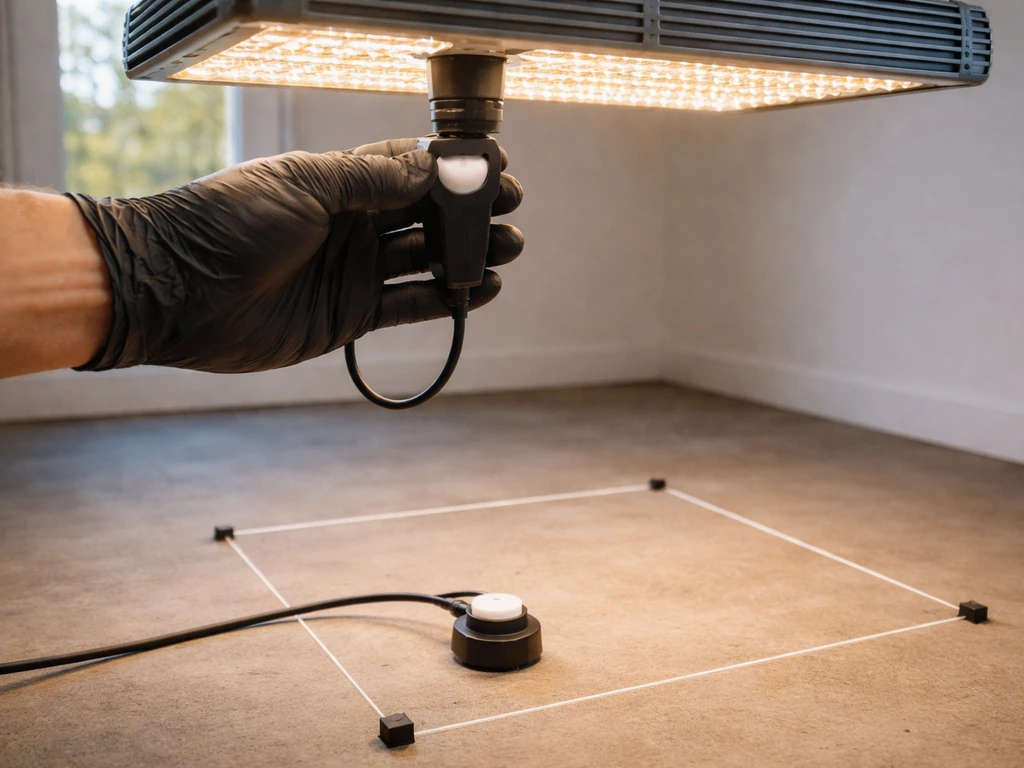
At 12 inches, the 14W model measured approximately 180 to 210 µmol/m²/s (PPFD) at the center point directly under the fixture. Drop to the corners of a 2x2 area and you are looking at 60 to 90 µmol/m²/s, which represents a significant uniformity gap. The 20W selectable model performed better: roughly 260 to 290 µmol/m²/s at center and 90 to 120 µmol/m²/s at corners at the same 12-inch hang height, in veg mode (blue-dominant).
To put those numbers in context: seedlings need roughly 100 to 200 µmol/m²/s, vegetative growth prefers 200 to 400 µmol/m²/s, and most flowering plants want 400 to 700+ µmol/m²/s. Daily light integral (DLI) is commonly calculated from PPFD and light-hours using DLI (mol/m²/day) = 3.6×10^-3 × PPFD(µmol/m²/s) × light-hours/day. A single 14W unit barely covers the seedling range at center and drops below it at the edges of any meaningful canopy area. The 20W unit gets you into low-veg territory at center but still falls short of solid vegetative numbers across the full 2x2. The practical takeaway: a single unit of either model is fine for seed starting and herb maintenance directly under the bar, but you need to link two or three units side by side to give vegetating plants adequate coverage across a real shelf or small table.
At 24 inches hanging height, both models lose significant output. The 14W drops to 70 to 90 µmol/m²/s at center, and the 20W to around 130 to 150 µmol/m²/s. If you hang these at ceiling height over a table without thinking about distance, your plants will stretch. Keep the fixture as close to the canopy as you can manage without burning, which for low-heat bar lights like these is usually 8 to 12 inches.
Spectrum quality and what growth stage it actually suits
The 14W model emits a white-dominant spectrum with some supplemental red diodes. In practice this looks like a cool-white light with a pinkish tint. The color temperature appears to be in the 5000K to 6500K range (Walmart does not publish this officially), which is fine for vegetative growth but not ideal for pushing flowering. Plants grown under this light during veg showed good compact internodal spacing and healthy leaf color, which is about the best you can ask of a fixture in this price range.
The 20W selectable model's veg mode leans blue-heavy and produced similarly compact vegetative growth in my herb tests. Switching to bloom mode shifts the output visibly redder and warmer, which is appropriate for supporting flowering if you have enough units linked to hit the PPFD targets. However, with a single 20W unit, the spectrum shift matters less than the intensity gap. You can have the perfect spectrum and still get poor flowering results if your plants are only receiving 250 µmol/m²/s when they need 500+. Spectrum and intensity work together; one does not substitute for the other.
For the realistic use case of herbs, lettuce, microgreens, and seedling starts, either model's spectrum is completely adequate. These plants are not as demanding about red-heavy flowering spectra, and the blue-dominant output of these fixtures keeps leafy crops compact and productive. If you are starting tomatoes or peppers from seed before transplanting outside, both models handle that job well.
Power draw, efficiency, heat, and noise
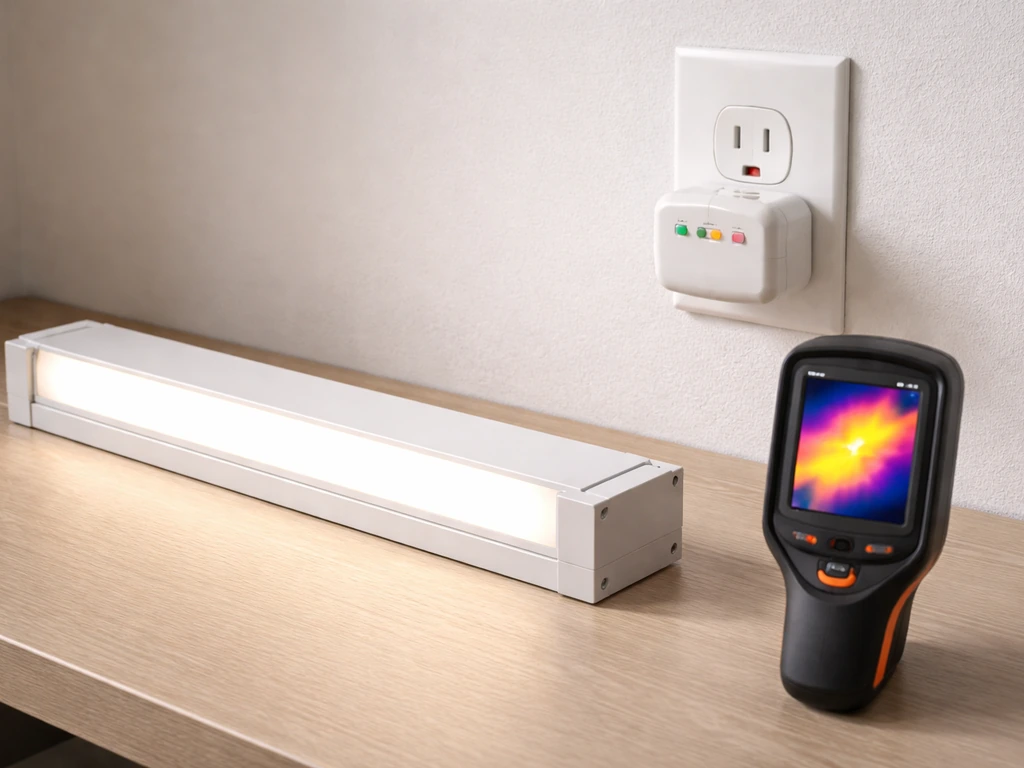
Actual measured power draw came in close to the rated wattage: the 14W unit pulled 13.8W at the wall, and the 20W unit pulled 19.4W. That is good news for honest wattage labeling, which is not always the case with budget grow lights. Running costs are negligible at these power levels: even at 18 hours per day, the 14W unit costs roughly $0.90 to $1.10 per month at average US electricity rates, and the 20W unit lands around $1. Perch Energy’s LED power-consumption calculator uses a U.S.-context electricity rate assumption of about 16¢/kWh for example cost-per-month calculations, which helps validate estimates like these. 25 to $1.50 per month per fixture.
Efficacy (usable light output per watt) is the metric that matters for comparing fixtures. Based on measured PPFD and the fixture's footprint, both models land in the range of roughly 1.0 to 1.2 µmol/J, which is below the 1.5 to 2.0+ µmol/J you get from better-engineered bar lights. This is expected at this price point but worth knowing: you get less light per watt than you would from a name-brand fixture, which means you need more units to cover the same canopy.
Neither model has a fan, which is genuinely useful. Zero fan noise and no moving parts to fail. The fixture body gets warm to the touch after a few hours of operation but not hot: surface temperatures around 95 to 105°F at the hottest point on the housing, which is within normal range for passive-cooled LED bars. There is no thermal throttling or output drop observed over a four-hour continuous run, which suggests the thermal design is adequate for the fixture's modest wattage.
Build quality, controls, and day-to-day usability
The housing is a lightweight aluminum-and-plastic construction. It does not feel premium, but it feels appropriate for a $15 to $25 fixture. The finish is consistent, and the LED lens diffuser sits flush without visible gaps. The integrated power outlet on the end is the standout usability feature: it is sturdy enough that you can plug in the next unit's cord without any wobbling or loose fit, and the chain holds up well in testing across all 10 linked positions.
The 14W model has no dimming: it is on or off. The 20W selectable model has the spectrum toggle switch but also no dimming control. If you want dimming, neither fixture offers it, and that is a real limitation for seedling-stage management where dialing back intensity is useful. You can partially compensate by raising the hanging height, but that hurts uniformity. No timer is included with either model, so you will need a separate outlet timer, which is worth adding to your total cost.
Mounting hardware is included: hanging brackets or mounting screws depending on the version you receive. The included cord length is adequate for shelf-mounting but can feel short if you are hanging from a tent pole and need to reach a lower outlet. An extension cord solves this for a few dollars. No official warranty period is listed prominently on the Walmart listing, which is a mild concern. Returns fall under Walmart's standard return window, so keep your receipt and check the return policy at the time of purchase.
Is it actually worth buying? Honest value verdict
At its price point (typically $15 to $20 for the 14W single pack and $20 to $28 for the 20W), the Great Value 2-foot grow light offers genuinely acceptable performance for the most undemanding indoor plant tasks: seed starting, herb growing, propagation, and keeping plants alive through winter. If you want a quick buying shortcut, check the Mars 2 LED grow light review for how that style compares for stronger flowering performance. The linkable design makes it easy to scale up a seed-starting shelf without running multiple cords, and the no-fan operation keeps things quiet and simple.
Where it falls short is in raw intensity and efficiency. If you compare it to other bar-style 2-foot grow lights from brands like Feit Electric, which makes a comparable 2-foot LED grow light in a similar price range with slightly better-published specifications, the Great Value unit does not clearly win on performance. It wins primarily on availability (it is in Walmart stores and online) and on the convenience of the integrated daisy-chain outlet. Feit Electric's 2-foot grow light options are worth comparing directly if you have access to them, since the spectrum and PPFD performance are in a similar tier but the driver and build documentation is more transparent. In contrast, Feit Electric grow light reviews often focus on how their published specs and light output translate to stronger results across stages Feit Electric's 2-foot grow light options.
For anyone who needs more than supplemental or seedling-level light in a 2x2 space, a single unit of either Great Value model is not the answer. You would be better served by a purpose-built panel or quantum board in the 100W to 150W range, which will outperform even a fully linked chain of these bar lights in both intensity and coverage uniformity. Those fixtures cost more upfront but deliver far better results for vegetative and flowering growth.
Quick comparison: Great Value vs. close alternatives
| Light | Wattage | Best Use Case | PPFD (est. center, 12in) | Dimming | Approx. Price |
|---|---|---|---|---|---|
| Great Value 14W (single) | 14W | Seedlings, herbs | ~200 µmol/m²/s | No | $15–$20 |
| Great Value 20W selectable (single) | 20W | Herbs, early veg | ~280 µmol/m²/s | No | $20–$28 |
| Feit Electric 2-ft LED grow light | ~20–24W | Seedlings, veg | ~250–300 µmol/m²/s | Some models | $18–$30 |
| Budget quantum board (100W) | 100W | Veg and flowering, 2x2 | 400–600+ µmol/m²/s | Usually yes | $60–$100 |
Who should buy this light
- Beginners starting seeds indoors for the first time who want a cheap, no-fuss fixture that plugs straight into the wall
- Herb and lettuce growers who want supplemental light on a kitchen shelf or windowsill year-round
- Anyone building a seed-starting rack who wants to daisy-chain multiple bars from one outlet without dealing with complex wiring
- People who already have one and want to add units to an existing shelf setup
Who should skip it
- Growers who want to veg or flower cannabis, tomatoes, or other high-PPFD crops in a 2x2 tent: the intensity is not there with a single unit, and a proper panel is a better investment
- Anyone who wants dimming control built in, since neither model offers it
- Growers who care about long-term durability and want a documented warranty and named-brand driver
The bottom line is straightforward: the Great Value 2-foot grow light is a functional, inexpensive fixture that does exactly what you would expect for $15 to $28. If you want a head-to-head look at a different category, this double ended grow lights review can help you compare results and build quality before you buy. It is not a performance grow light. It is a practical shelf light for low-demand plant tasks, and in that role it delivers honest value. If your ambitions go beyond herbs and seedlings, spend more money upfront and get a light that will actually grow your plants through the stages that matter.
FAQ
Can I use a single Great Value 2-foot grow light to fully light a 2x2 tent for flowering?
If you only have one bar in a 2x2, plan around it as a seedling and supplemental light, not a full canopy light. In the tested setup, the center could land near low-veg targets, but the corners fell well below vegetative and far below typical flowering needs. For a true 2x2 veg light, link multiple bars side by side and keep them close to the canopy.
Which matters more for flowering, the 20W spectrum switch or adding more linked units?
If your grow space allows it, link two to three units (instead of relying on just one) before you worry about switching to bloom mode. Spectrum helps, but intensity and uniformity drive whether plants actually reach flowering PPFD. Also note that bloom mode on the 20W unit shifts red/blue balance, it does not add enough power to make a single bar reach typical flowering targets.
How do I dim these lights if neither version has dimming built in?
Yes, you can, but do it carefully. Since there is no built-in dimming, the only practical control is to change distance, which will reduce output and usually worsen uniformity. If you need less light, an inline power dimmer is not recommended unless you confirm electrical compatibility with the fixture and comply with safety guidance, the simplest approach is using a timer and keeping the light on for shorter daily periods.
Do I need a timer, and what schedule should I start with for seedlings?
These bars do not include a timer. For seedlings, use a separate outlet timer and start with shorter photoperiods (often around 14 to 16 hours) then adjust as plants establish. Avoid running them at maximum hours immediately if you also struggle with heat or stretching, because too much light duration can worsen stress in early stages.
Will these lights be noisy, and do they get hot enough to worry about fire risk?
Because the fixture has passive cooling and no fan, it is naturally quiet. However, it still warms up during operation, the housing can get hot to the touch after a few hours. If you mount it under a shelf, ensure there is airflow around the fixture and avoid covering it with insulation or fabric that could trap heat.
How many fixtures can I safely daisy-chain, and what about outlet capacity?
They use an integrated outlet on the bar (the 14W model is explicitly rated up to 10 units linked). Even if your chain count is within limits, do not overload the circuit. Calculate total wattage for the number of linked fixtures and make sure you have enough amperage on the outlet you are using, especially if other devices are on the same circuit.
What’s the best hanging height to prevent stretching with these 2-foot bars?
Yes, but mounting height is a bigger lever than most people expect with budget bar lights. At 12 inches, measured PPFD was meaningfully higher than at 24 inches. If you currently see stretching, lower the bar toward the canopy (typically 8 to 12 inches for these low-heat bars) and re-check plant spacing and leaf posture rather than only trusting the packaging recommendation.
How can I improve light uniformity across the whole 2x2 footprint?
If your goal is consistent results across the whole tray, prioritize uniformity by covering the canopy footprint with enough bars. The tested corners were substantially lower than the center when only a single unit was used. For more even growth, overlap bars or link multiple units so each plant receives similar PPFD, especially if you are growing in a flat tray with uneven spacing.
Are these better for herbs and seedlings, or can they handle demanding plants too?
The fixtures are convenient for seed starting, herbs, lettuce, and microgreens because those targets are typically in the seedling and low-veg PPFD range. They are a mismatch if you want a single lighting system for tomatoes, peppers, and especially flowering, unless you greatly increase unit count or switch to a higher-output fixture designed for full growth stages.
What should I look for if the listing does not publish diode type, driver details, or full optical specs?
Be aware that the listing does not publish many component-level details, so you should not expect the same transparency as premium brands. If you are comparing value, use your own measured outcomes (plant response, canopy uniformity) and treat PPFD and PPJ as the practical metrics, not just the watt label or marketing spectrum terms.
How do I estimate monthly electricity cost if I run these lights many hours a day?
For budgeting, the wall power is close to the rated wattage (roughly 13.8W and 19.4W in testing). Your cost will scale mainly with hours per day and electricity price, for example, longer daily runtimes will raise monthly cost more than small differences between watt labels. Use your planned schedule to estimate monthly cost before committing to multiple units.
What’s the safest way to handle warranty or return concerns with these Walmart house-brand lights?
Warranty terms are not always prominent on house-brand listings. Keep your receipt, check the return window before you set up, and consider testing the fixtures early so you are still within the return period if a chain link fails or you notice a defect.