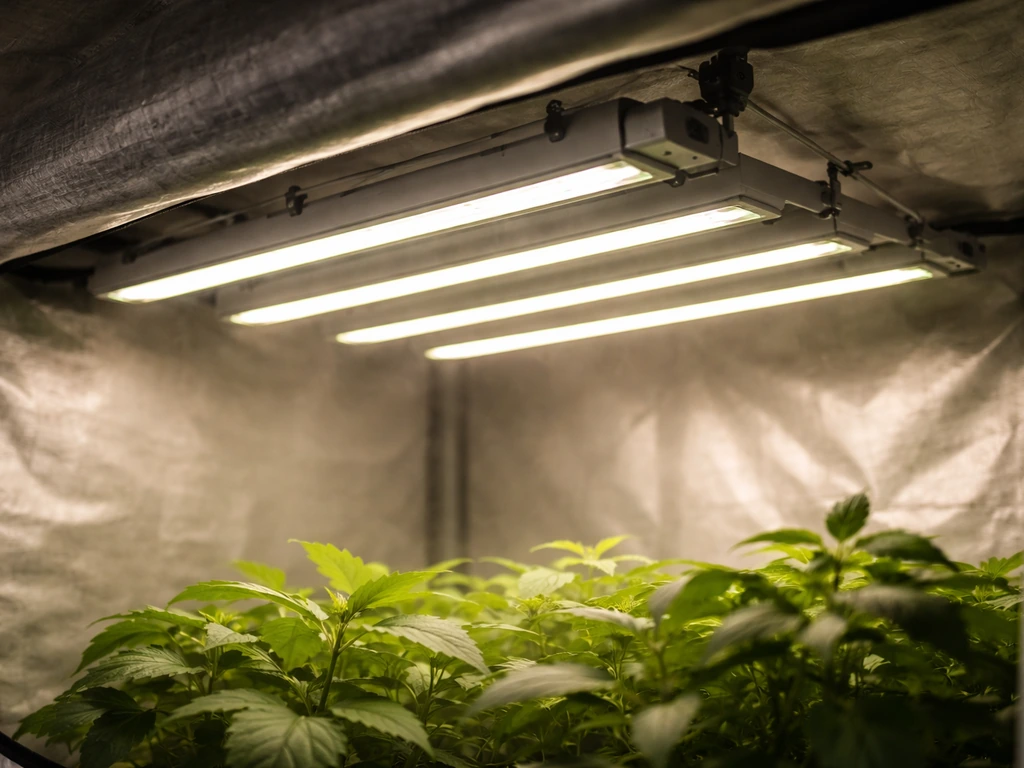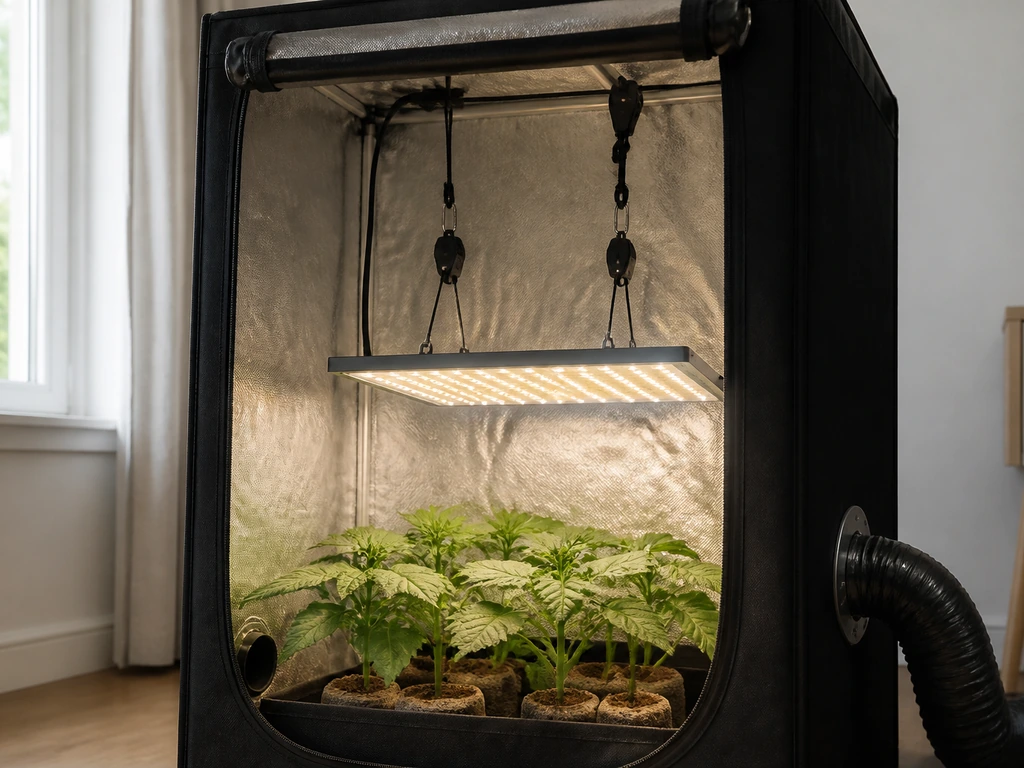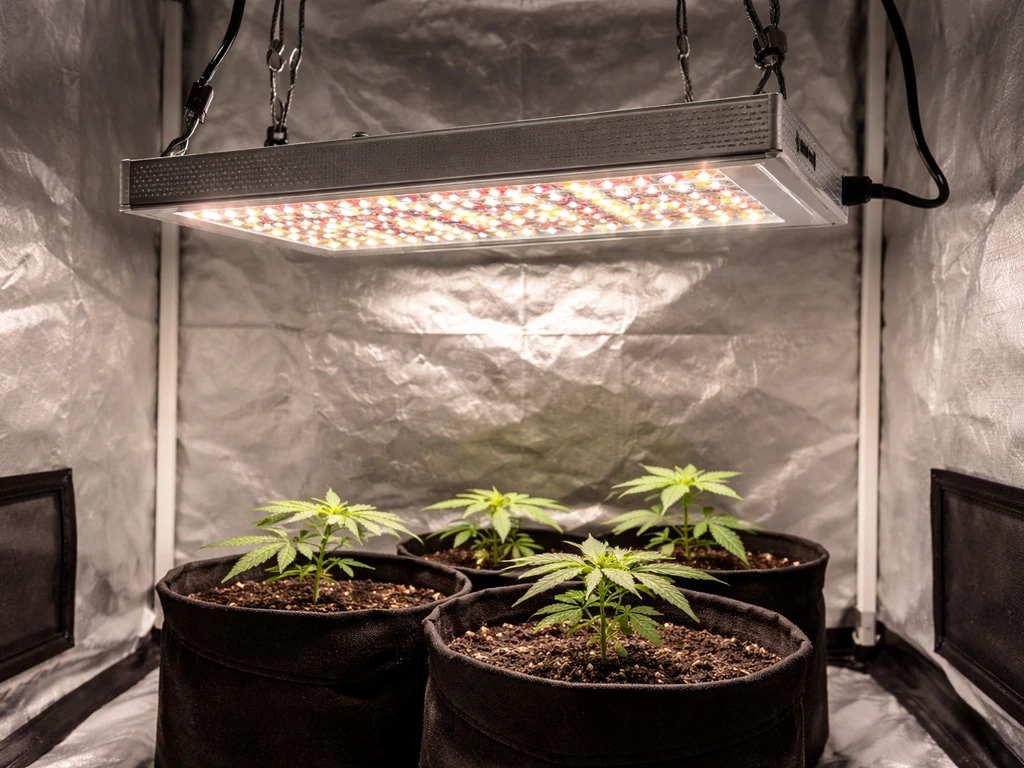
Loriflux grow lights are worth serious consideration if you're running a mid-to-large indoor tent or commercial-style small space and want a full-cycle LED with real efficiency numbers behind it. The 8 Blade 630W is the standout model for a 4x4 tent running full cycle cultivation, the 6 Blade 320W fits smaller footprints or lower-budget builds, the 4blade 180W earns its place in early-stage growing and tight spaces, and the Str8blade 180W is the pick for supplemental or greenhouse side-lighting where ceiling height and humidity are factors. None of them are cheap, but they're not cheap lights either.
Loriflux Grow Light Reviews: Best Models and Worth It?

Marcus Caldwell
3 May 2026
What Loriflux grow lights are and who they're for
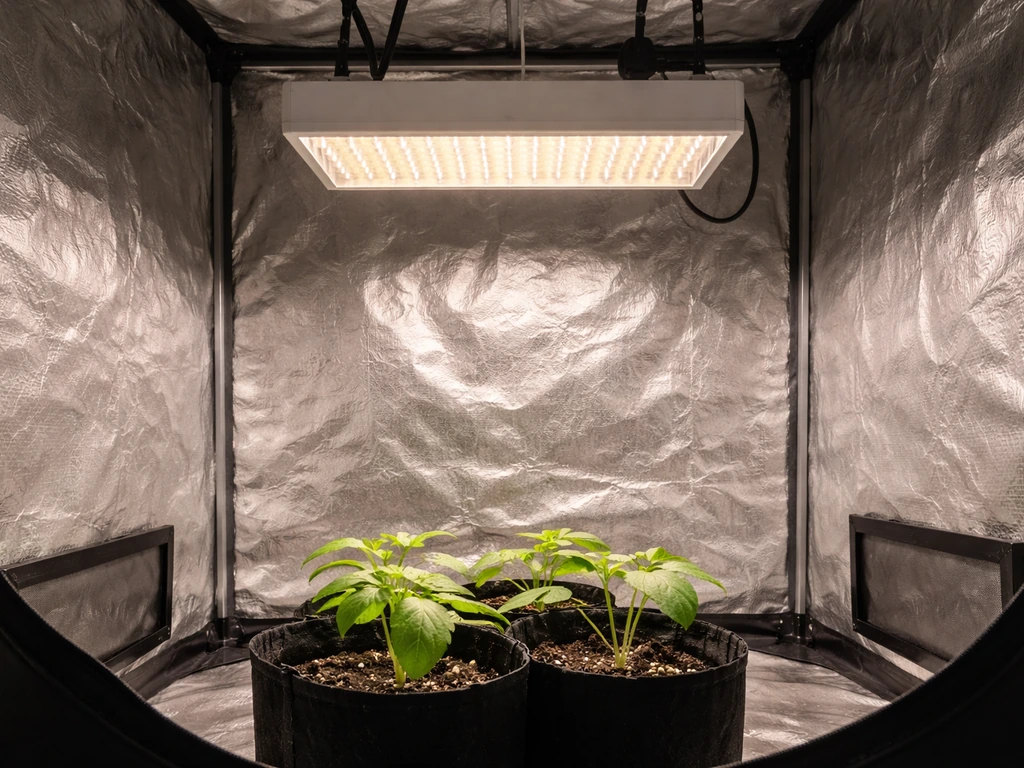
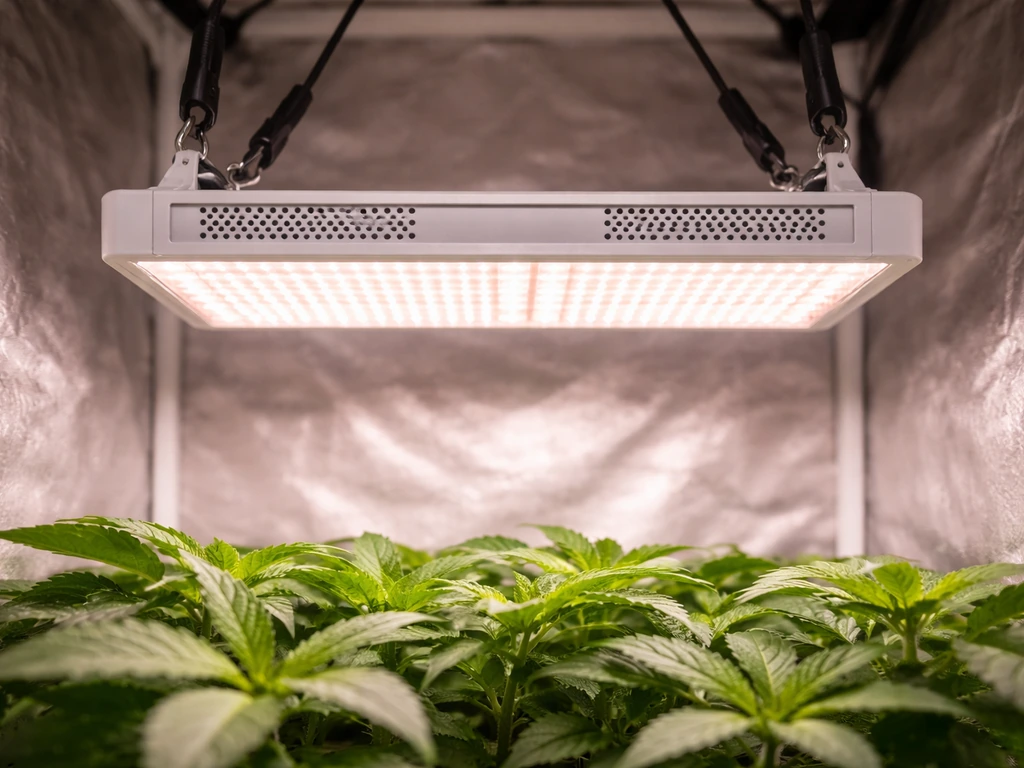
Loriflux is a horticultural lighting brand that sits in the professional-grade LED segment, aimed at serious hobby growers and small-scale cultivators who want more than a budget Amazon panel but aren't running a licensed commercial operation. Their current lineup breaks into four main products: the 4blade 180W, the 6 Blade 320W, the 8 Blade 630W, and the Str8blade 180W. Each model carries DLC and UL/cUL certifications, uses Samsung and Osram diodes, and is built around passive thermal management rather than noisy internal fans.
The intended user is someone who takes plant response seriously, tracks their PPFD targets by growth stage, and wants a light that won't need replacing in two seasons. If you're just keeping a couple of houseplants alive under artificial light, these fixtures are overkill. If you're running a 4x4 tent through full veg and flower cycles and want measurable, repeatable results, Loriflux fits that profile well.
| Model | Wattage | PPF (µmol/s) | PPE (µmol/J) | Primary Use Case |
|---|---|---|---|---|
| 4blade | 180W | 450 | 2.5 | Cloning, veg, small tent flower |
| 6 Blade | 320W | 800 | 2.42–2.5 | Smaller full-cycle environments |
| 8 Blade | 630W | 1650 | 2.42–2.5 | Full-cycle 4x4 cultivation |
| Str8blade | 180W | 1575 | 2.5 | Supplemental/greenhouse side-lighting |
Loriflux grow light review: real-world performance expectations
Growers running the 8 Blade in a 4x4 tent report results that hold up against more established names in that wattage class. Community posts from r/microgrowery show growers using the 8 Blade through week 4 of flower in a 4x4 with visible results on dense canopies. One grower who tested it against prior fixtures described the difference bluntly: 'this blows them out of the water.' That's anecdotal, but it aligns with what the output numbers suggest: 1650 µmol/s from a 630W fixture puts delivered PPFD at close-range canopy distances well into the range that supports strong photosynthetic response during flower.
One honest trade-off that comes up in community feedback is light distribution. At least one grower noted they weren't a fan of how Loriflux distributes light across the canopy, even while acknowledging the overall output quality. That's worth taking seriously: high peak PPFD doesn't mean even coverage everywhere, and hotspots or dim corners in a 4x4 are a real issue if you're running edge-to-edge canopy. The 120-degree light distribution angle on all models helps, but hanging height and fixture count per space still matter a lot, covered more in the coverage section below.
One concern that surfaces on forums like Rollitup is whether the efficiency ratings Loriflux advertises actually match independently verified measurements. In a Reddit discussion about “1100W LED enough” wattage claims, users expressed confusion about how marketed wattage is measured and what the real output corresponds to whether the efficiency ratings Loriflux advertises actually match independently verified measurements. Some users note that DLC-listed numbers and real-world performance can diverge by more than 10% depending on how and where they're measured. That's a fair point to raise. The DLC certification does give some third-party validation, but if you're making purchase decisions based on exact µmol/J numbers, treat the specs as a useful benchmark rather than a guaranteed field measurement.
Light spectrum and what it means for your plants
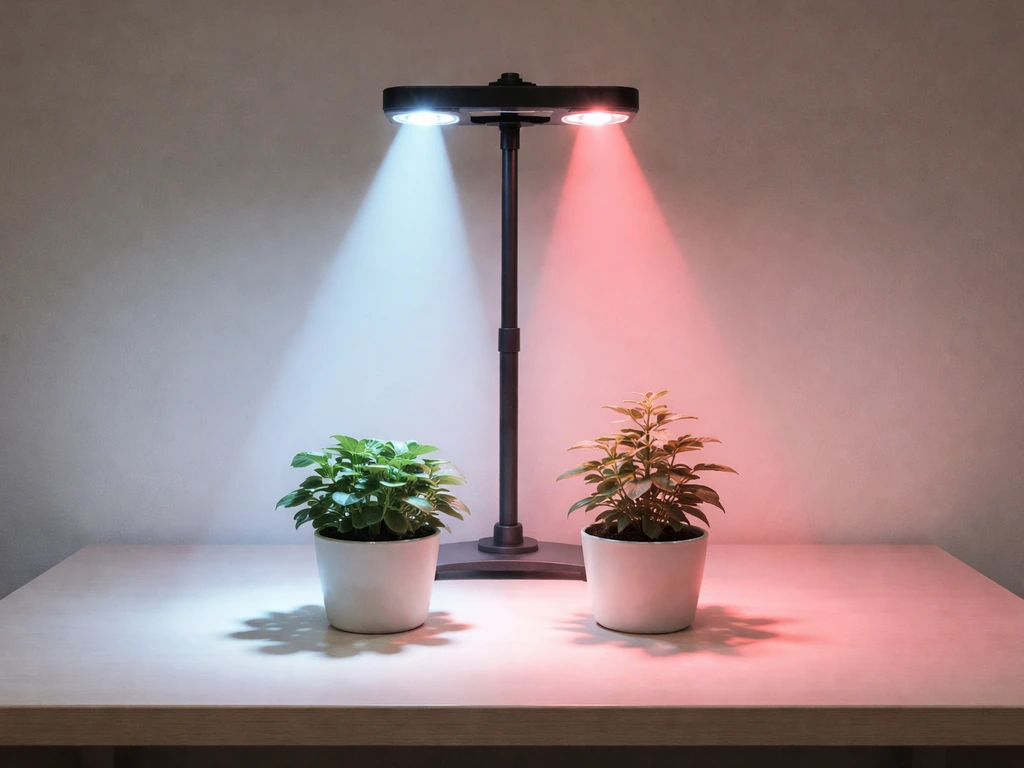
All Loriflux models are marketed as 'full spectrum,' which in practice means a broad-spectrum white LED output built on Samsung and Osram diodes tuned to cover the photosynthetically active range from roughly 400nm to 700nm, with representation across blue, green, and red wavelengths. This matters because it means you're not managing separate veg and bloom switches or swapping fixtures between growth stages. One fixture, one spectrum, from clone through harvest.
For vegetative growth, the blue-heavy component of full-spectrum LEDs drives compact, sturdy growth. For flowering, the red-heavy component supports bud development and dense structure. The 4blade's mounting height guidance gives a practical window into how Loriflux thinks about stage-based intensity management: keep clones and young plants at 1 to 2 feet from the fixture, move to 2 to 4 feet for established veg, and bring the light in close (as near as 6 inches above canopy) for peak flowering intensity. You're not changing the spectrum, just the distance and therefore the delivered PPFD.
Field-level reports suggest running clones at around 150 PAR under the 4blade or similarly dialed-back dimmer settings, which is a reasonable starting point. Seedlings and clones don't want 1000+ µmol/m²/s hammering them from the start. The built-in dimmer makes that adjustment simple without buying external hardware.
Coverage area, mounting height, and spacing
The 6 and 8 Blade models both specify a mounting height range of 6 to 15 inches above canopy, which is notably tight compared to many competing fixtures that recommend 18 to 24 inches. This design choice concentrates high PPFD intensity close to the canopy rather than distributing it across a wider area, which is part of why distribution can feel uneven toward edges. For a dense, trained canopy filling a 4x4 tent, the 8 Blade at 630W hung in this range can deliver serious intensity. For a looser canopy or larger footprint, you may need to raise it or supplement at the edges.
The Str8blade is a different animal: its mounting height recommendation is 2 to 6 feet, making it purpose-built for supplemental side-lighting in taller grow spaces or greenhouse benches where the fixture hangs or mounts vertically alongside the plant canopy rather than above it. It's rated for wet locations, which also makes it more practical in high-humidity greenhouse environments.
For the 4blade at 180W, the 120-degree distribution angle means at 2 to 4 feet of mounting height during veg, you're covering a moderate canopy area without excessive hotspots. It's a realistic solo fixture for a 2x2 to 2x4 space in veg, or as an additional fixture supplementing a larger setup. The 8 Blade is the right tool for a 4x4 running full cycle: multiple growers confirm that tent/wattage combination directly.
| Model | Recommended Mounting Height | Ideal Tent Footprint | Notes |
|---|---|---|---|
| 4blade 180W | 6" flower / 1–2' clone / 2–4' veg | 2x2 to 2x4 | Good solo fixture for small tents or supplemental use |
| 6 Blade 320W | 6"–15" above canopy | 3x3 or smaller full-cycle | Mid-range option for tighter full-cycle setups |
| 8 Blade 630W | 6"–15" above canopy | 4x4 full cycle | Primary recommendation for standard tent cultivation |
| Str8blade 180W | 2'–6' above/beside canopy | Supplemental/greenhouse | Wet-location rated, designed for side-lighting or tall spaces |
Build quality, reliability, and heat management
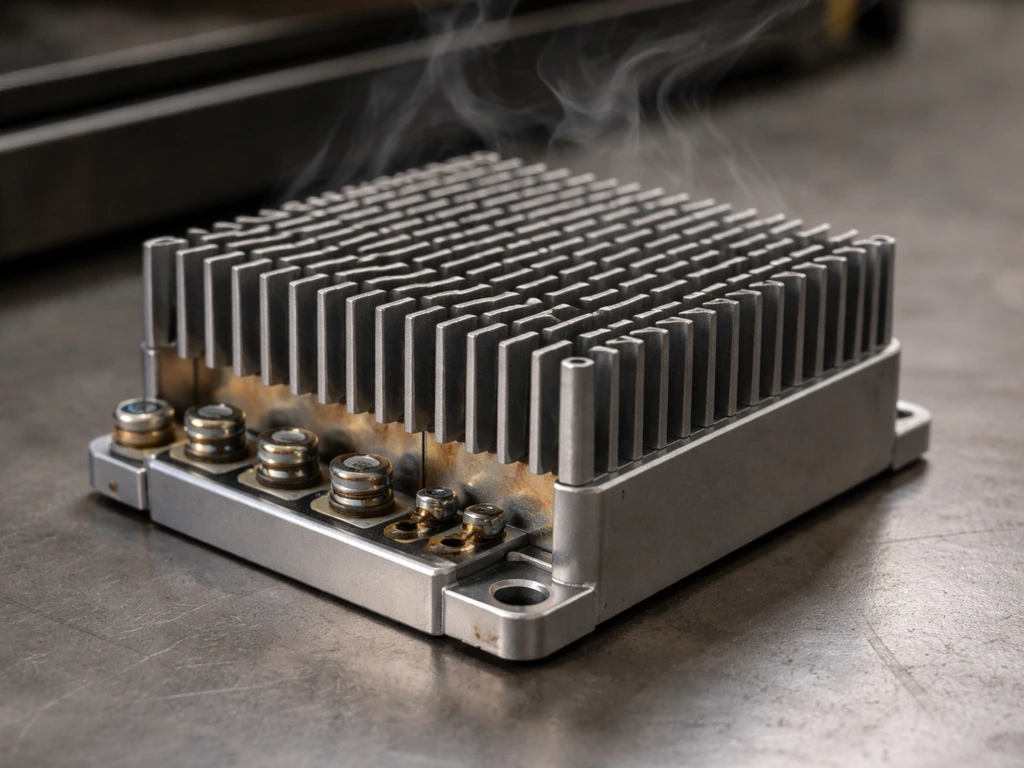
Loriflux uses passive thermal management across the lineup, meaning no internal cooling fan. That's a deliberate engineering choice: fewer moving parts, no fan noise, and no fan-failure points. It also means the fixture relies on its heatsink design and the ambient airflow in your grow space to stay within operating temperatures. In a well-ventilated tent, this works fine. In a poorly exhausted space in a hot room, passive cooling has its limits, so make sure your environment is already handling heat before you add a 630W fixture to it.
The diode lifespan rating across models is L90 greater than 50,000 hours, which means the fixtures are rated to maintain at least 90% of initial light output for 50,000+ hours of operation. At 18 hours of daily use that's over seven years before you'd expect meaningful lumen depreciation. At 12 hours per day, you're looking at closer to 11 years. These are manufacturer claims, but they're backed by the quality of the Samsung and Osram diode packages used, which have well-established longevity track records in horticulture.
All models carry a 5-year standard warranty, which is strong for the segment and signals that Loriflux stands behind the build quality. The 4blade and Str8blade both carry ingress protection ratings, with the Str8blade rated for wet locations. If you're growing in a high-humidity environment or a greenhouse where condensation is a real factor, that rating matters. The 4blade is rated for dry and damp locations, which covers standard tent environments comfortably.
Electrical efficiency, dimming, timers, and what it costs to run
At 2.5 µmol/J on the 4blade and Str8blade, and 2.42 to 2.5 µmol/J on the 6 and 8 Blade, Loriflux sits in competitive territory for efficiency. To put the 8 Blade's operating cost in concrete terms: running a 630W fixture for 12 hours a day at $0.15/kWh costs roughly $34 per month. At $0.25/kWh it's about $57/month. That's meaningful but not unusual for a fixture producing 1650 µmol/s. You're getting a lot of photons per dollar of electricity.
Every Loriflux model includes a manual 10V dimmer built in, which means you can reduce intensity for seedlings and clones without any additional hardware. This is a genuine usability advantage. Competing fixtures from brands like Gavita require you to purchase a separate adapter and dimmer unit, which adds cost and a box to your setup. An optional wireless smart controller is also available across the lineup, and all models support linkability so you can daisy-chain multiple fixtures and control them from a single point. That's practical if you're scaling up from one tent to two or running a multi-light setup in a larger space.
The 6 and 8 Blade listings also note 'Wireless Controller Ready' and an optional 'Cannaboost Output Booster' as factory-installed options, giving you the ability to integrate into a more automated control setup without major hardware changes. If you plan to run CO2 supplementation alongside the 8 Blade, the manufacturer specifically recommends doing so at 800 to 1400 ppm CO2 to take full advantage of the fixture's high PPFD output. At that canopy intensity, plants with ambient CO2 alone may not fully utilize the available light.
Best use cases, which model to pick, and when to look elsewhere
The 8 Blade 630W at around $1,079 is the right choice if you're running a 4x4 tent through full cycle cultivation and want a single fixture that handles the whole grow with room to push intensity during flower. If you're comparing other premium grow light options, you may also want to read this lee valley grow light review to gauge performance expectations outside the Loriflux lineup. It's also the model to choose if you're supplementing with CO2 and want a fixture with enough output to justify the investment. The price is high relative to budget LEDs, but the efficiency, warranty, and build quality reflect where the money goes.
The 6 Blade 320W fits growers with a 3x3 or smaller footprint, or those who want a step down in both output and upfront cost. The 4blade 180W is the entry point: strong for cloning rooms, seedling stages, small 2x2 tents, or as an add-on fixture in a multi-light setup. The Str8blade 180W is a specialist tool and isn't a replacement for a top-lighting solution; it's designed to fill vertical light gaps in tall or greenhouse grows.
When Loriflux may not be the right call: if your budget is tight and you're comparing against strong mid-range full-spectrum options, brands like Relassy or Root Farm offer lower entry prices with reasonable efficiency for casual or first-time growers. If you are considering other options, you may want to look for a relassy grow light review to compare performance and value directly.
If you are comparing options, it helps to include a root farm grow light review so you can judge value at your target footprint and intensity needs brands like Relassy or Root Farm. Farmlite and Lee Valley options target similar hobbyist audiences with different price-to-performance trade-offs worth exploring depending on your space and goals. Rousseau fixtures occupy a similar professional-grade positioning and are worth comparing side by side if you're deciding between premium brands at this tier.
Rousseau grow lights are another brand in this premium tier, so a direct Rousseau grow light review comparison can help you decide between options Rousseau fixtures. If you're comparing options, this Rousseau grow light review overview can help you judge performance, build, and value against Loriflux. Loriflux's real advantage shows up in the combination of diode quality, passive cooling, built-in dimming, and 5-year warranty at efficiency numbers that hold up against the category's best.
One practical note before buying: availability varies by retailer, and the 8 Blade in particular has been listed as out of stock at some distributors. Check multiple sources and confirm stock before committing. If you can find it at a sale price, the community consensus from growers who've run it in 4x4 tents is that it's a fixture worth the wait.
FAQ
Are loriflux grow light reviews claiming high output, and how can I be sure it will reach my canopy evenly?
It helps to match your dimmer setting to your target PPFD, not just wattage. Start conservatively (for example, use the built-in dimmer for clones/seedlings) and then verify at canopy height with a PPFD meter if you can. Because the fixtures can feel uneven toward tent edges, take readings near the center and near the outer canopy to decide whether you need to reposition or add side light.
What should I do if my Loriflux plants look light-stressed after I set the mounting height?
For the 8 Blade in a 4x4, the tight mounting window (6 to 15 inches above canopy per the product guidance) means small changes in hang height can noticeably change delivered intensity. If you see early canopy light stress (bleached tips, taco leaves, or slow recovery after lowering intensity), raise the light slightly or reduce dimmer output rather than waiting for the next growth stage.
Do independent measurements usually match the efficiency numbers mentioned in loriflux grow light reviews?
Do not assume efficiency is the same across all real-world setups. Watt draw can vary with dimmer level, and independent PPFD measurements often differ from spec numbers by more than 10 percent depending on test distance, reflectivity of the room/tent, and sensor type. Treat advertised µmol/J as a ceiling, then plan to confirm with your own PPFD readings at canopy.
Will Loriflux’s passive cooling be a problem in a hot tent?
Passive cooling works well only if heat can escape. Before buying a 630W model, check whether your tent exhaust and ambient room conditions can handle the extra thermal load, especially in summer or small, poorly ventilated spaces. If the environment runs hot, you may need improved exhaust/airflow, or you may be better served by a lower-watt model.
How do Loriflux linkable fixtures work in larger setups, and what should I watch for?
If you want to scale beyond one fixture, use the linkability and dimmer setup as designed, but keep in mind that running multiple fixtures can multiply total heat and total electricity draw. Also, daisy-chained control can make it easier to keep intensity consistent across zones, which matters for tents where one corner tends to run cooler or darker.
Can the Str8blade 180W replace a top light for a full-cycle tent?
The Str8blade is intended for side or vertical supplementation, not replacing top light in most full-cycle tents. If your goal is a uniform top-down canopy, the Str8blade is usually the wrong primary choice, but it can help fill gaps where overhead light misses (tall plants, greenhouse benches, or uneven canopy architecture).
Which Loriflux model is safest for high-humidity or condensation-heavy grows?
Yes, humidity and condensation are where ingress protection ratings become meaningful. The Str8blade is rated for wet locations, while the 4blade covers dry and damp (typical tent use). If you regularly have condensation dripping or misting, plan on the Str8blade for that area, or improve drying and airflow for top-light fixtures.
If I run CO2, can I raise PPFD immediately with Loriflux’s dimmer?
Use the fixture’s dimmer for stage changes, but avoid starting too hot even if your system is CO2 enriched. For example, CO2 supplementation (800 to 1400 ppm per the manufacturer guidance) can let plants use higher PPFD, but seedlings and clones still need gentler starts, then you can ramp intensity as canopy structure develops.
Do I need extra dimming gear to automate Loriflux lights?
The built-in 10V dimmer simplifies day-to-day changes, so you usually do not need external accessories for basic intensity control. However, if you want automation beyond manual dimming (timers, environmental controller integration), you may need the wireless smart controller or ensure your controller supports the proper dimming/control workflow.
What common mistake causes uneven results even when the “wattage matches”?
For a first-time buyer, a frequent mistake is choosing the right wattage but the wrong placement relative to canopy shape. Because Loriflux can create hotspots in some tents, prioritize even canopy height (training) and consider adding supplemental lighting for outer edges instead of only changing hang height.
When I see price differences in loriflux grow light reviews, what details should I verify on the product listing?
When comparing deals, check what you are actually getting: the 4blade, 6 blade, 8 blade, or Str8blade each has different mounting height intent and distribution behavior. Also confirm whether the listing includes the wireless controller option (where applicable) or only the base kit, since add-ons can change total cost and setup complexity.