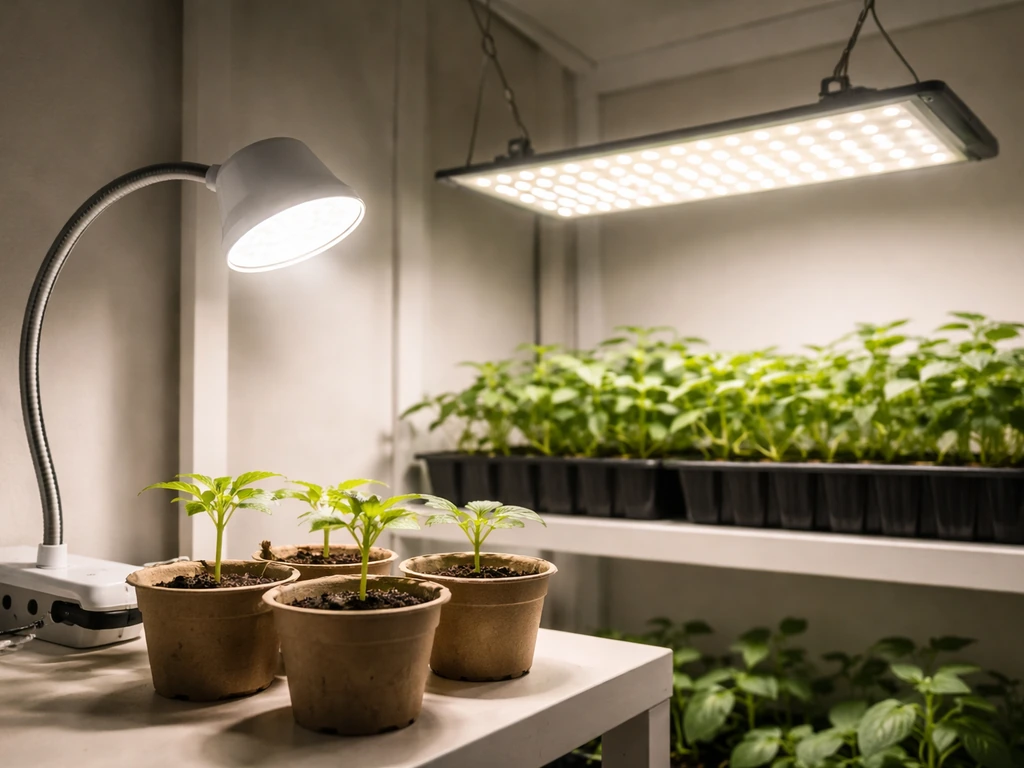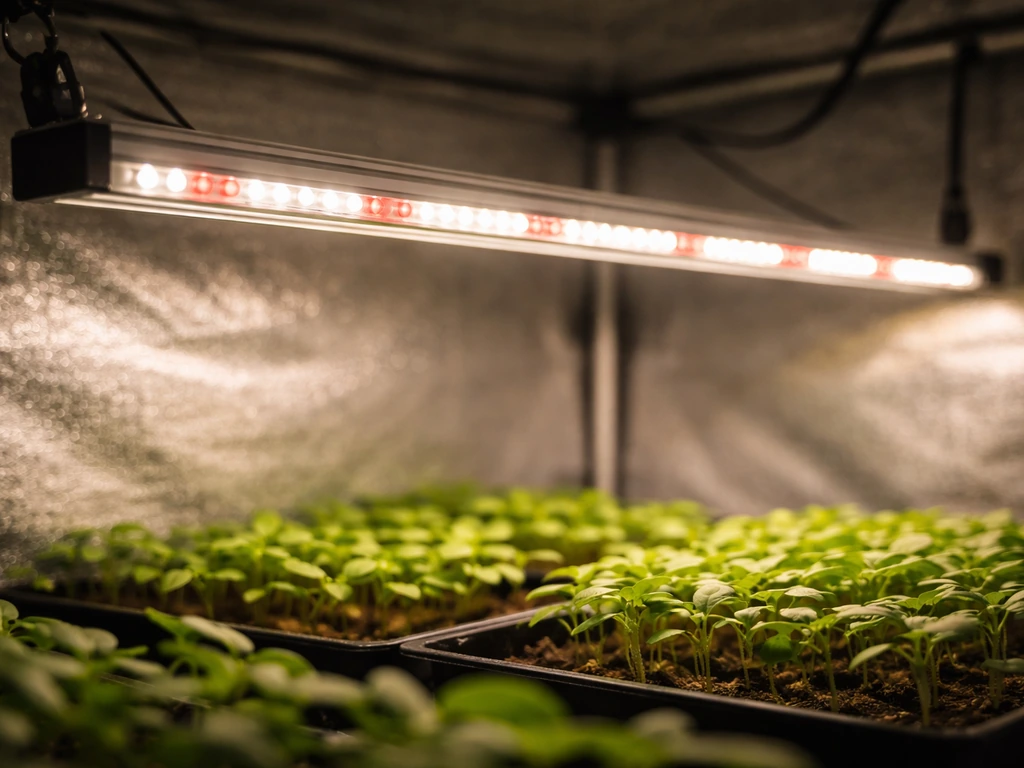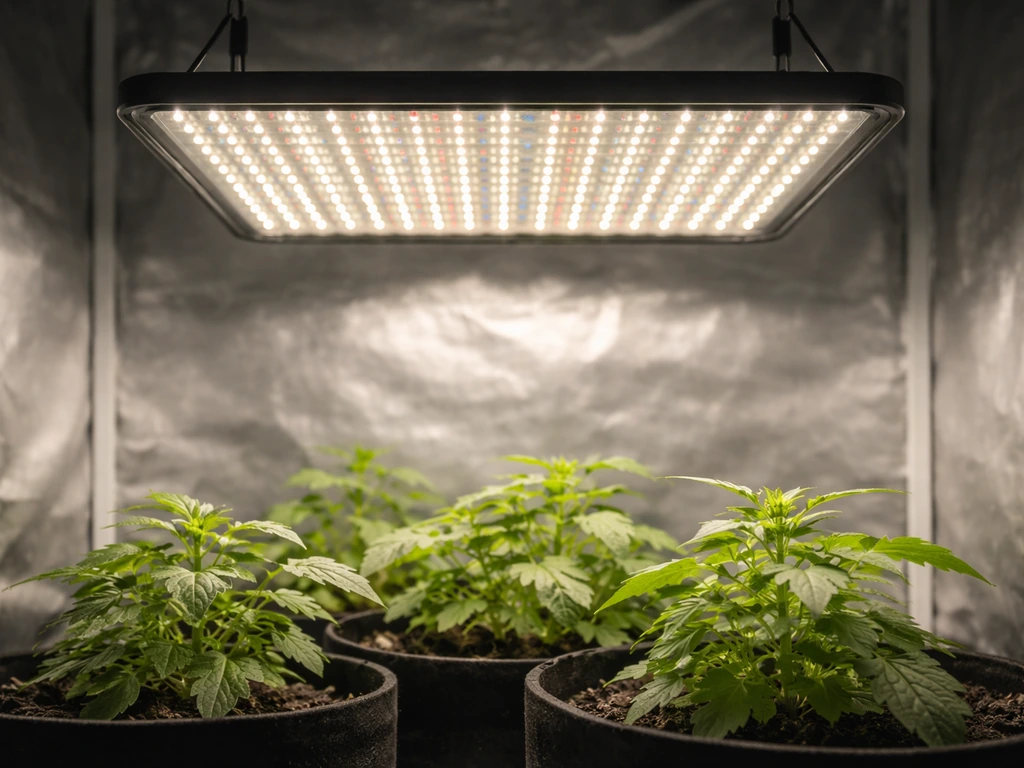
The Giixer 1000W LED grow light is a low-cost, entry-level fixture that draws roughly 70–120W from the wall despite the '1000W' label. It can work for seedlings, clones, and early vegetative growth in a small 2x2 ft space, but it does not deliver the light intensity needed to flower most plants effectively. If you already know that going in, it can be a useful, inexpensive starter light. If you're expecting anything close to 1000W of actual output, you're going to be disappointed.
Giixer 1000W LED Grow Light Reviews: Real Performance, Specs, Value

Marcus Caldwell
28 Apr 2026
Quick take and who this light is actually for
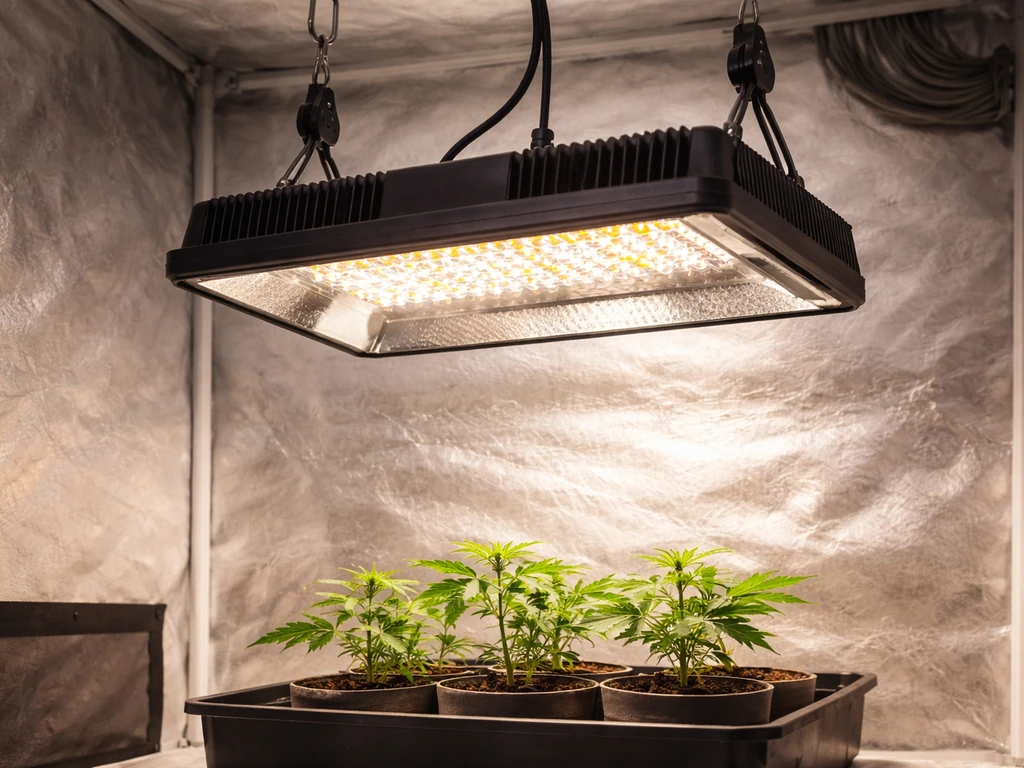
The Giixer 1000W sits in a crowded category of budget blurple-style LEDs that use inflated 'equivalent wattage' marketing to look more powerful than they are. The '1000W' refers loosely to an old HPS equivalent claim, not actual electrical draw. Real draw lands somewhere between 70W and 120W depending on which version you get and which switches you run. That's a meaningful gap. At that actual wattage, this is a light for small spaces, young plants, and low-demand crops. It is not for anyone serious about flowering dense, resinous plants in a 4x4 tent.
The buyer this light suits best is someone setting up their first small grow, working with a tight budget, and running seedlings, herbs, leafy greens, or early veg in a space no larger than about 2x2 ft. If you're in that situation, the Giixer 1000W is a serviceable, affordable option. If you're planning to flower cannabis or other high-PPFD crops and you need consistent canopy coverage, look elsewhere before spending the money.
Specs and feature breakdown
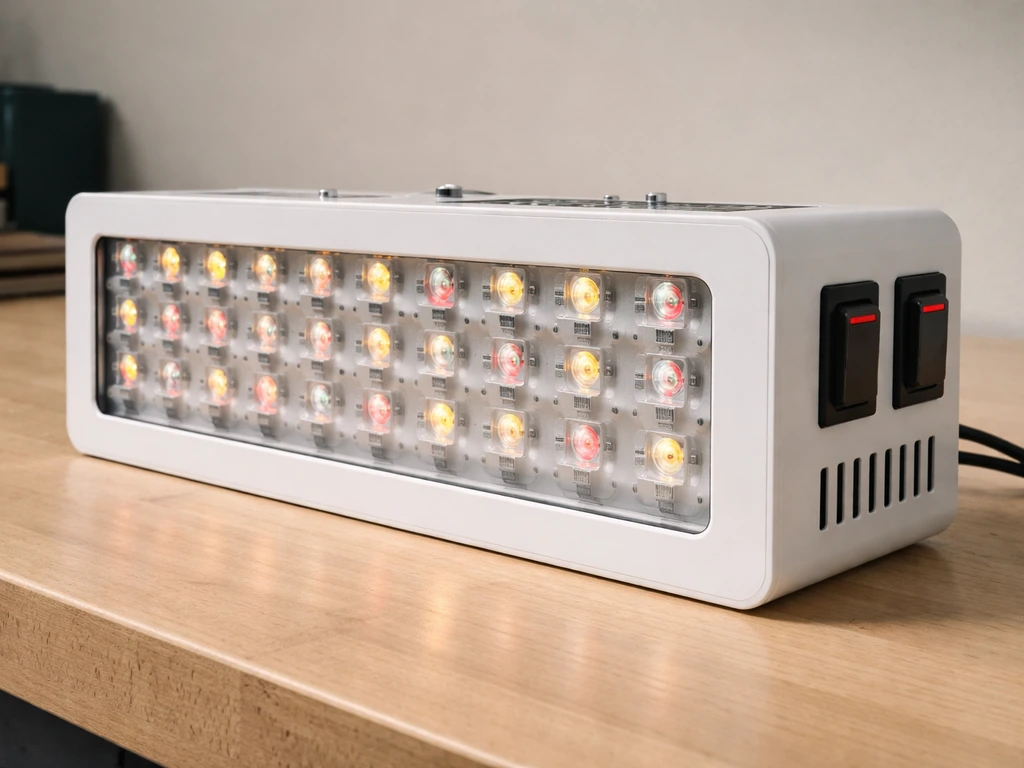
The Giixer 1000W uses 100 Epistar dual-chip LEDs with a 120-degree beam angle. The spectrum runs from 410nm to 800nm, covering the blue and red wavelengths plants use most, along with some white and IR contribution. Input voltage is 100–240VAC at 50/60Hz, making it compatible worldwide. Power factor is listed above 0.9, which is reasonable for a light in this class.
Actual power consumption is where things get complicated. Different versions and spec sheets list different numbers: one spec sheet shows 70W (plus or minus 5W) as actual draw, while a separate product listing shows 110W, and user measurements in the field have reported readings around 118W. The safest assumption is that actual wall draw sits somewhere in the 70–120W range. The '1000W' figure is a marketing equivalency, not a power rating.
The light runs a dual-switch design with one switch for veg (blue/white LEDs) and one for bloom (red/white LEDs). For vegetative growth, you run the veg switch alone. For flowering, you run both switches together. This is a simple, functional approach, though it gives you less fine-tuned control than dimmable drivers or full-spectrum quantum board designs.
| Spec | Claimed / Listed Value | Notes |
|---|---|---|
| Marketing wattage | 1000W | Equivalency claim, not actual draw |
| Actual power draw | 70W–120W | Varies by version; user-measured ~118W |
| LED count | 100 dual-chip Epistar LEDs | Dual-chip per node |
| Spectrum | 410nm–800nm | Blue, red, white, some IR |
| Beam angle | 120° | Per spec sheet |
| Coverage area | ~2×2 ft (approx. 1m²) | At 12–18 inch hanging height |
| Voltage | 100–240VAC, 50/60Hz | Universal input |
| Power factor | >0.9 | Listed on product spec |
| Lifespan | 50,000 hours (claimed) | Not independently verified |
| Warranty | 24 months + 30-day refund | Verify at purchase; varies by retailer |
| Operating temperature | -20°C to 40°C | Listed working temp range |
| Switches | Veg / Bloom (dual switch) | Run both for flower stage |
Real-world light output, PPFD, and coverage
This is where the Giixer 1000W shows its limitations most clearly. Community-measured PPFD reports put output around 430 µmol/m²/s at 12 inches with both switches running. That's a user-reported figure, not a calibrated lab map, so take it as a rough directional signal rather than a precise spec. Still, 430 µmol/m²/s at 12 inches is on the low end for a flowering light. Most cannabis plants in flower want 600–900 µmol/m²/s at canopy level, and high-demand strains push higher than that. This light doesn't get there.
The claimed coverage area of about 1m² (roughly 2x2 ft, or 3x3 ft at best in loose marketing language) is realistic only at very close hanging distances of 12–18 inches. Pull the light higher to reduce heat stress and the usable footprint shrinks further. One grow journal shows the light hung at 27.5 inches above the canopy, which is reasonable for young veg but further reduces intensity at the plant level. At that height, you're likely below 300 µmol/m²/s at canopy, which is fine for seedlings and early veg but not enough for flowering.
Uniformity is also a concern. Budget LED fixtures with a centralized chip layout tend to hot-spot at the center and drop off sharply at the edges. Multiple users have noted that plants toward the corners of even a 2x2 tent receive noticeably less light than those directly under the fixture. This matters if you're trying to fill a tent canopy evenly. For a small herb garden or a seedling tray, it's less of a problem.
Build quality, heat, noise, and reliability
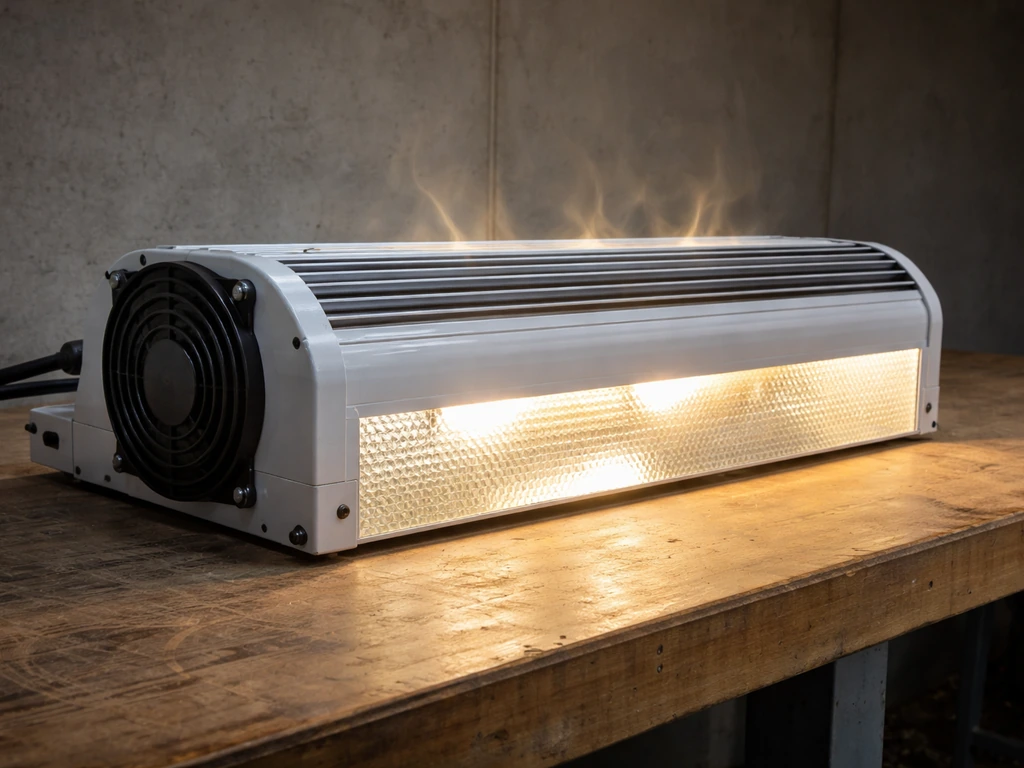
The Giixer 1000W is a lightweight plastic-and-aluminum fixture. It does not feel premium, but for the price point, the construction is adequate for casual use. The light comes with a rope ratchet for hanging and reportedly includes a thermometer probe to help monitor tent temperature, which is a practical touch given that heat management in small tents is a real concern.
Heat output from a 70–120W fixture is not extreme, but there is a fan involved in most versions to manage the diode temperature. This is where the documentation gets messy: at least one product listing claims the unit is 'noise free, fanless,' while other sources describe a cooling fan. If you receive a version with a fan, expect some audible noise during operation. That inconsistency across listings is itself a red flag about quality control and documentation standards for this brand.
The 50,000-hour lifespan claim is standard marketing language for this LED class and is not independently verified. The warranty language most commonly cited is 24 months with a 30-day refund window, but this varies by retailer and purchase channel. Always confirm the actual warranty terms with the seller before buying, because some listings state only a one-year guarantee.
How it stacks up against comparable lights
The Giixer 1000W competes directly with other budget blurple LEDs in the under-$50 range. Lights from brands like Mixjoy and Juhefa operate in a similar tier, with similar actual draw figures and comparable PPFD limitations. If you are comparing options, check out this juhefa grow lights review for how their models stack up against the Giixer. These are all more or less the same category of light: cheap, entry-level, limited for flowering, and acceptable for low-demand veg or propagation work. If you want to compare a different option in the same general class, read through this jhotec grow light review. None of them should be confused with a genuine 1000W output fixture. If you're specifically looking for budget LED options like this, these jiffy hydro grow light reviews can help you compare performance before you buy.
If you step up even one level in budget to mid-range quantum board lights (brands running Samsung LM301B or LM301H diodes with a proper driver), you get significantly better actual efficiency, measured in µmol/J. A quality quantum board drawing 100W can outperform the Giixer 1000W at the canopy in both raw PPFD and uniformity. The price gap has also closed considerably over the last few years, making the step up easier to justify.
| Light tier | Actual draw | Approx. coverage | Best use case | Relative value |
|---|---|---|---|---|
| Giixer 1000W (blurple) | 70–120W | 2×2 ft (at 12–18 in) | Seedlings, early veg, herbs | Low price, low output |
| Mixjoy / Juhefa class (blurple) | 60–120W | 2×2 ft | Seedlings, propagation | Similar tier, similar limits |
| Mid-range quantum board (100W) | ~100W real | 2×2 to 3×3 ft | Full cycle, veg and flower | Better efficiency per watt |
| Higher-end quantum board (200–240W) | ~200–240W real | 3×3 to 4×4 ft | Full cycle, high-yield flower | Best output/uniformity, higher cost |
The honest comparison here is not flattering to the Giixer. If your budget is truly $30–50 and you're growing low-demand plants, the Giixer does its job. But if you can stretch to $80–120, a basic quantum board fixture gives you meaningfully more usable light per dollar over the lifetime of the product.
Best use cases and how to set it up
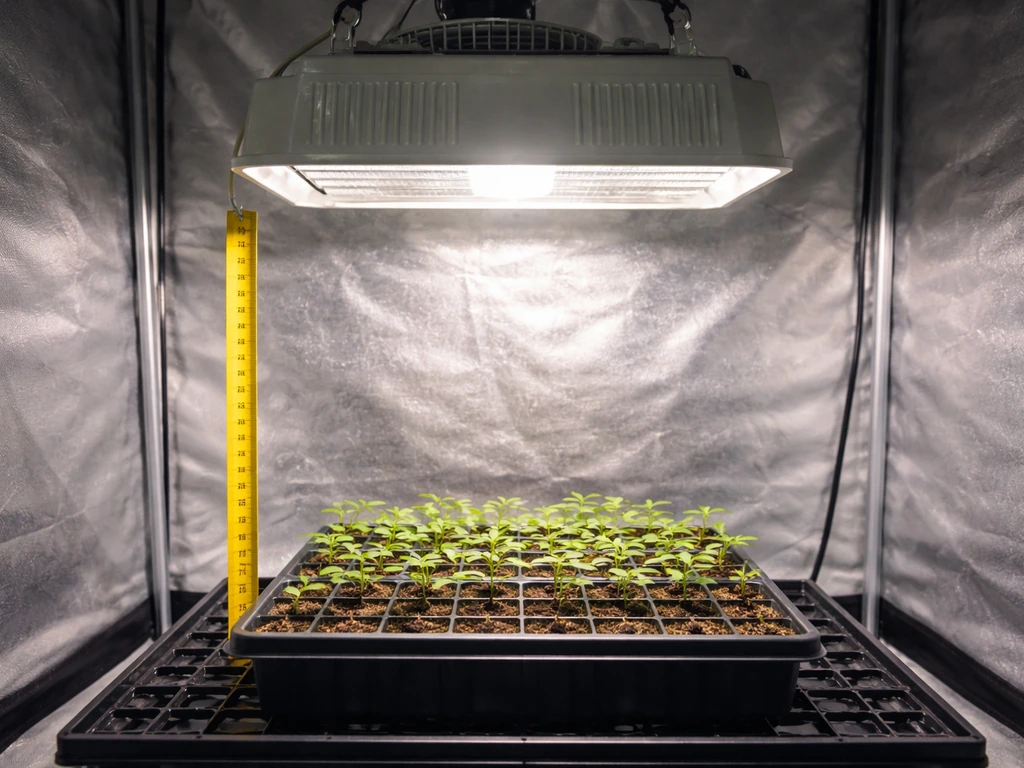
The Giixer 1000W is best suited for: seedlings and clones in a tray or small dome, early vegetative growth in a 2x2 ft tent or equivalent space, herbs and leafy greens like basil, lettuce, or spinach that don't need high PPFD to produce well, and supplemental light in a small propagation area. It is not well-matched for flowering cannabis, tomatoes, peppers, or other fruiting plants that need sustained high-intensity light to develop properly. That matches a Giixer 1000W unboxing and first-impressions discussion on 420 Magazine, where users talk about the light being more suited to early veg than for flowering, including the switch settings and height adjustments they used during the grow.
Hanging height by stage
- Seedlings and clones: hang at 24–30 inches above the tray to avoid light stress while still delivering adequate intensity for germination and early root development
- Early veg: 20–27 inches is a reasonable starting range; one grower's journal documents 27.5 inches working well for day 41 of veg
- Late veg: you can drop to 18–22 inches to increase intensity as plants become more light-tolerant
- Flower attempt (if you must use this light): 12–18 inches is the manufacturer's stated coverage distance, but expect PPFD around 430 µmol/m²/s or lower, which is below the 600+ µmol/m²/s typically needed for dense flower production
For daily photoperiod, the spec sheet lists 12–18 hours per day as the operating range. Seedlings generally do well at 16–18 hours. Veg plants respond well to 18 hours on, 6 off. If you're attempting a flowering trigger, drop to 12 hours on, 12 off. The light does not have a built-in timer, so you'll need an external outlet timer to manage this automatically.
Tent sizing: a 2x2 ft tent is the realistic maximum for this fixture if you want any meaningful canopy coverage. A 2x4 or 3x3 tent will leave the edges significantly under-lit. If you're using a grow space without walls, the light will cover even less usable area due to light spill and the absence of reflective surfaces.
Pros, cons, and whether you should buy it
- Very low price point makes it accessible for first-time growers on tight budgets
- Dual-switch design gives basic veg/bloom control without much complexity
- Universal voltage input (100–240VAC) works anywhere
- Lightweight and easy to hang with included rope ratchet
- Broad spectrum coverage from 410–800nm is adequate for general plant growth
- 24-month warranty language (where applicable) provides some purchase protection
- Suitable for low-demand crops: herbs, leafy greens, seedlings
- '1000W' label is misleading: actual draw is 70–120W, which is a major gap from expectations
- PPFD output (~430 µmol/m²/s at 12 inches, user-reported) is insufficient for flowering most plants effectively
- Coverage footprint is realistically 2x2 ft at best, not the larger areas sometimes implied
- Uniformity drops off noticeably toward the edges of even a small tent
- Fan/noise situation is inconsistent across listings: some claim fanless, others describe a cooling fan
- Warranty terms vary by seller and may not match the 24-month figure on all purchases
- Documentation inconsistencies across product pages create uncertainty about what you're actually getting
- Not a good long-term investment if your goals include flowering or high-yield production
Who should buy it
Buy the Giixer 1000W if you are a beginner setting up a first grow with a very limited budget, you're growing seedlings, clones, herbs, or leafy greens, and your space is 2x2 ft or smaller. It's also a reasonable temporary light while you save for a better fixture. If you still want a broader buying shortlist and similar beginner-friendly options, see our juhefa grow lights review for a related comparison. Go in with accurate expectations about actual draw and output, and it won't disappoint you.
Who should skip it
Skip the Giixer 1000W if you're planning to flower cannabis or other high-demand fruiting plants, if you have a tent larger than 2x2 ft, or if you've already outgrown the seedling/early veg stage. Multiple growers have noted that the light simply wasn't enough to flower their plants satisfactorily, and upgrading mid-grow is a frustrating and costlier outcome than buying the right light from the start. If you can budget $80–120, a proper quantum board is a better use of money for anything beyond propagation.
Key watch-outs before you buy
- The '1000W' claim is an equivalency marketing number, not actual wattage. Measure or confirm actual draw before trusting coverage or intensity claims.
- PPFD maps and coverage claims from the brand are not independently verified. User reports suggest real output is modest, particularly at practical hanging distances above 18 inches.
- Check whether your specific version has a fan or is fanless before assuming quiet operation. The two conflict across product pages.
- Verify warranty terms directly with the seller at purchase, as the 24-month figure is not guaranteed across all retail channels.
- If your grow plan includes flowering, factor in the likelihood of needing to upgrade: buying a better light now is almost always cheaper than buying two lights.
FAQ
Is the Giixer “1000W” rating referring to real electricity use or HPS equivalent output?
It is marketing equivalency, not actual electrical draw. Expect roughly 70–120W from the wall depending on the specific version and which switches are enabled, so you should base your power planning on real wattage, not the box number.
What hanging height should I use if I want the most useful light in a small tent?
For the best chance of usable intensity, keep it relatively close (around 12–18 inches) and monitor leaf response. If you raise it significantly (for example near the upper 20+ inch range), you should expect a large PPFD drop, especially at the canopy edges.
How much difference does the veg switch versus both switches make?
Using only the veg switch reduces red output substantially, which helps early growth but limits flowering effectiveness. For flowering attempts, you need both switches, but even then the intensity is often below what many fruiting crops require at canopy level.
Can I run this light higher if I need more space or to reduce heat?
You can, but coverage shrinks fast because the beam is limited and budget fixtures tend to lose intensity quickly with distance. If you must hang higher, consider adding a second unit or switching to a fixture designed for broader, more uniform canopy output.
Will plants in the corners of a 2x2 tent do poorly with this light?
They might. Budget LED layouts can hotspot at the center and fall off toward corners, so if you care about uniform canopy development, rotate plants (or rotate the light position) periodically to compensate.
Does the light have a timer, and what should I use to control photoperiod?
It does not come with a built-in timer. Use an external outlet timer sized for the fixture’s wattage, and include a small buffer for accurate sunrise or schedule consistency if you are sensitive to light interruptions.
Is 12–18 hours per day enough for seedlings, and what if I want to change schedules?
Seedlings often do well around 16–18 hours. If you adjust from veg (18/6) to a flowering-style schedule (12/12), make changes gradually over a few days when possible to reduce stress from abrupt photoperiod shifts.
What should I do if my unit’s power draw doesn’t match the listing?
Don’t rely on a single spec. Measure wall wattage with a plug-in meter for your exact version and switch combination, then use that reading to set expectations for heat, electricity cost, and performance.
Is it fanless, or will it make noise?
Listings are inconsistent, and some versions include a cooling fan even though other pages claim fanless operation. If noise matters, confirm the cooling method with the seller before buying, or plan for quiet-tolerant placement away from sleeping areas.
How do I know if this light is sufficient for my plant type before I commit?
Match it to low-demand crops and early growth stages. If you are growing fruiting plants that typically need high canopy intensity (such as flowering cannabis, tomatoes, peppers), use the Giixer only as supplemental light or expect you will likely need an upgrade for consistent results.
Is it worth buying if I plan to upgrade mid-grow later?
Usually not. Mid-grow upgrades can mean uneven development and extra time cost, because you will have already trained the canopy based on a weaker light. If you can stretch to a better fixture, it often prevents wasted grow time.
Will reflective walls or a reflective tent make a big difference with this fixture?
Yes. Because output is limited, reflectivity affects how much usable light you actually get across the tent. Use proper reflective material and keep the canopy near the recommended distance to reduce edge under-lighting.
What warranty should I expect, and should I verify it?
Warranty terms vary by retailer and purchase channel, with some listings referencing 24 months and others citing only one year. Confirm the exact coverage period and return window in the seller details before ordering, especially for budget fixtures.