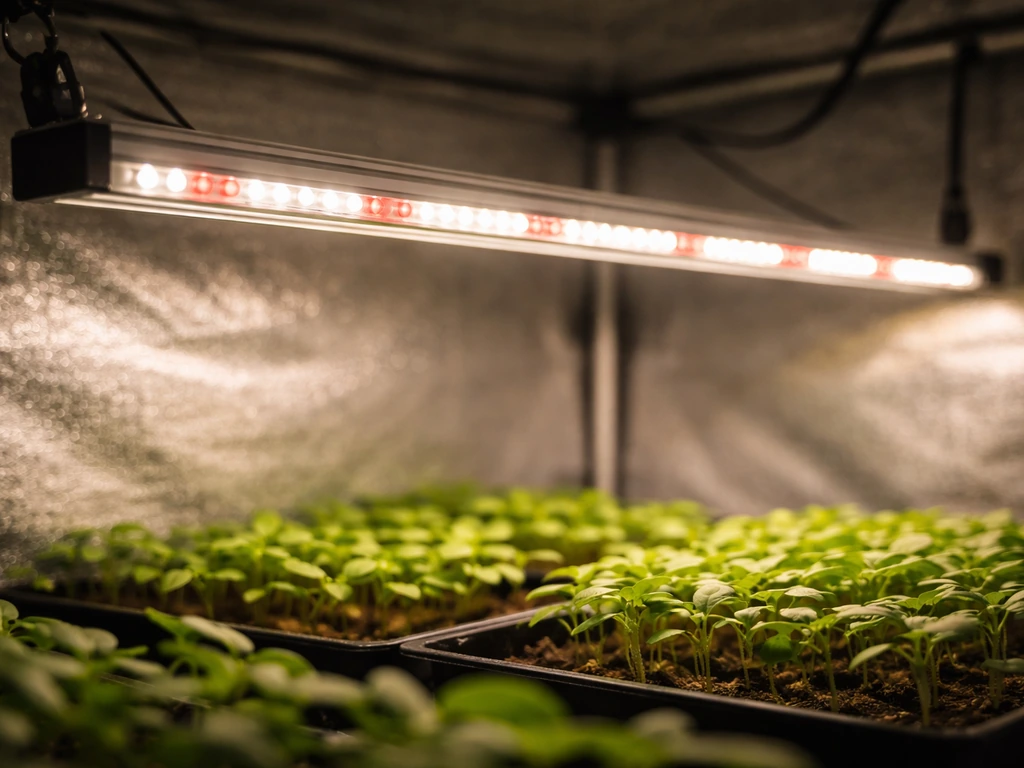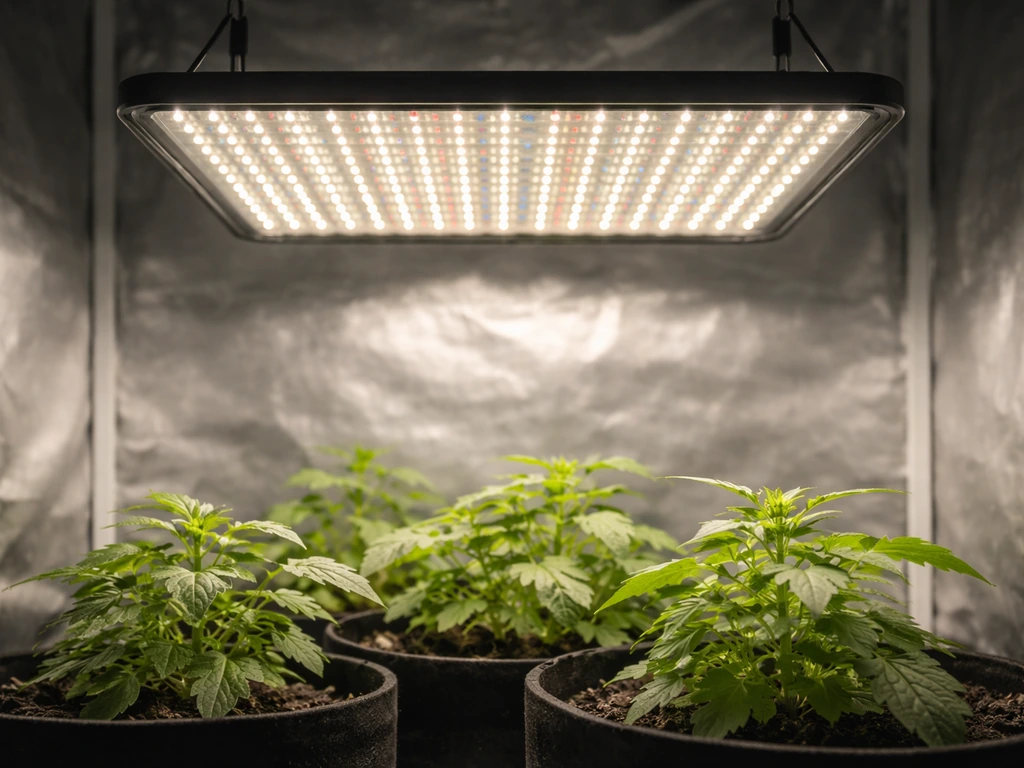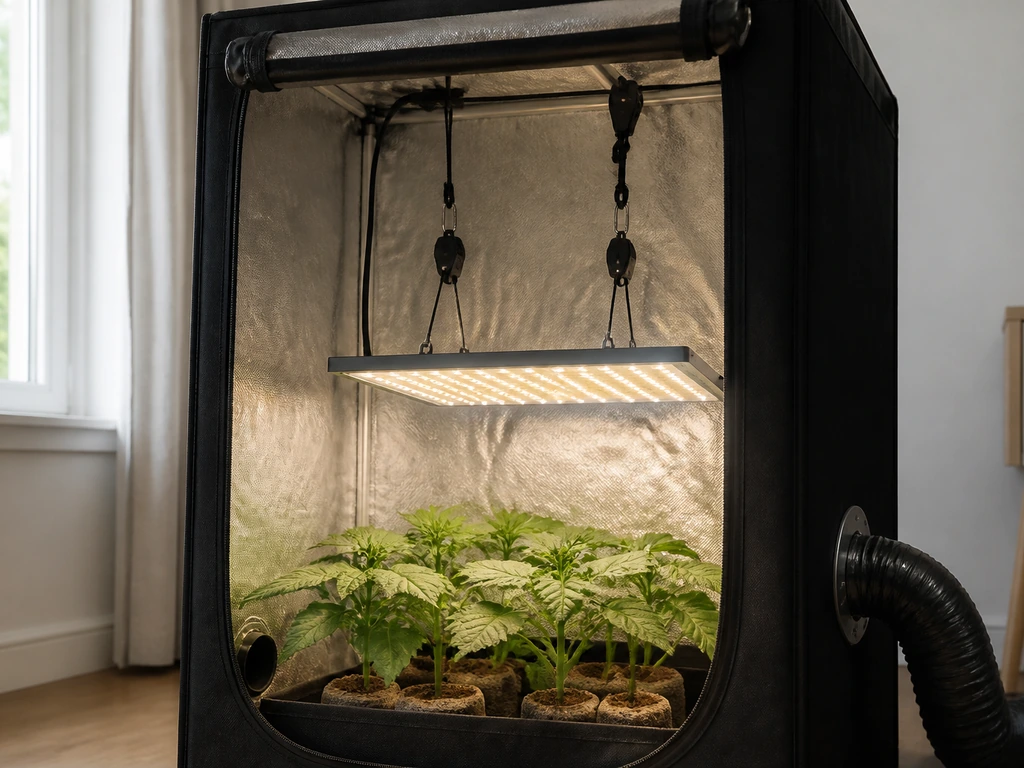
Juhefa grow lights are budget-friendly LED fixtures aimed at hobbyist indoor gardeners who want basic full-spectrum coverage for small spaces, houseplants, herb gardens, or seedling trays. They come in two main form factors: clip-on desktop lamps (the 84-bulb and 126-bulb 6000K models) and hanging panel lights (the 25W IR/UV full-spectrum panel).
Juhefa Grow Lights Review: Best Models, Coverage, and Value

Marcus Caldwell
26 Apr 2026
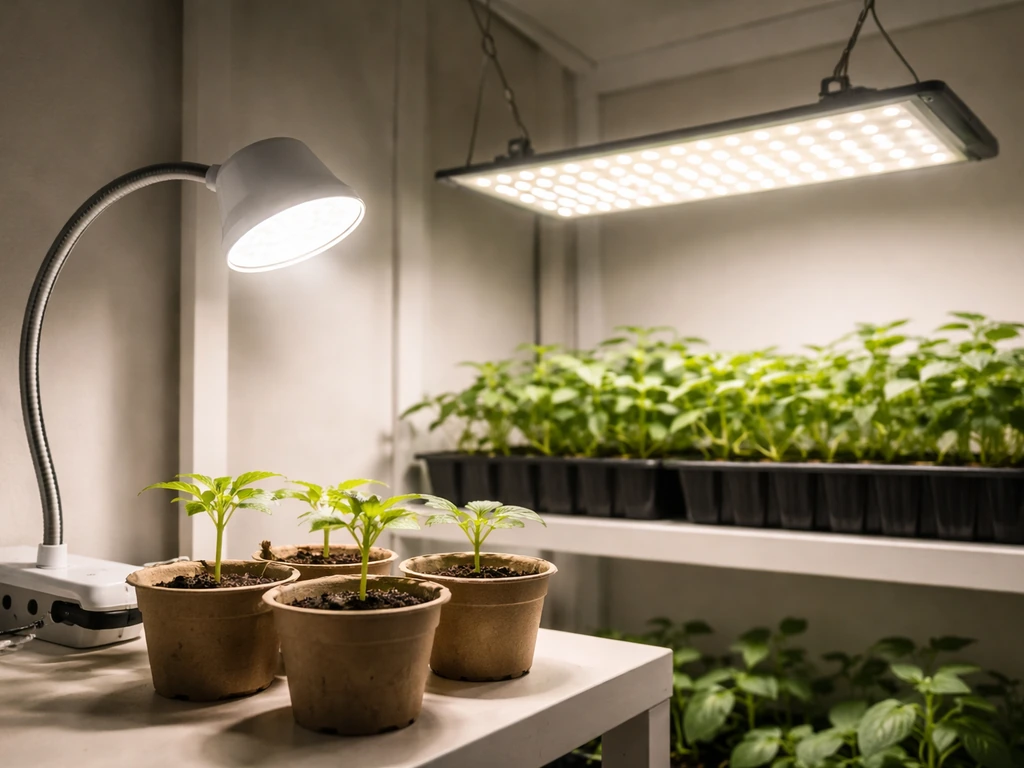
For most people reading reviews on these, the honest answer is this: Juhefa works well for seedlings, leafy greens, succulents, and early vegetative growth in spaces under 2 square feet per fixture, but it runs out of steam for serious flowering or larger canopy coverage. If that matches your situation, it's a decent buy at its price point. If you're pushing toward heavier flowering or a 2x2 tent or larger, you'll outgrow it quickly.
What Juhefa grow lights are and which models to consider
Juhefa is a small-brand LED grow light manufacturer whose products show up mainly on Walmart and Home Depot. The lineup isn't huge, but there are a few distinct models worth knowing about before you pick one.
The clip-on models (84-bulb and 126-bulb, 6000K)
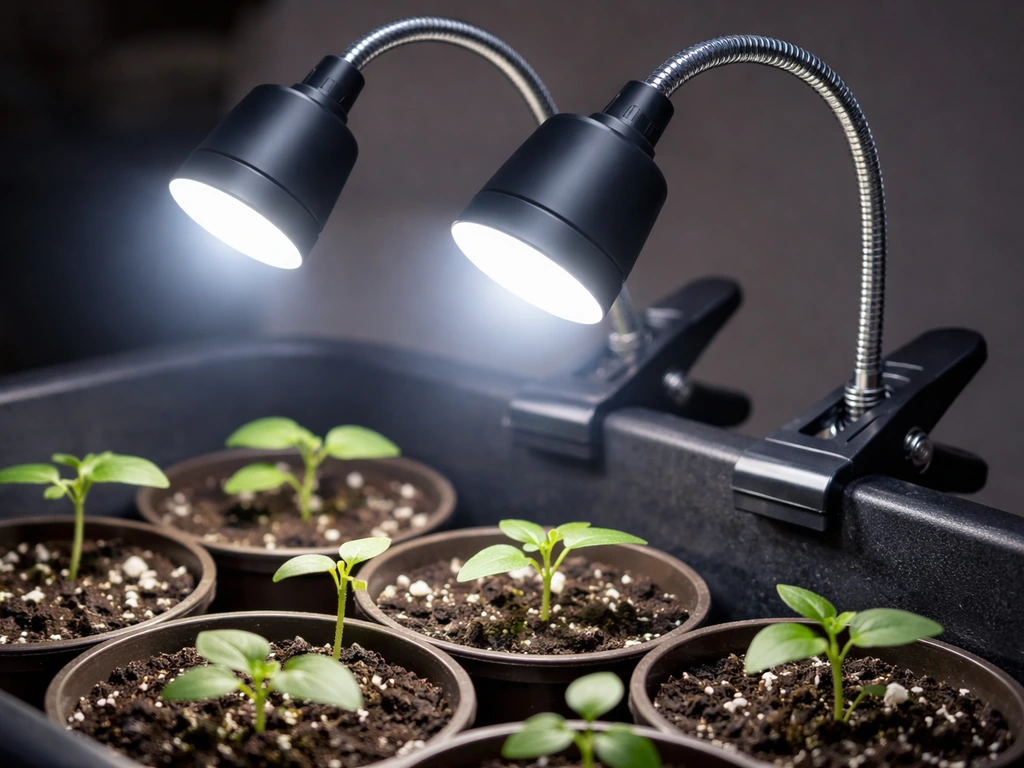
These are the most commonly encountered Juhefa products. Both run at 6000K, which sits in the cool-white daylight range and mimics a blue-heavy spectrum that's well suited to vegetative growth and seedlings. The 84-bulb version is the entry point, and the 126-bulb steps up with more LEDs and slightly broader coverage. Both include a built-in timer and dimmable output, which is genuinely useful for dialing back intensity over young seedlings. The clip-on design means they attach to a pot rim, shelf edge, or small desk, so they're not meant for tent installations.
The 25W hanging panel (IR/UV full-spectrum)
This is Juhefa's more serious offering for people who want to hang a light over a small grow area rather than clip it on. The panel packs 75 LED chips: 47 red, 19 blue, 3 UV, 3 IR, and 3 white, drawing a measured 25 watts. The red-heavy chip ratio makes it more relevant to flowering and fruiting than the 6000K clip-ons, though 25W is still modest output for anything beyond a very small footprint. It also ships with 5 dimming levels, letting you adjust for plant stage.
The 100W Home Depot panel (model 3508NJYO)
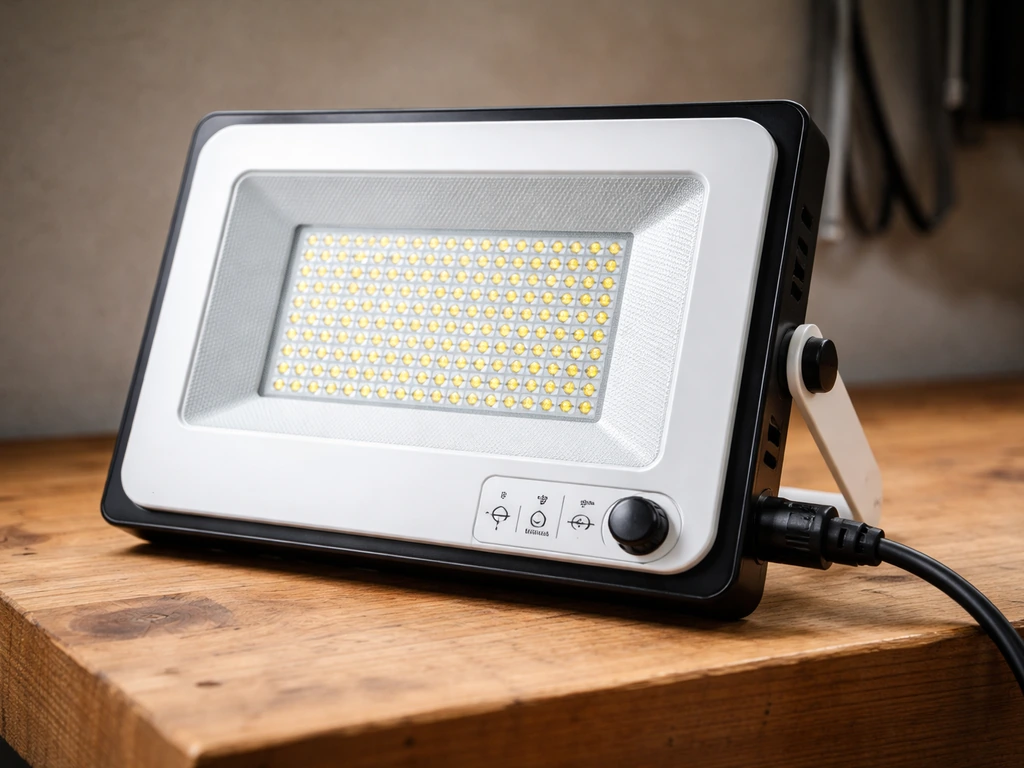
Juhefa also sells a 100W, 6000K full-spectrum LED panel through Home Depot (model number 3508NJYO) that includes dimmable levels and an auto timer. At 100W actual draw, this is the most capable unit in the lineup and the only one that could realistically handle a small 2x2 space for vegetative growth. It still leans cool-spectrum at 6000K, so it's not ideal for flowering, but for veg-only growers or herb gardeners who need a proper hanging fixture rather than a clip-on, it's the Juhefa model worth looking at.
| Model | Form Factor | Power Draw | Spectrum / Color Temp | Key Features |
|---|---|---|---|---|
| 84-Bulb Clip-On | Clip-on lamp | Low (not specified) | 6000K full spectrum | Timer, dimming, clip mount |
| 126-Bulb Clip-On | Clip-on lamp | Low (not specified) | 6000K full spectrum | Timer, dimmable levels, clip mount |
| 25W IR/UV Panel | Hanging panel | 25W | Red/Blue/UV/IR/White mix | 5 dimming levels, IR & UV chips |
| 100W Panel (3508NJYO) | Hanging panel | 100W | 6000K full spectrum | Dimmable, auto timer, hanging mount |
Build quality, design, and ease of setup
Juhefa lights are plastic-bodied fixtures with modest build quality that matches their price tier. The clip-on models feel light in hand but clip securely enough to standard pot rims and shelving. The flexible gooseneck arms on the clip-on versions let you angle the lamp head toward your plants, which is handy for oddly positioned pots. The hanging panels use straightforward hook-and-cord suspension with no adjustable ratchet straps included, so you'll want to sort out your own mounting solution.
Setup on any Juhefa model is genuinely simple, which is one of the brand's real selling points. The clip-on units require no tools at all: clip, position the neck, plug in, and set the timer using the button on the cord. The 25W and 100W panels hang from a hook and plug into a standard outlet. The timer and dimming controls are button-based and straightforward. There's no app, no Bluetooth pairing, no complicated settings, and that's actually a feature for a lot of growers who just want something that works without fuss.
The one build concern worth flagging is longevity under continuous use. Juhefa's documentation doesn't publish rated LED lifespan hours in any of the available manuals, which is a mild yellow flag compared to brands that publish 50,000-hour ratings. For casual hobby use this probably doesn't matter much, but if you're running lights 16 hours a day year-round, you'll want to keep that in mind.
Light spectrum and plant-stage fit
The spectrum story splits cleanly by model. The clip-on units both run at 6000K, which is a cool daylight white. That's useful for seedlings and vegetative growth because the blue-leaning output encourages compact, leafy development. It's not the right choice for flowering and fruiting, where plants benefit more from red-dominant wavelengths. If you're growing basil, lettuce, microgreens, or starting seeds, 6000K works fine. If you're trying to push peppers or tomatoes into heavy fruit production, you'll want something with more red energy.
The 25W IR/UV panel is the more balanced option for a full growth cycle. Its 75-chip LED mix (47 red, 19 blue, 3 UV, 3 IR, 3 white) gives you the red wavelengths that support flowering and fruiting, plus UV and IR chips that the manufacturer says aid blooming and fruiting processes. The UV and IR contributions at 3 chips each are token amounts rather than serious doses, but they're there. The five dimming levels let you dial down intensity for delicate seedlings and ramp up as plants mature.
The 100W 6000K panel sits in an interesting middle ground. More raw output than the 25W, but still a cool-white spectrum. It's the best Juhefa option for a full vegetative cycle or for herb and salad gardens that never need to flower. For flowering crops, it's the wrong spectrum regardless of wattage.
How it actually performs in the grow space
Coverage and intensity
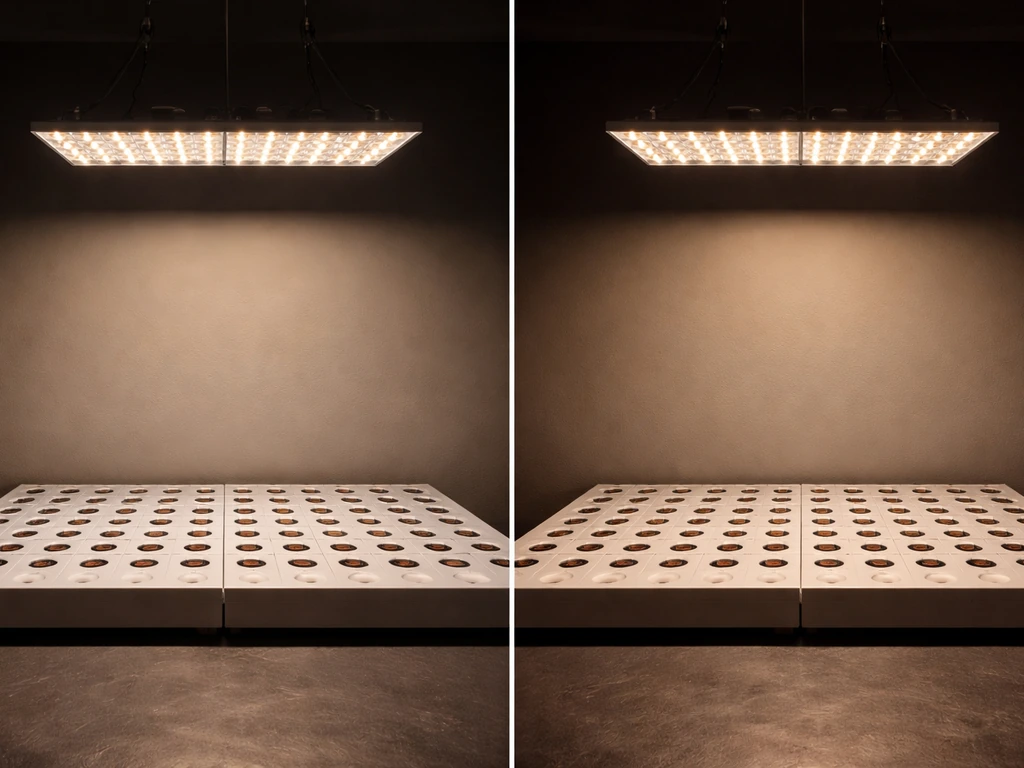
Juhefa doesn't publish PPFD maps for any of its models, which makes spec-sheet comparisons harder than they should be. Working from wattage alone: the 25W panel at typical hanging distances (12 to 18 inches above the canopy) will deliver reasonable seedling-stage light intensity over roughly a 1x1 to 1.5x1.5 foot area. The 100W panel can realistically cover a 2x2 foot space for vegetative growth. The clip-on lamps are best thought of as supplemental or targeted lighting for a single pot or a small cluster of plants, not primary lighting for a grow tent.
Uniformity and hotspots
The Juhefa manual itself acknowledges uneven light distribution as a real-world issue and advises adjusting placement or adding more lights to address it. That's an honest admission and also a useful flag: if you're growing multiple plants side by side, you may notice the center plants doing better than those at the edges, particularly with the clip-on models where the light source is small and directional. The hanging panels spread light more evenly than the clip-ons, but at 25W, the sweet spot is a fairly tight circle. Keep plants clustered together for best uniformity.
Heat and noise
The clip-on models are passively cooled, so there's no fan noise at all, which is great for bedroom or living room use. The 25W panel appears to be similarly fanless based on the manual content. At these low wattages, passive cooling is sufficient and the fixtures don't put out meaningful heat. The 100W panel is a step up in heat output, though at 100W actual draw, it's still far less thermally demanding than higher-wattage competition. No documented fan noise issues have surfaced for any Juhefa model.
Power use and value versus the competition
The 25W panel's energy efficiency is straightforward: at 25 watts running 16 hours a day, you're looking at roughly 12 kWh per month, which at average US electricity rates (around $0.16/kWh) works out to about $1.90 per month. That's genuinely cheap to run. The 100W panel runs 4x that, so about $7.60 per month at the same schedule. Both numbers are reasonable.
The value question gets more interesting when you compare Juhefa against alternatives in the same wattage class. Brands like Giixer and Mixjoy compete in the same budget LED segment with similar price points and overlapping feature sets. If you’re also comparing models in the same category, check out giixer 1000w led grow light reviews to see how its coverage stacks up.
If you want a second perspective, a giixer led grow light review can help you compare coverage and real-world performance against Juhefa. If you’re also considering Mixjoy, it can help to compare how the wattage and spectrum translate into real coverage for your plant stage. Where Juhefa differentiates is the clip-on form factor, which most competitors at this tier don't offer as cleanly.
For the hanging panel category, the 25W IR/UV model is competitive on features (UV/IR inclusion, 5 dimming levels) but the lack of published PPFD data makes it harder to verify whether you're getting the light output the chip count implies.
At the 100W level, Juhefa's Home Depot panel faces stiffer competition. For a similar or slightly higher budget, you can find panels from established grow light brands with published efficiency ratings (measured in micromoles per joule) and proper PPFD maps. If you're comparing the 100W Juhefa against, say, a mid-tier QB-style panel, the QB wins on measurable output per watt. The Juhefa 100W is competitive mainly on simplicity, accessibility (it's stocked at Home Depot), and a no-fuss feature set.
| Aspect | Juhefa Clip-On (84/126 bulb) | Juhefa 25W Panel | Juhefa 100W Panel | Typical Budget Competitor (25-100W) |
|---|---|---|---|---|
| Price tier | Budget | Budget | Budget-mid | Budget |
| Spectrum | 6000K veg/seedling | Red/Blue/UV/IR | 6000K veg/seedling | Varies |
| Flower suitability | Poor | Moderate | Poor | Moderate-good |
| PPFD data published | No | No | No | Rarely |
| Noise | None (passive) | None (passive) | Low | Low-moderate |
| Ease of setup | Excellent | Good | Good | Good |
| Monthly running cost (est.) | Very low | ~$1.90 | ~$7.60 | Similar |
Choosing the right Juhefa model for your space
Start with your grow area and plant type. Here's how to think through it:
- Single pot, houseplant, succulent, or small herb on a desk or shelf: the 84-bulb or 126-bulb clip-on is the right call. Clip it, point it at the plant, set the timer for 14 to 16 hours for most herbs or 12 hours for most houseplants, and leave it.
- Seedling tray or small propagation setup (up to roughly 1x1.5 feet): the 25W IR/UV hanging panel works well here. Hang it 12 to 16 inches above the tray at lower dimming levels for fresh seedlings, then raise intensity as they establish.
- Small vegetative grow (up to 2x2 feet) or a herb garden shelf: the 100W panel is the Juhefa model for this. Hang it 18 to 24 inches above the canopy for even coverage. Start at a mid-dimmer setting and move to full power once plants are established.
- Flowering crops like tomatoes, peppers, or cannabis: the 25W IR/UV panel is the only Juhefa model with the red-dominant spectrum for flowering, but 25W is underpowered for serious flowering results. Consider whether a different brand better suits this use case.
The timer feature on all Juhefa models is a practical asset. Use it. Consistent light cycles matter more than most growers realize, and the manual specifically notes that slow plant growth is often a symptom of inconsistent or insufficient lighting hours rather than a hardware problem. Set your cycle and let the timer handle it.
If you notice uneven growth across your plants (as the manual flags as a known issue), the fix is usually to raise the light slightly to widen the spread, rotate plants every few days, or add a second fixture to fill in edge coverage. These aren't Juhefa-specific problems, they're common to any small LED at this wattage, but it's worth knowing going in.
The honest pros, cons, and who should buy (or skip) Juhefa
What Juhefa gets right
- Clip-on models are genuinely convenient and require zero setup effort
- Timer and dimming on every model is a real quality-of-life feature at this price point
- Fanless operation on the low-wattage units means zero noise
- 25W panel includes UV and IR chips that most competitors at this price skip
- Widely available at Walmart and Home Depot, easy to return if something goes wrong
- Very low running costs on the 25W model
Where Juhefa falls short
- No published PPFD or efficiency data for any model, making objective comparisons difficult
- Clip-on models and the 25W panel are too low-output for serious flowering or large canopy coverage
- The 6000K spectrum on the clip-ons and 100W panel is vegetative-only and not suitable for flowering
- Uneven light distribution acknowledged even in the manual, especially with clip-on form factor
- No published LED lifespan rating
- The 100W panel faces better-specified competition at similar price points
Final recommendation
Buy a Juhefa if you're growing houseplants, herbs, succulents, microgreens, or seedlings in a small space and want something easy, quiet, and inexpensive to run. If you're still comparing lighting options, you can also check jiffy hydro grow light reviews to see how other systems handle coverage and performance. If you want more budget LED context, a jhotec grow light review can also help you compare coverage, intensity, and plant-stage fit jiffy hydro grow light reviews.
The clip-on 126-bulb model is the best starting point for most desk or shelf setups. The 25W IR/UV hanging panel is the right pick if you want a hanging fixture that covers a bit more ground and has a more balanced spectrum for a full grow cycle on small plants. The 100W Home Depot panel is worth considering if you specifically need a 100W hanging fixture and want the convenience of buying from a physical store.
Skip Juhefa if you're setting up a serious flowering grow, working with a 2x2 tent or larger, or want measurable performance data before you buy. In those cases, you're better served by brands that publish real PPFD maps and efficiency ratings. Competitors in the budget LED space, including options comparable to what you'd find reviewed in Mixjoy or Giixer comparisons, often publish more technical detail that makes apples-to-apples comparisons possible. For the casual hobbyist who just wants plants to thrive on a windowsill or shelf, Juhefa does what it says for a low price, and that's genuinely enough.
FAQ
Can I use a Juhefa light to flower peppers or tomatoes?
Most Juhefa units use a fixed spectrum approach (cool 6000K on the clip-ons and panels), so they are not great for fruiting crops that need stronger red-driven flowering support. If you still want to use one, keep expectations modest (for example, herbs, leafy greens, and seed-starting do better than pepper or tomato fruit production).
Will Juhefa work for seed starting, and how should I position it?
You can, but you need to manage height and intensity carefully. With small, directional clip-on lamps, even spacing matters, raise the light to widen the spread, and rotate plants every few days. If seedlings stretch, dimming down or moving closer is often the faster fix than changing timer hours.
How do I choose distance and intensity since there are no PPFD maps?
Juhefa does not provide PPFD maps, so the best practical method is to use plant response and distance. Start with the recommended hanging ranges you can infer from the fixture type (for the hanging panels, roughly 12 to 18 inches for seedlings), then adjust one variable at a time, distance first, if plants are stretching or staying pale.
Does the built-in timer actually matter, or can I just leave the light on?
The built-in timer helps most when you keep a consistent schedule, for example, running the light every day at the same time. If your plants seem slow, first verify the timer is set correctly and that you are not accidentally switching off early, because inconsistent photoperiod is a common cause of stunted growth.
What if I want to use Juhefa inside a 2x2 tent?
If you need full coverage for a tent, Juhefa clip-ons are typically the wrong form factor because they are small-area and directional. For a larger space, you would normally need multiple fixtures to reduce edge drop-off, and at that point the cost plus complexity usually outweighs the savings.
How should I use the dimming settings on the Juhefa panels?
Use the dimming levels for stage changes, not as a workaround for poor placement. For delicate seedlings, start with a lower dim level, keep the top growth compact, and only raise dimming as the canopy thickens. Avoid blasting new seedlings at high output just to accelerate growth.
Can I hang the clip-on models, or do they need to stay on pot rims?
Yes, but ensure the fixture is stable where you attach it. The clip-ons are designed for pot rims and shelves, so use a wide, sturdy rim and double-check the angle so the bulb does not drift as the pot grows. If your setup is tall or uneven, consider a separate mounting solution rather than relying on the clip alone.
How long will Juhefa LEDs last if I run them all year?
If you run lights continuously (for example, 16 hours daily year-round), the lack of published LED lifespan ratings becomes more important. A safe approach is to plan for eventual dimming over time, keep ventilation unobstructed, and replace the fixture if you see persistent slowing that does not improve with height and timer adjustments.
What should I do if growth is uneven across the tray?
If your plants show a center-versus-edge difference, the fix is usually coverage, not spectrum. Raise the light slightly, rotate plant positions every few days, and cluster plants tighter for clip-ons. For edge plants, add a second fixture rather than trying to solve the problem solely by dimming changes.
Is there any fan noise from Juhefa grow lights?
Juhefa is generally quiet because the clip-ons are passively cooled and there is no documented fan noise for these models. Still, if you mount the light near living areas, check that the power cord and any nearby surfaces do not vibrate, especially if you add your own hanging hardware.
What should I check before buying if I care about performance data and not just price?
Most buyers should verify two things before ordering: actual draw (25W for the IR/UV panel, 100W for the Home Depot panel, roughly 6000K output on the units) and your plant stage goals (veg-only versus flowering). If you need measurable performance, prioritize brands that publish PPFD or efficiency metrics, since Juhefa focuses more on ease of use than lab-grade specs.