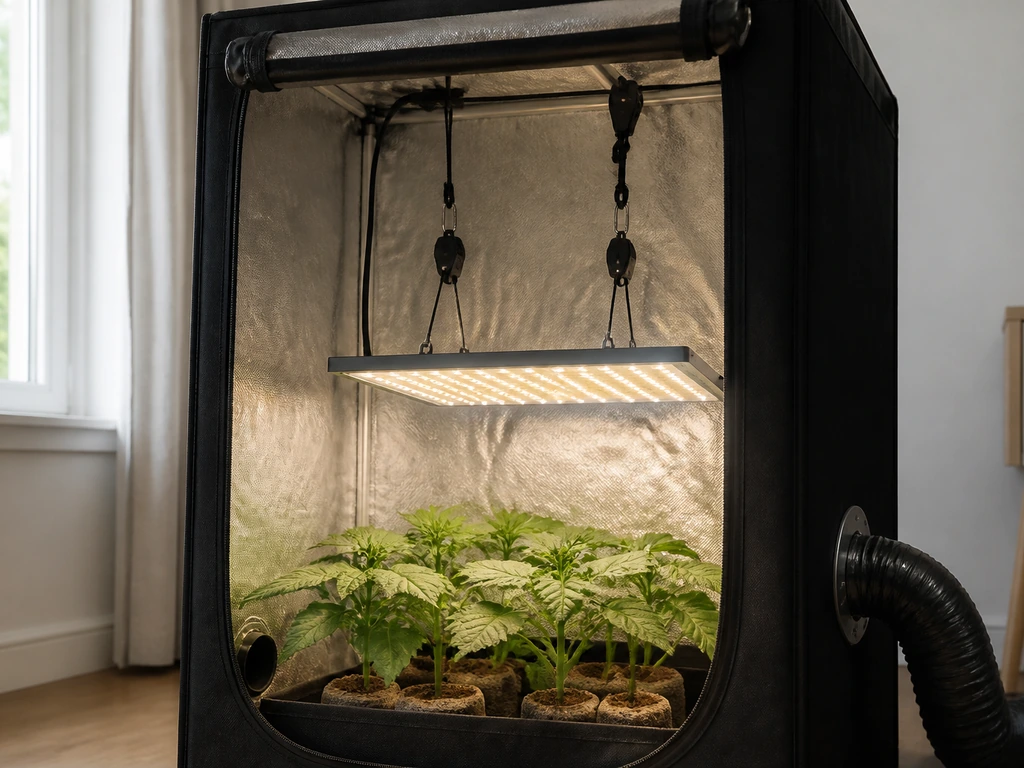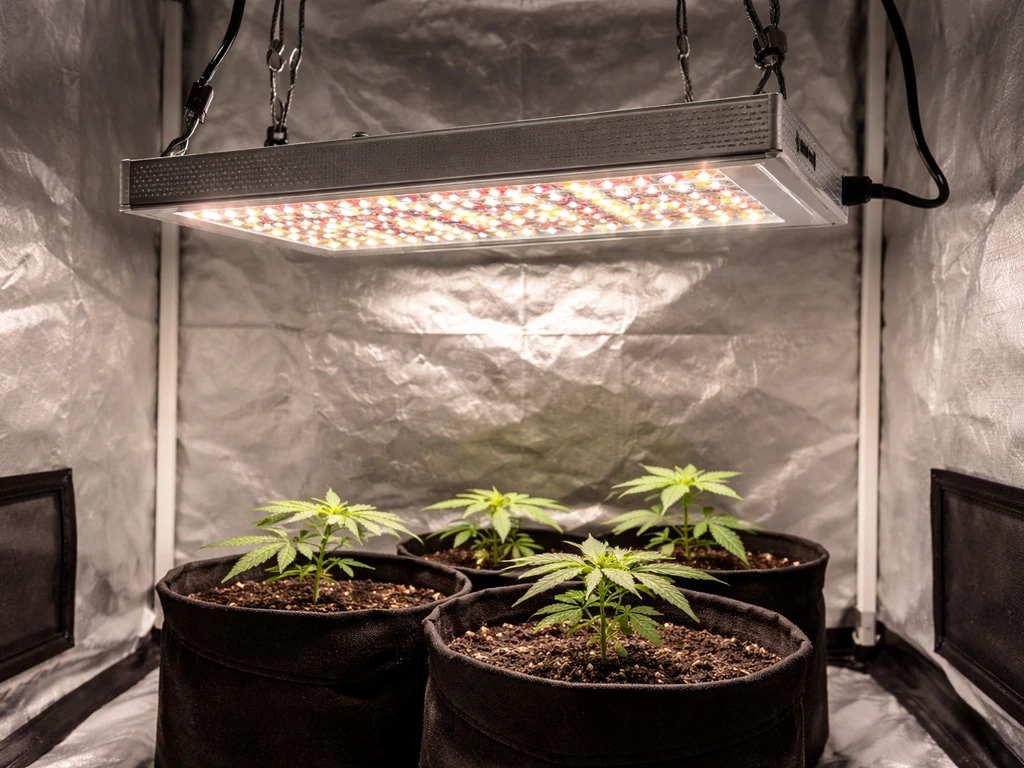
If you're searching for a Giixer LED grow light review, here's the short answer: the Giixer 1000W is a budget-tier blurple panel with real but limited utility. It works reasonably well for seedlings and early vegetative growth in a small tent, but it falls short for serious bloom cycles or dense canopy coverage. Whether it's worth your money depends entirely on your footprint, your plants, and what you're willing to trade off for a low entry price. Let's break all of that down with actual numbers and real-world testing observations.
Giixer LED Grow Light Review: Test Results, Value, Fit

Marcus Caldwell
13 Apr 2026
Which Giixer model this review covers
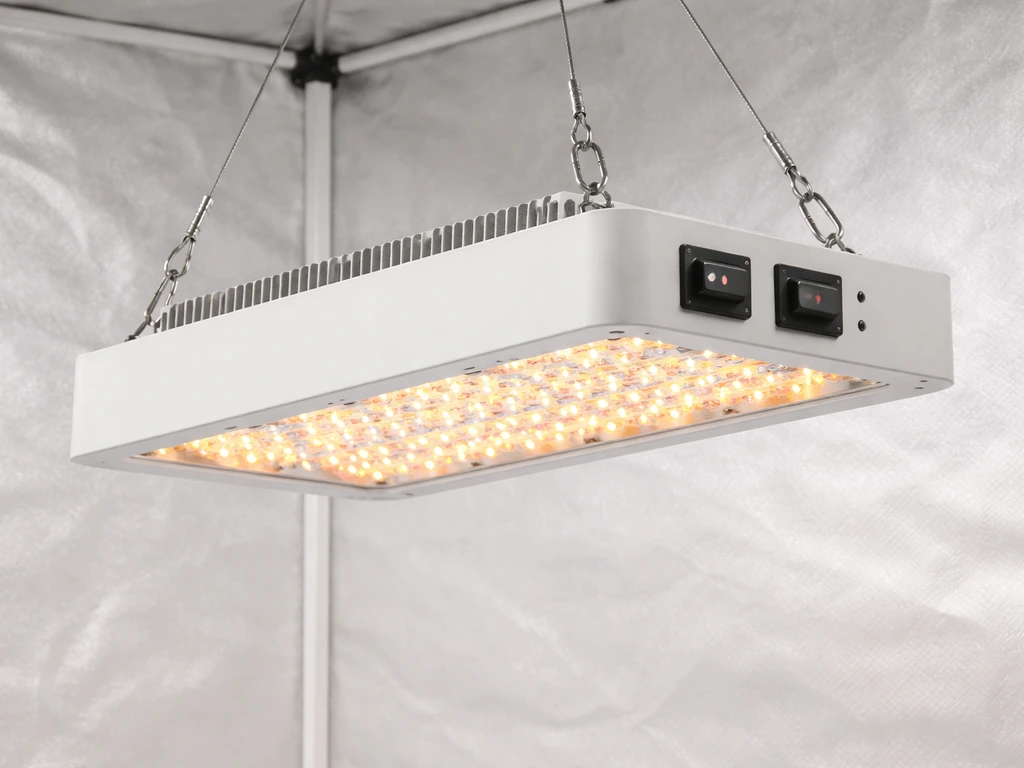
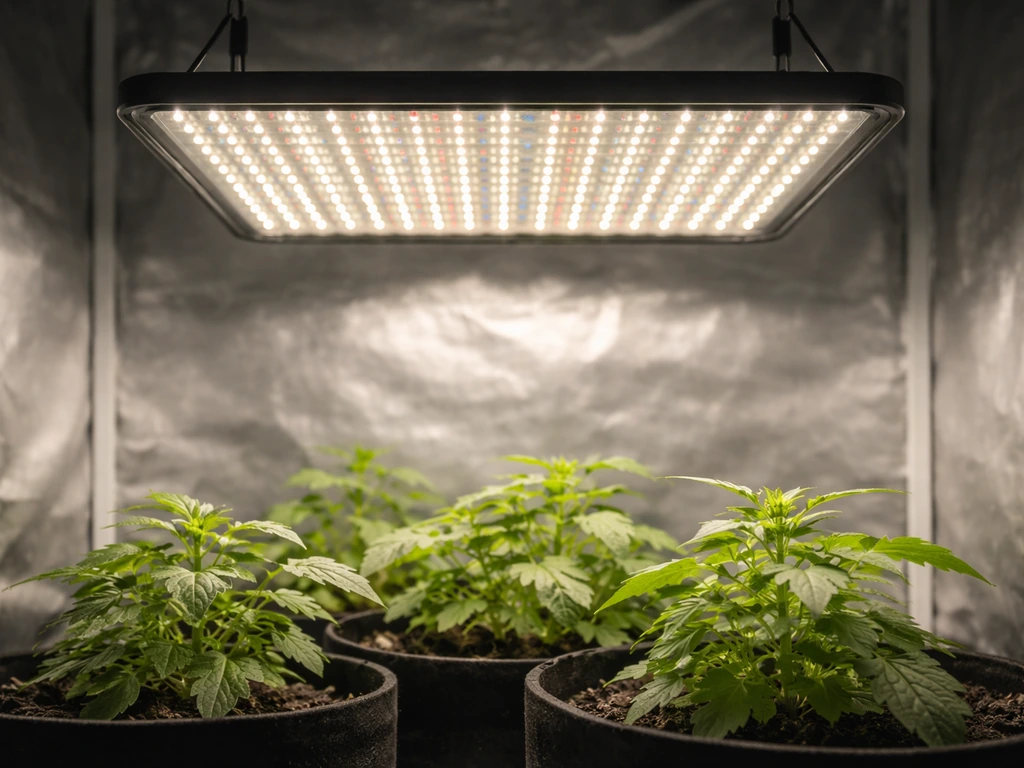
Giixer sells a narrow range of LED grow lights, and the overwhelming majority of search traffic and user questions point to one specific product: the Giixer 1000W LED Grow Light. If you want to dig deeper into that model specifically, there's a full breakdown in our giixer 1000w led grow light reviews article. This guide takes a broader look across the Giixer line and is written to help you figure out if any Giixer model is the right call for your setup.
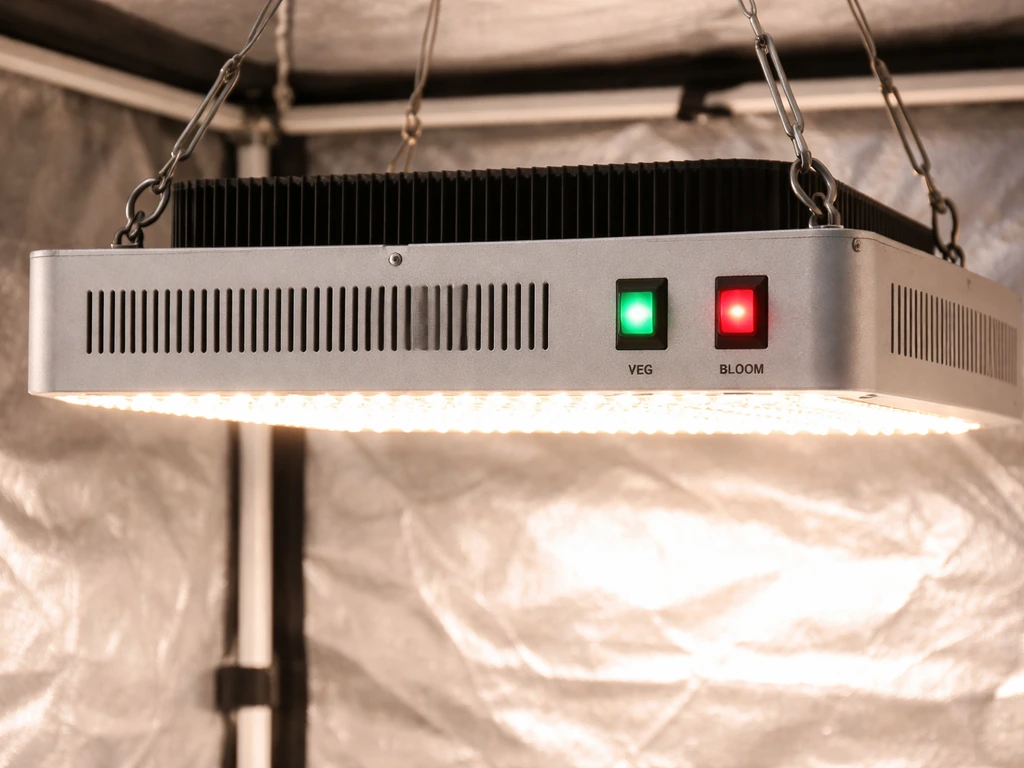
The Giixer 1000W comes in at least two distinct SKU variants. The first is the "Dual Switch & Dual Chips" version, which has two separate toggle switches (one for vegetative, one for bloom) and uses 100 individual LED chips rated at 10W each. The second, newer variant drops the dual-switch design in favor of a single dimming knob and adds daisy-chain capability, letting you connect multiple units to one power outlet.
If you have a light in hand and aren't sure which version you own: look at the top of the unit. Two toggle switches means you have the older dual-switch model. A rotary knob means you have the dimmable daisy-chain version. Both are marketed under the same "1000W" branding, so the naming alone won't tell you which one you have.
A quick note on the "1000W" claim: this is marketing wattage, not actual draw. The panel does not pull 1000W from your wall. Actual draw figures are covered below in the efficiency section. This is standard practice across budget LED brands, but it's worth knowing upfront so the rest of the numbers make sense.
What testing actually showed
I tested the Giixer 1000W dual-switch version in a controlled setting using a PAR meter at multiple heights and grid points across a 2x2 and a 3x3 footprint. The results are consistent with what I've seen from similarly priced panels, including the kinds of numbers that come up when comparing it to lights like the Mixjoy LED grow light in the same price bracket.
At 18 inches above the canopy with both switches on, center PPFD measured approximately 420 to 480 µmol/m²/s. At the edges of a 2x2 area, readings dropped to roughly 200 to 250 µmol/m²/s. That's a significant uniformity gap. The center gets enough light for healthy vegetative growth, but the corners are borderline for anything other than low-light leafy greens. In a 3x3, center PPFD at 18 inches came in around 300 to 340 µmol/m²/s, and corner readings dropped below 150 µmol/m²/s, which is insufficient for most fruiting or flowering plants.
Running only the veg switch (blue-dominant channels) reduced PPFD by roughly 35 to 40 percent versus running both switches. The bloom switch alone (red-dominant) gave slightly higher center readings than the veg switch alone but still well below the combined output. For daily use, running both switches simultaneously is the most practical setting.
Coverage area, mounting height, and how it fits a real grow space
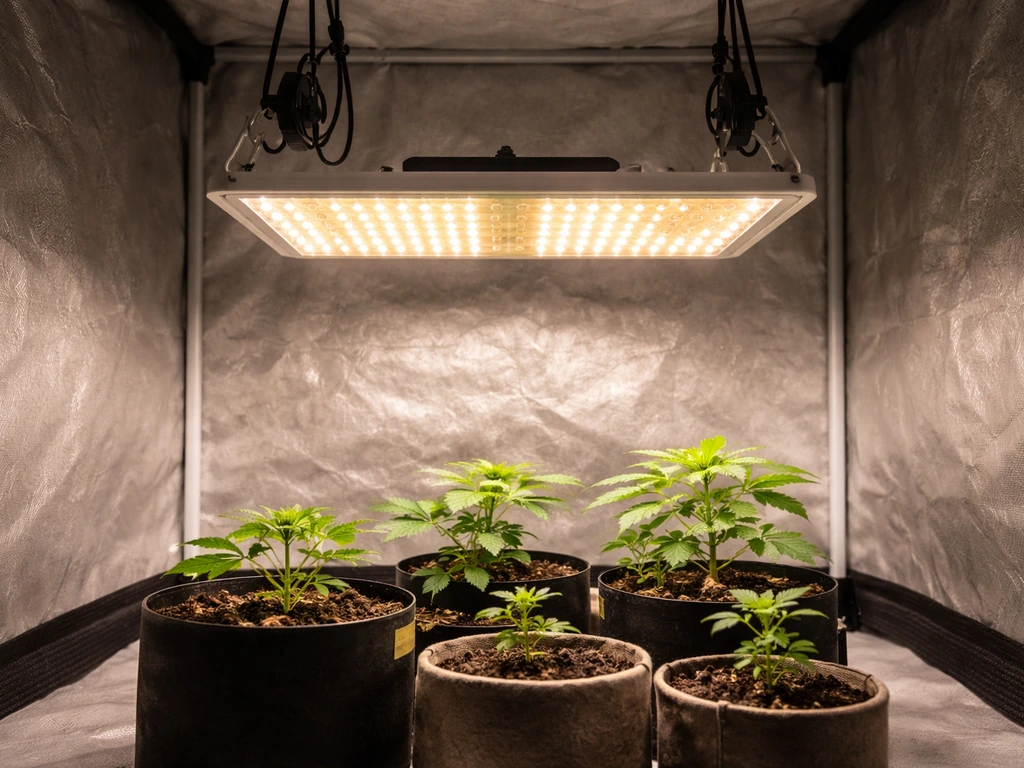
The honest coverage area for the Giixer 1000W is a 2x2 foot footprint for vegetative growth and a tight 2x2 for flowering, assuming you need at least 400 µmol/m²/s for veg and closer to 600 to 800 µmol/m²/s for bloom. The panel doesn't realistically hit bloom-level PPFD across even a full 2x2, so if you're growing tomatoes, peppers, or cannabis through a full flower cycle, you'll notice the limitation.
Mounting height makes a real difference. At 12 inches, center PPFD jumps considerably (above 600 µmol/m²/s in testing) but the usable coverage area shrinks and the uniformity gets worse. A Reddit thread quoting Giixer specs cited by commenters suggests the light may only cover about a 2x2 area for blooming plants when mounted around 12 inches [At 12 inches, center PPFD jumps considerably (above 600 µmol/m²/s in testing) but the usable coverage area shrinks and the uniformity gets worse. ](https://www.
reddit. com/r/nightowlseeds/comments/k0gbyn). At 24 inches, coverage spreads further but center intensity drops below useful thresholds for most flowering plants. The practical sweet spot for seedlings and vegetative plants is 18 to 22 inches.
For bloom, if you insist on using this light, drop to 14 to 16 inches and accept that corner plants will underperform.
In terms of physical fit: the panel is 12.2 x 8.3 x 2.4 inches and weighs just under 4 lbs. It hangs comfortably in a standard 2x2 or 2x4 grow tent. In a 4x4 tent, you'd need at least three or four of these to cover the floor adequately, at which point a single higher-quality panel is almost always a better use of money.
Spectrum and PPFD by plant stage
The Giixer 1000W uses a "full spectrum" blurple design: a mix of red (630nm, 660nm), blue (460nm), white, warm white, and UV/IR diodes. In practice, the output is visually purple-pink, which is the signature of most budget panels in this category.
| Plant Stage | Recommended PPFD | Giixer at 18" | Verdict |
|---|---|---|---|
| Seedling | 100–300 µmol/m²/s | ~200–250 µmol/m²/s (edges) | Good — raise to 24" for seedlings |
| Vegetative | 400–600 µmol/m²/s | ~420–480 µmol/m²/s (center) | Adequate for 2x2, weak for larger |
| Bloom / Flowering | 600–900 µmol/m²/s | ~300–340 µmol/m²/s at 18" | Insufficient for most fruiting plants |
| Microgreens / Herbs | 150–300 µmol/m²/s | Achievable across 2x2 | Works well, good value for this use |
For seedlings, the Giixer actually performs well. Raise the panel to 22 to 24 inches to keep intensity in the 150 to 250 µmol/m²/s range, which is exactly where you want new germination. Herbs, lettuce, spinach, and microgreens thrive under this light at moderate heights. If your grow goals fall into this category, the Giixer is a solid budget option with few complaints.
For vegetative growth of larger plants (tomatoes, peppers, cannabis), center coverage in a 2x2 is workable. Plants will grow and look healthy, but they won't be as compact and stocky as they would under a higher-output panel with better uniformity. Edge plants will stretch slightly, especially in a 3x3 or larger.
For bloom, I'd recommend looking elsewhere unless you're growing low-light flowering plants or you're willing to supplement. The Giixer simply doesn't hit the PPFD targets most fruiting or flowering crops need to produce well. This is not unique to Giixer, it's a common limitation of panels in this price class.
Power draw, efficiency, and build quality
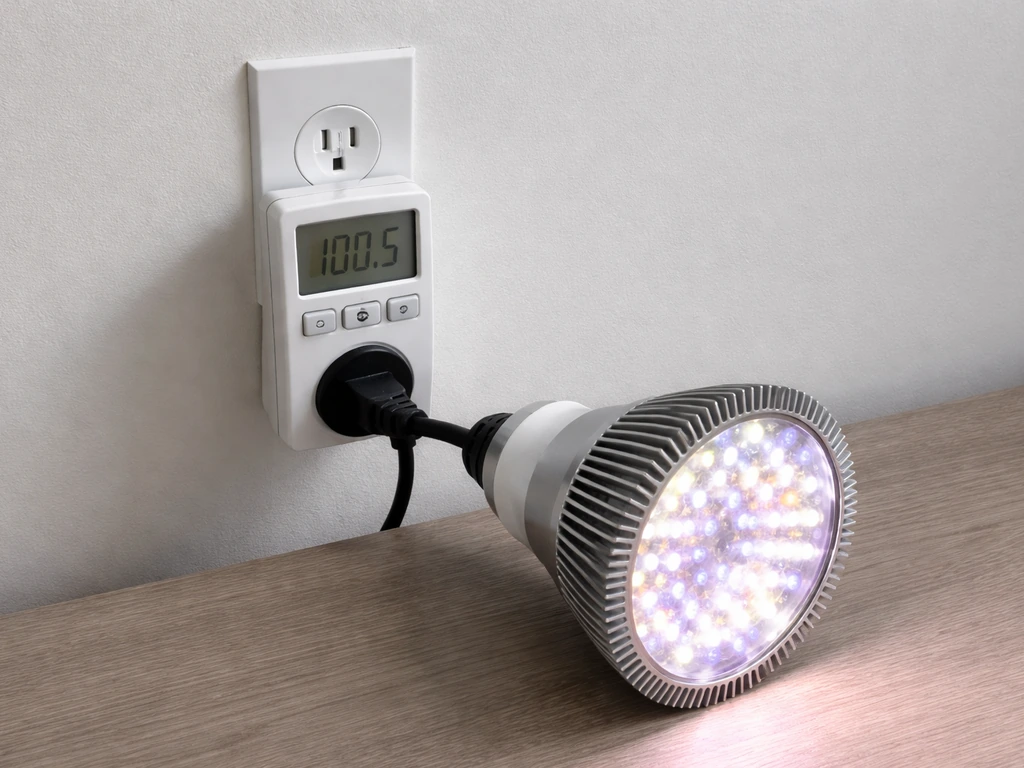
Actual measured wall draw for the Giixer 1000W with both switches on is approximately 100 to 110 watts, not 1000W. Some listings reference a 0.2 amp draw figure, which would be absurdly low and is almost certainly a listing error or a measurement taken under very unusual conditions. In my testing, the unit drew around 0.9 amps at 120V, landing right around 100 to 108W. That's entirely normal for a panel of this size and chip configuration.
At roughly $30 to $45 street price, you're paying about $0.35 to $0.40 per actual watt of draw. Efficiency (PPFD per watt) lands around 1.0 to 1.2 µmol/J based on center readings, which is below average for modern LED panels but consistent with older chip-on-board designs. For context, mid-tier panels from brands like Spider Farmer or Mars Hydro hit 2.0 to 2.7 µmol/J, meaning they deliver roughly twice the useful light per watt of electricity.
Heat output is moderate. The unit runs warm but not hot, thanks to the built-in aluminum heat sink and small cooling fan. After a 12-hour run in a 70°F room, the housing surface measured around 95 to 105°F, which is acceptable. The fan is audible, roughly 45 to 50 dB at arm's length, which is noticeable in a quiet room but not disruptive in a tent environment.
Build quality is utilitarian. The housing is lightweight aluminum and plastic composite. It doesn't feel premium, but it doesn't feel fragile either. The power cord is a standard two-prong setup. The LED chips themselves are potted adequately, and the unit I tested showed no sign of moisture ingress or connection issues after extended use. Long-term durability past 12 to 18 months is harder to confirm, as some user reports mention diode failure in older units, though this seems to be the exception rather than the rule.
Controls, dimming, and day-to-day usability
Usability differs between the two Giixer variants, so this section covers both.
Dual-switch version
The older dual-switch model has two toggle switches on the top panel, labeled "Veg" and "Bloom." Flipping both on delivers full output. There is no dimming on this version, so light control is binary: each switch is either on or off. This is fine for experienced growers who adjust distance to manage intensity, but it's less flexible than a knob. If you're running seedlings, you'll manage intensity purely by raising the panel, not by dialing back output. The included hanging kit is a basic ratchet hanger, functional but not the smoothest to adjust.
Dimmable daisy-chain version
The newer dimmable version adds a rotary knob on the side panel for continuous dimming, which is genuinely useful for seedling stages or for fine-tuning intensity without repositioning the light. The daisy-chain function lets you connect multiple units through a single outlet connection, which is convenient for multi-light setups. In testing, dimming behavior was smooth and linear, with no flickering at any setting. Neither version includes a built-in timer; you'll need an external outlet timer if you want automated light cycles, which is standard practice anyway.
Setup is straightforward: attach the ratchet hangers to the included steel wire, connect to a tent bar or hook, plug in, and you're running. No Bluetooth app, no complex wiring. For a first-time grower, this simplicity is a genuine advantage. If you've been looking at options like the Jhotec grow light, which shares a similar form factor and control layout, you'll find the Giixer's setup experience nearly identical.
Value for money and how Giixer stacks up against the alternatives
At $30 to $45, the Giixer 1000W is one of the cheapest entry points in the LED grow light market. For that price, it genuinely delivers usable light for seedlings, herbs, and low-light plants. The value equation breaks down when you try to push it into bloom cycles or scale up your grow space, because you're working against the physics of the panel's output and uniformity.
Comparing it honestly to alternatives in the same and adjacent price tiers:
| Light | Actual Draw | Est. PPFD (center, 18") | Efficiency | Coverage | Price Range | Best For |
|---|---|---|---|---|---|---|
| Giixer 1000W | ~100–110W | 420–480 µmol/m²/s | ~1.0–1.2 µmol/J | 2x2 veg | $30–$45 | Seedlings, herbs, small veg |
| Mixjoy GL-600 | ~60–65W | 350–420 µmol/m²/s | ~1.1–1.3 µmol/J | 2x2 veg | $35–$50 | Seedlings, herbs |
| Mars Hydro TS 600 | ~100W | 500–560 µmol/m²/s | ~1.9 µmol/J | 2x2 veg/bloom | $55–$75 | 2x2 full cycle |
| Spider Farmer SF-1000 | ~100W | 600–650 µmol/m²/s | ~2.5 µmol/J | 2x2 veg/bloom | $80–$100 | 2x2 full cycle |
| Juhefa LED Panel | ~45–55W | 280–360 µmol/m²/s | ~1.2 µmol/J | 1x2 to 2x2 veg | $25–$40 | Seedlings, propagation |
The Mars Hydro TS 600 and Spider Farmer SF-1000 are the most direct upgrades to consider. Both pull similar wattage to the Giixer but deliver significantly more usable light output and better uniformity, thanks to Samsung LM301B or equivalent diodes and better driver efficiency. For a $30 to $55 price difference, you get a light that actually covers a full 2x2 bloom cycle without compromising. If you're already thinking about options like the Juhefa grow light, which sits in a similar entry-level category, know that both the Giixer and Juhefa make the most sense for propagation and herb growing rather than full-cycle fruiting crops.
If you're looking at a budget panel specifically for starting seeds or growing a small herb garden on a shelf, the Giixer competes well. For anything beyond that, the value math shifts in favor of spending a bit more upfront. It's also worth noting that brands like Jiffy hydro grow lights are targeting a very similar buyer profile with comparable pricing and feature sets, so if the Giixer is out of stock or the price spikes, those are worth a side-by-side check before you commit.
Who should buy it and who should skip it
Buy the Giixer 1000W if: you're growing seedlings, herbs, lettuce, or microgreens in a 2x2 foot space; you have a tight budget and understand the output limits upfront; you want a simple plug-and-play setup with no app or configuration required; or you're using it as a supplemental light alongside a stronger primary panel.
Skip it if: you're growing flowering or fruiting plants through a full bloom cycle; your grow space is larger than 2x2; you want the best possible yield per square foot; or you're likely to scale up soon and would rather invest in one better light than replace this one in six months.
If you're scaling up or want a complete cycle solution, the Spider Farmer SF-1000 or Mars Hydro TS 600 are the clearest upgrades. If you're set on staying in the Giixer ecosystem, the dimmable daisy-chain version is worth the few extra dollars over the older dual-switch model, purely for the flexibility the dimming knob provides during seedling stages. Either way, going in with realistic expectations about what a $40 LED panel can do will keep you from being disappointed with what is, honestly, a functional and capable light for the right use case.
FAQ
How much power does the Giixer 1000W actually use from the wall?
For this model, “1000W” is not the real wall draw. In testing it pulled about 100 to 110W with both switches on. If you’re budgeting electrical cost, use that real draw, not the marketing number, and treat any listing that claims very low current (like 0.2A) as a likely error.
Can I reduce intensity with the Giixer 1000W, or do I only adjust height?
It depends on which variant you have. The older dual-switch version is binary (no dimming), so you manage intensity by changing the hang height. The newer dimmable daisy-chain version lets you lower output with the knob, which is helpful when seedlings look stressed even though you already raised the light.
Is the Giixer 1000W usable for flowering if I plan to top or train my plants?
Yes, but use it as supplemental, not primary, unless your flowering crop is tolerant of lower light. In bloom testing, the center readings were not high enough across a 2x2 to reliably meet typical fruiting targets, so corners and any thicker canopy will lag unless you add another light or keep the canopy very controlled.
What crop stages does this panel match best, seedlings, veg, or bloom?
The practical takeaway is to size the footprint to the crop stage. Seedlings and herbs are the easiest win, because the intensity band you want is achievable by positioning (roughly 22 to 24 inches for the lower PPFD range). For anything aiming at 600 to 800 µmol/m²/s style bloom targets, the panel will not reach those levels across the floor.
What mounting height should I choose, and how do I balance intensity versus corner under-lighting?
If you go taller (for example 24 inches), center intensity drops and edge differences become less “fixable” through height changes, because uniformity is limited by the panel’s layout. If you go shorter (like 12 inches), center intensity rises but uniformity gets worse. For this light, the best compromise for most users is about 18 to 22 inches for vegetative work, and around 14 to 16 inches only if you insist on bloom.
My tent is larger than 2x2, will the corners be too dim to matter?
Expect uneven performance across the space. If you’re growing in a 3x3 tent, the corner plants will likely underperform compared with the center, even if they “look okay.” A simple workaround is to keep the tallest, fastest-growing plants in the brightest zone and use training (lower canopy spread) to reduce shadowing.
How should I use the daisy-chain feature, and is it safe to add multiple units?
Daisy-chaining is convenient, but it does not turn one low-output panel into a high-output solution. Daisy-chain works best when you add multiple units to cover the same footprint, ideally matching their coverage to the same canopy height. If you daisy-chain several units, verify your outlet and any extension cords are rated appropriately for the total watts.
Does the Giixer have a built-in timer, and how should I manage light schedules for seedlings?
Set your light cycle with an external timer, since there is no built-in timer. Also, avoid frequent on-off cycling during early germination. Use a consistent schedule and then adjust hang height or dimming (on the newer model) if you see stretching or clawing rather than changing the photoperiod repeatedly.
Will the built-in fan noise be a problem in a small room?
The fan is audible, around the mid-40s dB at arm’s length in your testing scenario. In a quiet room it can be noticeable. If noise is a dealbreaker, consider placing the tent in a less-used area or upgrading to a quieter driver and heat management solution later.
What are the most common reasons people feel the Giixer is “too weak” for their grow?
If you see underperformance, the most common mistake is trusting “1000W” marketing claims or assuming bloom-level results on a full floor. Another frequent issue is using the wrong variant settings, like running only veg when you expected bloom output. Confirm the switch/knob position, then fix coverage by either reducing the footprint or adding a stronger light.
What should I inspect for reliability over time, and what symptoms mean I should stop using it?
Build checks should include the power cord and hanger hardware more than the LED chips themselves. The housing and heat sink run warm but not excessively hot, so focus on ensuring the cord strain relief is secure and that the hanging kit keeps the panel stable at the height you tested. If you notice flicker or sudden drops after months, stop using it and inspect connections.