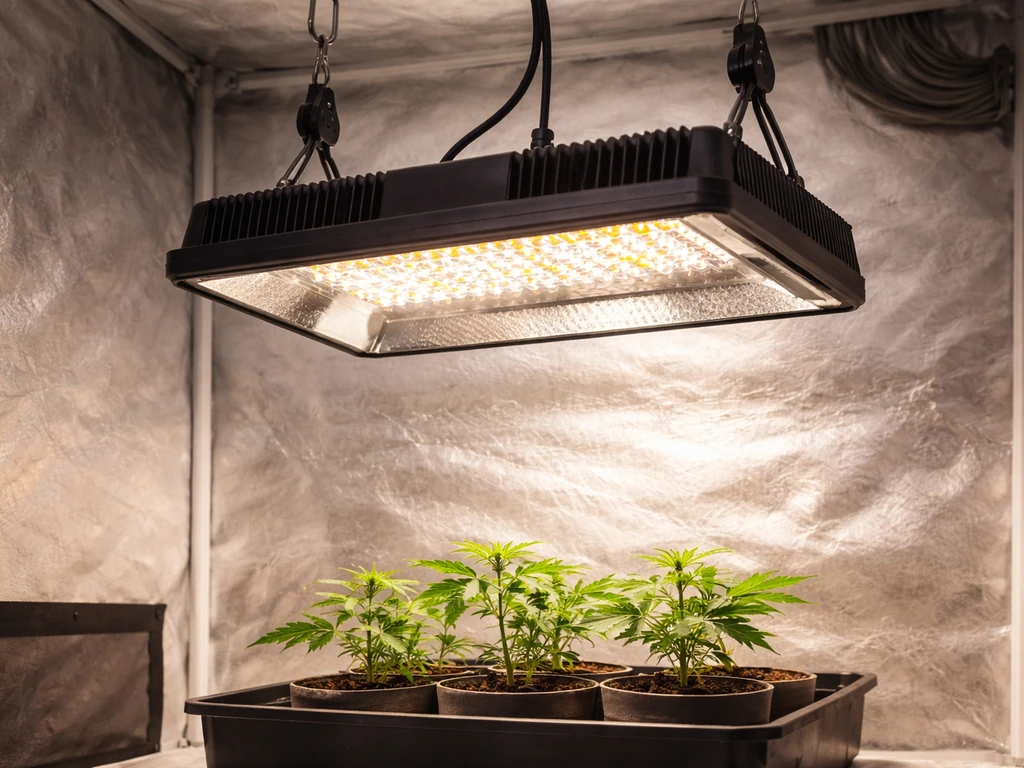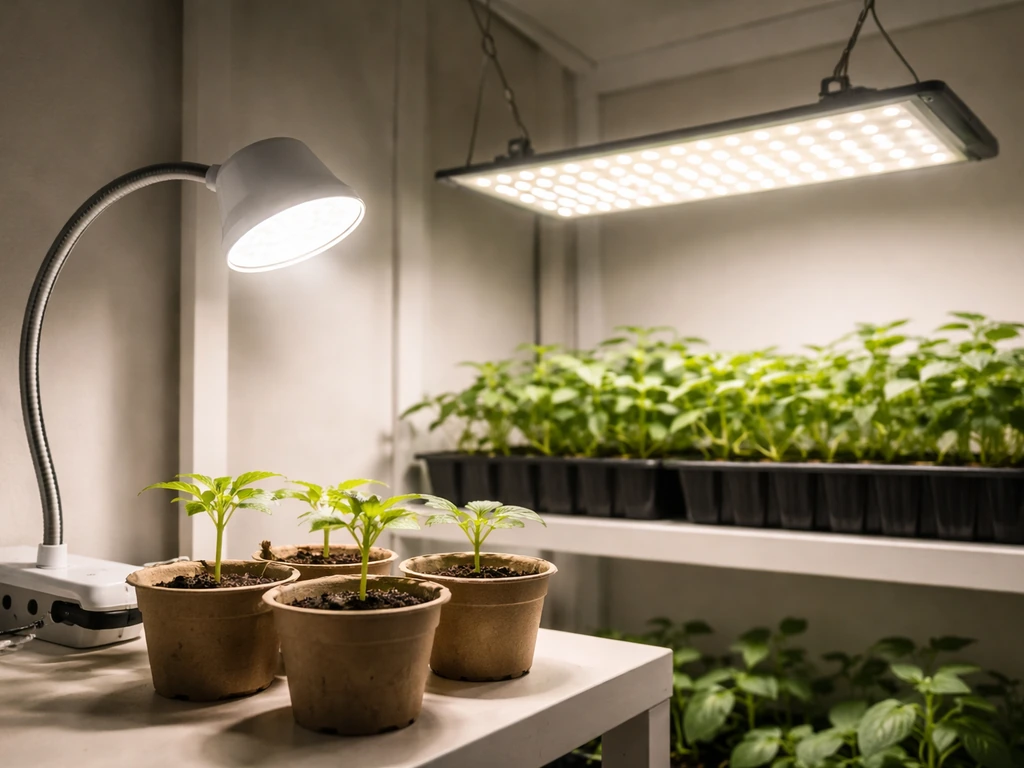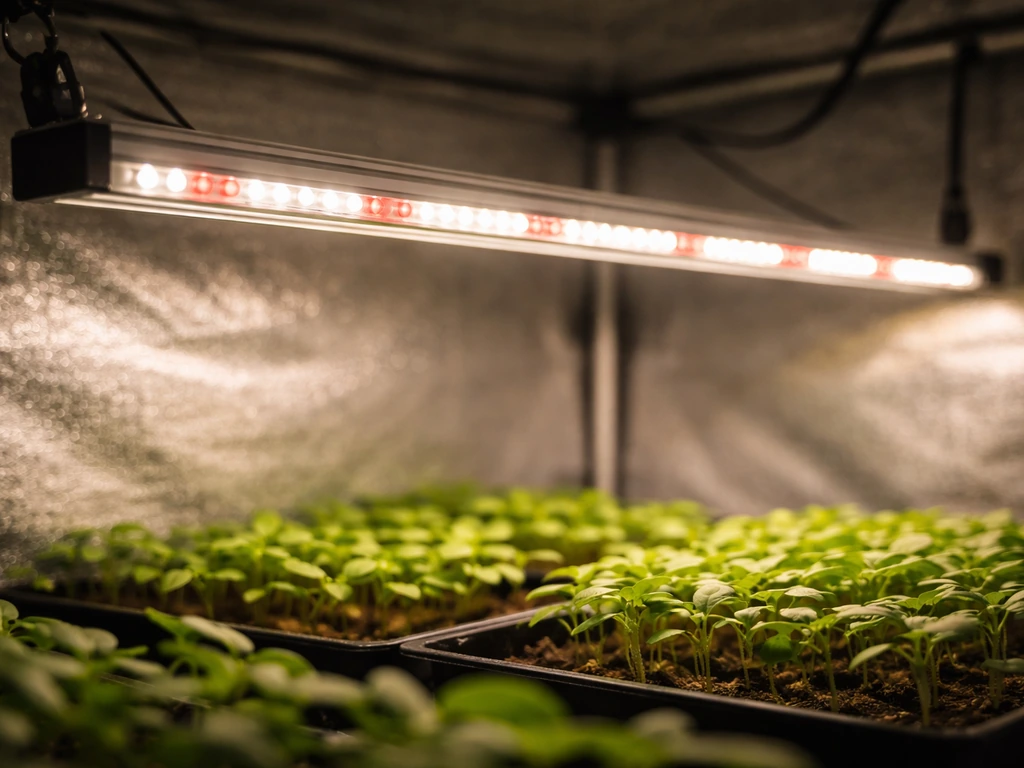
The Jiffy Hydro Grow Light (Model #140298) is a compact, 14W LED fixture designed specifically for seedlings and cuttings. It's a solid entry-level option for germination trays and propagation setups, but it is not a full-cycle grow light and won't carry plants through veg or flower. If you're starting seeds indoors or rooting cuttings and want something simple, safe, and easy to set up, it gets the job done at a reasonable price. If you're expecting it to power a mature plant canopy, it's the wrong tool.
Jiffy Hydro Grow Light Reviews: Buying Guide and Performance

Marcus Caldwell
3 May 2026
Quick verdict
For what it's designed to do, the Jiffy Hydro Grow Light is competent. It's ETL listed, draws only 14W, runs cool, and the 6500K spectrum is genuinely well-suited to seedling development. The stand-included kit keeps setup simple. Real-world user feedback is mixed on actual lumen output (at least one owner measured closer to 700 lumens rather than the rated 1,900), which is worth knowing before you buy. That said, multiple owners report units running reliably for years. At roughly $69.99 CAD at Canadian Tire, it's priced fairly for a seedling-stage light, especially with the stand bundled in. Just go in with clear expectations about its limits.
Which Jiffy grow light model this review covers
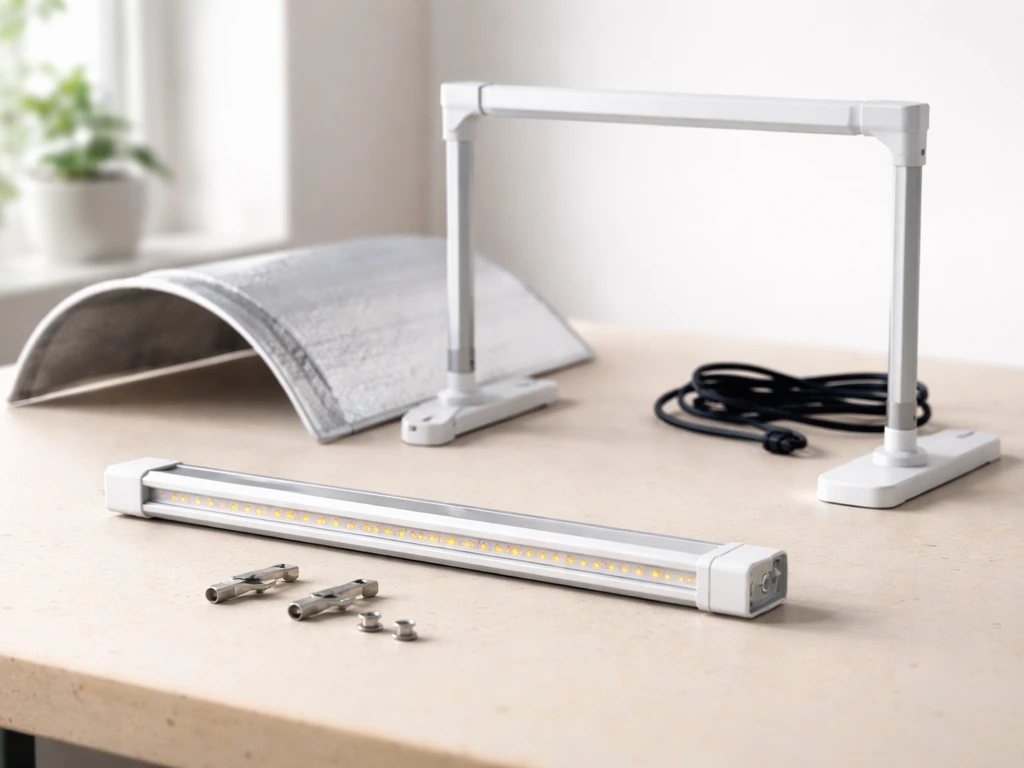
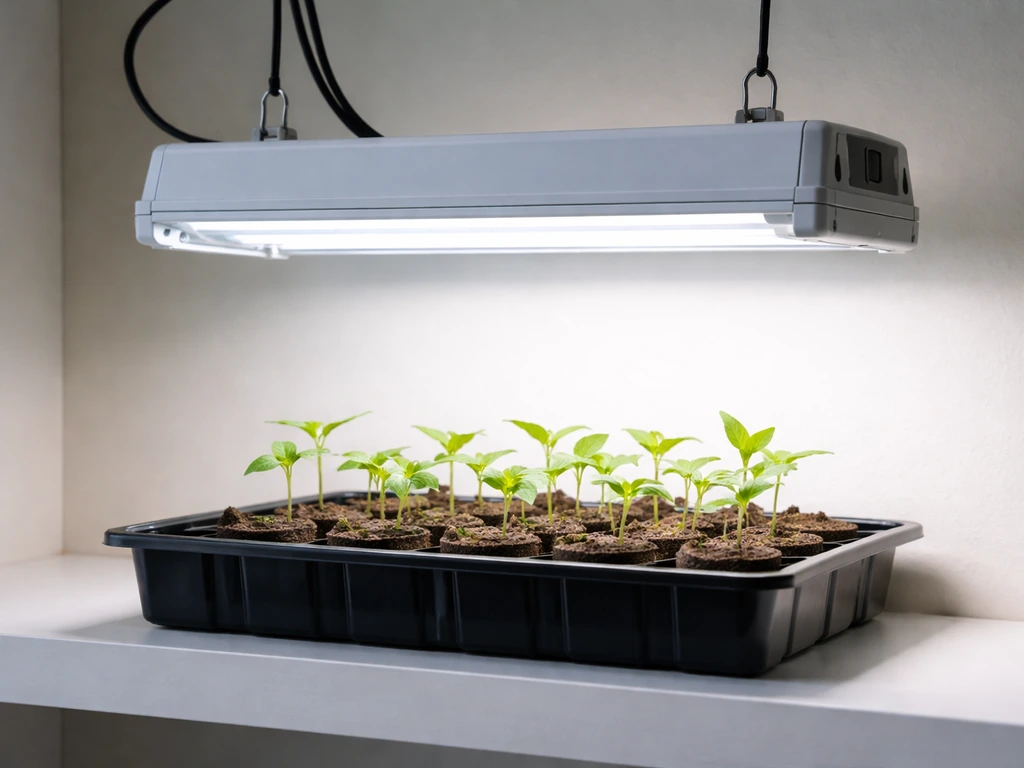
There's some confusion in the market because "Jiffy Hydro Grow Light" appears across different listings with different configurations. The core product this review focuses on is the 14W LED fixture, sold under Model #140298 (also written as 14-0298 depending on retailer). It appears at Home Hardware as Item #5121-002, at Home Depot Canada as Store SKU #1001519804, and at Canadian Tire and McKenzie Seeds under the same model number. This is the kit that includes a 2-foot LED light bar, an adjustable stand, and a 6-foot power cord with an inline on/off switch.
There is a separate, distinctly different product sold by Ocean State Job Lot under the "Jiffy Hydro Grow Light" name that claims a 150W HPS configuration. That appears to be an older or alternative product bundle and is not the same unit as the 14W LED kit. If you're shopping and see a listing mentioning HPS or 150W output alongside the Jiffy name, confirm the SKU before assuming it's the same product. The 14W LED fixture (Model #140298) is what the vast majority of current buyers encounter.
To confirm which version you have or are considering: look for the model number 140298 on the box or product page, a rated wattage of 14W, 48 LED diodes, and a 120V plug. Those four details confirm you're looking at the current LED kit covered here.
Performance: coverage, output, and spectrum
Light output and coverage area
On paper, the Jiffy Hydro Grow Light is rated at 1,900 lumens from 48 LED diodes, with an efficiency of 136 lumens per watt at 14W draw. Those are reasonable numbers for a seedling light. The 120-degree lighting angle across a 24-inch (61cm) fixture means decent spread for a standard 1020 propagation tray. In practice, at least one owner who measured actual output reported only around 700 lumens, which is a significant gap from the spec sheet. Lumen measurements vary by meter, distance, and calibration, so take that anecdote as a caution rather than a definitive verdict, but it's worth noting that marketing lumen specs on budget lights are sometimes measured under optimistic conditions.
For seedlings and cuttings, which have lower light intensity needs than mature vegetating or flowering plants, the output is generally adequate. This is not a fixture you'd want over a 4x4 tent or a full vegetative canopy. Treat it as a one-tray, one-shelf light and it performs as expected.
Spectrum and plant stage fit
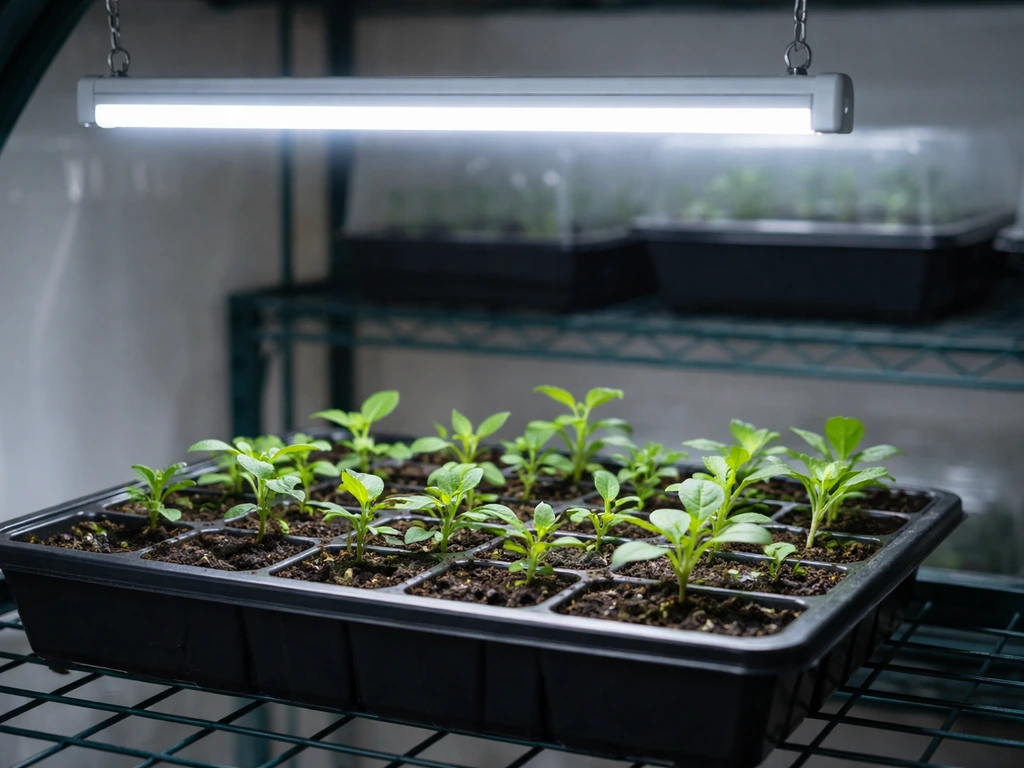
The 6500K color temperature puts the Jiffy firmly in the cool/daylight-blue range, which is ideal for vegetative and seedling growth. Blue-dominant spectrums promote compact, sturdy early growth and good root development, which is exactly what you want during germination and propagation. It is not suited for flowering (which benefits from warmer, red-heavy spectrums in the 2700-3000K range). Canadian Tire's listing specifically positions this as a tool for improving germination and faster early development, and that's the honest scope of its use.
Build quality, safety, and reliability
The unit is ETL listed, which is a meaningful safety certification for a light that will run over water in a hydro or propagation setup. The fixture is 120V, includes a 6-foot cord with an inline on/off switch, and is rated for 50,000 hours of LED life. The stand adjusts to accommodate different tray heights, and the overall footprint is 23 inches by 12 inches by 11 inches. User feedback on build quality is generally positive: multiple reviewers describe it as well-made and easy to assemble, and at least one owner reported using multiple units reliably for several years.
The manual includes detailed safety language including warnings about keeping the bulb away from moisture, not misting plants while the light is powered on, maintaining room temperature below 95°F, and ensuring adequate airflow around the fixture. There's also language in the manual about HPS/halide bulb replacement schedules, which likely carries over from an earlier version of this product line. For the current LED version, bulb replacement is a non-issue given the 50,000-hour rated life, but it's an example of documentation that hasn't fully caught up to the product revision.
Setup for hydro and indoor growing
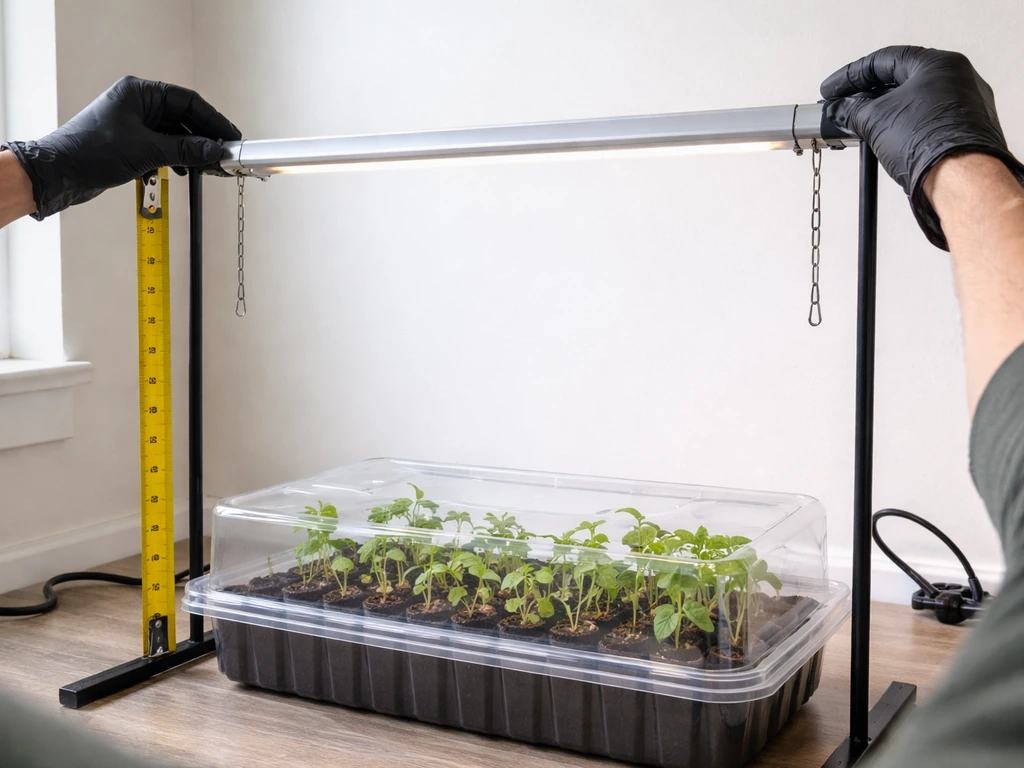
Setup is genuinely straightforward: attach the light bar to the stand, plug in the 6-foot cord, and position over your tray. The manual recommends 8 to 12 inches of clearance on all sides and warns against mounting directly to any surface, which is standard caution for heat dissipation even at this low wattage. For seedlings, a mounting height of 2 to 4 inches above the canopy is a reasonable starting point, then adjust based on how plants respond. If you see stretching or etiolation, lower the light or increase the photoperiod. If leaf tips show early stress, raise it slightly.
For photoperiod timing, seedlings and cuttings generally do well on 16 to 18 hours of light per day. The inline on/off switch is handy for manual control, but pairing it with a basic plug-in timer is a smarter move for consistency. The Ocean State Job Lot bundle version was sold with a bonus timer included, which is a good add-on to consider if your purchase doesn't include one.
- Mount 8-12 inches clearance on all sides, not flush to shelving
- Starting height over seedlings: 2-4 inches, then adjust based on plant response
- Run 16-18 hours on, 6-8 hours off for seedlings and cuttings
- Add a plug-in timer if your kit doesn't include one
- Never mist plants while the light is powered on
- Keep room temperature below 95°F and ensure airflow around the fixture
- Do not look directly into the diodes during startup or operation
Value and how it stacks up against alternatives
At $69.99 CAD, the Jiffy Hydro Grow Light is positioned as a beginner-friendly, entry-level seedling light. The stand is included, ETL certification adds peace of mind, and the package requires no assembly expertise. For casual home gardeners starting tomatoes, herbs, or flowers indoors each spring, this is a reasonable buy. For more serious indoor growers who want a light that will carry plants through multiple stages, the 14W output is a ceiling you'll hit quickly.
| Feature | Jiffy Hydro Grow Light (Model 140298) | Typical budget T5 fluorescent kit | Budget full-spectrum LED (comparable price) |
|---|---|---|---|
| Wattage | 14W | 24-54W | 20-45W |
| Rated lumens | 1,900 | 1,800-5,000+ | Varies (often unmarked) |
| Color temperature | 6500K | 5,000-6,500K | Full spectrum (white + red) |
| Plant stage fit | Seedlings/cuttings only | Seedlings/early veg | Seedlings through veg |
| Stand included | Yes | Sometimes | Rarely |
| Safety certification | ETL listed | UL listed (usually) | Varies |
| Rated LED/bulb life | 50,000 hours | 20,000 hours (bulb) | 50,000 hours |
| Price range (CAD approx.) | ~$70 | ~$50-$120 | ~$40-$80 |
If you're comparing the Jiffy to other budget LED grow lights reviewed on this site, including options like the Mixjoy, Juhefa, or Giixer lines, the key difference is scope. If you’re specifically looking for a giixer LED grow light review, compare wattage, spectrum, and coverage area first to ensure it matches your plant stage Giixer lines. If you are also considering Juhefa grow lights, check how their wattage and spectrum compare to this 14W seedling setup.
If you’re looking specifically for Giixer 1000W LED grow light options, these reviews can help you compare performance, coverage, and value before buying Giixer 1000W LED grow light reviews. If you want a similar budget option, a mixjoy led grow light review can help you compare how that style stacks up for seedlings and small setups. Those lights are marketed for vegetative and sometimes flowering stages with higher wattages and full-spectrum diodes. The Jiffy is not competing in that space.
It's a narrower tool for a narrower job, and that's fine as long as you know what you're buying. If you need a single light that covers germination through early veg, a comparable-priced full-spectrum LED with 20-45W output will give you more flexibility, though it usually won't include a stand.
Pros, cons, and who should buy it
What it does well
- ETL listed for safety in damp propagation environments
- 6500K spectrum is genuinely appropriate for seedling and cutting development
- Stand included makes setup immediate without extra purchases
- 14W draw is energy-efficient for a light that runs 16-18 hours daily
- 50,000-hour LED life means you won't be replacing bulbs
- Inline on/off switch is a convenient touch
- Multiple users report years of reliable operation
Where it falls short
- Real-world lumen output may be significantly lower than the 1,900-lumen spec
- Covers one standard tray only, not suitable for multi-tray or larger setups
- No spectrum flexibility: single color temperature only, no red channel for flowering
- Documentation (manual) includes legacy HPS/halide language that can confuse buyers
- Multiple product configurations sold under the same "Jiffy Hydro Grow Light" name create shopping confusion
Who should buy this
The Jiffy Hydro Grow Light is a good match for home gardeners who start seeds or root cuttings seasonally, want a simple plug-and-play kit with a stand, and don't need anything beyond the germination and propagation stage. This jhotec grow light review covers what to expect from its low-watt LED output and best-use scenarios for seedlings and cuttings Jiffy Hydro Grow Light. It's especially practical for Canadian buyers where it's widely available at Home Hardware, Home Depot Canada, and Canadian Tire. If you're a beginner setting up your first propagation area and you want a reliable, safe, certified option without spending $150+, this fits.
It's not a good fit for anyone who wants to grow plants through veg, flower, or fruit production, anyone scaling beyond a single tray, or any grower who wants to track PAR or PPFD performance data. There's simply not enough published technical depth on this fixture to satisfy a metrics-driven grower, and the wattage isn't there for serious canopy work.
Buying checklist before you order
- Confirm the model number is 140298 (not the HPS/150W bundle variant)
- Check whether a timer is included, and budget for one if not (~$10-15)
- Measure your tray or propagation area: if it's larger than a standard 1020 tray, consider two units or a different fixture
- Decide whether you need the light for seedlings only, or through vegetative growth. If the latter, look at full-spectrum options with 20W+ output
- Verify the retailer is selling the LED version, not an older HPS configuration
FAQ
Can I use the Jiffy Hydro Grow Light to grow herbs through harvesting, or will it stop at seedlings?
It’s best for germination and rooting cuttings. For herbs you want to keep producing, you typically need a stronger full-spectrum light once plants start building a canopy, because this 14W fixture is not designed for sustained vegetative growth through harvest.
What height should I place the light above seedlings for the best results?
Start around 2 to 4 inches above the top of the tray canopy, then adjust based on stretch and leaf color. If you see leggy growth, lower the light or extend daily light hours, and if you notice leaf-tip stress, raise it slightly and ensure airflow.
Why do some people measure much lower lumens than the product spec?
Real-world lumen readings can vary a lot due to meter calibration, measurement distance, and the fact that budget fixtures are often measured under ideal lab conditions. Use lumen anecdotes as a warning, but rely more on plant response when possible (stretching or slow growth usually signals insufficient intensity or wrong placement).
Will 14W be enough for a 1020 propagation tray, or do I need multiple lights?
One light can work for a single tray area if your goal is seedlings and cuttings. If you’re running a larger tray, uneven spacing, or want more uniform coverage, you may need two fixtures or repositioning to avoid dim edges.
Is 6500K really the right spectrum if I eventually want flowers?
6500K supports compact early growth, but it’s not optimized for flowering. If flowering is part of your plan, plan to switch to a warmer, red-forward spectrum later (around 2700K to 3000K) or use a different full-cycle light.
Does ETL listing mean it’s safe to use near water in a hydro setup?
ETL is a meaningful safety certification, but you still need to follow the manual’s moisture warnings. Keep the powered fixture and connections away from splashes, avoid misting while it’s on, and ensure the cord and plug are protected from drips.
How should I control the photoperiod if the kit has an inline on/off switch?
The inline switch is fine for manual control, but for consistent results use a basic plug-in timer. Set seedlings to about 16 to 18 hours per day, then adjust if you see stretching or slowed development.
Can I mount it directly to a shelf or wall to save space?
It’s not meant to be mounted directly to surfaces. The manual recommends leaving clearance on all sides and not mounting the unit to help with heat dissipation and airflow, even though it runs cool at 14W.
What is the practical “area coverage” limitation of this fixture?
Treat it as a one-tray or one-shelf light. If you’re trying to light a 4x4 tent or a whole plant canopy, intensity will drop quickly at the edges and you will likely see uneven growth.
Is the different “Jiffy Hydro Grow Light” listing with HPS the same product?
No. If a listing mentions a much higher wattage like 150W HPS, it’s likely a different, older, or alternative bundle. Confirm model number 140298 (and 14W, 48 LEDs, 120V plug) to ensure you have the current LED kit.