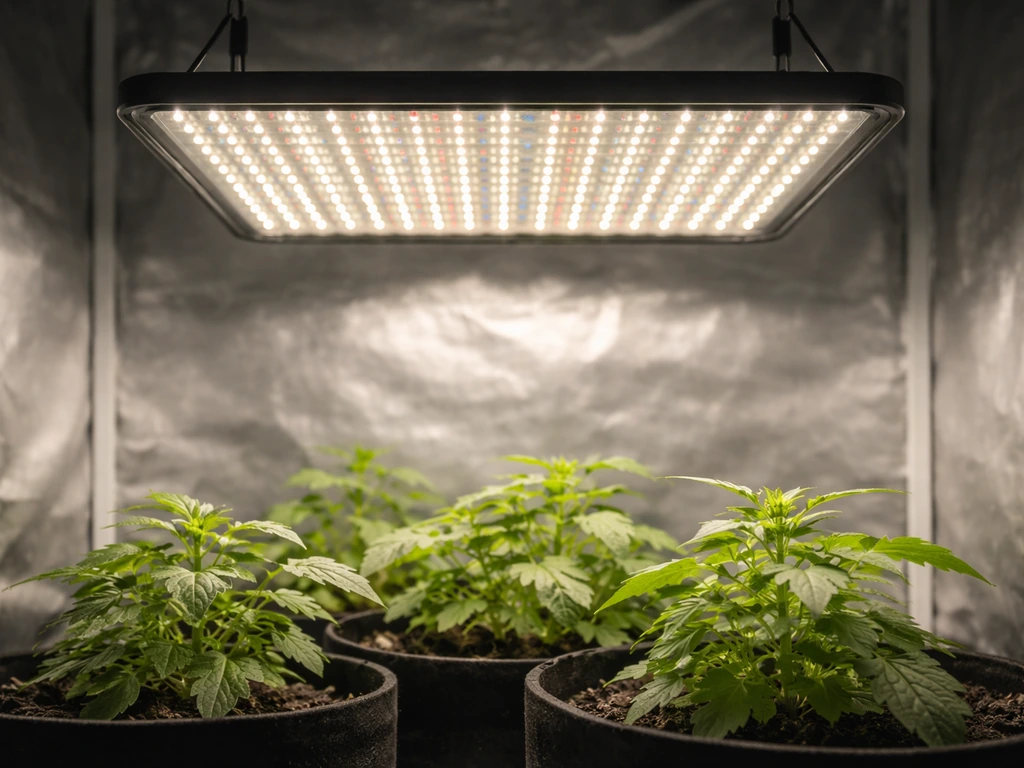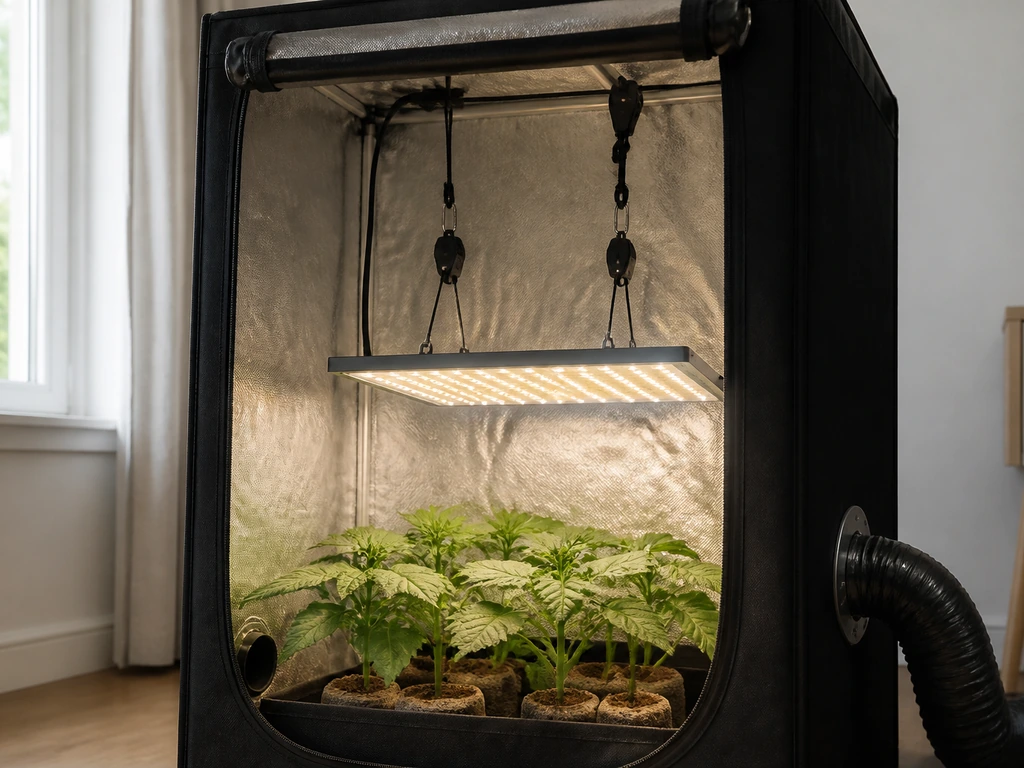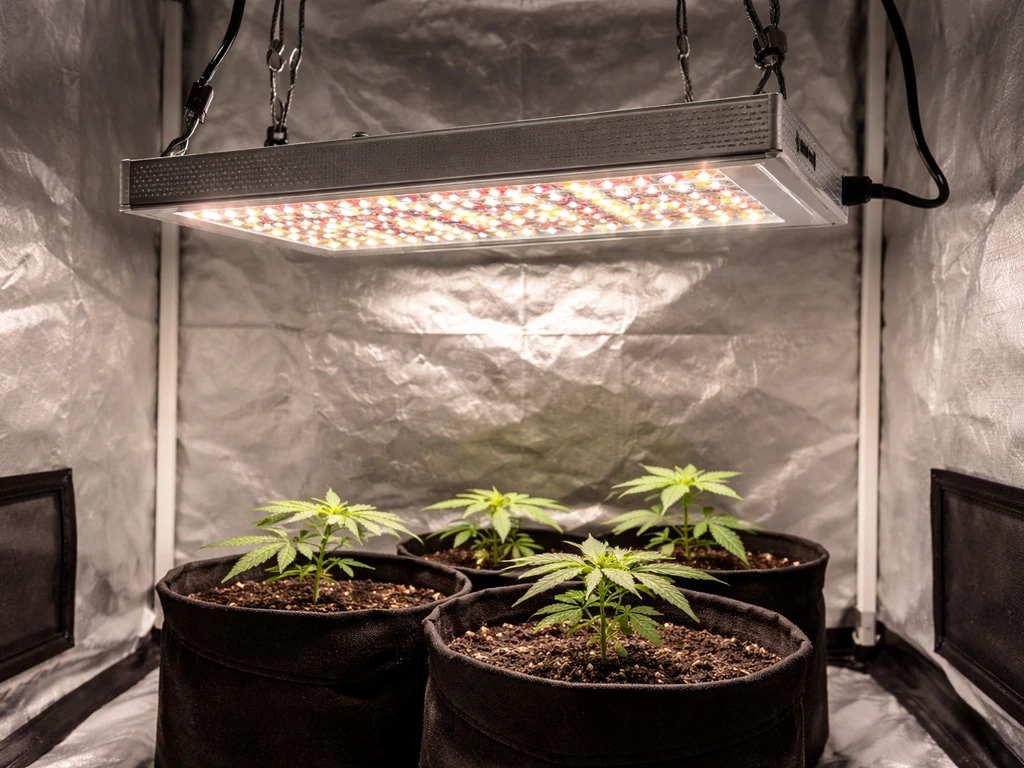
Mixjoy makes a small lineup of Samsung-diode LED grow lights that punch reasonably close to their price point, but the brand is not all one thing. The GL-1000d (110W) suits a single-plant or seedling setup, the GL-2000 (220W) covers a 3x3 tent through veg and flower, and the GL-4000d and GL-4000s (both around 450W) are marketed for a 4x4 to 5x5 bloom footprint. If you are deciding whether to buy one today, the GL-2000 is the sweet spot for most hobbyist growers: proven components, manageable heat, and a price that does not require you to take a marketing claim on faith. The GL-4000 variants are worth considering for larger tents but come with more caveats around independent testing data.
Mixjoy LED Grow Light Review: Best Models, PPFD, Setup Tips

Marcus Caldwell
24 Apr 2026
Which Mixjoy models are actually worth looking at
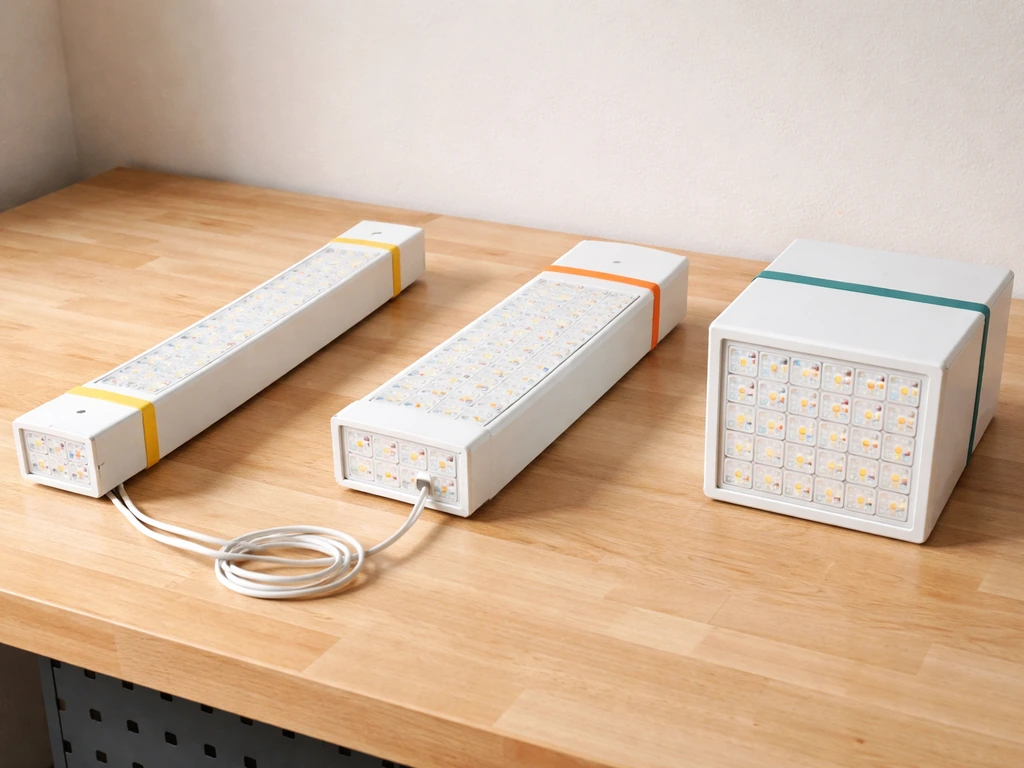
Mixjoy sells under a few confusingly similar model names, so it helps to pin them down before getting into performance. The four you will run into most often are the GL-1000d, GL-2000, GL-4000d, and GL-4000s. The lowercase 'd' suffix typically signals a daisy-chain dimmable version. The GL-4000s appears to be a separate, app-controlled variant rather than just a renamed GL-4000d, and the two have slightly different diode configurations.
| Model | Claimed Draw | Coverage Claim | Driver | Diode Type |
|---|---|---|---|---|
| GL-1000d | 110W | 2x2 to 3x3 (veg) | Not specified publicly | Samsung LM301 (inferred) |
| GL-2000 | 220W | 3x3 to 4x4 (veg/flower) | Not specified publicly | Samsung LM301 |
| GL-4000d | 450W | 4x4 veg / 5x5 bloom | Mean Well | Samsung LM301 |
| GL-4000s | ~450W | 4x4 to 5x5 | Not confirmed | Samsung LM301B 3000K + 5000K + 660nm + IR 740nm + UVA 395-405nm |
The GL-4000d is the most clearly documented. Its product listing confirms Samsung LM301 diodes and a Mean Well driver, which are meaningful hardware choices. Samsung’s publicly available LM301D datasheet is an example of the primary documentation for the LM301 family [Its product listing confirms Samsung LM301 diodes and a Mean Well driver](https://download. led.
samsung. com/led/file/resource/2022/05/DataSheetLM301DCRI80Rev. 2. 1.
pdf). Mean Well drivers are used by many reputable brands because they are reliable, run cool, and have long service lives. The GL-4000s adds app control and a more detailed diode breakdown: 3000K and 5000K whites, 200 pieces of 660nm red, 80 pieces of 740nm IR, and 16 UVA diodes in the 395-405nm range.
That is a richer spectrum config than the base GL-4000d on paper, though app-controlled lights add a layer of software dependency that some growers prefer to avoid.
Build quality, safety, and getting it set up
The bar-style form factor Mixjoy uses for the GL-4000 models is a solid choice for heat management. Heat spreads across a larger surface area instead of concentrating in a single panel. The aluminum housing feels adequate for the price class, though it is not as substantial as what you get from brands targeting professional horticulture budgets. For the GL-1000d and GL-2000, the build is a standard quantum board format: one or two boards in a compact housing.
The Mean Well driver on the GL-4000d is the most reassuring component from a safety standpoint. Cheap drivers are one of the main failure points in budget LED lights, and Mean Well is a well-regarded supplier used across price tiers. If Mixjoy is pairing it with genuine Samsung LM301 diodes (which the listing claims), the core electrical components are not a concern. That said, component claims from secondary Amazon listings should always be verified if you can, because relabeling happens in this category.
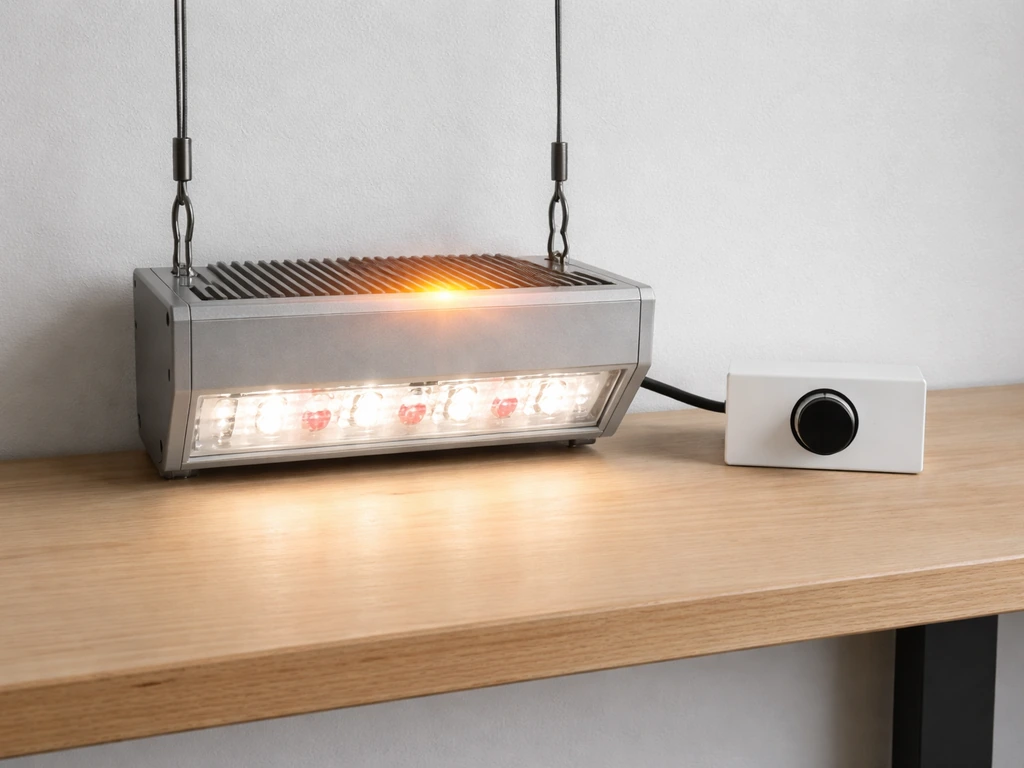
Setup is straightforward. The lights hang from a ratchet kit or tent crossbar, plug into a standard outlet, and the dimmer dial (on the GL-4000d) is accessible on the driver housing. Daisy-chaining lets you link multiple units to a single dimmer control, which is useful if you are running more than one light in a larger space. The GL-4000s adds app control, so you get scheduling and dimming from your phone, though that requires a working Bluetooth or Wi-Fi connection and a functioning app, which is a variable not everyone wants.
PPFD, coverage area, and why the numbers need context
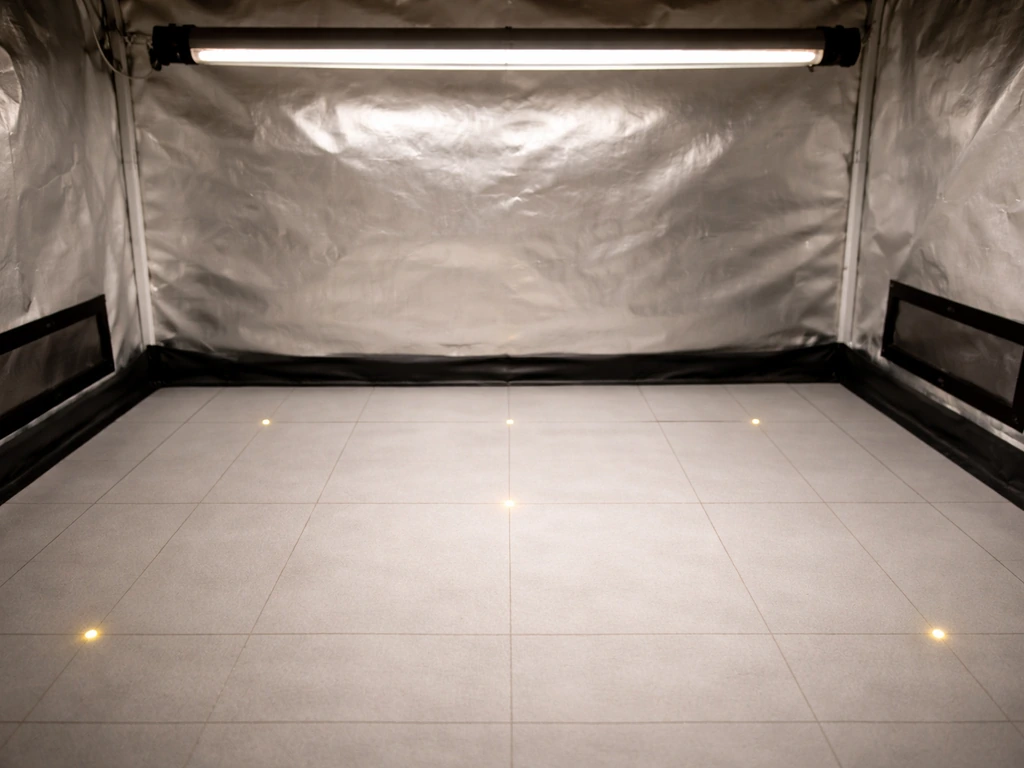
Mixjoy's GL-2000 listing cites a PPFD of 1106 µmol/m²/s at 12 inches and an efficiency claim of up to 2.7 µmol/J. Those are strong numbers on paper. The problem is these figures come from the product listing, not an independent quantum sensor measurement with a published grid map. A single center PPFD number tells you the hotspot, not what your canopy is actually receiving across a 3x3 or 4x4 footprint. Edges and corners matter: if the center reads 900 µmol/m²/s but tent corners are under 200, you have a real coverage problem regardless of what the headline spec says.
Community reports for the GL-4000 series have raised the same question. A thread specifically asking for independent PAR readings on the GL-4000 shows the demand for third-party data, but published grid maps from verified quantum sensor tests are not widely available for Mixjoy models at this point. That is not unique to Mixjoy, but it is worth being honest about: you are working from manufacturer claims and grow-diary user reports rather than controlled lab measurements.
Practical coverage guidance: for the GL-2000 at 220W, a 3x3 footprint for flowering and a 4x4 for vegetative growth are realistic expectations. Run it at around 18-24 inches during veg and drop to 12-18 inches during flowering, adjusting based on plant response. The GL-1000d at 110W is better suited to a 2x2 tent or a dedicated seedling and clone station. The GL-4000d's 5x5 bloom claim is optimistic; treat 4x4 as the reliable bloom footprint and 5x5 as a stretch vegetative coverage number.
Spectrum breakdown and what it means for each grow stage
All current Mixjoy models use a full-spectrum white-diode approach, not the old blurple (pure red plus blue) style. The GL-4000d combines 3000K and 5000K white diodes with red at 600nm and IR at 760nm. The GL-4000s goes further with 660nm red (200 diodes), 740nm IR (80 diodes), and a small UVA channel at 395-405nm (16 diodes). The GL-2000 uses a similar 3000K, 5000K, IR, and UV mix with 660nm red included.
The 3000K component is warm white, which skews toward the red end and suits flowering and fruiting stages. The 5000K is a cooler, bluer white that supports vegetative growth and photosynthesis broadly. Running both together gives you a reasonably balanced full-spectrum output across the whole grow cycle, which means you do not need to swap lights between stages. The 660nm supplemental red is the wavelength most directly absorbed by chlorophyll-a and makes a meaningful contribution to flower development. The 740nm IR can trigger the Emerson enhancement effect and influences photoperiod response. The UVA on the GL-4000s is a minor addition: 16 diodes is not enough to meaningfully stress plants into higher resin production, but it adds to the spectral completeness.
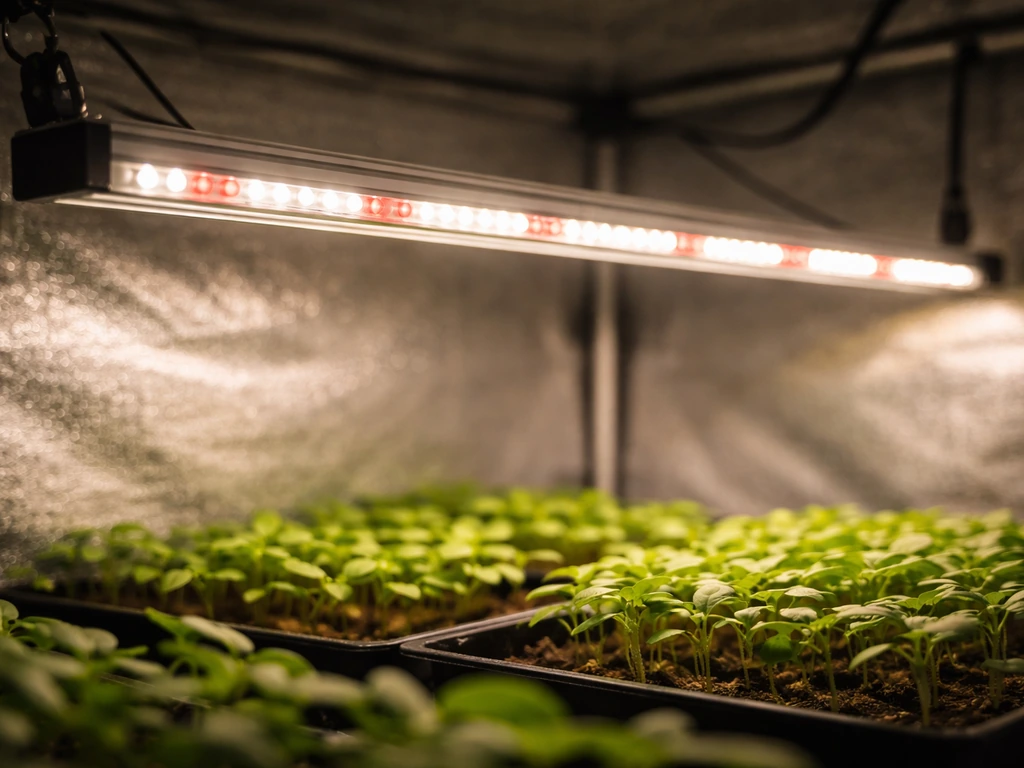
For seedlings, run any Mixjoy model at 30-50% dimming and keep it high in the tent, around 24-30 inches above the tray. This keeps PPFD in the 100-250 µmol/m²/s range that seedlings prefer without bleaching or stretching. Vegetative growth responds well to 400-600 µmol/m²/s; dial up to 70-80% output and lower the light to around 18-24 inches. Flowering wants 600-900 µmol/m²/s at canopy; run full power or close to it at 12-18 inches depending on your plants' response and your tent's ventilation.
Power draw, efficiency, and heat
The claimed 2.7 µmol/J efficiency for the GL-2000 would put it in competitive territory with well-regarded mid-tier lights, but treat that figure as a ceiling, not a guarantee. Actual wall draw matters more than the claimed wattage. The GL-2000 draws approximately 220W at the wall at full power, which is consistent with community use reports showing it running at around 12 inches in real grows. The GL-4000d at 450W is a meaningful power commitment: at 12 hours per day it pulls roughly 5.4 kWh daily, so factor that into your operating cost calculation.
Dimming changes actual draw significantly. This is not unique to Mixjoy, but it is worth knowing: dropping from 100% to 80% on a bar-style LED can reduce actual wattage by a meaningful margin, which also reduces heat output. The bar-style format on the GL-4000 series helps here because heat disperses passively across the bars rather than accumulating in a single housing. The GL-2000 in a well-ventilated 3x3 tent should not create heat management problems, but in a poorly ventilated space at full power, any 220W light will raise ambient temperature. The GL-4000d in a 4x4 at full 450W needs active exhaust to keep temperatures in range.
Neither model has a built-in fan, which is a positive for noise and longevity. Fanless passive cooling is generally preferable in LED grow lights because fans are a moving-part failure point and introduce noise. The Mean Well driver on the GL-4000d has its own thermal management and is rated for long service life under normal operating conditions.
How Mixjoy compares to the competition
Mixjoy sits in a crowded budget-to-mid-tier space alongside brands like Giixer, Juhefa, and Jhotec. If you are comparing brands in this tier, a jhotec grow light review can help you benchmark diode and driver performance against Mixjoy. If you are also considering Juhefa options, a juhefa grow lights review can help you compare driver quality and real-world performance expectations.
If you are also looking at a jiffy hydro grow light, check the jiffy hydro grow light reviews for driver quality and real-world results before you decide grow lights review. Those brands often use similar or identical diode configurations and similar form factors, and the honest reality is that at this price tier the differences are often incremental rather than decisive. Where Mixjoy distinguishes itself, at least on the GL-4000d, is the Mean Well driver.
Many competing models at the same price use unbranded drivers, which is a real long-term reliability difference. Giixer models, for example, are popular and widely reviewed but have a more mixed track record on driver longevity. If you are comparing Mixjoy to Giixer, this giixer led grow light review can also help you judge driver quality and real-world performance.
If you are also looking at Giixer options, the giixer 1000w led grow light reviews you find online can help you sanity-check driver and performance expectations before you buy Giixer models. If you're considering a Giixer 1000W model, these giixer 1000w led grow light reviews can help you compare driver quality and real-world performance.
| Brand / Model | Key Differentiator | Driver | Independent PPFD Data Available | Best For |
|---|---|---|---|---|
| Mixjoy GL-2000 (220W) | Samsung diodes, full spectrum, competitive efficiency claim | Not confirmed | Limited (user reports only) | 3x3 tent, veg and flower |
| Mixjoy GL-4000d (450W) | Mean Well driver confirmed, daisy-chain dimming | Mean Well (confirmed) | Not widely available | 4x4 tent, serious grows |
| Mixjoy GL-4000s (~450W) | App control, richer spectrum channels, UVA included | Not confirmed | Not widely available | 4x4 tent, tech-forward growers |
| Giixer / comparable budget brands | Widely reviewed, lower price in some cases | Typically unbranded | Occasionally available | Budget grows, smaller tents |
| Juhefa / Jhotec | Similar form factor and price tier | Varies | Limited | Comparable use cases |
If you need independent PPFD maps and third-party verified data before buying, Mixjoy is not the strongest choice right now because that data is sparse. Brands with more established review ecosystems and published PAR maps give you more confidence at the same or similar price. But if you are comfortable with user-reported performance data and value the confirmed Mean Well driver on the GL-4000d, Mixjoy is a reasonable buy rather than a gamble.
Who should buy which Mixjoy model, and what to avoid
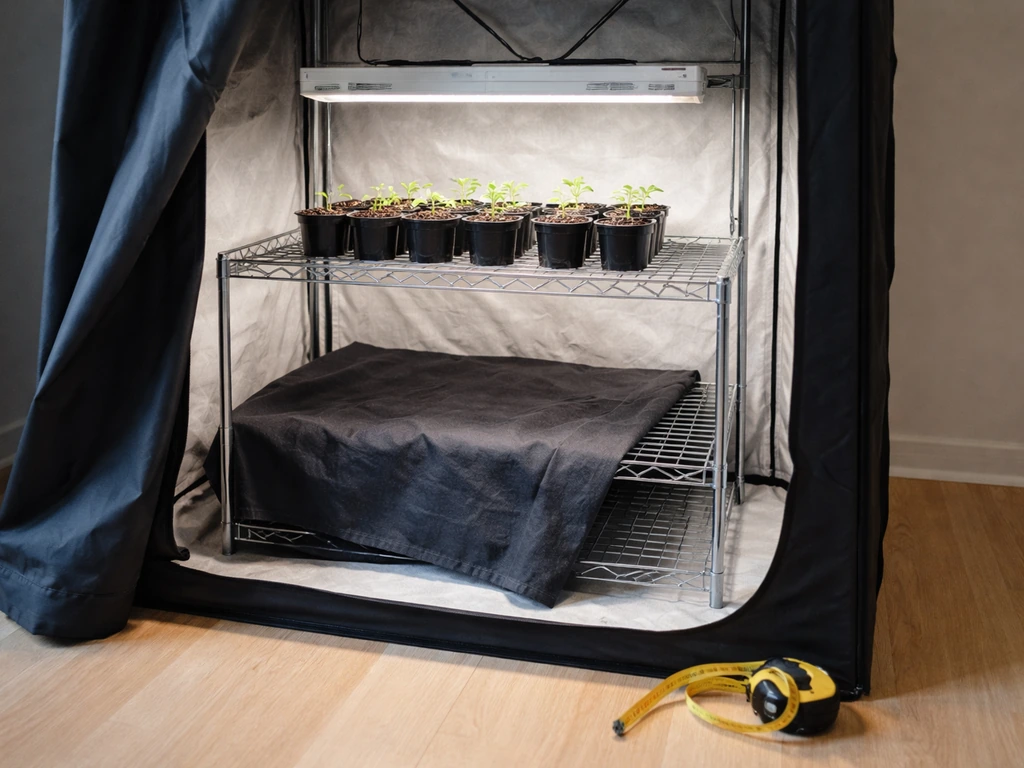
The GL-1000d at 110W is the right tool for seedlings, clones, or a small 2x2 tent through early veg. Do not try to flower a full 3x3 with it; you will be underlit and your yields will show it. The GL-2000 at 220W is the most versatile model in the lineup and the one I would recommend for most hobbyists working a 3x3 tent. It handles the full cycle without requiring a light swap, and 220W is manageable from a heat and electricity cost standpoint. The GL-4000d at 450W is for growers who have already outgrown a 3x3 and are running a 4x4 properly, with real exhaust, a temperature strategy, and a power circuit that can handle the load.
Common mistakes to avoid with Mixjoy lights: First, do not trust the coverage footprint claims at face value for flowering. The 5x5 bloom claim on the GL-4000d is a maximum spread number, not a high-intensity flowering footprint. Treat 4x4 as realistic for flower. Second, do not skip dimming for seedlings.
Running any of these lights at full power over young seedlings will bleach or stress them; start at 30-40% and raise intensity gradually. Third, do not hang based on the manufacturer's recommended distance without checking your plants. Run the light at the suggested height, watch for leaf curl or bleaching (too close) or stretching (too far), and adjust accordingly. Fourth, verify actual wall draw with a plug-in power meter if efficiency matters to your electricity budget.
Claimed wattage and actual wall draw are not always the same number, and the difference affects your operating cost and heat output calculations.
One last note: if you are comparing Mixjoy against other reviewed brands in this category, the meaningful questions are always the same regardless of brand name. Does it use a reliable driver? Are the diode specs verified or just claimed? Is independent PPFD data available? Mixjoy answers the first question well on the GL-4000d, partially on the GL-2000, and leaves the third question largely unanswered. Factor that into your decision alongside price, and you have a clear framework for choosing.
FAQ
How can I tell whether my Mixjoy unit is actually dimmable, and will the dimmer reduce heat and electricity the way I expect?
Check for a visible dimmer dial on the driver housing (GL-4000d) or a dimming control in the app/driver if you have the GL-4000s. In general, dimming should lower wall draw, but the exact reduction depends on the driver and dimming method, so confirm with a plug-in watt meter before you assume lower kWh and lower temperatures will match your calculations.
Is it safe to daisy-chain multiple Mixjoy lights on one dimmer controller?
It can be convenient, but you should verify the dimmer and driver current limits in the product paperwork and avoid exceeding the rated load. Daisy-chaining also means one control point affects all bars, so if your plants have uneven canopy heights you may need to adjust hanging height or avoid combining lights that are meant to run at different intensities.
What should I do if my plants bleach even when I’m running the light at the recommended distance?
Bleaching usually indicates the PPFD is higher than what your plants can handle at that stage, even if the height is correct. Lower intensity first, for example drop by 10 to 20% and recheck after a few days. Also verify your dim setting, because some grow light dials are not perfectly linear, and ventilation matters because stressed plants often show symptoms earlier.
How should I calibrate light height if I do not have a quantum sensor?
Use a response-based approach. Start at a conservative height, then look for clear markers over 5 to 7 days: seedlings should not develop intense clawing or crispy leaf edges, veg should not stretch rapidly, and flowering should not show persistent tip curl. If possible, borrow a meter for one session, measure PPFD at canopy center and at least one corner, then lock in a height and dimming level you can reproduce.
Why does the center PPFD number not match what my whole tent experiences?
Most listing figures represent a hotspot and do not reflect edge and corner drop-off. With tent layouts, corners often receive significantly less light, especially as you push the claimed footprint. A practical workaround is to bias your plant positions inward (or use training to level canopy) so the canopy does not sit right at the edges of the lowest-PPFD zones.
Can I run the GL-2000 or GL-4000d at very low dimming, like under 30%, without issues?
Many LED drivers handle dimming well, but extremely low settings can change the light’s stability and can lead to less predictable plant responses. If your goal is seedling acclimation, it is usually better to keep a stable, moderate range (as you would typically start around 30 to 40%) and then increase gradually, rather than jumping between very low and higher outputs.
What electrical circuit should I plan for with the GL-4000d, and is it a problem for standard home outlets?
A 450W class light is typically fine on a standard dedicated circuit, but you should consider total load from your other equipment (heaters, dehumidifiers, fans). Use a watt meter to confirm actual wall draw at your chosen dim level. If you often run multiple devices on one circuit, avoid stacking them all on the same outlet strip.
Does the GL-4000s app control add any real downsides beyond wanting to avoid software?
Yes, the practical downside is dependence on connectivity and the app’s behavior. If your connection drops, you may lose scheduling or dimming targets until the connection is restored. For plants with precise photoperiod needs, consider using reliable timers on the plug (for on/off) and treat app control as an optional bonus rather than the single point of control.
If I want the best reliability for the long term, should I prefer GL-4000d over GL-4000s?
Based on the article’s component discussion, GL-4000d’s hardware is the more straightforward, and the driver choice is a strong reliability signal. GL-4000s can be appealing for convenience, but the software dependency adds another potential failure point. If you prioritize “set and forget,” GL-4000d is usually the safer operational choice.
Are the stated diode wavelengths enough to guarantee better flowering or resin production?
Not by themselves. The diode mix helps, but outcomes depend heavily on delivered PPFD, canopy temperature, humidity, nutrient balance, and photoperiod consistency. The UVA channel on the GL-4000s is small, so you should not expect it to replace good light intensity, airflow, and stress management if you are chasing resin-heavy results.
Do I need active exhaust for a GL-4000d, and what’s a quick way to know?
For a 4x4 bloom area, the GL-4000d at full power is a meaningful heat source, and the article recommends active exhaust. A quick check is to monitor tent temperature at canopy height under your actual lighting schedule for several hours. If temperatures creep upward over time, you likely need better exhaust or additional intake, not just a fixed fan.
What is the safest way to move from veg to flower with these lights?
Do not change both height and intensity in a single jump if you can avoid it. Adjust one variable first, then correct after plant feedback. For example, keep height changes minimal, move from a veg dim level toward the flowering range, and watch for the first signs of over-intensity (leaf tip burn) or under-intensity (continued stretch and sparse bud sites) over a week.