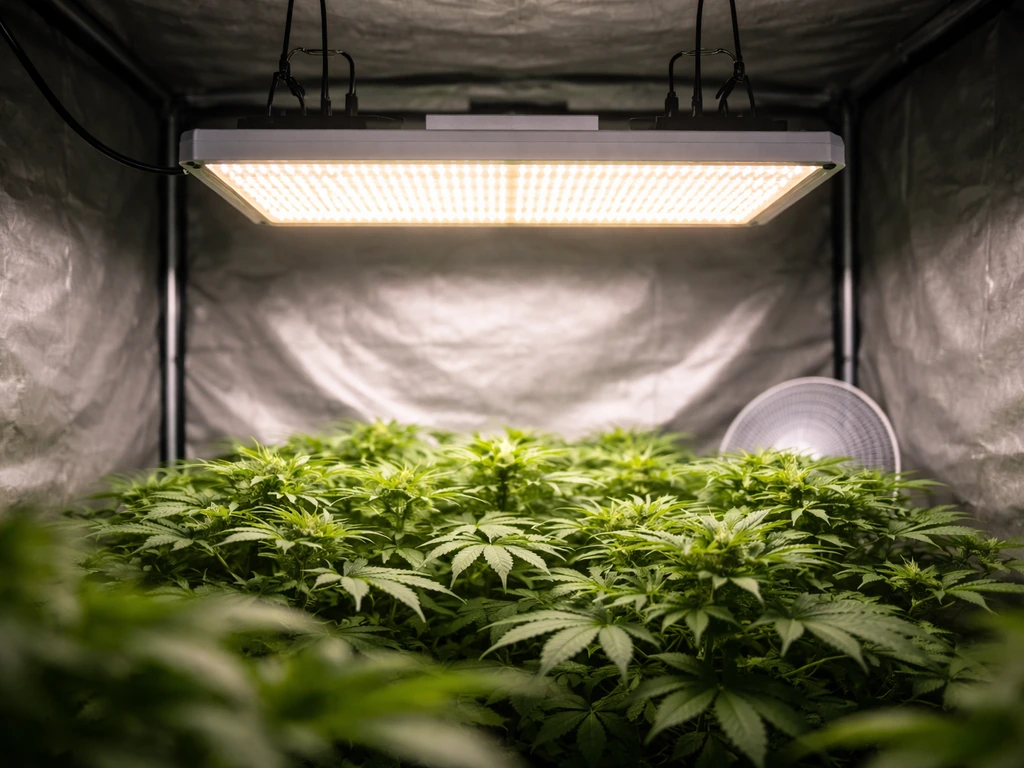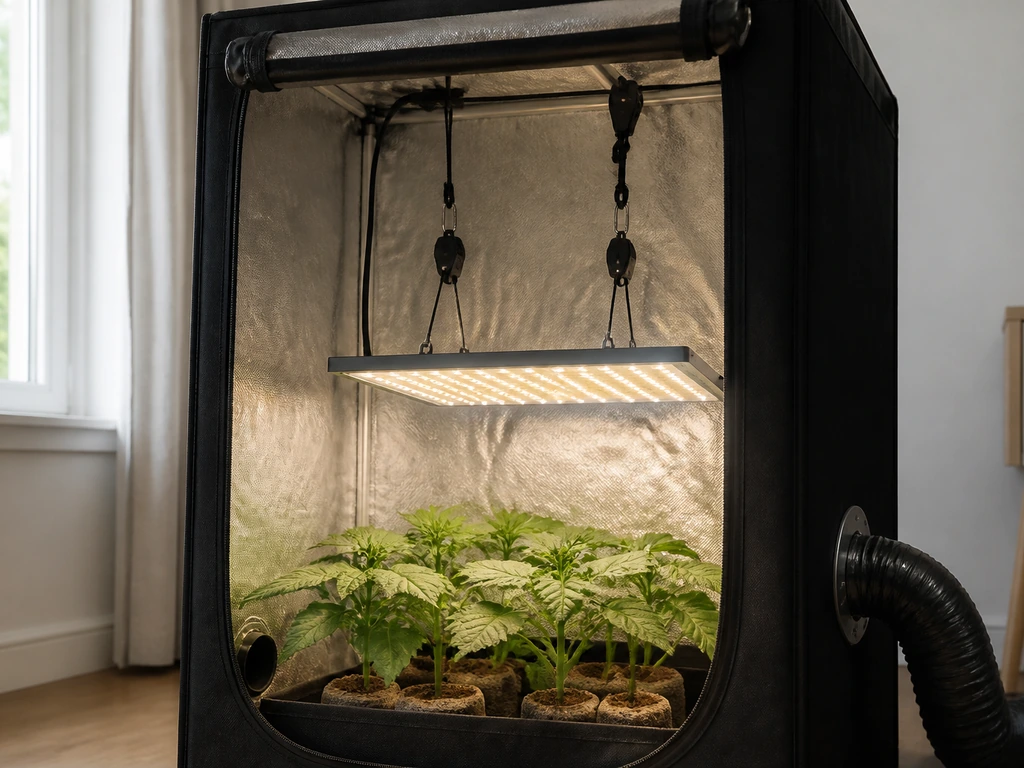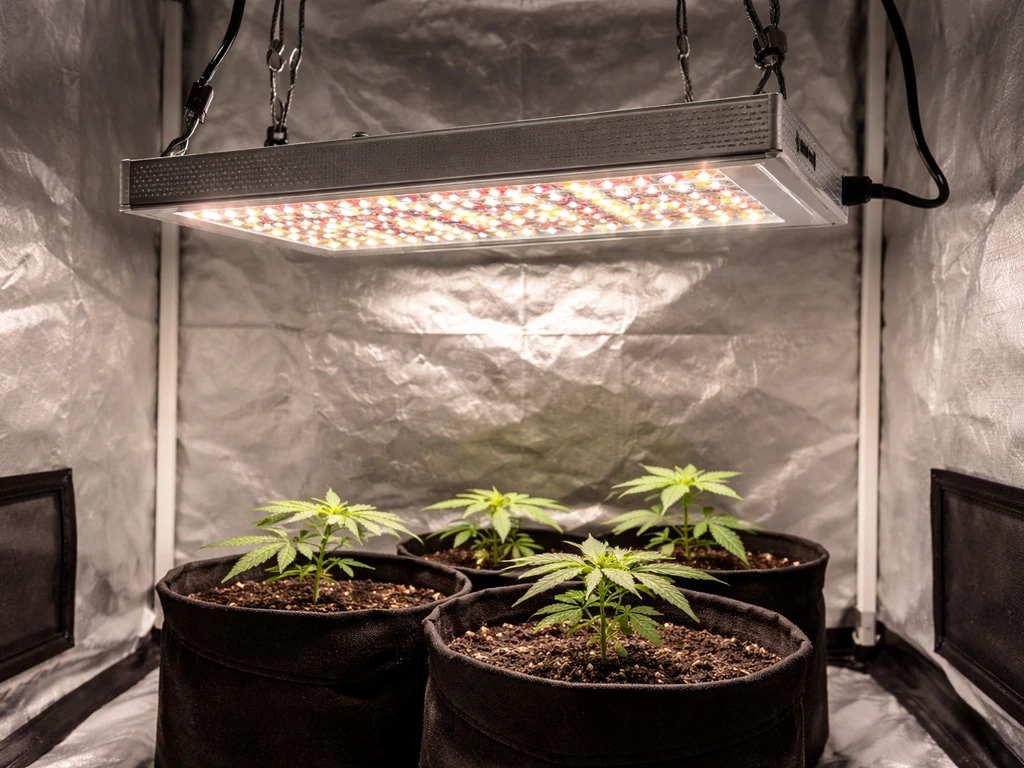
The Leoter grow light (model HY-00, sold as the 'LEOTER 80 LED Gooseneck Grow Light for Indoor Plants') is a compact, clip-on desktop fixture aimed squarely at houseplant hobbyists and seedling growers. It is not a replacement for a serious horticultural panel. If you have a few potted herbs, a small succulent shelf, or a seed-starting tray on a desk, it gets the job done at a low price. If you're running a vegetable garden or want true flowering performance, you'll want to look elsewhere.
Leoter Grow Light Review: Models, PPFD, Coverage, Value

Marcus Caldwell
7 May 2026
Bottom-line verdict
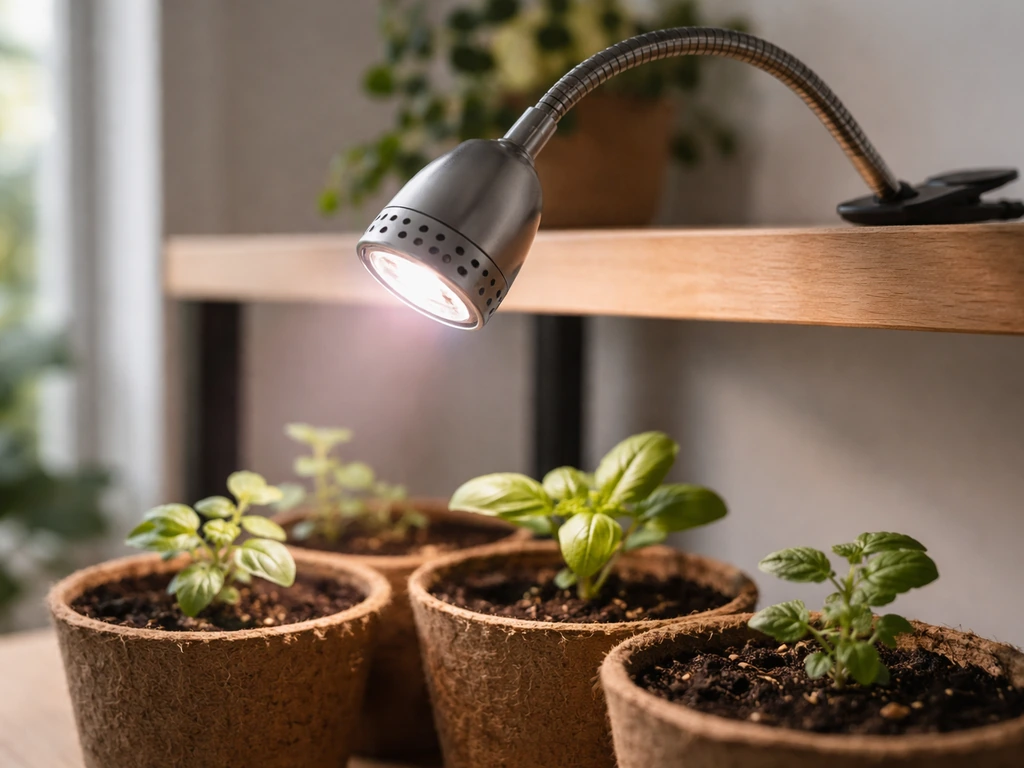
The Leoter HY-00 is a budget gooseneck grow light designed for small-scale indoor plant keeping. It delivers usable light for seedlings and low-to-medium light houseplants, and the gooseneck arm makes positioning flexible. If you are comparing similar budget fixtures, an o2 grow emitter review can help you judge whether a different emitter layout better fits your goals low-to-medium light houseplants.
The tradeoffs are real: actual PAR output is modest, coverage is limited to roughly one to three small pots, and the build quality reflects the price. For under $20-$30 this is reasonable value if your expectations are calibrated. It is not a high-output, wide-coverage panel, and shoppers comparing it to bar lights or quantum board panels at $80-$150+ will find those alternatives far more capable.
Technical specs and spectrum coverage
The Leoter HY-00 is built around 80 small LEDs arranged on a circular or multi-arm head mounted on a flexible gooseneck stem with a desk clip. Leoter markets this as a full-spectrum light, which in this price and form-factor category typically means a combination of warm white LEDs (around 3000K-4000K), cool white LEDs (5000K-6500K), and supplemental red diodes (typically 630-660nm). The result is a pinkish-white output that covers the photosynthetically active radiation (PAR) window from roughly 400nm to 700nm.
Here is what the core specs look like in practical terms:
| Spec | Detail |
|---|---|
| Model | LEOTER HY-00 (80 LED Gooseneck) |
| LED count | 80 LEDs |
| Spectrum type | Full spectrum (white + red diodes) |
| Approximate color temp | Mixed warm/cool white + 660nm red |
| Power draw | Approx. 10-15W (typical for this class) |
| Dimming | Multiple brightness levels via switch or dial |
| Timer | Built-in auto timer (3/9/12 hour modes common) |
| Mounting | Flexible gooseneck with desk/shelf clip |
| Power supply | USB or AC adapter (model dependent) |
| Fan | Fanless (passive cooling) |
The spectrum intent is broadly vegetative and maintenance-oriented. The red diodes push toward flowering wavelengths, but at the output levels this fixture produces, do not expect dramatic flowering responses in high-demand crops. The full-spectrum white LEDs are the practical workhorse here, supporting general photosynthesis across plant types.
Real-world PPFD, coverage, and heat
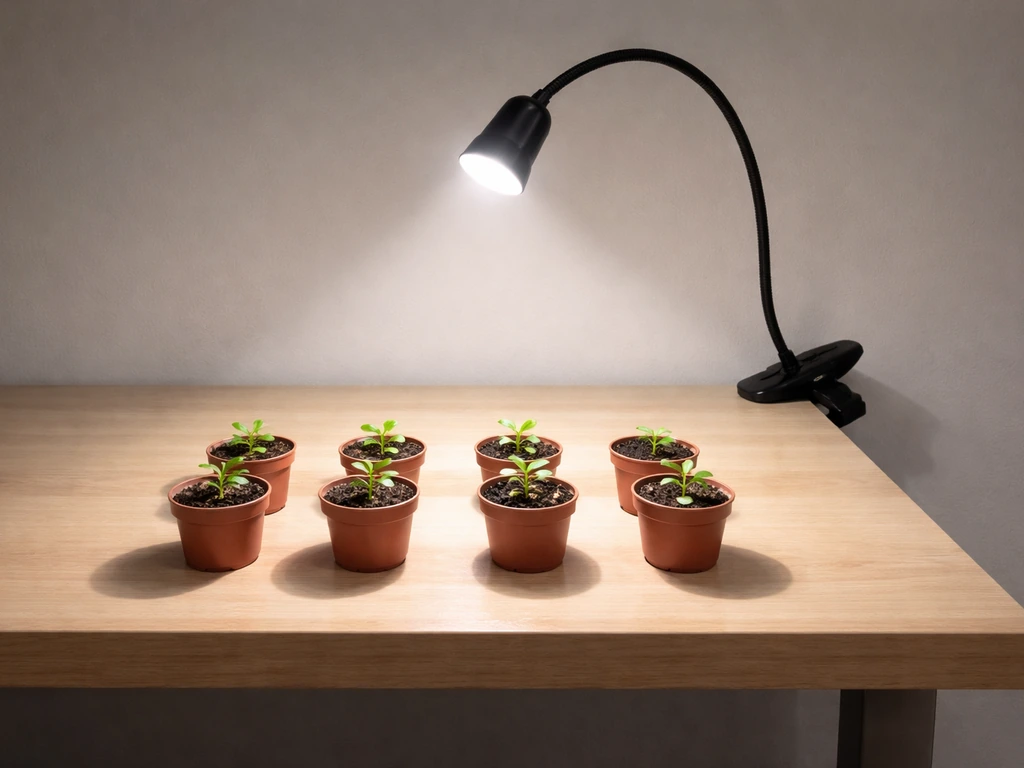
Gooseneck clip lights in this LED count and wattage range typically produce PPFD values in the 50-200 µmol/m²/s range depending on distance, and the Leoter HY-00 sits within that window. At a close range of around 6 inches (15cm) directly beneath the head, you can expect peak readings in the 150-200 µmol/m²/s neighborhood. Pull back to 12 inches (30cm) and that drops to the 60-100 µmol/m²/s range. At 18 inches, output is low enough that only shade-tolerant houseplants or seedlings in their earliest stage will respond meaningfully.
Coverage area is the biggest physical limitation. The usable footprint at 12 inches is roughly a 6-8 inch (15-20cm) diameter circle of meaningful intensity. That covers one medium pot or two to three small seedling cells. Uniformity within that circle is decent because the multi-LED array spreads light reasonably well, but edge falloff is steep. Do not plan to cover a full seed tray or more than a couple of plants without multiple units.
Heat is a non-issue in practice. Running at 10-15W with passive cooling, the fixture stays warm to the touch but never gets hot enough to harm plants even when positioned close. There is no fan, which means no noise, and the small thermal load dissipates through the housing without accumulation. That is genuinely useful for a desktop light used in living spaces.
Build quality, features, and long-term reliability
The Leoter HY-00 is built to a price point, and it shows. The gooseneck arm is functional but not premium: it holds position adequately under the light's weight, though over many adjustments the tension can loosen. The desk clip is plastic and grips shelving and desk edges up to about 2 inches (5cm) thick. On thicker shelves or irregular surfaces, the fit is less secure.
The control features are a genuine positive for this price class. Most versions of the HY-00 include a built-in auto timer with multiple cycle options (commonly 3, 9, and 12 hours), which means you do not have to buy a separate outlet timer. Brightness dimming is included, usually via a rotary dial or stepped switch offering three to five levels. These two features together make it more practical than bare-bones competitors at the same price.
Driver quality is adequate but unremarkable. At this wattage and price, you are not getting an LM-series or Inventronics driver. The internal circuitry is basic, which is reflected in the warranty terms (typically 12-18 months from Leoter). For a light that will run on a timer daily, realistic lifespan is 2-4 years under normal use conditions, though individual units vary. If the LED head dims noticeably within a year, contact the seller for warranty support. Safety certification (CE, FCC, or ETL) should be confirmed on the specific unit you receive, as budget light listings can vary by batch.
Which plants and which growth stages does it actually suit
The Leoter HY-00 is most at home with low-to-medium light plants and early growth stages. Here is how it maps across the plant life cycle:
Seedlings and cuttings
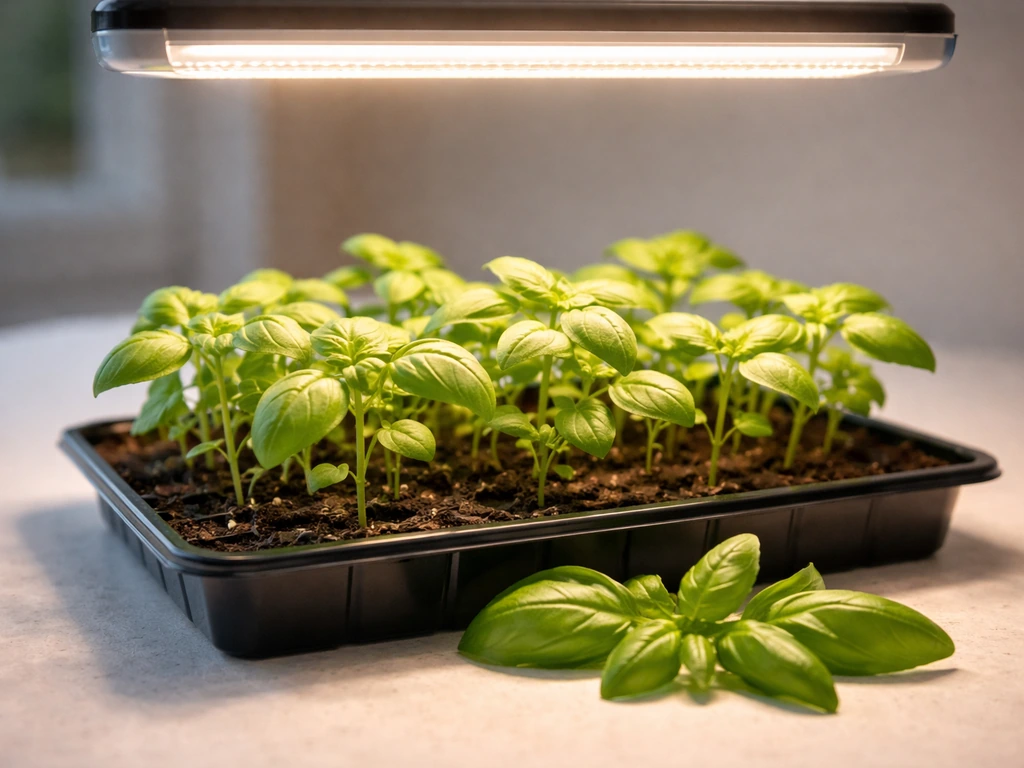
This is where the light performs best. Seedlings need relatively low PPFD (50-150 µmol/m²/s) and are sensitive to heat stress, so the Leoter's modest output and fanless cool running are actually advantages. Cornell’s Controlled Environment Agriculture lettuce handbook recommends keeping light intensity (PAR) at no less than 50 µmol/m²/s for lettuce seedlings. Position the head 8-12 inches above a small tray and run it 14-16 hours per day. Germination and early cotyledon development go well. The caveat is footprint: one light covers a small tray, not a full 1020 flat.
Vegetative growth
Herbs like basil, mint, parsley, and chives in individual or small cluster pots respond positively at close range (6-10 inches). Compact foliage houseplants including pothos, snake plants, peace lilies, and small ferns get usable supplemental or primary light. Leafy vegetables like lettuce and spinach can be grown in very small quantities (one to two plants) if positioned close and given 14-16 hours of light. Larger, more light-hungry vegetables like tomatoes or peppers will grow but will stretch and produce poorly.
Flowering and fruiting
Honest answer: the Leoter HY-00 is not a flowering light for serious crops. The red diodes contribute some flowering-spectrum output, and low-demand flowering houseplants like African violets or small begonias can bloom under it with proper placement. For fruiting vegetables, the PPFD ceiling is simply too low to drive productive flowering and fruit set. If flowering performance is your goal, a purpose-built panel in the 100-200W actual draw range is the right tool.
Best-fit crop summary
- Herbs: basil, mint, chives, parsley, cilantro (small pots, close range)
- Leafy greens: lettuce, spinach (1-2 plants, very close range)
- Houseplants: pothos, snake plant, peace lily, small ferns, succulents
- Seedling trays: any species in early germination and cotyledon stage
- Low-light flowering: African violets, begonias, small orchids (with close positioning)
How it stacks up against similar options
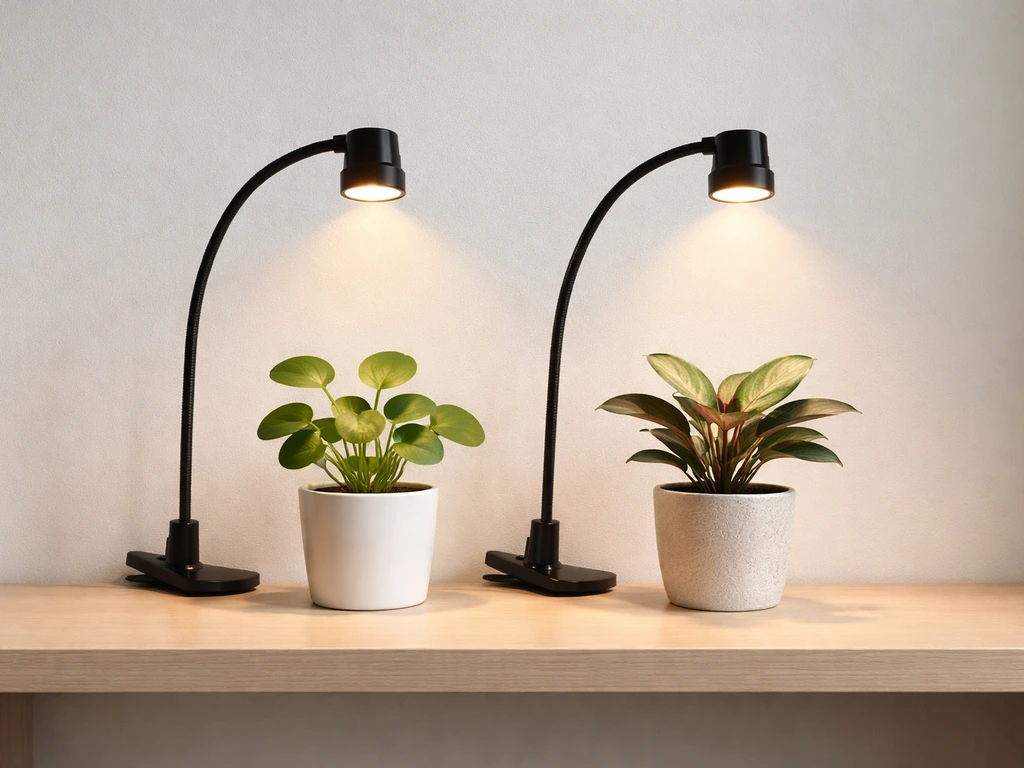
The Leoter HY-00 competes in a crowded space of Amazon-marketed gooseneck clip grow lights. Here is how it sits relative to common alternatives:
| Light | Form factor | Approx. wattage | Timer | Dimming | Best for | Price range |
|---|---|---|---|---|---|---|
| Leoter HY-00 | Gooseneck clip | ~10-15W | Yes (3/9/12hr) | Yes | Seedlings, herbs, houseplants | $20-$30 |
| Dommia grow light | Gooseneck/panel | ~10-20W | Yes | Yes | Similar desktop/houseplant use | $20-$35 |
| Sonlipo grow light | Clip/panel | ~10-20W | Yes | Yes | Herbs, seedlings | $20-$35 |
| Lordem grow light | Clip/gooseneck | ~10-20W | Yes | Yes | Small plants, seedlings | $20-$35 |
| Budget quantum bar (100W+) | Bar/panel | 100W+ | No (separate timer) | Sometimes | Veg to flowering, full tent | $80-$150+ |
Within its direct peer group (gooseneck desktop lights priced under $35), the Leoter HY-00 is competitive. Its timer and dimming features are standard rather than exceptional, and output is in the same range as similar products from Dommia, Sonlipo, and Lordem. If you are also researching Sonlipo grow light reviews, compare output and coverage limits in the same way before you buy.
If you are also comparing similar clip-on options, this dommia grow light review can help you judge whether Dommia’s design matches your coverage and output needs. The choice between these brands often comes down to specific arm design, number of heads, and clip style rather than major performance differences. If you need more from a light in this form factor, look for multi-head versions (3-head goosenecks), which multiply usable coverage while keeping the desk-friendly form.
If your grow needs have grown beyond a few houseplants and you are considering a step up, the right comparison shifts away from this class entirely. Panel-style and bar-style lights at higher wattages from brands like Telos offer meaningfully different performance profiles suited to larger footprints and more demanding crops. If you are looking specifically at the Telos Grow Light review takeaways, the main difference is higher output and coverage for demanding crops.
Setup, mounting, and how to get the most out of it
The Leoter HY-00 is simple to set up: clip the base to a shelf or desk edge, bend the gooseneck to position the head, plug it in, and set your timer. A few specific practices will get you noticeably better results:
Mounting height
- Seedlings and small cuttings: 6-10 inches (15-25cm) above canopy for best intensity without heat stress
- Established herbs and compact houseplants: 8-14 inches (20-35cm) depending on light demand
- Low-light tolerant houseplants: 12-18 inches (30-45cm) is fine and extends coverage slightly
- Watch for stretching (etiolation): if stems stretch toward the light within 1-2 weeks, move the head closer
Photoperiod recommendations
- Seedlings: 14-16 hours on, 8-10 hours off
- Vegetative herbs and houseplants: 12-16 hours on depending on plant type
- Low-light houseplants used to indirect window light: start at 10-12 hours and adjust based on plant response
- Use the built-in timer rather than leaving the light on continuously; plants benefit from a dark period
Positioning and coverage tips
Because the coverage circle is small, cluster plants tightly beneath the head rather than spreading them out. Rotate pots every few days if you notice uneven growth. If you have two or more plants that need coverage, consider a second unit rather than raising the single head, since raising it drops intensity more than it extends usable coverage. A white or reflective surface beneath and around the plants (a piece of white foam board works) will bounce stray light back onto leaves and improve efficiency noticeably with a low-output light like this one.
There is no shielding needed for the eyes at this output level under normal use, but avoid looking directly into the LED array when it is at full brightness. The reddish-white output can be visually uncomfortable even if it is not hazardous at normal viewing distances.
Who should buy the Leoter and who should skip it
Buy it if you are keeping a handful of houseplants or herbs on a desk or shelf, starting a small number of seedlings, or supplementing window light during winter months. At its price, it is an easy addition to a plant-keeping setup without meaningful financial risk. Skip it if you are growing vegetables past the seedling stage, running a dedicated grow tent, or expecting output similar to a panel light.
If you want a quick take that matches this review’s conclusions, you can also look up the Lordem grow light review for a similar budget perspective. The form factor and wattage are simply not suited to those applications, and spending more upfront on a purpose-built bar or panel light will save frustration.
FAQ
Is the Leoter HY-00 strong enough to replace a window for low-light homes?
Often, it can supplement but not fully replace a dark window. Expect meaningful results only for plants that are already comfortable in medium indoor light, and place the head close (about 8 to 12 inches). If your space is dim even under house lighting, you will usually need either multiple units or a higher-output bar or panel.
How high should I mount the gooseneck light to avoid leggy growth in seedlings?
Aim for consistency and keep it relatively close. If you start around 8 to 12 inches over a small tray and then raise it only when seedlings reach the appropriate height, you minimize stretch. With this class of light, larger increases in distance drop PPFD quickly and commonly cause legginess.
Do I need to rotate pots or plants under this light?
Yes, it helps more than you might expect because edge intensity falls off. Rotate plants every few days, especially if they are near the perimeter of the usable coverage circle. This is most noticeable with uneven canopy height, where taller seedlings can cast more shade.
What photoperiod should I use (for example, 12 vs 16 hours) with the HY-00?
A common starting point is 14 to 16 hours for seedlings and leafy greens, then reduce toward 12 to 14 hours once plants are established if you see no growth benefit from longer days. Using a timer daily is ideal, but avoid extremely long schedules if plants are still small, because they can become stressed or develop weak, fast growth.
Can I run it 24/7?
Generally, no. Most houseplants and seedlings benefit from a dark period for normal physiology. If you want maximum growth indoors, it is usually better to stay in the typical 14 to 16 hour range rather than running continuously, which can also make it harder to judge whether intensity or schedule is the limiting factor.
Does the timer actually prevent overuse reliably, or should I use a wall outlet timer too?
The built-in timer is convenient and usually sufficient for a desktop setup, but it depends on the unit revision. If your household power is unstable or you routinely forget to check schedules, using a separate wall outlet timer provides an extra layer of control and helps prevent accidental always-on operation.
Will the warm and cool LEDs be balanced enough for flowering, or should I add something?
Expect “possible bloom” for low-demand ornamental houseplants, not reliable fruiting or strong flowering performance. If flowering is your goal, you will typically get better results by using multiple units close together for more total PPFD, or switching to a higher-output horticultural panel where the intensity ceiling is higher.
Is it safe for plant leaves if I position it very close (near 6 inches)?
In most cases, yes because it is low wattage and fanless, it stays warm rather than hot. However, keep an eye on leaf curl, bleaching, or sudden tip discoloration, especially for thin-leaf seedlings. If any stress shows up, raise the light slightly and reassess.
How many plants can one HY-00 realistically support?
In practice, one light is usually for one medium pot or a small cluster of seedlings, not a full tray. If you are growing multiple plants with similar height targets, keep them within the central coverage area and consider a second unit if you need uniform growth across the whole surface.
What should I do if the gooseneck arm loosens over time?
Adjust it so the head is centered over the plants and do not use extreme bending at the same joint repeatedly. If tension becomes weak, some owners tighten or re-seat the gooseneck connection (when accessible) or position the arm so it rests against gravity without fighting the mechanism. If loosening happens quickly, it may be a warranty issue depending on your purchase terms.
Does the plastic desk clip hold securely on thick shelves or irregular surfaces?
It typically grips shelves up to around 2 inches thick, but irregular or dusty surfaces can reduce hold. If your setup vibrates (for example, a moveable desk) or you are placing it on textured materials, use a more stable mounting point or consider a different grow light style rather than trusting the clip alone.
What reflections improve results, and how should I set them up?
Placing a white or reflective surface beneath and slightly around the plants reduces wasted light and improves efficiency. A simple white foam board or reflective tray liner works well, but keep it clean and dry to avoid dust buildup that can reduce reflection over time.
How can I tell if I need a stronger light instead of just raising the timer schedule?
If you keep the light at the recommended close range and you still see slow growth, stretched stems, or pale leaves, schedule changes usually will not fix it. At that point the limiting factor is typically intensity, so adding another HY-00 or switching to a bar or panel is the practical next step.
What warranty or safety checks should I do when the unit arrives?
Confirm the certification markings on the specific box or product label (CE, FCC, or ETL, depending on your region and batch). If the output visibly dims early or the timer behaves inconsistently, document it quickly and contact the seller within the warranty window rather than continuing to use a degrading unit.