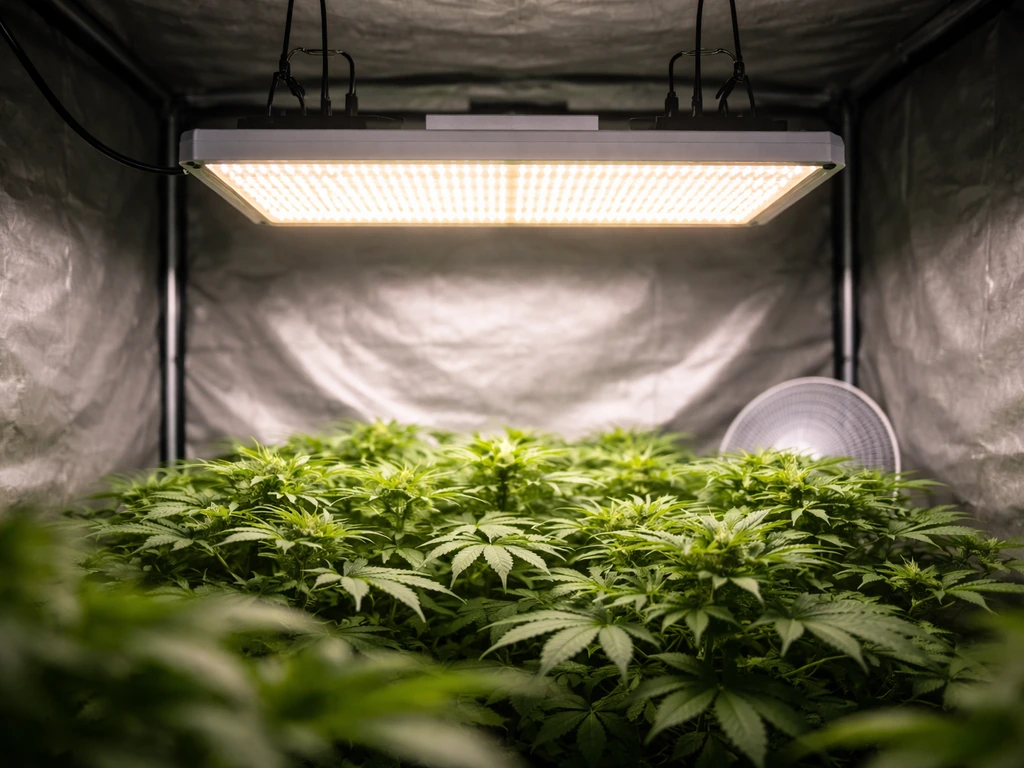
Telos Dynamic grow lights are worth serious consideration if you're running a mid-to-large indoor tent or commercial-style setup and care about verified efficiency numbers. The Dynamic series delivers 2.9 to 3.0 µmol/J system efficiency depending on the model, with exceptional PPFD uniformity confirmed by independent Migro testing, and an IP66-rated build that holds up in humid grow environments. They're not the cheapest option on the market, but the specs are real and the performance maps to what the datasheets promise, which is rarer than it should be.
Telos Grow Light Review: Performance, Coverage, Costs

Marcus Caldwell
14 May 2026
What Telos grow lights are and who they're for
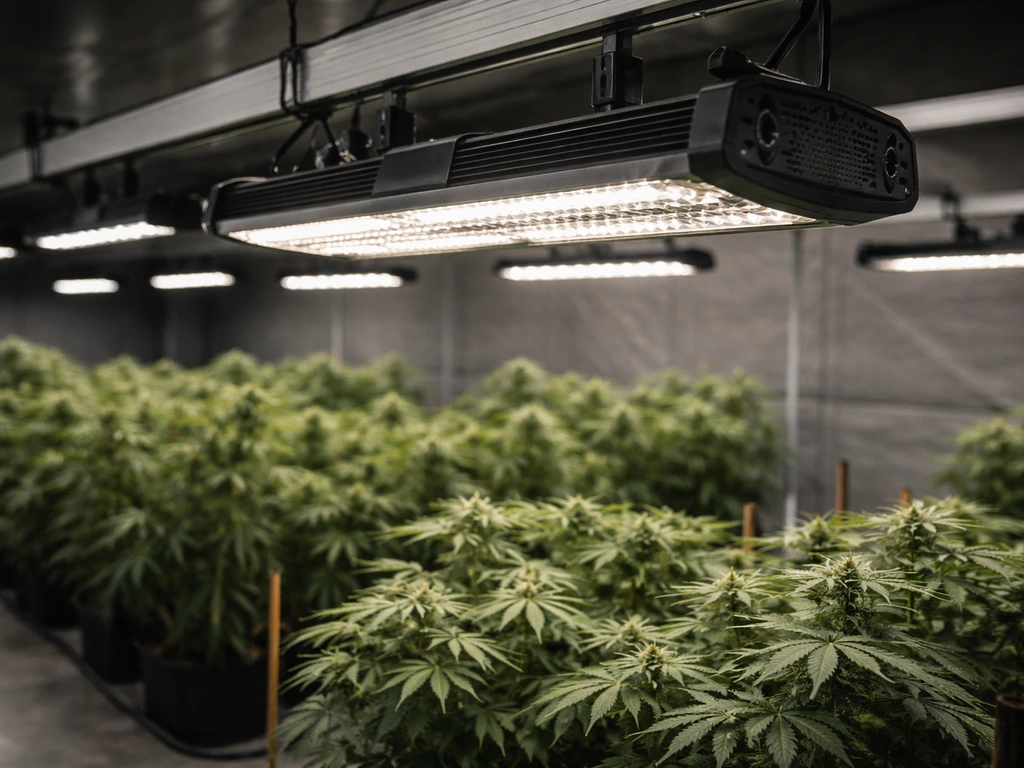
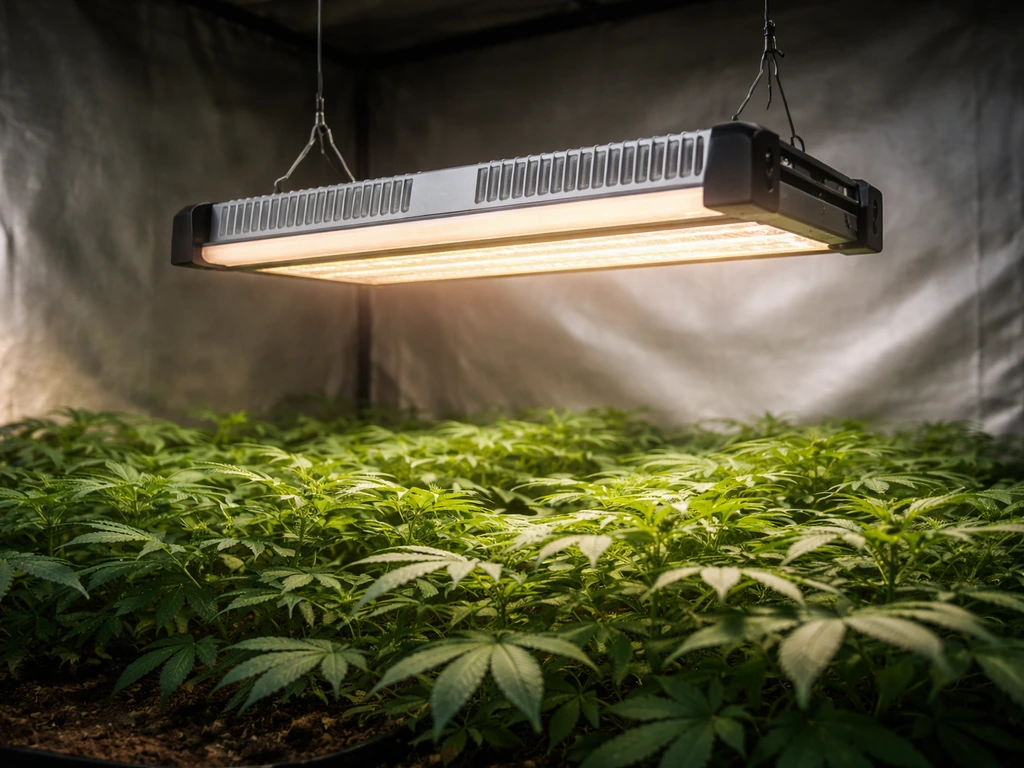
Telos is a lighting brand that positions itself firmly in the performance-focused, spec-driven segment of the grow light market. Their current flagship range is the Dynamic series, which comes in four power levels: the Dynamic 930 (320W), Dynamic 1200 (400W), Dynamic 1960, and Dynamic 2400 (800W). These aren't budget lights with vague claims printed on a box. Telos publishes detailed datasheets with measured PPF, efficiency figures, PPFD maps, mounting heights, and uniformity metrics, and they've submitted the Dynamic range for independent testing through Migro.
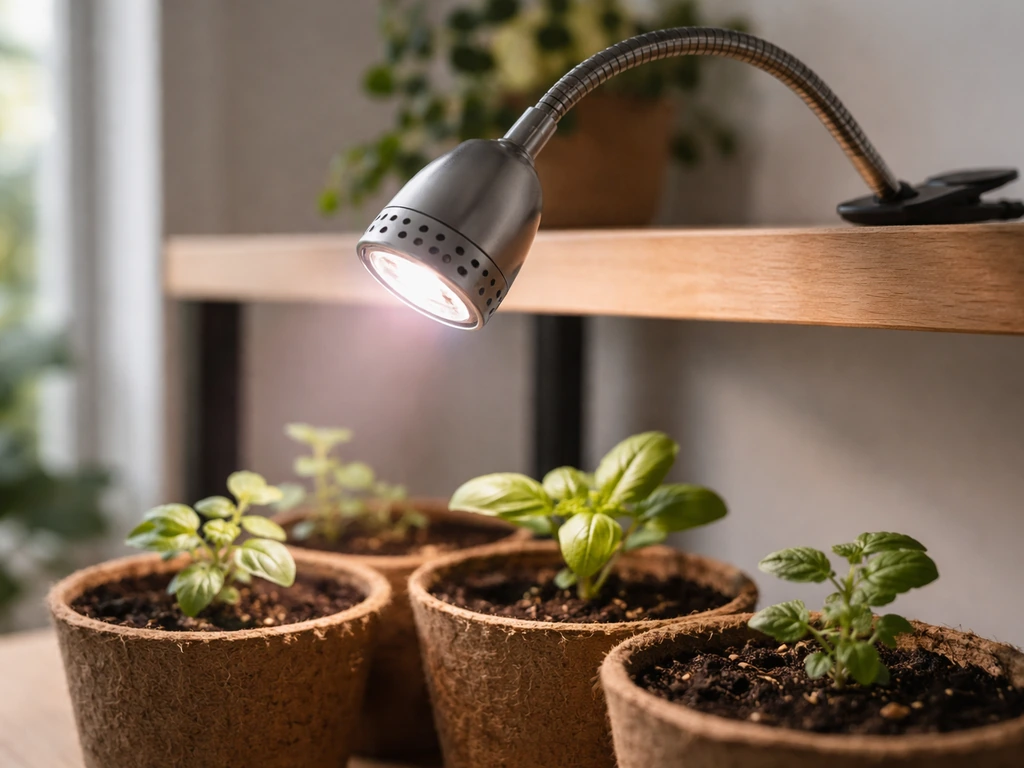
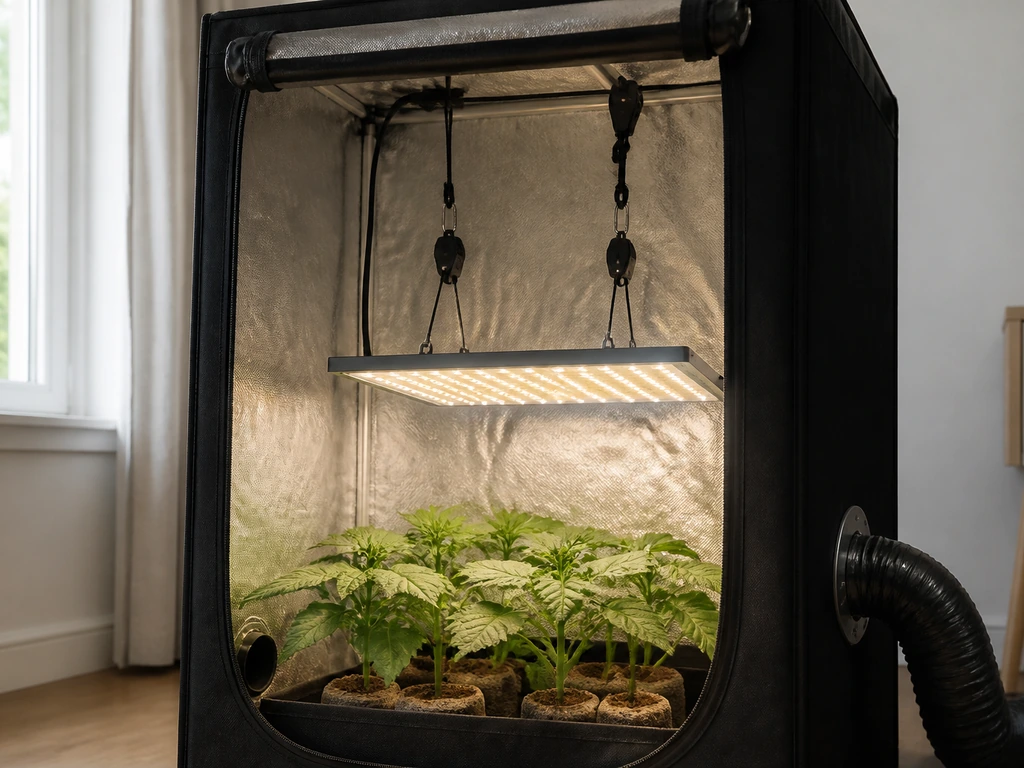
The target buyer is someone running a serious indoor grow, whether that's a dedicated 4x4 or larger tent, a greenhouse supplement setup, or a small-scale hydroponic operation. If you're looking for a cheap seedling lamp for a windowsill herb garden, Telos isn't aimed at you. But if you're growing cannabis, tomatoes, cucumbers, or leafy greens at a scale where light quality and distribution actually affect your yield, and you want a fixture that will still be performing accurately two or three years from now, the Dynamic series deserves a look.
Build quality, specs, and what comes in the box
The first thing you notice about Telos Dynamic fixtures is the build. The housing uses CNC-machined aluminum with stainless steel components, and every unit in the range carries an IP66 ingress protection rating. IP66 means it's completely dust-tight and can handle powerful water jets without damage, which matters in a humid grow tent or an environment where you're misting plants regularly. Most grow lights in this class get by with IP65 at best, so IP66 is a genuine differentiator.
The optical system uses what Telos calls a Bat Wing Distribution design, implemented through a refractive batwing lens. This is what gives the Dynamic series its unusually even spread across the canopy rather than a bright center spot with falloff at the edges. The LED driver on the 2400 model runs at 97% conversion efficiency, which is excellent and means very little wasted power as heat in the driver itself. Dimming is handled via a 0 to 10V input signal, with a dimming range of 10 to 100% of full output, plus a dim-to-off function.
The spectrum used across all Dynamic models is Telos' proprietary PWS1, which they call the Polar White Spectrum. It covers UV-blue, blue, green, red, and far-red bands, with a particular emphasis on violet and UV-blue wavelengths compared to a standard broad white spectrum. The intent is to drive plant morphology responses alongside photosynthesis, not just hit PAR numbers. Input voltage range is wide, 90 to 305Vac or 127 to 300Vdc, so it'll work on standard 120V US circuits or 240V setups without a transformer. Certifications include CE and UKCA, and the photobiology safety class is Class 1.
| Model | Power Draw | PPF Output | Efficiency | IP Rating |
|---|---|---|---|---|
| Dynamic 930 | 320W | 930 µmol/s | 2.9 µmol/J | IP66 |
| Dynamic 1200 | 400W | ~1200 µmol/s | ~3.0 µmol/J | IP66 |
| Dynamic 1960 | ~653W | 1960 µmol/s | ~3.0 µmol/J | IP66 |
| Dynamic 2400 | 800W | 2400 µmol/s | 3.0 µmol/J | IP66 |
How it performs in a real grow: PPFD, coverage, and heat
PPFD uniformity and coverage area
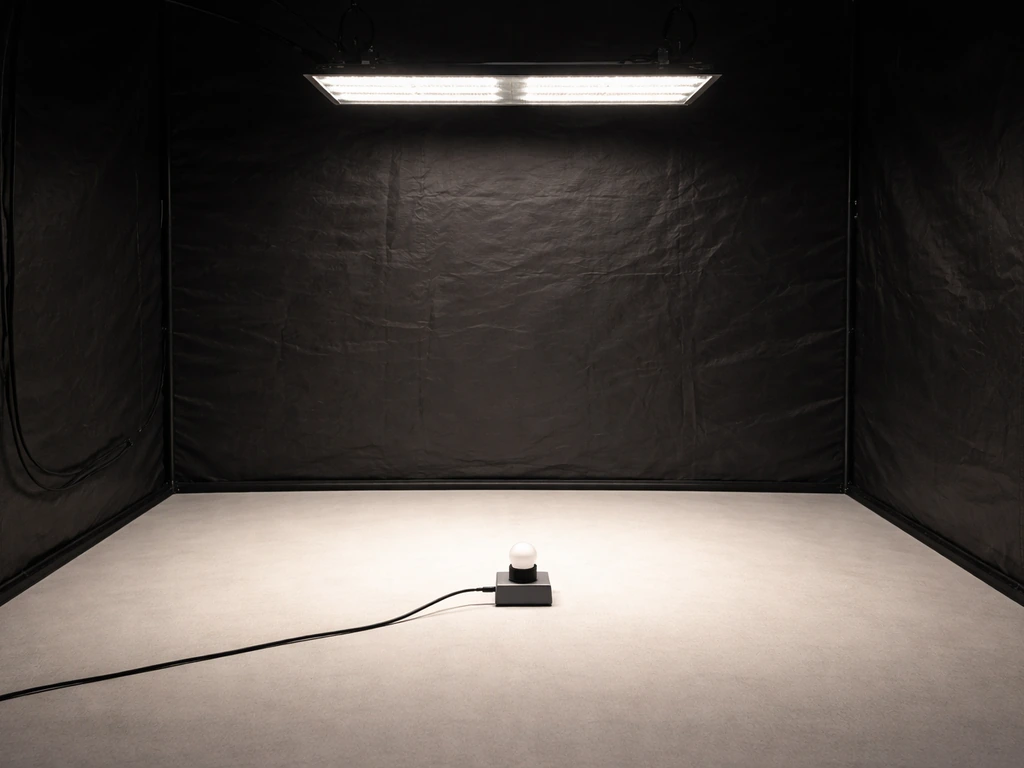
This is where Telos actually stands out from the crowd. The PPFD maps published for the Dynamic 1200 show an average PPFD of 1004 µmol/m²/s at the optimal hanging height of 55cm, with a minimum of 945 and a maximum of 1039. That gives a uniformity ratio of min:avg above 90% and min:max above 85%. Those are exceptional numbers. Most grow lights in the 400W class show a 20 to 30% drop from center to edge, which means your outer plants are underlit and your center plants can be stressed. The batwing lens design genuinely earns its keep here.
The independent Migro testing backs this up. Migro's methodology involves taking real-world PPFD grid measurements across the coverage area rather than just testing the light straight down from a fixed point, so when they confirm the uniformity claims, it carries real weight. Telos markets this as industry-leading efficiency and exceptional uniformity, and while their own marketing language is always worth taking with a grain of salt, in this case the independent data supports the claim.
Heat and ventilation
The Dynamic 930 at 320W generates 1130 BTU/hr according to the datasheet. To put that in context, that's roughly equivalent to a small space heater running at low power. In a sealed or poorly ventilated tent, that adds up fast. The Dynamic 2400 at 800W will push significantly more. Telos rates the operating ambient temperature range at 0 to 35°C, so if your grow room runs warm in summer, you need to account for that. The CNC aluminum housing does a good job dissipating heat passively from the LED array itself, but the thermal load still goes into your grow space. Plan your extraction accordingly, and if you're in a warmer climate, size your exhaust fan generously.
Plant response by growth stage
Telos provides explicit PPFD targets by growth stage in their datasheets, and the Dynamic 1200 is a useful reference point. At propagation, they recommend 200 µmol/m²/s, achieved at 17% output (73.4W, 3.3 µmol/J). For vegetative growth, the target is 450 µmol/m²/s at 38% output (165W, 3.3 µmol/J). Full flower is targeted at 1000 µmol/m²/s at 89% output (399W, 3.0 µmol/J). The Dynamic 2400 adds a CO2-enriched flower target of 1200 µmol/m²/s for growers running elevated CO2.
In practice, the dimming range makes the Dynamic series genuinely versatile across stages. You're not stuck running a 400W fixture at full blast over seedlings. At 17% output the 1200 is pulling under 75W and delivering exactly the gentle light level seedlings need without the heat stress risk. This is a practical advantage over cheaper fixtures with no dimming or only on/off switching. The PWS1 spectrum's UV-blue weighting also tends to encourage compact, stocky vegetative growth rather than stretching, which is useful if you're working with limited vertical space.
For flowering, reaching 1000 µmol/m²/s across a uniform canopy is where the batwing distribution really pays off. Every part of the canopy gets close to the same intensity, so you're not optimizing for the center at the expense of the edges. For high-light crops like cannabis or tomatoes in flower, that matters for final yield. The spectrum's far-red component also supports the Emerson enhancement effect, which can improve the efficiency of photosynthesis at the end of the light cycle.
Power draw, efficiency, and what it actually costs to run
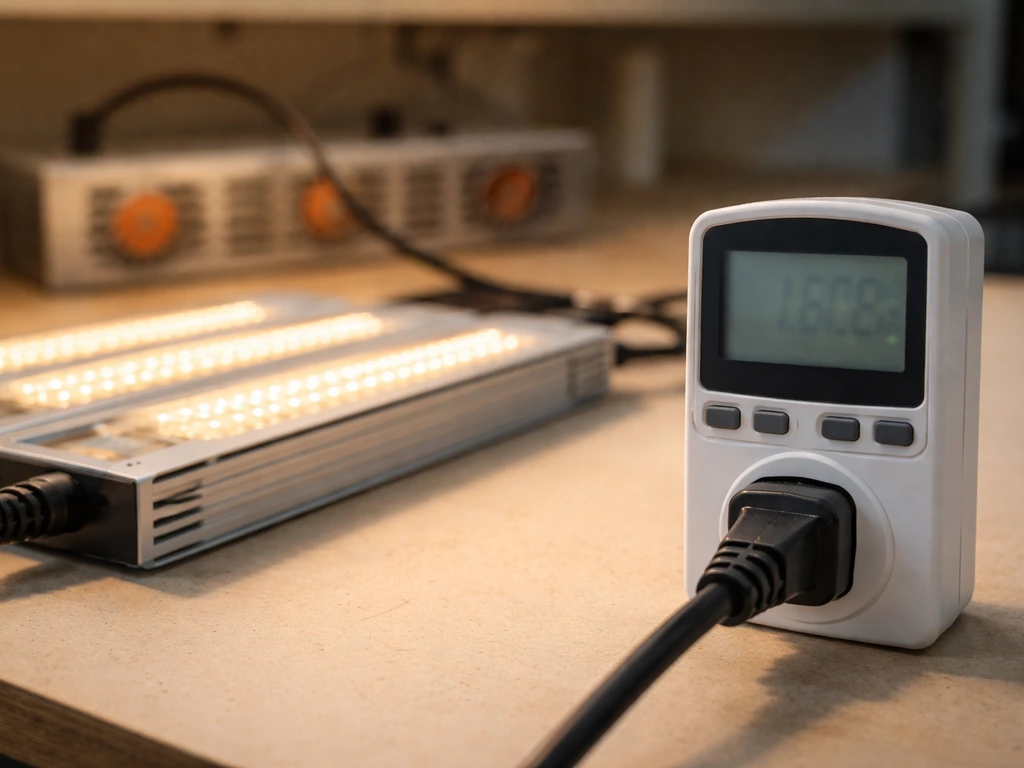
At 3.0 µmol/J system efficiency, the Telos Dynamic 2400 is among the more efficient fixtures available in its class. The 97% driver efficiency means almost no power is being wasted in conversion, which is part of how they achieve that overall system number. To put real operating cost in perspective: the Dynamic 1200 at full flower output (399W) running an 18-hour veg cycle costs roughly $0.07 per hour at the US average electricity rate of around $0.17/kWh, or about $1.20 per day. Over a 60-day veg run that's around $72 just for the light. At 12-hour flower cycles the daily cost drops closer to $0.82, and a 60-day flower run costs about $49.
Compare that to a less efficient 400W fixture running at 2.5 µmol/J: you'd need to run it harder to achieve the same PPF output, meaning higher actual wattage for equivalent results, and higher electricity bills over the same period. The efficiency gap between 2.5 and 3.0 µmol/J sounds small but compounds meaningfully across a full grow cycle, especially if you're running multiple fixtures. Telos claims up to 20% better efficiency than comparable competing models, which is aggressive but not implausible given the verified efficiency figures.
Is it worth the price? Warranty and value check
Telos Dynamic lights sit at the premium end of the LED grow light market. If you're comparing premium options before committing, you may also want to check sonlipo grow light reviews as a related comparison point for performance and value. You're not going to find these at budget prices, and that's by design.
The value proposition rests on a few things: verified efficiency that holds up under independent testing, a build quality (IP66, CNC aluminum, 97% driver efficiency) that supports a long service life, and the kind of uniformity performance that actually translates to better canopy coverage and yields. For a hobbyist running one tent, the price-per-watt is harder to justify.
For someone running multiple fixtures or treating their grow as a serious investment, the operating cost savings and fixture longevity make the math work better over time.
Telos provides CE and UKCA certifications, and the Dynamic series has been independently tested by Migro, which gives you a credible third-party reference point. For warranty and support specifics, it's worth checking directly with Telos or your local distributor at the time of purchase, as terms can vary by region. The key thing to confirm before buying is whether your region has a local distributor with real support infrastructure, because return and repair logistics for premium grow lights can get complicated if you're dealing with a distant supplier.
Best alternatives depending on your setup
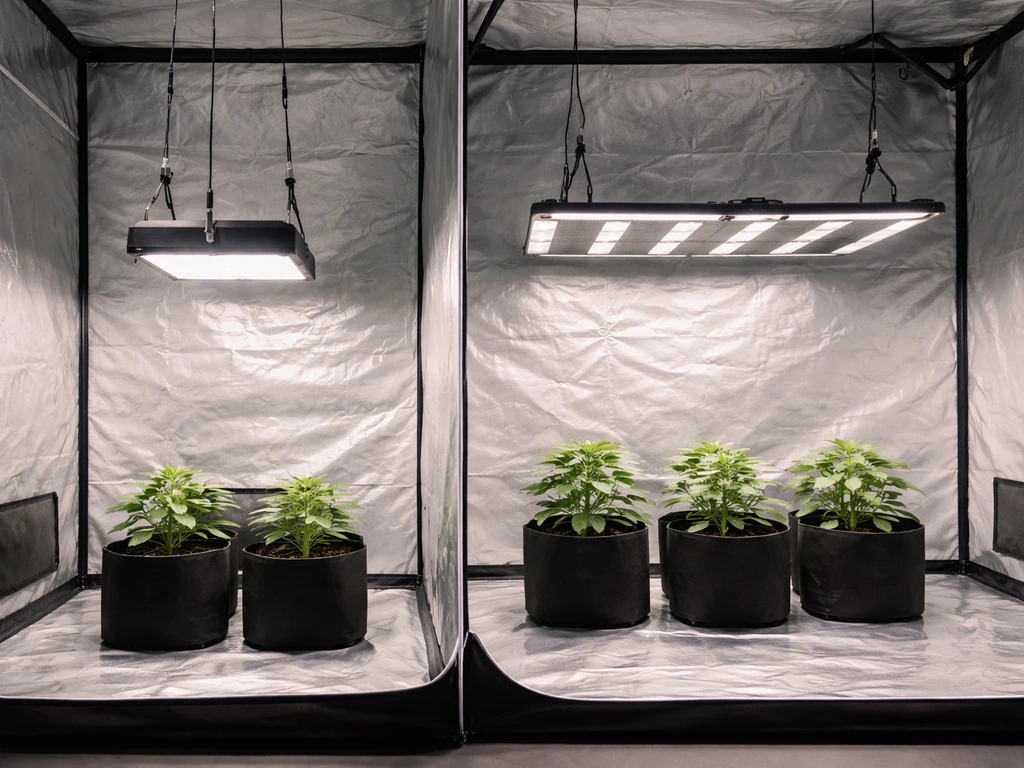
If the Telos Dynamic price point is out of reach, or if your grow space and goals don't quite match what the Dynamic series is optimized for, there are good alternatives worth knowing about. Other brands in this review silo, including the Sonlipo, Leoter, Lordem, and Dommia grow lights, cover a range of budgets and use cases from smaller tents to spectrum-specific needs. The O2 Grow emitter takes a completely different approach with dissolved oxygen, which is relevant if you're in a hydroponic setup and want to complement your lighting strategy.
| Garden Size / Need | Recommended Alternative | Why |
|---|---|---|
| Small tent (2x2 to 3x3), tight budget | Leoter or Lordem grow light | Lower upfront cost, adequate coverage for smaller footprints |
| Mid-size tent (4x4), full-cycle grow | Telos Dynamic 1200 or comparable 400W efficiency-class light | Best uniformity and efficiency in class at this size |
| Large tent or multi-light setup (5x5+) | Telos Dynamic 2400 or equivalent 800W+ fixture | CO2 flower PPFD target, high PPF output, efficiency at scale |
| Budget full-spectrum supplement | Sonlipo or Dommia grow light | Broad spectrum coverage at accessible price points |
| Hydroponic supplemental oxygen | O2 Grow emitter alongside any LED | Addresses dissolved oxygen, not a lighting replacement |
Buyer checklist and setup tips
Before you pull the trigger on a Telos Dynamic, run through this checklist to make sure it actually fits your setup.
- Match the model to your space: the Dynamic 1200 suits a 4x4 footprint at flower intensities; the Dynamic 2400 is better suited for 5x5 and larger or multi-plant setups at high intensity.
- Confirm your hanging height: the Dynamic 1200 optimal height is 55cm above canopy. Going significantly lower risks hotspots; higher and you lose PPFD at the canopy.
- Set output by growth stage, not by feel: use the published targets (Propagation 17%, Vegetative 38%, Flower 89% for the 1200) rather than running full power from day one.
- Plan your ventilation before you install: the Dynamic 930 alone adds 1130 BTU/hr to your grow space. Budget your exhaust fan size accordingly.
- Check your electrical supply: the wide voltage range (90 to 305Vac) means it'll work on 120V or 240V, but confirm your circuit can handle the full draw at the model you're buying.
- Verify regional warranty and support availability before ordering. Premium lights are only worth the premium if you can actually get service if something goes wrong.
- If you're running CO2 enrichment, use the CO2 flower PPFD target (1200 µmol/m²/s for the Dynamic 2400) rather than the standard 1000 µmol/m²/s flower target.
- Don't skip the dimming feature during seedling and early veg stages. Running a 400W+ fixture at full power over fresh seedlings will cause light stress even with proper hanging height.
Who should buy: serious hobbyists or small-scale commercial growers who want verified efficiency, IP66 durability, and the best canopy uniformity in the 320W to 800W class. If you want a straightforward lordem grow light review style walkthrough, you can still use this checklist to judge whether the Telos Dynamic series matches your goals. Who should skip: casual growers with a single small tent who can get adequate results from a less expensive fixture, and anyone who needs extensive local support infrastructure that may not yet exist for Telos in their region.
FAQ
What hanging height should I use for the Telos Dynamic, and what happens if I mount it higher or lower than recommended?
Use the hanging height targets from the published PPFD maps, then re-check your planned distance once plants reach each stage. Even with a batwing lens, going significantly higher can drop your delivered µmol/m²/s below the stage target, and you may end up compensating with higher output, which increases both power draw and heat load in the tent.
How should I connect and set up dimming on the Telos Dynamic (0 to 10V), and are there common controller mistakes?
Dimming is controlled by the 0 to 10V input, and the article notes a dim-to-off feature. If you dim below the practical range for your controller, you may not reach consistent output during transitions, especially when cycling schedules (veg to flower). Make sure your controller supplies a true 0 to 10V signal (or the manufacturer’s recommended driver interface) so the fixture tracks stage targets reliably.
With IP66, can I run the Telos Dynamic directly in a misty or sprayed grow environment, and what should I still be careful about?
IP66 helps with mist and water jets, but it does not mean you should soak connectors or run water pressure directly on any cable penetrations. Route the power and control wiring so drips do not pool at entry points, and avoid cleaning inside the fixture. If you use evaporative cooling or heavy humidity, add drip management and consider directing spray away from the driver area.
If I run CO2 for flower, how do I translate Telos’ PPFD targets into what I should aim for in my own tent?
Telos publishes stage PPFD targets at specific output percentages, but actual results depend on your canopy height and uniformity across your exact tent dimensions. If you are using a CO2-enriched flower run, confirm that you are targeting the 1200 µmol/m²/s spec (or a level your crops can use safely) and ensure your ventilation can keep leaf temperature and humidity within safe ranges.
How do I estimate my electricity cost with Telos, considering dimming and my own schedule?
Don’t judge cost by wattage alone. The article’s examples assume US electricity around $0.17/kWh and specific cycle lengths. Your real per-run cost changes with (1) your dimming schedule, (2) actual on-time, and (3) your kWh rate. If you run mostly mid-range output, your cost may be closer to the lower daily figure than to the full-flower example.
What are the practical thermal limits, and how do I plan extraction if my grow tent runs warm?
Yes, airflow is the limiting factor for heat removal rather than LED quality. The 320W model is already in small-space-heater territory (about 1130 BTU/hr), and higher power models add significantly more. If your grow room temperature regularly exceeds the fixture’s rated ambient upper limit (noted as 35°C), expect performance to drift and consider increasing exhaust capacity or using climate control.
How sensitive is canopy uniformity to plant height differences, and can uneven training reduce the benefit of the batwing lens?
Uniformity is strongest when your canopy sits at the correct height relative to the fixture and you keep plant spacing consistent. If one part of your garden grows taller (uneven training, sagging branches, or uneven rooting), that section will receive less PPFD than your “minimum” map implies. Use training to level the canopy or raise/lower the fixture per stage if your setup allows it.
Does Telos’ spectrum (PWS1, UV-blue and far-red) change how I should manage veg stretch and flower timing?
The article mentions a spectrum with UV-blue weighting and a far-red component, but morphology effects vary by cultivar and your actual delivered PPFD. If you see excessive compactness or slower stretch in veg, you may need to increase output slightly or adjust stage duration. In flower, if you run long photoperiods, verify you are not inadvertently changing day length more than intended when switching schedules.
What maintenance habits affect long-term performance (PPFD and efficiency) on the Telos Dynamic?
Datasheets cover efficiency and PPFD at specific conditions, but real-world performance can shift with dust accumulation on lenses, mounting hardware stability, and cable contact quality. IP66 helps resist ingress, but airflow and cleaning still matter for maintaining output over time. Plan periodic inspections and keep reflectors or surrounding materials clean to protect optical transmission.
What should I verify about warranty and local support before buying a premium Telos light?
Support varies by region, so the safest approach is to confirm warranty coverage, authorized service location, and turnaround time before purchase. If you anticipate needing rapid repairs, prioritize distributors that can handle returns locally. Also confirm whether warranty claims require proof of purchase date and serial number matching, since premium fixtures are often handled by strict RMA processes.