The GE BR30 grow light is a 9-watt LED bulb with a rated 16 PPF (micromoles per second) output, designed for seedlings, leafy greens, and houseplants in a standard E26 socket. It works, it's cheap to run, and it fits in any lamp or track fixture you already own. But it tops out early: the intensity is too low for flowering crops or anything that needs dense canopy coverage, and you'll need multiple bulbs the moment your grow space exceeds a single pot or small tray. If you're starting seeds on a windowsill shelf or keeping a few herb pots alive through winter, it's a solid, low-fuss option. If you're running anything bigger or pushing plants into bloom, you'll be disappointed.
GE BR30 Grow Light Review: Performance, Coverage, and Value

Marcus Caldwell
28 Apr 2026
What the GE BR30 grow light actually is
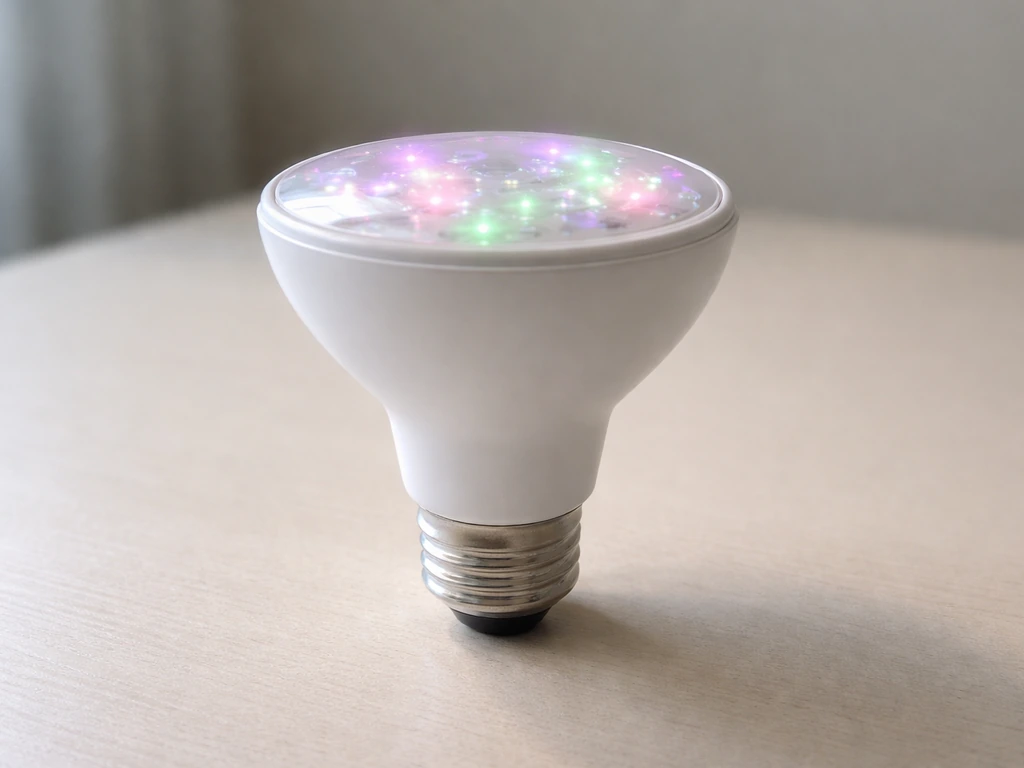
GE sells this under a few slightly different product names, but the core variant most people find is marketed as the 'GE Grow Light for Plants, BR30 LED Light Bulb for Seeds and Greens, 16 PPF.' The key specs are: 9 watts, E26 medium base (the standard US household screw base, also compatible with E27 fixtures), BR30 form factor (the wider-faced flood bulb shape, about 3.75 inches in diameter), and a rated PPF output of 16 micromoles per second. GE also lists a rated lifespan of up to 25,000 hours.
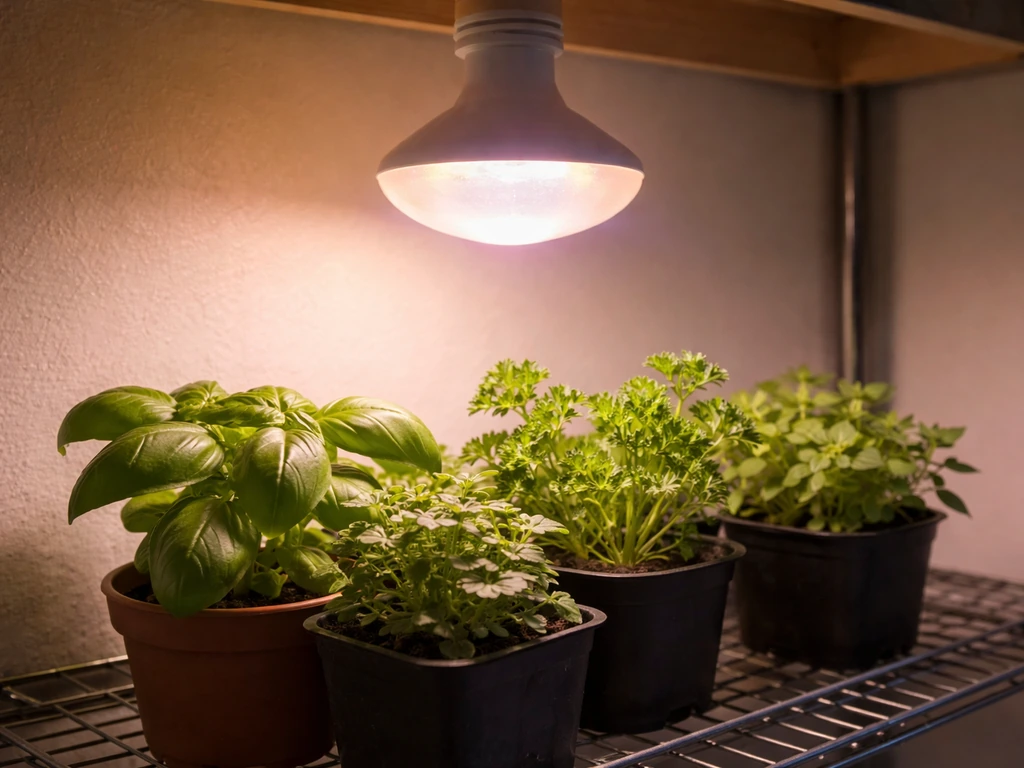
The spectrum is tuned for plant growth rather than being a plain white LED. GE blends red and blue wavelengths to target the chlorophyll absorption peaks that drive photosynthesis, which is why the bulb emits a noticeably pinkish-purple light when on. It's not a full-spectrum white grow bulb, so it will look odd in a living room, but that tradeoff gives you a more photosynthetically targeted output for the wattage. GE's naming of 'Seeds and Greens' is intentional: they're not marketing this for flowering or fruiting, and that's honest.
Build quality, heat, and real usability
The BR30 is a standard consumer LED bulb in construction. The housing is plastic with an aluminum heat sink base, which is typical at this price point. Heat output is low compared with any HID or even older CFL grow bulbs: running at 9 watts, the bulb stays warm to the touch but not hot, and there's no meaningful risk of burning plants if you maintain the recommended placement distance. I've run these in enclosed globe fixtures without overheating issues, though open or semi-open fixtures are still a better long-term choice for bulb longevity.
Dimming behavior is worth noting. The GE BR30 grow bulb is not reliably dimmable. GE does not list it as a dimmable product, and in testing it either flickers or does not respond predictably on most residential dimmer switches. GE Lighting publishes a “LED Lamp Dimmer Compatibility” PDF that lists BR30 lamp models and their tested or excellent dimmer compatibility, which can be used to confirm how specific GE BR30s behave with common dimmers. Don't plan to dim it. Just put it on a timer, which is how you should be controlling your photoperiod anyway. On a standard on/off circuit it performs without any issues.
Installation is genuinely plug-and-play. Any E26 lamp, clamp light, track head, or pendant fixture accepts it directly. The BR30 shape gives a wide 120-degree beam angle, so you don't need to angle or adjust it much. One practical note: because the bulb emits that pink-purple light, you may want a dedicated fixture for your grow area rather than using a lamp that's also in your main living space. It's not harmful, just visually odd for extended periods.
Grow performance: what the spectrum and brightness actually do
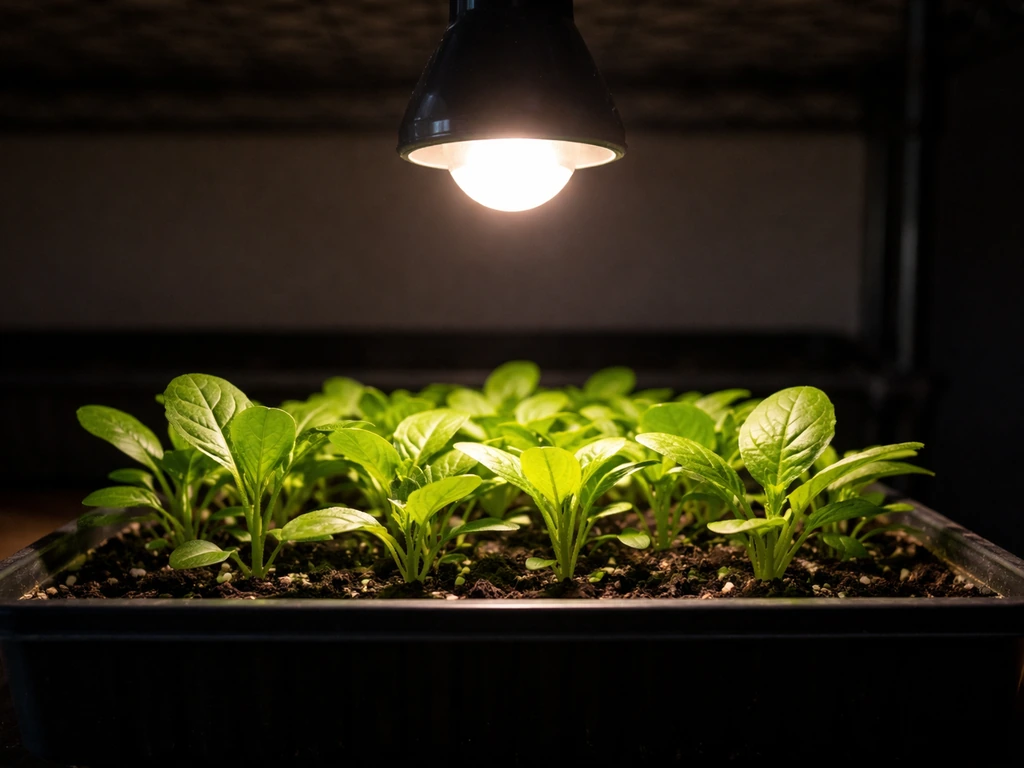
At 16 PPF, this bulb delivers a usable but modest light output for plant growth. To put that in context: seedlings and leafy greens generally need a Daily Light Integral (DLI) of around 6 to 12 mol/m²/day to grow well. Running one GE BR30 for 18 hours a day at the recommended 6-9 inch canopy distance, you can realistically achieve the lower end of that range directly under the bulb's central beam. That's enough for germination, early vegetative growth, and maintaining herbs or tropical houseplants that don't demand high light.
For flowering plants or fruiting crops like tomatoes and peppers, target DLI values are typically 20 to 30+ mol/m²/day, which a single 9-watt bulb at 16 PPF cannot approach. The red-blue spectrum is appropriate in principle for both vegetative and flowering stages, but intensity is the limiting factor here, not spectrum. You can run these bulbs over seedlings and young veg plants with good results. Don't expect them to push a pepper plant through bloom.
In practice, I've used BR30-style grow bulbs like this one to successfully start tomato and pepper seeds, grow lettuce and basil from seed to harvest, and keep tropical houseplants (pothos, philodendron, monstera) healthy through low-light winter months. For all of those applications the GE BR30 performs as expected. Where I've seen it fall short is when plants transition out of early veg: growth slows noticeably and internode spacing stretches out, classic signs of insufficient light intensity.
Coverage, height, and how many bulbs you actually need
GE recommends placing the bulb 6 to 9 inches from the plant canopy. At that distance, the BR30's 120-degree flood beam covers roughly a 12 to 15 inch diameter circle with useful intensity at the center, tapering toward the edges. Practically, think of each bulb as covering one to two small pots or a tray of seedlings no larger than about 12 by 12 inches with consistent light. Beyond that footprint, the PPFD drops off significantly.
If you're running a standard 10x20 seedling tray, plan on three to four bulbs to cover it adequately, positioned in a row roughly 8 inches above the tray surface. For a 2x2 foot grow shelf, two to three bulbs spaced evenly and run 16 to 18 hours per day will maintain seedlings and leafy greens reasonably well. GE suggests 18 hours on for seeds and greens, which aligns with standard recommendations for high-growth vegetative stages.
- Single pot or 6-inch container: 1 bulb at 6-8 inches, centered over the plant
- Standard 10x20 seedling flat: 3-4 bulbs in a row, 8-9 inches above tray
- 2x2 shelf: 2-3 bulbs evenly spaced, 7-9 inches above canopy
- Herb garden with 4-6 small pots in a line: 2 bulbs staggered along the row
One thing to watch: the BR30 floods light broadly, which is useful for even coverage but means more light spill outside your intended grow zone. If you're on a shelf system, use reflective mylar or even white foam board as side panels to bounce spilled light back toward the plants. It makes a real difference in efficiency at this output level.
Value for money: price, running cost, and how long it lasts
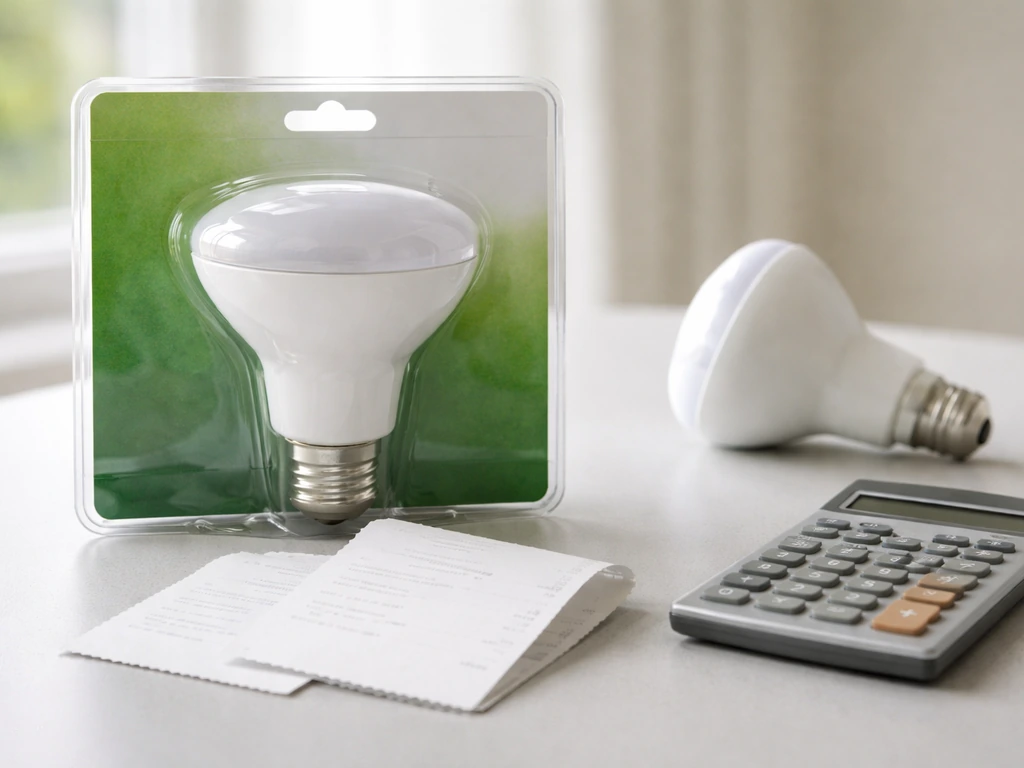
The GE BR30 grow bulb typically sells for around $10 to $15 per bulb at major retailers. At 9 watts and a 25,000-hour rated life, the running cost is negligible: at a national average electricity rate of roughly $0.16 per kWh, running one bulb 18 hours a day costs about $0.026 per day, or under $10 per year. Even running four bulbs for a seedling setup, you're looking at less than $40 per year in electricity.
The 25,000-hour rating is standard for quality LED bulbs and translates to roughly 3.8 years of continuous use, or well over a decade at 18 hours per day for seasonal growing. That's a reasonable warranty expectation for a consumer LED, though GE doesn't typically offer a robust commercial-style warranty on these retail grow bulbs, so factor that in if you're building a more permanent setup.
Where the value math gets complicated is when you start stacking bulbs to cover a real grow area. Three bulbs at $12 each is $36, plus fixtures, and you're still limited in intensity. At that spend level, entry-level dedicated grow panels (full-spectrum LED bars or quantum board-style panels) start to compete directly on price while delivering significantly more usable output per dollar. The GE BR30 is best value as a single-bulb or two-bulb solution for small, defined grow spaces, not as a scalable system.
Best-fit use cases and honest limitations
The GE BR30 is genuinely good at a specific job: low-intensity supplemental or primary lighting for plants that don't demand high DLI. That covers a lot of common home gardening scenarios.
- Starting seeds indoors before transplanting outdoors (6-8 week seedling period)
- Growing leafy greens and herbs (lettuce, basil, spinach, cilantro) from seed to harvest
- Keeping tropical houseplants healthy during dark winter months
- Propagating cuttings that need gentle light while rooting
- Supplementing a low-light windowsill to extend day length
Where it falls short: fruiting and flowering plants at any serious production scale, cannabis cultivation, larger grow tents, or any situation where you need consistent PPFD above roughly 200 to 300 µmol/m²/s across a canopy. A single BR30 at 6 inches delivers maybe 100 to 150 µmol/m²/s at the center of its beam (estimated, based on the 16 PPF output and typical beam geometry at that distance), which is fine for seeds and low-light greens but marginal even for mid-veg tomatoes. If you find yourself wondering whether to buy a fourth or fifth bulb for a single grow shelf, that's the signal to step up to a dedicated grow panel instead.
How it compares to other BR30 and similar grow bulbs
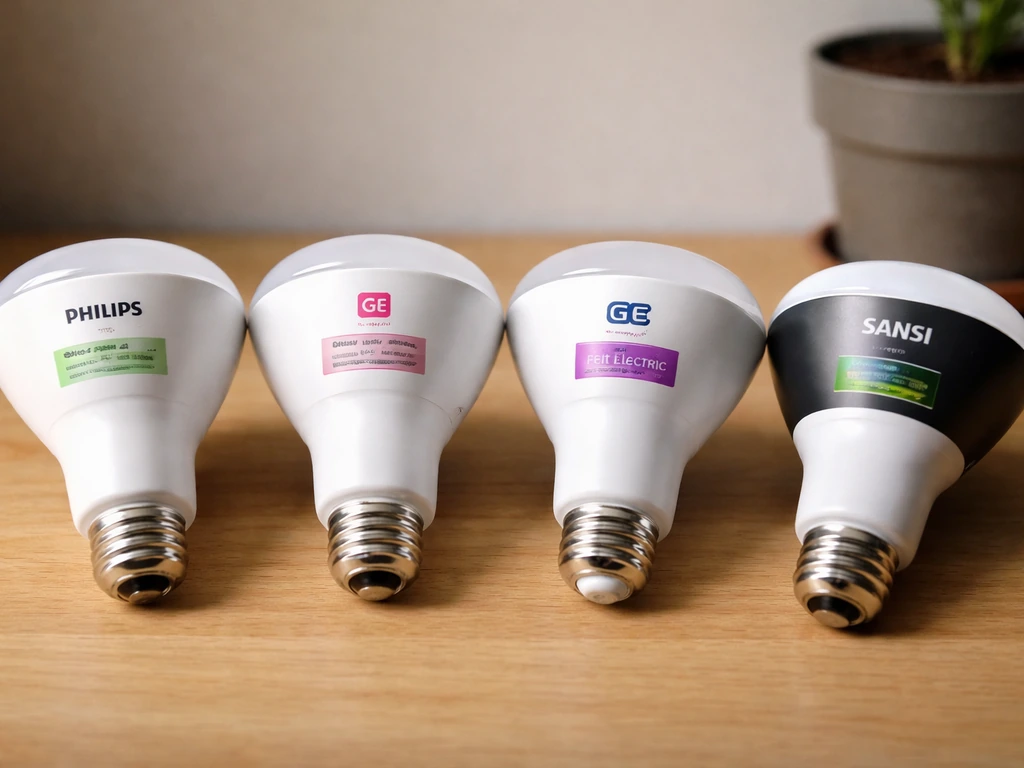
The BR30 grow bulb format is fairly crowded. Philips, Feit Electric, Sylvania, and a handful of Amazon private-label brands all sell similar E26 grow bulbs in the 9 to 15 watt range. Here's how the GE BR30 stacks up against the most commonly compared alternatives.
| Bulb | Wattage | PPF Output | Spectrum Type | Dimmable | Approx. Price | Best For |
|---|---|---|---|---|---|---|
| GE BR30 (Seeds & Greens) | 9W | 16 PPF | Red/Blue blend | No | $10-15 | Seedlings, herbs, houseplants |
| Feit Electric Grow BR30 | 9W | ~15 PPF (varies) | Red/Blue or Full-spectrum options | Some models | $8-14 | Seedlings, veg; FS version suits wider use |
| Philips LED Grow Light A19/BR30 | 6.5-10W | ~12-16 PPF | Red/Blue blend | No | $10-18 | Houseplants, herbs |
| Sylvania Gro-Lux BR30 | 9W | ~14 PPF | Red/Blue blend | No | $9-13 | Seedlings, low-light greens |
| Generic/Amazon BR30 grow bulbs | 10-15W | Varies widely (unverified) | Often red/blue or blurple | Varies | $5-12 | Unpredictable; buyer beware |
The GE BR30 sits comfortably in the middle of the pack. It's not the cheapest option, but GE's PPF spec of 16 PPF is one of the more transparently stated figures in this category, which matters when you're comparing bulbs. Many competing bulbs list lumens (a human-eye brightness measure, not a plant light measure) instead of PPF, making fair comparison difficult. GE actually stating PPF puts them ahead of most generic alternatives in terms of usable information.
Feit Electric's full-spectrum BR30 variant is worth a look if you want a slightly more natural-looking light (less purple, more white) while still supporting plant growth. It's functionally similar in output to the GE but won't turn your entire grow area that distinctive pink-purple hue. If aesthetics matter and you're growing in a shared living space, Feit's full-spectrum option is a reasonable alternative at a similar price.
If you're researching broader grow light options beyond the BR30 format, dedicated LED panels using high-efficiency diodes (like those using Samsung LM301B diodes) deliver substantially more output per watt and more precise spectrum control. Those products occupy a different category and price tier, but they're worth considering once your grow space outgrows what a handful of screw-in bulbs can reasonably deliver.
Who should buy the GE BR30, and how to set it up
Buy the GE BR30 if you're a home gardener who wants a no-fuss, low-cost way to start seeds, grow herbs, or keep houseplants thriving without investing in a dedicated grow light system. If you want a comparable comparison using a Samsung LM301B LED, see the Samsung LM301B grow light review for what that kind of board changes in performance and cost GE BR30. jamsung grow light review. If you are shopping around and want a practical starting point, this byingo grow light review style comparison helps you judge whether a small screw-in bulb meets your plants’ needs no-fuss, low-cost way to start seeds. It's ideal for apartment gardeners, beginners who want to test indoor growing before committing to more equipment, and anyone who already has suitable fixtures and wants to drop in a grow bulb without rewiring anything.
Don't buy it if your primary goal is flowering crops, you're covering more than about 2 square feet per bulb, or you're looking for something you can scale into a real production setup. At that point, look at full-panel LED grow lights designed for the job.
For setup: use a clamp light or adjustable lamp so you can keep the bulb 6 to 9 inches above the canopy and raise it as plants grow. Put it on a mechanical or smart plug timer set to 16 to 18 hours on for seedlings and leafy greens, or 14 to 16 hours for established houseplants. Check your plants after the first week: if they're stretching toward the light with long internodes, the bulb is too far away or you need more bulbs. If leaves are cupping or bleaching, move the bulb up a few inches, though at 9 watts that's rarely an issue.
If you find a variant listed with a different wattage or PPF number than the 9W/16 PPF version described here, apply the same framework: check that the PPF (not lumens) is stated clearly, confirm E26 compatibility, and scale your coverage estimates proportionally. A 15-watt version with 25+ PPF would cover roughly 50 percent more area at the same height, for example. GE's product line evolves, but the core evaluation criteria stay the same.
FAQ
Will the GE BR30 work with smart dimmers or adaptive light switches if I want smoother control?
It’s not a reliable dimmable bulb, and many dimmers cause flicker or unpredictable output. If you want smart control, use the smart plug or relay-based timer and keep the bulb on full power, then adjust photoperiod instead of brightness.
What if my fixture uses E27 instead of E26, is there any compatibility issue?
The bulb is compatible with E27 fixtures because both are the same screw-base family. The practical difference is mostly regional socket standards, so confirm your fixture actually accepts a medium screw base rather than a special grow-socket design.
How do I estimate coverage if my plants are not centered under the bulb?
Use the center as your “best-case” footprint, then treat the edges as lower output. Since the beam is wide but intensity tapers, you’ll often need to overlap bulbs or add side reflectors if your canopy spreads beyond the central 12 to 15 inch circle.
Can I use this bulb in a small enclosed grow box or cabinet without reducing its lifespan?
It runs warm but not hot, so it’s usually fine, but enclosed cabinets reduce airflow and can trap heat near the socket and reflector. If you notice the fixture housing getting noticeably warm to the touch or discoloring, add ventilation or switch to a more open fixture to protect the plastic components.
Is “Seeds and Greens” labeling a real limitation, or will it still flower if I add more bulbs?
The spectrum supports photosynthesis in principle, but the limitation is intensity for DLI. Adding bulbs can help, yet once you’re spreading across more than small areas, you’ll hit diminishing returns because a BR30 delivers limited PPFD compared with panels.
What PPFD or DLI target should I use for herbs versus leafy greens?
For many home setups, leafy greens and most culinary herbs do well on a modest DLI similar to early vegetative needs. If your plants start stretching or the new growth is pale, treat that as an intensity signal and either bring bulbs closer or add a bulb rather than changing the spectrum.
Does the bulb’s pink-purple color harm plants or indicate an issue?
No, that color is expected from the red-blue spectrum mix. The color is mostly a visual cue that it’s not white light, and plant health should be judged by growth response, not by how “bright” it looks to your eyes.
Can I mount the BR30 upside down or at an angle to spread light more evenly?
Angle adjustments can help coverage, but upside-down mounting can change heat distribution around the socket and may put the emitter closer to the wrong parts of an enclosure. If you must angle it, keep the working distance goal (about 6 to 9 inches) and use the recommended beam footprint to avoid hotspots.
How should I control runtime for seedlings versus established houseplants?
A common approach is longer photoperiod for fast seedling and leafy growth, shorter for mature houseplants. The key is to keep a consistent daily schedule on a timer and watch morphology after a week, stretching means you need more light or closer placement.
If I see leaf cupping or bleaching, should I move the bulb up or down?
Cupping and bleaching often point to excessive intensity or stress, so start by increasing the distance slightly and check again. With a 9-watt bulb, overheating is uncommon, so if you’re getting damage you may also have light focused by a reflective surface or very tight plant spacing.
Can I pair multiple GE BR30 bulbs on the same circuit or power strip?
Yes, because each bulb is only 9 watts, but confirm your fixtures and wiring are rated for the total current and the number of sockets you’re using. The more important issue is physical placement and consistent distance, since uneven mounting creates uneven PPFD.
Do I need to worry about PPFD measuring tools, or is “stretching” feedback enough?
You can get by with visual diagnosis for small setups, stretching and long internodes indicate insufficient intensity, while bleaching can indicate too much direct exposure or reflected hotspots. If you want precision, measure PPFD at canopy height with a cheap meter app-based unit is often unreliable, a dedicated meter is more dependable for small-beam bulbs.
What’s the best way to reduce light spill in a room where people will notice the glow?
Use reflective side panels around your grow zone (mylar or white foam board) and limit where the bulb can “see” the room. A dedicated grow shelf with a hood or simple baffle usually improves efficiency and reduces the amount of pink light visible outside the plants.
Is the 25,000-hour lifespan realistic if I run this bulb daily during a season?
It’s a rated figure under typical LED conditions, but real lifespan depends on heat near the socket and fixture airflow. If you run it on a timer for part of the year, it should last well beyond multiple seasons, but avoid sealed or stagnant hot enclosures to protect plastic housing and the aluminum base.