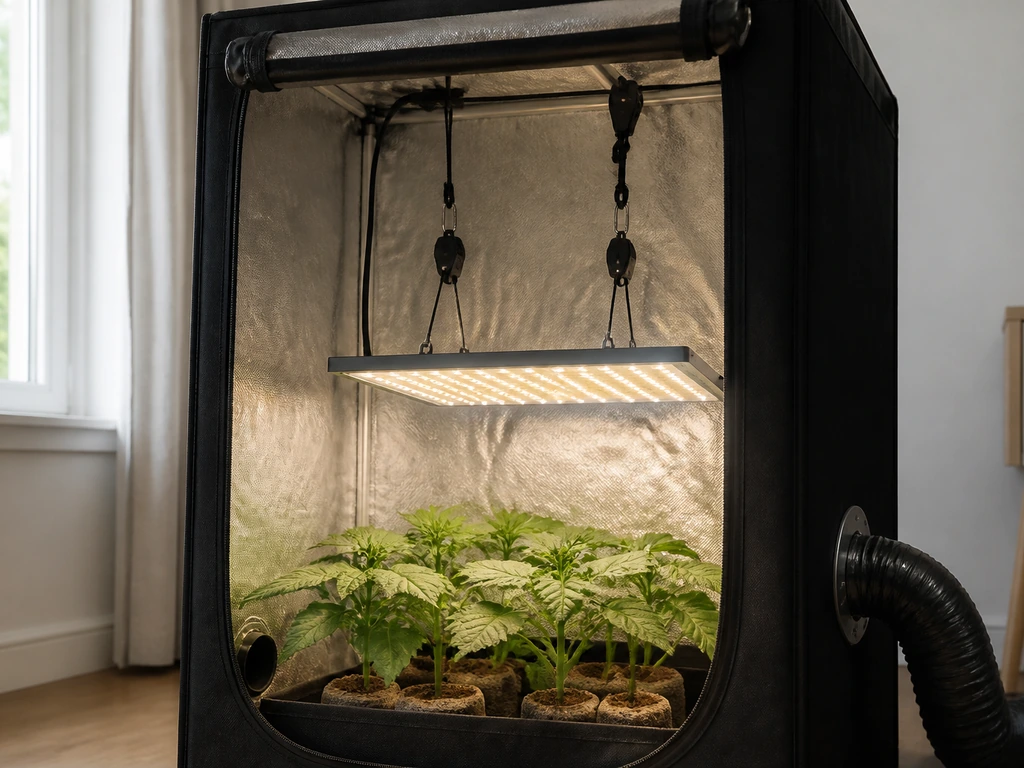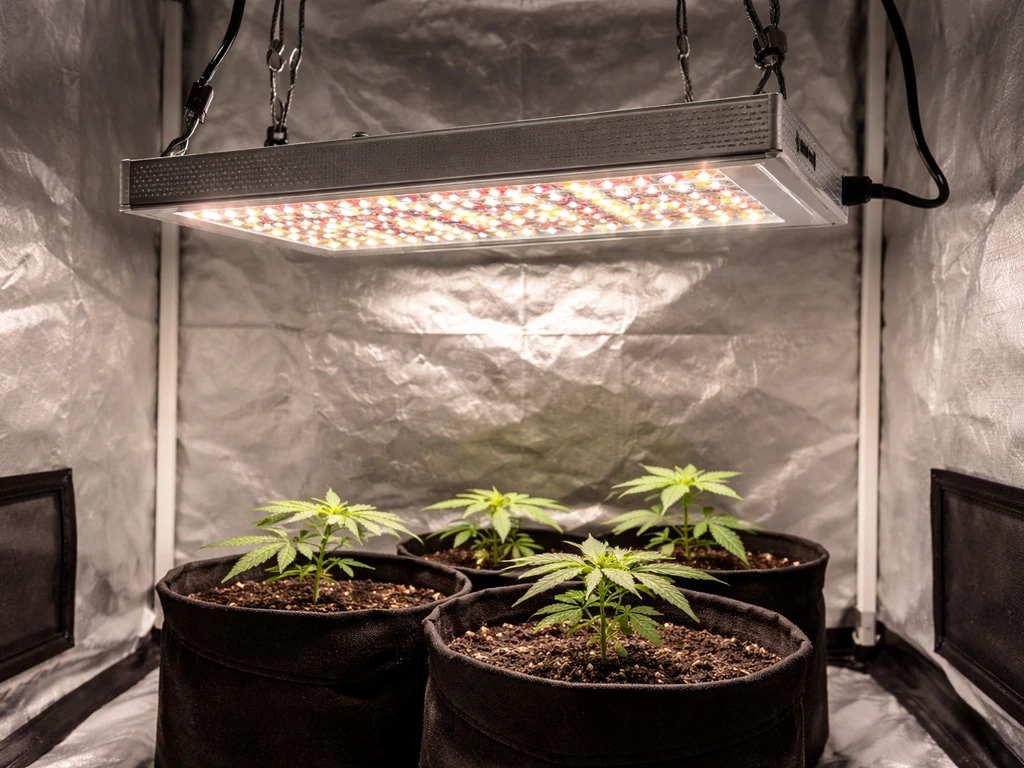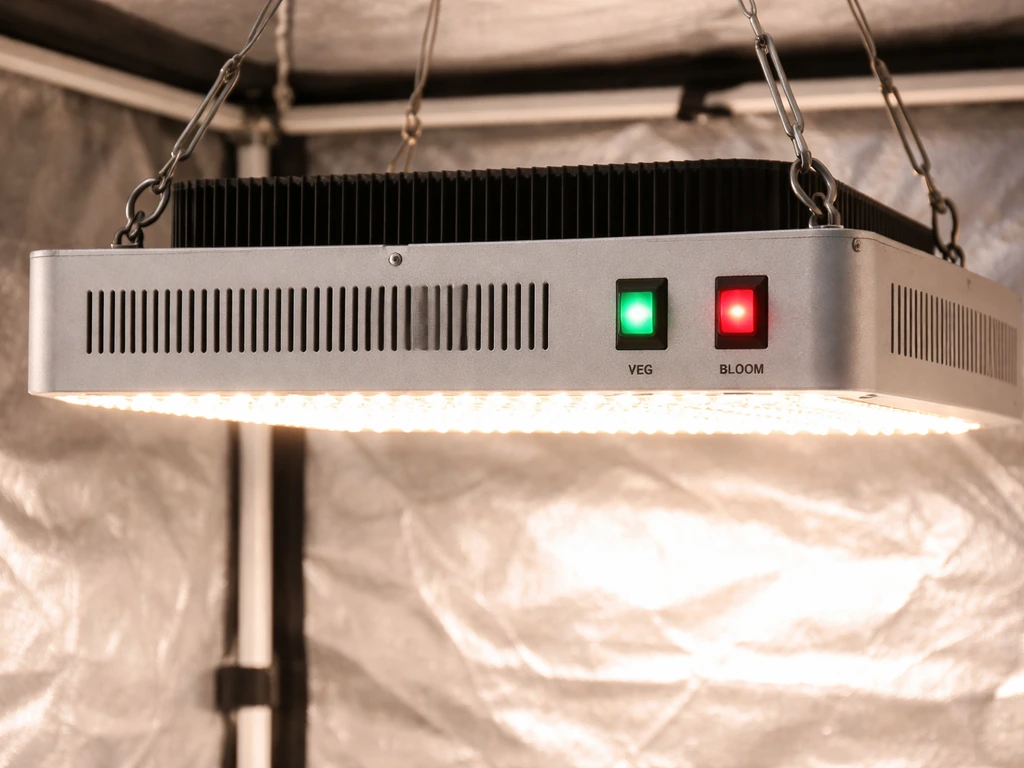
The Aovok grow light is a budget-tier, 45-watt LED panel aimed at hobbyist indoor gardeners who want a simple, plug-and-play light for a small grow space. Based on what's available across marketplace listings, there appears to be essentially one primary Aovok panel model in circulation (management/model number 9508040), a 225-LED full-spectrum unit sold for roughly $10 to $60 depending on the reseller. That wide price spread already tells you something about this brand: it lives in the unregulated, grey-market corner of Amazon and third-party resellers, not in the mainstream grow-light ecosystem. So before you decide whether to buy one, here's an honest look at what it actually offers and whether it's worth your money.
Aovok Grow Light Review: Specs, Coverage, and Results

Marcus Caldwell
20 Apr 2026
What the Aovok grow light is and who it's for
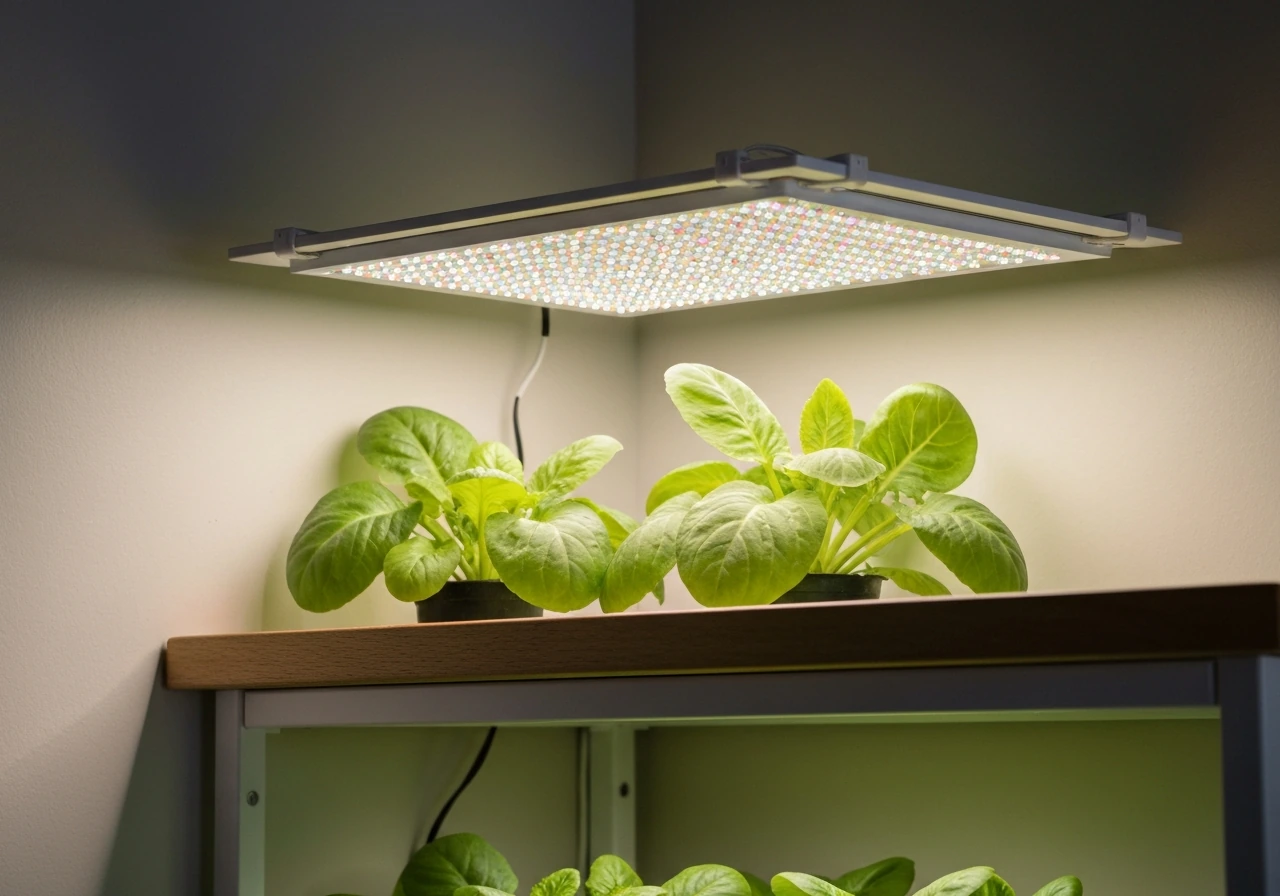
The Aovok is a flat LED panel grow light, roughly 12 x 12 inches square, designed for close-range supplemental or primary lighting over a small plant canopy. It's the kind of light that gets marketed to beginners, apartment gardeners, and anyone growing herbs, seedlings, or small houseplants on a tight budget. The brand doesn't have a prominent direct-to-consumer presence (aovok.com doesn't appear to function as a product catalog), and the product shows up across National Wholesale Products, eBay, Galleon Philippines, and similar grey-market resellers rather than through a clearly established retail channel.
That context matters. If you're a small-scale cultivator looking for a reliable, well-documented light with manufacturer support, the Aovok may frustrate you. But if you're a hobbyist who needs an inexpensive light for a herb tray, seedling tray, or a single small plant under a shelf, and you understand you're essentially buying a commodity LED panel, it can do the job within its limits. It is not a light for cannabis flowering, large vegetative canopies, or serious horticulture production.
Full specs and build quality
The confirmed specs across multiple reseller listings are consistent enough to trust. The panel draws 45 watts from the wall at AC 85-264V, 50/60Hz, so it works on both US and international outlets without a converter. It has 225 LEDs arranged as 165 red diodes and 60 blue diodes, which is a classic red/blue (blurple) ratio targeting chlorophyll A and B absorption peaks. There is no white, far-red, or UV diode in this configuration, which is a meaningful limitation for whole-spectrum plant health. The listed lifespan is 50,000 hours, the panel measures 12.2 x 12.2 x 1.22 inches, and the operating temperature range is -20 to 40°C with 45-95% relative humidity tolerance. The unit is explicitly noted as not waterproof.
| Spec | Detail |
|---|---|
| Model number | 9508040 |
| Wattage (actual draw) | 45W |
| Number of LEDs | 225 (165 red, 60 blue) |
| Spectrum type | Red/blue full spectrum (blurple) |
| Input voltage | AC 85-264V, 50/60Hz |
| Panel dimensions | 12.2 x 12.2 x 1.22 inches |
| Listed lifespan | 50,000 hours |
| Waterproof rating | Not waterproof |
| Operating temp range | -20 to 40°C |
| Typical resale price range | $10 to $60 depending on seller |
| In-box accessories | Light panel, hanger kit, power plug |
Build materials are described as a thickened aluminum substrate with an ABS plastic backboard. The aluminum base functions as a passive heat sink, which means there's no fan, no moving parts, and no noise. The LED cups use a 60-degree concentrated beam angle, which focuses light downward more than wide-angle panels do. That's a double-edged design: it preserves intensity directly below the panel but creates a narrower footprint before intensity drops off. At 12 x 12 inches and passive cooling only, this is a simple, low-maintenance build with no controls beyond plugging it in and out. There is no dimmer, no built-in timer, and no spectrum-switching capability on this unit.
Real-world performance: brightness, spread, heat, and uniformity
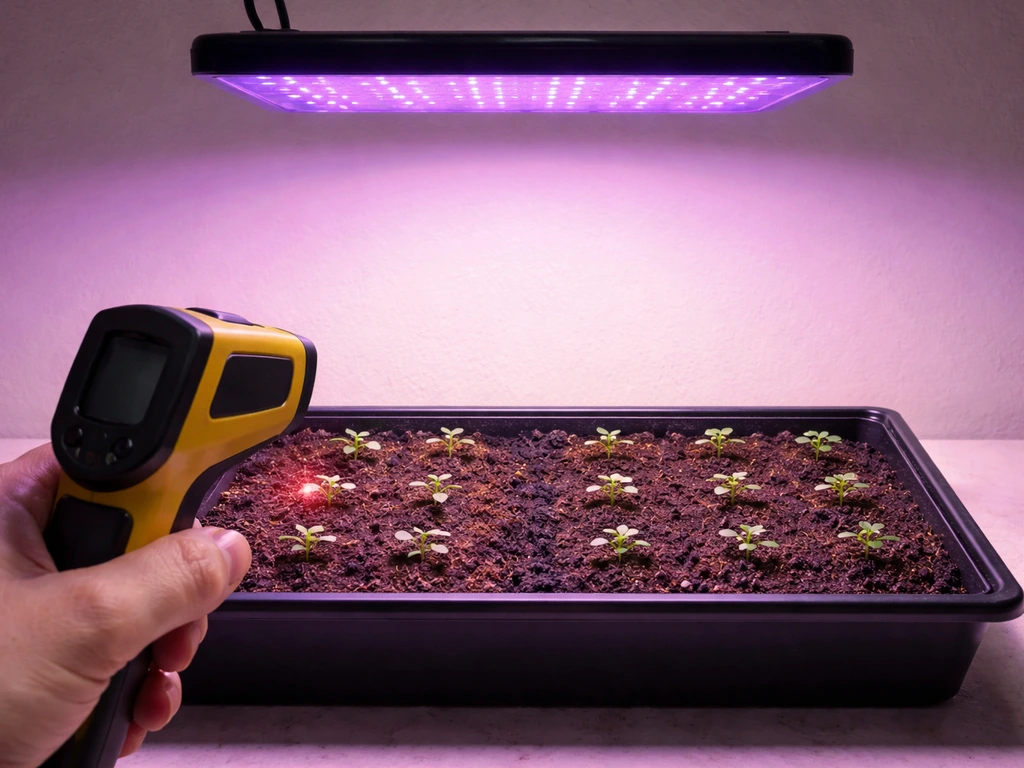
No independent, controlled PPFD maps exist for the Aovok 45W panel in the available evidence, so I'll be direct: I can't give you a specific micromole reading at a specific height the way I could for a well-documented light. What I can tell you is what the specs and community use patterns suggest, and how they compare to what a 45W LED panel at this price point typically delivers.
A 45W blurple panel of this type typically produces usable PPFD (roughly 200-400 µmol/m²/s) directly beneath the panel at 6-12 inches, dropping off significantly toward the edges of even a 2 x 2-foot space. The 60-degree beam angle concentrates that light in a tighter cone, so the effective footprint at useful intensity is closer to a 12 x 12-inch to 16 x 16-inch area when hung at 6-10 inches. Hanging it higher increases coverage but drops intensity fast, which matters for flowering-stage plants that need higher light levels.
Heat management through the aluminum substrate is adequate for a panel this small. Passive cooling without a fan works fine at 45W because the thermal load isn't high enough to cause problems under normal indoor conditions. Users on Reddit report the panel gets warm to the touch but doesn't run hot. The lack of a fan means dead silence, which is a genuine selling point for bedroom or living-room grows. One Reddit user did report a leaf burn issue with an Aovok LED, though that's consistent with hanging the panel too close (under 4-6 inches) rather than a defect in the light itself.
Uniformity across the canopy is limited by the narrow beam angle and the panel's small physical footprint. If you're growing a single plant or a tight tray of seedlings directly under the center of the panel, you'll get reasonably even coverage. If plants are at the edges of a 2 x 2-foot tray, expect noticeably less light. This isn't unusual for a 12-inch panel, but it's worth planning around.
What to grow and what to expect by growth stage
The Aovok works best for low-to-medium light demand plants and for the earlier stages of any plant's life cycle. For high-light flowering crops or large canopy coverage, it simply doesn't have the output. Here's how it breaks down by stage.
Seedlings and clones
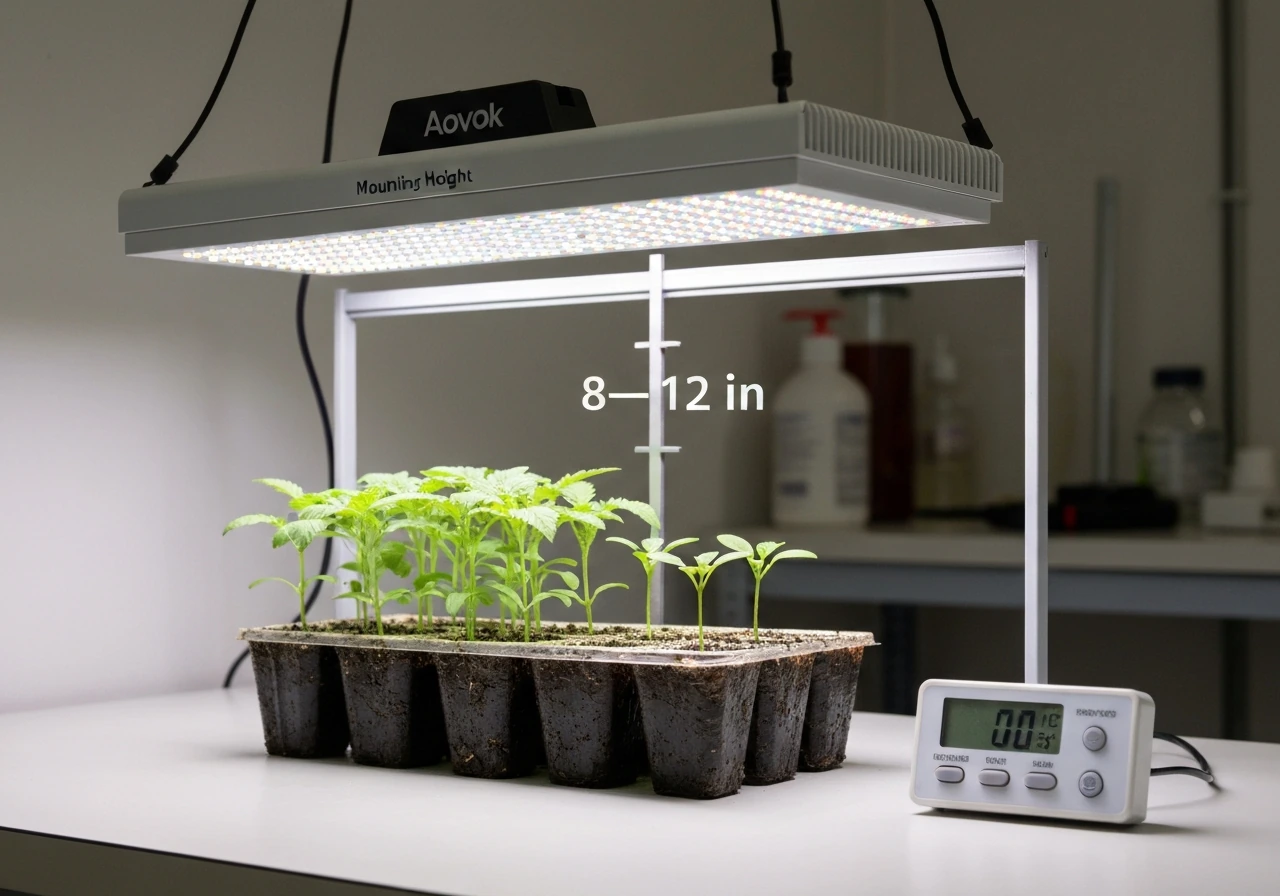
This is where the Aovok does its best work. Seedlings need relatively low light intensity (100-200 µmol/m²/s is plenty) and benefit from 12-14 hours of light per day. At 8-12 inches above a seedling tray, this panel covers the job. Manufacturer scheduling guidance recommends 12-14 hours for the seeding stage, which aligns with standard horticultural practice. Don't hang it closer than 6-8 inches for seedlings to avoid stretch or, in warmer environments, light stress.
Vegetative growth
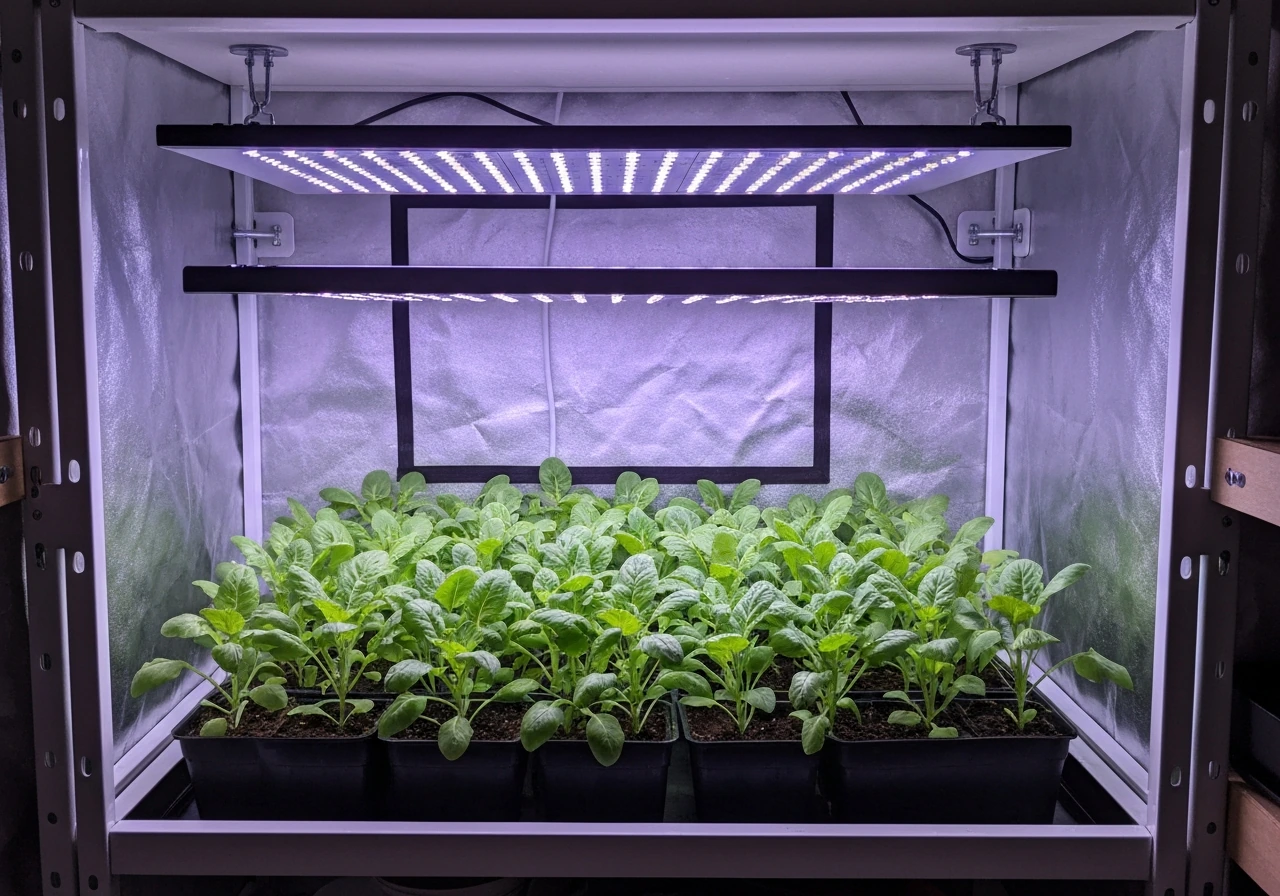
For herbs, leafy greens, and small vegetative plants, the Aovok can carry a plant through the full vegetative stage if the grow space is compact, ideally under 1.5 x 1.5 feet directly beneath the panel. Recommended lighting time is 14-16 hours per day. At this stage, plants need 200-400 µmol/m²/s, and at 6-8 inches the panel should be within that range for the central footprint. If you're growing something like basil, lettuce, or small herb starts, this is a reasonable light choice. For larger or faster-growing vegetative plants, expect slower growth than you'd get with a higher-output fixture.
Flowering and fruiting
Manufacturer guidance recommends 14-18 hours for the flower and fruit stage, but honestly, the Aovok is at its limits here. Flowering plants generally need 400-600+ µmol/m²/s and benefit from broader spectrum coverage including white, far-red, and sometimes UV wavelengths. Horticulture Research in Nature notes that horticultural LED fixtures commonly combine red (~660 nm) and blue (~450 nm) and sometimes add white and/or far-red (peak ~730 nm) [broader spectrum coverage including white, far-red, and sometimes UV wavelengths](https://www. nature.
com/articles/s41438-020-0283-7). The Aovok's 165-red/60-blue configuration misses those, and its output at any practical hanging height is unlikely to push deep into the flowering-intensity range for more than a single small plant. It can support low-light fruiting plants like compact strawberries or certain pepper varieties, but don't expect it to flower a cannabis plant or a full tomato canopy.
Best plant types for this light
- Herbs: basil, mint, cilantro, parsley (compact, low-to-medium light demand)
- Leafy greens: lettuce, spinach, arugula in a small tray
- Seedling trays for any plant type (as a starter light before transplanting outdoors or under a larger fixture)
- Succulents and cacti needing supplemental light
- Small houseplants with moderate light needs
- Microgreens over a compact tray
Value and reliability: what you actually get for the price
The Aovok 45W panel has a list price as low as $9.58 on some reseller platforms and tops out around $59.95 on certain eBay listings. That range is striking and reflects the scattered, unregulated way this product is distributed rather than a genuine variation in product tiers. If you find it near the $10-15 mark, it's a reasonable impulse buy for a small plant shelf. At $59.95, you're overpaying for what it offers and could get a more capable and better-supported light for the same money.
The 50,000-hour lifespan claim is standard for LED panels in this class and is plausible for the diodes themselves under normal operating conditions. Passive cooling with no fan means there are no moving parts to fail, which supports longevity. The ABS plastic backboard is the most likely long-term weak point as it can become brittle under UV exposure over years of use, but for a grow light used indoors this is a minor concern.
Warranty and returns are inconsistent across sellers. One eBay listing offers 30-day returns (buyer pays shipping), while another notes the seller does not accept returns at all. There is no evidence of a manufacturer warranty program backed by Aovok directly. This is a real risk: if the unit fails at month two, your recourse depends entirely on which marketplace and seller you bought from, not on any brand-level support. For a light in this price range it's not surprising, but it's worth noting before you buy.
How the Aovok compares to other grow lights
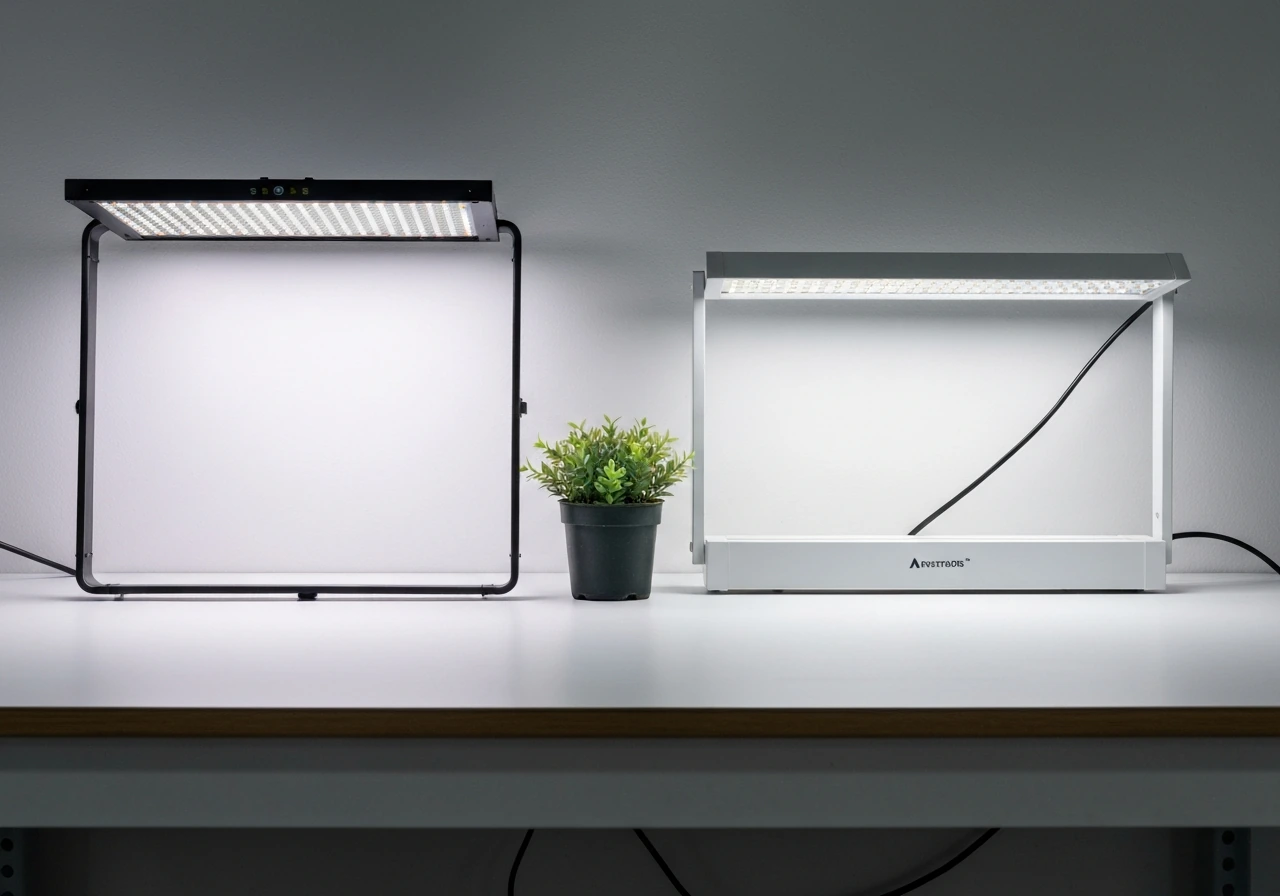
The Aovok sits at the entry-level, unbranded end of the grow-light market. To put it in context, here's how it stacks up against alternatives across spectrum type and budget.
| Light | Wattage | Spectrum type | Coverage (approx.) | Approx. price | Best for |
|---|---|---|---|---|---|
| Aovok 45W (model 9508040) | 45W | Red/blue blurple | ~1 to 1.5 sq ft usable | $10-$60 | Seedlings, herbs, small shelves |
| ACKE LED panel (comparable tier) | ~45-65W | Red/blue or blurple | ~1.5 to 2 sq ft | $20-$50 | Small herb/seedling grows |
| Aokrean LED panel | ~45-100W | Full spectrum (some models) | 1.5 to 3 sq ft | $20-$70 | Seedlings to early veg |
| AgroMax T5/LED | Varies (24W-216W) | Full spectrum white-based | 1 to 16 sq ft depending on model | $30-$200+ | Veg and seedlings, wider coverage |
| Apollo LED bar/panel | 100-200W | Full spectrum or blurple | 2 to 4 sq ft | $50-$150 | Veg to light flowering |
| Mid-tier quantum board (e.g., HLG, Mars Hydro) | 100-240W | Broad white + red spectrum | 2 x 4 to 4 x 4 ft | $100-$350 | Full-cycle grows including flowering |
If the Aovok is on your list alongside comparable budget panels, it's worth checking out the ACKE and Aokrean options in the same tier, since some versions of those offer broader white-based spectrums that are more useful for plants that will eventually flower. If you are considering Aokrean grow light options too, this review style can help you compare spectrum and coverage against the Aovok ACKE and Aokrean options.
If you are comparing options like an acke led grow light review, you will usually want to focus on spectrum choices and the realistic coverage area at typical hanging heights. The Apollo and AgroMax lines step up meaningfully in coverage and output and are worth considering if your grow space is larger than 2 x 2 feet or if you plan to carry plants through to fruiting.
If you’re also considering the Apollo Grow Light, this review can help you compare coverage, spectrum, and overall value. If you are looking at AgroMax models too, it helps to read agromax led grow light reviews for comparisons on coverage, spectrum, and real-world results AgroMax lines.
The biggest practical gap between the Aovok and even a $100 quantum board is spectrum quality and coverage uniformity, not just raw wattage. A white-dominant full-spectrum board at 100W covers a 2 x 4-foot canopy more evenly and supports better flowering responses than any blurple panel at 45W, and the price difference for a beginner-tier quantum board has narrowed enough that it's worth the jump if you're growing anything beyond herbs and seedlings.
Who should buy the Aovok and who should skip it
Buy the Aovok (at a fair price, under $20-25) if you need a light for a seedling tray, a small shelf of herbs, or low-light houseplants and want to spend as little as possible. It's plug-and-play, silent, and physically small enough to fit in tight spaces. At the right price it's a reasonable utility light.
Skip it if you're growing anything that needs to flower, if your canopy is larger than about 1.5 x 1.5 feet, if you want meaningful manufacturer support or warranty coverage, or if you're paying close to $50-60 for it anywhere. At that price point, you can find lights from established brands with better spectrum, better documentation, and actual customer service. Also skip it if you need a light that works in humid environments, since it's explicitly not waterproof.
Setup tips for your grow space
Because there's no dimmer on this unit, distance from the canopy is your only tool for managing intensity. Start higher and move down if plants look like they're stretching toward the light.
- Seedlings: hang 8-12 inches above the tray and run 12-14 hours per day. Watch for stretching (etiolation), which signals the light is too far away or the photoperiod is too short.
- Vegetative herbs and greens: drop to 6-8 inches above the canopy and run 14-16 hours. Keep plants centered under the panel to stay in the most uniform light zone.
- Any flowering attempt: hang 4-6 inches above the canopy and run 14-18 hours, but manage expectations. This panel won't drive heavy flowering responses.
- Use a plug-in outlet timer (not included) to automate the photoperiod. The Aovok has no built-in timer, so a $10 mechanical timer from any hardware store is a necessary add-on.
- For a single shelf or propagation tray (12 x 12 inches), one Aovok panel is sufficient. For a 2 x 2-foot space, you'll want two panels or a different light entirely.
- Hang with the included hanger kit and make sure there's at least 1-2 inches of clearance around the panel edges for passive airflow to the aluminum heat sink.
- Keep the panel away from water spray or misting. Not waterproof means it literally is not waterproof, so don't rely on splash resistance.
The bottom line is that the Aovok 45W is a functional, no-frills grow light for very small, low-demand growing situations. It doesn't pretend to be more than that once you strip away the typical budget-brand marketing language about being "equivalent to 3-5 times the power of a high pressure sodium lamp," which you should ignore entirely. At the right price it earns its place on a small herb shelf. At inflated reseller prices, or for any grow larger or more serious than seedlings and herbs, put your money into something better-supported and better-specced.
FAQ
What height should I hang the Aovok 45W panel to avoid leaf burn and stretching?
Use distance as your only intensity control. For seedlings, aim roughly 8-12 inches above the tray, and avoid going closer than about 6-8 inches. If you see bleaching or crisping, raise it first, since blurple panels can over-concentrate light in a narrow cone. If plants are stretching, lower it a few inches and reassess after 3-5 days.
Can I use the Aovok for flowering, like cannabis or to finish tomatoes?
It is unlikely to reach flowering-stage light levels for more than a single small plant. The red/blue-only LED mix and 45W-class output mean it typically falls short of the intensity and broader-spectrum wavelengths that crops use in fruiting. It may help very low-light fruiting plants in a compact setup, but plan on slower, weaker results compared with true grow lights.
Is the lack of white, far-red, or UV going to hurt plant growth?
It can limit flowering performance and overall “whole-plant” development, especially for crops you want to fruit. For seedlings, herbs, and vegetative growth, many people still get acceptable results, because those stages rely heavily on red/blue absorption. If you notice stunted flowering or poor bud/fruit set, that missing wavelength support is a likely contributor.
How much area will one Aovok panel really cover in practice?
At useful intensity, coverage is usually closer to a small footprint than the marketing suggests. For a 12 x 12 inch panel with a 60-degree beam angle, expect the most even results over the center, roughly 12 x 12 to 16 x 16 inches when hung around 6-10 inches. Beyond that, plants toward the edges can lag noticeably.
Does this light need a timer, and what photoperiod should I use?
The panel itself has no built-in timing. Use an external grow timer for consistency, especially for seedlings and vegetative growth. A common approach is 12-14 hours for seeding, then 14-16 hours for vegetative plants, while flowering schedules vary by crop, but you should not assume it can fully compensate for insufficient intensity.
Will the Aovok work in a humid grow tent or near splashing water?
No, it is explicitly not waterproof. In a humid tent, protect the fixture from condensation and splashes, and keep it away from direct misting. If your space is consistently wet, choose a properly rated, sealed fixture instead.
How loud is it, and will it run hot enough to be a safety issue?
It is fanless, so it is silent. It does get warm to the touch because it relies on a passive aluminum heat sink, but normal indoor ambient temperatures are typically fine for this wattage class. If the unit is very hot or heat is building up in a confined enclosure, improve ventilation around the back and sides.
Is the 50,000-hour lifespan claim realistic?
It is plausible for the LED diodes under normal conditions, but the weak point is often the rest of the assembly, especially the ABS backboard over long-term indoor exposure. Practically, you should expect gradual light output decline rather than a sudden failure, and you may see reduced performance before the diodes actually stop working.
What should I check before buying, given the wide price range and grey-market sellers?
Confirm the exact model number and that the listing matches the 45W, 225-LED red/blue configuration. Also check return terms (some sellers do not accept returns) and whether the listing includes any warranty language. Because support seems inconsistent, buying from a seller with a clear return policy matters more than the brand name.
If I can’t measure PPFD, how do I know whether the Aovok is strong enough for my plants?
Use plant response and a simple “distance test.” Start at a recommended height for the stage, observe for 3-5 days, and adjust by a few inches. Strong signs it is too weak are persistent stretching and pale, thin growth. Signs it is too strong are bleaching, dark stress, or leaf edge burn. If possible, borrow or rent a basic light meter for calibration, since PPFD maps are not available for this panel.
What is the best way to mount it for even light on a small canopy?
Mount it centered above the canopy and keep the plants within the brightest zone instead of spreading them across the full potential footprint. For trays, orient them so the tallest plants sit directly under the center of the panel. If you must grow wider than the central footprint, rotate tray position partway through the lighting cycle to reduce edge starvation.
Should I buy it if the price is around $50-60?
Not usually. At that level, you can often find better-supported lights with more complete spectrum choices and broader, more uniform coverage for similar money. If you still want it, treat it as a very limited-purpose desk or shelf light, and only if you are confident your plants fit the small footprint and low-to-medium light needs.