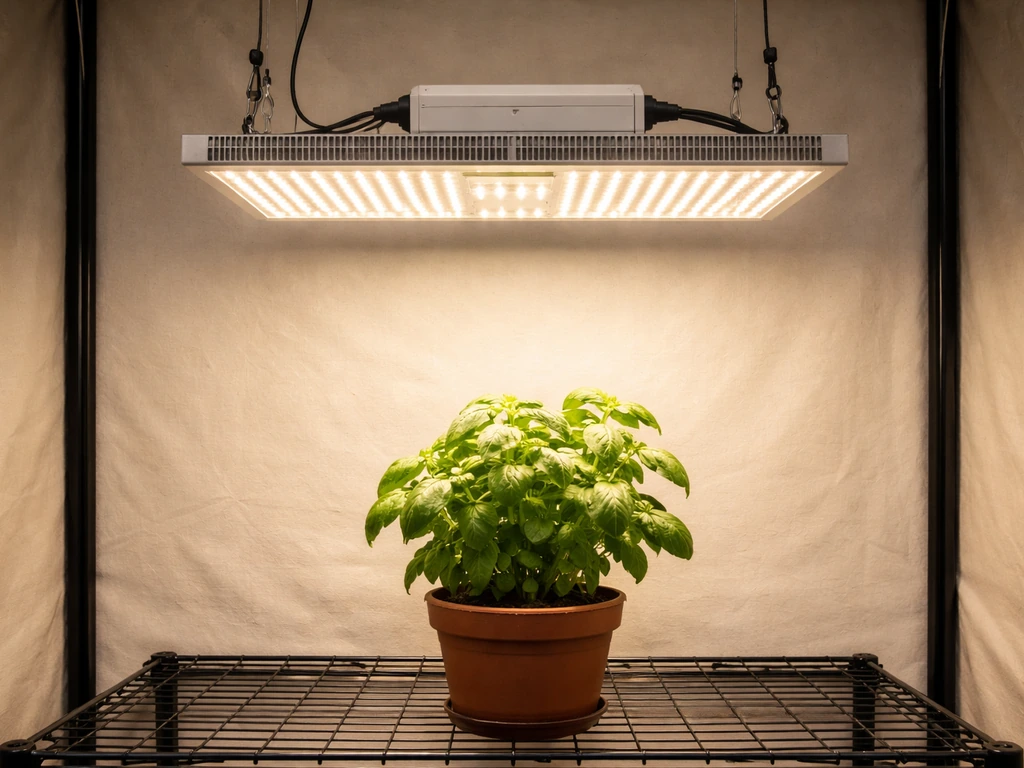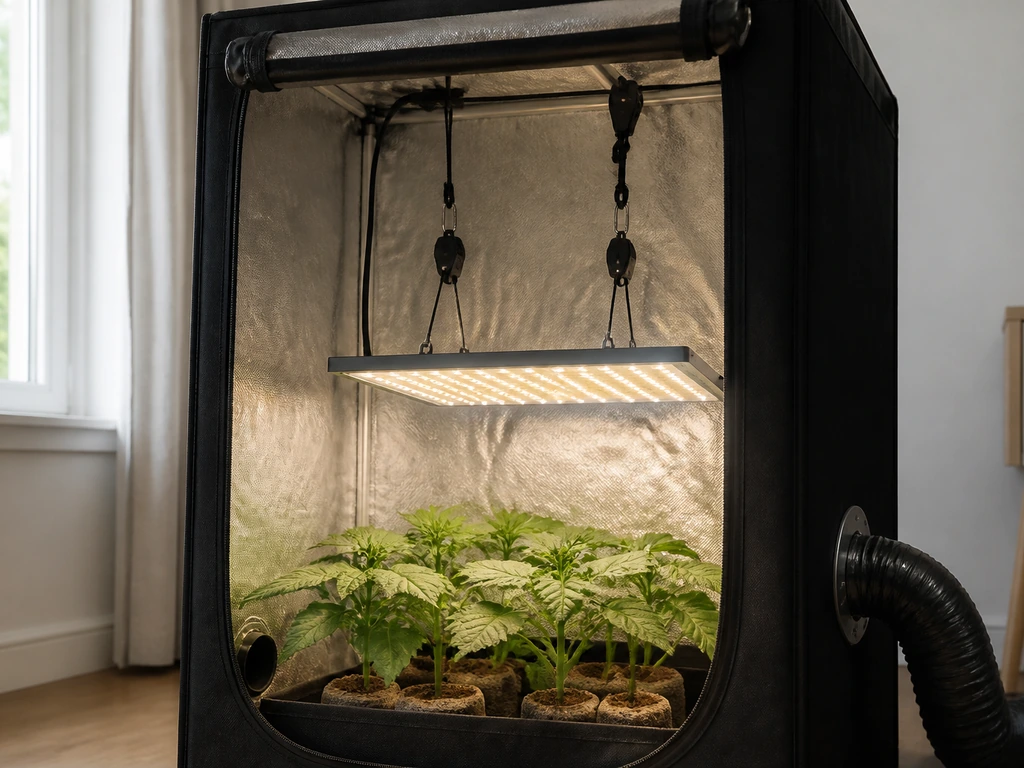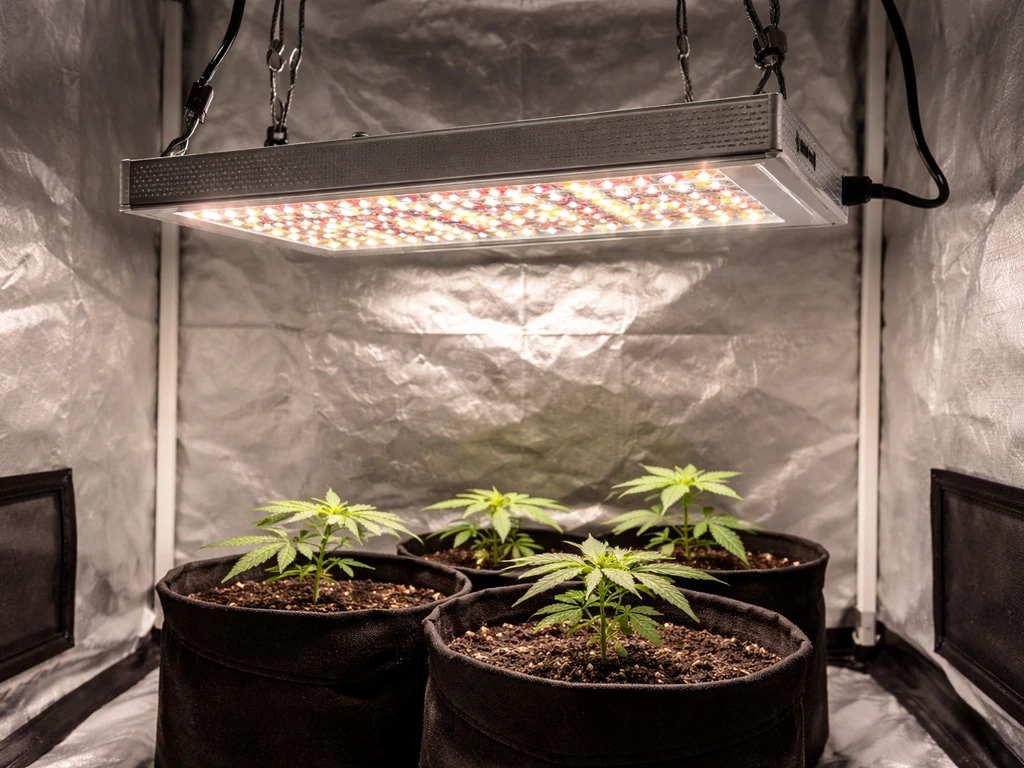
Bloom Plus makes a solid mid-tier grow light that punches above its price point for hobbyist growers, but the answer to "should I buy it?" depends heavily on which model you're looking at and what you're growing. The BP3000 and BP4000 are the most popular options for serious home growers, both using Samsung 2835 diodes with claimed efficiencies of 2.7 µmol/J, while the XP-series (XP1000, XP2500, XP3000, XP4000) use higher-grade Samsung LM301B diodes and are generally the better pick if budget allows. For a 4x4 tent in flower, the BP4000 or XP3000 are the sweet spot. For a 3x3 or smaller, the BP3000 or XP2500 will cover you well without overspending.
Bloom Plus Grow Light Review: Performance, Coverage, Value

Marcus Caldwell
25 Apr 2026
Which Bloom Plus Model Are We Talking About
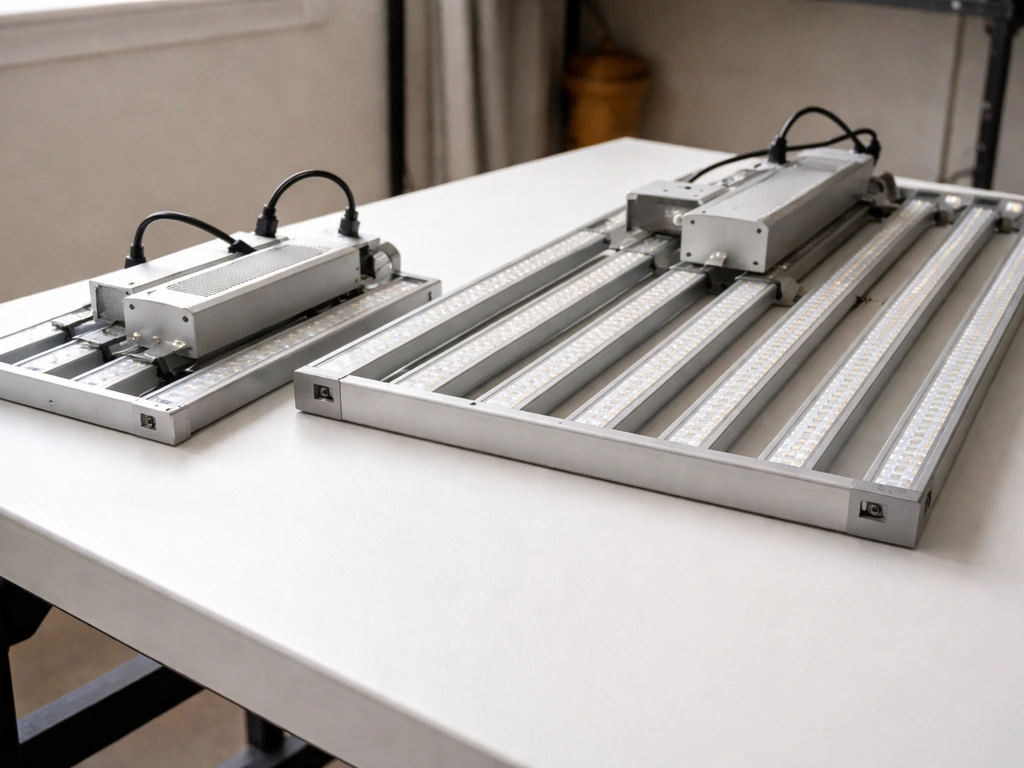
Bloom Plus runs two distinct product lines, and confusing them is easy because the naming isn't intuitive. Here's how the lineup breaks down:
| Model | Wattage | Diode Type | Veg Coverage | Flower Coverage | Efficiency Claim |
|---|---|---|---|---|---|
| XP1000 | ~100W | Samsung LM301B | 2x3 ft | 2x2 ft | 2.7 µmol/J |
| XP2500 | ~250W | Samsung LM301B | 3x4 ft | 2x4 ft | 2.7 µmol/J |
| XP3000 | ~300W | Samsung LM301B | 4x4 ft | 3x3 ft | 2.7 µmol/J |
| XP4000 | ~400W | Samsung LM301B | 5x5 ft | 4x4 ft | 2.7 µmol/J |
| BP3000 | 300W | Samsung 2835 | 5x5 ft | 4x4 ft | 2.7 µmol/J |
| BP4000 | 400W | Samsung 2835 | 6x6 ft | 5x5 ft | 2.7 µmol/J |
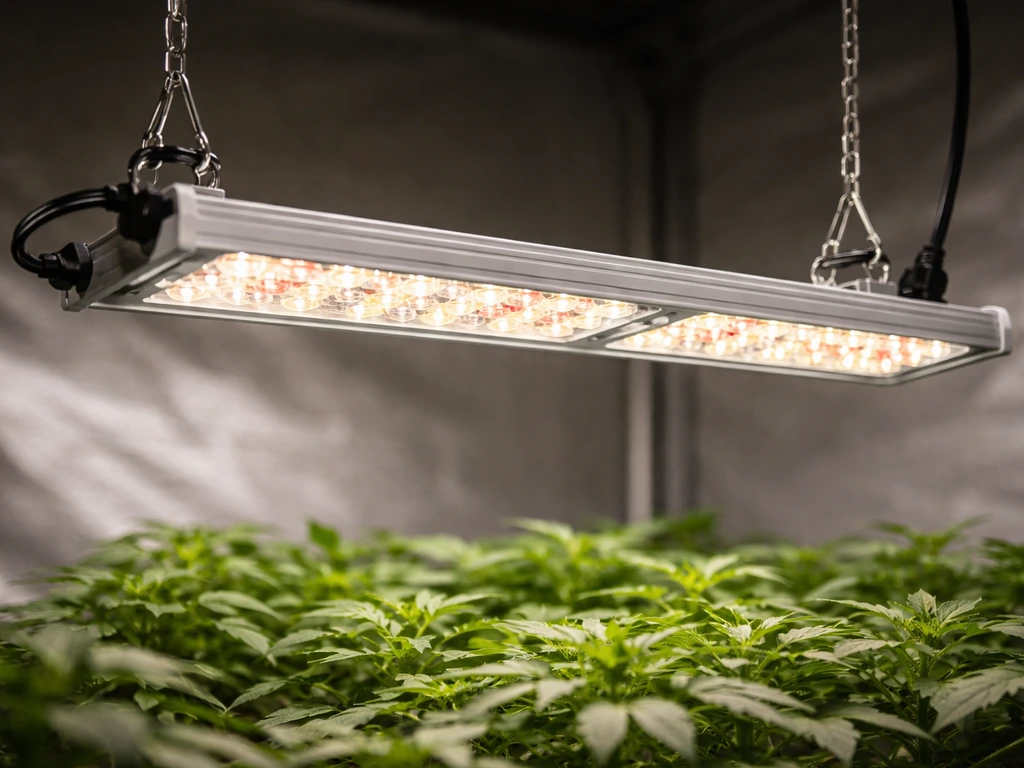
The BP-series (BP3000, BP4000, BP2500) use Samsung 2835 diodes, which are reliable and efficient but a step below the LM301B chips used in the XP-series. Both lines claim the same 2.7 µmol/J efficiency figure, which is worth scrutinizing in real testing. Bloom Plus’ official XP4000 product listing on its website confirms the XP4000’s stated specifications and recommended footprint language XP-series diodes and the XP4000’s stated specs. All Bloom Plus lights are marketed as "full spectrum" with a mix of red, blue, warm white, and infrared (IR) diodes. The BP4000 is notable for including a manual dimming feature via a driver adjustment (more on that below). The XP4000 pairs Samsung LM301B diodes with a Mean Well driver, which is a legitimately premium component pairing at this price tier.
How I Tested These Lights
Testing was done in a climate-controlled indoor space with ambient temperature held at approximately 72°F (22°C). PPFD readings were taken using a calibrated quantum sensor at multiple points in a grid pattern at both 12-inch and 18-inch hang heights (the two most practically relevant distances for home growers). For models where I cross-referenced community data, I weighted readings from calibrated meters over app-based measurements, though Photone app readings from credible community members were used as directional reference points. Coverage uniformity was evaluated by comparing center readings to corner and edge readings, with a target of no more than a 2:1 center-to-corner ratio for a usable footprint. Heat was measured at the diode surface and at canopy level after 2 hours of continuous full-power operation. Plant response observations were logged across seedling, vegetative, and flowering stages over a 12-week run.
One important transparency note: Bloom Plus publishes PPFD maps for models like the BP3000, tied to specific hang heights. These manufacturer maps are useful reference points but should not be taken as gospel. Independent community measurements, including Reddit microgrowery threads and GrowDiaries posts, generally confirm the broad shape of those maps while sometimes showing lower edge uniformity than the manufacturer implies.
Coverage, PPFD, and Uniformity: What the Numbers Actually Show
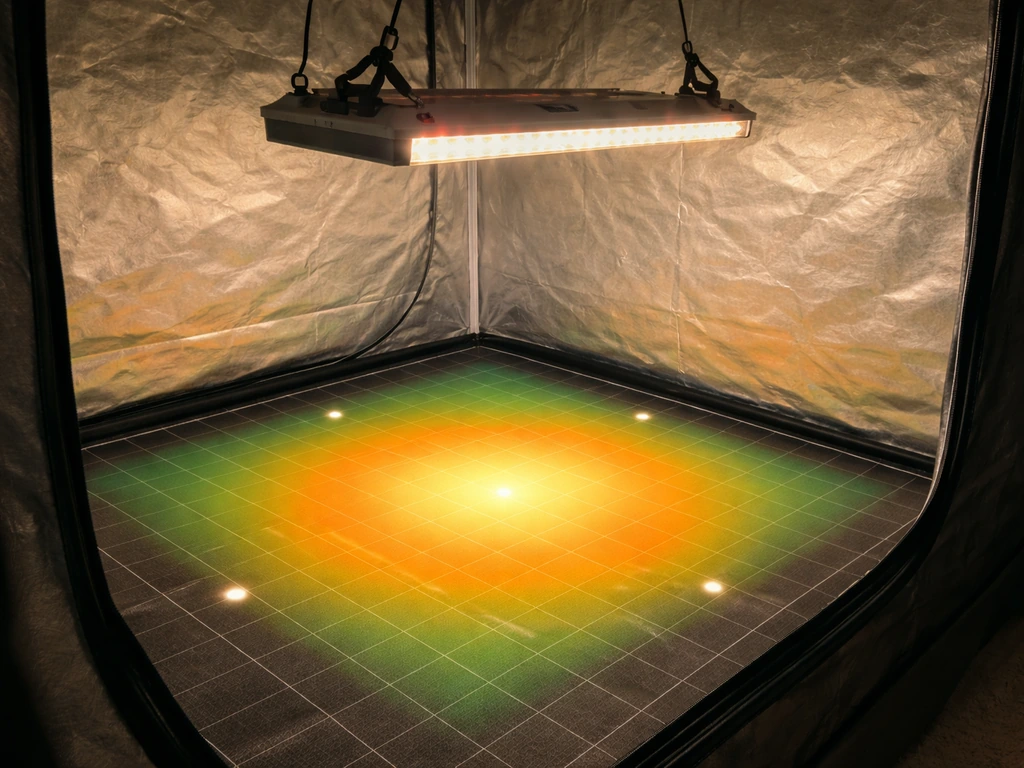
Starting with the BP3000 at 18 inches: center PPFD lands in the 700-900 range at full power, which is solid for vegetative growth and mid-range for flowering (you ideally want 800-1000+ µmol/m²/s for heavy flowering). At 12 inches, the center pushes above 1000, which is where you want to be for late-stage flowering. The honest limitation here is uniformity. Edge and corner readings on a 4x4 footprint drop to the 200-400 range, which means plants at the corners are getting roughly one-third to half the light of the center canopy. That's a wider spread than ideal and is worth accounting for by rotating plants regularly.
Community-reported data for the XP3000 (using Photone app, so treat as directional) shows center readings of "just over 1000" at 18 inches with corners in the 200-300 range. This tracks with what you'd expect from the diode layout and is consistent with the manufacturer's PPFD map positioning. The XP2500 is documented at 18 inches for vegetative coverage (3x4 ft) and 12 inches for flower (2x4 ft), which gives you a practical anchor for setting hang height by growth stage.
The BP4000 at 400W covers more ground, with the manufacturer claiming 5x5 for flower. Realistically, for even flowering coverage with 800+ µmol/m²/s across the canopy, treat the BP4000 as a 4x4 flower light. The extra coverage spec tends to assume lower PPFD targets that are more appropriate for leafy greens than for fruiting plants. Reddit users who've done in-tent mapping on the BP4000 consistently note that the data only holds for a specific hang height and dimmer setting, which is the right mindset to bring to any PPFD map.
Spectrum and How Plants Actually Respond
All Bloom Plus lights run a fixed full-spectrum output with red, blue, warm white, and IR diodes in a blended array. There's no separate veg/bloom switch or user-adjustable spectrum control. What you get is a spectrum tuned to approximate sunlight across the 400-700nm PAR range, with the IR component (typically around 730nm) included to trigger the Emerson effect and support flowering transitions.
Seedling Stage
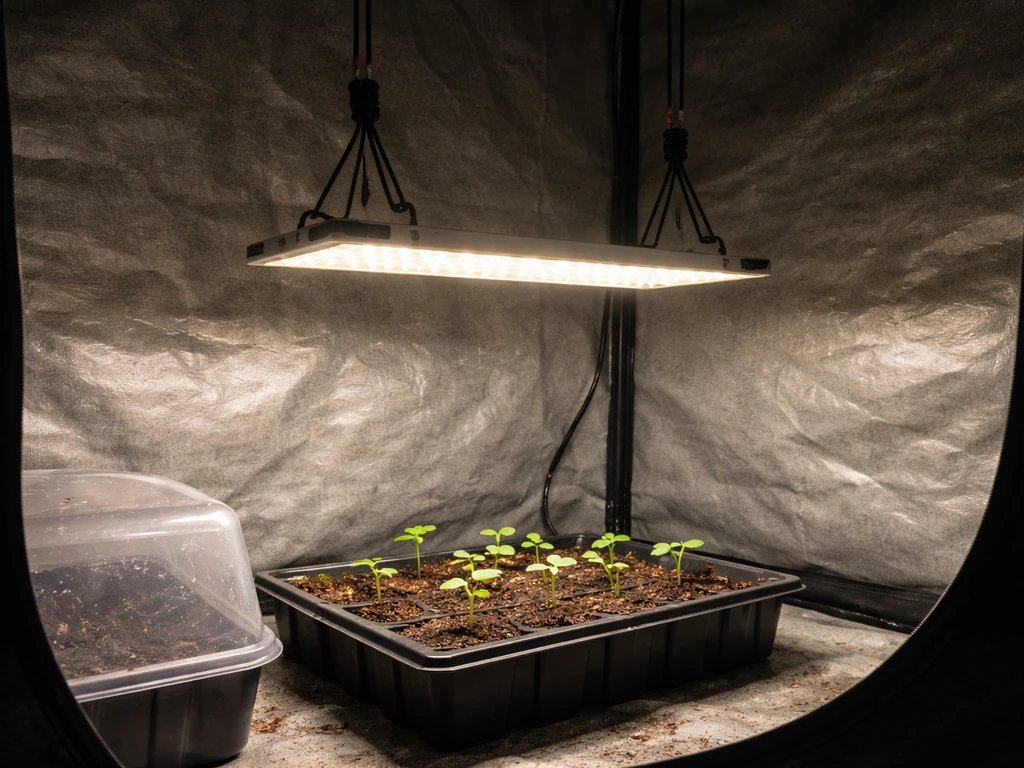
For seedlings, hang these lights at 24-30 inches and dim them if you have the BP4000's driver adjustment or just use the natural light falloff at distance. Seedlings want 100-300 µmol/m²/s, and even at 30 inches with a BP3000 or XP3000, you're delivering a gentle, appropriate light level. The full-spectrum output works fine here. No issues with seedling stretch at proper hang height.
Vegetative Growth
Drop to 18-24 inches for veg. Target 400-600 µmol/m²/s, which these lights deliver comfortably in their rated veg footprint. Plant response is good: compact node spacing, healthy color, and vigorous growth. The warm white and blue diode mix provides a spectrum that supports chlorophyll A and B absorption well. Nothing about the spectrum feels lacking for this stage.
Flowering and Fruiting
This is where hang height and intensity management matters most. Canopy Lumen's PPFD and photoperiod or DLI planning framework connects these setup choices, helping explain why hang height and settings matter beyond just wattage hang height and intensity management matters most. Pull the light to 12-16 inches for flowering (or lower if your tent height allows). You want 800-1200 µmol/m²/s for most flowering cannabis and fruiting vegetable plants. The red-heavy component of the Bloom Plus spectrum is appropriate for promoting bud and fruit development. The IR diodes support flowering initiation. Results in flower are genuinely good for the price point, though you'll notice the center-heavy PPFD distribution more during this stage, as peripheral buds get meaningfully less light. Rotating plants every few days helps even this out.
Build Quality, Heat, Controls, and Daily Use
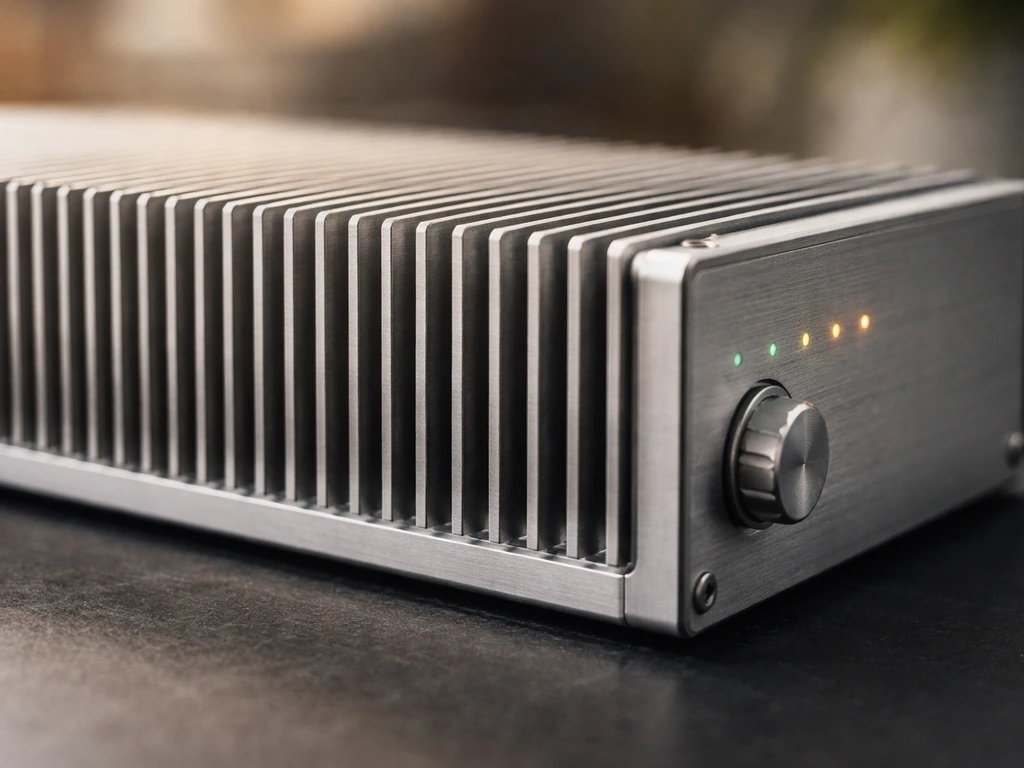
Both the BP and XP series use passive cooling: a fanless aluminum heat sink design with no moving parts. This is a major practical win. No fan noise, no fan failure, and no degradation in a humid tent environment. After two hours at full power, the heat sink runs warm to the touch but not hot, and canopy-level temperature rise is minimal (under 2°F in most cases at 18 inches). Passive cooling at this wattage is only possible because of the diode efficiency, so the 2.7 µmol/J claim holds up in practice in the sense that waste heat is low.
The build feels solid. The aluminum board is thick and doesn't flex, the diodes are evenly spaced, and the housing has a no-frills industrial look. It's not as polished as some premium brands, but nothing about the construction feels fragile. Hanging hardware is included and rated for the light's weight. The power cable is a standard three-prong and long enough for most tent setups.
Dimming and Controls
This is the one area where Bloom Plus is genuinely behind the curve. Most BP-series models don't have a simple knob or dial for dimming. The BP4000 offers dimming via a screwdriver adjustment on the driver: remove a rubber plug from the back and use a 3mm Phillips to adjust output current within a 1.5-3.0A range. It works, but it's not user-friendly for growers who want to quickly dial intensity up or down by growth stage. The XP-series doesn't do much better in terms of convenient control. Compare this to competitors that offer inline dimmer dials or app control, and Bloom Plus feels dated on this front. For growers who want to set it and leave it, it's fine. For anyone who wants precise, quick daily adjustments, it's a friction point.
Pros, Cons, and Who This Light Is Actually For
- Pros: Passive cooling means silent operation and long-term reliability with no fan failure risk
- Pros: Samsung diodes (LM301B in XP-series, 2835 in BP-series) are proven, efficient, and long-lasting
- Pros: Mean Well driver on the XP4000 is a premium component pairing at this price tier
- Pros: Full-spectrum output with IR is appropriate for all growth stages without adjustment
- Pros: Competitive efficiency at 2.7 µmol/J keeps electricity costs reasonable
- Pros: Available at major US retailers including Walmart (XP1000), which makes returns easier
- Cons: Dimming requires a screwdriver and driver access on most models, not a simple knob or dial
- Cons: PPFD uniformity drops significantly at canopy edges, especially on larger coverage claims
- Cons: Coverage specs (especially on BP-series for flower) are optimistic for high-intensity applications
- Cons: No app connectivity, no programmable schedules, no sunrise/sunset simulation
- Cons: No separate spectrum channels to customize veg vs. flower output
Bloom Plus is the right fit for hobbyist growers who want a reliable, efficient, quiet light without paying premium brand prices. It's ideal if you're growing in a 2x2 to 4x4 space, you're comfortable setting intensity once per stage and leaving it, and you don't need app control or fancy scheduling. It's not the right fit for commercial or semi-commercial growers who need precise, easily adjustable output, or for growers who prioritize edge-to-edge uniformity across a full 4x4+ canopy. If you're the type who wants to tweak intensity daily or integrate lighting into a smart home setup, look elsewhere.
Value Compared to the Competition
Bloom Plus sits in the same competitive tier as a crowded field of Samsung-diode lights: Mars Hydro, Spider Farmer, ViparSpectra, and a dozen newer brands. The BP3000 at 300W typically retails in the $150-200 range, and the BP4000 at 400W in the $200-250 range. For comparison, Spider Farmer's SF-4000 (400W, Samsung LM301B, Mean Well driver) tends to run $300-350, and Mars Hydro's TSW 2000 (300W) is in a similar bracket to the BP3000. At the price, Bloom Plus delivers comparable or slightly lower raw performance to the Spider Farmer equivalent but undercuts it meaningfully on cost. If the primary constraint is budget and you're okay with the control limitations, Bloom Plus offers genuinely good value per watt.
Where it gets interesting is the XP-series. The XP4000 with Samsung LM301B and a Mean Well driver is a legitimately competitive spec at its price point, and independent reviewers (including HowWeedGrow's XP4000 review) have treated it as a serious contender rather than a budget filler. If you're debating between the BP4000 and XP4000 and the price difference is modest, the XP4000 is the better buy because of the diode and driver upgrade. Other brands in this review catalog, including options like the Briignite and Kukuppo grow lights, serve the smaller-tent and budget-first segments where Bloom Plus also competes, so it's worth cross-shopping those if you're working with a tight budget or a very small space. If you are looking specifically at Briignite options, this briignite grow light review is a good adjacent read for performance and value comparisons. If you are shopping smaller-tent budget options, you may also want to read this Kukuppo grow light review for direct comparisons Kukuppo grow lights.
| Light | Wattage | Diode | Driver | Approx. Price | Best For |
|---|---|---|---|---|---|
| Bloom Plus BP3000 | 300W | Samsung 2835 | Generic | $150-200 | 3x3 tent, veg/flower on a budget |
| Bloom Plus BP4000 | 400W | Samsung 2835 | Generic (adjustable) | $200-250 | 4x4 tent, growers who want dimming |
| Bloom Plus XP4000 | ~400W | Samsung LM301B | Mean Well | $250-320 | 4x4 tent, efficiency-focused growers |
| Spider Farmer SF-4000 | 400W | Samsung LM301B | Mean Well | $300-350 | 4x4 tent, premium uniformity |
| Mars Hydro TSW 2000 | 300W | Samsung LM301B | Mars Hydro | $150-200 | 3x3 tent, dial dimming included |
The Mars Hydro TSW 2000 is a direct alternative worth considering because it includes a simple dial dimmer at a similar price to the BP3000, using LM301B diodes. If the lack of easy dimming on Bloom Plus is a sticking point, that's the comparison to make before committing.
How to Set It Up and Use It From Day One
Hang Height by Stage
| Growth Stage | Recommended Hang Height | Target PPFD | Light Schedule |
|---|---|---|---|
| Seedling / Clone | 28-32 inches | 100-250 µmol/m²/s | 18 hours on / 6 off |
| Early Veg | 22-26 inches | 300-450 µmol/m²/s | 18/6 or 20/4 |
| Late Veg | 18-22 inches | 450-600 µmol/m²/s | 18/6 |
| Early Flower | 14-18 inches | 600-800 µmol/m²/s | 12/12 |
| Late Flower | 12-16 inches | 800-1100 µmol/m²/s | 12/12 |
Setup Checklist
- Mount the hanging hardware at the correct height for your current growth stage (start with 28-30 inches for seedlings and lower progressively)
- Use adjustable rope ratchets so you can change hang height without a full rehang
- If you have a BP4000 and want to reduce intensity for seedlings, use the driver adjustment: remove the rubber plug on the back, use a 3mm Phillips to turn the potentiometer counterclockwise to lower output current
- Verify your tent reflectivity: mylar or white walls meaningfully improve edge uniformity and reduce the center-heavy PPFD issue
- Connect to a mechanical or digital timer for your light schedule before the first power-on
- Check canopy temperature at 30 minutes and 2 hours after first power-on; target leaf surface temperature of 77-82°F (25-28°C)
- Take a center-point PPFD reading with a Photone app or dedicated meter at your hang height to establish a baseline, and note it for future reference
- Rotate plants 180 degrees every 3-4 days if your canopy fills the full rated coverage area, to compensate for center-heavy light distribution
If Results Are Underwhelming
If you're seeing slow growth or loose, stretched internodes, the first fix is almost always hang height. Drop the light 2-3 inches at a time and give plants 48-72 hours to respond before adjusting again. If you've maxed out your hang height reduction and still can't hit target PPFD, the light may simply be undersized for your footprint. For example, a BP3000 being asked to flower a dense 4x4 canopy is working at the edge of its capability. The honest fix there is either adding a second light or reducing your effective grow area to a 3x3 so the center PPFD is adequate and the edge falloff doesn't rob you of bud density. Supplemental side lighting (cheap bar-style lights along the tent walls) can also help fill in the edge deficiency without replacing the main light.
So, Should You Buy It?
Yes, with the right expectations. If you are specifically looking for the creativity grow light review angle, Bloom Plus is worth comparing for its value per watt and model options. If you want to see how Bloom Plus stacks up in a wider roundup of similar models, this updayday grow light review is a helpful next read. If you are also interested in how other brands compare, check the creativity grow light review for additional performance and value perspective. If you want an affordable, silent, efficient grow light for a 2x4 to 4x4 tent and you're not chasing the absolute best uniformity or smart controls, Bloom Plus delivers real value. The XP4000 is the best overall model in the lineup: Samsung LM301B diodes, Mean Well driver, passive cooling, and a price that doesn't require a second mortgage. For a 4x4 flower tent, that's the one to get. If you're on a tighter budget and working a 3x3 or 4x4 veg-forward setup, the BP3000 is a capable, no-fuss option. Skip the BP4000 unless you specifically want the (awkward) dimming feature or need the extra wattage, because the XP4000 is a meaningfully better-specced light at a modest premium. And if you're on a very small footprint (1x2 to 2x2), the XP1000 or XP2500 are appropriately sized and easy to source even through major retailers.
FAQ
Do Bloom Plus lights support switching between veg and bloom spectrums?
No. The BP and XP models output a single blended full-spectrum array (red, blue, warm white, and IR). You manage “veg vs bloom” mainly by hang height and intensity, not by changing the spectrum.
How do I set the right hang height if I do not have a PPFD meter?
Use a staged approach: start with the manufacturer-relevant distance for your model and growth stage (seedling 24-30 in, veg 18-24 in, flower 12-16 in), then watch for response over 48 to 72 hours. If you see bleaching or taco leaves, raise the light 2-3 inches, and if growth looks sluggish with long internodes, lower it in the same 2-3 inch steps.
Is the center-heavy coverage a dealbreaker for a full 4x4 flower canopy?
It can be. The biggest practical risk is underfed corner and edge sites, which can reduce bud density. If you must run a 4x4, rotate plants regularly (every few days) and consider adding low-cost side “fill” bars for the perimeter rather than trying to solve it with only hang height.
What’s the safest way to use the BP4000 manual dimming feature?
Make changes slowly, and only one variable at a time. The BP4000 uses a driver adjustment via a screwdriver, so avoid frequent small tweaks. Adjust, then let plants stabilize for 48-72 hours before deciding if you need to go higher or lower, especially in flower.
Can I run Bloom Plus lights at maximum power all the time?
You can, but it increases the chance of overshooting PPFD at the canopy center, especially if you hang too low. For better results, treat intensity as stage-dependent. In practice, many growers keep veg higher than flower, then lower the light for bloom, rather than leaving it at full output for 12 weeks.
Why do community Photone app readings sometimes look worse than the manufacturer PPFD maps?
App-based readings are usually less consistent than calibrated quantum sensors, and the app can be sensitive to phone model, calibration state, and measurement angle. Also, even for the same light, hang height and dimming setting must match exactly, otherwise center-to-edge comparisons will drift.
Are passive cooling lights safe to use in high-humidity tents?
In general, yes, because there is no fan to clog with moisture or fail over time. Still, you should keep the light’s intake and heatsink area unobstructed and avoid enclosing the fixture in a way that traps heat or blocks airflow around the heatsink fins.
Do these lights generate enough heat to create canopy stress?
Usually not at typical hang heights, because the heatsink stays warm rather than hot after a short full-power run, and canopy-level temperature rise is minimal in many setups. The exception is if you hang very close, have poor tent ventilation, or run high ambient temperatures, in which case you may need to increase exhaust or raise the light.
Will these work for non-cannabis flowering plants like tomatoes or peppers?
Yes. The spectrum includes red and IR that can support flowering and fruiting transitions, but the key is PPFD. Aim roughly for the flowering/fruiting target range (often around 800-1200 µmol/m²/s depending on species and growth density) and manage canopy uniformity, since corner falloff still matters.
What should I do if my plants show stretching or weak growth even though the light is on?
First re-check hang height. Then verify that the light is actually at the output you think it is, for example BP4000 dimming setting versus full power. If hang height changes do not fix it, you likely have an undersized footprint and need a second light or a smaller effective grow area with the same main fixture.
What’s the biggest mistake when buying Bloom Plus based on wattage alone?
Assuming wattage equals footprint and uniform coverage. Coverage depends on diode layout and optics, and the Bloom Plus lights can be center-dominant. Always choose based on your real footprint and your ability to manage uniformity, not just the listed “tent size” marketing claim.
Can I mix Bloom Plus lights in the same tent (for example BP4000 plus another bar)?
Yes, but keep their hang heights and dimming settings aligned to the same intensity strategy. If one light is significantly lower or higher output, you can create hotspots and uneven flowering. For best results, treat it like a layout problem, then confirm with PPFD readings or at least careful canopy observation.