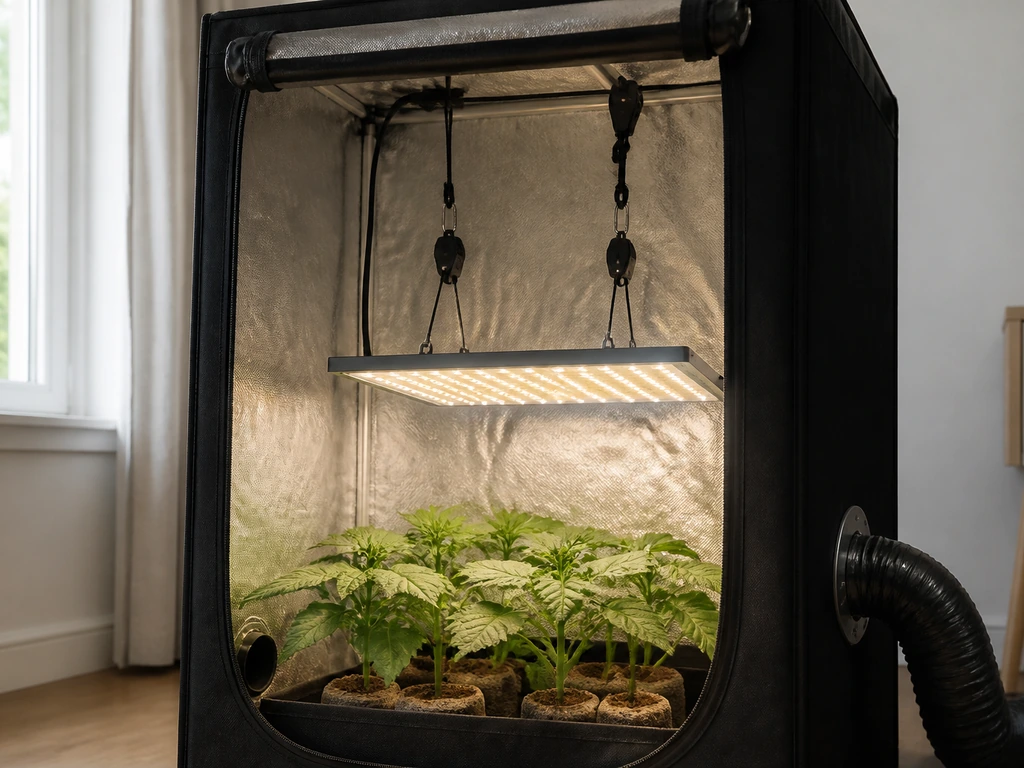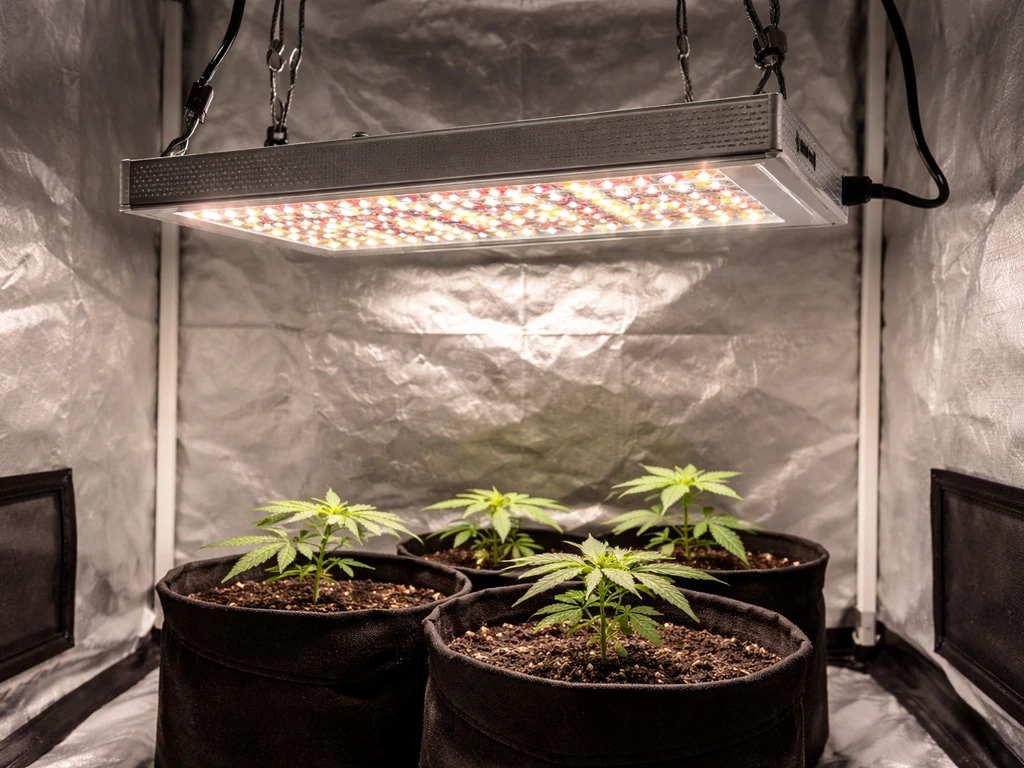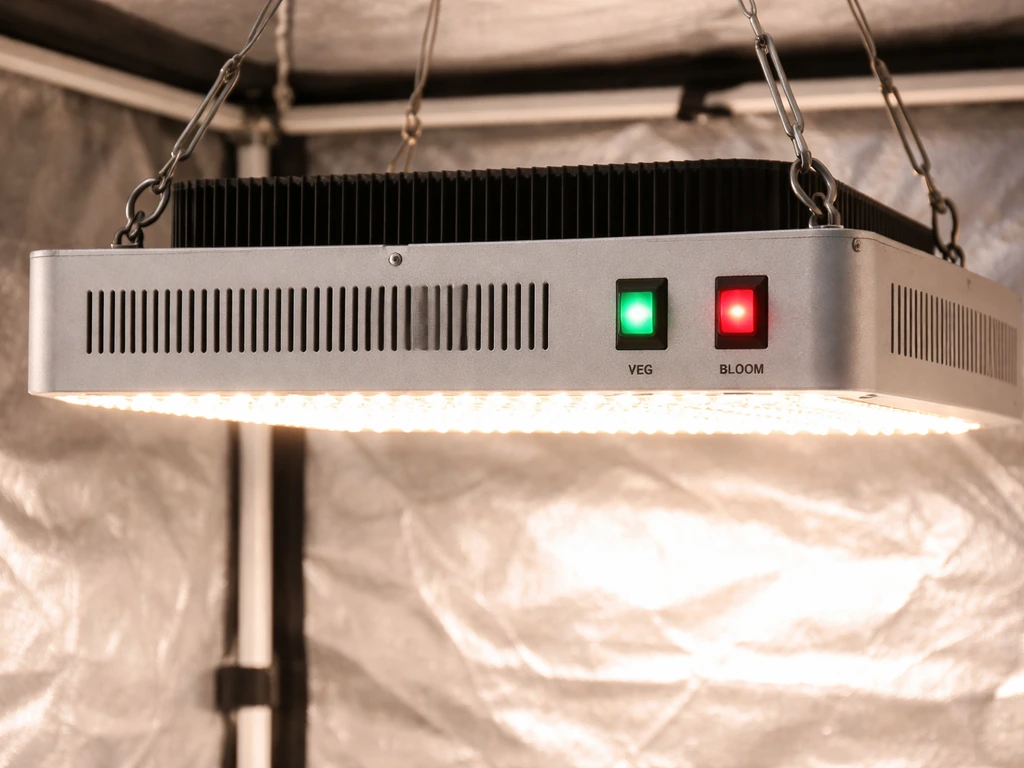
Briignite makes a handful of LED grow lights aimed squarely at budget-conscious hobbyists and small indoor setups. The two models you're most likely to encounter right now are the HR-GL04W96DY-1A (a 96-watt integrated panel sold at Home Depot) and the BRQ600W (a more dedicated grow light targeting a 2x2 ft footprint with a claimed PPFD of 736 µmol/m²/s). Neither is going to replace a top-tier quantum board for serious flowering, but for seedlings, veg, and small herb or houseplant setups, they're reasonable, low-fuss options if price is the primary driver. Read on to figure out which one fits your grow space and whether the tradeoffs are worth it for you.
Briignite Grow Light Review: Specs, Coverage, and Value

Marcus Caldwell
23 Apr 2026
Who Briignite is for (and who should keep shopping)
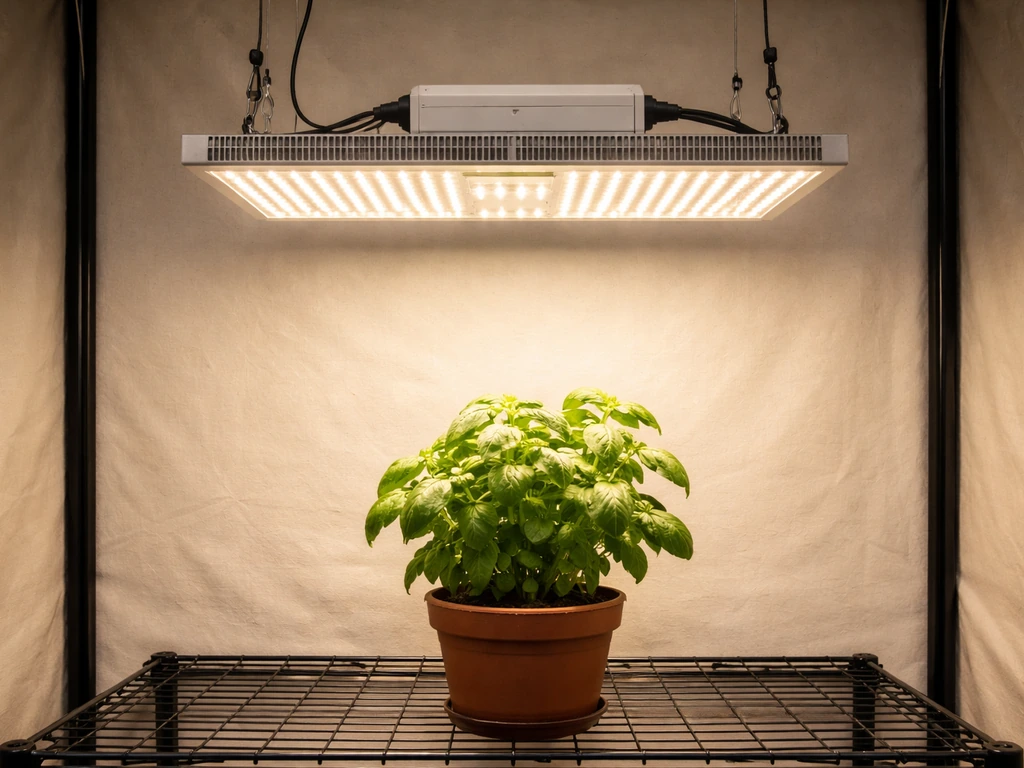
Briignite lights make the most sense for first-time indoor growers, people starting seeds on a windowsill shelf, or anyone running a small herb garden who doesn't want to overthink their lighting setup. The pricing is approachable, both models are available from mainstream retailers, and setup requires zero technical background. If you're growing tomatoes in a 2x2 tent through flower, or you want dialed-in spectral tuning and high-efficiency drivers, Briignite isn't the right tool. Serious cultivators chasing yield per watt will find better options from brands that publish full PAR maps and independent testing data. But for casual growing, propagation, or keeping tropicals alive indoors through winter, Briignite does the job without drama.
The Briignite lineup: which model is which
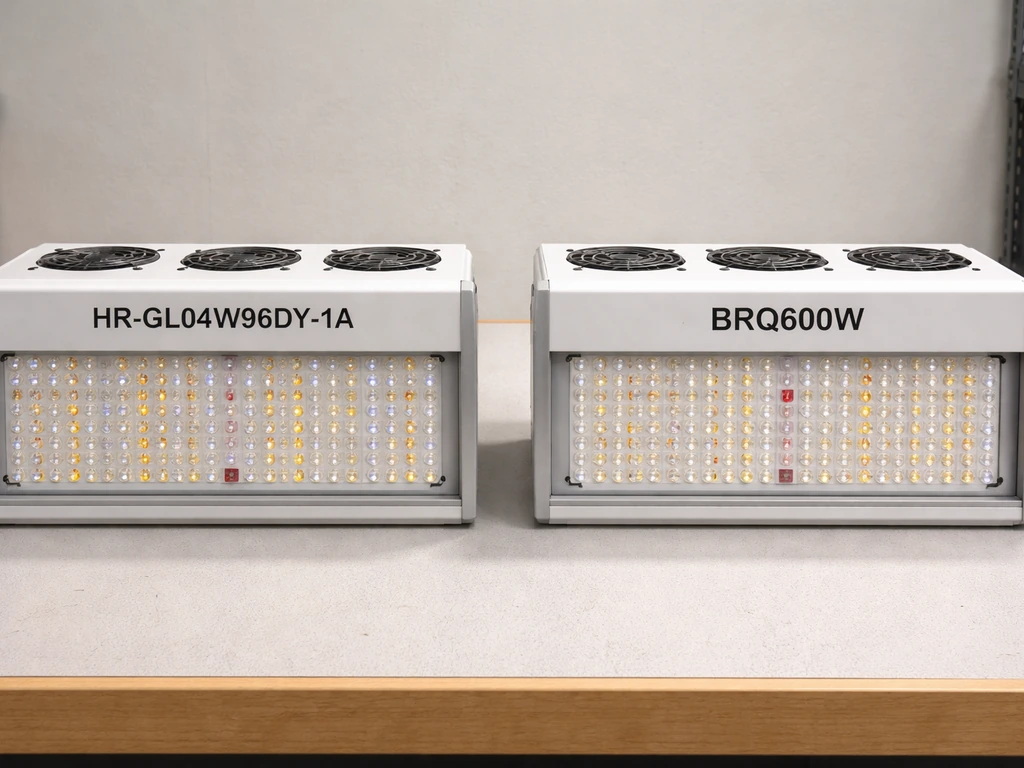
There are at least two distinct Briignite products circulating right now, and it's worth knowing which one you're actually looking at before buying.
| Feature | HR-GL04W96DY-1A | BRQ600W |
|---|---|---|
| Wattage | 96W actual draw | Approx. 60W actual ("600W equivalent" marketing) |
| Coverage area | Not specified per listing | 2x2 ft (60x60 cm) |
| PPFD (claimed) | Not published | 736 µmol/m²/s at listed height |
| Spectrum | Full spectrum LED | Full spectrum + IR |
| Dimming | 10 brightness levels | Stepless dimmable |
| Form factor | 4-light integrated panel | Dedicated grow light fixture |
| Retailer | Home Depot (in-store & online) | Amazon / third-party online |
| Model number | HR-GL04W96DY-1A | BRQ600W |
The HR-GL04W96DY-1A is the one you'll find on a Home Depot shelf. It's a panel-style integrated fixture with four light bars and ten discrete brightness steps. The BRQ600W follows the now-familiar "600W equivalent" naming convention, which means the actual wattage is considerably lower (likely in the 55-65W range at the wall). That's not necessarily a dealbreaker, but the inflated naming is worth flagging so you're comparing apples to apples when benchmarking against other brands. Briignite also sells grow light bulbs (standard E26/E27 base, full spectrum LED), though those are a separate product category better suited to lamp fixtures than grow tents.
Spectrum and grow performance by plant stage
Seedlings and propagation
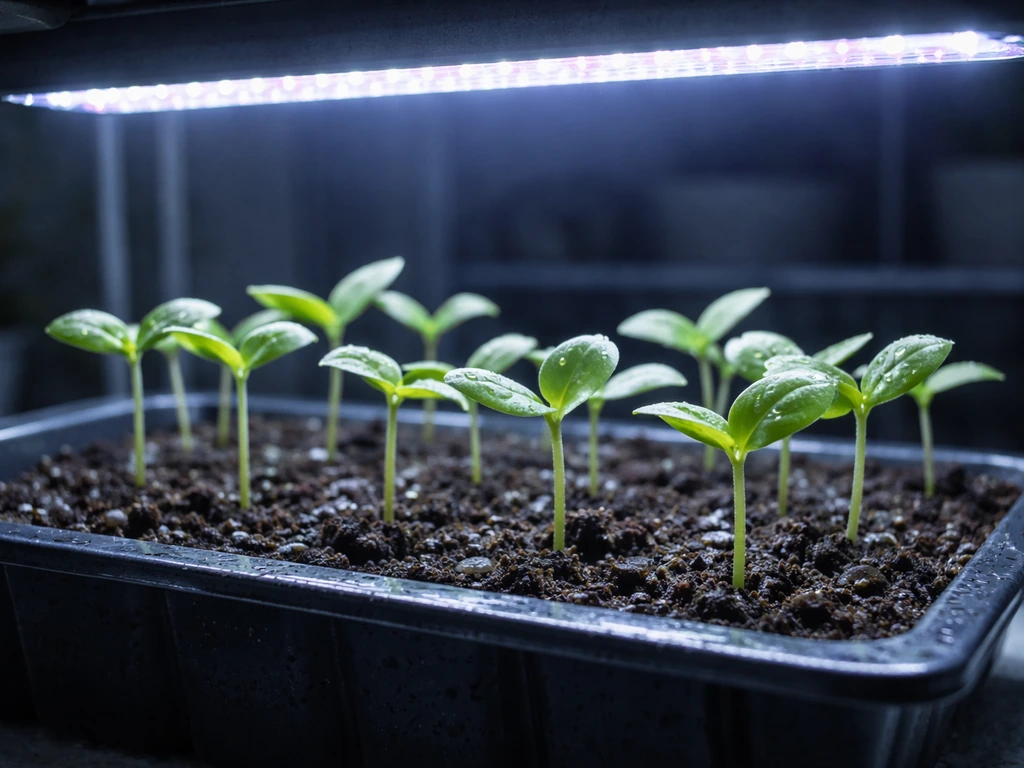
Both Briignite fixtures claim full-spectrum output, which means they cover the blue-heavy range (around 400-500nm) that seedlings and clones respond to during early development. For this stage, neither light needs to work particularly hard, and the dimming features on both models are genuinely useful here. Seedlings don't want blasting intensity right out of the gate, so being able to run the HR-GL04W96DY-1A at 30-40% or dial the BRQ600W down steplessly gives you real control. Mounted at 18-24 inches above a seedling tray, the BRQ600W's 736 µmol/m²/s at full power gets dialed back to a seedling-friendly 200-300 µmol/m²/s range, which is right where you want it.
Vegetative growth
Veg is where the BRQ600W earns its keep more convincingly. At full power over a true 2x2 ft canopy, 736 µmol/m²/s is a workable vegetative intensity for most herbs, leafy greens, peppers, and small tomato plants. You won't see the explosive growth rates you'd get from a 200W quantum board pushing over 1,000 µmol/m²/s, but for a light in this price range, the numbers are respectable. The HR-GL04W96DY-1A is harder to evaluate for veg without published PAR data, but at 96 actual watts spread across a panel form factor, expect it to cover a modest 2x3 ft zone adequately for low-to-medium light plants.
Flowering and fruiting
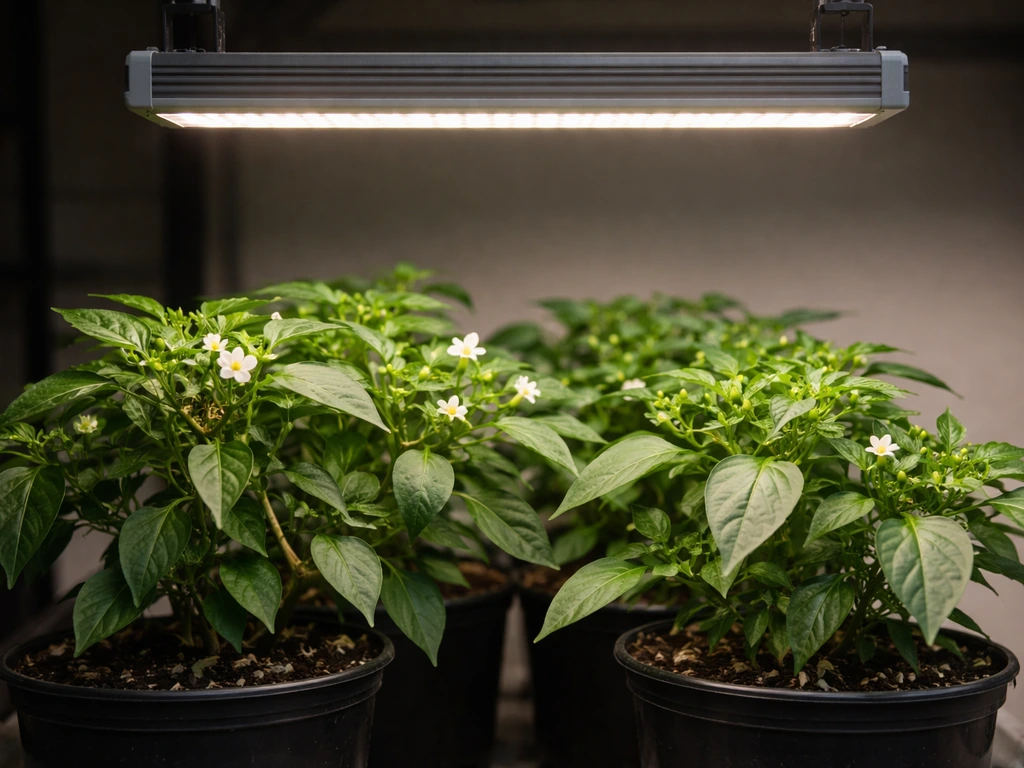
This is where Briignite's limitations become real. The BRQ600W's inclusion of IR is a positive sign (IR wavelengths in the 730nm range can support the Emerson effect and improve flowering response), but 736 µmol/m²/s is on the lower end for flowering stage plants that typically want 600-1,000+ µmol/m²/s consistently across the canopy. For compact flowering plants like herbs going to seed, dwarf peppers, or small cannabis plants in a 2x2, it's passable. For heavy-feeding, high-yielding fruiting plants, expect modest rather than impressive results. The HR-GL04W96DY-1A is better categorized as a general-purpose or supplemental light rather than a dedicated flowering fixture.
Coverage, mounting height, and uniformity
The BRQ600W is officially rated for a 2x2 ft (roughly 0.37 m²) coverage area, which is realistic given the claimed PPFD figure. Exceeding that footprint will drop intensity quickly, especially toward edges and corners. For a 3x3 tent, this light is undersized for anything beyond seedlings or supplemental coverage. Mounting height matters a lot with compact fixtures like this: the claimed 736 µmol/m²/s figure is measured at a specific distance (typically 18-24 inches), and moving the light up to 30+ inches will reduce that number significantly. For veg, aim for 18-22 inches; for seedlings, you can go higher or just dim the output.
Uniformity is a real concern with budget fixtures that don't publish full PAR maps. Panel-style lights like the HR-GL04W96DY-1A tend to have a hot center zone and noticeably lower intensity at the corners. If you're growing in a reflective-lined tent, that partially offsets the edge falloff, but for open-shelf or windowsill setups, plants at the perimeter will grow more slowly than those directly underneath. Rotating plant positions every few days helps even out the growth.
Setup, build quality, and controls
Both Briignite models are straightforward to set up. The HR-GL04W96DY-1A is described as an integrated fixture designed for indoor and outdoor use, which suggests it's reasonably weatherproofed and durable for a general-purpose light. The ten discrete brightness levels give you more granular control than a simple on/off, though stepless dimming (available on the BRQ600W) is more useful in practice since you can fine-tune intensity without jumping in big increments. Neither model appears to use a named-brand driver (no Meanwell or similar mentioned in product listings), which is worth noting since driver quality affects both efficiency and longevity.
Heat management on LED fixtures in this wattage class is generally not a major problem, and Briignite's designs follow standard passive heatsink conventions. You shouldn't need extra cooling for either model in a typical grow space, though the HR-GL04W96DY-1A at 96 true watts will generate more heat than the BRQ600W. Neither is likely to cause temperature problems in a properly ventilated tent. There's no reported flicker issue or audible driver noise from these units in available user feedback, which is a baseline expectation for modern LED grow lights but still good to confirm.
Power use and running costs
At 96 actual watts, the HR-GL04W96DY-1A running 16 hours per day for seedlings or veg will consume roughly 1.54 kWh per day. At the US average electricity rate of around $0.16 per kWh (April 2026), that's about $0.25 per day or roughly $7.50 per month. The BRQ600W, assuming a true draw of around 60 watts, costs closer to $0.15 per day or about $4.70 per month on the same schedule. These are not expensive lights to run, which is one of their genuine advantages over higher-powered options. A 200-300W quantum board will cost two to three times as much in electricity, though it will also significantly outperform either Briignite model in canopy coverage and yield potential.
| Model | True wattage | Daily kWh (16h) | Monthly cost (~$0.16/kWh) |
|---|---|---|---|
| HR-GL04W96DY-1A | 96W | 1.54 kWh | ~$7.50 |
| BRQ600W | ~60W (est.) | 0.96 kWh | ~$4.70 |
| Typical 200W quantum board | 200W | 3.20 kWh | ~$15.40 |
How Briignite stacks up against alternatives
In the budget-to-mid-range LED grow light category, Briignite competes against a crowded field. Brands like Bloom Plus offer similar full-spectrum LED panels in comparable wattage ranges, and some of those products publish more detailed PAR data and use better-documented drivers. If you want to see how Bloom Plus compares in brightness, coverage, and transparency, check a Bloom Plus grow light review for side-by-side takeaways. If you want the full updayday grow light review-style perspective on what to expect, compare Briignite against your top alternative before buying Briignite grow light review. The Bloom Plus and similar alternatives in the 60-100W range often have larger communities of growers sharing real-world results, which makes it easier to validate performance claims. If you want a similarly priced light with more transparency around specs, it's worth comparing before committing.
For grow tent use specifically, lights from brands that publish full PPFD maps (showing intensity at every point in the coverage footprint, not just the center) give you much better confidence that the specs match real performance. Briignite's claimed 736 µmol/m²/s for the BRQ600W is a center-point figure, and without a full map, edge uniformity is an open question. Other budget brands in this space, including some reviewed elsewhere on this site, have started publishing that data, which makes comparison easier. If you're currently evaluating multiple options in the small-tent category, it's worth cross-referencing those alternatives before settling on any single brand. If you want more specific takeaways from real purchasers, check garland grow light garden reviews to compare how these models perform in everyday setups. If you want a broader view before choosing a budget fixture, this kukuppo grow light review can help you compare real-world performance and value.
Before you buy: a practical checklist
- Confirm which model you're buying: the HR-GL04W96DY-1A (Home Depot panel) and the BRQ600W (online/Amazon fixture) are different products with different specs and use cases.
- Match the light to your footprint: the BRQ600W is suited to a true 2x2 ft space, nothing larger for flowering. The HR-GL04W96DY-1A needs more user-side research to pin down its actual coverage.
- Check the actual wattage, not the marketing wattage: "600W equivalent" means the real draw is likely 55-65W. Make sure that real number meets your plants' light needs.
- Look for a full PAR/PPFD map, not just a center-point number: if Briignite doesn't publish one for the model you want, factor that in as a transparency gap.
- Calculate your electricity cost before buying: use the true wattage, your daily light schedule, and your local electricity rate to estimate monthly cost.
- Confirm return/warranty terms from your retailer: Home Depot has a clear return window for electronics; third-party online purchases vary. Know your recourse before the light arrives.
- Consider whether dimming meets your stage needs: the BRQ600W's stepless dimmer is more flexible than the HR-GL04W96DY-1A's 10 fixed levels, which matters if you're running seedlings through to veg under the same fixture.
- Compare at least one alternative in the same wattage and price class before purchasing, particularly brands that publish full PAR maps and driver specs.
Bottom line: Briignite is a serviceable entry-level brand that won't disappoint a casual grower but won't impress a metrics-focused cultivator either. If you're starting seeds, growing herbs, or keeping houseplants thriving indoors without a large budget, either model gets the job done. If you're pushing for maximum yield in a 2x2 or 3x3 tent through flowering, the money is better spent on a light with documented performance and a known-quality driver.
FAQ
Which Briignite model should I choose for seedlings and clones, the HR-GL04W96DY-1A or the BRQ600W?
For propagation, pick the one that lets you dim low enough without blasting intensity. The HR-GL04W96DY-1A has discrete brightness steps, while the BRQ600W’s stepless dimming makes it easier to land in a safer seedling range. If you already know your target distance (around 18 to 24 inches), the BRQ600W is usually the more adjustable option.
Do I need a PAR meter to use one of these lights correctly?
A PAR meter helps, but it’s not required. If you don’t have one, use the symptom-based approach: start dimmed and at a conservative height, then adjust based on leaf posture (too much light shows “tight” growth, bleaching, or curling). After you dial it in, avoid frequent distance changes because intensity drops quickly as you raise the fixture.
What distance should I mount the BRQ600W or HR-GL04W96DY-1A to avoid weak growth at the edges?
Stay close to the distance your light’s claims assume (often around 18 to 24 inches for this class). For the BRQ600W, don’t treat the 2x2 coverage as guaranteed across the whole footprint, expect weaker corners. In practice, keep plants centered under the brightest zone, or rotate trays every few days to balance edge falloff.
Are these lights safe to run for long hours, like 16 hours per day?
They’re designed for continuous indoor use and should run fine if your tent is ventilated. Still, check the fixture’s temperature by touch after a couple hours, if the housing feels uncomfortably hot, improve airflow or increase space around the driver/heatsink area. Passive-heatsink LEDs typically tolerate long schedules, but “stuffed” tents can trap heat.
How much will the lights cost to run if I’m growing through winter with higher electricity prices?
Your cost scales linearly with both watts and kWh price. If you run 16 hours a day, a 60W draw costs about 0.96 kWh per day, multiply by your local rate. If your electricity is closer to $0.25 per kWh, the BRQ600W estimate becomes roughly $6 per month instead of under $5.
Does the “600W equivalent” label mean I should expect 600W performance?
No. That label is only marketing shorthand for brightness relative to older high-intensity bulbs. The more useful comparison is the actual wall draw (the article notes it is likely around the 55 to 65W range) and where the claimed PPFD is measured from. Compare in terms of coverage and dimming capability, not the “equivalent” number.
Will the BRQ600W’s included IR meaningfully boost flowering for my plants?
IR can support flowering responses, but with this light’s modest PPFD, the limiting factor is often intensity and uniformity rather than missing wavelength components. If you’re growing fruiting crops that demand high energy, treat IR as a bonus, not a substitute for a stronger flowering light. You may see acceptable results for compact plants, but don’t expect top-tier yields.
Which crops are most likely to be successful under a Briignite budget fixture?
They fit best for seedlings, herbs, leafy greens, and small fruiting plants where you can keep expectations realistic. If you’re growing larger, high-demand plants in a 3x3 tent, the math usually doesn’t work because edge intensity drops and the light can’t maintain the needed PPFD across the whole footprint.
Can I use these for an outdoor grow or a mixed indoor-outdoor setup?
The HR-GL04W96DY-1A is described as suitable for indoor and outdoor use, but “outdoor suitable” usually means protected from light spray and normal weather exposure, not fully waterproof use. If you plan to use it outdoors, mount it under cover, avoid direct rain, and use a properly grounded outlet to reduce electrical risk.
What’s the biggest mistake people make when buying a budget panel like these?
Buying based on the advertised coverage without accounting for uniformity and mounting distance. Many budget fixtures publish center PPFD (or a single number) and not a full map, so corners can be significantly dimmer. The fix is to choose a smaller canopy than the claimed footprint, keep the light at the recommended height, and rotate plants regularly.
How can I tell if my light is too strong or too weak without instruments?
Too strong often shows bleaching, dark green leaves with clawing or leaf curl, and slowed growth from stress. Too weak shows stretched stems, larger spacing between leaves, and pale, slow growth even when nutrients are correct. Adjust in small steps by dimming first, then moving height second, and give plants a few days to respond.