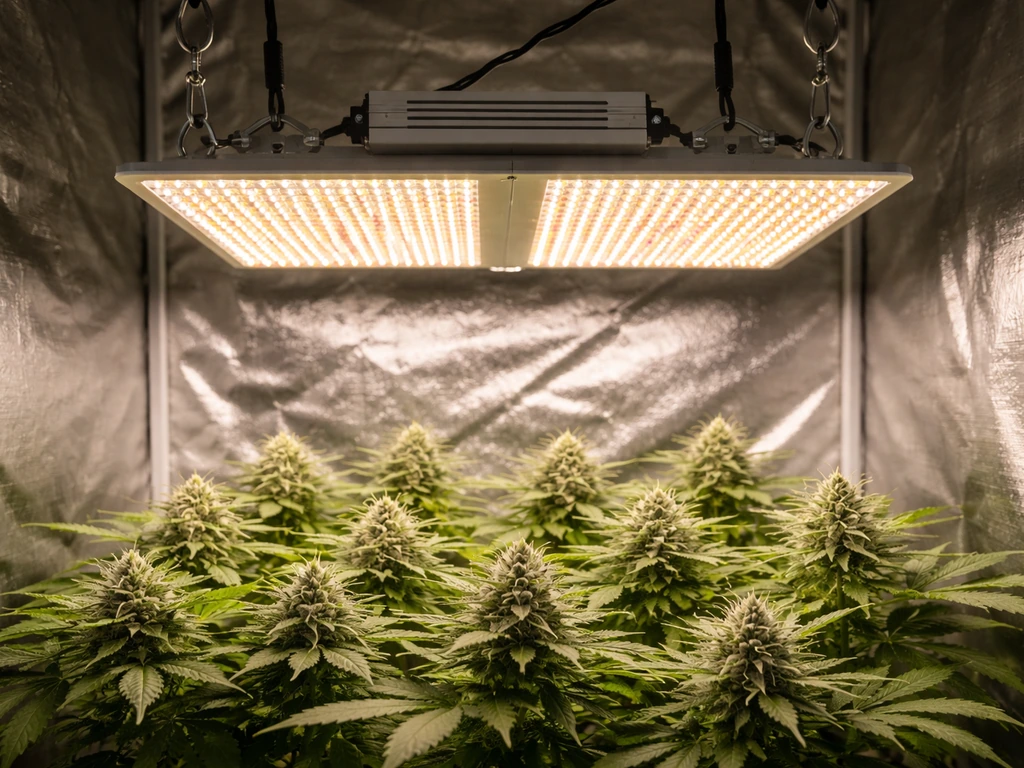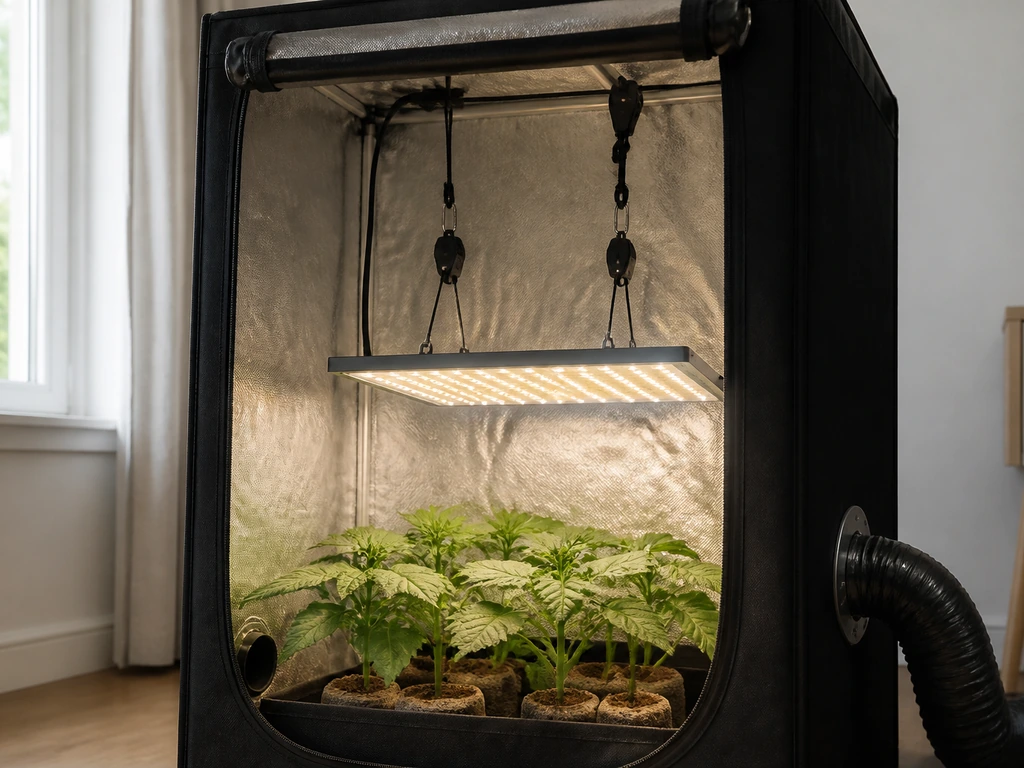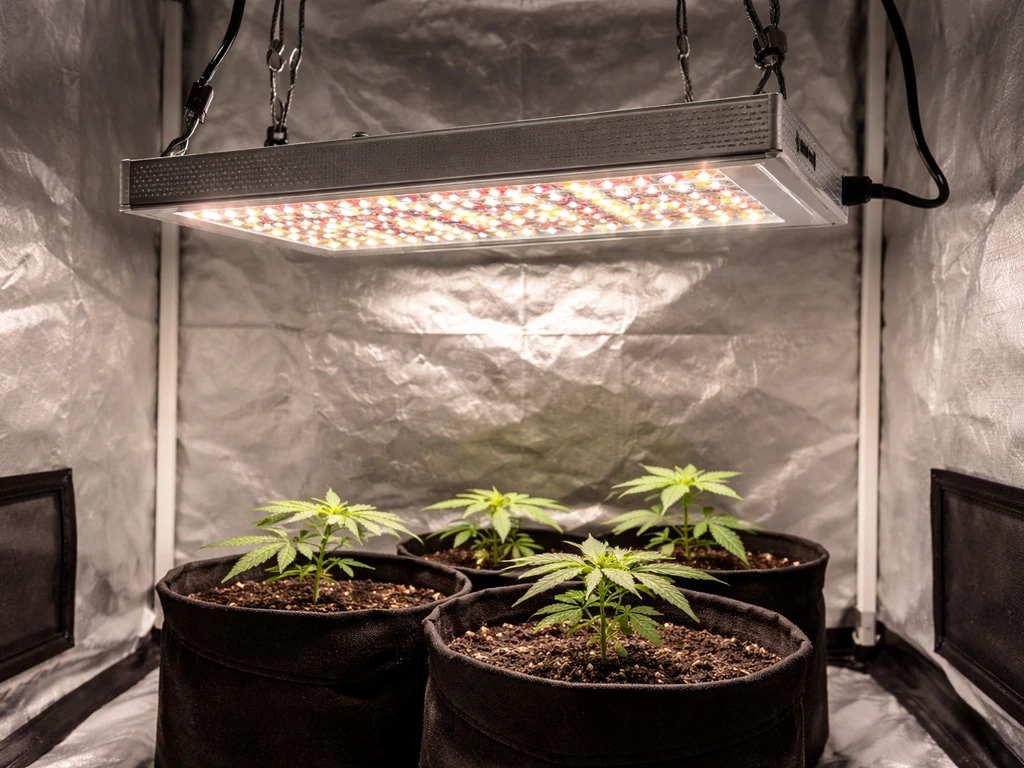
The Advanced LED Diamond Series XML grow lights (DS-XML 150, DS-XML 350, and DS-XML 650) are full-spectrum LED panels built for indoor hobbyists and small-scale cultivators. They deliver 11+ wavelengths, switchable grow modes, and respectable coverage footprints, but they come in at a premium price point and are not as efficient per watt as modern quantum board designs from brands like HLG. If you're deciding whether to buy one today, the short version is: they're capable lights with solid build quality and a good warranty, but the pricing is hard to justify against the competition unless you specifically need the multi-mode dimming or the brand's support structure.
Diamond Series LED Grow Light Review: Models, PPFD, Coverage

Marcus Caldwell
5 May 2026
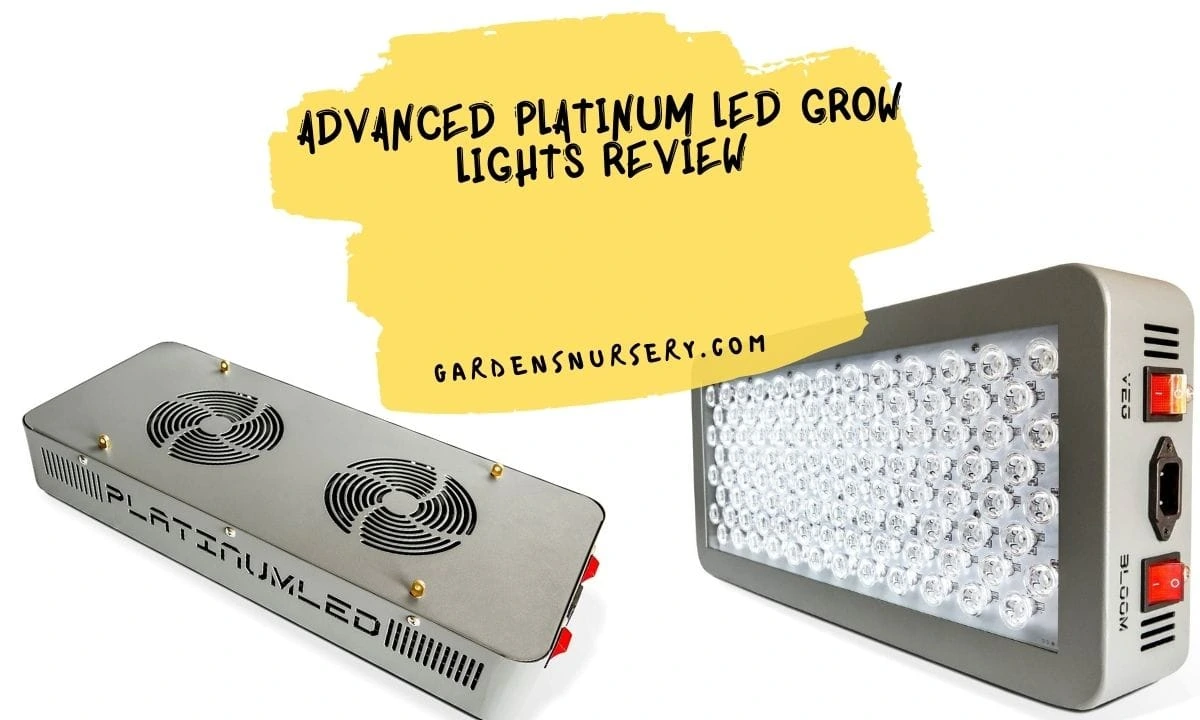
What the Diamond Series is and who it's actually built for
The Diamond Series is the flagship LED lineup from Advanced LED Lights, and when people search for a review, they're almost always looking at one of three models: the DS-XML 150, DS-XML 350, or DS-XML 650. The naming can cause some confusion because the product has gone through revisions over the years, but the XML family is the version most commonly reviewed and still the one you'll find in circulation. These lights are aimed at growers who want a plug-and-play solution with stage-specific controls built in, rather than a bare-bones panel they have to dial in manually.
The target buyer is someone running a small tent or dedicated grow room, likely growing cannabis, tomatoes, or other fruiting plants, and wants a light they can trust across the full growth cycle without buying separate veg and flower fixtures. The Diamond Series attempts to solve that with switchable modes and a wide wavelength spread. It's not aimed at commercial operations or anyone running square footage at scale, where per-watt efficiency becomes a much bigger cost factor.
Quick specs breakdown
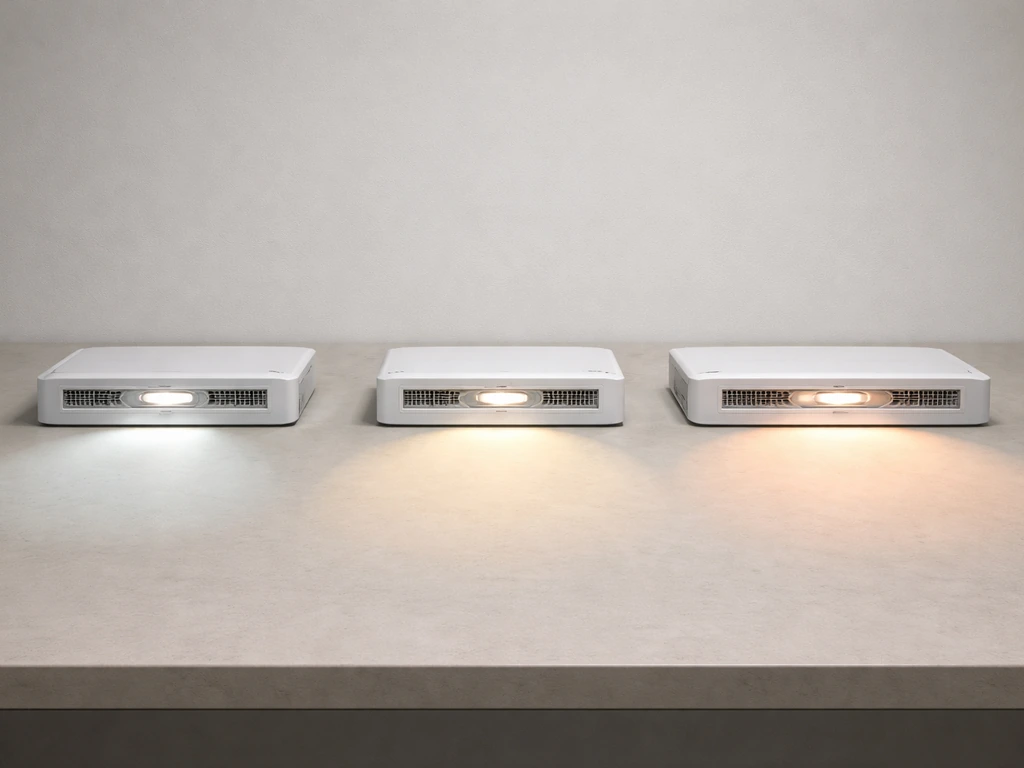
| Spec | DS-XML 150 | DS-XML 350 | DS-XML 650 |
|---|---|---|---|
| Actual Power Draw | ~140W | ~330W | ~500W (est.) |
| Coverage Area | ~2.5 x 2.5 ft | ~4.5 x 4.5 ft | ~5.5 x 5.5 ft (core 5 x 5 ft) |
| Spectrum | 11+ wavelengths (380–760nm) | 11+ wavelengths (380–760nm) | 11+ wavelengths (380–760nm) |
| LED Chips | Cree 10W + Bridgelux 3W | Cree 10W + Bridgelux 3W | Cree 10W + Bridgelux 3W |
| Grow Modes | Clone / Veg / Flower | Clone / Veg / Flower | Clone / Veg / Flower |
| Dimming | 3 dimmer switches | 3 dimmer switches | 3 dimmer switches |
| Cooling | Dual heat sinks + fans | Dual heat sinks + fans | Dual heat sinks + fans |
| Warranty | Limited lifetime | Limited lifetime | Limited lifetime |
| Price (approx.) | ~$550 | ~$997 | ~$1,595 |
A couple of things worth noting here. The 'wattage' in the model name (150, 350, 650) refers to the marketed equivalent output, not the actual wall draw. The XML 350, for example, pulls around 330W from the wall. The 90-degree collimator lenses on each LED chip are a meaningful design choice: they concentrate light downward rather than letting it scatter sideways, which improves canopy penetration but does make the intensity drop off more sharply at the edges of the coverage zone. And those wavelengths span 380nm (near UV) all the way to 760nm (far red), which is a genuinely wide spread compared to older blurple panels.
Hands-on performance: PPFD, uniformity, heat, and controls
Light output and PPFD
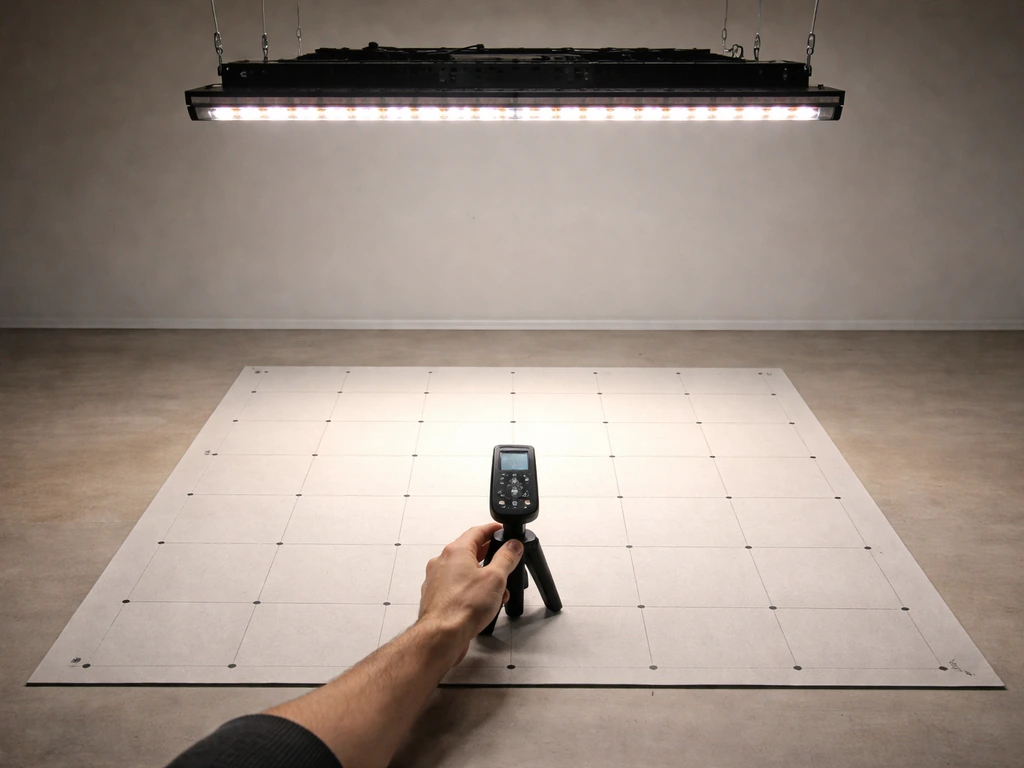
The XML 350 in flower mode at 18 inches produces usable PPFD levels across most of the 4.5 x 4.5 ft footprint, with stronger output at center and a noticeable drop at the corners. This is a direct consequence of the collimator lens design: you get better penetration into the canopy at center, but uniformity across the full claimed footprint is not flat. For a 3 x 3 or 4 x 4 tent, this works well. Stretching it to fill a 4.5 x 4.5 space evenly is where you'll start seeing edge-of-canopy plants underperform relative to center plants. The XML 650 with its 5.5 x 5.5 ft total coverage (5 x 5 ft core, based on goniometer lab testing) has the same characteristic: strong core, softer edges.
Heat management
Heat is handled reasonably well. The dual heat sink design combined with onboard fans keeps the panel itself from running hot, and the fans are described as quiet enough that they don't become an annoyance in a small grow space. In practice, the light adds warmth to the tent as any 330W or 500W fixture will, but it's not creating a hotspot above the canopy the way old HPS setups did. You still need to account for ambient tent temperature as usual. The fans are not silent; in a very quiet room you'll hear them, but they're not disruptive.
Dimming and grow mode controls
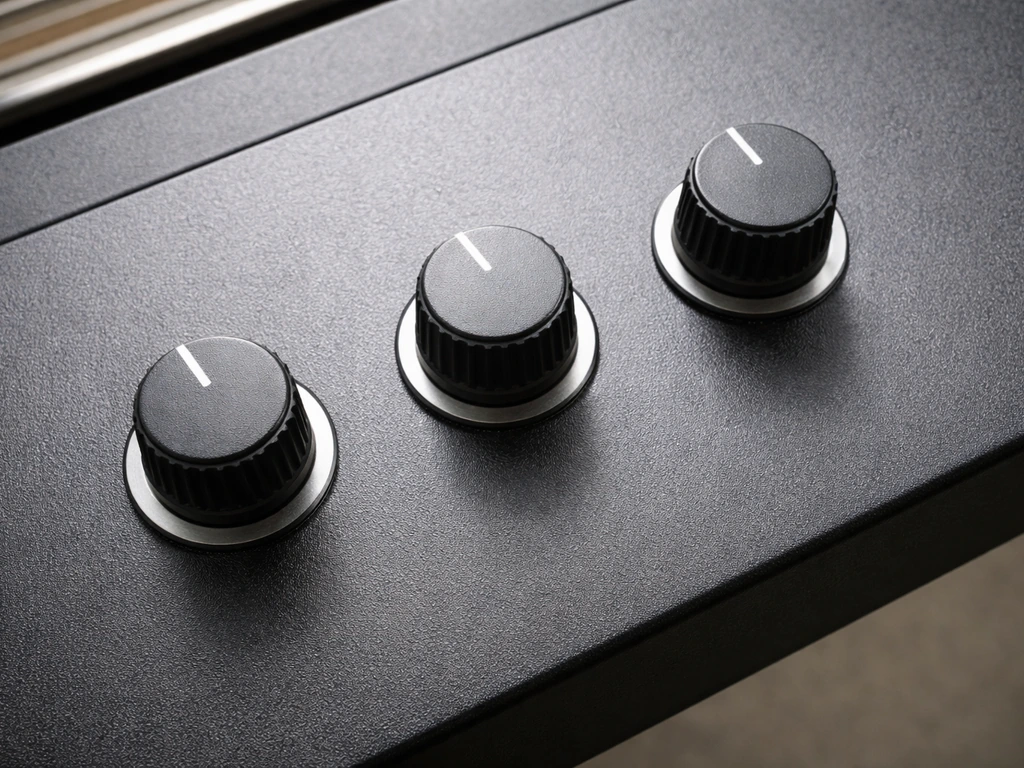
The three dimmer switches on the XML models let you adjust light band intensity independently, which gives you real control over the spectrum balance at each growth stage. The clone/veg/flower mode switch on the top panel changes the overall output profile: clone mode runs at a lower intensity suitable for delicate cuttings, veg mode provides a balanced output, and flower mode pushes the highest intensity and red-heavy spectrum. This is a practical system, and it works. One complaint is that the controls are on the fixture itself rather than a remote or controller box, so if you're running the light high up in a tent you'll need to physically reach it to make adjustments. That's a minor usability issue, but worth knowing.
Plant results by growth stage
Seedlings and clones
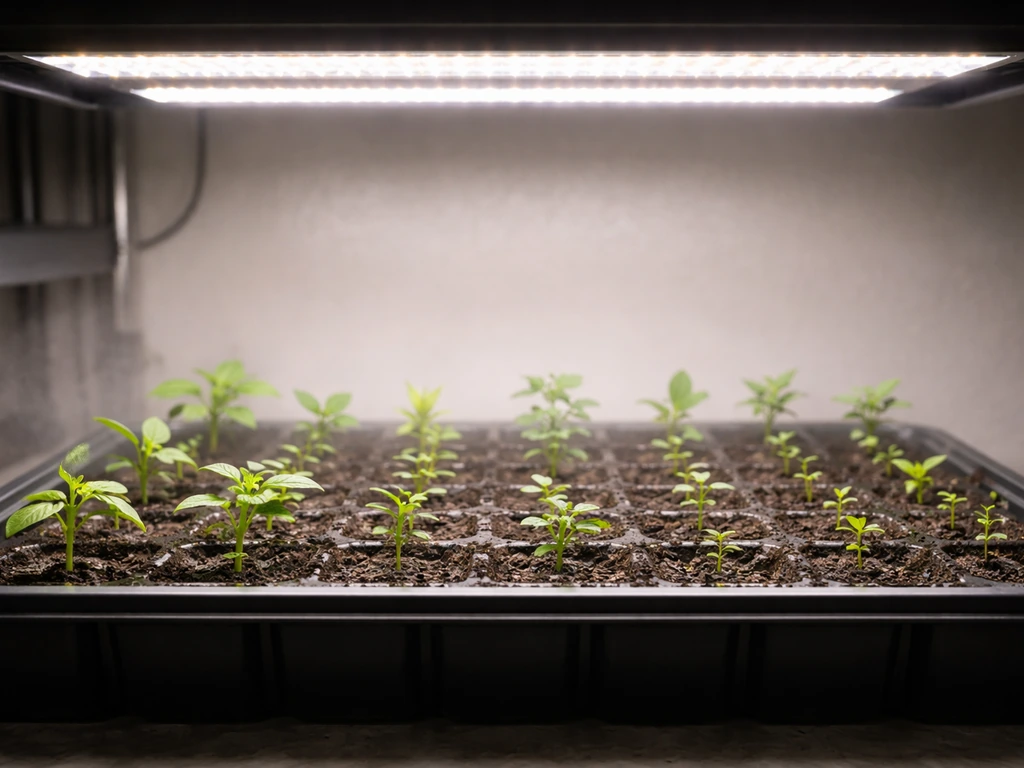
In clone mode, the Diamond Series is genuinely gentle. The reduced output means you can hang it relatively close without bleaching or stressing cuttings, and the UV wavelengths (down to 380nm) help with early root development without overdoing intensity. For seedlings started under the XML 150, the small coverage area is actually a good fit: you're not wasting light on empty space, and the 140W draw is proportionate for a small propagation tray.
Vegetative growth
Veg mode with the 350 or 650 produces solid vegetative growth across a 3 x 4 or 4 x 4 footprint. The blue-heavy portion of the spectrum (440nm, 460nm) combined with the broader white band encourages compact, bushy structure. Plants don't stretch excessively under these lights in veg, which is a good sign of adequate blue spectrum delivery. The dimming switches let you ramp intensity as plants mature and develop more leaf surface area to handle higher PPFD.
Flowering and fruiting
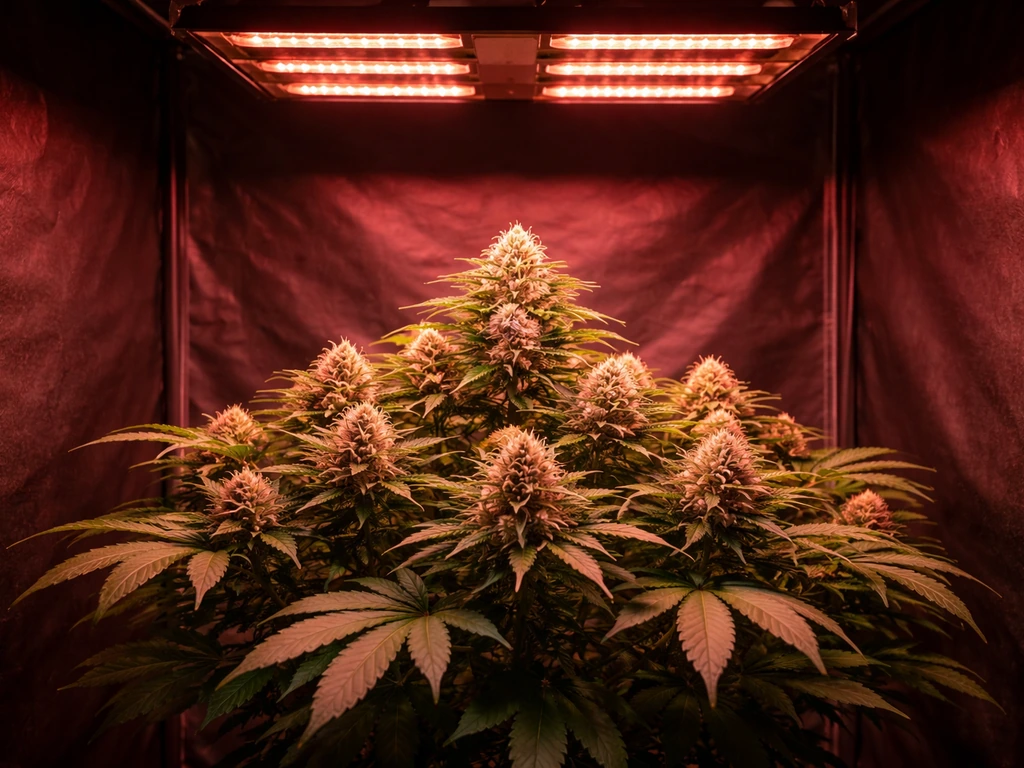
Flower mode is where the Diamond Series performs best and where the 660nm and 630nm red wavelengths do the work. Flowering plants respond well to the red-dominant output, and the far-red wavelengths (720nm, 740nm, 760nm) contribute to the Emerson enhancement effect, which can improve photosynthetic efficiency during the flowering phase. Bud density and flower development are strong at center canopy. Edge plants in a maxed-out 4.5 x 4.5 space will produce less than center plants, so training techniques like LST or SCROG help even out the canopy and make better use of the light distribution.
Setup and day-to-day usability
Mounting height recommendations vary by stage: for clone/seedling work, 24 to 30 inches is a safe starting point with the intensity dialed back. For veg, 18 to 24 inches works well. For flowering, 16 to 20 inches at full flower mode is the typical target range, though you should always confirm with a PAR meter if possible since room conditions vary. The panels include standard hanging hardware (ratchet hangers work fine), and the build feels solid enough that there's no concern about the fixture flexing or hardware loosening over time.
The 90-degree collimator lenses mean you don't get much sideways light spread, so supplemental side lighting is worth considering if you're running tall plants with significant lower canopy. For most standard tent grows at the sizes these lights are rated for, this isn't a major issue, but it's something to keep in mind if you're running a particularly dense or tall canopy.
Value for money: is the price justified?
This is the hardest part of recommending the Diamond Series in 2026. At around $997 for the XML 350 and $1,595 for the XML 650, these lights are expensive relative to what modern quantum board designs offer at the same price point. If you are also looking at Hipargero options, this hipargero grow light review can help you compare price, warranty, and real performance. HLG fixtures at similar price ranges deliver higher photon efficacy (more PPFD per watt), better uniformity, and lower heat output. If you want a benchmark from the quantum board side, this HLG grow light review approach helps you compare real per-watt performance HLG fixtures at similar price ranges deliver higher photon efficacy. If raw efficiency and cost-per-gram is your primary concern, HLG and similar quantum board designs come out ahead on the numbers.
Where the Diamond Series holds its ground is in the feature set: the multi-mode switching, the wide wavelength range including far-red and near-UV, and the built-in dimming controls are genuinely useful for growers who want that level of control without adding external gear. The limited lifetime warranty and the 90-day risk-free trial with a full refund also reduce the purchase risk meaningfully. If you value those features and are willing to pay for them, the Diamond Series is a legitimate product. If you just want the most light per dollar, it's not the top pick today.
| Brand / Line | Approx. Price (350W class) | Efficacy | Multi-mode Control | Warranty |
|---|---|---|---|---|
| Advanced LED Diamond Series XML 350 | ~$997 | Moderate | Yes (3 modes + dimmers) | Limited lifetime + 90-day trial |
| HLG 600H (quantum board) | ~$600–$700 | High | Dimmer only | 3-year limited |
| HLG general lineup | Varies | High | Varies by model | 3-year limited |
| Hipargero (comparable wattage) | ~$150–$300 | Moderate | Basic dimmer | Limited / brand varies |
The HLG 600H in particular represents the efficiency benchmark in this wattage class, and a full HLG lineup review is worth reading alongside this one for context. If you're specifically comparing efficiency and coverage, the HLG 600H grow light review gives you the context you need. Hipargero offers a much lower entry price but without the build quality or warranty confidence of either Advanced LED or HLG.
Drawbacks and who should skip the Diamond Series
A few honest limitations to keep in mind before buying:
- Price is significantly higher than quantum board competitors that outperform it on efficiency metrics.
- Controls are on the fixture, not on a remote or controller box, which is inconvenient if the light is mounted high.
- Edge uniformity across the maximum rated footprint is not flat; center coverage is meaningfully stronger.
- Per-watt efficiency is lower than modern quantum board designs, meaning higher electricity costs over time at equivalent PPFD.
- The Cree and Bridgelux chip mix is a previous-generation approach compared to the Samsung LM301H diodes used in current HLG and similar boards.
- Fan noise is present, which may matter in a quiet room or shared living space.
Who should skip it: budget-conscious buyers, efficiency-focused growers running lights 18+ hours per day where electricity cost compounds, and anyone who just needs straightforward veg or flower coverage without the multi-mode feature set. For those buyers, a well-reviewed quantum board from HLG or a comparable brand will deliver better output per dollar.
Who it still makes sense for: growers who specifically want the clone-to-flower mode switching in a single fixture, those who appreciate the risk-free trial period for testing before committing, and buyers who want a light with a long-standing brand history and direct customer support. The Diamond Series is a real product from an established company, not a generic import. Quantum board LED grow lights are a dedicated style of indoor grow lighting designed around the “quantum board” concept, which many growers consider well-suited to indoor cultivation. That matters to some buyers, and it's fair to say the quality of construction reflects it.
Bottom line recommendation by model
The DS-XML 150 is best suited to propagation and small veg spaces (2.5 x 2.5 ft), and the price-to-coverage ratio is the hardest to justify of the three. The DS-XML 350 is the most practical choice in the lineup if you're committed to the Diamond Series: it covers a 4 x 4 footprint reliably, draws 330W, and the three-mode control system earns its keep across the full grow cycle. GrowDiaries’ listing for the Advanced LED Lights Diamond Series XML 2.0 350 describes it as a replacement for a “600w HPS” for all growth phases blank" rel="noopener noreferrer">three-mode control system earns its keep across the full grow cycle. The DS-XML 650 suits growers who need to cover a 5 x 5 space with a single fixture and don't want to run multiple panels, though at $1,595 the efficiency gap versus quantum boards becomes a real ongoing cost. Whichever model you're considering, use the 90-day trial aggressively: run it through at least one full growth stage, take measurements if you can, and hold the manufacturer to the refund policy if it doesn't perform as expected. If you’re specifically trying to decide whether the garpsen grow light is a good fit, the garpsen grow light review will help compare it against alternatives and real-world results Whichever model you're considering.
FAQ
Do the Diamond Series models need a separate controller to use the dimming and clone/veg/flower modes?
No. The XML 150, 350, and 650 include onboard switching and dimming, so you do not need an external controller for mode changes. The tradeoff is usability, the controls are on the fixture itself, so you may need a way to safely reach the light if you hang it high in a tent.
Why is light coverage good in the center but weaker near the corners, and how can I reduce the edge drop-off?
The 90-degree collimator lenses focus light downward, which improves penetration in the core but naturally creates a steeper intensity falloff at the perimeter. Practical fixes include training to keep the canopy level (SCROG, LST), lowering the light slightly toward flower if your center plants tolerate it, or adding limited supplemental side lighting if your lower canopy is shaded.
Is the PPFD you see in flower mode based on a consistent hang height, and what should I measure first?
The effective PPFD depends heavily on mounting height and your room conditions. Before buying, if possible, confirm your target PPFD by measuring with a PAR meter at your intended hang height and mode, especially for the largest footprint model where corner underperformance is more noticeable.
How should I convert the “150, 350, 650” naming to actual electricity use?
The model number is an output class, not your wall-draw. For example, the XML 350 is described as pulling about 330W from the wall. If electricity cost matters, estimate total daily kWh based on wall draw for the specific model and your planned photoperiod.
Can I run the Diamond Series on a timer, and is there any reason to avoid 18+ hour schedules?
Yes, you can run them on a standard timer like other grow lights, but longer daily runtime increases total energy cost, which is where quantum board options often look better. Also ensure you monitor tent heat and fan noise at your chosen schedule, since warm ambient conditions can limit how close you can safely hang the fixture.
Do the near-UV and far-red wavelengths replace the need for special UV or far-red add-ons?
In many setups, the built-in spectral range down to around 380nm (near-UV) and up to around 760nm (far-red) can cover the intended bands without extra fixtures. However, if you are chasing a specific research-grade UV or far-red dosing strategy, the built-in implementation may not match your desired intensity distribution, so you would still need measurement and careful dial-in.
What mounting height should I use if my canopy is uneven or I use heavy training?
Because the light has stronger center intensity, keeping an even canopy is especially important. For uneven or trained plants, start at the stage-typical height (clone 24 to 30 inches, veg 18 to 24 inches, flower 16 to 20 inches), then adjust using PAR readings if you can, and re-check edge plants after a week rather than assuming they will track the center.
Is the onboard fan noise truly a non-issue, and what should I do in a quiet room?
The fans are described as quiet enough for typical small grow spaces, but they are not silent. If noise is a concern, plan for sound sources beyond the fans too (ducting, clip-on fans, inline fans). A simple step is to run the light at your normal duty cycle for a few evenings in place to confirm it stays acceptable.
How do I avoid bleaching when using clone or veg mode, especially if I hang the light close?
Clone mode is designed for lower output and can tolerate closer mounting, but you still need to ramp down risk by starting conservative. Begin in clone mode at a safe hang height, then gradually increase intensity over several days while watching for leaf tip burn or bleaching, particularly if your cuttings already have high light exposure from previous conditions.
Does the Diamond Series remove the need to add side lighting for tall grows?
Not necessarily. Because the fixture is designed to concentrate light downward with limited sideways spread, tall plants or a dense lower canopy can leave areas shaded. If you see consistently weaker lower growth, add side lighting or plan your training to bring lower sites closer to the light footprint.
Is the warranty and 90-day trial strong enough to justify the price premium over quantum boards?
It can be, if you actively test it rather than just “run and hope.” Use the risk-free period to test at least one full stage, measure PPFD in your room at your hang height, and compare plant response across the footprint. If the edge drop-off harms your results or the energy cost does not match your expectations, you can still make a purchase decision based on real data during the trial window.
Which model should I pick if I am between two sizes (for example, 4 ft by 4 ft tent but considering the 5 ft by 5 ft light)?
If your tent is closer to 4 by 4 and you want strong uniformity, the XML 350 is typically the safer match. The XML 650 can cover a larger area, but edge intensity drop-off means you may end up with a bigger uniformity problem than you expected unless your canopy is trained to reduce edge stress. Choose the smallest model that reliably covers your effective canopy area.