Garland grow lights are a decent starting point for UK home growers who want a tidy, self-contained system for seed starting, herbs, and leafy greens, but they are not high-output LED panels designed for flowering or large-canopy crops. If you pick the right model for the job (compact seedling tray, small herb garden, or propagation shelf) and keep your expectations realistic, they work. If you expect them to replace a dedicated horticultural LED for fruiting plants, they will disappoint. Here is what you actually need to know before buying.
Garland Grow Light Garden Reviews: Best Models Compared

Marcus Caldwell
28 Apr 2026
What 'Garland Grow Light' actually refers to
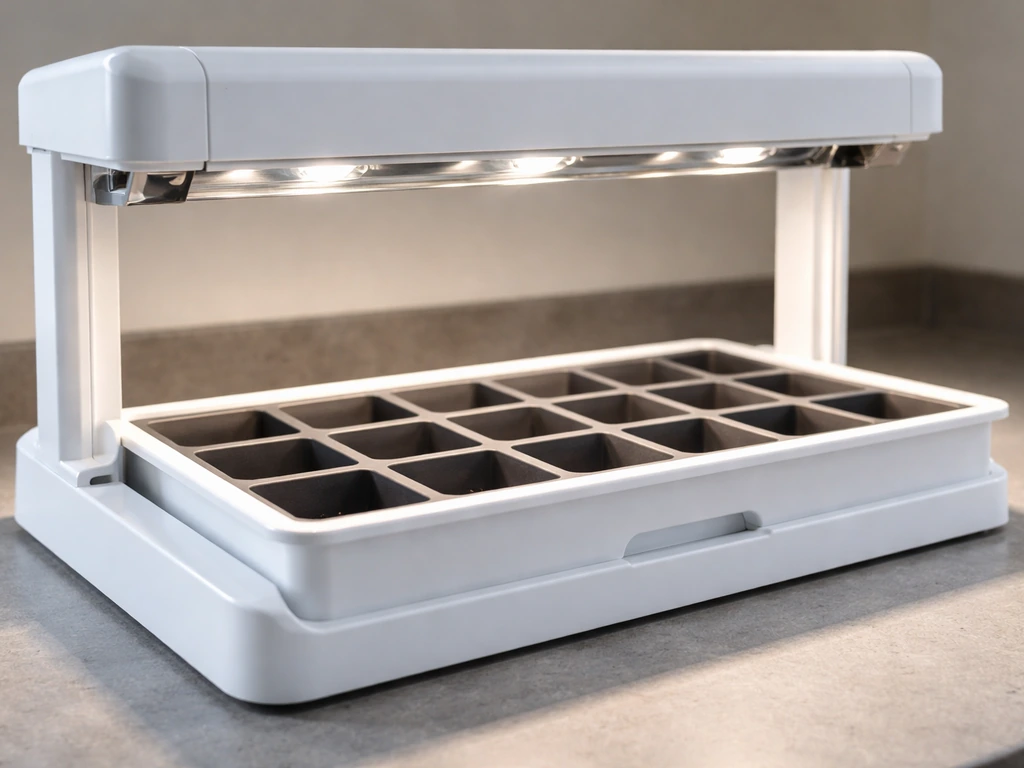
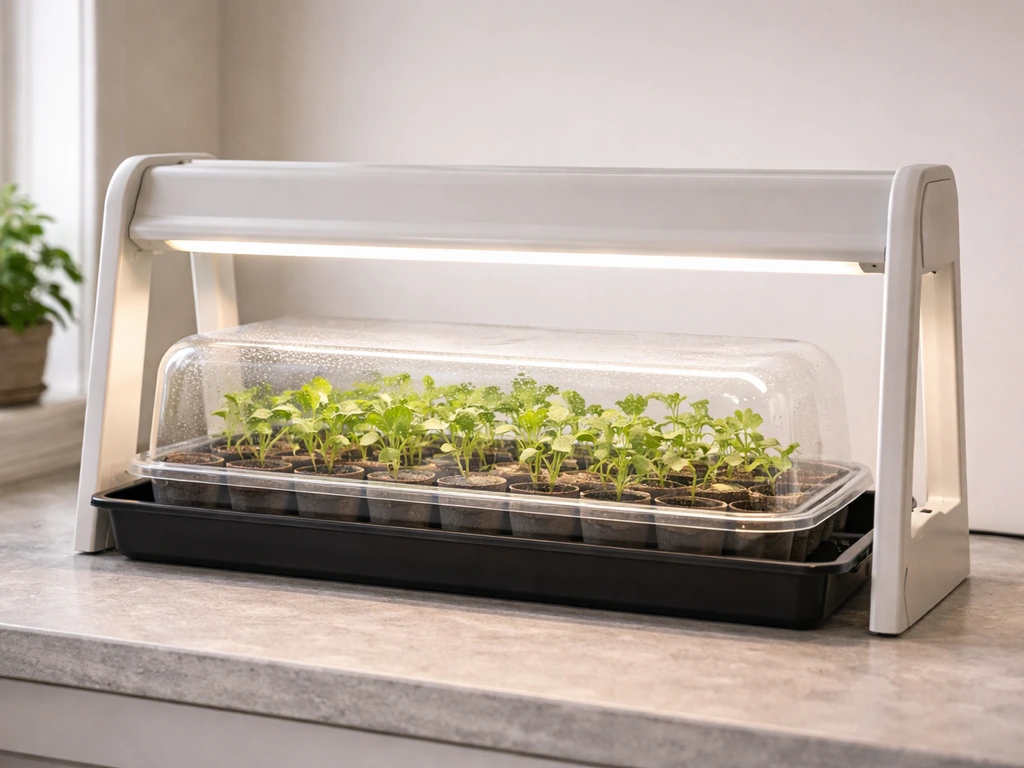
Garland (the UK brand Garland Products) markets a range of self-contained indoor growing units under the 'Grow Light Garden' name. These are not standalone LED panels or bar lights in the way most of the grow light market works. They are complete tabletop systems: a tray, an adjustable canopy, built-in lighting, and in some versions a self-watering capillary mat. The lighting component is what shoppers are really evaluating, and Garland has used two distinct approaches across their line.
The main models you will encounter are the standard Grow Light Garden (G139), the Micro Grow Light Garden, and the High-Rise LED Light Garden. The G139 and Micro use fluorescent T5-type tubes, while the High-Rise is the brand's move into LED territory. Knowing which one you are looking at matters because the power draw, light output, and spectrum handling are quite different between them.
| Model | Light Source | Wattage | Color Temp | Max Canopy Height | Guarantee |
|---|---|---|---|---|---|
| Grow Light Garden (G139) | 2x T5 fluorescent (Sunblaster) | 2 x 24W (48W total) | 6400K | Not specified in manual | 12 months |
| Micro Grow Light Garden | T5-type (Sunblaster) | 11W per bulb | 6400K (full spectrum claimed) | 38cm from base | 12 months |
| High-Rise LED Light Garden | LED (full spectrum) | Not published as single watt figure | 6400K claimed | 47cm (18.5") | 12 months |
The 6400K color temperature is consistent across all models. That is a cool, blue-dominant white light well suited to vegetative growth and seedlings but not optimized for flowering, where growers typically want a warmer spectrum in the 2700K to 3000K range or a broad-spectrum LED that covers both. All Garland units use electronic ballasts (on the fluorescent models) to eliminate the hum and flicker you used to get from older ballast designs, and the T5 bulbs are rated up to 10,000 hours. The NanoTech reflectors on the fluorescent versions are worth noting: they are claimed to reflect 100% of light toward the plants and help reduce heat buildup directly under the tubes.
Real-world performance and coverage
The honest assessment from people who have actually grown with Garland Grow Light Gardens is mixed in a predictable way. When used for their intended purpose, mainly starting tomatoes, basil, beans, and other seedlings out of season, they get the job done. Reviews on retail platforms include comments like 'no more spindly seedlings' and 'plants growing well and looking very strong and healthy,' which lines up with what you would expect from a 6400K fluorescent system used close to the canopy.
The problem shows up when plants outgrow the system or when growers push the unit beyond propagation-phase crops. One widely-cited hands-on review found lettuce and seedlings coming out 'a little floppy and weak,' which is a classic sign of insufficient light intensity rather than wrong spectrum. T5 fluorescents, especially at 11W per tube, produce meaningful lux close up but fall off quickly with distance. If your canopy is sitting more than 20 to 25cm above small seedlings, you are probably not getting the photon density needed for compact, robust growth.
Coverage area for the G139 (48W total) is realistically a standard seed tray footprint, roughly 37 x 23cm for the tray that ships with it. The Micro is smaller still. These are single-tray systems, not multi-shelf arrays. If you are trying to cover a 60 x 60cm propagation shelf, you are going to need two units or a different product entirely. The High-Rise LED model offers more flexibility on mounting height (adjustable in 5.4cm steps from 10cm up to 47cm from the tray) but Garland has not published a photon flux density (PPFD) map for any of their units, which makes it impossible to confirm light intensity claims with any precision.
Spectrum and plant suitability
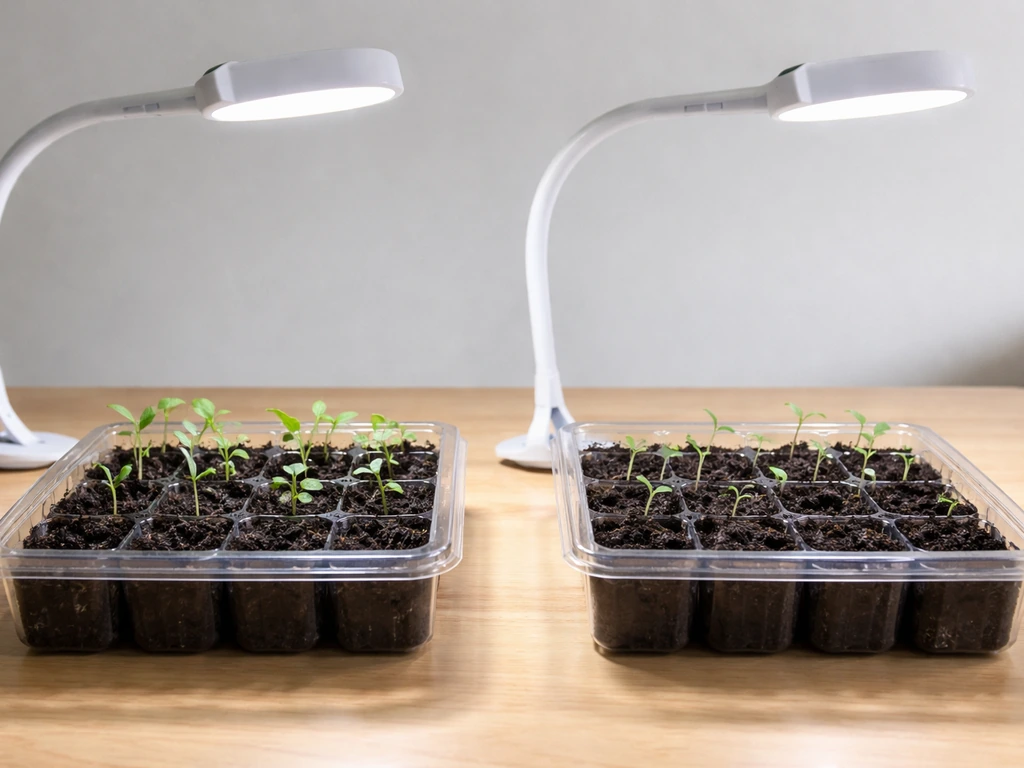
The 6400K output on all Garland units is genuinely useful for specific growth stages and crops, but it is not a universal grow light spectrum. Here is how it breaks down by use case.
| Use Case | Suitability | Notes |
|---|---|---|
| Seed germination | Good | Low light requirement; even 11W close up is fine |
| Seedling development (tomatoes, peppers, basil) | Good | Keep light close (10–15cm) to avoid leggy growth |
| Herbs and salad greens (ongoing) | Good | 6400K suits leafy growth; compact plants respond well |
| Vegetative stage (larger plants) | Moderate | Works for short-term veg but limited canopy height restricts it |
| Flowering/fruiting (tomatoes, chillis) | Poor | 6400K alone is insufficient; lacks red spectrum for flowering |
| Boosting flowering houseplants | Marginal | Seller claims this use case but spectrum is not ideal for bloom |
The marketing copy on several Garland listings claims the lights can 'boost flowering house plants out of season,' but a 6400K blue-dominant spectrum is the opposite of what plants need during flowering. Red-spectrum light in the 620 to 700nm range drives anthesis and fruit set. If flowering is a priority, you would be better served by a broad-spectrum LED panel that includes both blue and red peaks, or a purpose-built grow bar that outputs a proper 3000K to 3500K warm spectrum at meaningful intensity. That is a real limitation to understand before buying.
Build quality, controls, heat, and power draw
Build quality is the most consistent criticism across independent reviews. The Garland Grow Light Garden is a consumer-grade plastic product priced and built accordingly. The canopy slides up and down on metal rods held by O-rings to allow height adjustment and tray access for watering. In practice, this mechanism is awkward: the lid does not stay at intermediate heights well and can feel stiff or fiddly when you just want to water your seedlings without disturbing the canopy. One reviewer described it as 'a real pain' and noted the overall construction felt 'a bit flimsy' relative to the price paid.
That said, the electronic ballasts on the fluorescent models do what they promise: no buzzing, no slow flicker start. The T5 tubes warm up quickly and do not generate the kind of heat that requires active cooling. The NanoTech reflectors help direct light downward and the manufacturer's claim that they reduce heat at the canopy level is plausible since they bounce radiated heat back rather than letting it build up in the housing. Overall heat management is not a meaningful concern with these units at 11W to 48W.
Power draw is low enough that running costs are minimal. The Micro at 11W uses less electricity per hour than a smartphone charger. Even the 48W G139 running 16 hours a day adds only a few pounds per month to a typical UK electricity bill. Garland markets the Micro as consuming '20% less power than a standard domestic light bulb,' which is technically accurate but a slightly odd benchmark for a product that competes with purpose-built horticultural lights.
One legitimate concern flagged in real-world testing is humidity management. The optional capillary mat accessory, which self-waters the tray for up to 14 days, can create conditions that encourage damping-off and fungal issues if airflow is poor. If you use the capillary mat, keep a small fan nearby and do not let seedlings sit in standing water at the base of the tray. This is not unique to Garland but the enclosed tray design does trap humidity more than an open propagation shelf would.
Value analysis: what you actually get for the price
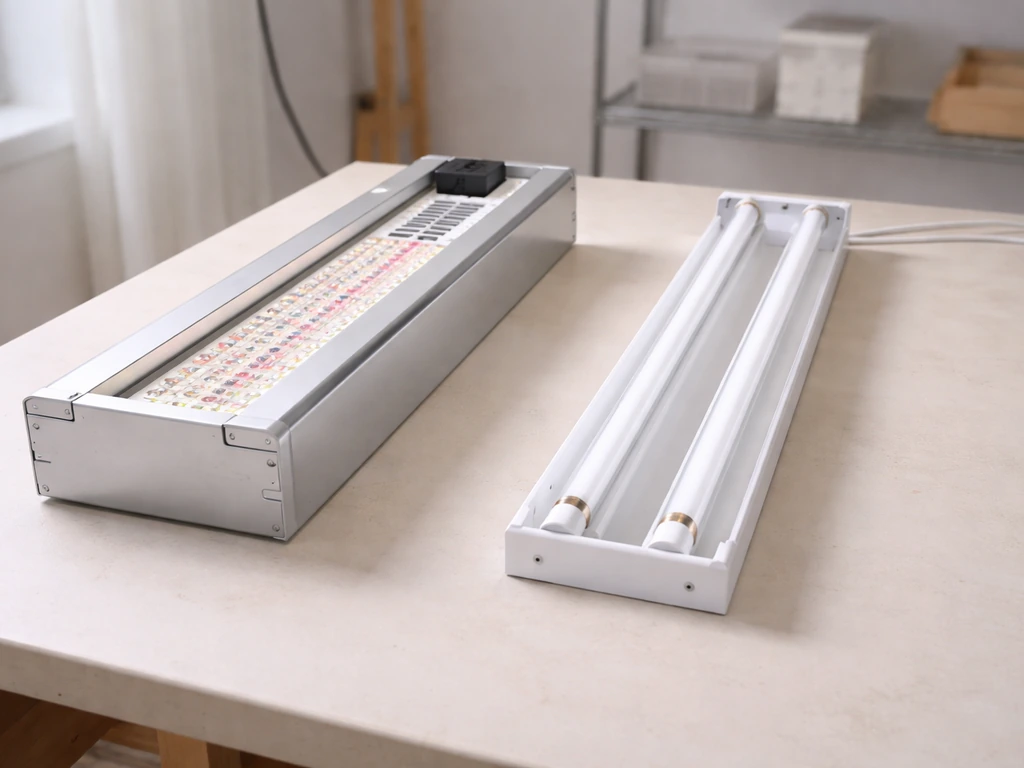
Garland Grow Light Gardens sit in a niche that is harder to evaluate than a standalone grow light because you are paying for a complete system (tray, housing, lighting, and sometimes accessories) rather than just a light. If you already have a propagation shelf and trays, you are paying for convenience and aesthetics as much as performance.
Compared to a bare T5 fluorescent tube fixture or an entry-level LED bar, the Garland system costs more per watt of output. What you get in return is a tidy, countertop-friendly package that does not look out of place in a kitchen or living room, a known UK brand with domestic-market customer support, a 12-month guarantee, and a 30-day return window direct from Garland Products (refund minus carriage for change of mind; full refund including carriage if the item arrives faulty, provided you notify them of damage within 3 days of delivery). For a gift purchase or a first-time grower who wants a plug-and-play experience, that package has real value.
For a grower who is already comfortable sourcing components, a comparable or better light intensity over the same tray footprint can be achieved for less money with a standalone LED panel or bar. Brands like Bloom Plus, BriIgnite, and others in this space offer higher PPFD outputs with more transparent specs for similar or lower prices. If you are evaluating the Bloom Plus Plus grow light options as an alternative to Garland, look for a focused review that compares PPFD and mounting flexibility directly. The trade-off is that those are raw lights that need mounting, timers, and their own tray setup. If simplicity and aesthetics matter to you, Garland's system cost makes more sense.
Choosing the right Garland model for your grow space
The most common mistake buyers make is picking the wrong model for their actual grow space and plant goals. Here is a practical way to think through it.
Tray size and coverage area
Each Garland Grow Light Garden unit is designed for one tray. The tray that ships with the G139 covers a standard UK seed tray footprint. If you need to cover more than one tray simultaneously, you need multiple units or a different product. Do not try to position one Garland unit over a wider propagation area: the light falls off sharply at the edges of the tray footprint and plants further than 25 to 30cm from directly below the tubes will not get enough intensity.
Mounting height and plant stage
The High-Rise LED model gives you the most height flexibility: 10cm at the lowest for dense seedling trays, up to 47cm for taller plants. The Micro tops out at 38cm from the base. For germination, start with the canopy as close as possible (10 to 15cm). As seedlings develop true leaves, raise it to 15 to 20cm from the leaf canopy. For herbs you are growing long-term in the unit, 15 to 20cm above the plant tops is a reasonable operating height.
Matching the model to your goal
- Starting seeds before transplanting outdoors: Micro Grow Light Garden is adequate and the most compact option
- Growing herbs and salad leaves on a kitchen counter through winter: G139 (48W) gives more intensity over the tray and handles ongoing growth better than the Micro
- Larger seedling batches or taller propagation work: High-Rise LED is the better pick given the height range
- Flowering crops or plants that will live in the unit long-term at fruiting stage: look at a different product category entirely; Garland units are propagation and veg-phase tools
Common mistakes and what to watch for before ordering
A few things trip buyers up with Garland grow lights specifically, and they are worth knowing in advance.
- Confusing 'full spectrum' with broad-spectrum LED: Garland's fluorescent models use 6400K tubes. That is a single color temperature, not a multi-band LED spectrum. It works well for veg and seedlings but 'full spectrum' in the marketing copy overstates the breadth of wavelength coverage compared to a true broad-spectrum LED.
- Expecting PPFD data that does not exist: Garland does not publish photon flux density maps for their units. You cannot directly compare them to LED panels on PPFD per watt. Buy on the basis of their intended use case (seedlings, herbs) rather than trying to benchmark against horticultural LEDs.
- Using the capillary mat without monitoring airflow: the self-watering accessory is convenient but creates a humid microclimate. Damping-off is a real risk with small seedlings in enclosed trays. Water manually if you notice condensation building up or if you are germinating seeds prone to fungal rot.
- Assuming one unit covers a large shelf: these are single-tray products. The footprint is small by design.
- Overlooking the return window on damage: if your unit arrives with damage, you need to notify Garland within 3 days of delivery to be covered. Do not leave it a week before checking the product.
- Not checking bulb availability before buying the fluorescent models: the Sunblaster T5 tubes used in Garland units are a specific size and wattage. Before committing, confirm you can source replacement bulbs in the UK at a reasonable price so you are not stuck when the originals reach end-of-life at the 10,000-hour mark.
Overall, a Garland Grow Light Garden earns its place on a windowsill or propagation bench for the specific task of getting seedlings and herbs through the dark months. It is a complete, tidy package with genuine UK customer support and a sensible return policy. It is not a replacement for a purpose-built LED grow light if you are running larger grows, trying to flower fruiting plants indoors, or want the kind of measurable PPFD output that lets you dial in light intensity precisely. An blank" rel="noopener noreferrer">assembly instructions PDF for the High-Rise LED Light Garden is available from Greenhouse Sensation, and it can be cited for setup or installation details. If you are comparing it against other compact grow-light systems from brands like Kukuppo, Updayday, or others in the entry-level space, the Garland's main differentiator is the integrated tray-and-canopy system rather than raw light performance. If you are also considering Updayday options, this Updayday grow light review will help you compare spectrum, brightness, and real-world results. If you are also looking at a Kukuppo setup, a quick kukuppo grow light review will help you compare light output and build quality side by side. For most home seed-starters in the UK, the G139 or the High-Rise LED is the practical choice, and either one will outperform a windowsill in February.
FAQ
Can Garland Grow Light Gardens replace a dedicated light for indoor flowering and fruiting?
Not really. The integrated system is built around propagation and leafy growth with a 6400K cool spectrum. Even if the listing mentions out-of-season flowering, a 6400K-dominant output is not what reliably triggers fruiting, so expect only modest results unless you add a warmer/broader grow bar for that stage.
What’s the safest way to use the capillary mat accessory without getting damping-off?
Yes, but only if you stay close to the canopy and manage airflow. Use the canopy height guidance (start at roughly 10 to 15cm for germination, then move up as seedlings develop) and place a small fan to reduce damping-off risk, especially if you’re using the capillary mat.
How many Garland units do I need for a full propagation shelf?
Look at the tray count first. Each unit is intended for a single standard tray footprint, and edges fall off quickly. If you want full coverage for a 60 x 60cm shelf, plan on multiple units or switching to a different light category with a larger effective footprint.
My seedlings look floppy, what should I check first, spectrum or distance?
The easiest way to prevent weak, floppy seedlings is to reduce the canopy-to-leaf distance and avoid overwatering. If leaves look stretched even though the lamp is on for hours, measure the actual height of the canopy relative to the plant top, then lower it within the model’s range.
Do I need to run it all day, and should I use a timer?
For the fluorescent models, you can expect warmup to be fairly quick, but you still benefit from consistent timing. Use a timer and target typical seed-start cycles (often 14 to 18 hours for many vegetables), then adjust based on plant response rather than changing bulb height daily.
How can I confirm light intensity since there’s no PPFD information?
Garland does not publish PPFD maps, so you cannot “dial in” an exact target the way you can with more spec-transparent LEDs. If you have a PPFD meter, you can verify intensity at your canopy height, but without one, treat the built-in footprint and height settings as the limiting factor.
What canopy height works best for keeping herbs compact?
For herbs long-term in the unit, 15 to 20cm above plant tops is a practical starting point. If stems start to stretch, lower the canopy rather than assuming the solution is longer runtime, since distance changes intensity dramatically on T5 setups.
Does the canopy height adjustment range change how well it works with different plant sizes?
Yes, and it changes things more than people expect. If you set the tray lower or higher than intended, the light intensity drops off quickly at the edges, and the system can become less effective than you think. Reconfirm the canopy height at the final plant size, not at purchase.
How do I manage humidity and watering schedules in a self-contained tray system?
More growth usually means higher humidity and more frequent watering, which increases the risk of fungal issues in a semi-enclosed tray. Consider adding gentle airflow and avoid leaving the mat full for extended periods beyond what the plants actually need.
When is it better to skip Garland and choose a different type of grow light?
If your goal is measurable, stage-specific flowering performance, Garland’s cool spectrum plus single-tray footprint is usually the wrong tool. For flowering-focused setups, you’ll typically get better results by pairing a warmer-spectrum grow light with a separate propagation solution, or by buying a broader-spectrum LED with published PPFD.