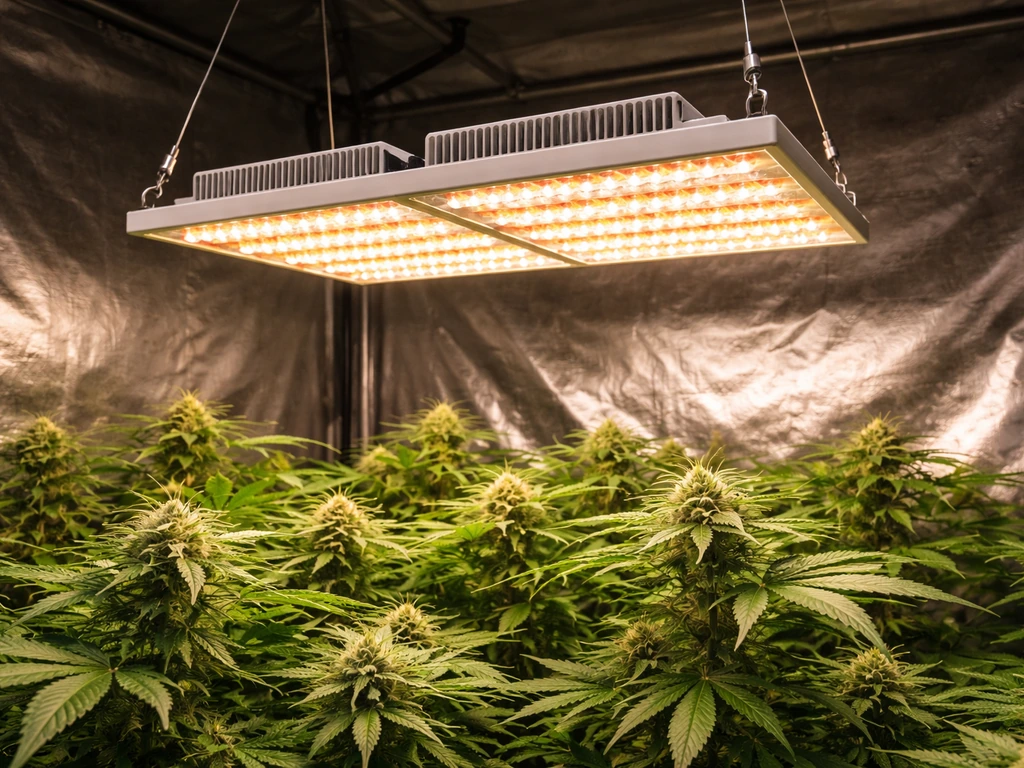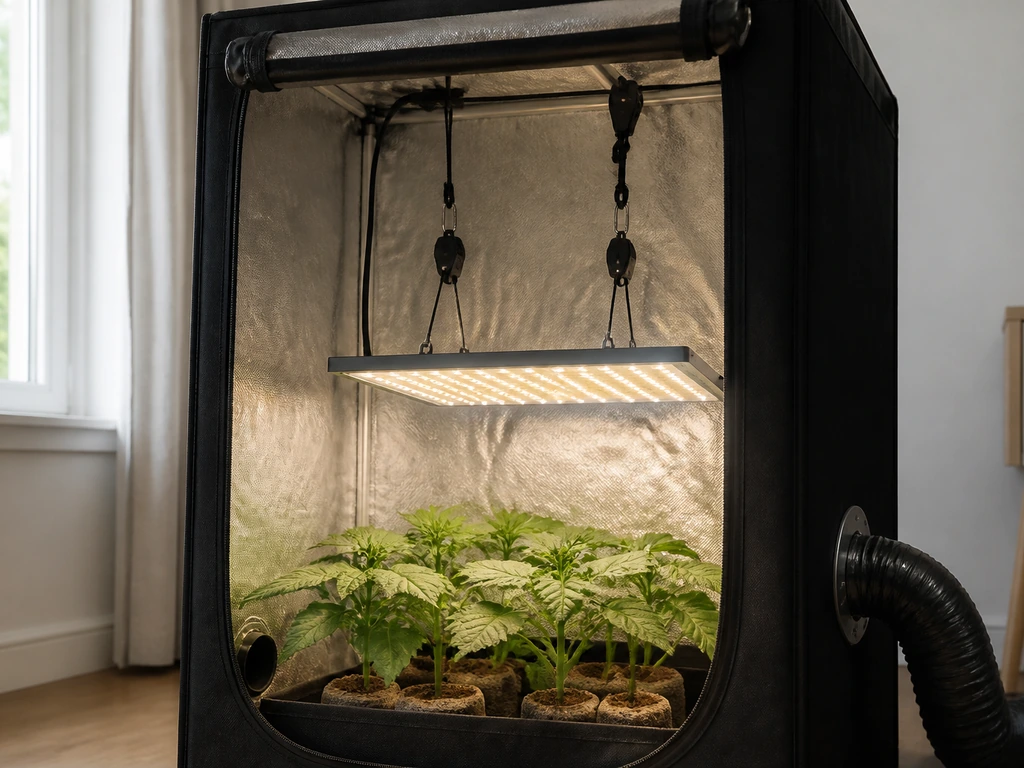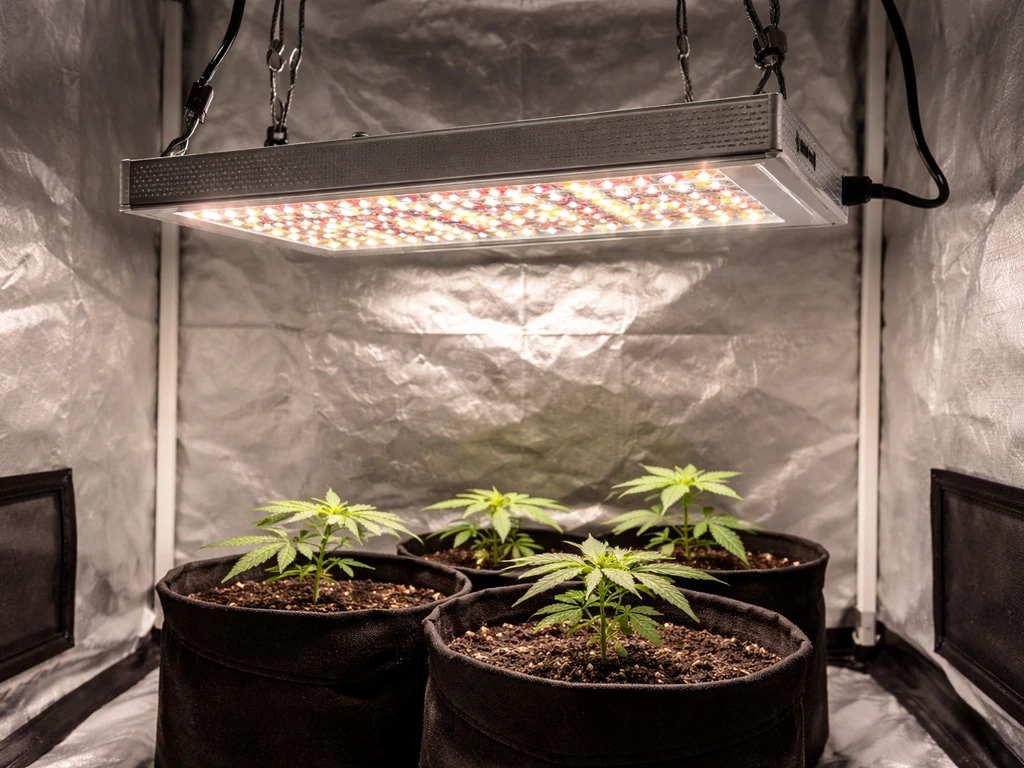
The Spider Farmer SF-1000 is a solid 100W LED grow light that genuinely earns its reputation for small-space growing. If you're running a 2x2 ft tent for flowering or a 3x3 ft space for veg, it delivers reliable full-spectrum output, runs cool enough to touch on the back panel, and backs everything up with a 5-year warranty. It's not the highest-output light on the market, and it won't fill a 4x4 tent properly, but for its intended use case it's hard to fault at its price point.
Spider Farmer SF1000 LED Grow Light Review: Worth It?

Marcus Caldwell
26 Apr 2026
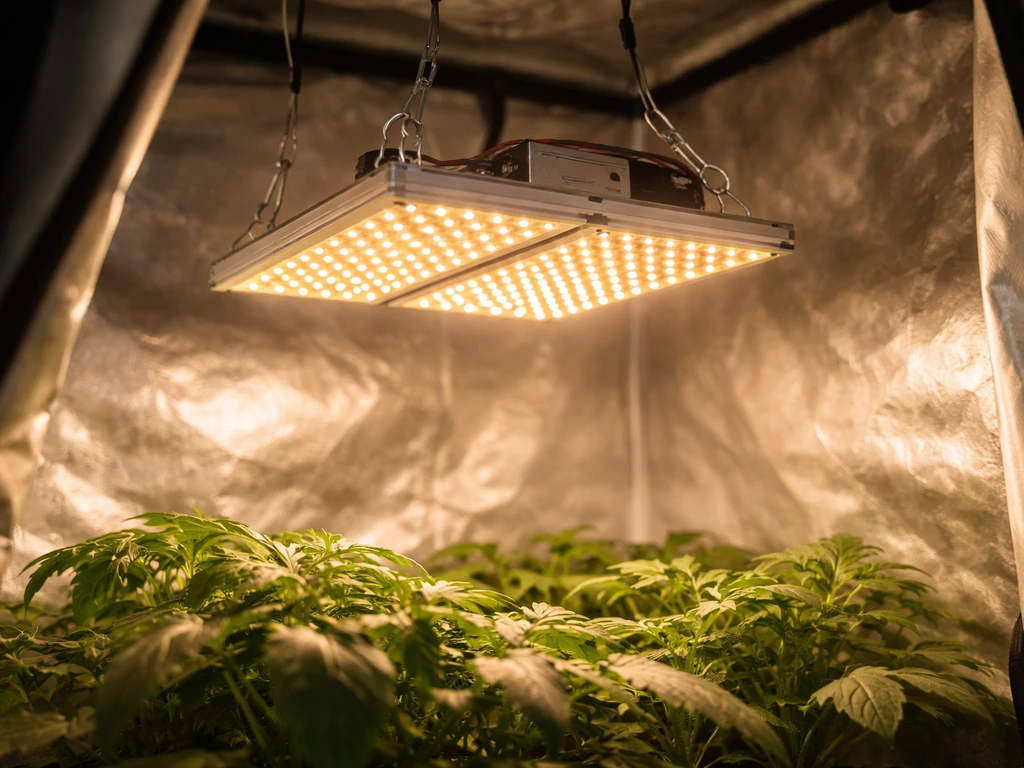
Quick recommendation: is the SF-1000 worth buying?
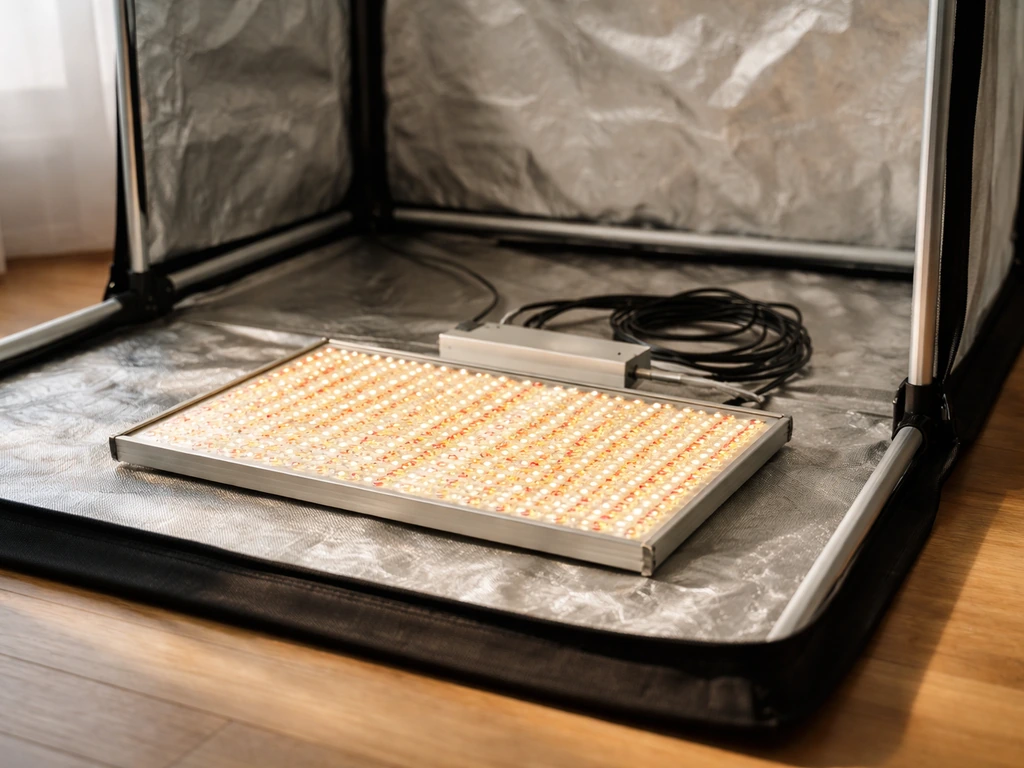
Yes, with caveats. The SF-1000 is one of the most competent entry-level grow lights in the under-$150 bracket, and it makes sense for hobbyists starting out with a small tent, a mother plant setup, or a dedicated seedling and clone space. The 5-year warranty removes a lot of the risk that usually comes with budget-tier LEDs. Where it falls short is raw canopy coverage for serious flowering runs: if you're expecting it to push heavy yields across a full 3x3 during flower, you'll want either a bigger light or a second unit. For the grower it's actually designed for, though, the SF-1000 is genuinely worth the money.
Key specs and features at a glance
Before getting into performance, here's what the SF-1000 actually is on paper. Spider Farmer has refreshed this model for 2026, so double-check you're looking at the current version if you're comparing prices across retailers.
| Spec | SF-1000 (2026 Version) |
|---|---|
| True power draw | 100W (±5%) @ AC100–277V |
| Intended coverage | 2×2 ft (flowering) / 3×3 ft (vegetative) |
| LED type | Samsung LM301B / LM301H diodes (full spectrum) |
| Driver | Meanwell driver (dimmable on standard SF-1000) |
| Dimming | Yes, via dimmer knob (note: SF-1000D variant has no dimming box or daisy chain) |
| Daisy chain | Available on standard SF-1000; absent on SF-1000D variant |
| Spectrum | Full spectrum (3000K + 5000K + 660nm + IR 760nm) |
| Warranty | 5 years limited |
| Input voltage | AC100V–277V (universal) |
One thing worth flagging immediately: there are two versions floating around, the standard SF-1000 and the SF-1000D. The D variant does not have a dimming box and does not support daisy chaining. If you plan to link multiple lights or want manual dimming control, confirm which version you're ordering before you buy.
Light performance and coverage in real use
Output and efficiency
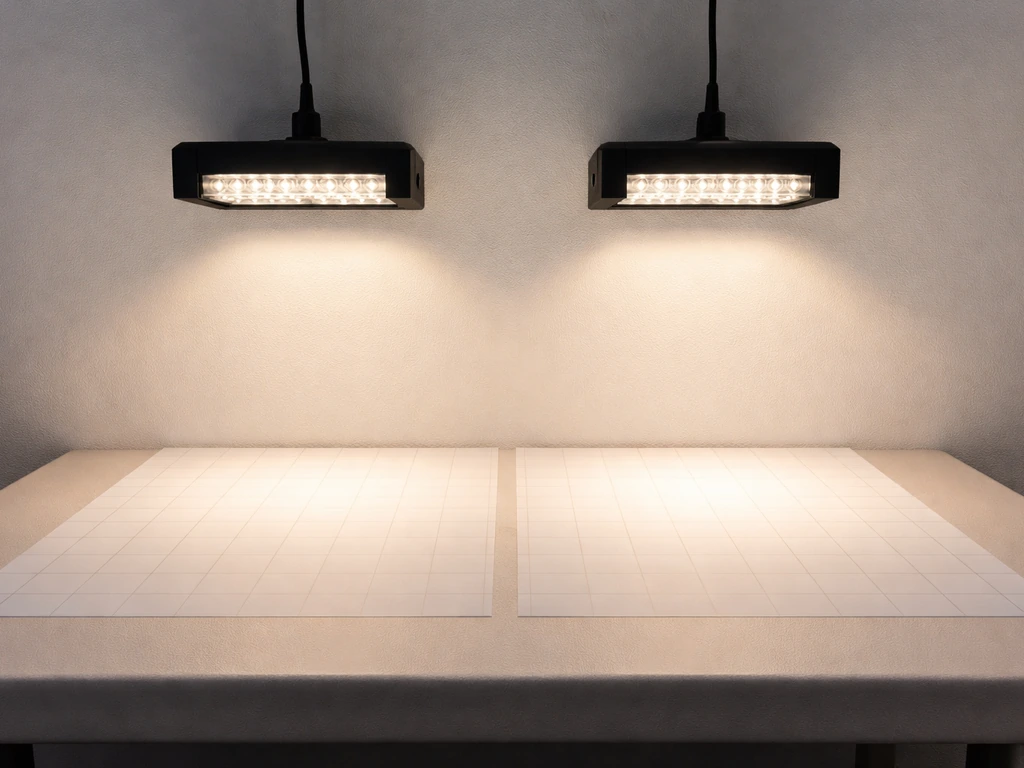
At 100W true draw, the SF-1000 isn't trying to pretend it's something it isn't. Spider Farmer rates efficiency in the range of 2.7 umol/J on newer builds using the LM301H diodes, which is competitive for this wattage class. In practical terms, you're getting a photon output that's appropriate for the 2x2 ft flowering footprint the light is designed around. Push it out to a 3x3 for flowering and the center will be fine but the corners will be noticeably dimmer, which is expected and honest for a 100W unit.
Uniformity and coverage
Uniformity is where a lot of affordable LED panels fall apart, and the SF-1000 does reasonably well within its intended zone. Hanging it at the right height is critical: at 18 inches above canopy during veg, the spread across a 3x3 is acceptable for leafy greens, herbs, and mother plants. For flowering in a 2x2, dropping it to around 12 to 16 inches tightens the intensity right where you need it. The center hotspot isn't extreme, but growers who measure with a par meter will notice the edges of a 3x3 are getting roughly 60 to 70% of the center reading during flower, which is why Spider Farmer correctly calls the 2x2 the flowering coverage and 3x3 the veg coverage.
Recommended hanging heights by growth stage
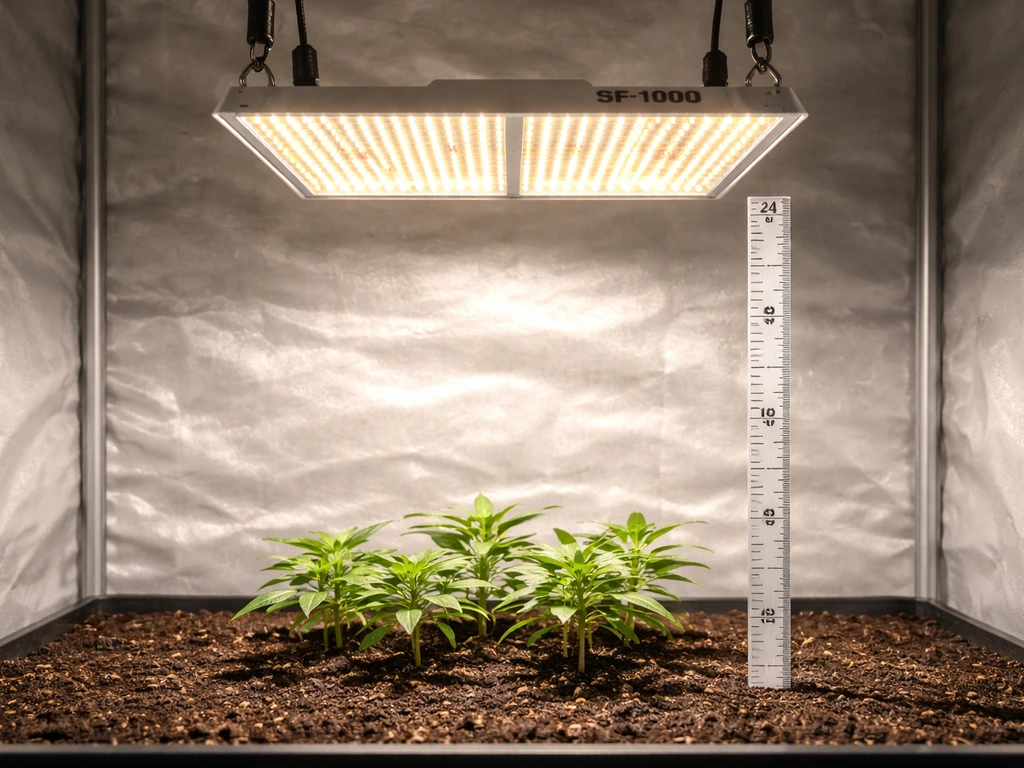
| Growth Stage | Recommended Hanging Height | Notes |
|---|---|---|
| Germination / Seedling | 24–30 inches | Lower intensity needed; watch for stretching |
| Vegetative | 18–24 inches | Full 3×3 ft spread at this range |
| Flowering | 12–18 inches | Best used over 2×2 ft canopy |
| Clones / Propagation | 24–30 inches | Keep dimmed or at max height to prevent stress |
The user manual also notes a temperature threshold consideration: if your tent runs hot (above 85°F / 30°C), raise the light rather than relying on the dimmer alone. The Spider Farmer SF-series user manual also provides lighting guideline hanging distances by growth stage, including specific target ranges Recommended hanging heights by growth stage. Thermal stress on plants is a more immediate problem than slightly lower light intensity at that point.
Spectrum and which plants and stages it suits best
The SF-1000 uses a mixed-bin full-spectrum approach: blank" rel="noopener noreferrer">3000K diodes for warm red tones that support flowering and fruiting, 5000K for the blue-white output that drives vegetative growth, and dedicated 660nm red and 760nm infrared diodes layered in. This combination means you don't need to switch lights between veg and flower, which is one of the things that makes it practical for small setups where you're running one tent through the whole cycle.
In practical terms, the spectrum works well for a wide range of plants. Herbs like basil and mint do very well under it. Leafy greens thrive. Cannabis growers running small personal grows report good vegetative stretch and decent bud development, though maximizing flower density in a 2x2 will depend heavily on your strain, environment, and training technique, not just the light. The IR component at 760nm stimulates the Emerson enhancement effect, which can marginally improve photosynthetic efficiency near the end of the light cycle.
- Herbs (basil, mint, cilantro): excellent, handles full cycle
- Leafy greens (lettuce, spinach, kale): excellent for veg-only grows
- Tomatoes and peppers (small varieties): good for veg, adequate for fruiting in 2×2
- Cannabis: good for personal/hobby scale in 2×2 flower or 3×3 veg
- Seedlings and clones: very well suited when dimmed and hung high
- Orchids and houseplants: works well, especially with dimmer dialed back
Build quality, thermals, and day-to-day experience
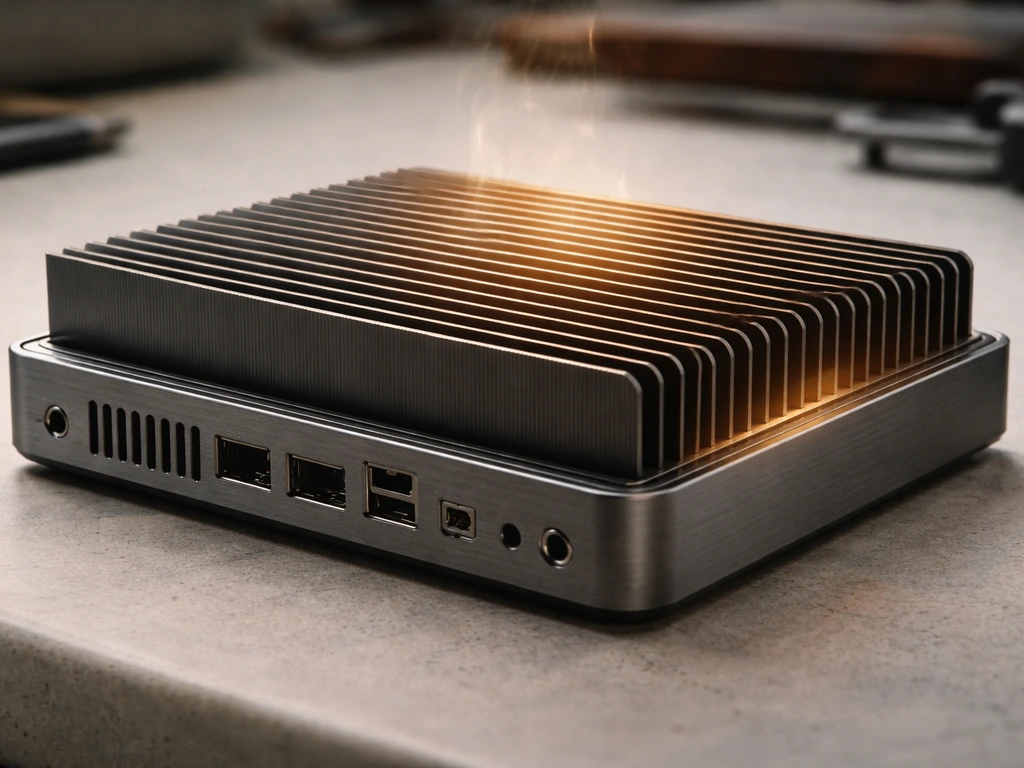
The SF-1000 is fanless, which is one of its most practically appealing features. There are no moving parts to wear out, no fan bearings to fail after 18 months, and no additional noise in your grow space beyond whatever ventilation you're already running. The heat is managed entirely through the aluminum heatsink, which runs warm to the touch under full power but never alarmingly hot. In a well-ventilated tent, it's a non-issue.
Build quality is above what you'd expect at this price. The board feels solid, the diodes are securely mounted, and the Meanwell driver (on the standard version) is a proven component that's used in commercial lighting applications. The power cable and connector are straightforward. The hanging hardware is basic but functional: ratchet hangers are included, which saves you from that minor first-day annoyance. The light itself feels denser and better-constructed than comparable units in the same wattage class from lesser-known brands.
Long-term reliability is hard to fully verify in a single review cycle, but the 5-year warranty is a meaningful signal. Spider Farmer has been honoring warranties without excessive friction based on community feedback, which matters more than specs for a lot of buyers. Diode degradation (lumen maintenance) is rated to LM80 testing standards on the Samsung diodes, typically 36,000 hours or more to L70, meaning you're unlikely to see significant output drop within the usable life of a hobby grow setup.
Installation, setup, and getting the most out of your grow space
Setup is genuinely easy. The SF-1000 ships with everything you need: the light, ratchet hangers, a power cord, and a basic instruction card. You hang it, plug it in, and adjust the dimmer if your version has one. There's no app, no Bluetooth pairing, no driver configuration. For most hobbyists that's a feature, not a limitation.
- Mount the ratchet hangers to your tent's top bar, centered over the canopy.
- Clip the SF-1000 to the hangers and set initial height at 24 inches for seedlings or 18 inches for established veg plants.
- Plug into a standard outlet (100–277V universal input, so no adapter needed).
- If your unit has a dimmer, start at 75% for the first week to let young plants acclimate.
- Lower the light gradually as plants develop, targeting the hanging heights in the table above.
- If daisy chaining a second unit (standard SF-1000 only), connect the secondary light before powering on.
- Check canopy temperature at plant level: aim for 75–82°F. If it's higher, raise the light before adjusting the dimmer.
For a 2x2 tent, the SF-1000 is essentially a drop-in solution. For a 3x3 tent used for veg, it works but you'll get better results if you supplement with a small side light or a reflective lining to bounce edge light back toward the canopy. Don't try to flower a 3x3 with a single SF-1000 if you're expecting heavy production, the intensity just isn't there at the edges.
Value and how it compares to other grow lights
The SF-1000 sits in an interesting spot in the market. It's priced competitively against budget options from lesser-known brands, but it's built and backed like a product that costs more. The Samsung diodes and Meanwell driver are the same components you'll find in lights that cost significantly more, which is part of why the SF-1000 has held its reputation for several years through multiple minor revisions.
Where it becomes a trickier choice is when you compare it against slightly larger Spider Farmer models or competitors in the 200W to 300W class. The VS2000 and VS4000, for example, are designed for growers who need more canopy coverage and are willing to spend more to get it. If you're weighing the VS series for a bigger footprint, this vs4000 led grow light review can help you gauge real coverage and performance. If you're specifically considering the VS1000, this article is a solid starting point for a vs1000 led grow light review focused on coverage and real-world performance. If you're already thinking about a 3x3 or 4x4 flowering tent, those options are worth looking at closely rather than trying to stretch the SF-1000 beyond what it's built for. Similarly, the VS1000 competes directly with the SF-1000 at a similar wattage, with a slightly different LED configuration, and is worth comparing if you're deciding between Spider Farmer's own lineup.
| Grower Profile | SF-1000 a Good Fit? | Consider Instead |
|---|---|---|
| First-time grower, 2×2 ft tent | Yes, ideal | Nothing at this size beats the value |
| Seedling / clone / propagation station | Yes, excellent | Could overkill with something larger |
| Hobby herb or greens grower, 2×2–3×3 | Yes, strong fit | SF-1000 is more than enough |
| Cannabis flower, 2×2 ft (1–2 plants) | Yes, works well | Maximize with LST/SCROG training |
| Cannabis flower, 3×3 ft (3–4 plants) | Partial, not ideal | VS2000 or similar 200W+ unit |
| 4×4 or larger tent, full flower cycle | No | VS4000 or dedicated higher-wattage light |
| Commercial or production grow | No | Purpose-built commercial fixtures |
One thing worth saying plainly: the SF-1000 is not a replacement for a 200W or 300W light in a larger space, regardless of what any retailer listing implies. The watts and coverage numbers matter, and 100W has a ceiling. Within that ceiling, the SF-1000 performs as well as anything in its class.
The bottom line
If your grow space is 2x2 ft for flowering or 3x3 ft for veg, the SF-1000 is a confident recommendation. This spydr led grow light review covers how the SPYDR model compares for coverage, spectrum, and value. The Samsung diode array, Meanwell driver, fanless design, and 5-year warranty give it a durability and performance profile that punches above its price. The spectrum is genuinely full and useful across all stages, the setup is painless, and the silence (no fan) is a real quality-of-life win. Just be honest with yourself about your actual footprint before buying: if you're already thinking bigger, look at the higher-wattage options in Spider Farmer's lineup or compare against the VS series before committing. But for the grower who knows they're running small, the SF-1000 is one of the most sensible purchases in the entry-level LED segment right now.
FAQ
Can I use the Spider Farmer SF-1000 in a 3x3 tent for flowering and still get good results?
The SF-1000 is most consistently effective when you plan around it as a 2x2 flowering light. If you want to run a 3x3 through flower, budget for either two lights positioned with overlapping coverage or accept that the corners will run meaningfully dimmer, which usually leads to slower bud development at the edges.
Should I dim the SF-1000 for heat, or raise the light when my tent runs hot?
If your SF-1000 version has the dimming box, use it for intensity control, but do not treat dimming as your primary heat strategy. The manual guidance in your setup conditions matters, if the tent is above about 85°F (30°C), raising the light is the safer lever because thermal stress can reduce plant performance faster than a modest light reduction.
What should I check to avoid mistakes when buying the SF-1000 versus the SF-1000D?
Confirm whether you bought the standard SF-1000 or the SF-1000D, because the D version cannot be daisy chained and lacks the dimming box. If you intended to run multiple units from one control point, ordering the wrong variant can force you into a separate plug and manual adjustment per light.
Does the fanless design mean I can skip ventilation and still grow well?
With the SF-1000 being fanless, you still need to control airflow for plant health. Use your existing exhaust and circulating fans to prevent hot spots under the canopy, because a fanless fixture can still create localized warmth that affects leaf temperature, especially in dense canopies or warm rooms.
Will the SF-1000 work as a one-light solution from seedling to flower, without swapping anything?
Yes, you can rely on it as a single fixture across the full cycle because the spectrum includes warm red, blue-white, and added 660nm plus 760nm components. The practical caveat is that your training and canopy management affect how much light the plants actually receive, so even with a good spectrum, poor canopy uniformity can limit yield.
How should I set intensity for seedlings and clones with the SF-1000?
A dimmer exists only on the standard SF-1000, not the SF-1000D. If you have the standard unit, start at full power for seedlings is usually too much, even if the spectrum is gentle, so begin lower and confirm leaf response and distance-based intensity over a week rather than trying to fine-tune everything in one day.
Without a PAR meter, how do I know the SF-1000 hanging height is correct?
If you do not use a PAR meter, the simplest decision aid is to base your plan on tent footprint and height targets described for the SF-1000, roughly 12 to 16 inches for flowering in a 2x2, and around 18 inches for veg spread in a 3x3. If you can measure, aim to reduce edge underperformance by keeping your canopy level and using consistent hanging height adjustments.
What should I do to protect my warranty with the SF-1000?
The warranty is a strong reason to buy from a legitimate retailer, but warranty outcomes can still depend on proof of purchase and whether the unit was used within its intended electrical and environment conditions. Keep your receipt and avoid operating in overly humid or water-exposed setups, because electronics warranty claims can be rejected if there is evidence of moisture damage.
What’s the most common mistake people make when they buy the SF-1000?
For the SF-1000’s power class, the biggest mistake is trying to force it into roles meant for 200W to 300W lights in larger tents. If you want dense, even flowering across a full 3x3 or 4x4, step up to a higher-wattage model or add a second unit, rather than assuming training alone can compensate for edge intensity limits.
When using the SF-1000 in a 3x3 for veg, is supplemental lighting actually necessary?
If you already have reflective lining in a 3x3 veg setup, adding a small side light can help, but it is usually not required for veg if your goal is leafy growth rather than maximum uniformity for dense colas. Prioritize canopy leveling and stable light height first, then decide on supplemental lighting based on how noticeably dim the canopy edges look.