Double-ended grow lights are HID fixtures where the bulb has electrical contacts on both ends instead of a single screw-in base. That design detail changes quite a bit about how the light performs, how you install it, and whether it's actually worth the money for your setup. If you're trying to figure out which DE grow light to buy, or whether to bother with DE at all versus a modern LED, this guide covers exactly that: what DE lights are, honest pros and cons, how we test and compare them, and specific recommendations by use case and tent size.
Double Ended Grow Lights Review: Best Picks and Buying Guide

Marcus Caldwell
30 Apr 2026
What double-ended grow lights are and how they work
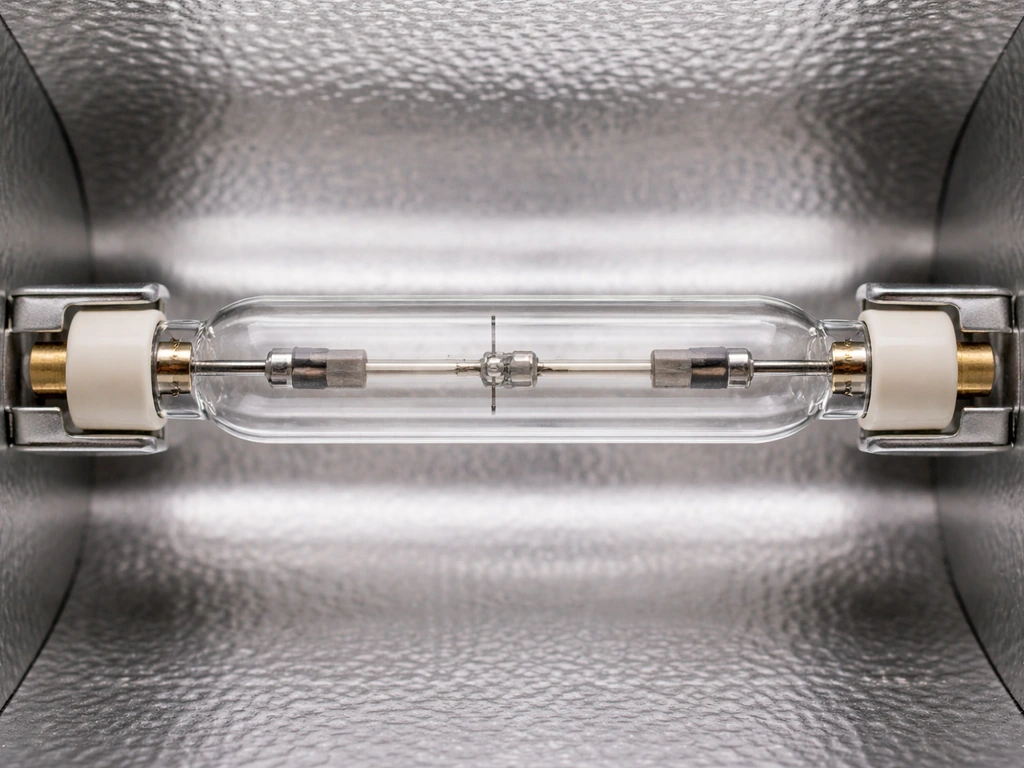
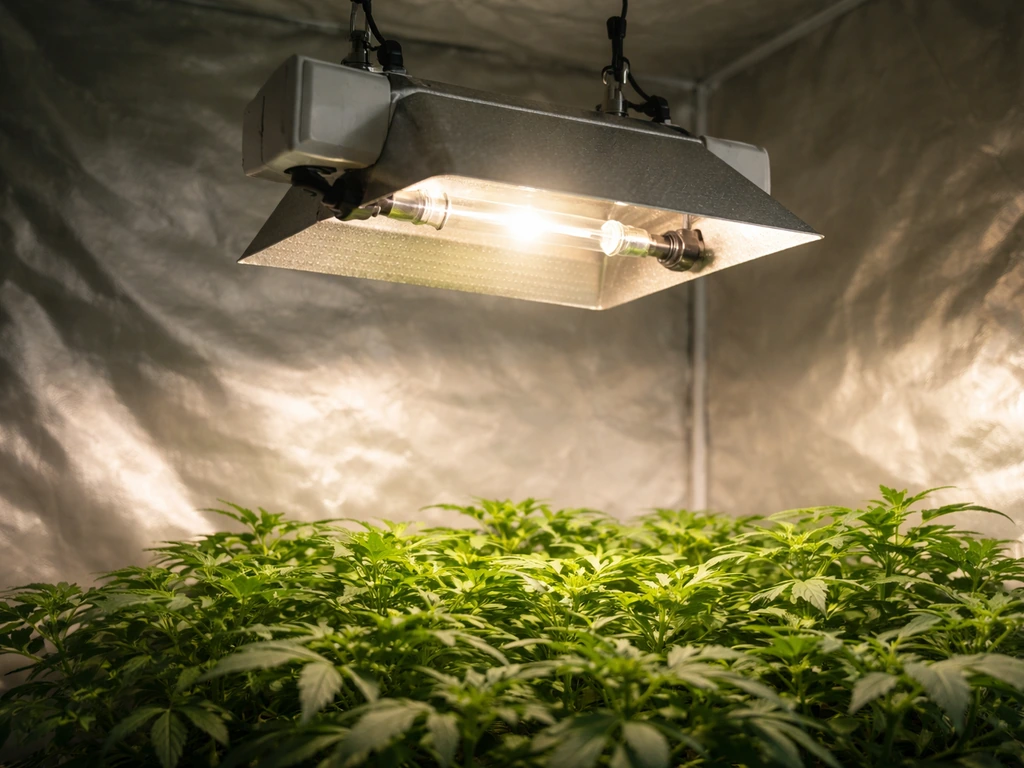
A double-ended (DE) grow light is a High Intensity Discharge (HID) fixture where the lamp connects to the reflector housing at both ends of the bulb rather than just one. Standard single-ended (SE) HID bulbs have a single screw-in or plug-in base at one end, similar to a household bulb. DE bulbs look more like a long glass tube with a metal pin or contact at each tip. You seat both ends into the reflector's DE sockets, which locks the lamp into a fixed horizontal position.
This matters because the horizontal, dual-contact mounting keeps the arc tube stable, reduces vibration-related wear, and allows the optics of the reflector to be designed around a consistent lamp position. The result is more predictable light distribution and, in practice, better coverage uniformity across your canopy than you typically get from a vertically-mounted SE bulb in a wing-style reflector.
DE fixtures are most commonly available in HPS (High Pressure Sodium), MH (Metal Halide), and CMH/LEC (Ceramic Metal Halide) versions. The 1000W DE HPS is the most widely used configuration, though 315W DE CMH has become a popular mid-power option. Regardless of wattage or lamp type, all DE systems share one non-negotiable requirement: the ballast, reflector, and lamp must all be matched to each other. A DE-specific ballast is required.
You cannot run a DE lamp on a standard SE ballast. The Phantom Commercial DE 1000W ballast, for example, is engineered specifically to drive double-ended 1000W HPS lamps, and the reflector kit that pairs with it is likewise designed for that lamp geometry. Mixing components from different systems is how you damage ballasts and shorten lamp life.
Installation is also different from SE lights. You don't just screw the bulb in. You slide the lamp into both sockets simultaneously with the correct orientation, ensuring the contacts seat properly. Hydrobuilder's setup instructions explicitly flag that DE HID lights require special care during installation, and that's not exaggerating. A partially seated lamp can arc incorrectly and cause premature failure or worse.
Are double-ended grow lights actually better?
The honest answer is: better in some ways, not better in others, and increasingly outcompeted by LEDs in terms of efficiency and operating cost. Here's how they stack up in practice.
Where DE lights have a real edge
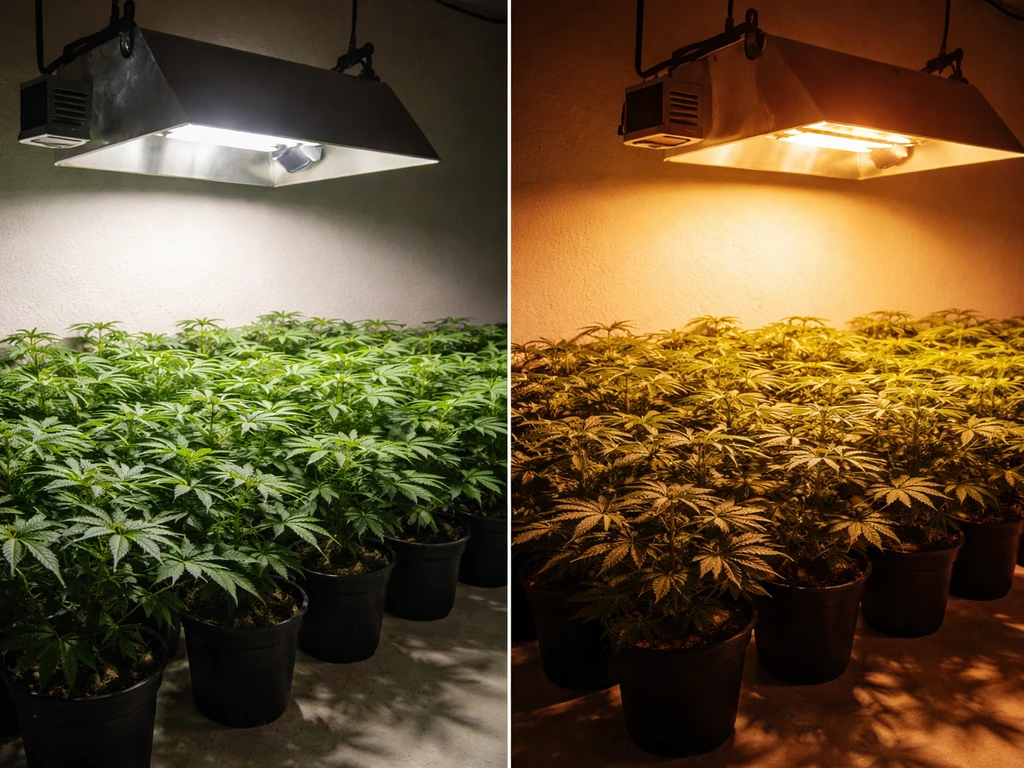
- Higher intensity per watt than single-ended HPS at the same wattage, partly due to the stable lamp position and more efficient reflector geometry
- Better coverage uniformity than SE wing-reflector setups, especially at wider tent footprints
- DE CMH and DE HPS lamps maintain their output longer before degrading, meaning you're changing bulbs less often compared to older SE HID technology
- Mature, well-understood technology with predictable flowering results, particularly with DE HPS for high-light crops
- 315W DE CMH delivers a full-spectrum output that's genuinely useful through both veg and bloom without switching bulbs
Where DE lights fall short
- Significant heat output: a 1000W DE HPS in an enclosed tent without active cooling will cook your plants, period
- Higher electricity cost than modern LED quantum boards at similar PPFD output
- System cost is higher than it appears once you add a DE ballast, DE reflector, and DE lamp separately
- Compatibility requirements are strict and unforgiving: one wrong component purchase and you're returning parts
- Ballasts add complexity and failure points compared to LED drivers
- Requires electrical access at 240V or 277V for some ballasts (like the ILUMINAR 1000W DE CMH, which runs at 208-277V), which isn't available in every grow room without an electrician
Compared to modern LED grow lights, DE HID loses the efficiency argument. A quality LED quantum board can deliver similar PPFD to a DE 1000W HPS at roughly half the wattage draw. For hobbyists growing in small tents, that difference in electricity cost adds up fast. Where DE lights still make sense is for commercial-scale operators who already have the infrastructure (high-voltage circuits, active cooling, HVAC) and want proven, high-output intensity for large flowering canopies. At that scale, the upfront cost per watt and the familiarity of HID growing protocols can outweigh the efficiency gap.
How we evaluate double-ended grow lights
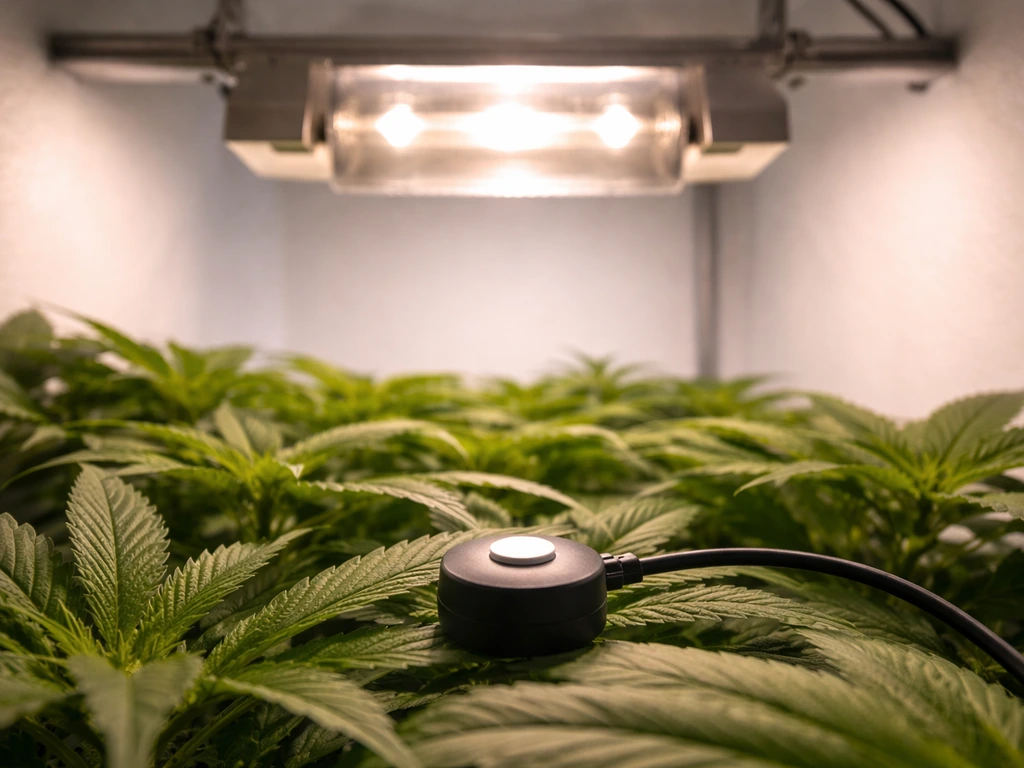
Before recommending anything, it's worth being upfront about how DE systems get tested, because the numbers vary a lot depending on how the test is set up. The core metric is PPFD (Photosynthetic Photon Flux Density), measured in micromoles per square meter per second (µmol/m²/s). For a fair comparison, you need to hold constant the hanging height, the reflector, the ballast, and the measurement grid size. GrowersHouse's lamp comparison testing for 315W CMH is a good model for this: they isolate variables so that only the lamp changes, which gives you a meaningful output comparison rather than one muddied by a different ballast or reflector.
For field testing, we follow a protocol that sets hanging height so the maximum PPFD reading in the test area lands in the 950 to 1,000 µmol/m²/s range before mapping the full canopy. This is the same methodology used by rigorous independent testers in the hobby space. After fixing height, we take a 9-point or 25-point grid of readings across the target footprint and calculate average PPFD and uniformity. Uniformity matters because a hot-spot reading in the center means nothing if your corners are getting half that intensity.
For DE CMH systems specifically, published test data gives you a concrete benchmark. The HI-PAR 315W Dynamic DE Control Kit reports an average PPFD of 596 µmol/m²/s across its test footprint. The Eye Hortilux CMH 315 system publishes similar PPFD averages on their spec sheet. When evaluating any DE fixture, we compare against published benchmarks like these and look at: average PPFD across the full footprint, uniformity percentage, efficacy in µmol/J (how efficient the fixture is at converting watts to usable light), heat output, and total system cost including ballast and lamp.
One thing to watch: edge readings will always be lower than center readings, and the larger your test area and the higher your hanging height, the more pronounced that drop-off becomes. Don't compare a manufacturer's cherry-picked center reading to a competitor's full-canopy average and assume you're comparing apples to apples.
Best double-ended grow lights by use case
The right DE fixture depends on your growth stage, your tent footprint, and your ventilation situation. Here are the top picks organized by how you're actually growing.
Best for seedlings and clones
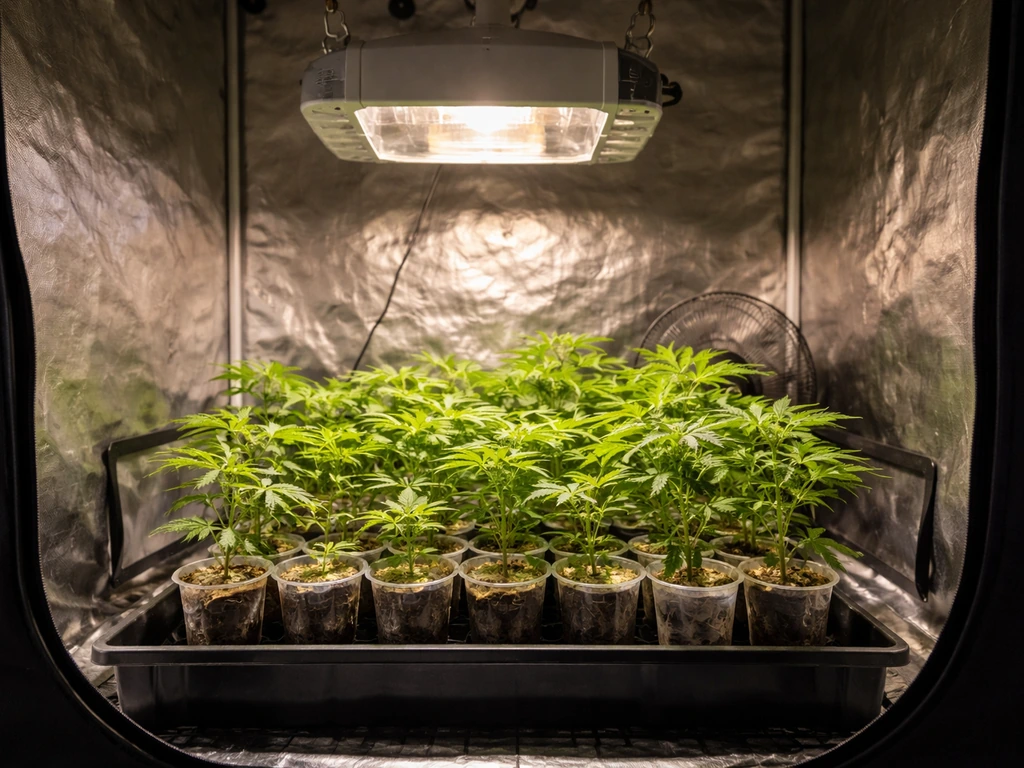
DE grow lights are generally overkill for seedlings. Clones and germinating seeds need much lower PPFD (100 to 300 µmol/m²/s), and running a 315W or 1000W DE system at low height or high power to hit those numbers is wasteful. If you're exclusively propagating, a T5 fluorescent or small LED bar light is more appropriate. That said, if you already own a 315W DE CMH, you can run it at maximum hanging height (around 30 to 36 inches above the canopy) to reduce intensity to a seedling-safe range. Just don't buy a DE system specifically for cloning.
Best for vegetative growth (2x2 to 4x4 tents)
The 315W DE CMH is the strongest choice here. CMH lamps produce a broad, full-spectrum output that's particularly good during veg because it includes useful blue wavelengths without requiring a separate MH bulb. The Dimlux 315W CMH, for example, specifies a maximum coverage area of around 10.76 square feet (roughly a 3x3 footprint) and a minimum of about 4.5 square feet for more intensive cultivation. For a 4x4 tent, you'd either push the reflector height higher to spread light more, accept lower edge intensity, or pair two 315W units. The HI-PAR 315W Dynamic DE Control Kit is another strong option at this wattage, with that reported 596 µmol/m²/s average PPFD benchmark.
Best for flowering (4x4 to 5x5 tents)
This is where DE HPS makes its strongest case. A 1000W DE HPS system like the Phantom DE 1000W setup (ballast plus DE reflector plus a premium European DE HPS lamp) delivers the high-intensity, red-heavy spectrum that flowering plants respond to. For a 4x4 to 5x5 tent footprint, a single 1000W DE HPS run at the right height will hit flowering-appropriate PPFD targets across most of the canopy. Heat management is non-negotiable at this wattage: you need active exhaust, ideally a cool-tube or air-cooled hood reflector, and intake air that keeps canopy temps below 85°F.
Best for larger rooms (5x5 and beyond)
For a 1000W DE HPS covering larger than a 5x5, you're likely to see significant uniformity drop-off at the edges. The better approach at this scale is multiple 1000W DE units or a shift to the 1000W DE CMH format. The ILUMINAR 1000W DE CMH is built for commercial environments and runs at 208-277V, which means it's designed for the kind of electrical infrastructure serious grow rooms have. If you're considering this fixture, plan your circuit requirements before purchasing.
Value comparison: wattage, spectrum, and efficiency side by side
| Fixture type | Wattage | Best use | Typical coverage | Avg PPFD benchmark | Key advantage | Key limitation |
|---|---|---|---|---|---|---|
| DE CMH 315W (e.g. HI-PAR, Dimlux) | 315W | Veg, early bloom | Up to ~10 sq ft | ~596 µmol/m²/s | Full spectrum, lower heat than DE HPS | Small footprint, high cost per watt vs LED |
| DE HPS 1000W (e.g. Phantom DE) | 1000W | Heavy flowering | 4x4 to 5x5 | High intensity (fixture-specific) | Peak bloom output, proven results | Significant heat, high electricity draw |
| DE CMH 1000W (e.g. ILUMINAR) | 1000W | Commercial flowering | 5x5 and larger | High, manufacturer-specific | Broad spectrum at high wattage | Requires 208-277V, expensive system cost |
| LED quantum board (comparable) | 500-650W | Veg and bloom | 4x4 to 5x5 | 800-1000+ µmol/m²/s | Low heat, high efficiency | Higher upfront cost, less proven in some bloom scenarios |
The LED column is included here because it's the honest comparison. A 500 to 650W LED quantum board from a reputable brand will cover a similar 4x4 to 5x5 footprint as a 1000W DE HPS, at roughly half the electricity cost, with far less heat to manage. If you're building a new setup today and don't already have DE infrastructure, LED is the stronger value play for most hobbyists. DE systems make more sense if you already own the ballast and reflector, if you're growing at commercial scale where initial cost per square foot matters more, or if your grow room is already built around HID infrastructure.
For smaller setups in the 2x4 to 3x3 range, DE CMH at 315W competes more closely with LEDs because the heat differential is smaller and the system cost is more manageable. If you're comparing options in that power class, reviewing LED-based alternatives alongside a 315W DE CMH is worth the time before committing.
If you want a practical starting point, a Mars 2 LED grow light review can help you compare real-world performance against a 315W DE CMH setup reviewing LED-based alternatives alongside a 315W DE CMH. If you are comparing results, a great value 2 foot grow light review can help you benchmark output and efficiency for small indoor setups 315W DE CMH.
If you are trying to narrow choices like the best 315W DE option, reading feit electric grow light reviews can help you compare real-world performance claims 315W DE CMH.
Buying checklist before you order a DE grow light
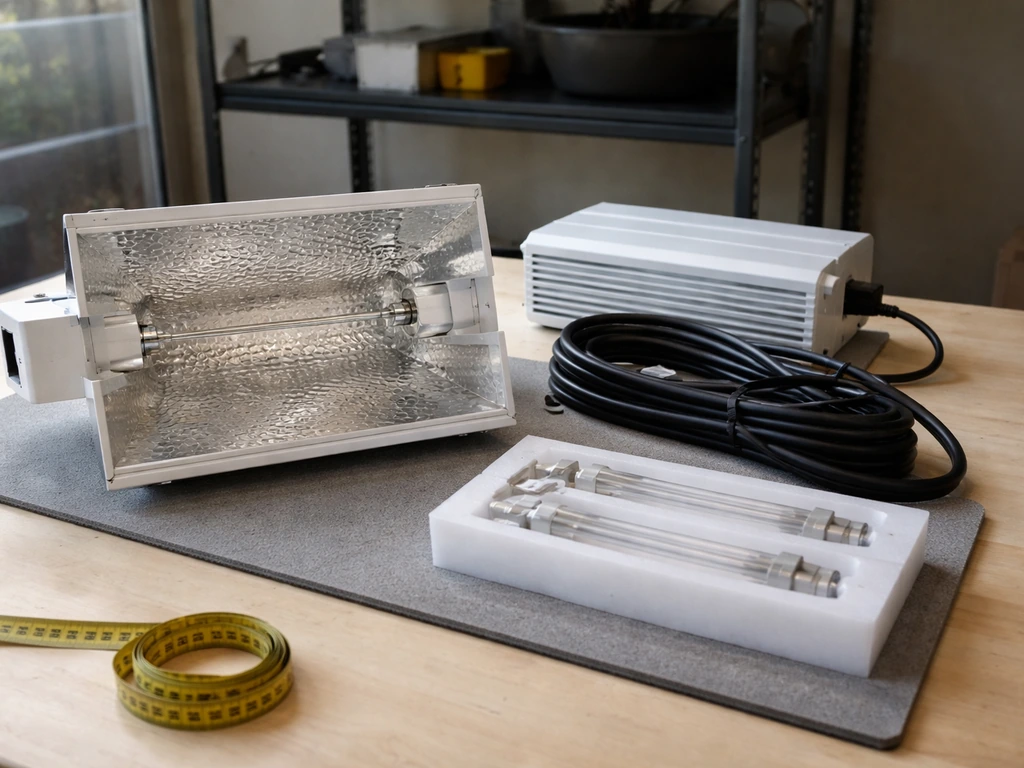
DE systems have more purchasing pitfalls than plug-and-play LEDs. Go through this list before you buy.
Sizing and coverage
- Match fixture wattage to your actual footprint, not the manufacturer's maximum claimed coverage (maximum numbers are usually optimistic)
- For a 4x4 flowering tent, a 1000W DE HPS is appropriate; for a 3x3 veg tent, a 315W DE CMH is the right scale
- Use a PPFD calculator (Hydrobuilder's coverage and PPFD calculator is useful here) to verify your target intensity at your planned hanging height before buying
- If your footprint is larger than 5x5, plan for multiple fixtures rather than trying to stretch one unit
Mounting height and space
- DE reflectors are wider and heavier than SE fixtures; verify your tent's hanging rail or rope ratchet system can handle the weight
- Leave at least 18 to 24 inches of clearance between the DE reflector and your tent ceiling to allow heat to dissipate
- At 1000W DE HPS, canopy distance during bloom should typically be 18 to 30 inches depending on ventilation; less distance with inadequate cooling causes light burn and heat stress
- Hanging height affects both intensity and uniformity: too high reduces PPFD at the canopy, too low creates hot spots
Compatibility
- Confirm that your ballast, reflector, and lamp are all DE-compatible and from matched system components; a DE lamp will not work in an SE ballast
- Check voltage requirements before purchasing: some DE ballasts like the ILUMINAR 1000W DE CMH require 208-277V, which is not standard residential voltage in North America
- Look for systems sold as complete kits (ballast plus reflector plus lamp) to avoid compatibility guesswork
- If buying lamp replacements separately, verify the wattage and lamp type exactly matches what your ballast is rated to drive
Safety
- Look for UL or ETL listing on the ballast and fixture; DE HID systems operate at high wattage and unlisted electronics in a humid environment are a real fire risk
- Do not touch DE lamps with bare hands; oils from skin degrade the glass and can cause hot spots or cracking during operation
- Ensure your circuit can handle the load: a 1000W DE system draws around 9 to 10 amps at 120V or about 4.5 amps at 240V, and that's before your fans and other equipment
- Use proper strain relief and waterproof connections if running any wiring near irrigation
Common purchasing mistakes
- Buying a DE ballast and a standard SE reflector, or vice versa, and then discovering they're incompatible after delivery
- Underestimating heat: many first-time DE buyers don't add enough exhaust capacity and cook their plants in the first week
- Comparing manufacturer center-point PPFD numbers to full-canopy average PPFD from a competitor's independent test; these are not the same metric
- Buying a 1000W DE HPS for a 2x2 or 3x3 tent where it's complete overkill and impossible to cool effectively
- Skipping the lamp budget: a quality European DE HPS lamp replacement adds real cost to the total system price and needs to happen every 1 to 2 years depending on run hours
- Not checking ceiling height in your grow space; a DE reflector plus 24 inches of canopy clearance plus plant height can exceed a standard basement or closet ceiling
FAQ
Can I mix a double-ended lamp from one brand with the ballast and reflector from another?
Yes, but only if the DE lamp and the ballast are designed to work together, and the reflector is matched to that lamp’s geometry. A common mistake is assuming “all DE is the same” and swapping to a different brand or wattage. Even within the same nominal wattage, differences in arc design can change heat and electrical characteristics, reducing life or causing ballast issues.
Are double-ended grow lights dimmable like LEDs?
You generally cannot dim DE fixtures the same way people dim LEDs. Many DE ballasts are not designed for user-level power modulation, and running a lamp outside its intended operating conditions can shorten lamp life. If you need less intensity, the safer approach is to raise hanging height, adjust your light schedule, or use a fixture built with true dimming control.
Why do manufacturer PPFD numbers look better than what I see in my grow?
Aim for the measurement method the article describes, not the “center PPFD” numbers you see on marketing sheets. Edges drop off, and DE optics can show stronger center-to-corner variation depending on reflector and hanging height. For buying decisions, compare average PPFD across a footprint and the reported uniformity percentage.
What electrical requirements should I check before buying a DE HID setup?
It depends on the ballast type and how it is wired. Some DE setups require specific voltage ranges and proper circuit wiring, and certain commercial systems operate on higher-voltage inputs. Before buying, confirm your available electrical service matches the fixture’s ballast requirements, then verify you have the correct breaker size and safe wiring for the total system draw.
If I already own a 315W DE CMH, is it safe to use it for clones and seedlings?
For seedlings and clones, DE HID is usually inefficient because it is hard to get low, stable PPFD without either excessive power or unsafe hanging heights. A practical workaround, if you already own the system, is running the 315W DE CMH higher in the canopy (rather than buying a DE unit specifically for propagation). For new installs, using a purpose-built low-intensity light for veg and early growth is typically a better efficiency choice.
Do double-ended HID lamps maintain the same PPFD over time?
HIDs also change output over time, so your “height set once, forget it” assumption is risky. Lamps age and PPFD can drift downward, even if the fixture still turns on normally. If you care about uniformity, re-check hanging height and output periodically, and replace lamps on a schedule based on hours rather than waiting for obvious symptoms.
What are the most common installation mistakes that reduce performance or shorten DE lamp life?
Mounting height and reflector fit matter as much as wattage. If the reflector kit is not installed correctly, or the DE lamp is not fully seated and oriented in both sockets, you can get uneven distribution or premature failure. Before testing canopy performance, confirm the reflector is level, fans are unobstructed, and the lamp contacts are fully seated.
How do I size ventilation for a 1000W DE HPS so I don’t cook the canopy?
It’s not just heat removal from the light housing. You need to keep canopy temperatures in range and maintain adequate airflow across the grow space, especially during flowering. If you underestimate exhaust capacity or restrict intake air, you can end up with correct PPFD but poor plant performance due to heat stress.
What should I do if I want to cover a larger space than a single DE HPS footprint?
If you are planning to cover beyond about a 5x5 with a single 1000W DE unit, expect more edge drop-off and lower uniformity. The buying decision is usually either add additional fixtures to maintain coverage or choose a format intended for larger areas, like multiple smaller DE units or a higher-coverage option designed for commercial rooms. Using one large fixture when you need uniform corners is a common disappointment.
How can I compare total cost of ownership between DE HID and LEDs fairly?
Yes, but do it by comparing system-level cost and not just the lamp price. Include ballast and electrical cost, replacement lamp intervals, and cooling infrastructure (ducting, fans, controllers). LEDs often win on operating cost and heat management, while DE can still make sense if you already own the HID infrastructure and you value high flowering intensity per fixture.