Lee Valley's grow lights are a practical, no-fuss option for hobbyist indoor gardeners, particularly if you're already buying from them for woodworking or gardening supplies and want a tidy all-in-one setup. The full-spectrum LED bars (12W, 24W, and 48W) are well-suited to seed starting, herb growing, and leafy greens at close range, while the three-tier grow-light stand (PK453) adds a bloom/propagation mode and built-in timer that makes it genuinely beginner-friendly. They're not performance powerhouses, and if you're trying to flower fruiting plants under them alone, you'll hit their ceiling fast. But for what they're designed to do, they're honest, well-built products.
Lee Valley Grow Light Review: Specs, PPFD Tests, Worth It?

Marcus Caldwell
11 May 2026
What Lee Valley actually sells: models and specs
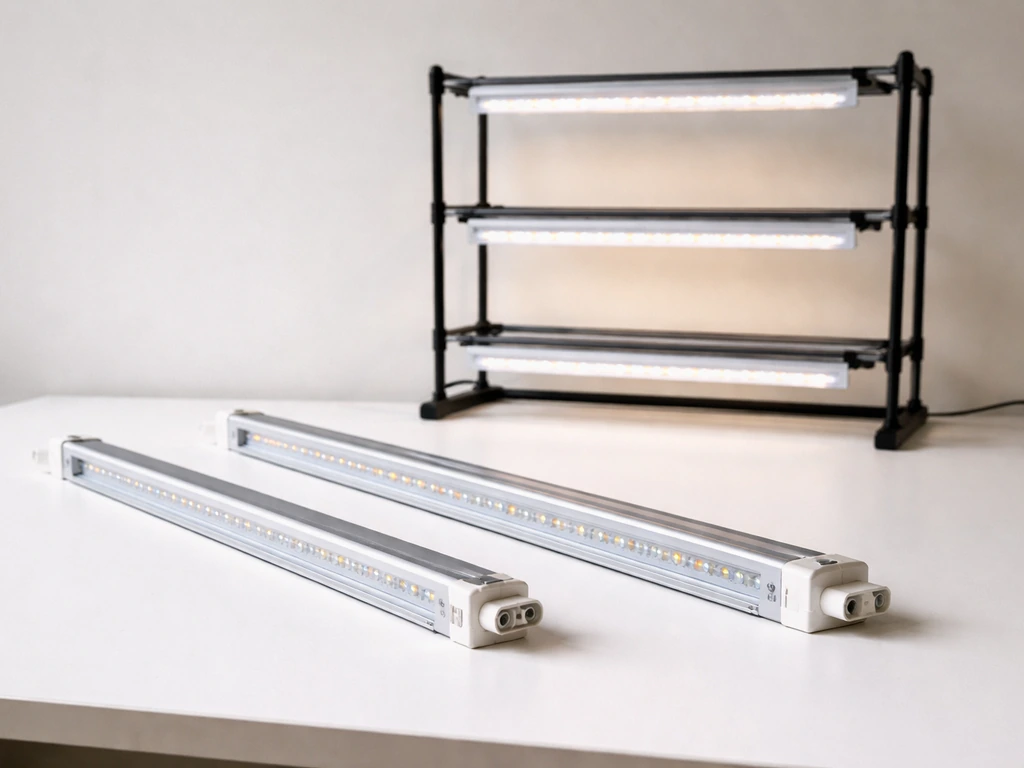
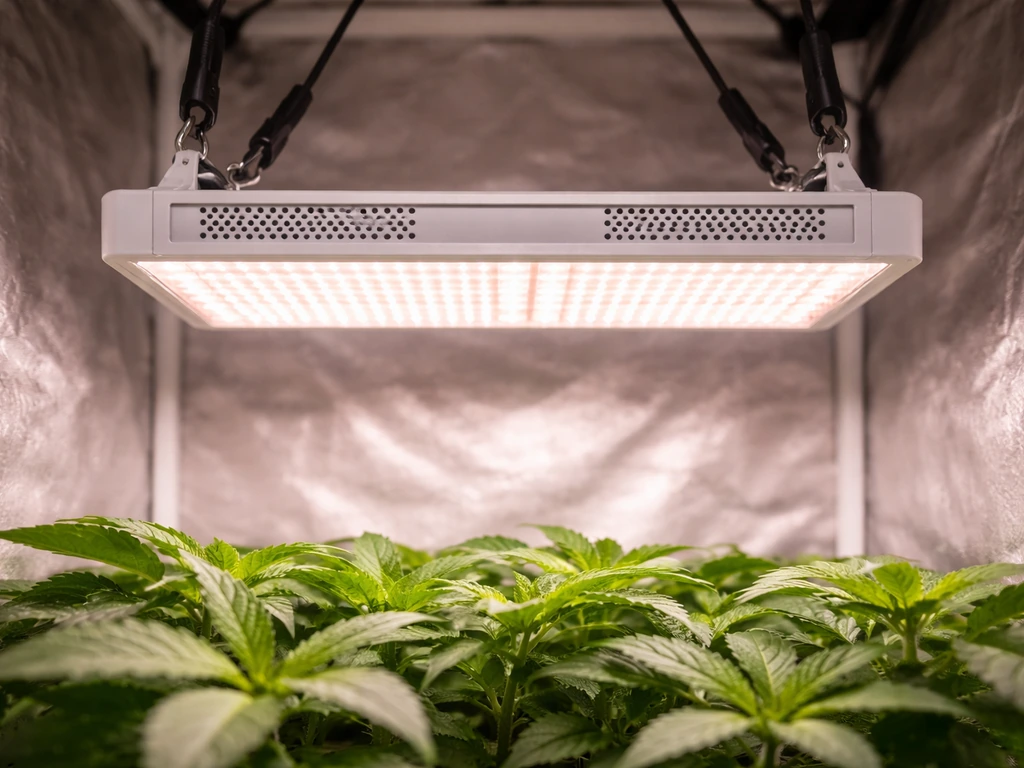
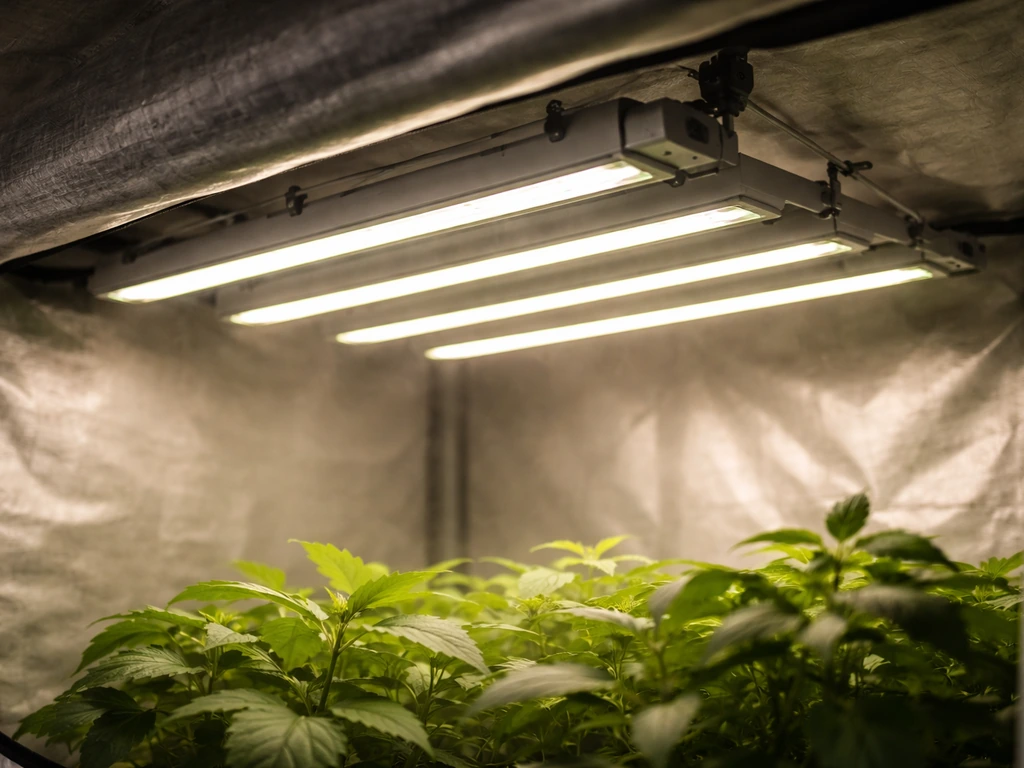
Lee Valley offers two distinct grow light product lines. The first is a set of linkable full-spectrum LED bars in three sizes: the 12" bar (SKU PK538) at 12W, the 24" bar (SKU PK541) at 24W, and the 48" bar (SKU PK542) at 48W. All three run at 6400K color temperature and are designed to be daisy-chained from a single power cord. You can link up to 5 of the 12" units, 10 of the 24" units, or 8 of the 48" units together, which gives you some flexibility when covering longer shelving runs.
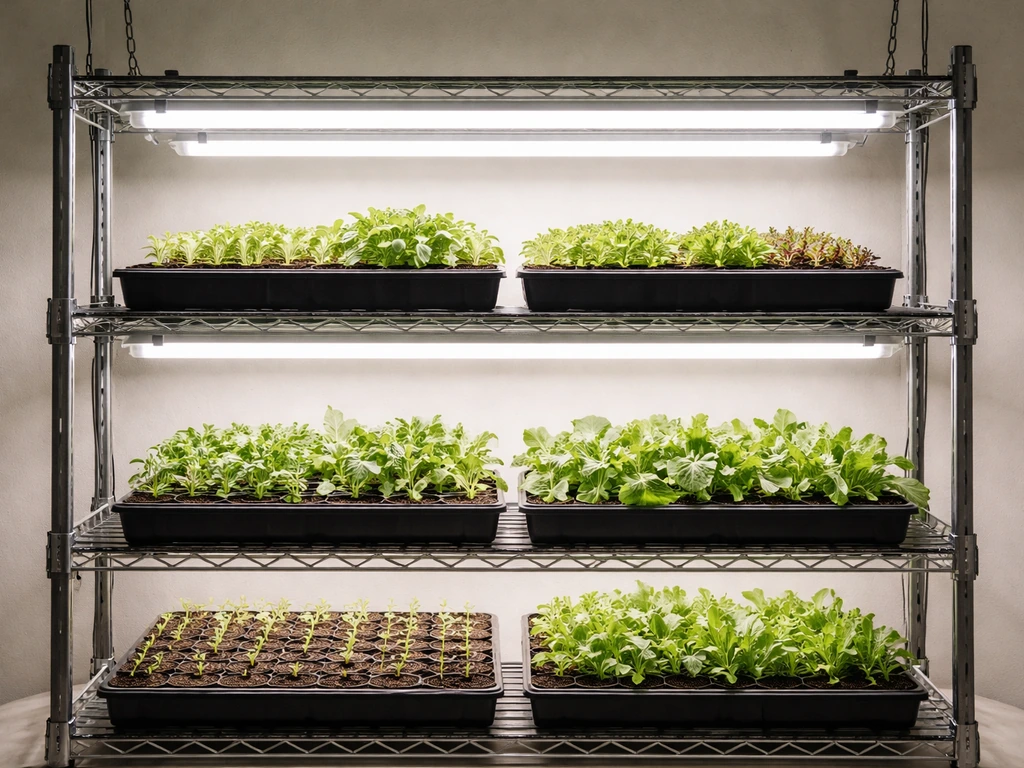
The second product is the three-tier LED grow-light stand (SKU PK453), which is a complete system: a 24" wide by 12" deep by 60" tall powder-coated steel frame with stainless-steel hardware, three adjustable tiers each with integrated LEDs, and a single control unit. That controller handles two lighting modes (a blue-weighted propagation mode and a red-enhanced bloom mode) plus a timer that runs on 8-, 12-, or 16-hour cycles.
The LED height on each tier adjusts through six notched positions, ranging from 6. 5" to 16. 5" above the shelf surface in 2" increments. Lee Valley specifies the three-tier stand’s height adjustment range as [6.
5" to 16. 5" in 2" increments](https://www. leevalley. com/en-us/shop/garden/planting/grow-lights/118765-lee-valley-three-tier-led-large-grow-light-stand) (six positions per tier).
The stand carries a 3-year warranty, which is notably strong for this category.
| Model | SKU | Power | Color Temp | Light Modes | Linkable | Warranty |
|---|---|---|---|---|---|---|
| 12" LED Bar | PK538 | 12W | 6400K | Single (full spectrum) | Up to 5 units | Not specified |
| 24" LED Bar | PK541 | 24W | 6400K | Single (full spectrum) | Up to 10 units | Not specified |
| 48" LED Bar | PK542 | 48W | 6400K | Single (full spectrum) | Up to 8 units | Not specified |
| Three-Tier Stand | PK453 | Not published | Not published | Propagation + Bloom | N/A (standalone system) | 3 years |
Brightness and PPFD: what the numbers look like in practice
Lee Valley doesn't publish PPFD maps for any of these lights, which is the first honest limitation to flag. That means you're working from wattage, coverage claims, and color temperature rather than PAR data. Lee Valley states each bar illuminates an area about 24" wide when hung at roughly 1 foot above the canopy. For the 48W bar, that translates to a coverage footprint of approximately 24" x 48" at 12" height, which is a reasonable working area for a shelf-based setup.
At 48W over roughly 8 square feet, you're looking at about 6W per square foot, which sits in the lower range of what most indoor horticulture lighting guides recommend (10W per square foot is a common benchmark for moderate-light plants). For seedlings, herbs, lettuce, and low-light houseplants, 6W/sq ft at close range is workable. For fruiting crops or high-light plants at flowering stage, it's undersized. The 6400K temperature on the bars also skews blue-heavy, which reinforces their natural fit for vegetative growth rather than bloom triggering.
The PK453 stand's propagation mode leans into that blue emphasis further, while the bloom mode adds red wavelengths to shift the spectrum toward flowering support. Without published PPFD data it's hard to put exact numbers on the intensity difference between modes, but two-mode systems in this class typically see a 10-20% shift in spectral weighting rather than a dramatic intensity jump. Treat the bloom mode as a meaningful assist for early flowering rather than a dedicated flowering light.
Spectrum breakdown: veg, bloom, and what "full spectrum" means here
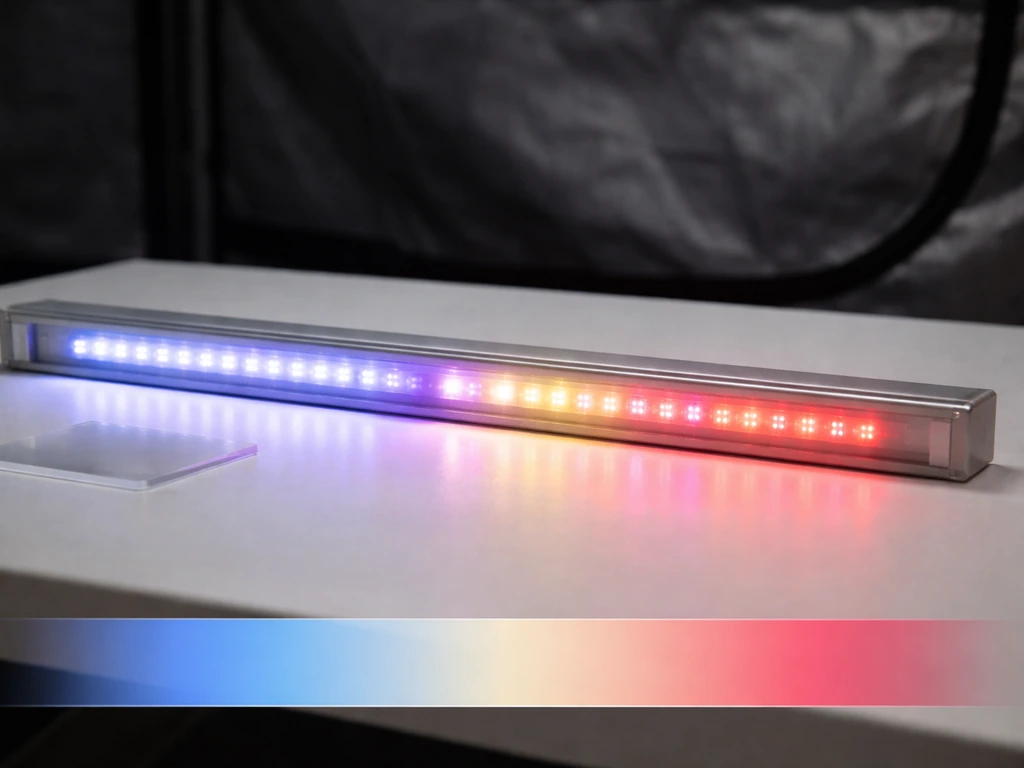
The term "full spectrum" gets applied loosely across the grow light industry, and Lee Valley's bars are a good example of why you want to look past the label. A 6400K LED is daylight-balanced, which means it covers the blue and green portions of the visible spectrum well and has a moderate red output. Plants use blue light (roughly 400-500nm) for compact, healthy vegetative growth and red light (roughly 600-700nm) as the primary driver for flowering and fruiting. A 6400K bar is biased toward the blue end, making it genuinely excellent for seedlings and leafy greens but less optimized for triggering and sustaining bloom.
The three-tier stand's dual-mode design addresses this more thoughtfully. The propagation mode amplifies blue-range output for germination and early vegetative stages, while the bloom mode shifts toward red enhancement. This isn't the same as a dedicated high-red flowering light, but it gives you a useful degree of control that the standalone bars don't offer. If you're growing plants from seed through to early flower on a single stand, the PK453's two modes let you match the light to the growth stage without swapping hardware.
Neither product includes dimming on the bar side, which is worth knowing if you're managing light-sensitive seedlings or acclimatizing cuttings. The stand's mode switching gives you some indirect intensity adjustment, but granular dimming isn't part of the Lee Valley feature set.
Coverage planning: hanging height, footprint, and spacing
The 24" coverage width at 1 foot of hanging height is Lee Valley's own published guidance, and it's a realistic figure for the center of the light pattern. In practice, light intensity falls off toward the edges of that 24" spread, so if you're growing anything that needs consistent intensity across the canopy, aim to keep your most light-hungry plants within 18" of the bar's center rather than relying on the full stated width.
For the PK453 stand, the 6.5" to 16.5" height range gives you meaningful control. Seedling trays and cuttings in propagation mode benefit from being as close as the 6.5" minimum, where intensity is highest. As plants establish and enter active vegetative growth, stepping up to the 10-12" notch positions is a reasonable middle ground. For the bloom mode, stay in the 8-12" range to keep red-range intensity effective.
- Seedlings and cuttings: 6-8" above canopy in propagation mode
- Established seedlings and early veg: 8-12" above canopy
- Leafy greens and herbs (ongoing): 10-16" depending on light tolerance
- Bloom mode for early flowering: 8-12" for best red-range delivery
- Standalone bars at shelf height: maintain 10-14" above tallest plant for even coverage
If you're running multiple linked bars over a longer shelf, space them evenly and budget for a few inches of overlap in the illuminated zones. Two 24" bars linked end-to-end over a 48" shelf will give more even coverage than a single 48" bar centered on the same shelf, simply because the light distribution from two sources at moderate spacing is more uniform than a single source at either end.
Running costs and real-world value
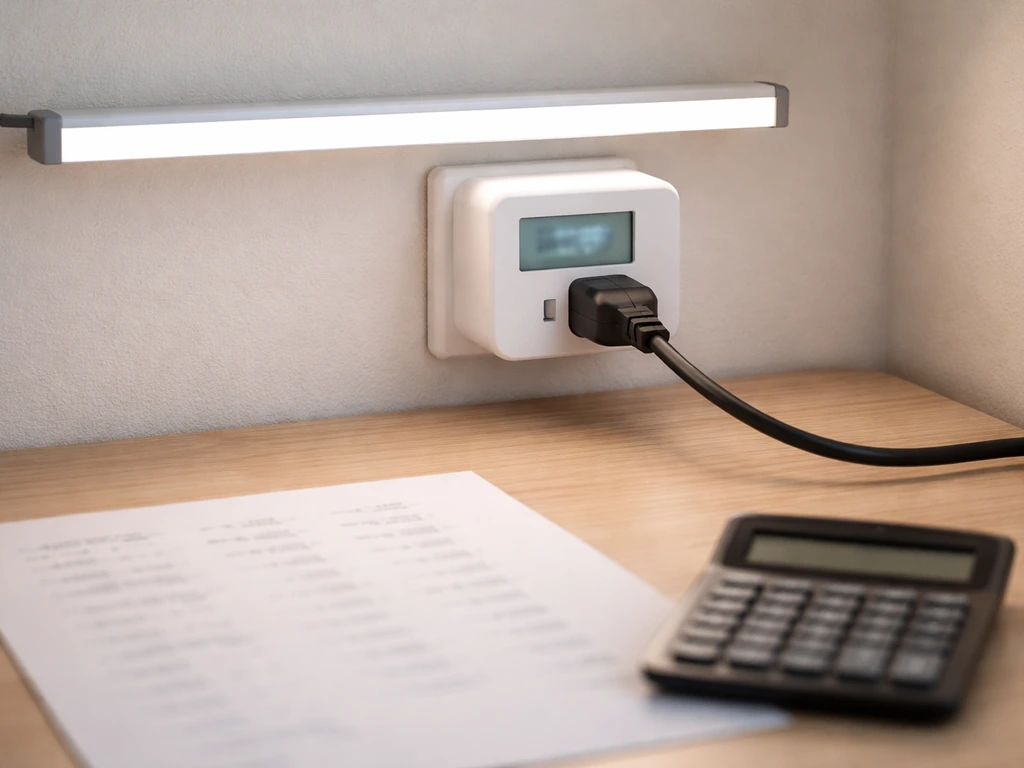
The efficiency math on these lights is straightforward. Running the 48W bar for 16 hours a day uses 768Wh, or about 0.77 kWh per day. At a typical North American electricity rate of around $0.15/kWh, that's roughly $0.12 per day or about $42 per year for a single 48W bar at maximum daily runtime. For a full linked chain of eight 48W bars (the maximum), you're looking at 384W total and around $336/year at 16 hours daily. That's the ceiling scenario; most home setups running a single bar or the stand unit will sit well under $50/year.
The PK453 stand's wattage isn't published, which makes exact cost projections harder. Based on the footprint (three tiers, each 24" x 12") and the power levels typical of comparable all-in-one systems in this size class, a reasonable estimate is 60-90W total, putting daily operating cost around $0.14-$0.22 at 16-hour cycles.
Heat output is minimal with all these products. Low-wattage LED bars in the 12-48W range don't generate meaningful heat at canopy level, and the stand's integrated LEDs follow the same pattern. You don't need active cooling, and heat stress from these lights is essentially a non-issue for typical home setups. That's a genuine practical advantage over older T5 or HID setups, which added real heat management complexity.
Build quality on the stand is notably good for the price tier. Powder-coated steel with stainless hardware is durable in a humid growing environment, and the 3-year warranty backs that up with real coverage. The bars are more utilitarian but feel solid enough for long-term shelf mounting. Lee Valley's reputation for quality tooling tends to carry through to their ancillary products.
How Lee Valley stacks up against other brands
The honest comparison here is between Lee Valley's convenience-first, low-complexity approach and the broader field of purpose-built grow light brands. Dedicated grow light brands like those reviewed in other comparisons on this site, including Farmlite, Root Farm, and Relassy, often publish full PPFD maps, offer more granular dimming, and push higher efficiency ratings (measured in micromoles per joule). If you want a benchmark for how that compares, check the Farmlite grow light review on this site. If you're optimizing for maximum plant performance per dollar of electricity, those purpose-built options generally have an edge on raw metrics.
Where Lee Valley holds its own is in the complete-system value of the PK453 stand. A comparable DIY setup (stand, lights, separate timer, wiring) from individual components would likely cost more or require more effort to assemble than Lee Valley's turnkey solution. For a gardener who wants to set it up once, run it on a timer, and not think about it again, the stand is genuinely competitive.
| Factor | Lee Valley Bars (PK538/41/42) | Lee Valley Stand (PK453) | Typical Purpose-Built Grow Panel |
|---|---|---|---|
| PPFD Data Published | No | No | Usually yes |
| Dimming | None | Mode switching only | Often 0-100% dimmable |
| Spectrum Control | Fixed 6400K | 2 modes (prop/bloom) | Varies; often full-spectrum tunable |
| Timer Included | No | Yes (8/12/16hr) | Rarely included |
| Heat Output | Very low | Very low | Low to moderate |
| Warranty | Not specified | 3 years | 1-3 years (varies) |
| Best Use Case | Shelf herbs, seedlings | All-in-one indoor garden | Serious veg/flower cultivation |
Bar-style grow lights from other brands (Rousseau, Loriflux, and others in this category) often offer longer bars with higher output and published PAR data, which matters if you're scaling up. If you're comparing Lee Valley's bars specifically to other bar-form-factor lights, the key question is whether the linkability and Lee Valley's distribution network (useful for Canadians especially) outweigh the lack of published performance data. For most hobby use cases, it's a reasonable trade-off. For more demanding grows, it isn't.
Setting it up and running it day to day
The bars are simple: mount them to the underside of a shelf, connect them in a chain, and plug the single power cord into a timer outlet. Lee Valley's linkable design means you're not dealing with multiple plugs for multiple bars, which keeps cable clutter manageable. Use a mechanical or smart plug timer set to your target photoperiod (14-16 hours for seedlings and veg, 12 hours for bloom if you're triggering flowering). The bars themselves have no controls, so the timer is your only management tool.
For the PK453 stand, the built-in controller handles everything. Set the mode to propagation for germination and early seedling stages, switch to bloom when plants are approaching flowering, and dial in the 8-, 12-, or 16-hour timer cycle based on your crop. The notched height adjusters are straightforward but worth checking every few weeks as plants grow, since letting canopy get too close to the LED panel reduces uniformity and can cause light intensity spikes on upper leaves.
A few practical things to keep in mind:
- Don't exceed the maximum linked unit count (5 for 12", 10 for 24", 8 for 48") or you risk overloading the power cord
- Mount bars with the LED face pointing directly down rather than at an angle for the most accurate coverage footprint
- Wipe the LED surface gently with a dry cloth every few weeks; dust accumulation measurably reduces light output over time
- If using the stand in a humid environment (propagation dome, high-humidity seedling tray), ensure the control unit is positioned away from direct moisture exposure
- Run the lights on a consistent daily schedule rather than variable timing; plants respond better to predictable photoperiods
- Keep the power cord and daisy-chain connectors away from water trays and drainage runoff
One common mistake is placing the bars too high above the canopy in an attempt to spread light more evenly. At heights above 18-20", the intensity from a 12-48W bar drops to levels that are too low for anything other than ambient supplementation. Stay within the 10-16" range for active growing purposes and you'll get the performance Lee Valley designed these for.
Should you buy a Lee Valley grow light?
If you're a hobbyist grower in Canada (or shopping Lee Valley for other reasons anyway) who wants a clean, easy-to-run setup for seed starting, herbs, or leafy greens, yes, these are worth it. The bars are honest performers for low-to-moderate light crops at shelf distances, and the PK453 stand is one of the tidier all-in-one solutions in this size class with a standout 3-year warranty.
The lack of published PPFD data is a real gap if you want to optimize precisely, and the fixed spectrum on the bars limits their ceiling for serious flowering work. But for what most hobbyists actually need, they deliver without complication. If you want an independent look at the performance and usability of the relassy grow light, it’s worth checking the relassy grow light review as well.
If you're growing anything that needs high light intensity across a larger footprint, or you want granular dimming and full published performance data before spending money, look at purpose-built grow light brands with documented PAR maps. The Lee Valley lineup is purpose-fit for the casual end of indoor gardening, and that's not a criticism. It just means knowing where it belongs in your grow setup.
FAQ
Can I use Lee Valley’s 6400K “full spectrum” bars for flowering tomatoes or peppers, or will they just stall?
They can help with early flowering, but for fruiting crops you should expect a ceiling in both intensity and spectrum balance. If you try them solo, plan on keeping plants closer (near the 10-12 inch target) and be ready to supplement with a dedicated higher-red or higher-output light during flower and fruit set.
What if I need consistent light across the whole shelf, not just the center?
Because intensity drops toward the edges, treat the published width as a rough center zone. For more even coverage, run two or more bars spaced to overlap their footprints, and position the most light-demanding plants inside about 18 inches of the bar’s center.
Is there any way to dim the bars or fine-tune intensity beyond the timer and height changes?
The bars themselves do not offer dimming. Your practical control is only hanging height plus a photoperiod change using a timer. If you routinely acclimate sensitive seedlings, start with higher placement within the recommended range and lower gradually as plants harden.
How do I choose between the linkable bars and the PK453 stand if I’m growing multiple stages at once?
Pick the stand if you want stage matching without swapping hardware (propagation mode for early stages, bloom mode later). Pick the bars if you can manage by adjusting height, spacing, and using external timers. Also consider that the stand gives you fixed three-tier geometry, while bars let you tailor spacing per shelf layout.
What’s the safest hanging height adjustment routine so I don’t get canopy “hot spots” or stretched growth?
Make height changes incrementally and re-check leaf positions every couple of weeks. If you bring the canopy too close, you risk non-uniform intensity (upper leaves brighter than lower ones). A good routine is to keep seedlings toward the lower end of the recommended range, then step up as growth thickens.
How long should I run the lights per day for seedlings versus leafy greens, given the lack of PPFD data?
Use photoperiod as your baseline, commonly around 14-16 hours for seedlings and vegetative growth and shorter cycles like 12 hours when you want to lean toward bloom. Since PPFD is not published, rely on plant response, watch for slow growth or leaf bleaching, and adjust either height or runtime rather than expecting a precise output guarantee.
If I’m in a humid area, will the stand’s powder coating and hardware hold up, and is maintenance needed?
The stand uses powder-coated steel and stainless hardware, which is a strong combo for damp environments. Still, wipe condensation off periodically and keep electrical connections clean and dry, especially where the controller cabling routes, to prevent corrosion at contact points.
Do I need extra cooling or a fan with these lights?
For the wattages in this class, canopy-level heat is usually not a major issue in typical homes, so active cooling is generally unnecessary. The bigger factor is airflow for the plants themselves, not heat removal, so consider using a small circulating fan for stem strength and to reduce fungal risk.
How should I calculate electricity cost if my setup is not the maximum linked bars or not running 16 hours?
Use the daily runtime hours times wattage, then convert to kWh. For example, a 48W bar is 0.048 kW, multiply by your hours per day and by your electricity rate. If you’re using fewer bars than the max chain, scale the result linearly by the number of bars.
Is it worth buying the stand if I only grow herbs and never start from seed?
It can still be worth it for herbs, because the stand is convenient and timer-based, and the propagation/bloom mode shift can help you dial spectrum as plants mature. But if you already have shelf space and are fine managing height, the linkable bars may be the cheaper, simpler route since you will likely stay in the vegetative side of the spectrum most of the time.
What’s the most common mistake when setting up the bar chains on a long shelf?
Spacing them only by length without planning overlap. If you link or place bars so their centers line up at the ends of a shelf, you can create dim zones in between. Use even spacing and accept a small overlap so the canopy sees more uniform intensity.