Rousseau grow lights are designed primarily for houseplant enthusiasts who want something that looks good in a living room as much as it grows plants. The core lineup is a 35W, 4000K full-spectrum pendant (available in white or black) and a matching track-light system using the same bulb module. They're honest, well-warranted, aesthetically thoughtful lights, but with a PPFD of 33 μmol/m²/s at their rated distance, they're firmly in the low-light supplemental category. If you're growing tropical houseplants, ferns, pothos, or anything that thrives in indirect-to-medium light, Rousseau is a legitimate option. If you're trying to grow fruiting vegetables, herbs at full output, or anything that needs serious intensity, you'll want to look elsewhere. If you want serious intensity for fruiting vegetables or herbs, you may also prefer reading loriflux grow light reviews to compare options built for higher output.
Rousseau Grow Light Review: Best Models, Performance, Fit

What Rousseau grow lights actually are
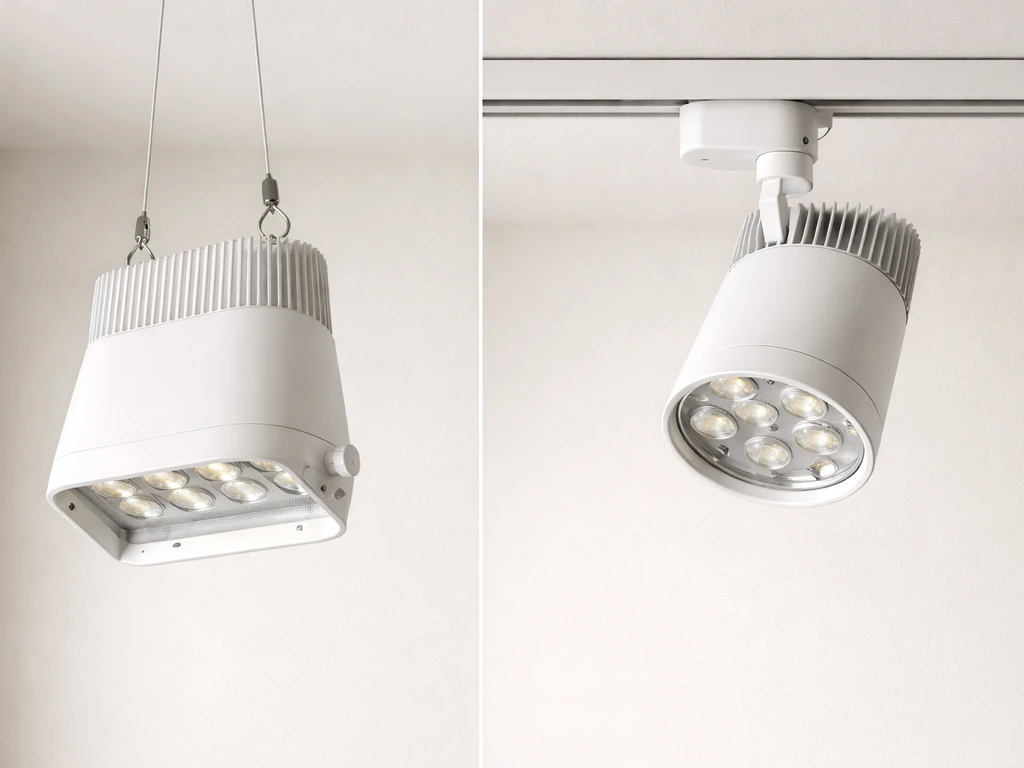
Rousseau Plant Care makes a small, focused lineup. As of 2026, the products break down into two form factors: pendant lights and track lights. The pendant comes in white ($150) and black ($140) colorways, and the track system uses the same individual light module mounted on a rail (sold separately as a pre-release SKU). Rousseau Plant Care lists the White Pendant Grow Light on its grow lights collection page at $140 and above (as shown on the storefront) blank" rel="noopener noreferrer">white ($150) and black ($140) colorways. Every unit in the lineup shares identical core specs: 35W draw, 4000K color temperature, blank" rel="noopener noreferrer">PPF of 44 μmol/sec, and a rated PPFD of 33 μmol/m²/s. There are no separate veg or bloom channels, no red/blue toggle, and no tunable spectrum option. The 4000K rating places the output squarely in the neutral-white range, which includes a broad spread of wavelengths useful for plant growth without being optimized aggressively for any single growth stage.
The pendant form factor is a hanging fixture with an adjustable beam angle, described as a telescoping or adjustable-spread design that lets you widen or narrow the coverage radius by changing how the beam is aimed. The track system extends this into a configurable multi-head setup where individual lights are mounted along a rail, useful for covering a shelf row or a longer, narrower grow area. Both formats are clearly designed with home decor in mind: these are meant to hang in a living space without looking industrial.
Quick verdict: who should buy this, and who should skip it
Rousseau makes sense for a specific type of grower. If you have tropical houseplants in a low-to-medium light room, want a grow light that doesn't clash with your interior design, and are comfortable spending $140–$150 on a single pendant fixture with a five-year warranty, this is a well-made product. It's genuinely good for the use case it's built around.
- Best for: tropical houseplants (pothos, philodendrons, monsteras, peace lilies), low-to-medium light ferns, succulents placed at distance, and staged shelf displays
- Good fit if: you need something that looks polished in a living space and you're not expecting fruiting or fast vegetative growth
- Skip it if: you're growing herbs for harvest, fruiting vegetables like tomatoes or peppers, or any crop that needs sustained high PPFD (200+ μmol/m²/s)
- Skip it if: you're on a tight budget and prioritizing raw photon output per dollar over aesthetics
- Skip it if: you want a multi-channel veg/bloom spectrum, UV supplementation, or IR wavelengths for flowering response
Coverage, intensity, and real output at working distances
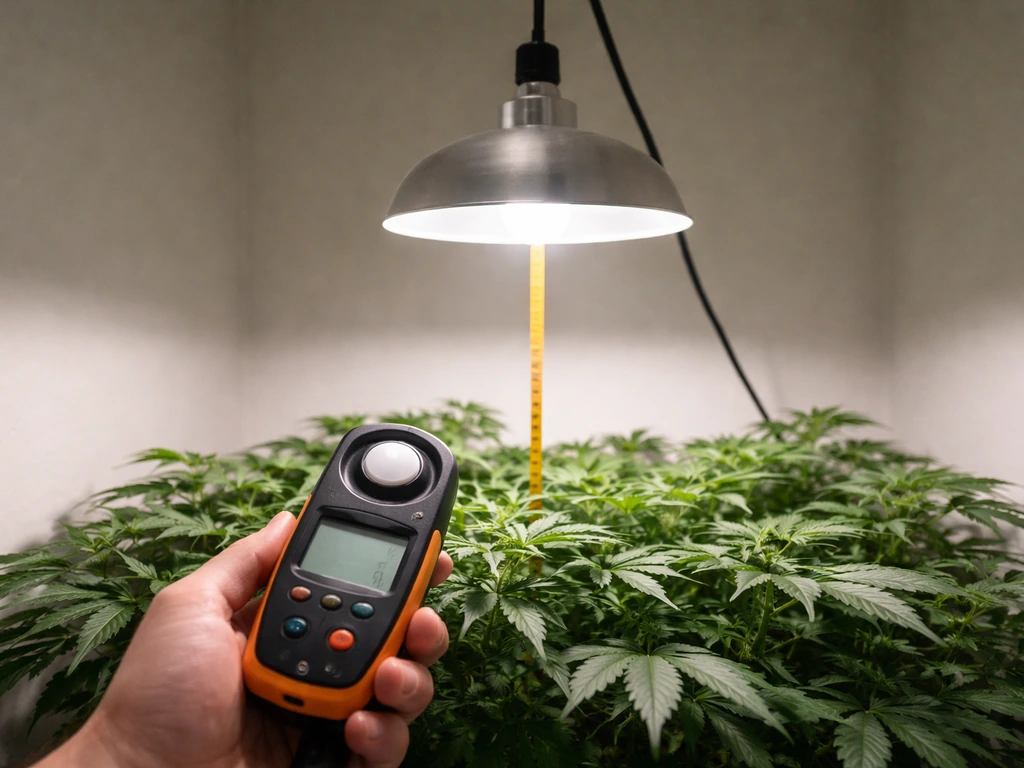
The stated PPFD of 33 μmol/m²/s is low by most grow light standards, but context matters. Rousseau's own placement guidance is useful here: they recommend hanging the pendant 12–24 inches above full-sun plants and 48–60 inches above low or indirect-light plants. At 12–24 inches, that 33 μmol/m²/s figure is the rated center-point reading, and intensity will drop toward the edges of the beam. For a single pendant, the practical coverage footprint for any meaningful light level is roughly a 1–2 foot radius depending on beam angle setting, which means one pendant effectively supplements maybe 1–3 individual plants depending on their size.
At 48–60 inches of hanging height for low-light plants, intensity drops further but the beam spreads out, covering a wider area at a lower photon dose. This actually works well for low-light tropicals: you're delivering consistent, gentle supplemental light across a group of plants rather than one hot spot. The adjustable beam angle matters here. Narrowing the beam concentrates photons for a single plant closer up; widening it distributes more evenly for a shelf or collection. It's worth spending five minutes at setup dialing in the angle for your specific situation.
In terms of uniformity, a single-point pendant is never going to give you perfectly even distribution across a wide canopy. The center of the beam will always read noticeably higher than the edges. For a tight grouping of 2–4 small-to-medium plants directly below the fixture, this is manageable. For a 4-foot shelf or a wide propagation tray, a single pendant will have weak edges. This is exactly the use case the track system addresses: multiple heads along a rail give you more even distribution across a longer footprint.
Spectrum fit: what this light actually does for your plants
The 4000K neutral-white spectrum is a reasonable all-purpose choice for foliage plants. At 4000K, the output includes good representation of blue wavelengths (which drive compact vegetative growth and chlorophyll absorption) and adequate red wavelengths for general photosynthesis, though not heavily optimized for the far-red range that accelerates flowering. For houseplant maintenance and slow-to-moderate vegetative growth, this is fine. You'll see healthy leaf development, normal internodal spacing, and good color in foliage plants.
For flowering and fruiting crops, the 4000K spectrum is less compelling. Plants that want to transition from veg to bloom respond better to elevated red and far-red ratios, which a warmer-spectrum or multi-channel light delivers more efficiently. Using a Rousseau pendant to push a tomato through flowering is technically possible at close distances, but you'd be working against the spectrum and the intensity ceiling. For herbs like basil or mint grown primarily for foliage rather than seed production, the 4000K spectrum is more than adequate.
| Crop type | Rousseau performance expectation | Minimum recommended distance |
|---|---|---|
| Low-light tropicals (pothos, philodendron) | Strong: light exceeds natural indirect-light conditions | 48–60 inches |
| Medium-light houseplants (monsteras, peace lilies) | Good: solid supplemental source through winter months | 24–36 inches |
| Foliage herbs (basil, mint for leaf harvest) | Acceptable: adequate for modest harvests, slow growth | 12–18 inches |
| Succulents and cacti | Marginal: adequate at close range, may not replace direct sun equivalents | 12–18 inches |
| Fruiting vegetables (tomatoes, peppers) | Poor: insufficient intensity and spectrum optimization for fruiting | Not recommended |
| Flowering crops (cannabis, flowering annuals) | Poor: low PPFD and neutral spectrum limit flowering response | Not recommended |
Build quality, heat, noise, and safety
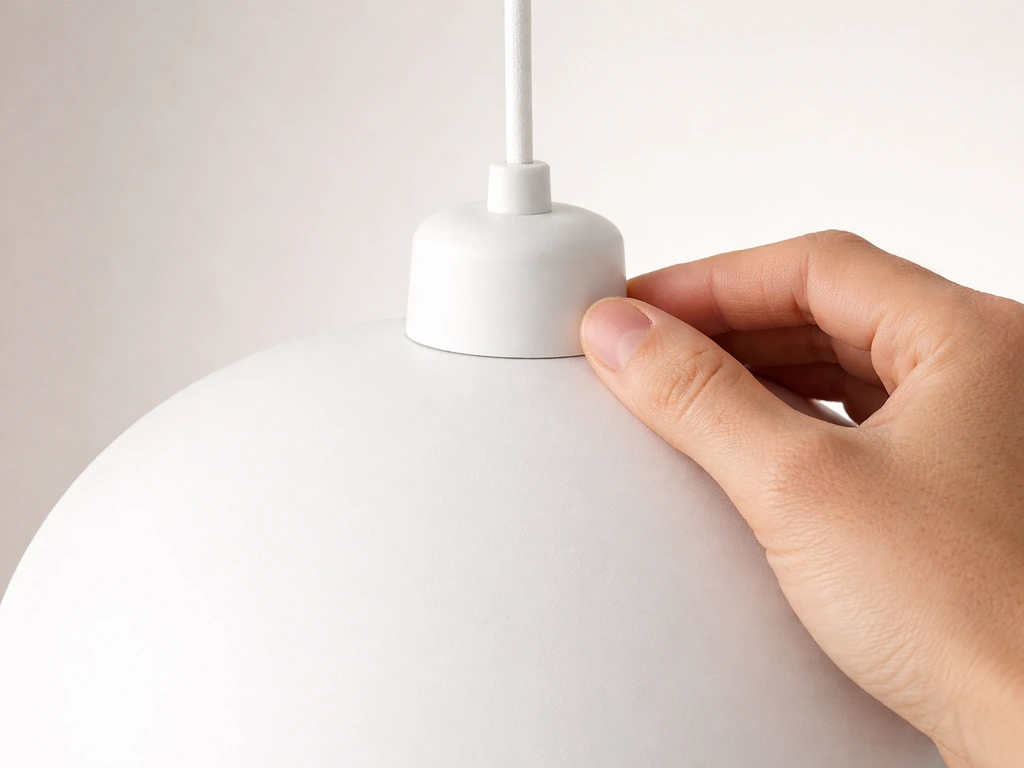
Rousseau positions these as premium home-use fixtures, and the build quality reflects that. The pendant housing is solid, the colorways (white and black) are clean, and the cord and suspension hardware are finished to a standard you'd expect from a $140+ fixture. There are no visible cheap plastic corners or flimsy connections.
At 35W, thermal output is modest. There's no active cooling fan on the pendant, which means zero operating noise, an important consideration if this is hanging in a bedroom or living space. Passive heat dissipation at 35W is straightforward, and there are no reports of thermal issues at normal operating distances and durations. The wall timer option bundled with the white pendant is a sensible addition: running grow lights on a consistent photoperiod matters more than most casual growers realize, and having a built-in timer removes one variable.
On electrical safety, the five-year warranty with a stated free replacement policy is a meaningful commitment. Rousseau's warranty and returns page explicitly covers grow lights for five years, and their product page language promises repair support after that window. For a relatively small brand, this is a strong warranty posture and suggests confidence in component longevity. At 35W with passive cooling and no high-stress thermal cycling, LED lifespan at this output level should comfortably exceed the warranty period under normal use.
Value, pricing, and how it stacks up against alternatives
At $140–$150 per pendant, Rousseau is priced at the upper end of the houseplant-focused grow light market. You're paying for industrial design and warranty confidence as much as raw photon output. For comparison, a no-name 45W LED panel on a major e-commerce platform will often deliver higher PPFD numbers for $30–$50, but with no warranty, generic aesthetics, and questionable build consistency. Brands like Farmlite, Relassy, and similar mid-market options sit in the $40–$80 range with higher raw output specs, though their warranty and build finish rarely match what Rousseau offers. If you are comparing Rousseau with other home-friendly brands, this Relassy grow light review can help you judge output and value side by side. If you are comparing alternatives, this is where a Farmlite grow light review can help you judge raw output and warranty value side by side.
The honest efficiency tradeoff is this: Rousseau's PPF of 44 μmol/sec from 35W works out to roughly 1.26 μmol/J, which is an acceptable efficacy figure for a pendant-style fixture but not class-leading. High-efficiency LED bars from brands targeting serious horticulture growers can hit 2.5–3.0 μmol/J at higher wattages. But those lights look like grow equipment, not home fixtures, and they come with no warranty story remotely close to Rousseau's five-year coverage.
| Factor | Rousseau Pendant | Mid-market LED panels (e.g., Relassy, Farmlite) | High-efficacy horticulture bars |
|---|---|---|---|
| Price per unit | $140–$150 | $40–$80 | $80–$300+ |
| Wattage | 35W | 40–100W typical | 100–480W typical |
| PPFD at rated distance | 33 μmol/m²/s | Higher, varies widely | Much higher, purpose-built |
| Spectrum | 4000K neutral white | Full-spectrum or red/blue mixed | Tunable or optimized red/blue/far-red |
| Warranty | 5 years, free replacement | Typically 1–2 years | 1–5 years depending on brand |
| Aesthetics for home use | Excellent | Poor to acceptable | Industrial, not home-friendly |
| Noise | Silent (passive cooling) | Often fanless at low wattage; fans above ~100W | Fans at higher wattages |
| Best use case | Houseplants in living spaces | Seedlings, herbs, general grow tents | Serious cultivation, fruiting crops |
Practical setup: distances, photoperiod, and getting the most from a Rousseau
If you're buying a Rousseau pendant, here's how to set it up for best results. For full-sun tropical plants that you're pushing to grow more actively, hang it 12–18 inches above the foliage and run it 14–16 hours a day. For low-light plants you're just maintaining through dim winter months, 48–60 inches of hanging height and 12 hours a day is plenty. Use the wall timer if your model includes it, or add a simple plug-in timer if not: photoperiod consistency matters more than people expect for steady growth.
For the track system, space individual lights 12–18 inches apart along the rail to get reasonable uniformity across a shelf. A two-light track setup covers a standard 24–30 inch shelf reasonably well at low-to-medium light levels. For a 4-foot shelf, three lights give you better edge coverage. Because each light is the same 35W module, you can scale the track layout to your space without worrying about mixing incompatible components.
The bottom line: should you buy a Rousseau grow light?
Yes, if your primary goal is supplementing light for houseplants in a living space and you want a fixture that won't look out of place. The five-year warranty, quiet operation, and clean design are genuine advantages over cheaper alternatives at this use case. No, if you want maximum photon output for the money, need a spectrum tuned for flowering, or are running any kind of dedicated grow tent or fruiting crop setup. For those needs, mid-market options like Relassy or Farmlite give you more output per dollar, and brands with full-spectrum horticultural bars give you better performance at scale. Rousseau is a considered, honest product for the audience it's designed for. The mistake is buying it for a job it was never meant to do. If you're comparing options, check the Lee Valley grow light review for how this category stacks up for different plant needs. If you want to compare other options, this root farm grow light review can help you judge whether it matches your plants and your budget.
FAQ
How should I choose the hanging height when my room light is mixed (not purely low or medium)?
If you have tropicals that already survive in medium light, start with the pendant 48–60 inches from the canopy for “maintenance” months, then drop to about 12–18 inches only if you clearly see slow growth. Keep in mind the rated PPFD is a center-point figure, intensity drops toward the edges, so you may need narrower beam settings or multiple fixtures for any spread-out shelf.
Can Rousseau grow lights be used for flowering and fruiting, or is the 4000K spectrum a deal-breaker?
Rousseau does not offer spectrum tuning or separate veg and bloom channels, so you cannot “force” flowering intensity the way you can with multi-channel grow lights. You can still get results for herbs and some blooms, but expect slower transitions and more reliance on the plant’s natural light cycle, especially for crops that need a stronger red or far-red emphasis.
What’s the practical plant spacing and placement if I want even growth across a shelf?
A pendant is best for tight clusters (roughly 2 to 4 small-to-medium plants). For a 4-foot shelf, a single pendant usually leaves weak edges, so use the track system and space heads about 12–18 inches apart. If you only buy one pendant, position it so the brightest center lands where your most light-hungry plants sit.
How many hours per day should I run a Rousseau light, and should I adjust it over time?
For most houseplants, aim for a consistent photoperiod rather than reacting daily. If you are not sure, start around 12 hours per day, then adjust by observing new growth rate and leaf color, not just height. Longer hours can look greener but can also cause stress or leggy growth if the intensity is too low for your goal.
Can I use Rousseau in a room that gets some daylight, and still get reliable results?
Yes, but it can be inefficient if your tank is bright enough already. Using Rousseau as a supplemental light works best when you have a window that provides partial daytime light, then run the grow light for the “missing” hours in winter. If your room is dark all day, Rousseau’s 33 μmol/m²/s class will often stall demanding plants.
How do I use the adjustable beam angle to avoid hot spots and weak edges?
The adjustable beam matters most when you care about uniformity across multiple plants. Narrowing the beam increases intensity on the center spot, which helps one cluster. Widening the beam reduces intensity per plant but gives more even coverage, which is usually better for propagation trays or mixed-height shelves.
Are Rousseau lights a good choice for basil, mint, and other culinary herbs?
If your goal is herbs for cooking (more frequent leaf harvest) rather than maximum seed production, 4000K is typically fine. For seed-focused or flowering-heavy herb work, the limiting factors become both spectrum and intensity, so you may need closer placement and more hours, but that will still be less efficient than horticulture-focused full-spectrum or higher-output options.
What should I check about the warranty and returns before buying?
Rousseau’s five-year warranty is a strong differentiator, but read how the “free replacement” is handled in your region, because exclusions can apply (power issues, physical damage, improper mounting). Also keep the proof of purchase and record your installation height and usage schedule, which can help if you ever need warranty support.
What are the most common reasons Rousseau lights underperform for certain crops?
A common mistake is buying one pendant expecting it to replace a high-output grow tent or to fully power fruiting vegetables. If you are trying to grow tomatoes, peppers, or long-day crops in a low-light home, you will likely need either many Rousseau fixtures or a different, higher-PPFD light class.