The O2 Grow Emitter is not a grow light. It is a dissolved-oxygen generator designed to sit inside a hydroponic reservoir and electrochemically split water molecules into hydrogen and oxygen micro-bubbles. Cannabis Business Times describes O2 Grow emitter technology as “electrically separating the water molecule into hydrogen and oxygen,” and frames oxygen at the root as the goal for hydroponics, not LED light output [electrochemically split water molecules into hydrogen and oxygen micro-bubbles](https://www.
O2 Grow Emitter Review: PPFD, Coverage, and Value

Marcus Caldwell
15 May 2026
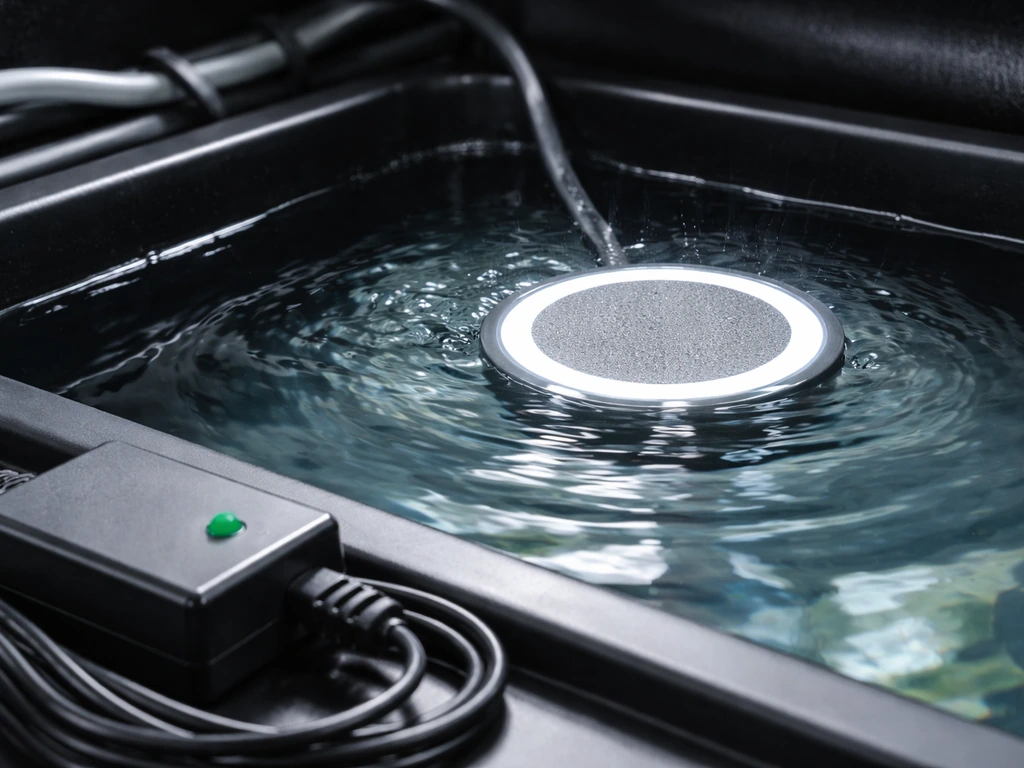
cannabisbusinesstimes. com/cultivation/product/15688776/2120-a-spider). If you searched for this expecting PPFD charts, LED spectrums, or coverage maps, you landed in the wrong product category entirely. This article will explain what the O2 Grow Emitter actually does, who it genuinely helps, and how to think about it as part of a hydroponic setup rather than a lighting purchase.
Quick verdict: who the O2 Grow Emitter is actually best for
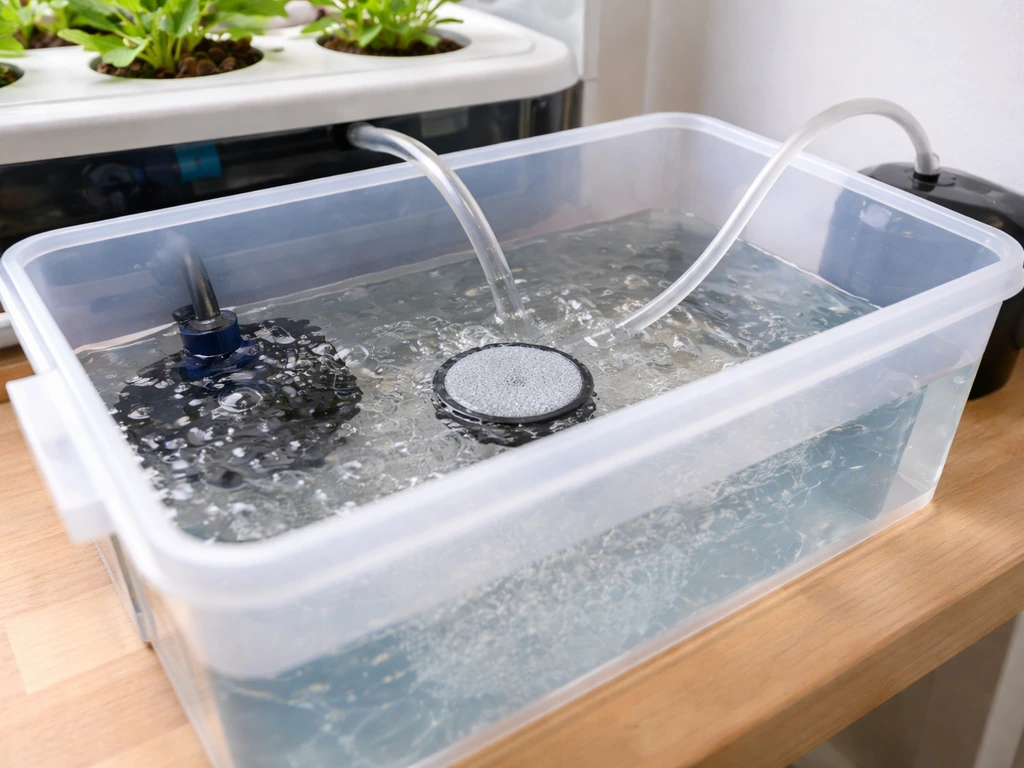
The O2 Grow Emitter is best for hydroponic growers running reservoir-based systems (DWC, recirculating deep water culture, NFT, or similar) who want to raise dissolved oxygen (DO) levels in their nutrient solution without the noise and maintenance of an air pump and airstone setup. It is not for soil growers, coco growers, or anyone shopping for a light source. If your roots are sitting in water and you want them to thrive, the concept behind O2 Grow is legitimate. If you were looking for an LED panel or quantum board, this product has nothing to offer you.
Design and build quality
The O2 Grow system ships as three components: the emitter itself (a flat disc that submerges in your reservoir), a standard control box, and a power cord. The whole package weighs about 2 lbs, so it is lightweight and easy to position. The emitter works by passing an electrical current through water to electrochemically separate H2O into hydrogen and oxygen gas, releasing oxygen as ultra-fine micro and nano-bubbles into the solution. These tiny bubbles stay dissolved far longer than the large bubbles produced by a conventional airstone, which is the core engineering claim of the product.
Build materials are functional rather than premium. The control box is a simple enclosed unit with no exposed heat sinks or complex thermal management because the power draw is low at 29 watts on 120V. There are no fans, no drivers in the LED sense, and no spectrum controls because this is not a lighting device. The manufacturer quotes a minimum 1,600-hour run time for the emitter element itself, after which the electrochemical plate will need replacement. That works out to roughly 200 days of continuous use, so plan for annual or near-annual consumable costs depending on your run schedule.
Warranty terms are not prominently detailed in standard product listings, and that is worth noting before you buy. If post-sale support matters to you, contact O2 Grow directly before purchasing to confirm current warranty coverage, especially for the emitter plate which is the component most likely to degrade.
What it actually does: dissolved oxygen, not light output
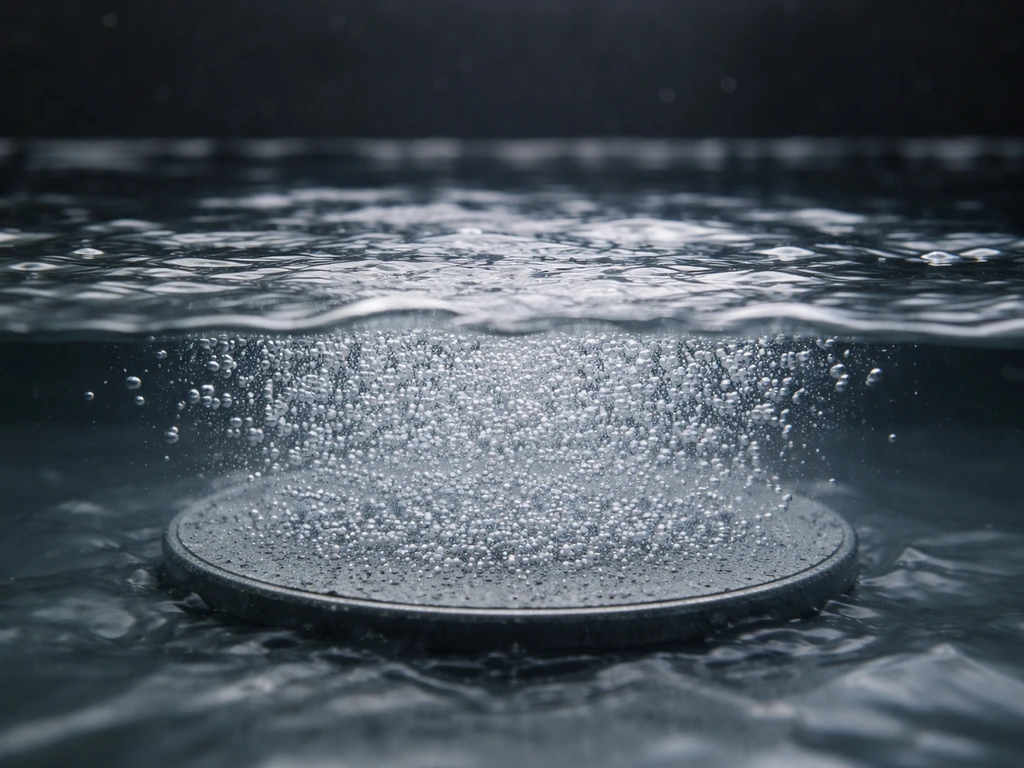
Because this article appears in a grow light review context, it is worth being direct about why the O2 Grow Emitter shows up in searches alongside lighting gear. Hydroponic growers often research their entire equipment stack at once, and dissolved-oxygen tools, lights, nutrients, and controllers all get lumped into the same research sessions. But the performance metrics here have nothing to do with PPFD, photon efficacy, or spectrum.
If you want a related perspective on lighting instead of dissolved oxygen, see our Telos grow light review for what that category can actually do for photosynthesis. The relevant performance measure for the O2 Grow Emitter is how many gallons of reservoir water it can treat and how quickly it raises dissolved oxygen concentration.
The 2015 model is rated for up to 20-gallon reservoirs and is claimed to treat that volume in under four hours. The 2040 model scales up to 40 gallons. Dissolved oxygen levels in a well-oxygenated hydroponic reservoir should sit between 8 and 12 parts per million (ppm) at typical nutrient solution temperatures. Roots deprived of oxygen become vulnerable to pythium and other root rot pathogens, which is the actual problem this device is solving.
Whether it solves it better than a quality air pump and diffuser stone is what growers in hydroponic communities debate, and the answer is nuanced: the micro-bubble technology does produce finer, more stable oxygenation, but real-world DO gains depend heavily on water temperature, reservoir geometry, and how well the emitter is positioned.
Spectrum, diodes, and what it means for plant stages
There is no spectrum to discuss here. The O2 Grow Emitter contains no LEDs, no diodes, no photons. It does not contribute to the light environment your plants experience at any growth stage. Seedlings, vegetative plants, and flowering plants all respond to spectrum from your grow light, not from your oxygenation device. If you are trying to choose between a full-spectrum LED, a broad-spectrum quantum board, or a targeted red-blue diode configuration for veg versus flower, that decision is entirely separate from anything the O2 Grow Emitter does. For those comparisons, dedicated LED grow light reviews covering brands and wattage ranges are the right resource.
Setup and compatibility in a hydroponic system
Setup is straightforward. The emitter disc submerges in your reservoir, the power cord connects to the control box, and the control box plugs into a standard 120V outlet. There are no mounting heights to calibrate, no dimming channels, and no light recipes for different growth stages. Placement of the emitter within the reservoir matters more than most manufacturers emphasize: positioning it toward the center and away from reservoir walls tends to produce more even oxygenation throughout the water volume. In larger or irregularly shaped reservoirs, a single emitter may not reach every corner effectively, which is one practical limitation to keep in mind.
Compatibility is broad because the system is self-contained and does not integrate with lighting controllers, timers, or environmental management systems in any meaningful way. You can run it on a simple timer if you want to experiment with intermittent operation, but most growers run it continuously alongside their reservoir lighting and nutrient circulation.
Coverage, heat, and power consumption
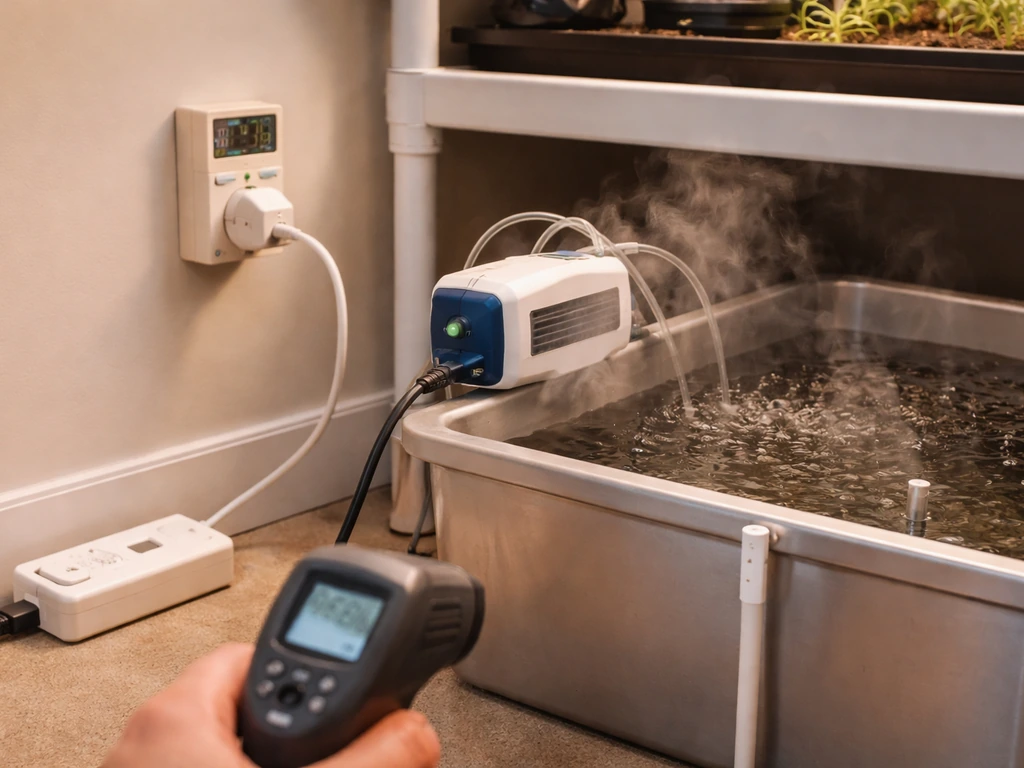
At 29 watts on 120V, the O2 Grow Emitter is a low-power device. Running it continuously for a full month costs roughly 0.6 to 0.9 kWh per day depending on your local rate, which at the US average of around 17 cents per kWh works out to approximately 3 to 5 dollars per month in electricity. Heat output at this wattage is negligible and will not meaningfully affect reservoir temperature, though keeping your reservoir below 72 degrees Fahrenheit is still critical for DO retention regardless of your oxygenation method. Warmer water holds less dissolved oxygen by physics, so climate control in your grow space matters more than which oxygen generator you use.
How it compares to alternatives
The main competition for the O2 Grow Emitter is not other grow lights but other dissolved-oxygen solutions: air pumps with airstones or diffuser manifolds, recirculating systems with venturi injectors, and ultrafine bubble generators from brands like Mazzei or similar. Air pumps are far cheaper upfront (a quality pump and stone setup can cost under $30 for most home reservoirs) but are noisier and produce larger bubbles that escape the water surface more quickly. The O2 Grow's micro-bubble approach theoretically keeps oxygen in solution longer, but this advantage is most meaningful in warmer environments or sealed reservoir setups where surface agitation is limited.
In terms of price, the O2 Grow Emitter sits in a higher bracket than basic air pump solutions, and the emitter plate replacement cost adds an ongoing expense. For growers who are already running efficient cooling and good circulation, the practical DO gains may be marginal. For growers dealing with chronic root health issues in warmer reservoirs, the finer oxygenation could make a real difference. It is not a universal upgrade but a targeted tool for specific conditions.
A note on this site's focus
This site is built around evaluating grow lights, and if you arrived here while building out a full hydroponic setup, the lighting decision is likely the most impactful single purchase you will make for plant performance.
Brands like Dommia, Telos, Sonlipo, Leoter, and Lordem all occupy different niches across wattage, spectrum, and price, and detailed breakdowns of those options can help you match a light to your canopy size and growth stage goals in a way that the O2 Grow Emitter simply cannot touch. If you are specifically looking for a Lordem Grow light review, you should compare its LED output, spectrum, and coverage against similar models before buying.
If you are also considering Leoter options, see a leoter grow light review for guidance on choosing wattage and spectrum for your setup. If you are comparing Sonlipo products, reading sonlipo grow light reviews can help you see which models perform best for your canopy and growth stage. If you want an LED grow light instead, a Dommia grow light review will cover spectrum, coverage, and whether it is a good match for your plants.
The emitter supports root health at the nutrient solution level; your grow light determines whether your plants actually photosynthesize efficiently. Both matter, but in completely different ways.
Pros, cons, and buying recommendation checklist
Pros
- Low power draw at 29 watts makes it inexpensive to run continuously
- Silent operation compared to air pump and airstone setups
- Produces micro and nano-bubbles that stay dissolved in solution longer than conventional airstones
- Simple plug-and-play setup with no configuration required
- Lightweight and easy to position or reposition in any reservoir
- Scales by reservoir size with the 2015 (20 gal) and 2040 (40 gal) models
Cons
- The emitter plate is a consumable with a stated minimum 1,600-hour lifespan, adding ongoing replacement costs
- Higher upfront cost than a basic air pump and diffuser setup that achieves similar baseline oxygenation
- Warranty terms are not clearly documented and require direct contact with the manufacturer to confirm
- DO benefits are most pronounced in warm-water or sealed reservoir conditions; growers with cool, well-circulated reservoirs may see minimal gains
- Single emitter coverage may be uneven in large or irregularly shaped reservoirs
- Has no relevance to grow light selection, PPFD, spectrum, or any photosynthetic parameter
Should you buy it? A quick checklist
- You run a reservoir-based hydroponic system (DWC, RDWC, NFT, or similar) — if yes, this product is relevant to you
- Your reservoir temperature regularly climbs above 68 to 70 degrees Fahrenheit — if yes, better oxygenation is more urgent and the micro-bubble advantage is more meaningful
- Noise from an air pump is a genuine problem in your space — if yes, the silent operation is a real quality-of-life benefit
- You have had recurring root health or root rot issues despite standard airstones — if yes, this is worth trialing
- You are primarily looking for a grow light or spectrum-based performance tool — if yes, stop here and look at LED panel reviews instead; this product will not help you
- You are comfortable with ongoing emitter replacement costs and can factor that into your annual grow budget — if yes, the total cost of ownership is manageable for most small-scale setups
FAQ
Can I run the O2 Grow Emitter on a timer instead of continuously?
Yes, but only if you still keep the rest of your system moving oxygen, for example with proper water circulation and temperature control. If you shut it off for long blocks, DO can drop fastest when the reservoir warms or when nutrient draw changes, so start with shorter off periods and monitor DO rather than guessing.
How do I know when the emitter plate needs replacing?
The emitter plate is a wear item, so plan replacement on a schedule, not just when performance seems worse. If you notice your DO stabilization taking longer to recover after a water temperature change, that is a good practical signal the plate may be nearing end-of-life.
Is it worth using the O2 Grow Emitter together with an air pump and airstone?
If you already run an air pump, do not assume the emitter will automatically “stack” benefits. Use a DO test plan, measure baseline DO with the pump on, then compare again with the emitter on (at similar water temps and circulation speed) to see whether the extra cost is buying you meaningful DO improvement.
What happens if my reservoir water runs warm?
It does not replace essential temperature management. Since DO retention drops as water heats up, if your room or reservoir frequently exceeds the low 70s F, you may get diminishing returns no matter how good the micro-bubble technology is.
How should I position the emitter in my reservoir for best DO coverage?
In general, placing the emitter toward the center helps distribute oxygenation through the bulk water, but you should also consider your flow path from the return pump. In irregular reservoirs, one emitter can leave low-oxygen pockets, so you may need repositioning or consider adding an additional unit sized for your tank volume and geometry.
How should I measure success with an oxygenation device in hydroponics?
Use a DO meter or at least periodic lab-grade or calibrated readings when you are dialing in. Without measurement, it is easy to misattribute root problems to oxygen when the real driver is nutrient strength, pH imbalance, water temperature swings, or inadequate flow to the root zone.
Will the emitter fix root oxygen problems if my circulation is weak?
Yes, it can reduce DO problems caused by limited surface agitation, but it will not fix oxygen starvation caused by poor circulation. If your nutrient flow is weak or dead zones exist, oxygen can be present in some parts of the reservoir while roots in other areas still suffer.
Is the O2 Grow Emitter compatible with recirculating setups like DWC and NFT?
It can work in recirculating systems, but you must ensure the emitter stays properly submerged and protected from splashing that can expose the plate area. Also verify that your reservoir volume rating matches your actual sump volume, not just the container footprint.
What warranty questions should I ask before purchasing the O2 Grow Emitter?
Warranty details are not always clear in listings, so confirm coverage for the emitter element specifically before buying. Ask whether the plate is covered separately from the control box, and how they define wear versus failure, since that affects how you plan the long-term cost.
Can I control the emitter with smart plugs or home automation?
Yes, but verify that the control box is supported by your electrical setup and that your timer can handle the device reliably. If you use a smart plug, choose one rated for continuous low power loads and avoid frequent rapid cycling, because repeated on-off cycles can stress components.