The Barrina T5 grow lights are worth buying for seedlings, herbs, leafy greens, and low-to-medium light houseplants, and they're a solid budget pick for vegetative growth in a properly configured setup. They're not a replacement for a high-powered LED panel if you're flowering tomatoes or cannabis, but for the price and form factor, they genuinely deliver. Here's everything you need to know to decide if they're right for your space, and exactly how to set them up so they actually work.
Barrina T5 Grow Lights Review: Setup, Coverage, Results

Marcus Caldwell
7 Apr 2026
What the Barrina T5 is and who it's actually for
blank" rel="noopener noreferrer">The Barrina T5 lineup is a series of linkable LED grow light bars in 2ft and 4ft form factors. The most common configuration you'll encounter is the 8-pack (Model MF10), which bundles eight 20W bars for a combined 160W draw. Each bar runs on 120V AC, mounts overhead or under shelves, and links together via included connectors so a single power cord can run multiple strips. The package includes the grow lights themselves, power cords, connecting cords, small connectors, blank" rel="noopener noreferrer">installation clips, double-sided tape, and cable ties. Everything you need for a basic install is in the box.
The Model MC05 variant adds per-strip individual ON/OFF switching, meaning you can control each bar independently rather than toggling all of them at once. That's useful if you're running different plants at different stages on the same shelf system and want finer control. The NF10 and ML20 variants follow the same T5 bar format but differ in wattage and color temperature options.
These lights are genuinely well-suited for: seed starting trays, herb gardens under shelving units, propagation racks, houseplant supplemental lighting, carnivorous plant setups, succulents, and vegetative growth for low-demand crops. They're also used by growers who want to cover a wide, shallow canopy area more evenly than a single spotlight-style panel would allow. Where they fall short is anything requiring high PPFD at distance, like fruiting crops or flowering plants that need 400+ µmol/m²/s consistently across the canopy.
Setup, mounting, spacing, and photoperiod
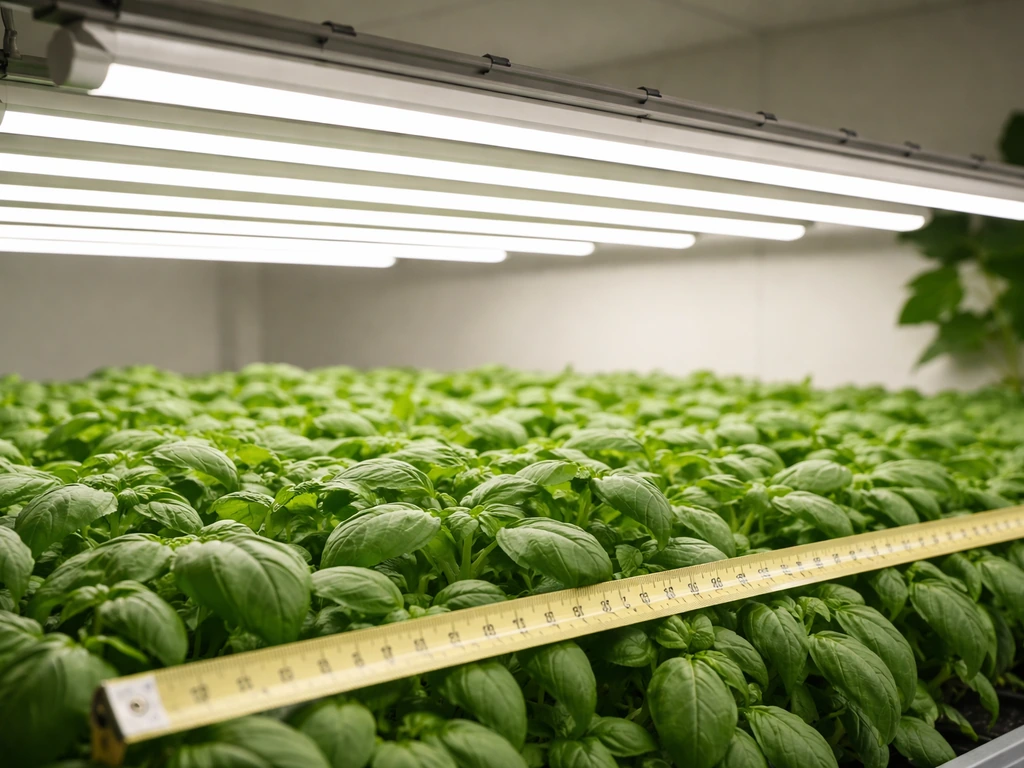
The MF10 8-pack is designed to be mounted close to the plant canopy, and close really means close. The manual's PPFD table makes this concrete: you're looking at 107 µmol/m²/s at about 8 inches (7.87"), 77 µmol/m²/s at roughly 12 inches (11.81"), and only 37 µmol/m²/s at around 20 inches (19.68"). That dropoff is steep. For most seedlings and low-light plants, 12 inches is a comfortable starting point. For more demanding veg plants, push the bars as close as 6 to 8 inches above the canopy.
Both the MC05 and NF10 manuals include explicit stage-based distance guidance. The general principle across all Barrina T5 variants is: hang higher during germination to avoid burning fragile seedlings, lower the fixture during vegetative growth to increase PPFD at the canopy, and consider lowering further during flowering or fruiting to maximize light intensity. The NF10 manual is particularly clear about this staged approach, so if you own that model, reference its "Optimal Light Distance" section directly.
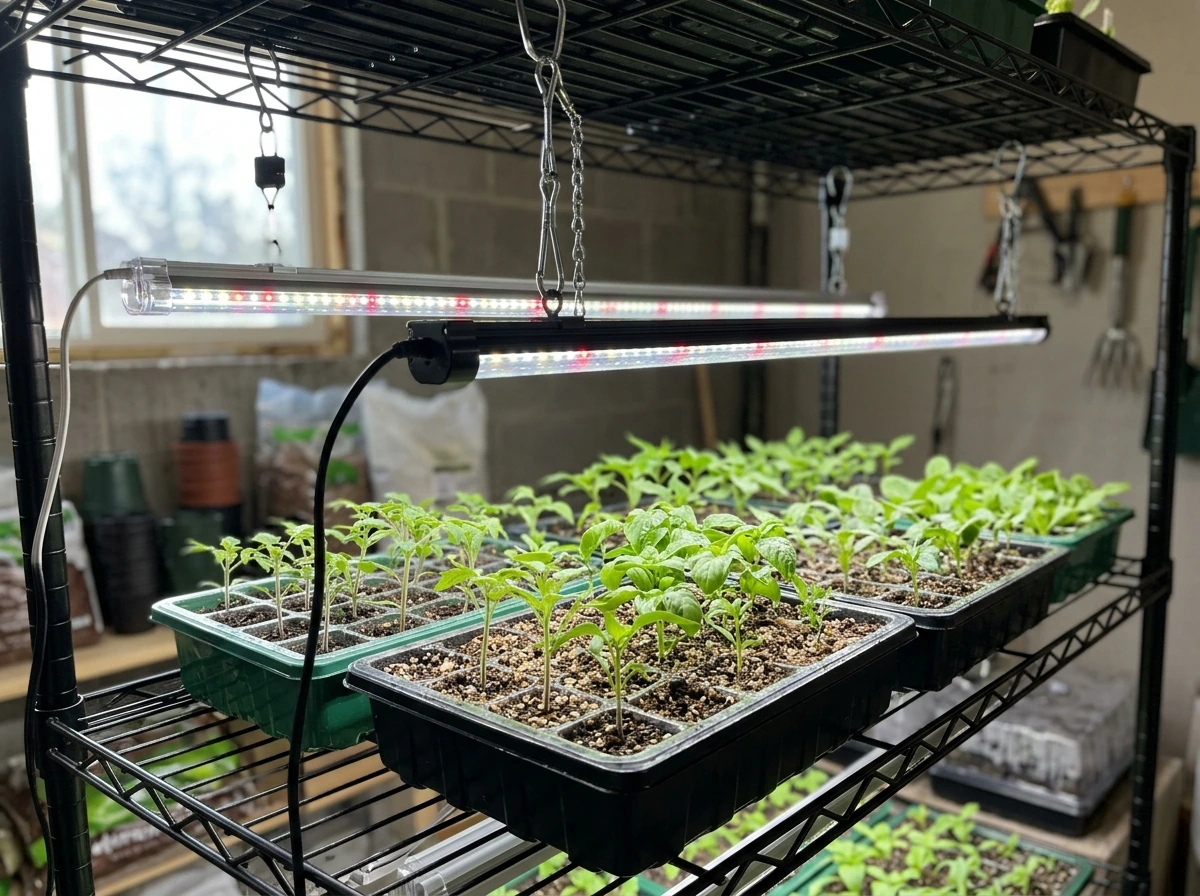
For coverage, the 8-bar configuration spaced evenly across a 2x4ft or 4x2ft shelf works well. Space the bars so you're not leaving dark strips between fixtures. Think about it as even tiling of your canopy, not just placing them all in the center. Mounting options are flexible: the included clips and double-sided tape handle most under-shelf installs without tools. If you're hanging them above a grow tent or open rack, use the hooks or zip ties to maintain consistent height.
Photoperiod-wise, most seedlings and leafy greens do well with 16 hours on and 8 hours off. Vegetative plants can handle 18/6. If you're using the lights for fruiting or flowering, you'll typically drop to 12/12, though at that stage these bars may not deliver enough intensity on their own for high-demand plants. One practical note on timers: some users have run into issues where certain Barrina T5 variants behave unexpectedly with smart plugs, essentially staying in an off-state depending on how the strip's internal switch is positioned when power is applied. If you're automating with a smart timer or smart plug, verify the switch state on each bar before programming your schedule. A standard mechanical outlet timer avoids this issue entirely.
Light output and spectrum: what the numbers actually mean for your plants
The Barrina T5 MF10 and 160W 4ft variants are full-spectrum LEDs with a spectral output graph showing blue and red emphasis, which is exactly what plants need for photosynthesis across all growth stages. The blue peak (around 450nm) drives compact, leafy vegetative growth and is especially important for seedlings. The red peak (around 650–660nm) supports flowering and fruiting response. There's also broad-spectrum output in between that mimics a more natural daylight profile, which is why these work well for general houseplant health too.
The 4ft 160W (8x20W) version of this light is rated as a "1000W equivalent" in marketing language, but treat that claim with skepticism. What actually matters is the PPFD at your canopy height, and the manual's figures tell you that story: 107 µmol/m²/s at 8 inches is fine for seedlings and low-light plants (they typically need 50–150 µmol/m²/s), decent for medium-light herbs (150–250 µmol/m²/s target), and not enough for fruiting crops that want 400+ µmol/m²/s. These bars work best when mounted close, which is also why the linkable bar format is so effective: you're spreading intensity across a wide, shallow area rather than trying to punch light from 18+ inches away.
A point worth making clearly: visual brightness is a poor proxy for plant-available light. Reddit growers frequently note that measuring PAR/PPFD with a meter gives you the real picture, while relying on how bright it looks to your eyes can mislead you into placing the fixture too far away. If you're serious about optimizing your setup, a basic PAR meter or a smartphone app with a PAR sensor is worth the investment. The Barrina T5's PPFD drops fast with distance, so a meter will tell you quickly whether your canopy is getting adequate light or not.
How it performs in practice: seedlings, veg, and flowering
Seedlings and germination
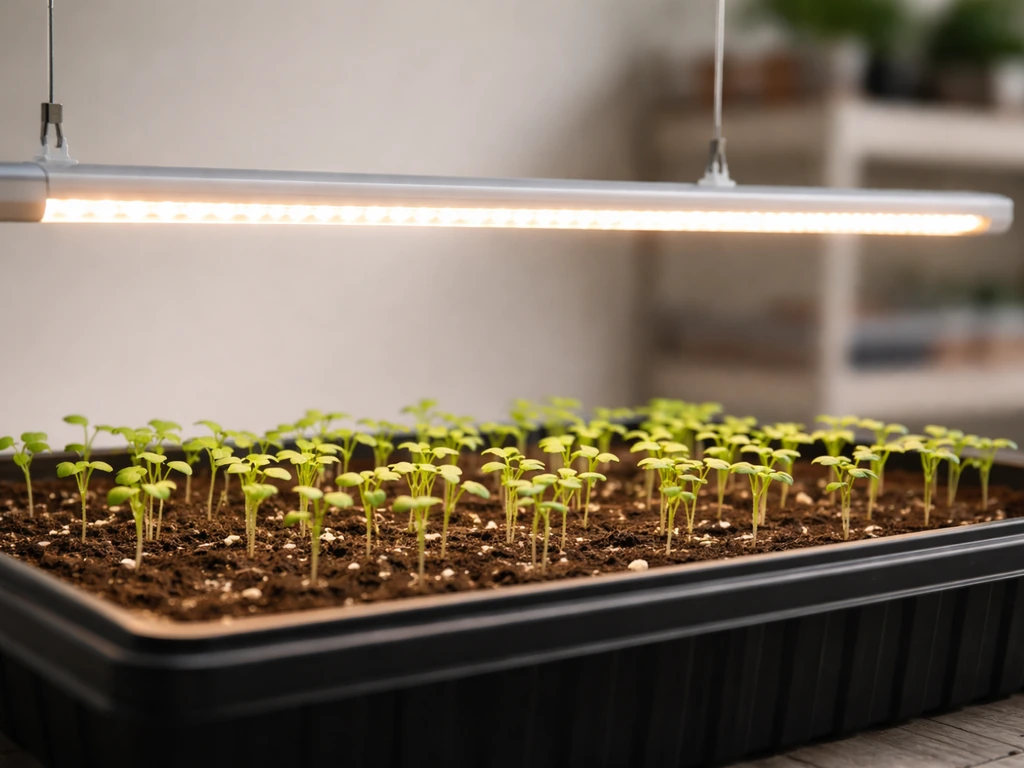
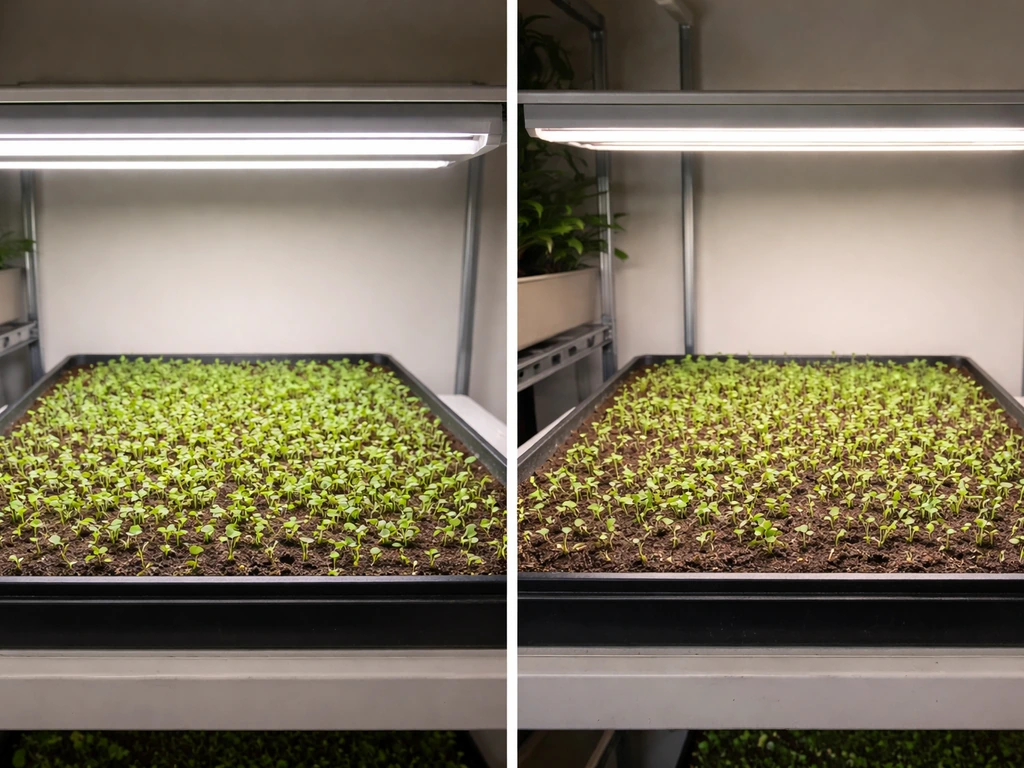
This is where the Barrina T5 shines most clearly. Mounted 10 to 12 inches above seed trays, the bars provide even coverage across a full flat without the hot-spot problems you get with panel-style lights. Seedlings come up compact and green, without the leggy stretching that happens when light is insufficient. The gentle, distributed intensity is ideal here: you're not blasting fragile seedlings with high PPFD, but you're giving them enough to develop strong stems and true leaves. For propagation racks running multiple trays on tiered shelving, a set of Barrina T5 bars under each shelf is a genuinely effective and low-cost solution.
Vegetative growth
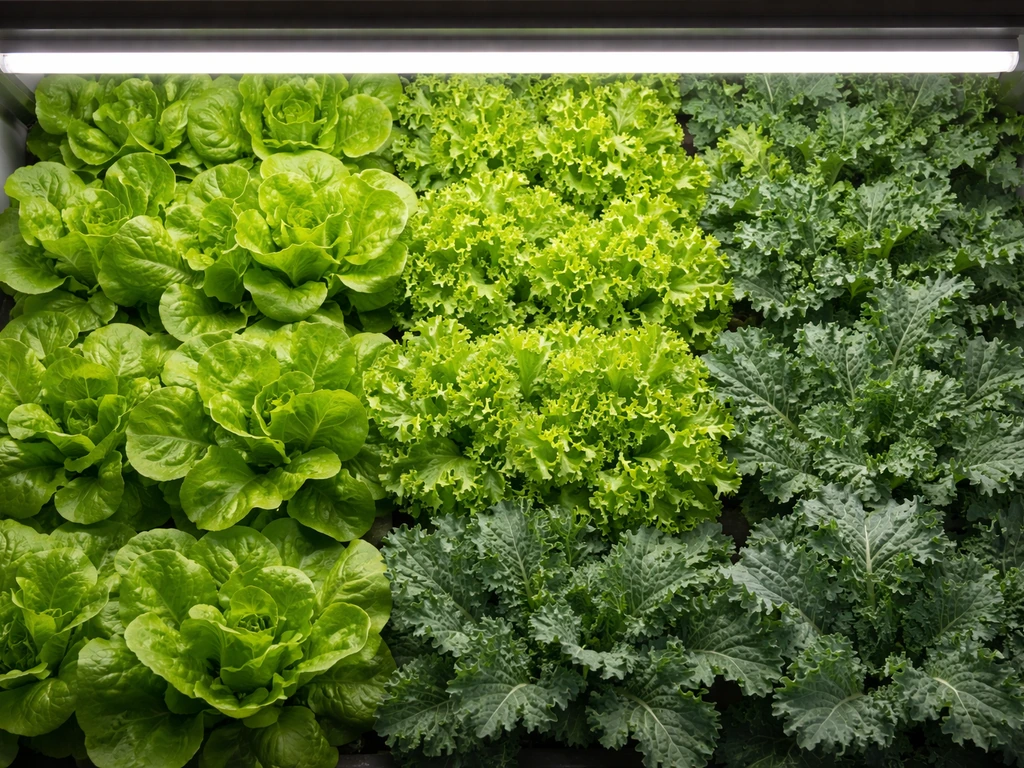
Herbs, lettuce, kale, basil, and similar crops respond well to the Barrina T5 when mounted at 6 to 10 inches above the canopy. At that height you're in the 77 to 107 µmol/m²/s range from the MF10's published data, which is enough for most leafy crops. Pepper seedlings and tomatoes in early veg also perform acceptably, though they'll want the bars as close as possible. For medium-light houseplants like pothos, monsteras, or snake plants, even the 37 µmol/m²/s reading at 20 inches is often sufficient as supplemental lighting in a dim room.
Flowering and fruiting
This is the honest limitation. The Barrina T5 bars can support light flowering for low-demand plants (some herbs will bolt and flower fine under them), but for fruiting crops or anything that requires sustained high PPFD across the canopy, the output simply isn't there at practical mounting distances. You'd need to stack multiple fixtures very close to the canopy to approach the 300–400 µmol/m²/s range needed for tomatoes or peppers in full flower. For that kind of growing, a higher-powered panel or a dedicated flowering light is the more logical choice.
Build quality, heat, noise, and safety
The Barrina T5 bars are fanless, passive-cooled fixtures. That means zero noise, which is a real advantage if your grow space is in a bedroom or living area. The aluminum body dissipates heat adequately at normal operation, and the bars stay warm to the touch but not hot. You won't burn your hand or scorch plant leaves from incidental contact at reasonable mounting heights.
Build quality is utilitarian: the housing is lightweight aluminum and plastic, the connectors are straightforward, and the linking system is simple enough that even first-time growers can set up an 8-bar system in under 30 minutes. That said, the lightweight construction means these bars aren't going to feel premium. They're functional, not fancy.
The main reliability concern worth flagging is dead-on-arrival units. There are documented reports of multiple bars in a single order arriving non-functional right out of the box. It's not a universal experience, but it's frequent enough to plan for: inspect and test every bar individually when your order arrives. Barrina offers a 1-year warranty, so DOA units should be covered, but dealing with replacements is an inconvenience. If you're on a tight timeline (seed starting season, for example), order a week or two before you need them so you have time to handle any replacements. The input voltage range on most T5 variants (AC 85–277V) means they're electrically flexible and compatible with standard North American outlets without any adapter concerns.
Value analysis: price per performance and how it stacks up
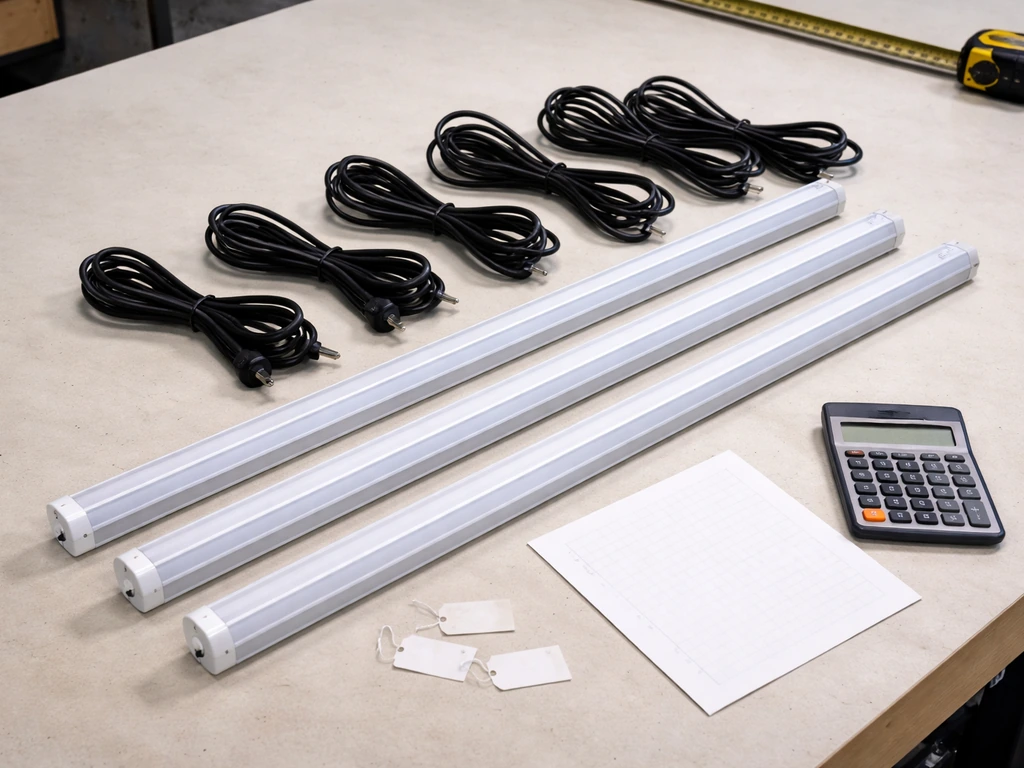
The Barrina T5 4ft 20W single bar is listed at $59.99, which is the per-unit price anchor for the ML20 variant. The 8-pack (MF10 at 160W total) typically runs in the $40–$60 range for the full set depending on the sales cycle, making it one of the most cost-efficient bar-style grow light setups on the market for seedlings and veg use. At $5–$8 per bar in the 8-pack configuration, the price-per-watt is genuinely competitive.
For context, other Barrina grow light models in the full product lineup cover different wattages and form factors, so if the T5 bar format feels limiting for your space, there are other options within the same brand ecosystem worth evaluating. If you're deciding between the T5 bars and a more conventional tube-style format, the Barrina LED T8 grow light is a direct comparison worth reading before you commit, especially if you need wider individual fixture coverage.
Against competitors in the same tier, the Barrina T5 competes well on price but less so on raw output at distance. The Bionic grow light is one alternative that targets a similar indoor hobbyist market and is worth stacking up against the Barrina T5 if you're shopping around in this price range. For applications where you need stronger PPFD from a single fixture at greater mounting heights, a PAR38-style option like the GE PAR38 grow light performs differently and may suit a specific corner or spotlight-style placement where a bar array isn't practical.
| Factor | Barrina T5 (MF10 8-pack) | T8 Bar Alternative | Panel-Style LED |
|---|---|---|---|
| Best use case | Seedlings, herbs, leafy veg, propagation | Seedlings, wider shelf coverage | Veg through flower, fruiting crops |
| PPFD at 12" | ~77 µmol/m²/s (per bar) | Similar range | Typically 200–600+ µmol/m²/s |
| Coverage per unit | 4ft linear bar | 4ft linear bar | 2x2ft to 4x4ft footprint |
| Noise level | Silent (fanless) | Silent (fanless) | Variable (some have fans) |
| Price range | $40–$60 for 8-pack | $40–$80 for comparable set | $60–$200+ per fixture |
| Flowering suitability | Low to none for high-demand crops | Low to none | Good to excellent |
| Install complexity | Easy, everything included | Easy | Moderate (hanging hardware varies) |
The bottom line on value: if your use case is seedlings, leafy greens, herbs, low-to-medium light houseplants, or propagation, the Barrina T5 8-pack is hard to beat at this price point. If you're trying to grow fruiting crops or flower high-demand plants through to harvest, budget for a different category of light.
Before you buy and after you mount: a practical checklist
Use this checklist to confirm you're buying the right configuration and to troubleshoot if your plants aren't responding the way you expect.
- Confirm your use case matches the output: seedlings and leafy greens yes, high-demand fruiting crops no. If you're on the fence, check the PPFD figures against your target crop's light requirements before ordering.
- Choose the right model: MF10 (8-pack, 160W total) for full shelf coverage; MC05 if you need per-bar independent switching; NF10 for stage-specific placement guidance built into the manual; ML20 or AAL20 if you need individual bars. The AAL20 variant runs on AC85–277V, making it compatible with a wide range of outlets including commercial settings.
- Test every bar immediately on delivery. Power each one individually before finalizing your install. DOA units need to be reported within the warranty window (1 year), and catching them early saves a lot of frustration mid-grow.
- Set your mounting height by growth stage: start at 12–16 inches for germination and new seedlings, lower to 6–10 inches for active vegetative growth, and lower further for any flowering work. Use the MF10's published PPFD data (107 µmol/m²/s at 8", 77 at 12", 37 at 20") as your reference.
- Space bars evenly across the canopy footprint. Don't cluster them in the center. Even tiling across the shelf gives you uniform coverage and avoids dark edges.
- If you're using a smart plug or smart timer for automation, check each bar's individual switch is in the ON position before plugging into the smart outlet. Some variants behave unexpectedly if the bar's own switch is off when the smart plug sends power. A mechanical outlet timer is simpler and avoids this entirely.
- Troubleshooting leggy plants: if seedlings are stretching toward the light, you need to lower the fixture. The PPFD at your current height is too low. Get to 8–10 inches above the canopy and reassess.
- Troubleshooting slow or stunted growth: first verify mounting height is correct. Then check your photoperiod (16/18 hours on for veg). If both are right, consider whether your plant's needs simply exceed what a T5 bar system can deliver at practical distances.
- If you want precise readings, use a PAR meter or PAR-capable smartphone sensor to measure actual PPFD at your canopy. Visual brightness is not a reliable guide. A reading below 50 µmol/m²/s means most plants will underperform regardless of how bright it looks to you.
The Barrina T5 is a well-priced, easy-to-install option that performs exactly as its specs suggest when you mount it correctly. The key to getting good results is understanding that these bars are designed for close-canopy use, not overhead distance. Stay close to the plants, tile the bars evenly, test your units on arrival, and set a consistent photoperiod. Do those things and the lights will do their job well.
FAQ
How close should I mount the Barrina T5 MF10 8-pack if I’m starting with older seedlings (not just sprouting)?
For seedlings that already have a few true leaves, start closer than the “germination” height, about 8 to 10 inches above the canopy, then adjust after 3 to 7 days based on stretch and leaf color. If leaves look stressed (bleaching, very dark and curled tips), raise the bars 1 to 2 inches; if plants are stretching or pale, lower by about 1 inch increments.
Do I need to worry about heat or burning leaves with the fanless Barrina T5 bars?
Usually no at the recommended mounting heights, the aluminum body is warm but not typically scorch-level. However, burning can still happen if a bar is set too close or if leaves physically touch the fixture. Leave a small air gap and avoid direct contact, especially with trays that sit on a solid shelf that can reduce airflow.
What is the safest way to space the bars so I don’t end up with dark bands across my canopy?
Treat the setup like tiling. Place bars so their coverage overlaps visually at the canopy level rather than concentrating them in the center. If you’re mounting on a shelf, use consistent spacing from left to right, then verify evenness with a quick phone-based PAR app or a simple PAR meter reading at multiple points.
If my plants aren’t improving, how can I tell whether the issue is distance versus photoperiod?
Distance changes PPFD immediately, photoperiod changes daily light integral. First, confirm distance and uniformity, then lock the timer to a known schedule (example 16/8 for seedlings, 18/6 for vegetative growth). If nothing improves after a week at the correct height, measure or reassess photoperiod, then consider nutrient and watering variables.
Can I mix plant types under the same Barrina T5 setup, or do I need separate zones?
You can, but you generally need separate zones when plants have very different light needs. If you have the MC05 with individual switching, use it to keep high-demand seedlings or herbs on their own schedule or height. If you only have an all-on setup (MF10), group plants by similar stage and avoid placing a light-hungry tray next to a shade-tolerant houseplant.
How do I avoid smart plug or timer weirdness with Barrina T5 bars that have per-strip switching?
Before programming, power each bar once and confirm it actually turns on under your chosen control method. Then set the switch to a consistent ON state before plugging into a smart timer, and test a full on/off cycle. Using a basic mechanical outlet timer eliminates the internal-switch edge case entirely.
Is it worth buying a PAR meter for the Barrina T5, or can I rely on the published PPFD table and grow by eye?
A meter is most valuable with bar fixtures because PPFD drops quickly as you mount farther away. If you cannot measure, keep a strict distance and make small adjustments based on stretch, leaf thickness, and color over several days. If you can measure, take readings across the canopy (front, center, back) to confirm evenness rather than trusting one point.
What’s a practical way to choose between MF10 (8-pack) and single 4ft bars if my shelf is smaller than 2x4ft?
Use fewer bars if your shelf width is limited, but do not mount them too far from the canopy to “reach” the area. Instead, match bar count to the usable footprint (for example, a narrow rack often needs fewer bars but placed evenly). If you can, mount slightly closer than you would for a full-size canopy to compensate for partial coverage.
Are the Barrina T5 bars good for flowering, or should I switch lights at a certain point?
They can support low-demand herb flowering, but for fruiting or high-demand flowering you’ll usually need a different light category. A practical approach is to finish germination and early vegetative growth with the T5, then plan to transition when plants start requiring sustained high PPFD (commonly in later flowering for tomatoes and peppers).
If I want to use the Barrina T5 for propagation racks, how should I set the height on tiered shelves?
Set each tier at its own distance to the seedlings, not one universal hanging height, because shelf spacing and tray thickness change actual canopy distance. A good starting point is around 10 to 12 inches for fragile starters, then lower 1 to 2 inches once they establish. Check for evenness by placing one test leaf at front and back positions.
What should I do if one or more bars arrive dead on arrival (DOA)?
Test each bar immediately after arrival, power them individually, and document which units fail. Because replacement handling can take time, order at least 1 to 2 weeks before your planned start date. Keep the packaging and proof of purchase so warranty coverage is easier if multiple bars are non-functional.
Does the Barrina T5 need any special electrical setup, or can I plug it into standard outlets?
Most T5 variants are designed for broad input voltage ranges, so you can typically use standard North American outlets without adapters. The practical caution is to avoid overloading a single outlet or power strip with too many linked fixtures and cords, especially when you’re using multiple shelves on one circuit.