The Bell & Howell Bionic grow light is a budget-tier, USB-powered desktop grow lamp aimed at casual indoor gardeners who want a simple, low-commitment light for a small number of houseplants or seedling trays. At $36.99 (often discounted), it's not trying to compete with horticultural-grade panel lights. But is it actually useful? Short answer: for a single potted herb or a windowsill seedling tray, it can do something. For anything more serious, it has real limitations you need to know about before you spend the money.
Bionic Grow Light Review: Bell and Howell Tested Guide

Marcus Caldwell
3 Apr 2026
What the Bell & Howell Bionic grow light actually is
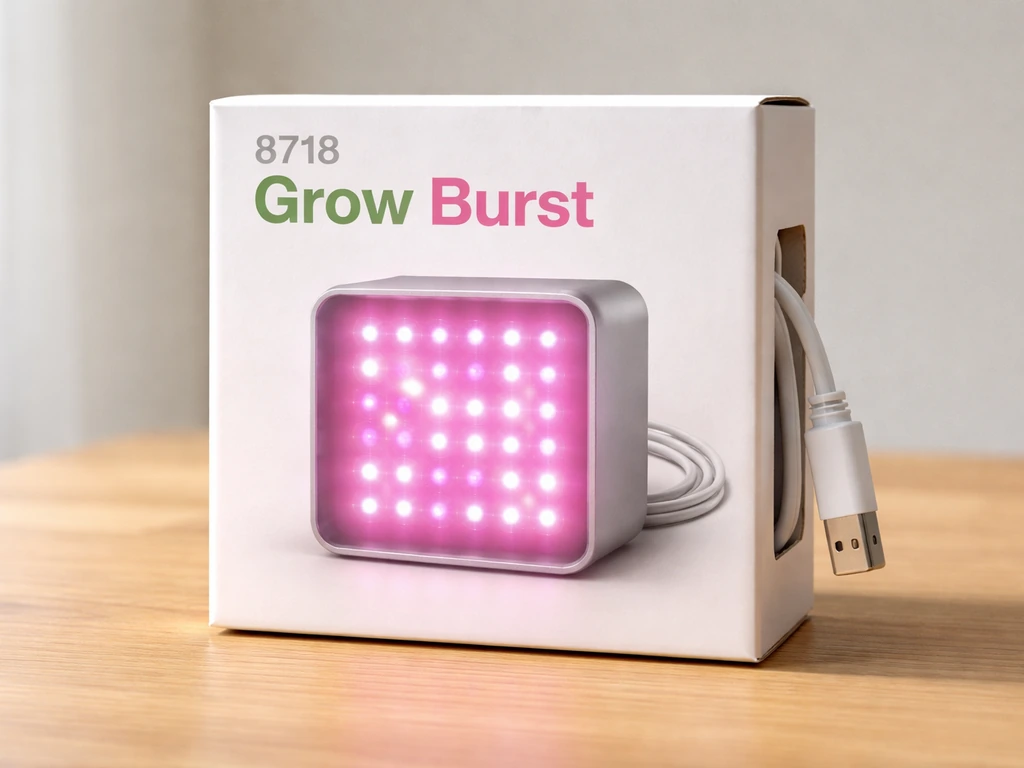
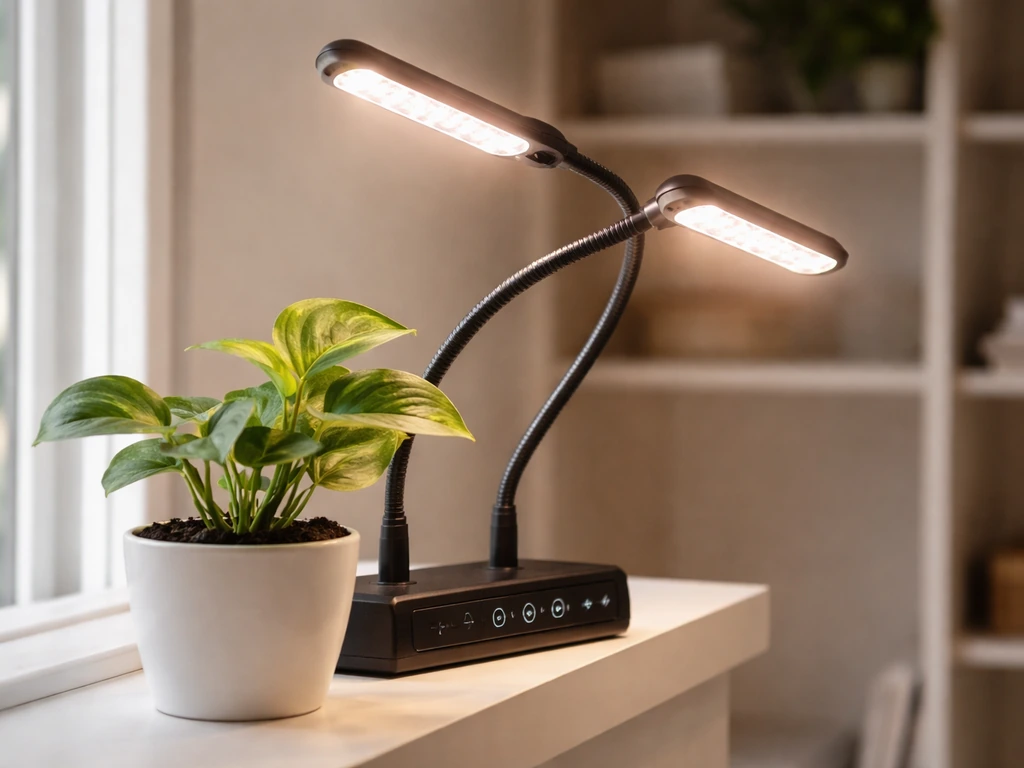
Bell & Howell sells the Bionic grow light under SKU 8718 (and the closely related model 8573 sold through Home Depot and Canadian Tire under the "Grow Burst" name). The core product is a flexible gooseneck LED lamp with 2, 3, or 4 adjustable heads depending on which configuration you buy. The gooseneck extends to 15 inches, the whole unit measures roughly 5 inches deep by 3 inches wide by 24 inches tall, and it weighs about 2.5 lbs. The build is plastic throughout.
Power comes through a USB cord that's included in the box, but here's an important catch: no AC adapter is included. The manual recommends a standard DC 5V 2A USB adapter, which you likely already own, but some buyers have been caught off guard expecting a wall plug. You can also run it from a laptop USB port in a pinch. The manufacturer lists the power source as "corded electric (50 watts)" on one page, but the Home Depot listing correctly describes it as "6-watt equivalent," which is far more consistent with a USB-powered lamp. The 50W figure on the manufacturer page appears to be a marketing-equivalent claim rather than actual draw, so don't take it at face value.
The Bionic is marketed to cover the full growth cycle "from sprout to bloom" using three light modes: blue-only for vegetative growth and dense foliage, red-only for flowering, and a mixed/full-spectrum mode. Color temperature is listed at 3700K to 4000K on the retailer spec sheets. There are 8 brightness dimming levels and a built-in timer that cycles through 3, 6, or 9-hour daily auto-repeat settings.
Quick verdict: what it does well and where it falls short
Here's the honest take. The Bionic is a convenience product, not a performance grow light. It's easy to set up, the gooseneck is genuinely flexible, the dimmer and timer work as advertised, and at under $40 the price is accessible. For someone who wants supplemental light for a single succulent shelf, a propagation tray on a desk, or a herb pot near a window with inconsistent natural light, it can do the job without much fuss.
The weaknesses, though, are significant. There is zero published PAR or PPFD data from Bell & Howell, and nothing in the manual or product page quantifies light output in horticultural terms. You're essentially flying blind on actual photon delivery. Reliability is also a genuine concern: multiple recent user reviews from early 2026 report heads failing within six months, and at least one buyer reported two of four heads dying shortly after purchase. Customer service responsiveness has been flagged as poor in those same reviews. For a product with only a 1-year exchange warranty (redeemable at Canadian Tire for that market), that's a meaningful risk.
- Strengths: low price, easy USB setup, flexible gooseneck, built-in dimmer and timer, three light modes, multiple mounting options
- Weaknesses: no published PPFD/PAR data, USB-only power (no adapter included), plastic build feels fragile, reliability complaints in 2025-2026 reviews, limited coverage area, customer service concerns
Light spectrum, output, and what plants it can actually support
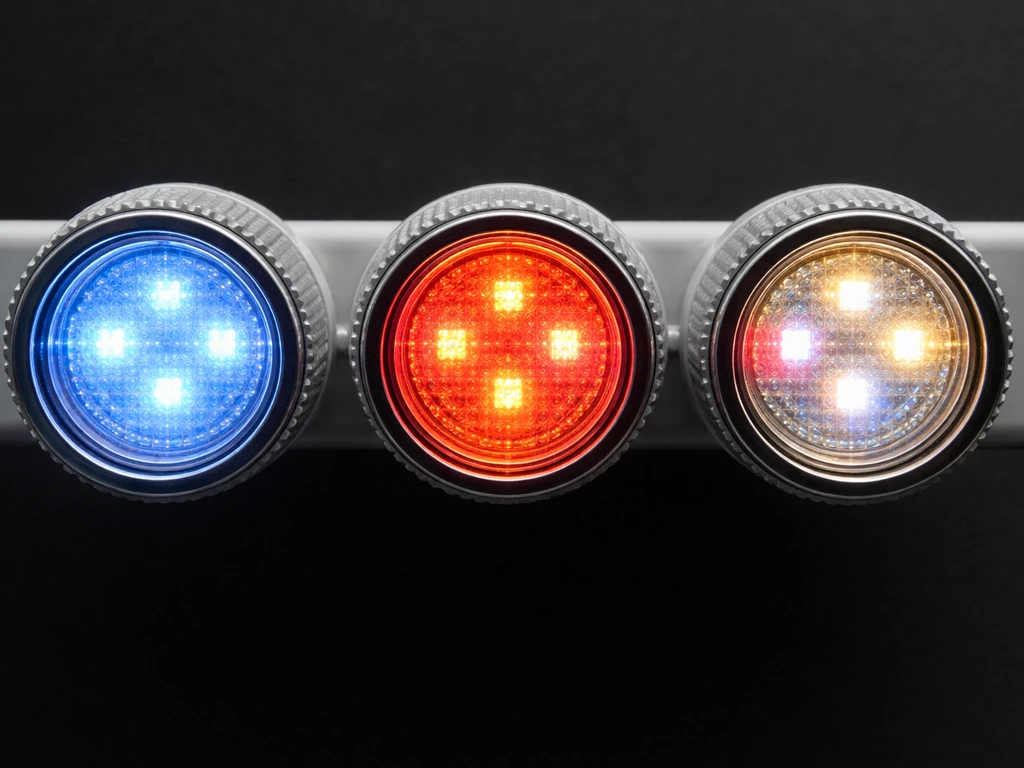
The three light modes are the Bionic's headline feature. Blue-only mode targets vegetative growth, red-only mode is intended to encourage flowering, and the mixed mode combines both for a general full-spectrum effect. The 3700K to 4000K color temperature sits in a cool white range that's reasonably balanced for general plant use. That's fine as far as it goes.
The problem is that neither Bell & Howell nor any third-party source has published a PPFD map or PPF figure for this light. Without that data, you can't know whether the light is delivering the 200 to 400 µmol/m²/s that seedlings need, or the 400 to 600+ µmol/m²/s that most fruiting and flowering plants require. Based on the USB power draw (5V 2A = 10 watts maximum, likely less in practice), the actual photon output is modest. Realistically, this light can supplement natural light for low-to-medium light plants like herbs, leafy greens, and succulents. It should not be expected to sole-source lighting for fruiting vegetables or high-demand flowering plants in a dark environment.
The 15-inch gooseneck means you can position the head relatively close to leaves, which helps concentrate whatever photons it does produce. For a single small pot or a cluster of seedling cells, keeping the head 4 to 8 inches above the canopy is your best bet. Coverage across a full 10x20 seedling tray is unlikely to be uniform given the small head size and low output.
Setup, controls, heat, and day-to-day use
Getting the Bionic running takes about five minutes. There are three mounting methods: clip it onto the edge of a desk or shelf, set the base in the included mounting bracket on a flat surface, or screw the bracket directly into a surface using the four included screws. The clip method is the most popular for desk use and works reliably on surfaces up to about an inch thick.
Once plugged in, the POWER button cycles through how many heads are active (3, then 2, then 1 for the three-head model). A separate button cycles the color mode: blue, red, then mixed. The dimmer buttons (labeled + and -) step through 8 brightness levels. To use the timer, you press the timer button until the indicator lights up, then cycle through 3, 6, or 9-hour options.
The timer auto-repeats daily from the time you first set it, so if you turn it on at 8am and set a 12-hour cycle (not available, maximum is 9 hours), it will turn off at the duration mark and repeat the next day. The 9-hour maximum may be limiting if your plants need 14 to 16 hours of light per day in a dark space, as you'd need to manually adjust or use an external timer.
Heat output is minimal given the low actual wattage, so you don't need to worry about heat stress at normal operating distances. There's no fan, so it runs silently. Flicker has not been widely reported as an issue. The gooseneck holds its position reasonably well, though the plastic joints can loosen over time with frequent repositioning.
Build quality, safety, warranty, and value
The plastic construction is the biggest durability concern. It looks fine out of the box but doesn't inspire confidence for daily use over a year or more. The reliability data from recent Trustpilot reviews (failures reported in January and February 2026) suggests this isn't just a perception issue. Two heads dying on a four-head unit within a short ownership period is a functional failure, not cosmetic wear.
On safety, the USB power standard (5V 2A) inherently limits voltage risk, which is a genuine advantage over cheaper plug-in lamps with questionable drivers. No FCC or UL certification is prominently listed in the available product documentation, which is worth noting if that matters to you. The warranty is one year and described as an exchange program (at least in Canadian Tire markets), meaning you'd return the unit rather than receive a repair or cash refund. Bell+Howell’s support and help center includes a Warranty Information area that you can use to confirm the warranty/exchange details for your specific product. Given the customer service complaints in recent reviews, the practical value of that warranty depends heavily on where you purchased it.
At $36.99, the per-dollar value is only reasonable if the unit lasts. If you're replacing it within six months as some users have reported, you're paying more than you would for a more durable option. The absence of any PAR/PPFD performance data also makes it hard to calculate cost-per-photon, which is the honest efficiency metric for grow lights.
How it compares to other grow light options
The Bionic sits in a crowded category of small desktop grow lamps, but it also competes with bar-style and tube-style LED grow lights at similar or modestly higher price points. Here's how it stacks up across the key decision factors most indoor gardeners care about.
| Light | Form Factor | Power Draw | PAR/PPFD Data | Coverage | Timer/Dimmer | Approx. Price | Best For |
|---|---|---|---|---|---|---|---|
| Bell & Howell Bionic | Gooseneck/desktop | ~10W (USB 5V 2A) | None published | 1-2 small pots | Yes (3/6/9h timer, 8 levels) | $37 | Single pot supplemental light |
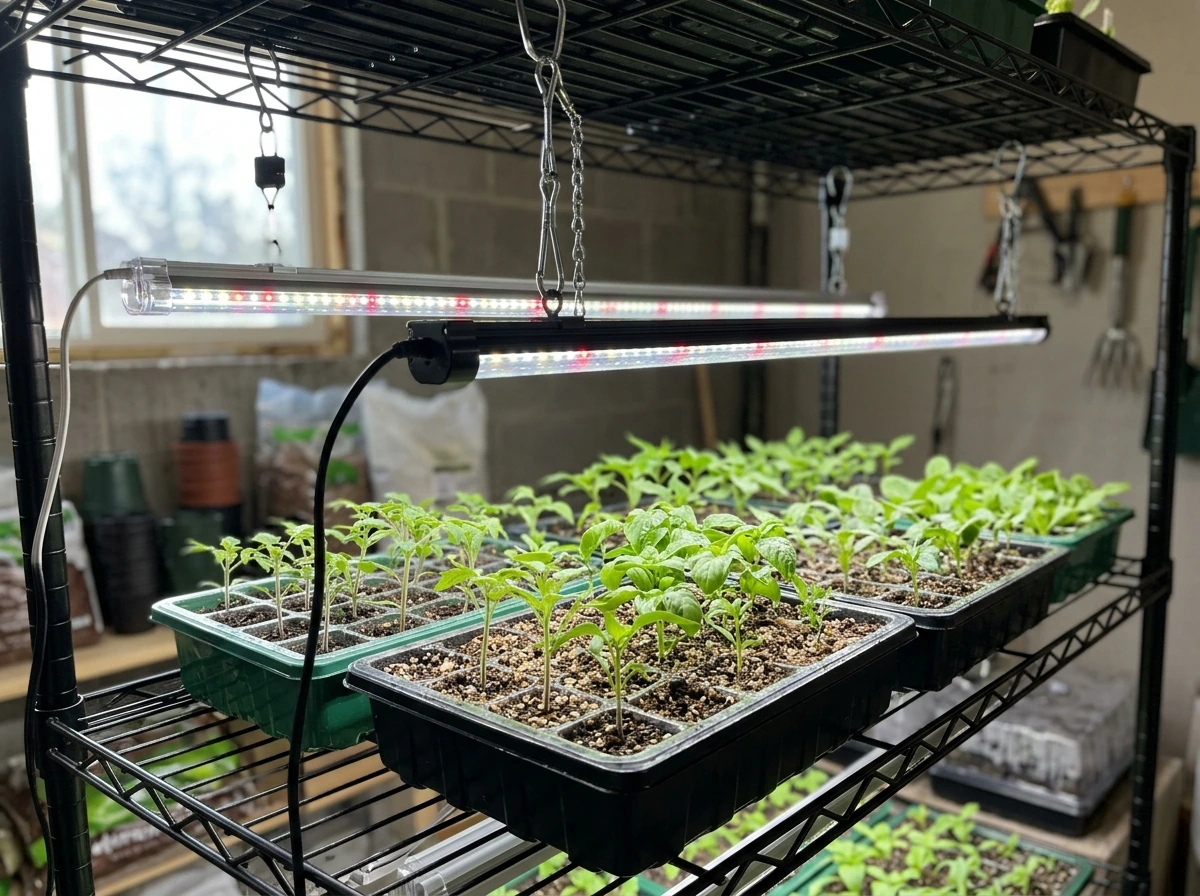
| Barrina T5 LED Bar | Linkable tube bars | 20-45W (plugs in) | Partial data available | 2x4 ft per set | External timer needed | $30-60 | Seedling trays, shelf grows |
| Barrina LED T8 | T8 tube bar | 18-22W per tube | Better-documented | 1-2 ft per tube | External timer needed | $25-50 | Shelving, propagation |
| GE PAR38 Bulb | Screw-in bulb | 9-32W | Partial PPFD noted | 1-2 ft cone | Depends on fixture | $15-30 | Single plant spot treatment |
If you're leaning toward bar-style lights for a seedling shelf or a more serious propagation setup, it's worth reading a detailed look at Barrina's grow light lineup, which covers their range of linkable LED options that generally offer better coverage documentation than the Bionic. If you specifically want tube-style lighting for shelving systems, the Barrina T5 grow lights are a popular step up from desktop lamps and work well for seedling trays. For those who prefer a T8 format, the Barrina LED T8 grow light offers a slightly different form factor with similar practical benefits. And if you want to go the single-bulb route and already have a standard lamp or fixture, the GE PAR38 grow light is a legitimate option worth comparing before you commit to anything.
The core trade-off is flexibility versus coverage. The Bionic wins on portability and no-tools setup for one or two small plants. Bar and tube lights win on coverage area, documented output, and long-term reliability for more serious grows.
Who should buy it and who should skip it
Buy the Bionic if you have one or two small houseplants on a desk or shelf that get inconsistent natural light, you want a plug-and-play solution with a timer already built in, and you're not running a serious propagation or growing operation. It's also reasonable as a gift for a casual plant hobbyist who doesn't need precision lighting.
Skip it if you're germinating a full seedling tray, growing fruiting plants like tomatoes or peppers indoors, running a low-light-season vegetable grow, or expecting this to be your only light source in a dark room. Also skip it if long-term reliability matters to you, since the recent failure reports are a real red flag for a product in this price bracket.
Before you buy: a quick checklist
- Confirm you have a 5V 2A USB adapter available, since one is not included in the box.
- Check which model configuration you need: 2-head, 3-head, or 4-head, depending on how many plants you're covering.
- Make sure the 9-hour maximum timer is sufficient for your plants' light schedule (many plants need 14-16 hours in low-light conditions).
- Assess whether your plant is low-to-medium light demand (herbs, leafy greens, succulents) or high-demand (tomatoes, flowering plants) since the Bionic is only reliably useful for the former.
- Check the return/exchange policy at your specific retailer before purchasing, given recent customer service complaints.
- If you need coverage for more than two small pots, compare bar-style options before committing to the Bionic.
The Bionic isn't a bad product for what it is. If you're shopping for a stronger option, this GE PAR38 grow light review breaks down how it performs compared with budget LEDs. But what it is, is a small supplemental desk lamp, not a grow light for serious indoor cultivation. Know that going in, buy it for the right use case, and keep your receipt.
FAQ
Do I need to buy a separate power adapter for the bionic grow light review unit?
Check the box for a USB cable and plan to supply your own 5V 2A USB wall adapter. If you only have a low-power phone charger, it may run dimmer than expected or behave inconsistently, especially when you change brightness levels.
Can I run it for 14 to 16 hours a day using only the built-in timer?
Yes, it has both a brightness dimmer and a timer, but the timer only offers 3, 6, or 9-hour cycles with daily auto-repeat. For 12 to 16 hours a day in a dark room, you will likely need a separate plug-in timer and leave the lamp timer unused.
What distance should I keep the heads above my plants if there is no PPFD data?
For seedlings, the best practical target is placing the lamp close enough to reach the intensity needed, usually around 4 to 8 inches above the canopy for small setups. Since there is no PPFD or PAR data, start at the manufacturer’s practical distance (or closer within reason), watch leaf response, and adjust upward if you see stress.
Which light mode should I use for seedlings versus flowering plants?
Using only the blue mode for long periods can work for many leafy greens and herbs, but if you are trying to encourage flowering or move plants from vegetative growth, switching to the red or mixed mode helps match the intended growth stage. Treat modes as “directional,” since you still cannot verify actual photon delivery.
Will one lamp cover a full 10x20 seedling tray evenly?
Coverage is the biggest limitation. Even with a flexible gooseneck, the small heads and modest output mean you should expect a bright center and dimmer edges on larger trays. If you want uniform coverage, use fewer plants per lamp position, rotate the tray periodically, or consider a bar/tube light instead.
How can I judge whether it is worth it if I cannot calculate cost-per-photon from published specs?
Because the lamp’s output is not quantified with PAR or PPFD, the most reliable cost check is “how quickly does it meet your plants’ needs.” A simple approach is to compare growth and color to your prior setup and to natural window conditions, and track how often you have to replace heads if you buy it for ongoing use.
Does dimming or using fewer active heads significantly improve coverage area?
If you choose the three-head model and you later use fewer heads via the POWER button cycle, you are effectively reducing area and intensity. That can be fine for one pot or a small cluster, but it will not compensate for needing higher output across a larger space.
How do I prevent the gooseneck from loosening after repeated repositioning?
Use the bracket and screw mount if you plan to reposition it frequently, because the plastic joints can loosen with repeated bending. If the lamp droops over time, replace it sooner rather than trying to force-straighten the gooseneck.
Is there any heat or moisture safety concern with this USB grow light?
Most users report heat is minimal due to low real draw, but you still should keep it away from water splashes and avoid running it where runoff drips onto the USB connection. Treat it like an electronics device, not like a waterproof horticultural fixture.
How do I confirm the timer schedule is correct after installation?
Set it up and test daily timing before leaving it to run unattended. Since the timer auto-repeats from the time you first set it, confirm the off time after the first setup day, then avoid changing it mid-cycle unless you are okay with shifting the schedule.
What should I do if I buy it for long-term use but reliability is my concern?
If you are in a cold or dry environment, the plastic and LED housings may feel fine initially but still fail prematurely over months, based on reported early head failures. If you care about reliability, prioritize a vendor with stronger return terms and keep proof of purchase, since the warranty is an exchange process in some regions.