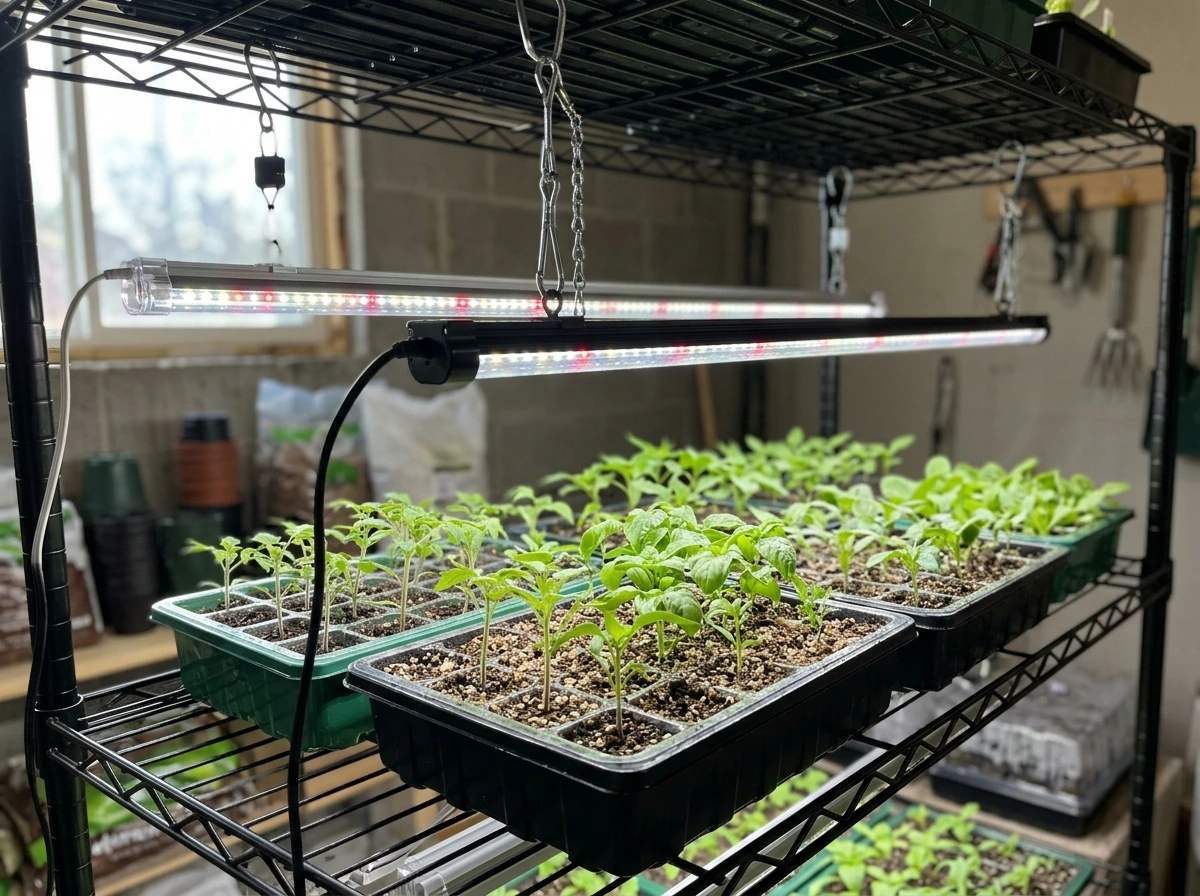
The brand makes a wide range of bar-style LED fixtures across T5 and T8 form factors, from tiny 5W, 1-foot strips up to 63W multi-spectrum bars. The better models include real red-spectrum emitters (660nm, far-red at 730nm in some versions) and hit usable PPFD numbers at close range. The weaker models are essentially upgraded grow-spectrum shop lights. Knowing which is which before you buy is the whole point of this review.
The Barrina lineup explained
Barrina sells grow lights primarily as bar-style or tube-style fixtures in T5 and T8 configurations. Most are linkable, meaning you can chain multiple units from a single power cord, which is the main practical advantage for shelf or rack setups. Here is how the current lineup breaks down.
T5 series: entry-level shelf lights
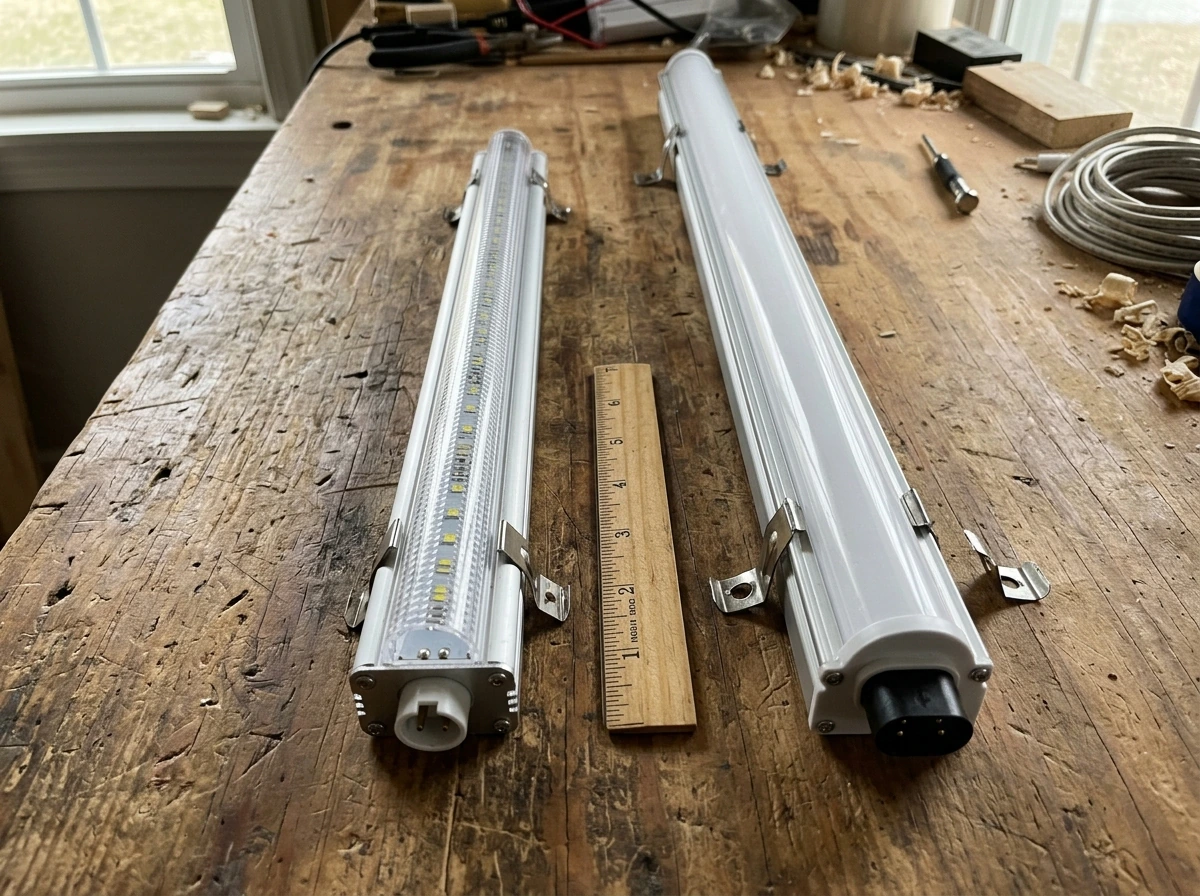
The T5 NC05 is a 1-foot, 5W strip running at 5000K full-spectrum with a magnetic mount and linkable design. It is as small and low-power as grow lights get. The T5 ML20 steps up to 4 feet and 20W, also 5000K, also linkable, running on standard 120VAC. Both are aimed at small shelf setups, propagation trays, and low-light plants. They are what most people picture when they search 'Barrina T5 grow lights. If you want the same budget-friendly, linkable idea but with more output, see the TX series section and the related Barrina TX-L63 and TX72 comparison in our barrina t5 grow lights review. '
T8 series: more output, reflector design
The T8 QF24 is a 2-foot, 24W fixture with a V-shaped reflector and wide voltage input (AC85 to 265V), which makes it usable internationally and also suggests a better-quality driver. The T8 QL42 is a 4-foot, 42W version with the same reflector-style design and includes a pink-light variant that adds red spectrum output. Both are linkable.
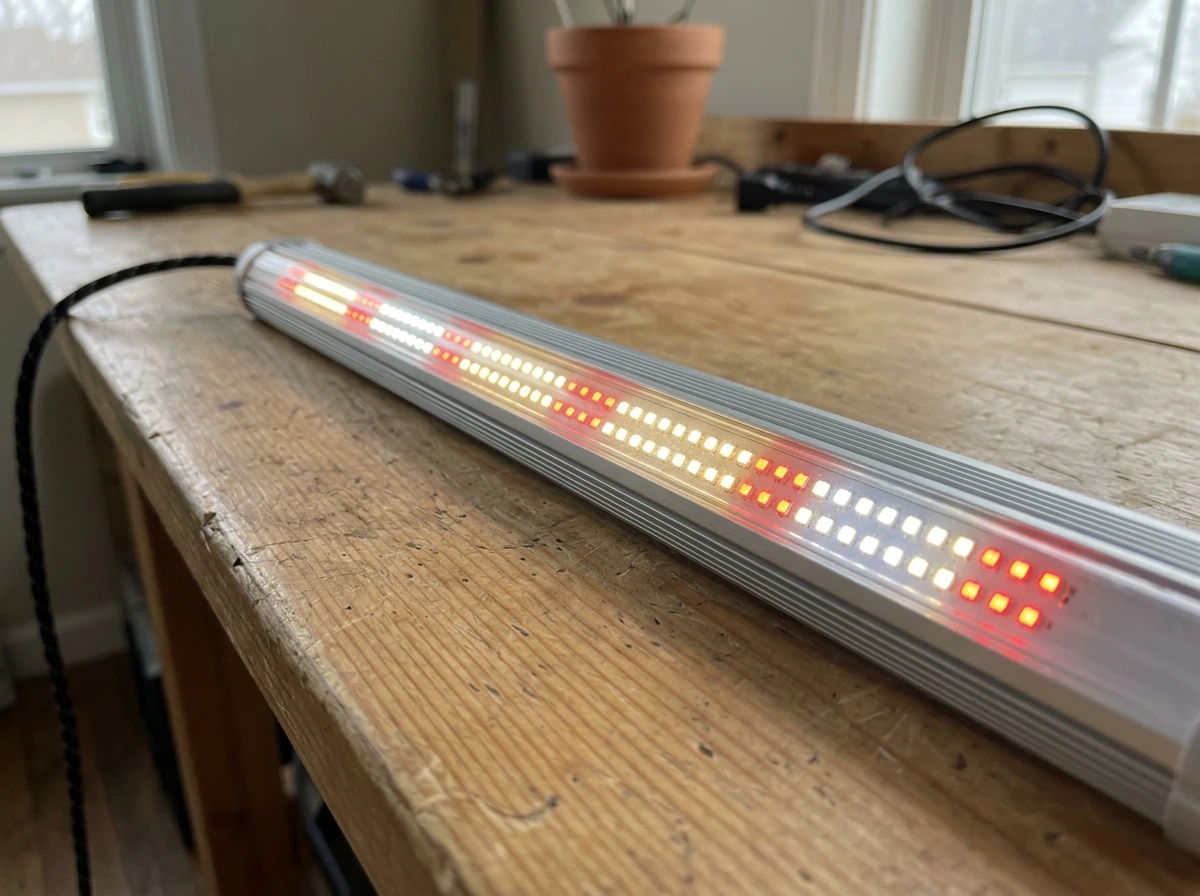
This is where Barrina gets genuinely interesting. The TX-L63 is a 3-foot, 63W bar with a 3000K+6500K+660nm LED mix, meaning it combines warm white, cool white, and a dedicated red channel. The TX72 is a 4-foot version of similar design. These are not just 'full-spectrum' shop lights with a marketing label. The multi-diode approach produces a spectrum that is meaningfully more useful for plant growth across all stages, and the PPFD numbers reflect that.
| Model | Size | Wattage | Spectrum | Voltage Input | Key Feature |
|---|
| NC05 (T5) | 1 ft | 5W | 5000K full-spectrum | 120VAC | Magnetic mount, linkable |
| ML20 (T5) | 4 ft | 20W | 5000K full-spectrum | 120VAC | Linkable, budget shelf light |
| QF24 (T8) | 2 ft | 24W | 5000K full-spectrum | AC85-265V | V-reflector, heat dissipation |
| QL42 (T8) | 4 ft | 42W | 5000K / pink variant | N/A | Reflector, linkable, red option |
| TX-L63 | 3 ft | 63W | 3000K+6500K+660nm | N/A | Multi-spectrum bar, high PPFD |
| TX72 | 4 ft | ~72W | 3000K+6500K+660nm | N/A | High PPFD bar, full coverage |
PPFD (photosynthetic photon flux density, measured in µmol/m²/s) is the number that actually tells you whether a light can grow plants. Marketing language like 'full-spectrum' and 'high efficiency' means little without it. Here is what Barrina's own specs and real-user measurements suggest across the lineup.
T5 and T8 entry models: honest numbers
The T8 QF24 is rated at 210.7 µmol/m²/s at 8 inches per light, and that figure comes from Barrina's own manual. In practice, users report PPFD hovering around 100 to 125 µmol/m²/s at roughly 10 inches with their 15W T8 units, which is roughly consistent with the spec once you account for the wattage difference. One multi-shelf measurement of Barrina T5s showed readings of about 250 µmol/m²/s at the top shelf directly under the light, dropping to around 100 at mid-level and 60 at the bottom, which is a steep falloff. That kind of drop-off is normal for bar lights but confirms you need to keep plants close.
Some independent reviewers have been blunt: the T5 models deliver 'crappy PPFD' for applications requiring moderate to high light, like sun-loving succulents or carnivorous plants needing high PAR. That is not unfair. At 5W or even 20W per bar, you are not generating photosynthetically meaningful light across more than a narrow strip directly beneath the fixture. For shade-tolerant plants and seedlings, that is fine. For anything more demanding, you need multiple bars run very close together or you need to step up to the TX series.
TX series: meaningfully higher output
The TX-L63 is rated at 597.85 µmol/m²/s at just 3.94 inches (10cm) from the fixture. The TX72 comes in at 543.51 µmol/m²/s at the same distance. These are peak numbers at very close range, so you should not treat them as coverage-area figures. But they do indicate that the TX series has the output to sustain vegetative growth and even support early flowering if you hang them at the right height and cover enough area with multiple bars. At 12 to 18 inches of hanging height, you can expect usable seedling-to-veg range PPFD from these units over a reasonable footprint.
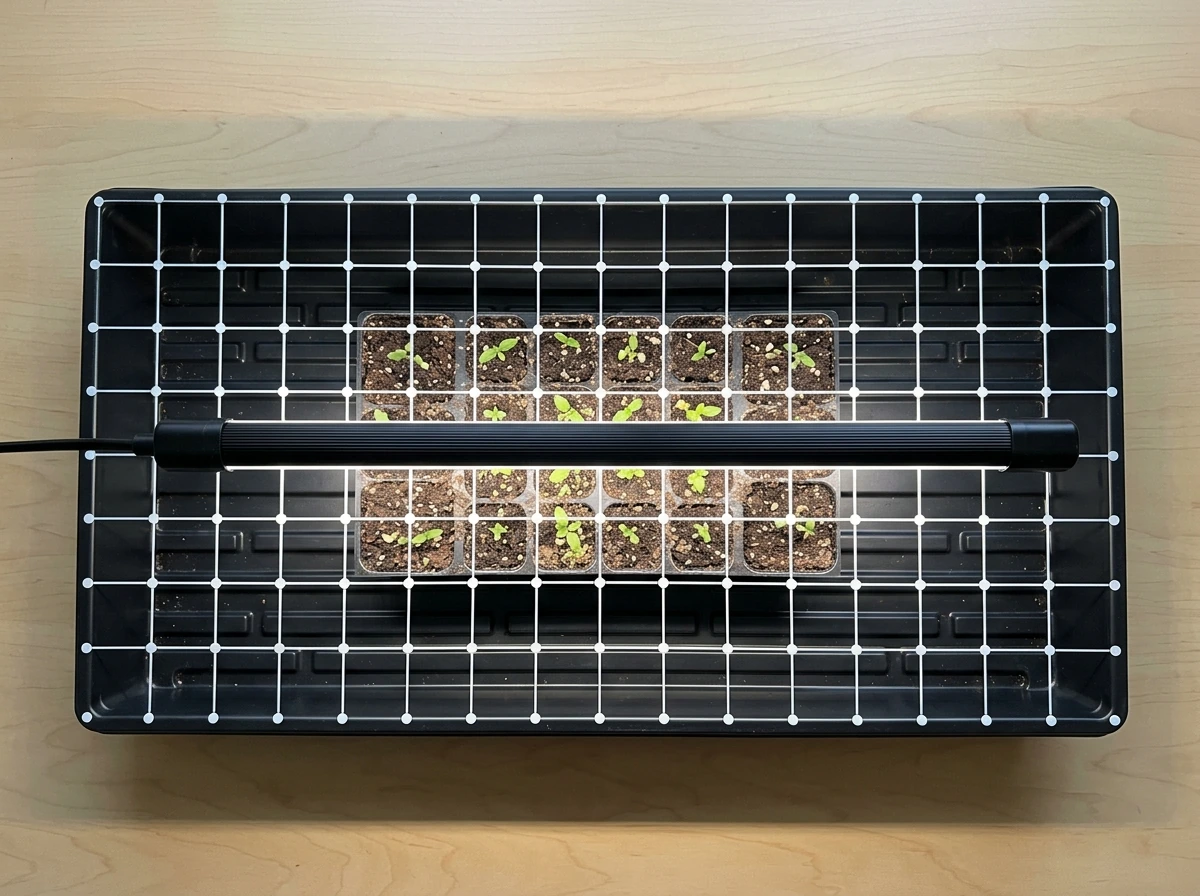
Bar lights in general produce uneven coverage compared to panel lights. A single Barrina bar will create a hot strip directly below it and fall off steeply toward the edges. The V-shaped reflector on the QF24 and QL42 helps spread light a bit wider, but you still need to space multiple bars evenly across your canopy to get anything resembling uniform distribution. For shelf setups with fixed-depth trays, this is manageable. For open tent growing, you need to plan bar placement carefully.
Brightness, heat, and build quality
Barrina fixtures run noticeably cooler than HPS or even some lower-quality LEDs, which is one of the practical benefits of bar-style LED design. The QF24 manual specifically highlights V-shaped reflector design and heat dissipation, and in practice these lights do not get uncomfortably hot to the touch during normal operation. That matters in enclosed shelf setups where heat can accumulate quickly.
Build quality is where the brand earns some caution. The housings are plastic-dominant, which keeps costs down but does not convey premium durability. The drivers in the T5 and lower T8 models are functional but basic. The QF24's wide voltage input (AC85 to 265V) suggests a more capable driver than you typically find in this price bracket, which is a point in its favor. The TX series appears to use more sophisticated circuitry given its multi-channel LED configuration.
Reliability over time is a mixed picture based on user reports. Some owners report their Barrina strips running fine for years without failures. Others have observed a small flicker developing after extended use, and there are reports of T8 units beginning to flicker, with enough users raising this that it is a documented pattern rather than a one-off incident. No widespread early burnout complaints appear in the community, but the flicker issue is worth knowing about if you are sensitive to it or running time-lapse photography in your grow space.
Value for money: what you actually get per dollar
Barrina's pricing sits firmly in the budget category. A 6-pack of QF24 2-foot T8 fixtures typically runs well under $100 for 144W of total draw. The TX-L63 costs more per unit but is still priced well below comparable-wattage bars from premium brands. That pricing shapes how you should think about value.
For the T5 and lower T8 models, cost per watt is excellent, but cost per µmol is not, because efficiency per watt is modest. You are paying a low absolute price for a functional but not particularly efficient grow light. The ROI math works best when you are growing low-to-medium light plants where you do not need to push PPFD into the 400 to 800+ range. For succulents, herbs on a kitchen shelf, seedling starts, or shade-tolerant tropicals, you are buying exactly what you need and not overpaying.
The TX series offers better value at higher performance levels. If you need 500+ µmol/m²/s for vegetative or early flowering work and you are comparing the TX-L63 against similarly priced single-bar competitors, Barrina holds its own. The multi-spectrum LED configuration (3000K+6500K+660nm) is not a gimmick at this tier; it produces a spectrum that is demonstrably more complete than a single-CCT fixture. You are getting real photosynthetically useful red output that the T5 and lower T8 models lack.
Which plants and grow stages actually benefit
The honest answer here is that not every Barrina model suits every grow stage, and getting this matching right is more important than any other buying decision.
Seedlings and propagation
This is where Barrina T5 and lower T8 models genuinely shine. Seedlings need relatively low PPFD, typically in the 100 to 200 µmol/m²/s range. At 8 to 12 inches, the QF24 delivers comfortably in that window per light, and the T5 bars can produce useful levels if kept within 6 to 10 inches. The linkable design makes it practical to run multiple bars across a propagation tray from a single cord. For starting vegetables, herbs, or flowers indoors in late winter, the T5 ML20 or T8 QF24 packs are a sensible, cost-effective choice.
Vegetative growth
Vegetative plants typically want 200 to 400 µmol/m²/s or more. The T5 models struggle here unless you are running multiple bars very close together, which gets impractical. The T8 QF24 can work for low-to-moderate veg plants if kept close. The TX-L63 and TX72 are the right tools for this stage: they hit 500+ µmol/m²/s at close range and drop to more manageable veg-zone numbers at 12 to 18 inches. For consistent vegetative growth on leafy vegetables, tropicals, or herbs that need real light, go TX series.
Flowering
The T5 and single-CCT T8 models are not suited for flowering. They lack sufficient red-spectrum output (660nm and beyond) and cannot deliver the PPFD levels flowering plants need, typically 400 to 800+ µmol/m²/s over meaningful coverage area. The TX-L63 and TX72, with their dedicated 660nm channel and higher wattage, are the only Barrina products that could reasonably support early to mid-stage flowering on smaller plants. Even then, you will be running multiple bars and keeping them relatively close to the canopy. For heavy-flowering crops or high-light fruiting plants, Barrina's lineup in general is under-powered and you should consider purpose-built horticultural bars.
Low-light and shade-tolerant plants
This is Barrina's sweet spot across almost every model. Hoyas, pothos, ferns, most begonias, and a wide range of tropical houseplants on multi-tier shelving do extremely well under Barrina T5 or T8 bars. Users running Barrina strips on Hoya collections and similar shelf setups consistently report healthy, consistent growth. At 6 to 12 inches distance with the T5 or T8, you get the 50 to 200 µmol/m²/s that most low-light tropical plants thrive under without any risk of light burn.
Setup, installation, and safety
Barrina lights are among the easier grow lights to set up, which is one of their real-world advantages. The linkable design means you run one power cord and daisy-chain additional bars using the included connectors. The magnetic mounts on the T5 NC05 make shelf attachment simple for metal wire racks. The T8 fixtures typically include mounting hardware for ceiling or rack installation.
Hanging height and coverage planning
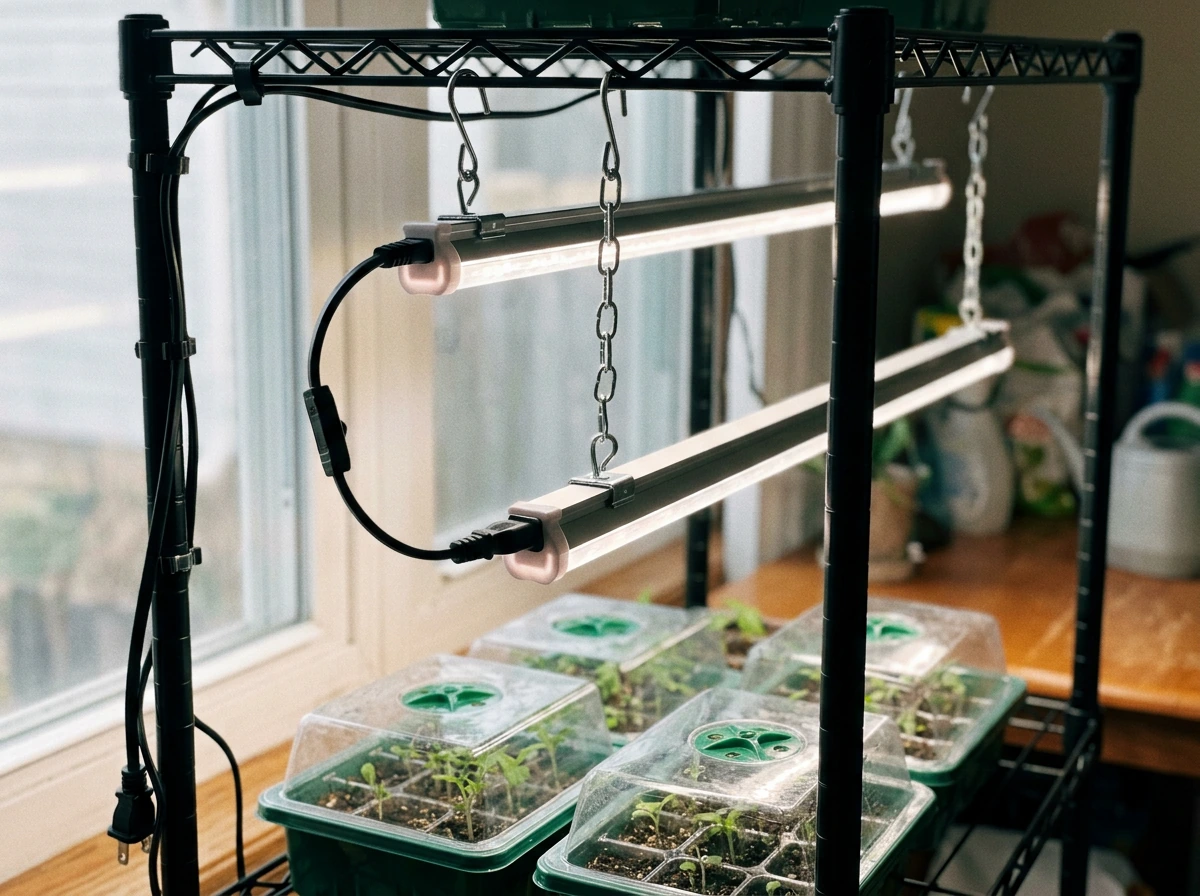
PPFD drops sharply with distance from bar lights, so hanging height is your primary lever for controlling light intensity. General guidelines based on documented measurements:
- T5 NC05 / ML20: keep within 4 to 8 inches for seedlings, 3 to 6 inches for any plant needing moderate light
- T8 QF24 / QL42: 6 to 12 inches for seedlings and low-light plants, 4 to 8 inches for moderate-veg plants
- TX-L63 / TX72: at 3.94 inches these hit 500+ µmol/m²/s (too hot for seedlings at that distance); aim for 12 to 18 inches for veg, 8 to 14 inches for higher-light plants
- For even coverage across a full shelf or tray, space bars 6 to 8 inches apart horizontally rather than clustering them
A practical note: users running Barrina T8 lights at 2 to 5 inches from plants report good results for low-growing seedlings and compact herbs. That is a workable approach for shallow trays but watch closely for any bleaching or tip burn on sensitive seedlings, especially under the TX series at close range.
Safety considerations
Barrina's own manual for the QF24 specifically calls out moisture exposure as a risk: do not expose the fixtures to direct water or excessive humidity. This is important if you are using them in a greenhouse cabinet or above a misting setup. The lights are not rated for wet or even damp locations; treat them as dry-location fixtures only.
The TX series at close range generates meaningful intensity, and you should avoid looking directly at the fixture during operation. Barrina lights are not high-UV emitters, but the sheer brightness at short distances is uncomfortable and potentially harmful to eyes over time. A simple rule: hang them, set your timer, and do not stare at them. For anyone spending extended time in the grow space, UV-blocking grow-room glasses are a reasonable precaution.
On electrical safety: the QF24's AC85 to 265V driver is a sign of quality here; it handles voltage fluctuations better than fixed-voltage drivers. When chaining multiple bars, do not exceed the manufacturer's stated linkable limit per chain (typically 6 to 8 units depending on model). Overloading a chain puts strain on connectors and drivers, which is likely where the flickering issues some users report originate.
How the models compare side by side
| Model | Best For | PPFD (closest spec) | Spectrum Quality | Build Durability | Value Rating |
|---|
| NC05 (T5 1ft) | Shelf accent, low-light plants | Low (no spec published) | Basic 5000K | Functional, basic | Good for price |
| ML20 (T5 4ft) | Seedlings, low-light shelves | ~100-250 at 6-10in (user data) | Basic 5000K | Functional, basic | Good for price |
| QF24 (T8 2ft) | Seedlings, propagation, low-veg | 210.7 µmol/m²/s at 8in | 5000K, reflector-boosted | Better driver, decent | Strong value |
| QL42 (T8 4ft) | Seedlings to low-veg, wider shelves | Not published (higher than QF24) | 5000K / pink variant adds red | Similar to QF24 | Good value |
| TX-L63 (3ft bar) | Veg to early flower, higher-light plants | 597.85 µmol/m²/s at 3.94in | 3000K+6500K+660nm | Better overall | Best value in lineup |
| TX72 (4ft bar) | Veg to early flower, wider coverage | 543.51 µmol/m²/s at 3.94in | 3000K+6500K+660nm | Better overall | Best value in lineup |
Who should buy Barrina (and who should look elsewhere)
Barrina is a solid choice if you fit one of these profiles: you are setting up a multi-tier wire rack for houseplants or herb starts, you want affordable seedling lights to supplement a sunny window during late-winter starts, or you need a cost-effective linkable system for a shallow greenhouse cabinet. If you want a deeper breakdown of the specific models in this category, a dedicated Barrina LED T8 grow light review can help you compare output and build details side by side. The T8 QF24 packs in particular offer good measurable output for the price, and the TX series is competitive for anyone needing veg-capable bars without spending premium prices.
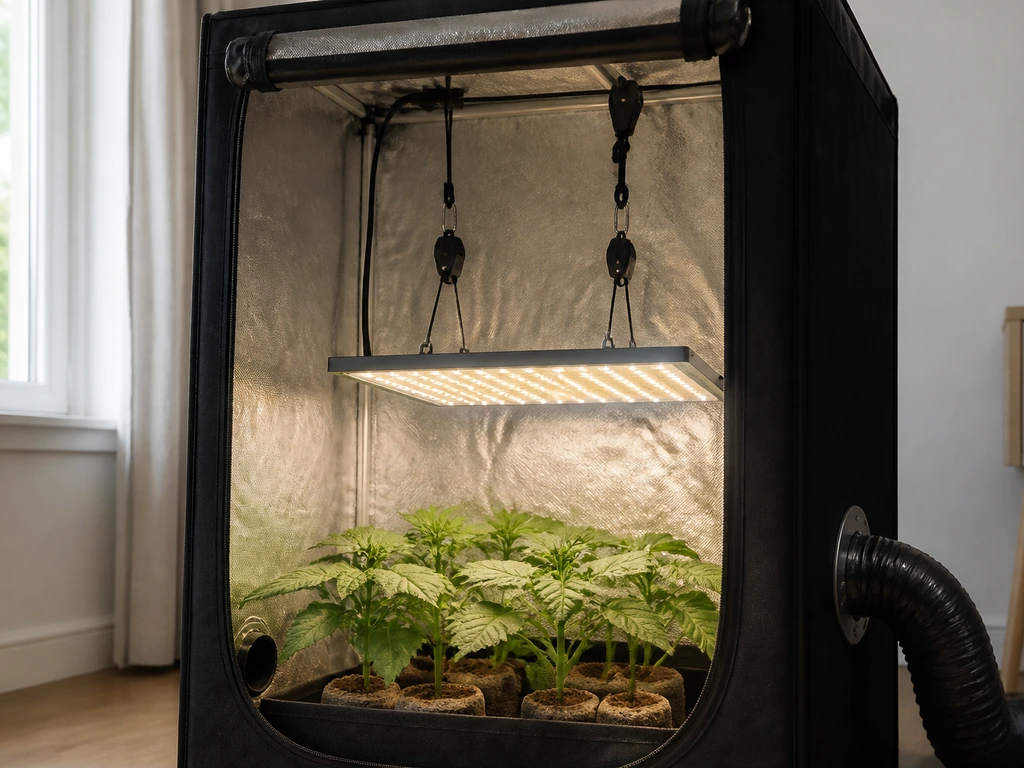
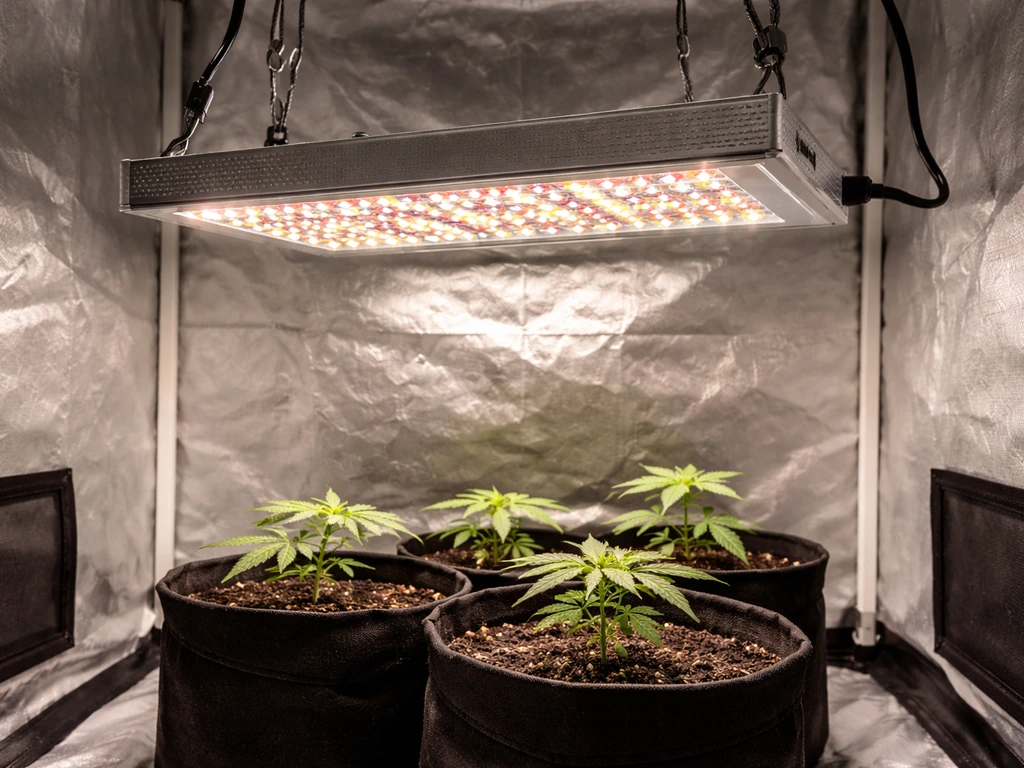
Skip Barrina if you are trying to flower tomatoes, peppers, or cannabis in a serious grow tent. The T5 and basic T8 models are simply not powerful enough, and even the TX series will leave you wanting more output across any meaningful canopy area. For those applications, you need purpose-built horticultural bars with higher efficacy ratings and better spectral engineering. You can check our reviews of other bar-style and panel grow lights for comparison in those performance tiers. If you are specifically researching LED bar options, you can also find our GE PAR38 grow light review for a different fixture type and performance expectations check our reviews of other bar-style and panel grow lights.
One last practical note: if you are specifically comparing the T5 and T8 Barrina models for a specific application like a greenhouse cabinet or IKEA Milsbo build, those two categories are meaningfully different in output and are covered in more depth in the dedicated Barrina T5 and Barrina LED T8 reviews on this site. This overview is the starting point; those digs into individual model series if you have already narrowed down your direction.