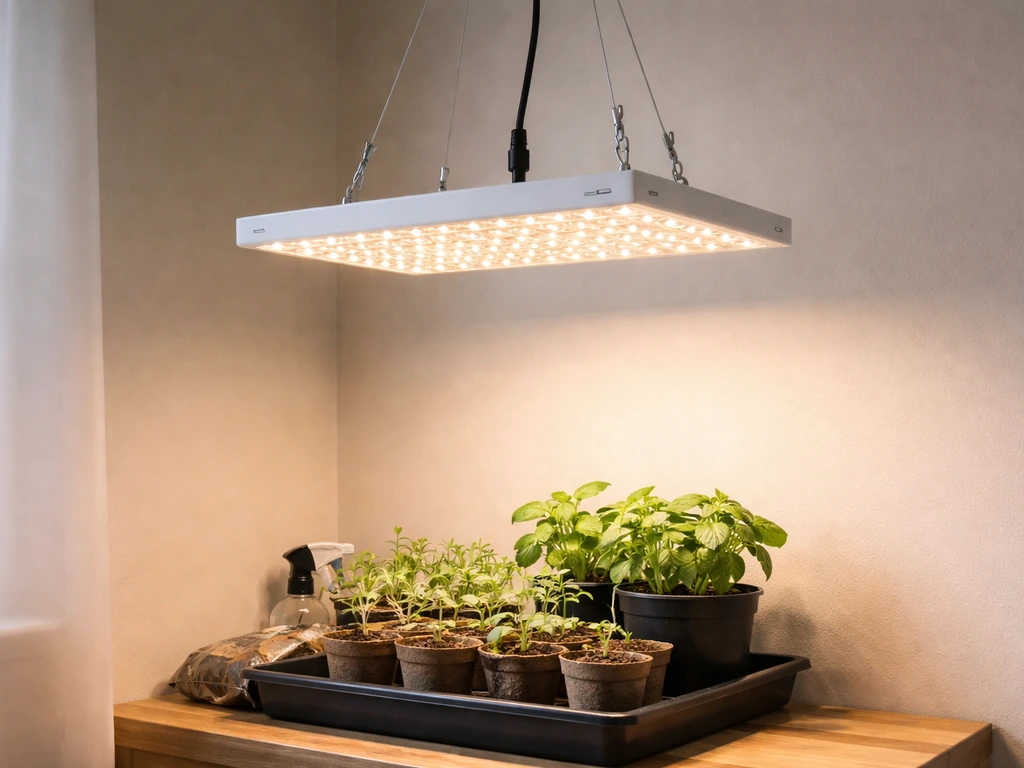
Yes, a Samsung LM301B-based grow light is genuinely worth buying for most hobbyist and small-scale indoor grows. These quantum board fixtures reliably deliver 200 to 900+ µmol/m²/s of usable light depending on wattage and mounting height, run cool enough that heat rarely becomes a problem, and pull real efficiency numbers in the 2.5 to 2.9 µmol/J range. The catch is that the market is flooded with LM301B-branded lights of wildly different quality, so what you pay for matters more than the diode name on the box.
Samsung LM301B Grow Light Review: PPFD, Heat, and Value

Marcus Caldwell
13 May 2026
What the Samsung LM301B diode actually is
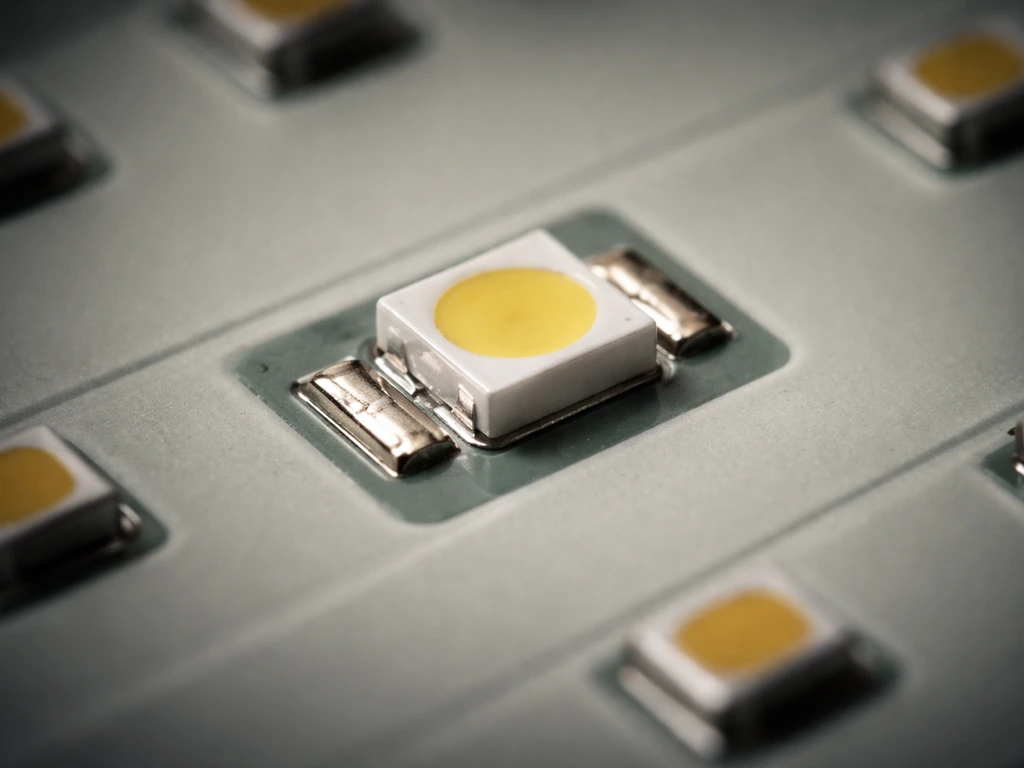
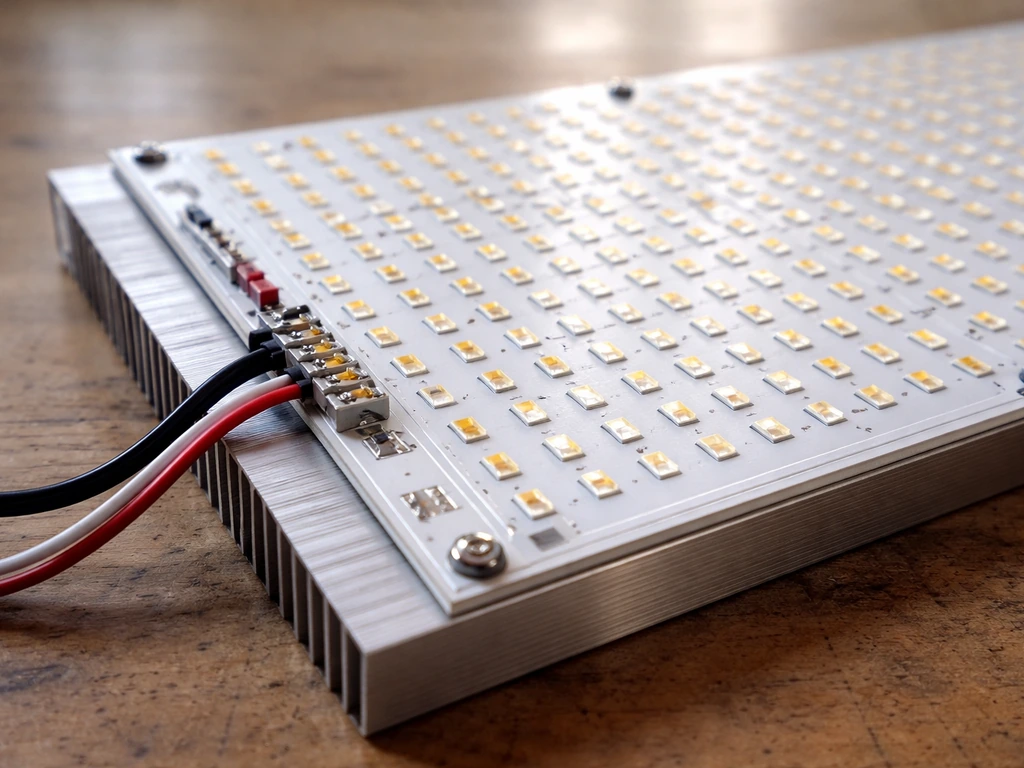
The Samsung LM301B is a small-format (3030 package, meaning 3mm x 3mm) white LED used in horticulture quantum board designs. Samsung offers it across a broad range of color temperatures: 2700K, 3000K, 3500K, 4000K, 5000K, 5700K, and 6500K, plus CRI variants including CRI80 and CRI90 families, with the updated 'EVO' revision being the current production line. The EVO revision introduced flux and efficiency improvements over the original LM301B, so when you're comparing listings, it's worth checking whether the product references the base LM301B or the LM301B EVO since efficacy and thermal limits can differ between datasheet revisions.
In plain language, the 3030 package is small and low-power per diode, which is the point. Quantum boards spread hundreds of these diodes across a large aluminum board, running each diode at a fraction of its rated current. Lower current per diode means less heat, higher efficiency, and longer diode life compared to older high-power LED designs that crammed fewer, hotter chips into a fixture. This is why LM301B boards feel barely warm to the touch during operation when properly driven.
One thing worth clarifying: Samsung publishes flux bin ranges per CCT rather than a single lumen number. At 4000K, for example, individual diode flux bins range from roughly 36 to 40 lumens depending on the bin code, which means two boards using 'Samsung LM301B' diodes at the same CCT can have slightly different total output if manufacturers cherry-pick or accept different bin grades. Budget boards sometimes use lower-grade bins without advertising it.
Real-world PPFD, coverage, and what the numbers mean for your grow
PPFD (photosynthetic photon flux density, measured in µmol/m²/s) is the number that actually tells you how much usable light your plants receive. Marketing lumens are nearly useless for grow lights since human eyes and plants respond to different wavelengths. Here's what you can realistically expect from LM301B boards at different wattages and heights based on tested product data:
| Board Wattage | Mounting Height | PPFD (center/avg) | Realistic Coverage |
|---|---|---|---|
| 100W | 30 cm (12 in) | ~820 µmol/m²/s | 0.5–0.6 m² seedling/veg |
| 100W | 60 cm (24 in) | ~240 µmol/m²/s | 0.8–1.0 m² light veg/clones |
| 110W | 30 cm (~12 in) | ~761 µmol/m²/s | 0.5–0.7 m² veg |
| 120W | 30 cm (12 in) | ~697 µmol/m²/s (avg) | ~0.6 m² flowering |
| 240W | 45–60 cm | Varies by fixture; heatmap reference recommended | 1.0–1.2 m² flowering |
A couple of important notes on those numbers. First, center PPFD is always higher than average PPFD across a footprint, and good manufacturers publish actual PPFD heatmaps showing uniformity across the coverage area, not just peak values. Some brands like LED-Tech make downloadable PPFD heatmaps available for their LM301B fixtures, which is the right approach. If a listing only advertises a single center-point number, factor in that real average coverage will be significantly lower. Second, the 697 µmol/m²/s from a 120W board at 12 inches is a high-intensity number for that wattage, suggesting good optical concentration, but it also means you need to raise the light or dim it for seedlings and young veg to avoid light stress.
For practical planning: seedlings and clones want 100 to 250 µmol/m²/s, vegetative growth does well from 300 to 600 µmol/m²/s, and flowering light-hungry plants like cannabis, tomatoes, or peppers want 600 to 900+ µmol/m²/s at canopy level. A well-driven 100W LM301B board can cover roughly a 2x2 ft (0.4 m²) space properly in flower, or stretch to a 2x3 ft space for vegetation. For a 3x3 ft flowering space, plan on 200 to 240W minimum. A 4x4 ft flower tent realistically needs 400W or more.
Spectrum choices: full-spectrum, blurple, and why quantum boards win
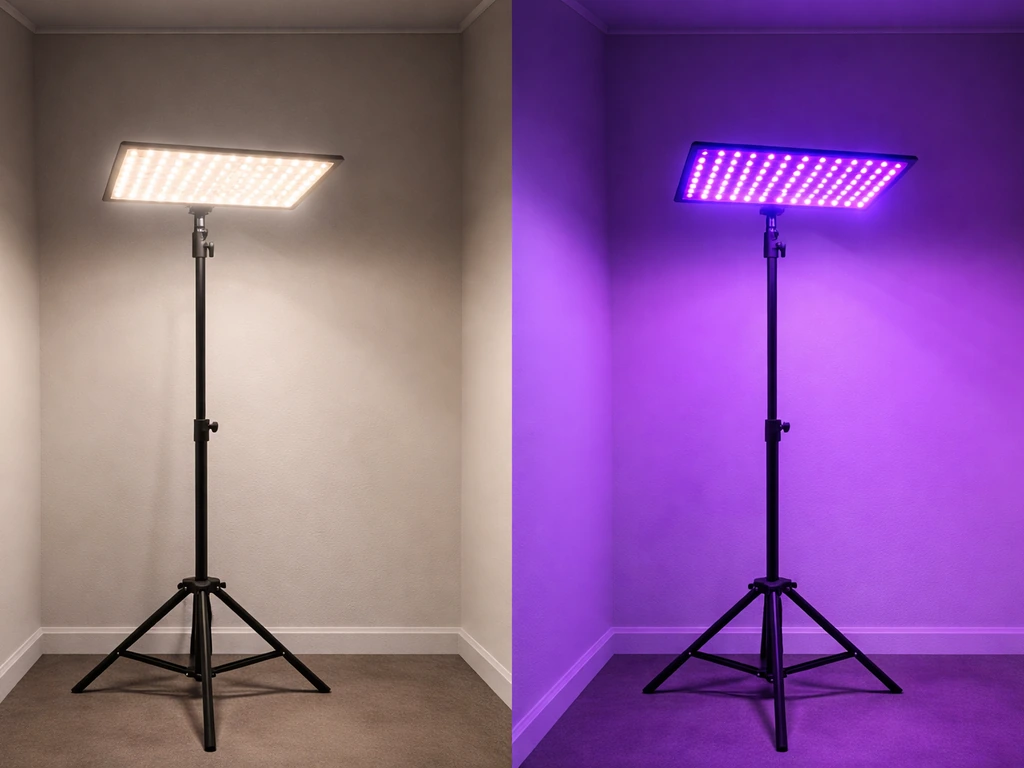
Most LM301B grow lights are sold as 'full-spectrum' quantum boards, and in this case the marketing mostly holds up. White LEDs at 3000K to 4000K produce a broad, continuous spectrum that covers the photosynthetically active range well, including the red peaks (around 630 to 680nm) and blue peaks (around 430 to 460nm) that plants use most. Many LM301B boards also add dedicated 660nm deep-red diodes to boost the flowering spectrum, which is a meaningful addition since white LEDs are relatively weak in that narrow red band.
Blurple lights (the older style with narrow-band blue and red LEDs only) produce highly unnatural, often uncomfortable pink or purple light that makes it very hard to spot pests, deficiencies, or problems on your plants. Full-spectrum white LED boards produce a natural-looking light that's far easier to work under. There's also good evidence that the broader continuous spectrum from white LEDs supports more complete photosynthesis and better secondary metabolite production than narrow-band blurple fixtures.
For CCT selection, 3000K to 3500K boards with supplemental 660nm are the most popular all-stage choices since the warmer color temperature is weighted toward red wavelengths that favor flowering while still covering veg adequately. If you only grow leafy greens, herbs, or seedlings, a 4000K to 5000K board works well and sometimes feels slightly more 'daylight' in your grow space, making plant inspection easier. Cooler CCTs like 6500K emphasize blue wavelengths and are better suited to pure vegetative or propagation setups.
Efficiency and electricity cost: what the watt-to-light ratio means in practice
This is where LM301B boards genuinely stand out from older LED designs. Published efficacy for quality LM301B boards reaches around 2.9 µmol/J, which is excellent. In real terms, a 100W LM301B fixture producing 2.9 µmol/J delivers roughly 290 µmol/s of photons total, which is solid performance for that input power. Compare that to blurple fixtures that often deliver 1.5 to 2.0 µmol/J, or cheap no-name white LED panels that may not break 2.0 µmol/J regardless of what the label claims.
The driver efficiency matters too. Quality LM301B fixtures pair with Mean Well HLG-series drivers, which run at up to 95.5% efficiency. That means very little power is lost as heat in the driver itself, and the driver is rated for a life expectancy exceeding 62,000 hours when the case temperature stays at or below 75°C. In practical terms, a Mean Well HLG driver paired with properly managed LM301B boards should outlast your grow tent and most of the rest of your setup.
On electricity cost: a 240W LM301B fixture running 18 hours a day in veg (a common schedule) draws 4.32 kWh per day. At $0.15 per kWh, that's about $0.65 per day, or roughly $19.50 per month for the veg stage. Switch to a 12/12 flowering schedule and that drops to $0.43 per day, around $13 per month. These are real operating costs you can budget before you buy, and they're significantly lower than the equivalent HID or blurple fixture running the same effective light output.
Heat output is proportionally low because efficiency is high. Most of the input power becomes light rather than heat. The aluminum board and passive heatsink handle thermal dissipation without fans in most designs under 300W, which means silent operation and no moving parts to fail. The boards themselves run warm but not hot under normal conditions, typically in the 40 to 55°C range at full power in reasonable ambient temperatures.
Component quality: what to actually look at before you buy
Driver
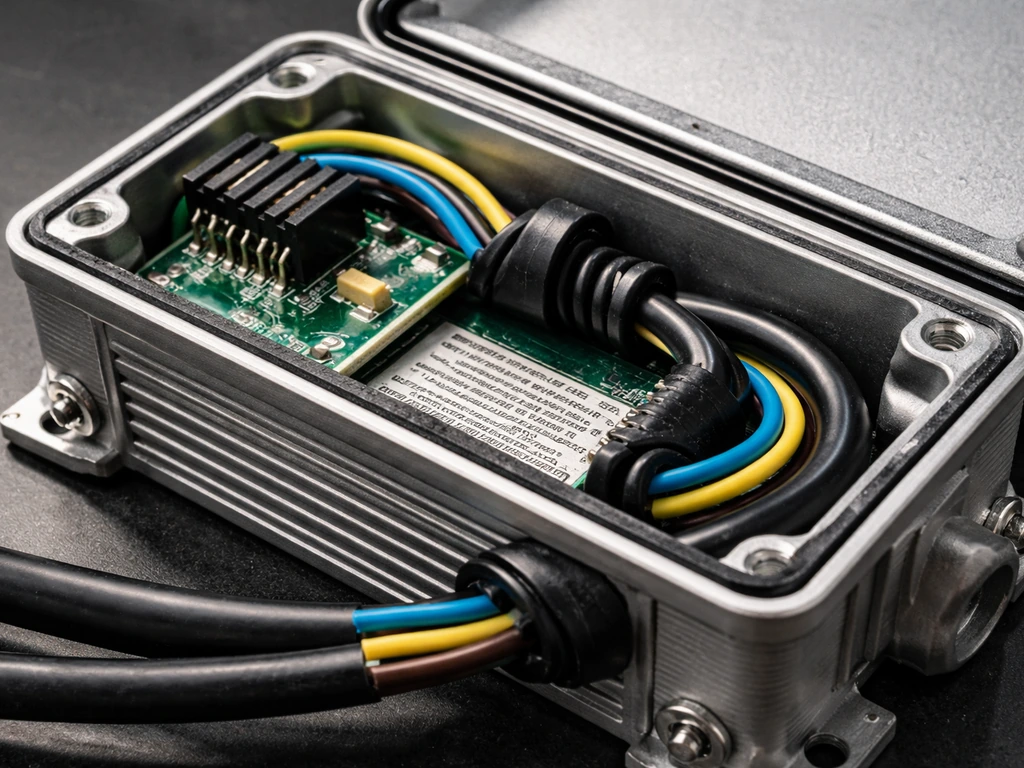
The driver is the single most important component outside the diodes themselves. Mean Well HLG series drivers are the gold standard in this category. They're waterproof-rated, highly efficient, and the 62,000+ hour life expectancy at rated temperatures is real and documented in their published datasheets. Cheaper boards use no-name or unbranded drivers that frequently fail within a year or two, which is where most budget LM301B fixtures lose their value proposition. If a listing doesn't explicitly state the driver brand and model, assume it's not Mean Well.
Heatsink and thermal design
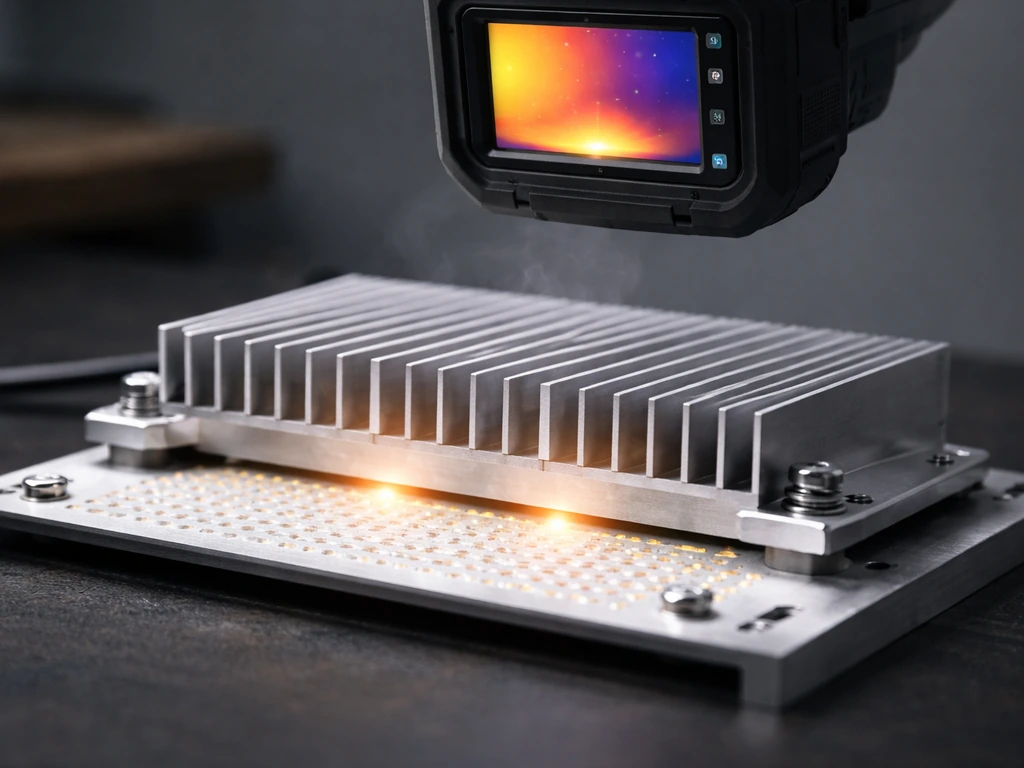
Most LM301B quantum boards use an aluminum heatsink for passive cooling. Thickness matters: a 10mm aluminum heatsink (as specified on some 240W QB products) is adequate but not luxurious for higher-wattage boards. Thicker heatsinks and larger surface area mean better thermal management, which directly protects diode lifespan. Boards running at higher current per diode to hit watt targets on cheap hardware run hotter and die faster. On better-built fixtures, the heatsink should feel warm but never uncomfortably hot during operation.
Board layout and wiring
A well-designed LM301B board spaces diodes evenly to produce a uniform PPFD footprint rather than a hot spot in the center. You can get a rough sense of this from published heatmaps if available. Wiring quality varies: look for clean, strain-relieved connections and a driver housing that keeps the electronics away from moisture and direct splash. Boards with sloppy solder joints, exposed wiring, or poorly attached driver mounts are a reliability red flag regardless of which diodes are on the board.
Dimming and control
Most Mean Well HLG-series drivers include a dimming potentiometer or support external dimming via a 0-10V signal. This is genuinely useful: you can run the light at 50 to 60% during seedling stages to avoid light stress, dial up to 100% during peak flower, and manage heat in warm climates by backing off intensity without raising the fixture. Lights without dimming force you to manage canopy distance as your only variable, which is workable but less flexible. If you're running a multi-stage setup or a perpetual harvest, dimming is worth the small price premium.
LM301B vs LM301H vs competitors: which one actually makes sense
Samsung's LM301H is the direct successor to the LM301B. It uses the same 3030 package format and is offered in 3000K, 3500K, 4000K, 5000K, and 5700K CCT options, so the product lineup is similar. The LM301H was designed with improved efficacy over the original LM301B, and fixtures built on LM301H diodes can push efficiency numbers that compete with or exceed what LM301B EVO boards hit. In practical terms, the difference in plant results between an LM301B EVO board and an LM301H board of the same wattage, driven properly, will be marginal for most hobbyist applications. The more important variable is how the board is driven and the driver and heatsink quality.
| Diode | Package | Peak CCT Options | Relative Efficacy | Best For |
|---|---|---|---|---|
| Samsung LM301B EVO | 3030 | 2700K to 6500K | Excellent (~2.7–2.9 µmol/J at board level) | Most hobbyist grows; wide CCT availability |
| Samsung LM301H | 3030 | 3000K to 5700K | Excellent to outstanding (comparable or slightly higher) | Efficiency-focused builds; newer fixtures |
| Competitor white LED boards (non-Samsung) | Varies | Varies | Often 1.8–2.3 µmol/J in budget products | Budget entry-level; verify claims |
| Blurple LEDs | Various | N/A (narrow band) | Often 1.5–2.0 µmol/J | Not recommended for serious grows |
Where LM301B boards beat the competition most clearly is at mid-price points in the $80 to $250 range for 100 to 240W fixtures. In this bracket, a quality LM301B board from a reputable manufacturer consistently outperforms comparably priced blurple fixtures and most non-Samsung LED panels on efficiency, spectrum quality, and operational lifetime. At the premium end of the market, LM301H and other high-bin diode boards from established brands start pulling ahead, but the price premium is hard to justify for vegetable gardens, herbs, and most flowering plants where you're not optimizing for maximum yield per watt at commercial scale.
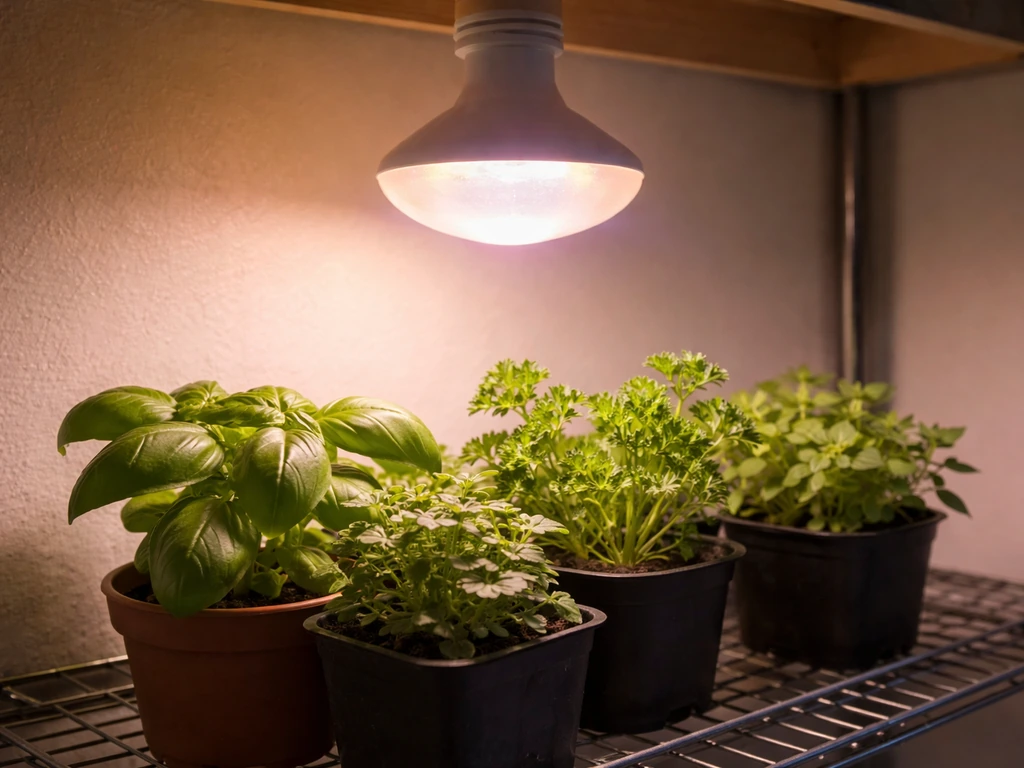
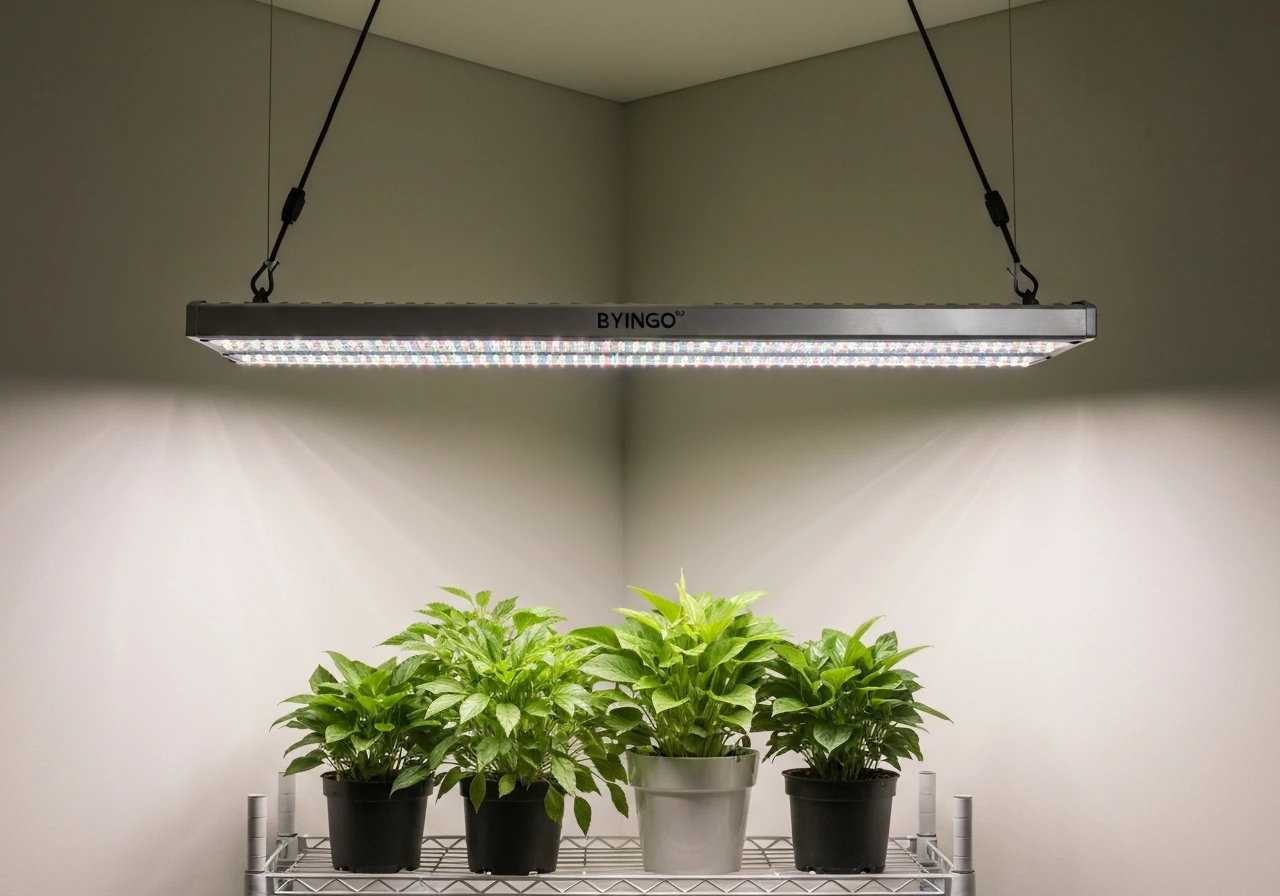
It's also worth knowing what neighboring products in the grow light market look like. If you've come across brands positioning themselves as budget Samsung alternatives, reviews of products like those in the Jamsung or Byingo lineups can give you useful context for what to expect from value-tier LED fixtures versus name-brand Samsung diode boards. If you specifically want a jamsung grow light review, compare its reported PPFD, driver model, and warranty against the same wattage options from reputable Samsung board sellers Jamsung or Byingo lineups. The GE BR30 grow light sits in a completely different category, more of a plug-in household bulb for windowsill plants, which illustrates how broad the 'LED grow light' label has become. If you specifically want a GE BR30 grow light review, the same basics apply, but you will be evaluating a plug-in bulb style instead of a quantum board fixture.
Who should buy an LM301B grow light and what to check first
LM301B boards are the right call for indoor gardeners growing in spaces from about 1x1 ft to 5x5 ft, covering anything from propagation trays to full flowering tents. They're appropriate for all plant stages when paired with dimming, and they're efficient enough to run year-round without making a meaningful dent in your electricity bill. If you're growing herbs, vegetables, leafy greens, flowers, or fruiting plants indoors and you want a light that will last years without fuss, a well-built LM301B fixture is one of the most sensible purchases in the category.
Before you buy, run through this checklist:
- Confirm the driver brand and model. Mean Well HLG is what you want. If it's not listed, ask the seller or skip the product.
- Look for actual PPFD data at multiple heights, not just a single center-point number. A published heatmap is the best signal that the manufacturer has actually tested the fixture.
- Match wattage to your space: 100W for a 2x2 ft flower tent, 200 to 240W for a 3x3 ft, 400W+ for a 4x4 ft.
- Check the CCT and whether the board includes supplemental 660nm red diodes if you're flowering. A 3000K to 3500K board plus 660nm is a solid all-purpose choice.
- Confirm dimming is available, either via onboard potentiometer or external 0-10V control, especially if you're running seedlings and flowering plants in the same space at different times.
- Check the heatsink description. 10mm aluminum is workable; thicker is better for sustained high-wattage operation.
- Verify whether the listing claims LM301B or LM301B EVO, and be skeptical of sellers who can't provide a clear answer or who reference generic 'Samsung LED' without a specific part number.
One honest caveat: the LM301B name has become something of a marketing umbrella, and not every board claiming Samsung LM301B diodes is using the same bin quality, board design, or driver. The diode itself is excellent, but it's only as good as the system built around it. Buy from a manufacturer that publishes real PPFD data, names their driver, and stands behind a warranty of at least two to three years. Those three conditions filter out the majority of the low-quality options flooding the market right now, and they leave you with a fixture that will genuinely perform for years.
FAQ
How can I tell if an LM301B “full spectrum” board actually includes useful deep red (around 660 nm)?
Look for a parts list or spectrum photo that names the presence of 660 nm diodes (or additional red channels). If the listing only says “full spectrum” with no wavelength breakdown, assume you may be getting mostly white 2700K-4000K output, which can be adequate but usually not as optimized for flowering as boards that explicitly add 660 nm.“
What should I do if the seller only provides a center PPFD number and no heatmap or uniformity info?
Use a conservative coverage assumption. A common practical approach is to treat the advertised center PPFD as the top end and plan your target average PPFD by applying a reduction factor (for many boards it is roughly 20 to 40% lower on average, depending on spacing and design). If you cannot find a heatmap, increase wattage or reduce canopy distance rather than trusting the center reading blindly.
Do I need to worry about UV or far-red with LM301B boards?
Most LM301B quantum boards are designed around visible PAR, they typically do not provide meaningful far-red (around 730 nm) or UV-A for pest control or specialized photomorphogenesis. If you see marketing about UV or “sunlike” far-red, verify that the listing specifies wavelength channels, not just marketing claims.
How high should I mount the LM301B board for seedlings versus flowering?
Seedlings and clones are sensitive to intensity spikes. Even with dimming, start with a lower output level and a greater distance, then inch the light down while monitoring leaf posture (aim for normal, not stretched or clawing). For flowering, you can generally run closer or higher output, but confirm with your target PPFD and avoid maxing brightness right after transplant.
How do I choose between 3000K, 3500K, 4000K, and 5000K if I grow different crops?
If you want one board for mixed stages and plants, 3000K or 3500K is the most forgiving because it naturally leans red while still covering veg needs. If your main goal is easier plant inspection and you prefer a more neutral daylight look, 4000K to 5000K works well, but you may want supplemental 660 nm for stronger flowering emphasis.
Does LM301B “EVO” versus the original LM301B change what I should buy?
It matters mainly when two listings claim similar wattage but you care about total output and thermal behavior. If you are comparing otherwise similar boards, prioritize products that specify LM301B EVO, because updated revisions can provide better efficiency and/or flux under the same drive conditions. If you cannot confirm revision details, focus on real PPFD data and driver and heatsink quality first.
Can two boards with the same wattage and “Samsung LM301B” diodes still perform very differently?
Yes. Differences in bin grade, how hard the LEDs are driven (current per diode), heatsink quality, optics, and driver efficiency can change both PPFD and long-term reliability. That is why two boards labeled the same way can have different center PPFD, different uniformity, and different rates of performance drop over time.
How can I estimate whether a listed “efficacy” or “µmol/J” claim is realistic?
Treat it as a best-case marketing number unless the manufacturer also provides PPFD heatmaps at specified mounting heights. For a quick sanity check, compare the claimed µmol/J to your expected wattage output and see if it lines up with the PPFD results. If the efficiency claim is high but the PPFD coverage is poor, it is often a sign of optimistic testing conditions or missing data.
Is dimming via 0-10V worth it, or can I just adjust the hanging height?
Dimming is usually more efficient and more repeatable than adjusting height, especially if you run multiple stages or a perpetual schedule. With hanging-height-only control, canopy movement changes uniformity and can create hotspots or stress. If your driver supports 0-10V or has a built-in potentiometer, you can fine-tune daily intensity without constantly moving the fixture.
What warranty length is “good” for an LM301B quantum board?
A practical minimum is typically at least 2 to 3 years, especially if the listing names a known driver and provides real PPFD data. Short warranties on a “value” fixture are a red flag, because LED performance and driver failures are the most common expensive issues.
Do I need a fan if the LM301B board is “fanless”?
Often you do not need a fan directly on the fixture, but you still need adequate room airflow to manage ambient temperature around the heatsink and driver housing. If your grow space is warm or humid, improve ventilation or use gentle circulation so the board can shed heat consistently, which helps maintain efficiency and lifespan.
How should I think about coverage for a specific tent size if PPFD targets vary by plant?
Use stage-based targets, then work backward. For example, if you need 600 to 900+ µmol/m²/s at canopy for flowering, a tent size only tells you the footprint, not the required wattage. Always match wattage and mounting height to your target PPFD, and prioritize average PPFD uniformity, not just center peak.
What’s the safest way to buy an LM301B board when the seller’s specifications are incomplete?
Only buy if you can confirm at least (1) driver brand and model, (2) a real PPFD measurement method or heatmap at a stated mounting height, and (3) a reasonable warranty. If any of those are missing, budget for faster failure or for reduced performance versus expectations, because you cannot verify output or thermal design from the diode name alone.