The Acke LED grow light (model 4316270627) is a 12W, clamp-style full-spectrum plant light built for small-scale indoor growing. It works fine for seedlings, cuttings, and low-light houseplants on a desk or shelf. It is not a tent light, not a flowering light, and not a replacement for a dedicated grow tent fixture. If that matches what you need, it's a reasonable buy at its price point. If you're hoping to push plants through a serious vegetative or flowering stage, you'll want something with considerably more power.
Acke LED Grow Light Review: Testing, Coverage, and Value

Marcus Caldwell
18 May 2026
What the Acke LED grow light actually is
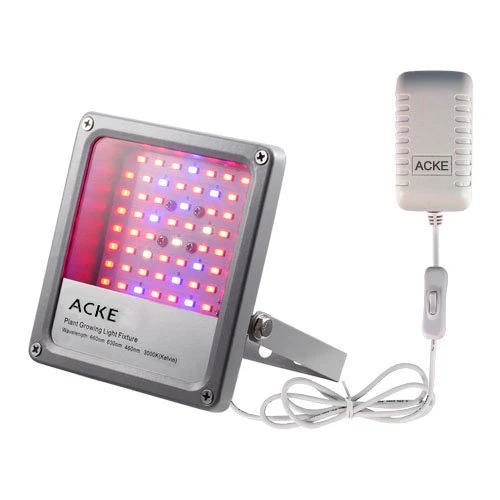
The model that shows up most consistently in searches for 'Acke LED grow light review' is the ACKE 4316270627. It's a compact, clamp-mount fixture sold under the 'full spectrum' label, and here are the hard specs straight from the manufacturer's documentation:
| Spec | Value |
|---|---|
| Model | ACKE 4316270627 |
| Rated power | 12W |
| Input voltage | 110V |
| Color temperature | 2700K |
| Number of LEDs | 40 |
| Dimensions | 7.64 x 5.59 x 2.05 inches |
| Weight | 12 ounces |
| Warranty | 1-year limited |
The 2700K color temperature sits in the warm-white range, which is heavier on red wavelengths. That's reasonably useful for early growth and for plants that prefer warmer spectrum conditions (think seedlings and some flowering houseplants). It is not a true quantum-board-style broad-spectrum fixture with separate blue and red channels or a tunable spectrum. The 'full spectrum' label here refers to a warm white LED that covers a broad-ish visible range, not a purpose-engineered horticultural spectrum with calibrated peaks at 450nm and 660nm like you'd get from a dedicated grow light brand.
The form factor is a clamp-style gooseneck or arm-mounted fixture. It's designed to clamp onto a shelf, desk edge, or small rack. There's no hanging kit, no tent-style spreader bar, and no secondary optics. It's essentially a desk lamp built for plants.
Hands-on performance: brightness, PPFD, and coverage
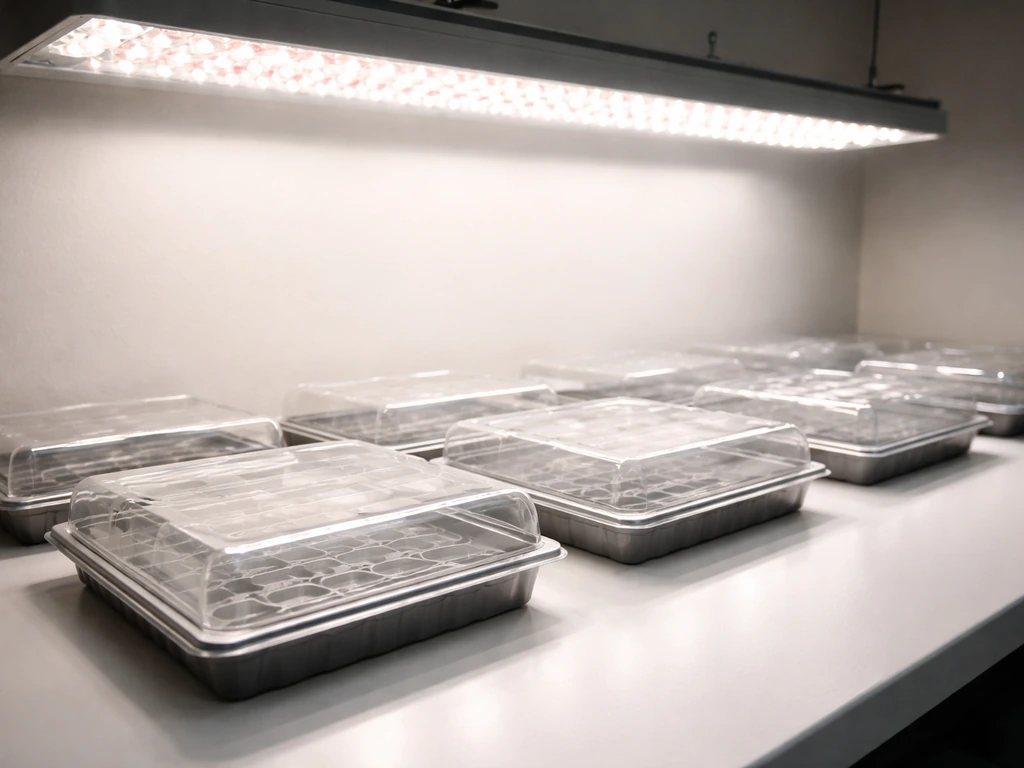
Here's where I have to be straight with you: there are no published, meter-verified PPFD maps for the Acke 4316270627 from a credible lab or from a tester who documented their methodology. The manufacturer doesn't provide a PPFD chart, and community discussions about this light focus on general impressions rather than PAR meter readings. That's telling in itself. Lights from serious horticultural brands, even budget ones, typically publish at least a center-point PPFD at a stated distance. The absence of that data for the Acke isn't a dealbreaker for a $15-25 clamp light, but it does mean you're flying somewhat blind on actual photon output.
What I can tell you, based on physics and experience with similar 12W warm-white fixtures: at 12 actual watts of draw, you're looking at somewhere in the range of 100-300 µmol/m²/s at 6-12 inches directly beneath the fixture center, dropping off sharply outside a 6-8 inch radius. That's enough to sustain low-light houseplants and push seedlings along, but nowhere near the 400-600+ µmol/m²/s that vegetative growth ideally wants, or the 600-900+ µmol/m²/s that flowering demands. If you want to verify this yourself, the Photone app on a modern smartphone gives a reasonable PPFD estimate for free and is worth running when the light arrives.
Coverage area is small. Realistically, this fixture is covering a circle of maybe 6-10 inches in diameter at useful light intensities. Think of it as a supplement for one or two small pots, not a solution for even a 1x1 foot grow area.
What size grow space it actually fits
To be blunt: this light is not a tent light. There's no configuration of this fixture that makes it suitable for a 2x2, 2x4, or any standard grow tent. Even a 1x1 foot space would be underpowered at 12W. The Acke 4316270627 belongs on a shelf above a seed tray, clipped to a rack over a few small propagation pots, or positioned above a single small plant on a windowsill that doesn't get enough natural light.
Mounting height matters here. At 6 inches above the canopy, you'll get the most intensity this fixture can offer. At 12 inches, intensity drops noticeably (following the inverse-square law), and you're really only supplementing ambient light at that point. For seedlings, keep it 4-8 inches above the tray. For established low-light houseplants, 8-12 inches is fine.
Plant results by growth stage
Seedlings and cuttings
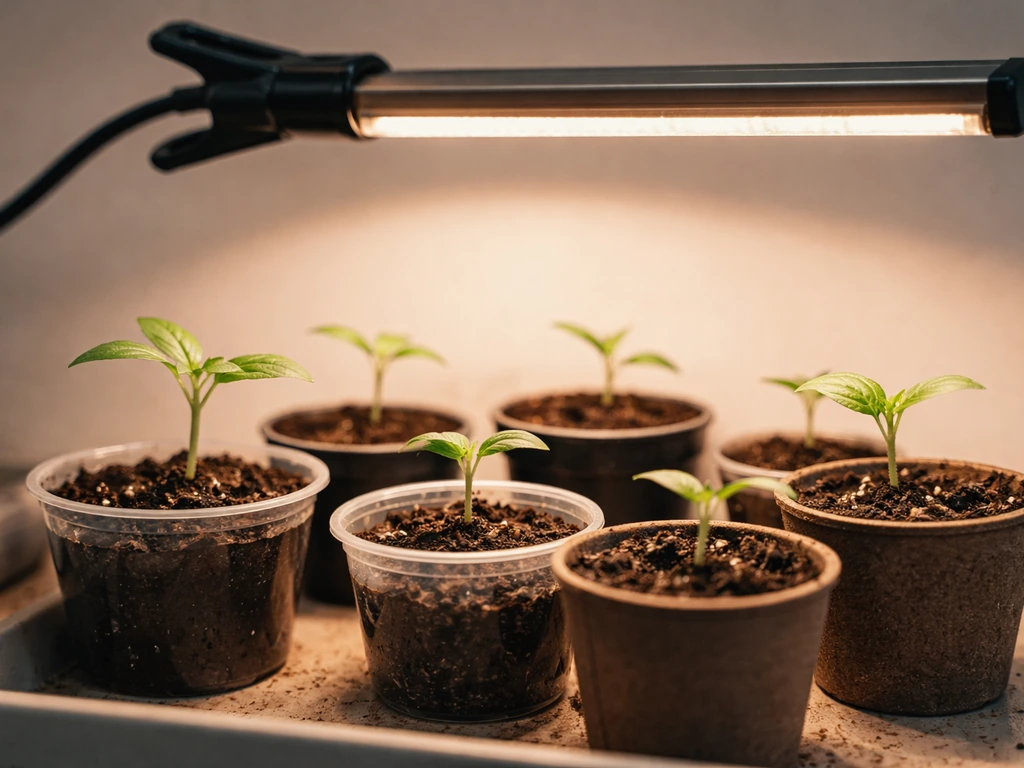
This is where the Acke performs most reliably. Seedlings have low light requirements (around 100-200 µmol/m²/s is adequate), and the warm spectrum can support germination and early cotyledon development. Cuttings rooting under a dome will do fine with this as a supplemental or sole light source at 4-6 inches. Community users repeatedly describe it as 'good for starting seeds' and that tracks with the physics. Just keep the light close and run it 16-18 hours per day for seedlings.
Vegetative growth
For veg, results get mixed fast. Small herbs like basil or cilantro in individual pots directly beneath the fixture may sustain moderate growth. Anything that genuinely needs 400+ µmol/m²/s will show slower internodal development and stretch toward the light. Tomatoes, peppers, and cannabis in veg will not thrive under this fixture as a sole light source. They'll survive, but you'll see leggy, light-starved growth.
Flowering
Skip it for flowering. At 12W, you don't have the photon output to drive the flowering response in light-hungry plants. Even the 2700K spectrum, which is appropriate for the flowering phase, can't compensate for insufficient intensity. If you're trying to flower tomatoes, peppers, or cannabis, you need a proper quantum board or bar-style fixture with at least 100-200W of actual draw for even a small 2x2 space.
Heat, power draw, build quality, and noise
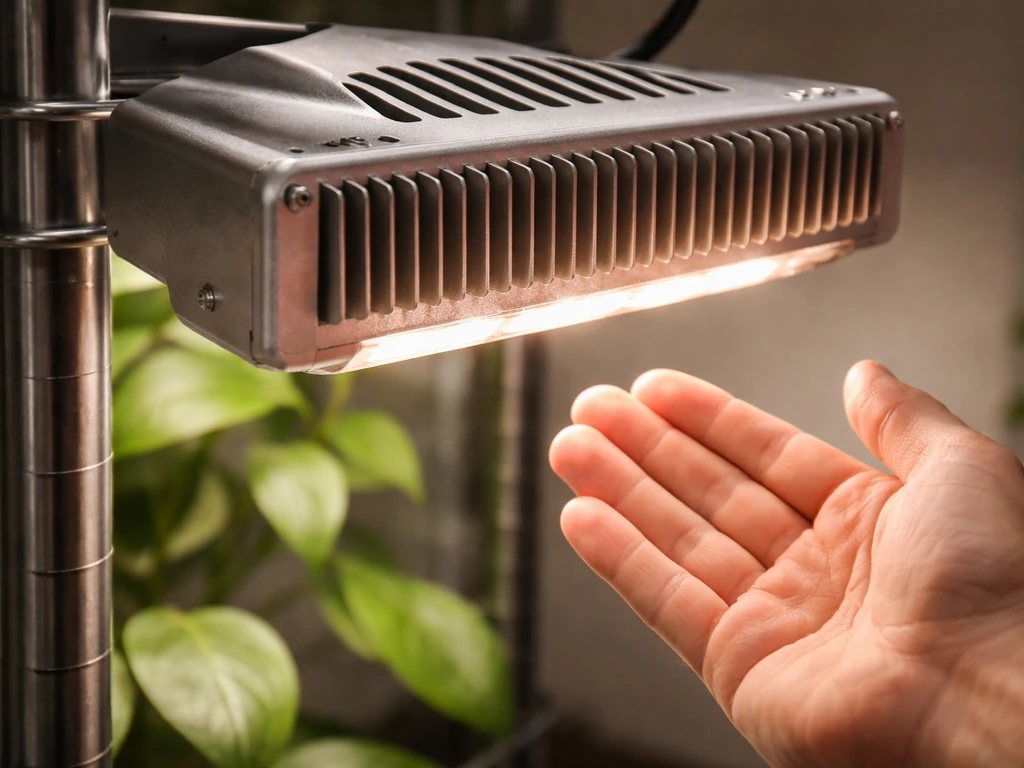
At 12W, heat is minimal. The fixture runs warm to the touch but not hot, and it poses no meaningful heat risk to your plants at normal mounting distances. You're not going to need additional ventilation or cooling because of this light. That's genuinely a plus for small, enclosed shelf setups where a bigger light would raise ambient temperature.
Power draw at the wall is, per manufacturer documentation and anecdotal community confirmation, right around 12W. At 12 hours per day, you're looking at roughly 0.14 kWh daily, or about 52 kWh annually. At average US electricity rates around $0.16/kWh in 2026, that's about $8 a year to run. Cheap to operate.
Build quality is exactly what you'd expect for the price tier. The plastic housing is lightweight (12 ounces), the clamp mechanism is functional but not heavy-duty, and the gooseneck arm holds position reasonably well when not disturbed. The LEDs are not individually replaceable. There's no active cooling fan, which means zero noise. For a shelf light over seed trays, that's the right call.
Controls, setup, and included hardware
Setup is straightforward. Clamp it on, plug it in, done. The manual recommends using an external timer for automated on/off cycles, and that's good advice since there's no built-in timer. There's no dimmer, no app, no remote, and no Bluetooth or Wi-Fi connectivity. The controls are essentially: plugged in or not. That's not a criticism at this price and form factor, but it does mean you'll want a cheap mechanical or digital outlet timer if you're not going to manually switch it.
The included hardware is the clamp and the power cord. No hanging kit, no carabiners, no daisy-chain cables. If you're mounting this over a grow tent (not recommended for the reasons above), you'd need to improvise. For its intended use on a shelf or rack, the clamp is all you need.
How it compares to other lights at this price and wattage
The honest answer is that the Acke 4316270627 competes in a crowded field of sub-$25 clamp grow lights. At this wattage and price tier, the differences between brands are small. Lights from similar small-brand manufacturers in the 10-15W clamp category (common on Amazon) are functionally comparable to the Acke. The main considerations are spectrum quality, LED longevity, and build reliability, none of which are measurably superior or inferior in the Acke versus its direct competitors based on available data.
Where the comparison gets interesting is when you step up to purpose-built horticultural fixtures. If you're thinking about growing anything beyond seedlings and low-light houseplants, a dedicated 45-100W quantum board from brands like Mars Hydro, Spider Farmer, or Viparspectra changes the conversation entirely. Those fixtures publish PPFD charts, offer far greater coverage, and include dimmable drivers with more precise spectrum tuning. They cost more ($60-150 for an entry-level 45-100W board), but they're fundamentally different tools for a different purpose.
| Light Type | Actual Wattage | Typical Use Case | Approx. Coverage | Price Range |
|---|---|---|---|---|
| Acke 4316270627 (clamp) | 12W | Seedlings, low-light houseplants | 6-10 inch diameter | $15-25 |
| Generic 10-15W clamp light (competitors) | 10-15W | Same as above | 6-10 inch diameter | $12-30 |
| Entry quantum board (e.g., Mars Hydro TS600) | ~100W | Seedlings through veg in 2x2 | 2x2 ft | $60-90 |
| Mid-range quantum board (e.g., Spider Farmer SF-2000) | ~200W | Full veg and flower in 2x2-2x4 | 2x2 to 2x4 ft | $150-220 |
If you're comparing the Acke to other small-format clamp lights from brands like Aokrean or Apollo, the differences are marginal enough that price, warranty, and availability will likely be the deciding factors. These are all utility-grade shelf lights, not performance grow fixtures.
Buy it or skip it
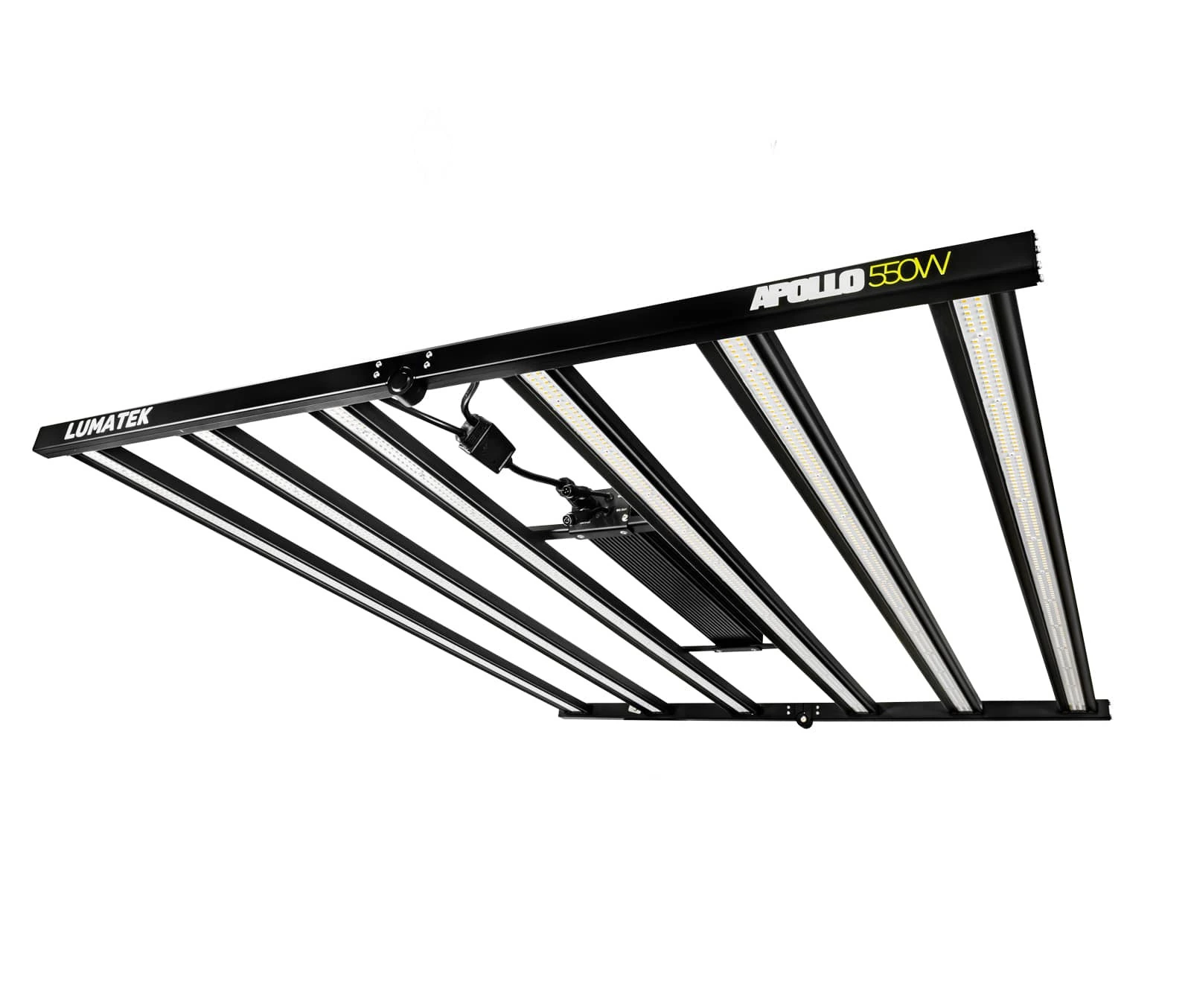
Buy the Acke 4316270627 if you need a no-fuss, low-cost light for seedling trays, propagation, or keeping low-light houseplants alive through winter. If you want a broader walkthrough of the setup, performance, and whether it’s worth buying, see the Apollo Grow Light review. If you’re specifically looking for agromax led grow light reviews, it helps to compare wattage, spectrum, and real-world coverage before you buy low-cost light. It's quiet, runs cool, draws almost no electricity, and does exactly what a clamp-style shelf light should do.
Skip it if you're planning to grow vegetables, herbs in volume, or any flowering plant through its full cycle. The power simply isn't there. Skip it also if you want PPFD data, a built-in timer or dimmer, or a light that can cover more than a single small pot.
Quick buying checklist before you decide
- What are you growing? If it's seedlings, cuttings, or low-light houseplants, the Acke works. If it's fruiting or flowering crops, move up in wattage.
- How large is the area you need to cover? If it's more than 8-10 inches in diameter per fixture, plan on multiple units or a larger light.
- Do you need a built-in timer or dimmer? The Acke has neither. Budget $10-15 for an outlet timer if you want automated light cycles.
- What's your electricity budget? At 12W, running costs are negligible. This is not a concern here.
- Do you want published PPFD data? The Acke doesn't provide it. If that matters to you, look at brands that publish proper photon flux charts.
- Are you starting with seeds or clones indoors before moving outside? That's the ideal use case. The Acke handles the first 2-4 weeks of a plant's life well.
FAQ
Is the “full spectrum” label on the Acke 4316270627 actually good for plant growth?
In this model it mainly means warm-white LEDs covering a broad visible range, not separate calibrated blue and red channels. It can support seedlings and some cuttings well, but it does not give the intensity or spectrum control you would want for consistent vegetative and flowering results.
What mounting height should I use if I want the best results from a 12W clamp light?
To get the most usable intensity, keep it about 4 to 8 inches above seedlings and about 8 to 12 inches above low-light houseplants. If you raise it to 12 inches or more, the drop-off is noticeable and it becomes more of an ambient supplement than a true growth light.
Can I use this light in a grow tent if I only plan to grow one plant?
Practically, it is not recommended because the fixture has small coverage and you cannot hang it in a way that provides enough even intensity for tent conditions. Even a 1x1 foot area will be underpowered, and you will likely need to improvise a mounting setup that is stable and safe.
How many hours per day should I run it for seedlings versus established plants?
For seedlings, aim for roughly 16 to 18 hours per day. For low-light houseplants, you can typically use fewer hours since they also benefit from window light or room light, but reduce exposure if you see leaf curling or excessive stretching.
Will the Acke be enough for herbs like basil or cilantro?
For one small pot, basil or cilantro can survive and sometimes grow acceptably, but expect slower growth than under a higher-output grow light. If you notice legginess or slow leaf production, switch to a stronger fixture rather than moving this light closer beyond the recommended height.
Can I use it to root cuttings or start seeds without any other light?
Yes, it is well-suited for propagation when placed close to the tray, around 4 to 6 inches. Use a clear humidity dome if needed, and position the light so the seedling tops are not shading each other as they grow.
How can I check whether the light is actually strong enough for my setup?
Use a PPFD app method like Photone, but be consistent with measurement height and placement. Measure directly at canopy level where the plants sit, and take readings across the area since coverage drops quickly beyond the center.
Does it get too hot for plants or seedlings?
Heat output is minimal at this wattage, and it typically will not create a meaningful heat problem at normal mounting distances. Still, check with your hand after running for an hour, and avoid contact with foliage if you mount it extremely close.
Is there any way to dim the light or adjust intensity?
No, this model does not include a dimmer or built-in intensity control. If the light feels too strong or plants stretch less than expected, the practical adjustment is changing mounting height or reducing daily run time with an outlet timer.
Do I need a timer, and what kind works best?
The light has no built-in timer, so if you want consistent photoperiods, use a basic mechanical or digital plug-in timer. Choose one rated for the wattage and prefer one that can hold settings reliably through power interruptions.
Is the fixture safe to use around water or in a humid propagation area?
The fixture is a simple indoor lamp style device, so keep electrical connections protected from splashes. Use a placement strategy where water cannot drip onto the power cord or clamp area, and avoid using it directly inside standing-water trays.
Are the LEDs user-replaceable if the light fails?
No, the LEDs are not designed to be individually replaced. If the unit stops working or LEDs degrade significantly, it is usually more cost-effective to replace the whole fixture than attempt repairs.
How long will it last compared with larger grow lights?
Exact lifespan depends on the LED driver and thermal conditions, but at 12W with no fan it generally runs cool. That said, cheap clamp lights are still more likely to have early failures due to components, so consider warranty terms and reliability before relying on it long-term.
What is the biggest reason people are disappointed with this light?
They try to use it as a tent light or as a sole light for flowering. The small coverage and limited intensity mean it is best for one or two small pots, propagation, and low-light plant support rather than full-cycle vegetable or cannabis-style grows.
If I want better results, when should I upgrade from the Acke?
Upgrade if you need even coverage across a 2x2 area, if you are targeting flowering, or if plants show persistent legginess despite correct placement and run time. A mid-range quantum board or bar-style fixture (tens of watts to 100W class) is the more direct path because it provides published PPFD and broader coverage.