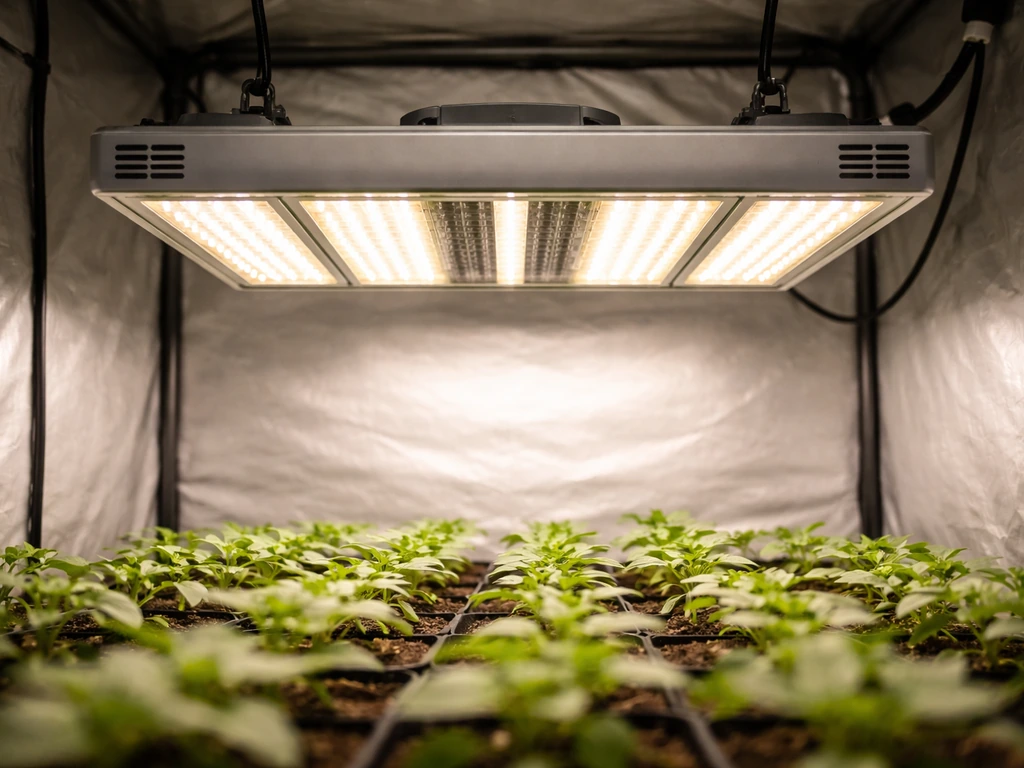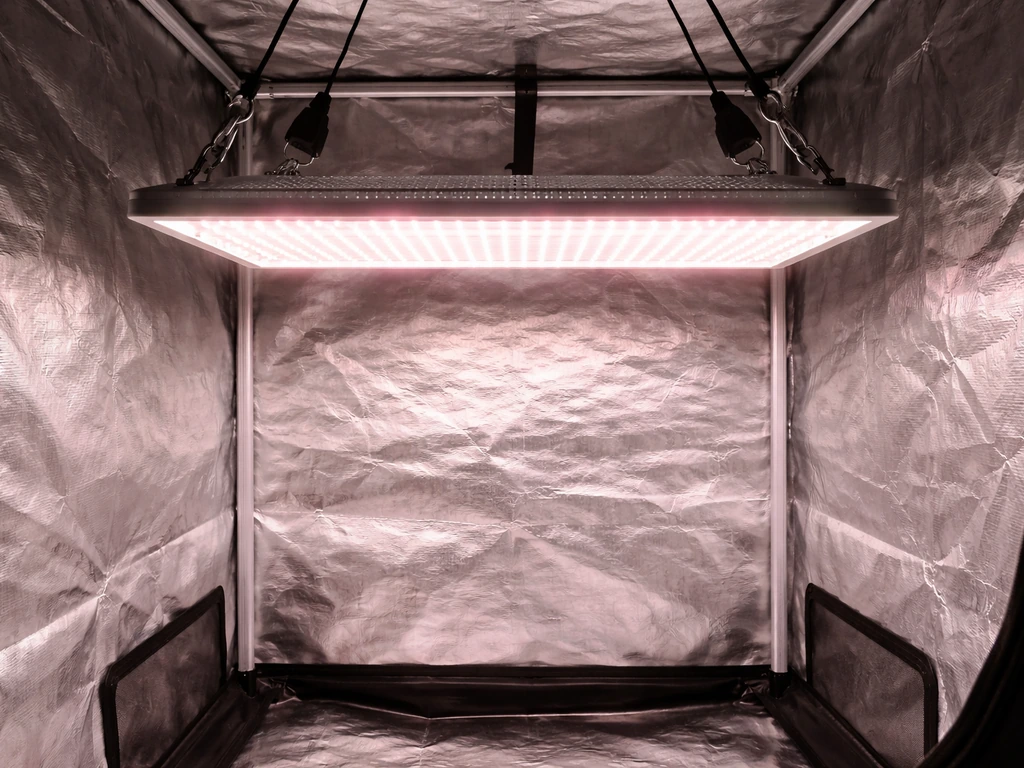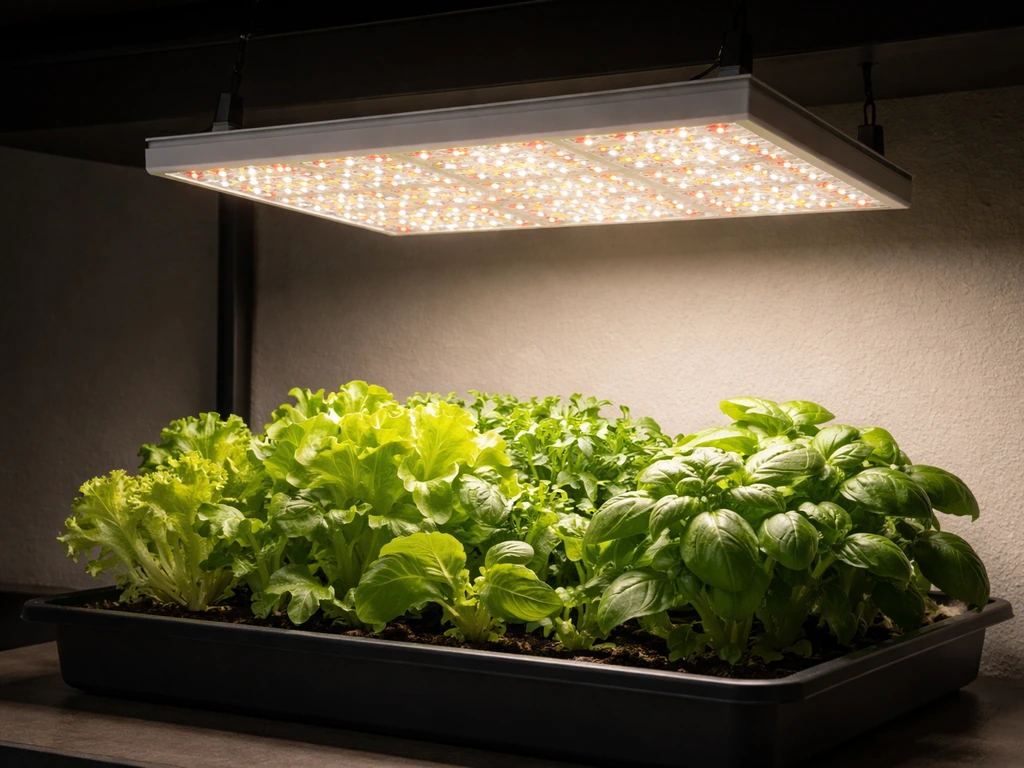
Excelvan LED grow lights are budget-tier panels aimed at hobbyists and beginners. The most common model people mean when they search this phrase is the Excelvan 45W 225 SMD panel (sometimes listed as the PG8), a 310 x 310 x 35 mm square light with 225 small SMD LEDs split roughly 165 red and 60 blue. It draws somewhere between 32W and 45W at the wall depending on which listing you believe, covers a modest footprint, and sells for well under $50. If that sounds like your light, this review is exactly what you need. If you want to compare how the higher-watt Excelvan model performs, our Excelvan 1200W LED grow light review walks through the same specs, coverage, and real-world results. If you picked up a different Excelvan unit, the general guidance still applies, but check your exact wattage and diode count first.
Excelvan Grow Light Review: Specs, Performance, and Value

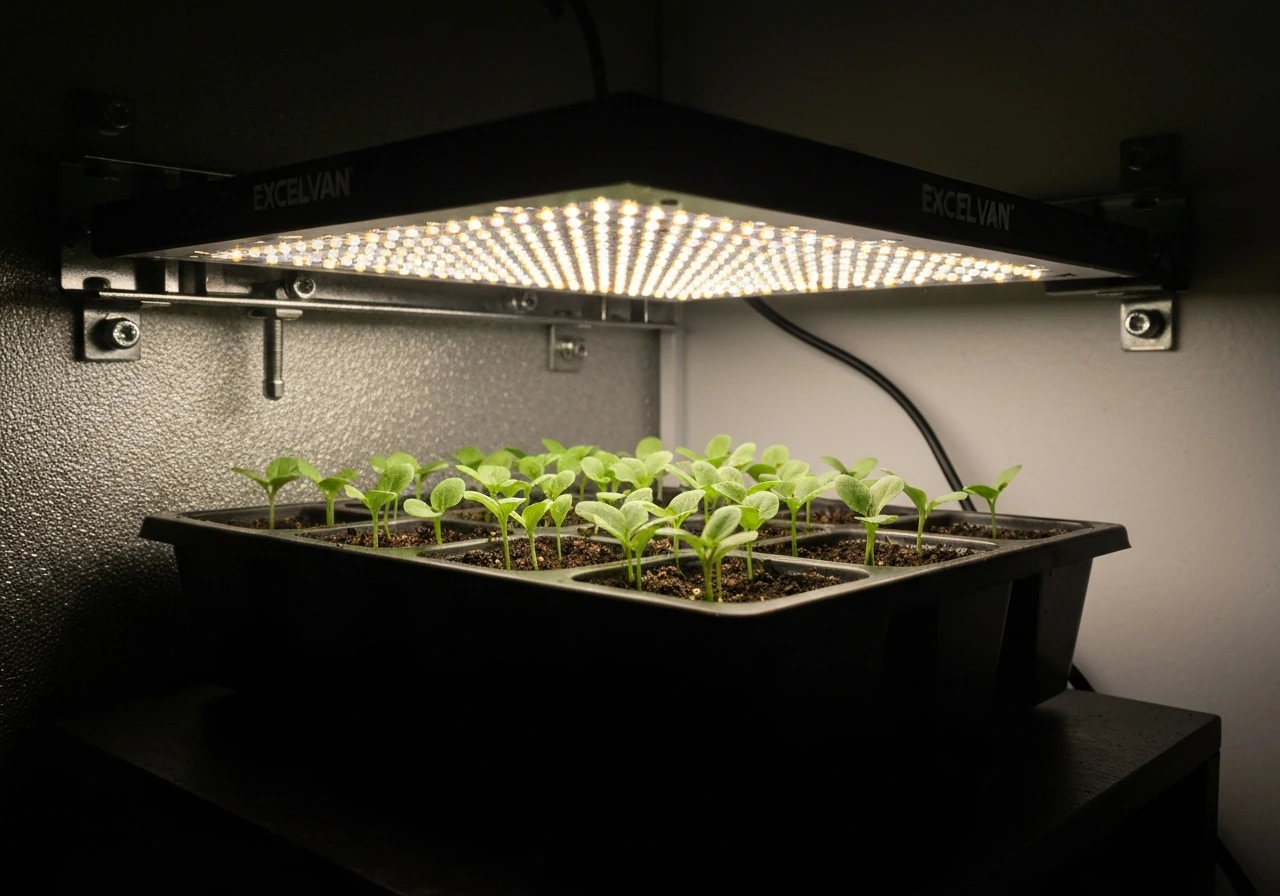
Which Excelvan model are we actually talking about?
Excelvan is a Chinese electronics brand that has sold a handful of LED grow light variants over the years. The dominant one in search results and user forums is the 45W 225 SMD panel, so that's the focus here. It uses SMD (surface-mount device) LEDs rather than the higher-powered double or triple-chip LEDs you'd find on more expensive lights. The diode mix is 165 red (620-625 nm) and 60 blue (465-470 nm), which covers the basic photosynthetically active range for both vegetative growth and flowering, though without UV, IR, or the broader white spectrum that modern full-spectrum quantum boards provide.
Worth flagging right away: in 2019, the London Borough of Bromley issued a recall notice for an Excelvan LED plant light. That recall related to a specific product and safety concern, so if you own an older Excelvan unit purchased before 2020, it's worth cross-checking the model against that notice before using it. Newer listings appear to be separate products, but it's a detail that matters for a brand you may not know much about.
| Spec | Excelvan 45W 225 SMD (PG8) |
|---|---|
| Advertised wattage | 45W |
| Actual wall draw (tested) | ~32W-45W (varies by listing) |
| LED count | 225 SMD LEDs |
| Red diodes | 165 (620-625 nm) |
| Blue diodes | 60 (465-470 nm) |
| Input voltage | AC 85-264V |
| Dimensions | 310 x 310 x 35 mm |
| Shell material | ABS plastic |
| Power cable length | ~1.3 m |
| Included accessories | Suspension cables, screw fittings |
Build quality and key features
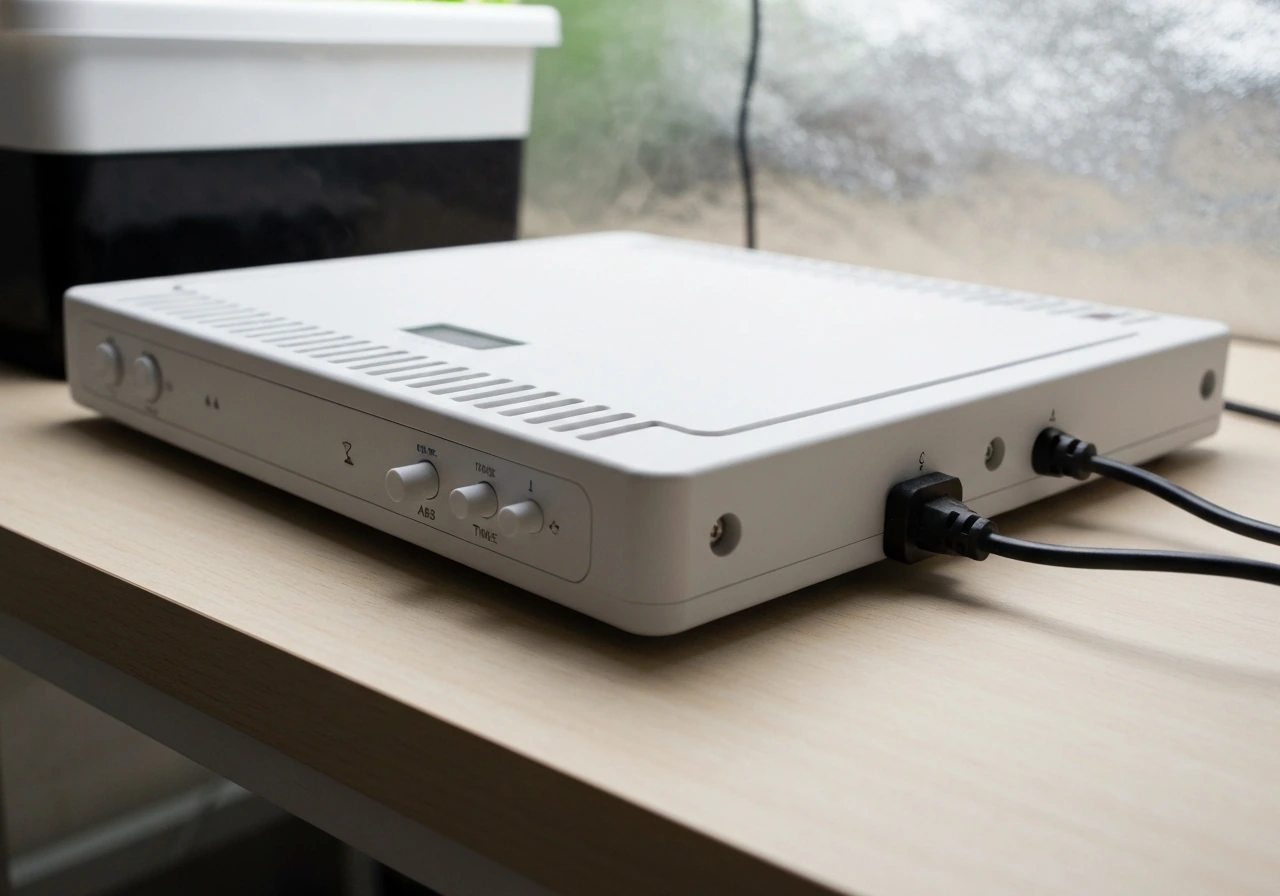
The 45W Excelvan panel is built around an ABS plastic shell, which keeps the weight down but doesn't inspire a lot of confidence for long-term durability in a humid grow space. The frame is thin and the overall feel is firmly budget-tier. That said, it's compact at roughly 31 cm square and about 3.5 cm deep, so it fits easily above small tents or shelves without taking up much vertical headroom.
There are no dimming controls, no built-in timer, and no daisy-chain port on the standard 45W model. You get a power switch, a hanging kit with suspension cables and screw fittings, and a 1.3-metre power cable. That short cable can be a nuisance depending on your setup, so budget for an extension cord if your outlet isn't directly above the grow area. The lack of a timer means you'll want a plug-in mechanical or digital timer, which is standard practice at this price point anyway.
Heat is manageable. The SMD LEDs run cooler than older, lower-quality diodes, and the panel doesn't get uncomfortably hot to the touch at distance. There's no active fan, so it runs silently, which is a genuine advantage in a bedroom or apartment grow. However, passive cooling only works reliably if you're not pushing the panel too close to plants for extended periods, and the ABS shell doesn't dissipate heat as efficiently as an aluminum housing would.
Real-world grow performance: what to expect
Let's be straight about what 32-45W of actual draw can realistically do. For seedlings, clones, and early vegetative growth in a very small space (think a 1-2 plant propagation tray or a tiny desktop herb setup), the Excelvan 45W will do the job. The blue-dominant portion of the spectrum supports compact vegetative growth, and the red component gives plants enough signal to transition toward flowering. But PPFD (the actual photon density hitting your canopy) at practical mounting heights is modest.
At around 20-30 cm above the canopy, the light is bright enough that you really shouldn't look at it directly, as users have pointed out. But brightness to the eye doesn't equal PAR output for plants. At 40-50 cm mounting height, which is a safer distance for young plants, PPFD likely sits well below the 400-600 µmol/m²/s sweet spot that vegetative cannabis, tomatoes, or peppers want for strong growth. For leafy greens, herbs, and low-light houseplants, those numbers are perfectly fine.
Flowering performance is where the 45W Excelvan starts to show its ceiling. Fruiting and flowering crops need sustained PPFD in the 600-900+ µmol/m²/s range across the canopy. A 32-45W draw panel simply cannot deliver that across any meaningful footprint. If you're growing cannabis, chillies, or tomatoes through to harvest, you'll see stretched plants, thin stems, and underwhelming yields unless you're working with a very small number of plants in a very confined space with the light close overhead.
Sizing your setup: coverage, mounting height, and intensity
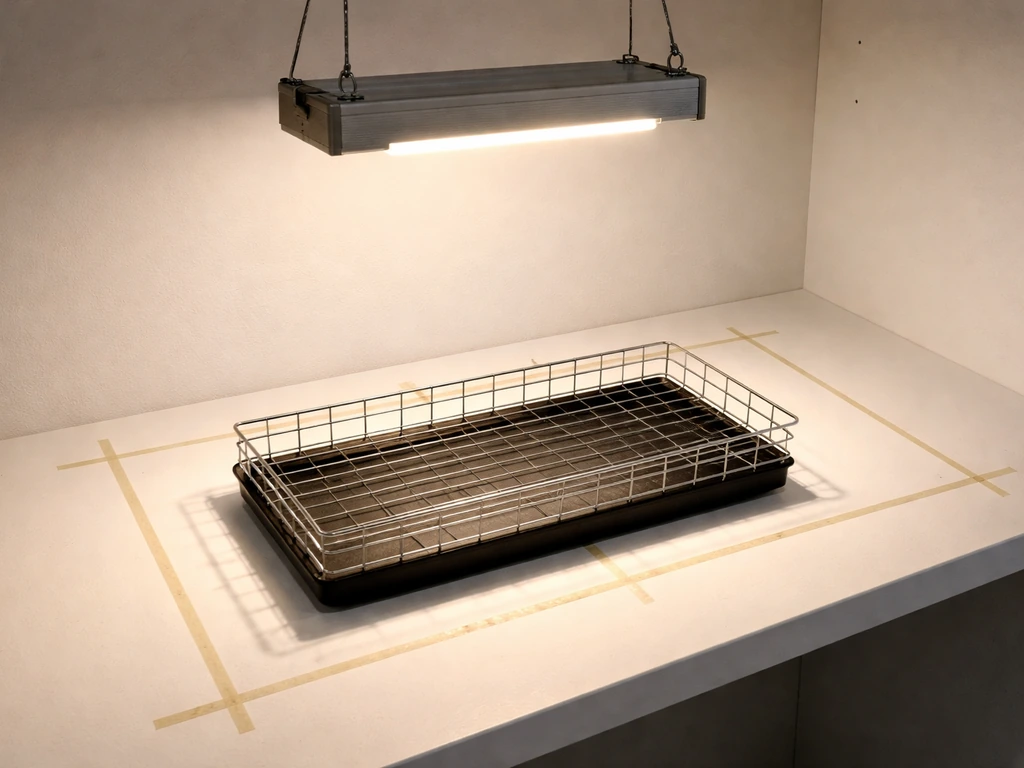
The honest coverage figure for the Excelvan 45W at useful intensity is roughly 30 x 30 cm to 40 x 40 cm for high-demand plants, or about 60 x 60 cm for low-to-medium demand herbs and greens. Manufacturer coverage claims are often measured at light intensities that don't match what plants actually need, so always size down from whatever the packaging says.
- Seedlings and clones: mount 15-25 cm above the tray, 18-hour photoperiod
- Vegetative herbs and greens: mount 25-40 cm above canopy, 16-18 hours of light per day
- Vegetative high-demand crops (tomato, pepper, cannabis): mount 20-30 cm, 18 hours, but expect slower growth than a higher-wattage light would produce
- Flowering/fruiting crops: this panel is underpowered for best results; use it only as a supplement or for very small single-plant experiments
If you're working in a dedicated grow tent, the Excelvan 45W is realistically a solo light only for a 30 x 30 cm to 40 x 40 cm tent footprint for anything beyond herbs. In a 60 x 60 cm tent, you'd want at least two panels or a step up in wattage. In a 1 x 1 m tent, this panel is better treated as a side supplemental light than a primary source.
Spectrum and settings: does it fit your grow goal?
The 165-red/60-blue diode split at 620-625 nm and 465-470 nm is a serviceable basic spectrum. Both wavelengths sit within the photosynthetically active range, and the ratio leans red-heavy, which supports flowering signal alongside vegetative growth. What's missing is everything outside that narrow band: no 730 nm far-red to accelerate flowering transitions, no 380-400 nm UV to stimulate secondary metabolite production (relevant for herbs and medicinals), and no broad white spectrum to fill in the green and yellow wavelengths that contribute to photosynthesis more than early LED research suggested.
For basic herbs, leafy greens, microgreens, and propagation, the spectrum is adequate. Plants grow under it, and the color rendering makes it straightforward to spot deficiencies. For a full-cycle cannabis grow, peppers, or high-yield tomatoes, the narrow spectrum is a genuine limitation compared to modern full-spectrum quantum board designs. There are also no controls to shift the spectrum between growth stages since this is a fixed-output panel with no separate veg and bloom switches.
Value compared to similar lights
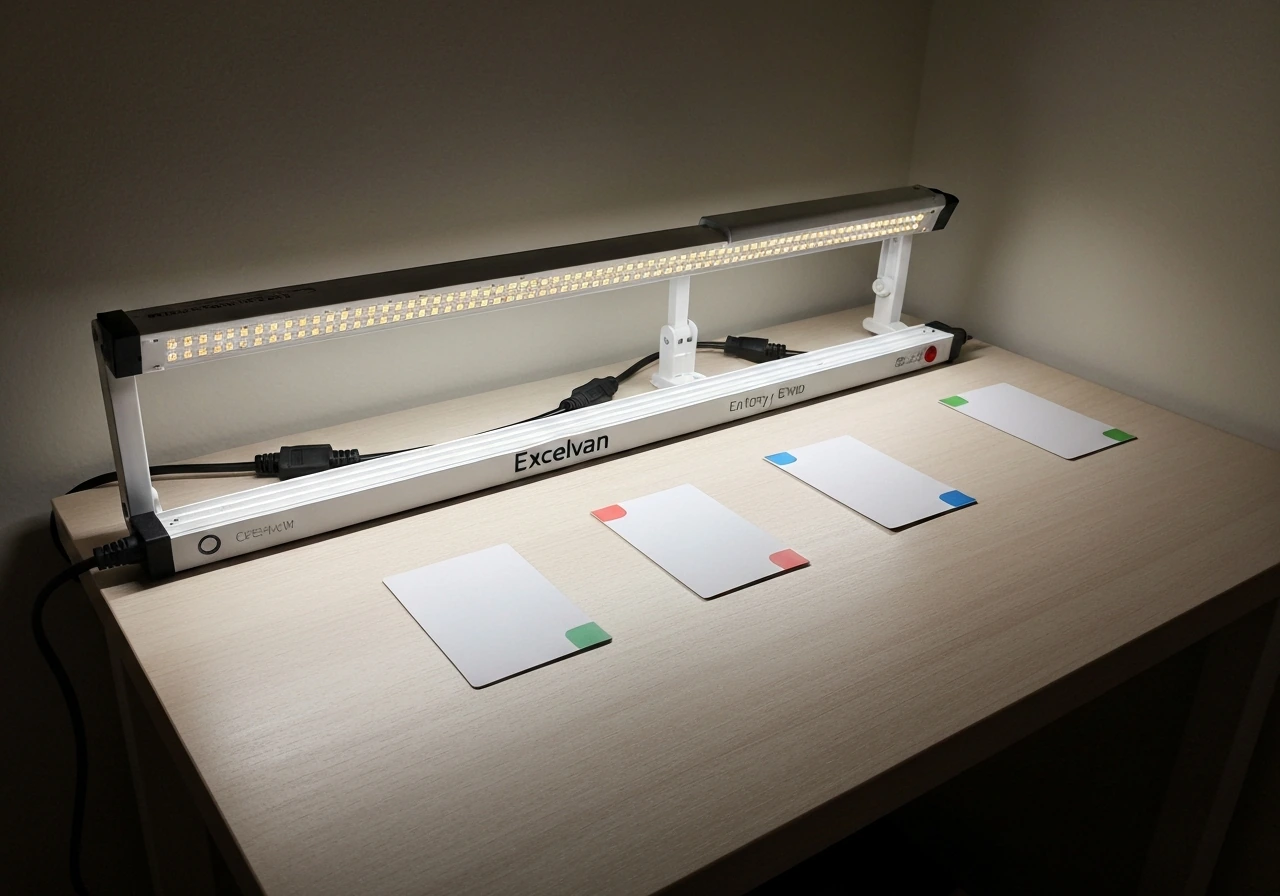
The Excelvan 45W sits at the very entry level of the grow light market. At under $30-40, the price is hard to argue with for a first experiment or a propagation setup. But price-per-watt and price-per-PPFD are the metrics that matter for real grows, and here the picture gets more complicated.
| Light | Approx. Price | Actual Draw | Spectrum | Best Use Case | Controls |
|---|---|---|---|---|---|
| Excelvan 45W 225 SMD | $25-40 | ~32-45W | Red + Blue only | Seedlings, herbs, greens | None (fixed output) |
| Vogek 45W panel | $30-45 | ~40W | Red + Blue or full-spectrum versions | Seedlings, small veg | Some models have timer |
| Vevor LED grow light (mid-range) | $50-90 | ~60-100W | Full spectrum + IR | Veg through early flower | Dimmer on some models |
| Vander 2000W blurple (equiv.) | $40-60 | ~200-300W actual | Red + Blue | Veg and flower, medium tents | Veg/bloom switches |
Compared to similar blurple and SMD panel competitors like the Vogek or Vander lineup, the Excelvan holds its own at the smallest wattage tier. If you also want a different budget panel, check the Vevor grow light review for how it compares on power, coverage, and value. If you want a close alternative, many shoppers also look for a Vogek grow light review before choosing their final panel. It's priced competitively and the build quality is roughly equivalent. Where Excelvan falls behind is that some competing brands at a similar price have started offering full-spectrum versions or at least a two-switch (veg/bloom) setup, which gives you more flexibility. If you're comparing the Excelvan 45W specifically against a Vander 2000W-branded light, keep in mind those Vander models draw significantly more actual watts and cover a much larger footprint, so they're not really competing products despite overlapping price ranges. If you want the details on that Vander model and whether it is worth the price, see our Vander grow light review next Vander 2000W-branded light. If you're specifically shopping for the Vander 2000W, this review will help you judge whether its higher wattage and coverage match your grow goals.
The bigger picture comparison is against entry-level quantum board panels. For around $60-80, you can now find quantum board-style lights that draw 65-100W actual power, deliver far higher PPFD per dollar, include dimming controls, and cover a 60 x 60 cm footprint properly. If you're spending money on seeds, growing media, and a tent, spending an extra $30-40 on a better light almost always pays off in plant quality and yield. The Excelvan 45W makes most sense if your budget is genuinely tight, your grow goal is modest (herbs, greens, propagation), or you just want to experiment before committing to a real setup.
The wattage confusion: 32W or 45W?
This is worth its own note because it matters for sizing. Multiple Excelvan 45W listings show an 'Actual Power: 32W' figure alongside the 45W rating. This is a known pattern with budget LED panels where the headline wattage reflects maximum theoretical output and the real wall draw is lower. One verified user review confirms actual consumption 'mostly around 45W' over two weeks of use, but the marketplace listing discrepancy suggests at least some units draw only 32W. If you want to know your unit's actual draw, use a plug-in power meter (a $10-15 kill-a-watt style device). A Reddit discussion similarly emphasizes that LED grow lights can be mislabeled by marketing “equivalent” or board wattage, so checking real wall power draw is the safest approach a plug-in power meter. That real number is what you should use when calculating coverage expectations, not the advertised wattage.
Things to watch out for
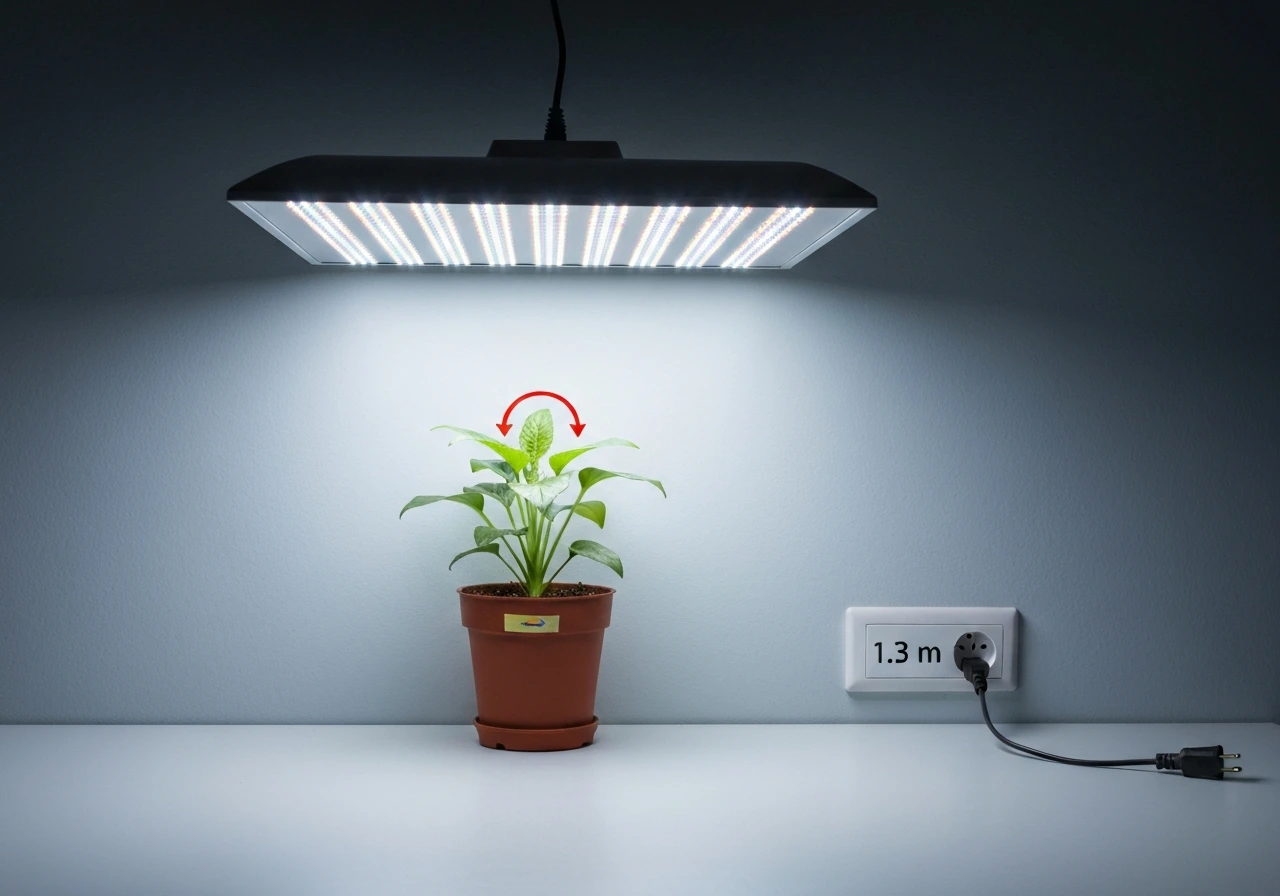
- Uneven coverage: SMD panels can have hot spots directly under the center and dimmer edges; rotate plants if you notice uneven growth
- Short power cable: the 1.3 m cord limits placement options, budget for an extension
- No timer or dimming: you need an external timer for consistent photoperiods; don't skip this
- Wattage discrepancy: measure actual draw with a power meter rather than trusting the label
- ABS plastic shell in humid environments: wipe down the exterior if condensation forms and don't spray water near the unit
- Eye safety: don't look directly at the panel when it's on; the intensity can cause discomfort even though PAR output is modest
- Older recall: if you're buying second-hand or have a pre-2020 unit, verify it isn't covered by the 2019 safety recall before use
Who should (and shouldn't) buy the Excelvan grow light
The Excelvan 45W 225 SMD is a reasonable buy for a narrow set of use cases. If you're starting seedlings for an outdoor garden, growing a small tray of microgreens, keeping herbs alive on a windowless shelf, or just dipping a toe into indoor growing without committing serious money, this panel gets the job done. It's quiet, compact, draws a known amount of power, and is simple to hang and operate. OnBuy product listings for the “45W 225 SMD” Excelvan/PG8-style panel also specify the “310x310x35mm” dimensions and an “about 1.3M” power-cable length for the model shown as PG8/I draws a known amount of power.
It's not the right choice if you want to grow cannabis, peppers, tomatoes, or other high-demand crops through to harvest in a proper grow tent. The combination of limited wattage, narrow spectrum, and no output controls means you'll hit a ceiling quickly and likely feel frustrated by stretched plants and modest yields. At that point, you'd be better served by a purpose-built quantum board or a higher-wattage full-spectrum panel from a brand that publishes actual PPFD data. If you’re trying to decide whether the Volt King might be a better fit for your budget grow, our Volt King grow light review breaks down performance, coverage, and value.
Quick recommendation summary
| Grow goal | Excelvan 45W suitable? | Better alternative if not |
|---|---|---|
| Seedlings and clones | Yes | N/A |
| Herbs and leafy greens | Yes | N/A |
| Microgreens | Yes | N/A |
| Vegetative cannabis or peppers | Marginal (small space only) | 60-100W quantum board |
| Full-cycle cannabis or fruiting crops | No | 100W+ full-spectrum LED |
| Large tent (60x60 cm or bigger) | No (supplement only) | Dedicated higher-wattage light |
Next steps after buying
- Plug in a power meter on day one to confirm actual wattage draw and log it for reference
- Set up an external plug-in timer before your first photoperiod; 18 hours on / 6 off for veg, 12/12 for flower
- Start with the light at 40 cm above seedlings and lower gradually as plants establish, watching for any bleaching or cupping of leaves
- Rotate plants every few days to even out any hot spots from the center of the panel
- If plants are stretching noticeably toward the light after 2 weeks, lower the panel a few centimetres and check that your timer is working correctly
- For fruiting or flowering crops, track your results honestly after 4-6 weeks; if growth is slower than expected, upgrading to a higher-output light will pay back in results faster than troubleshooting a wattage-limited panel
FAQ
How can I tell if my Excelvan 45W panel is actually drawing 32W or closer to 45W?
Use a plug-in power meter to measure your exact unit’s wall draw for at least a few hours, then base your expectations on that number. If your meter shows 32W instead of 45W, treat the coverage and PPFD targets as closer to the lower end of what the light can achieve.
What mounting height should I use to avoid stressing plants with an Excelvan grow light?
Mounting height matters more than marketing “coverage” claims. For seedlings and herbs, stay around 20 to 30 cm, but for anything that needs gentler intensity, 40 to 50 cm is the safer range, especially if you see leaf tip bleaching or persistent downward clawing.
What’s the best way to run schedules (timer, photoperiod) with this panel since it has no built-in controls?
Because there’s no timer or dimming built in, the simplest setup is a plug-in timer plus a manual on-off switch or smart plug. Choose daily schedules that match growth stage, but start with shorter photoperiods for propagation (often 14 to 18 hours) and increase only once plants are established.
Can I use the Excelvan 45W as a complete grow light from seed to harvest?
It will work for propagation and early veg, but expect slow progress if you try to do full-cycle flowering. The lack of far-red and broad-spectrum output can lead to less robust flowering signals, so consider it a seedling or side light, not the main light for harvest-oriented setups.
Will one Excelvan 45W panel be enough for a 60 x 60 cm tent?
You’ll usually get better results with multiple smaller lights than trying to cover a wide area with one. If your tent is 60 x 60 cm, plan on at least two panels or step up wattage, because the 45W panel can’t maintain useful canopy intensity across the whole space for demanding crops.
How should I arrange multiple Excelvan 45W panels if I want better coverage?
Yes, but watch spacing. With a small compact panel, overlapping two lights can create uneven hotspots if you place them too close together, so stagger positions and keep the canopy level. Also, avoid stacking too high above the plants, since intensity drops quickly as distance increases.
How can I tell if problems are from the light versus nutrients or watering?
For this style of narrow-spectrum panel, glossy or very dark foliage can make it harder to notice early nutrient stress. Use a simple checklist instead, watch new growth speed, leaf color consistency, and internode length, then adjust nutrients and light height together rather than changing only one variable.
Does the plastic housing mean I need extra cooling or airflow when using it in a humid grow space?
The ABS shell is light and cheap, but it won’t spread heat as well as aluminum. If your plants are close for long periods, keep airflow in the tent and avoid burying the panel inside fabric covers, since trapped heat can reduce performance over time.
If I buy an older or used Excelvan, how do I reduce the risk of getting a potentially recalled model?
Check the exact model number and listing year if you’re buying used or older stock. Even if most current sales are different products, an older unit could fall under a prior recall notice, so verify the identification markings before powering it up in a grow area.
What should I check on the listing before buying another “45W” Excelvan model?
Look beyond “watts” and confirm whether the vendor provides actual power draw or PPFD testing. If they only show a headline wattage without real measurements, budget for lower-than-expected performance, and plan your footprint smaller than the printed coverage area.