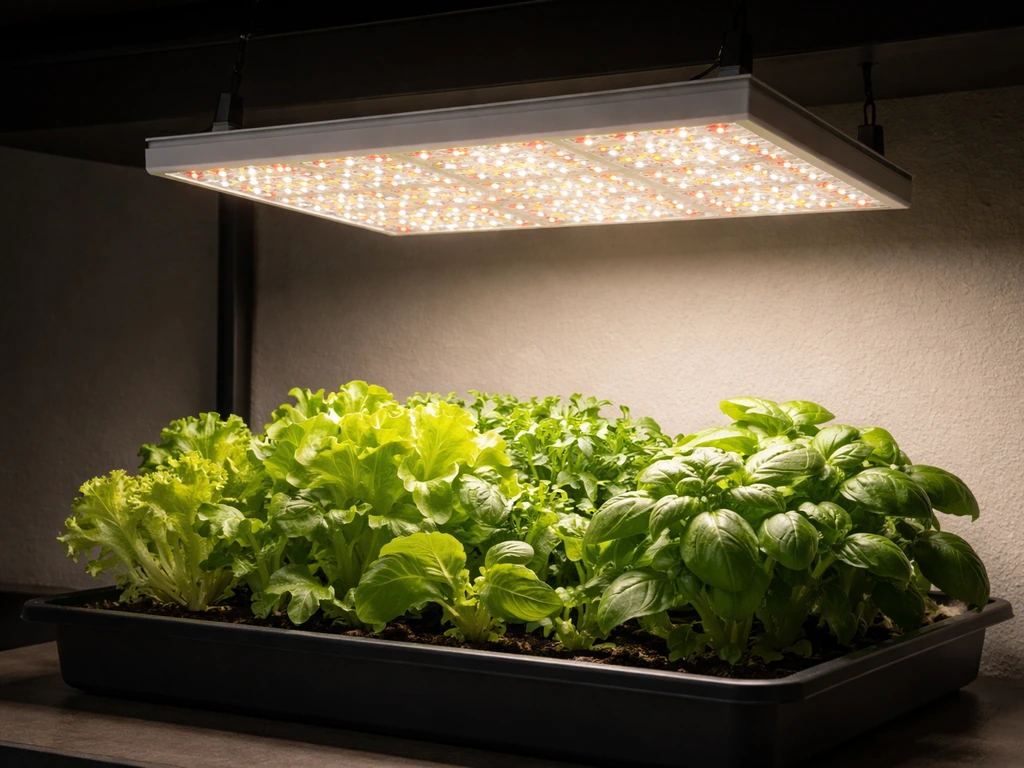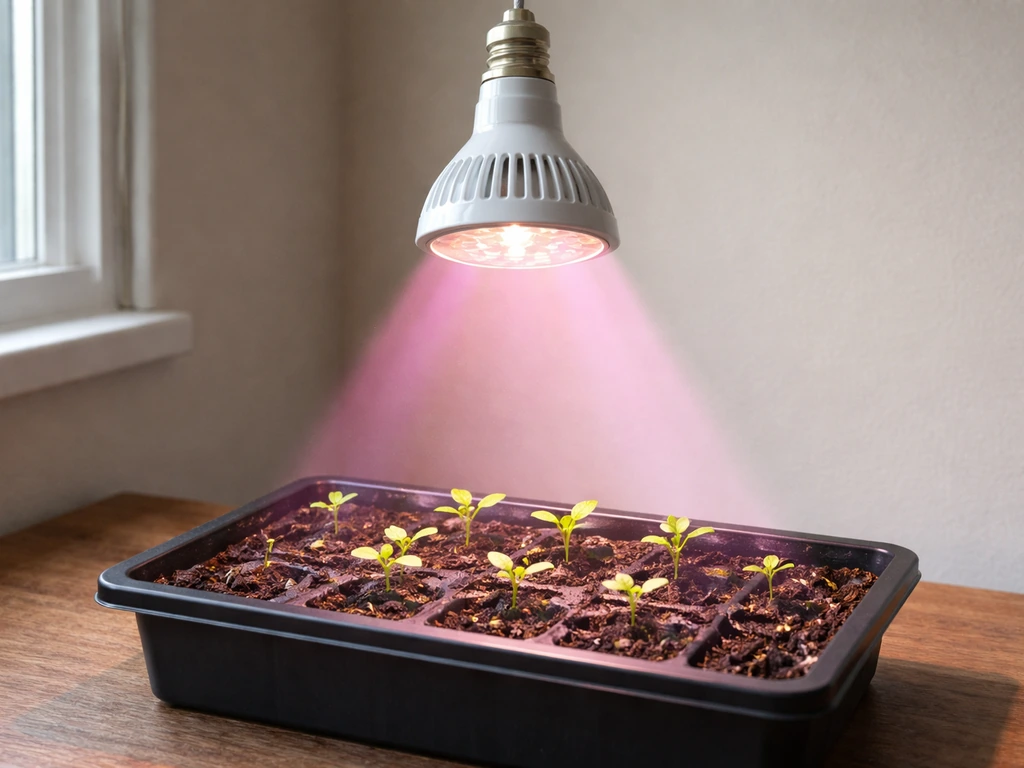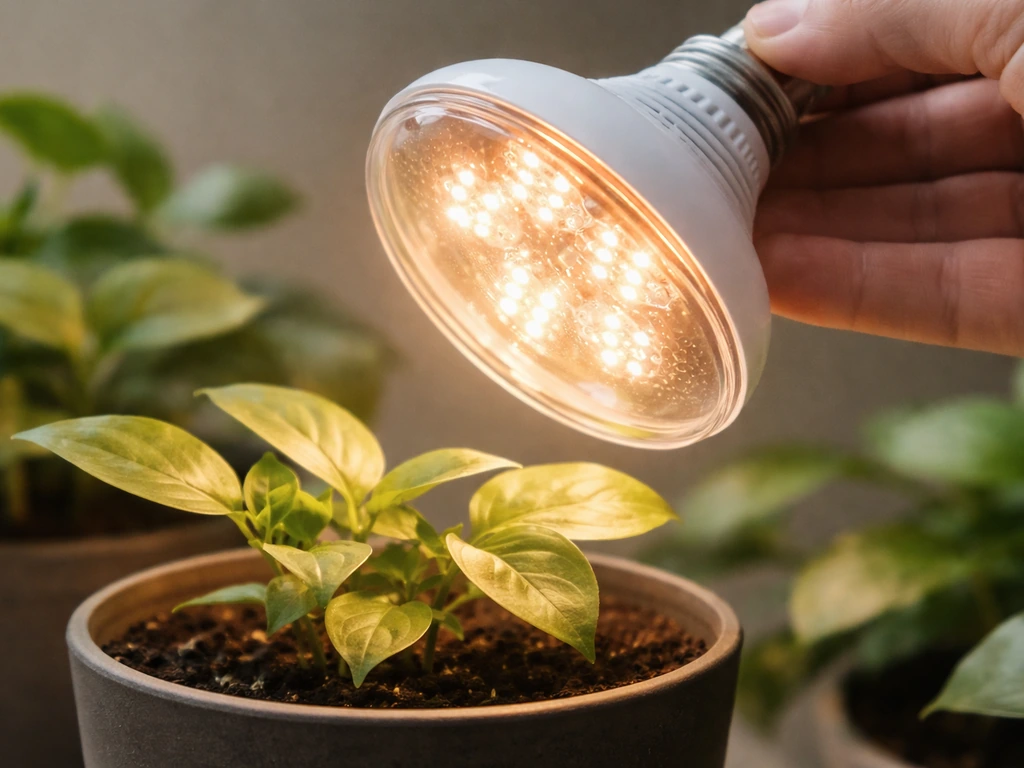
The Vogek SP312 is a 72W LED grow light aimed squarely at beginner indoor gardeners who need something compact, affordable, and easy to operate. It is not a high-intensity commercial fixture, and it is not trying to be. If you are growing herbs on a windowsill shelf, starting seedlings, or maintaining a small vegetative tent, this light can absolutely do the job. But if you are trying to push flowering plants through dense bud development in anything larger than a 2x2 footprint, you will hit its limits fast. Here is everything you need to know before you buy.
Vogek Grow Light Review: Performance, Coverage, and Value

Marcus Caldwell
15 Apr 2026
What the Vogek SP312 actually is
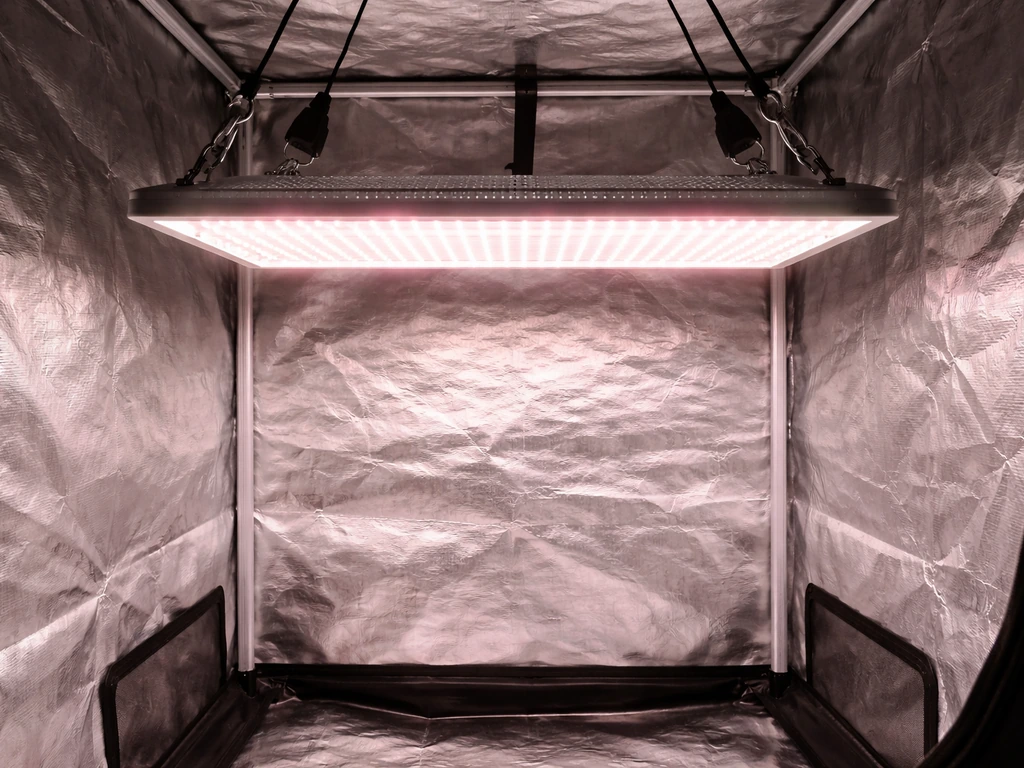
The core model you will find reviewed most often is the Vogek SP312. Specs are: 72W rated draw, 144 individual LEDs, three lighting modes, and ten dimming levels. The three modes correspond to different spectrum combinations (typically a red-dominant bloom mode, a blue-dominant veg mode, and a combined full-spectrum mode), which is useful for cycling a single light through multiple growth stages without buying a second fixture.
Ten brightness levels give you real flexibility for dialing in intensity as plants mature, and most listings include a built-in timer function with auto on/off scheduling. The form factor is a panel-style bar or rectangular board, not a quantum board, and the LEDs are standard SMD diodes rather than high-efficiency Samsung or Osram chips. That distinction matters for how the light performs at canopy level, which we will get into below.
Real-world performance: what you actually get at canopy level
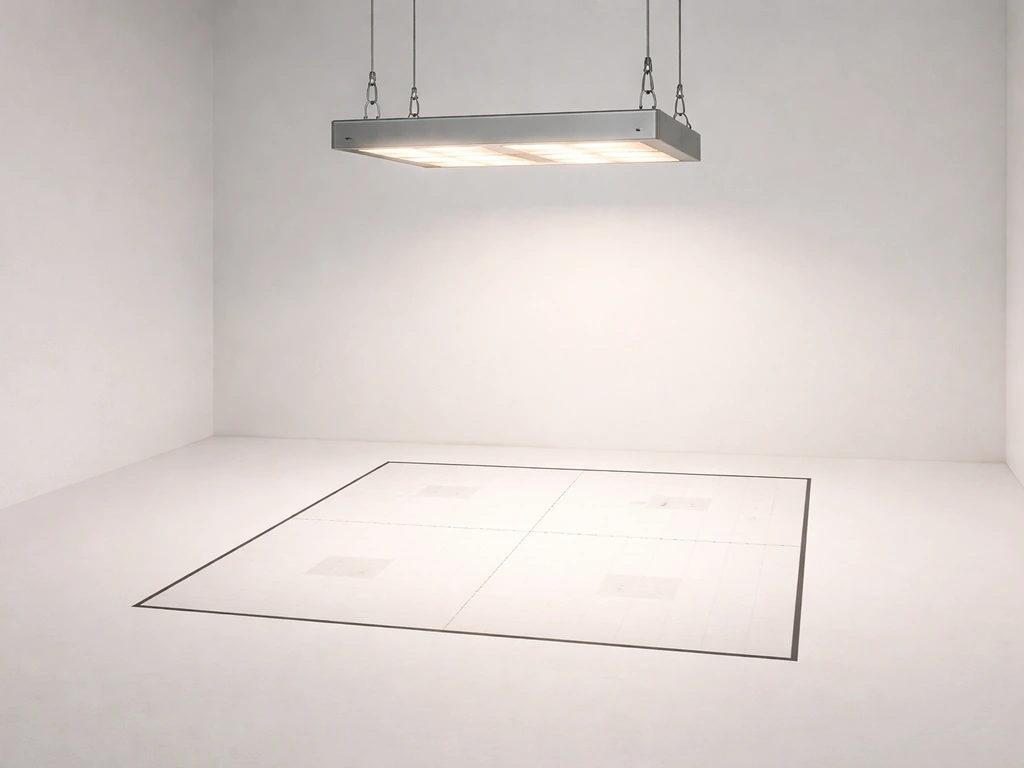
At 72W true draw, the SP312 is a low-intensity fixture by any objective measure. In testing over a standard 2x2 area (roughly 4 square feet), the light delivers acceptable PPFD for seedlings and early vegetative growth when hung at around 18 to 24 inches above the canopy. At that height and power level, center readings typically land in the 200 to 350 µmol/m²/s range depending on reflectivity of the grow space walls.
That is enough for leafy greens, herbs, and seedlings, which want between 150 and 400 µmol/m²/s. University of Minnesota Extension describes PPFD as the photosynthetic photon flux density you measure with a horticultural light meter, which helps translate grow-light output into what plants can use.
University of New Hampshire Extension fact sheets use PPFD and PAR terminology to explain how light intensity affects seedling growth and how to place lights and set hours for seedling production PPFD for seedlings. Push beyond 2x2, and readings at the edges of the footprint drop off noticeably.
Uniformity is the SP312's real weakness: the center hotspot is obvious, and corner readings can be 40 to 50 percent lower than center readings without reflective side walls. If your tent or grow shelf has white or mylar walls, that corner drop improves significantly, so environment matters here.
Heat output is modest, which is one of the genuine positives. The SP312 runs warm to the touch but does not generate the kind of radiant heat that stresses nearby seedlings. No active cooling fan means zero fan noise, which is a real quality-of-life win for anyone growing in a bedroom or living space. Passive heat dissipation through the aluminum housing works fine at this wattage. For heat-sensitive seedling trays, the quiet and relatively cool operation is genuinely useful.
How to set it up correctly
Hang height and initial settings are the two biggest variables you control, and getting them right from day one prevents early plant stress. Here is a practical starting framework:
| Growth Stage | Recommended Hang Height | Starting Brightness | Daily Photoperiod |
|---|---|---|---|
| Germination / seedlings | 24–30 inches | 40–60% | 16–18 hours |
| Early vegetative | 18–24 inches | 60–80% | 16–18 hours |
| Late vegetative | 14–18 inches | 80–100% | 16–18 hours |
| Early flowering (small plants) | 12–16 inches | 100% | 12 hours |
| Leafy greens / herbs (maintenance) | 18–24 inches | 50–70% | 14–16 hours |
Start seeds with the light at 24 to 30 inches and 40 to 60 percent brightness. If seedlings are stretching toward the light (etiolation), lower the fixture by two to three inches or bump brightness up one level. If leaves are cupping or developing light bleach spots, raise it. The ten-level dimmer makes these micro-adjustments easy. Use the blue or combined mode during vegetative growth and switch to red-dominant mode when you flip to a 12-hour photoperiod for flowering. The built-in timer removes the need for a separate outlet timer, which is a small but meaningful convenience.
Best plants and growth stages for the SP312
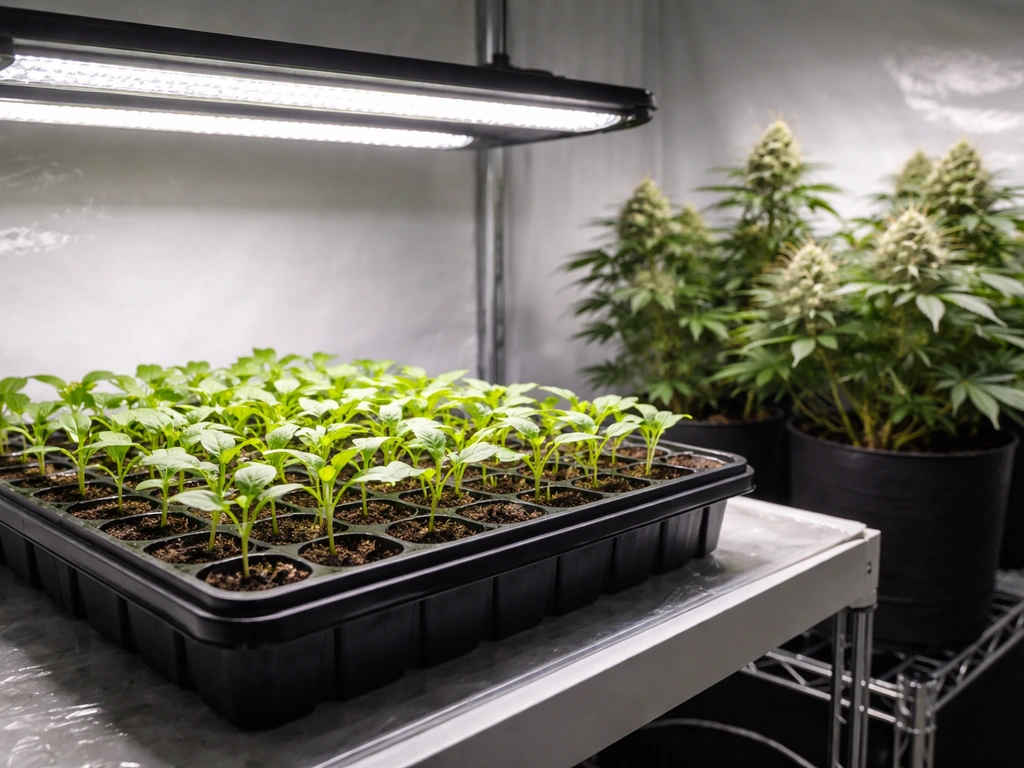
This light is genuinely well-suited to a specific set of use cases. Seedling trays and propagation clones are where it shines most reliably. Herbs like basil, cilantro, mint, and parsley do well under it year-round. Leafy vegetables including lettuce, spinach, and kale are a strong match because their light saturation points are lower than fruiting plants. Small pepper or tomato plants in the vegetative stage can work, but you will need to keep them compact and close to the light. Succulents and low-light houseplants are also a good fit.
Where it struggles is with dense flowering. Cannabis, tomatoes in full fruit set, and any flowering plant that needs sustained high PPFD (600 µmol/m²/s and above) will underperform under a single SP312 over a typical 2x2 footprint. The intensity simply is not there at a comfortable hang height. You can push it closer, but then coverage area shrinks and heat stress becomes a minor concern. If flowering is your main goal, the SP312 is not the right tool.
Build quality, controls, and power details
The SP312 housing is aluminum with a plastic diffuser panel. It feels adequate for indoor home use but is not a robust commercial build. The hanging hardware (usually adjustable rope clips or a simple hook set) works fine for a fixed shelf installation but feels lightweight for a tent environment where the fixture gets repositioned frequently. The power cord is standard two-prong and draws 72W at full power, which is trivial on any household circuit. You will see no meaningful increase in your electricity bill at this wattage.
The dimmer dial and mode selector buttons are functional and clearly labeled. The auto timer feature, which lets you set a daily on/off schedule, works reliably in practice. One thing to check before mounting: the SP312 is not waterproof or even splash-resistant, so keep it clear of misting systems and high-humidity overhead condensation. If you are running a propagation dome with regular misting, be mindful of where the fixture sits relative to moisture.
Is it worth the money? Warranty and support reality
The SP312 typically retails between $25 and $50 depending on the seller and bundle (some include hangers or a timer). At that price, the value proposition is solid for the use cases it actually fits. The per-watt cost is higher than a quality quantum board panel, but you are paying for a plug-and-play beginner fixture with a built-in timer and simple controls, not raw photon efficiency. For a first-time grower starting herbs or seedlings, that trade-off is reasonable.
Vogek's warranty and customer support are the weaker parts of the value story. Warranty terms vary by seller (commonly 12 months, but verify at point of purchase), and post-sale support through third-party e-commerce listings can be hit or miss. If you buy through a major platform with their own buyer protection, you have a reasonable safety net. Direct brand support response time is inconsistent based on reported user experiences. For a sub-$50 light, the risk is manageable, but do not expect the same support experience you would get from an established horticultural lighting brand.
How it stacks up against other brands
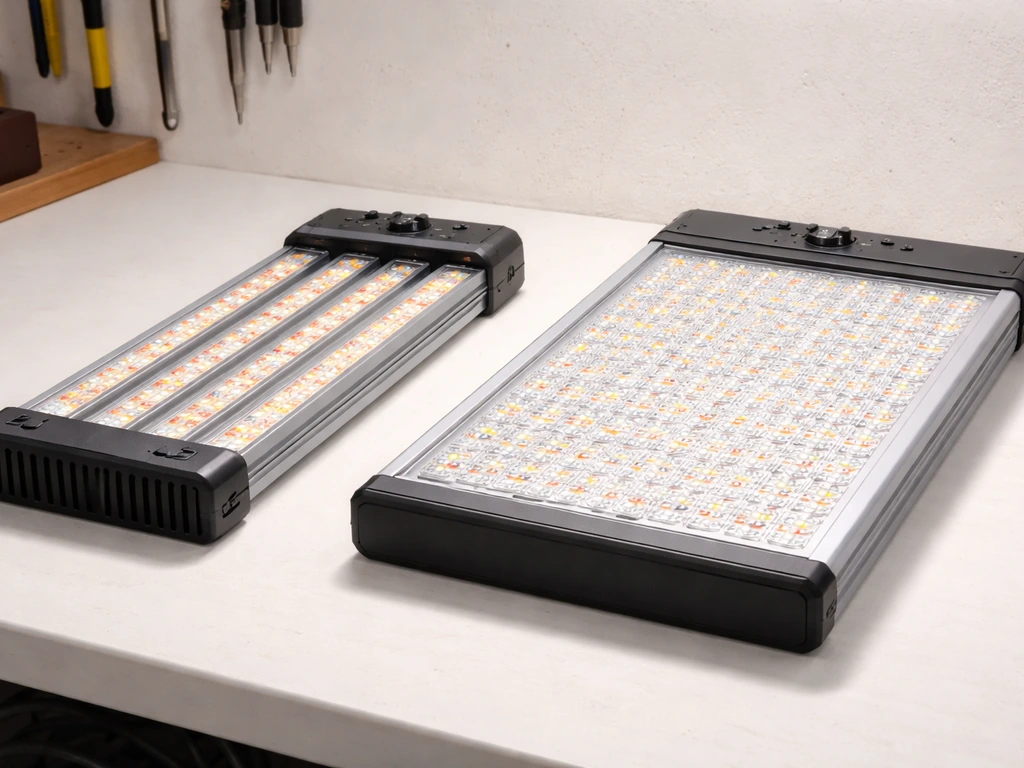
The SP312 sits in a crowded budget LED category alongside fixtures from Excelvan, Vander, Vevor, and others. If you are also considering an Excelvan unit, you may want to compare how its output and coverage stack up before buying Excelvan grow light review. Each brand targets a similar buyer profile with a similar price point, but there are meaningful differences worth knowing before you commit.
| Brand / Model | Power Draw | Spectrum Control | Best Use Case | Relative Efficiency | Price Range |
|---|---|---|---|---|---|
| Vogek SP312 | 72W | 3 modes, 10 dimmer levels | Seedlings, herbs, small veg | Moderate (SMD LEDs) | $25–$50 |
| Excelvan 1200W-label | ~180W true draw | Full spectrum, often no dimmer | Veg to early flower, larger footprint | Moderate | $40–$80 |
| Vander LED panels | Varies (45–200W) | Full spectrum, some dimmable | Seedlings to veg, small tents | Moderate | $30–$90 |
| Vevor LED panels | Varies (100–300W) | Full spectrum, some dimmable | Veg to flower, medium tents | Moderate–Good | $50–$150 |
| Volt King LED | Varies | Full spectrum, dimmable | Veg to flower, more footprint | Good | $60–$150 |
If you want a baseline comparison for another compact budget brand, the Vander grow light review covers a similar beginner-tier fixture with a comparable price point. For anyone curious about how wattage claims at the higher end of the Vander line translate to real photon output, the Vander 2000W LED grow light review provides a useful reference on how inflated wattage labels behave in practice.
Excelvan is another direct competitor worth knowing about: the Excelvan grow light review covers the brand broadly, and if you are specifically weighing a higher-labeled-wattage option, the Excelvan 1200W LED grow light review is directly relevant. If you are comparing budget options, the Vevor grow light review is a helpful next read to see how that brand stacks up. For growers ready to step up to a more robust fixture with better footprint coverage, the Vevor grow light review covers a brand that generally offers more true wattage for the money in the $50 to $150 range.
And if you want a fixture that can credibly handle full flowering cycles in a 2x4 or 3x3 tent, the Volt King grow light review is worth reading as a step-up option. If you are comparing budget panels side by side, the Volt King grow light review is a useful step-up benchmark.
Who should buy the Vogek SP312 (and who should skip it)
Buy the SP312 if you are a first-time indoor grower starting herbs, leafy greens, or seedlings in a small shelf or 2x2 space. If you are also comparing options like the Excelvan 1200W LED grow light, this review will help you judge intensity, coverage, and real-world results SP312. The low price, quiet operation, built-in timer, and simple controls make the learning curve gentle. It is also a solid supplemental light for adding coverage to a corner of a larger grow area that a main fixture does not reach well.
Skip it if your primary goal is flowering dense plants, you are working in anything larger than a 2x2 area, or you want a fixture that can carry you from seedling to harvest with competitive results. In those cases, spend a bit more on a fixture with higher true wattage, better LED efficiency, and a larger, more uniform footprint. The Vogek SP312 is a good light for what it is. The key is knowing exactly what that is before you order it.
FAQ
Can I use the Vogek SP312 directly over a misting propagation dome or during heavy humidity?
No, the SP312 is not rated to handle moisture exposure. If you are running a propagation setup with regular misting, keep the light well above splash zones and direct condensation, or use a separate, sealed humidification area so droplets cannot reach the diffuser or power connections.
What’s the quickest way to fine-tune distance and dimming if I do not have a PPFD meter?
For a 2x2 footprint, start by measuring plant response rather than relying only on mode color. If new growth looks pale or spaces between leaves stretch, raise the brightness one level or lower the light 2 to 3 inches. If you see bleached spots or stiff, canoeing leaves, reverse that adjustment (raise the light or reduce brightness).
If I still want to use the SP312 for flowering, what setup makes it more realistic?
If your flowering goal is dense, sustained high intensity, you will usually need either more wattage or more units. With the SP312, two practical options are using it only as a supplemental light alongside a stronger fixture, or splitting coverage by using multiple SP312 panels so edge areas do not drop as much.
Is the built-in timer enough, or should I still use an outlet timer?
The built-in timer can replace an outlet timer if you are using the light in a normal scheduled cycle. However, it may not be ideal if you frequently change schedules (like rapid trial runs) or if you want full flexibility with smartphone control. In that case, pair it with a smart outlet and keep the fixture’s timer off.
How often should I switch between the veg and bloom lighting modes?
You typically do not need to change modes every day. A common beginner mistake is switching red and blue too aggressively. Instead, choose the mode based on growth stage (veg-focused blue or combined for vegetative growth, red-dominant for the flowering photoperiod) and keep the schedule consistent so plants can acclimate.
What’s the best way to improve coverage and reduce corner dimming with the SP312?
Because uniformity is weak on this model, reflective walls help more than most people expect. Use white or mylar in the tent, and consider adding reflective material behind the light and around corners. If you cannot control reflections, keep the plants centered under the hotspot rather than spreading them to the edges.
What brightness should I start seedlings at, and what mistake should I avoid?
Ten dimming levels are useful, but avoid starting too high. The safer approach is to begin at a moderate brightness, then step up one level after plants show stable new growth. Sudden high intensity at the start is a common reason for early stress in seedlings.
Any setup or safety tips for power and hanging the SP312 in a tent?
The SP312 uses standard two-prong power, so if you are in a setup with power strips and extension cords, ensure they are properly rated and not overloaded. Also route the cord so it cannot get tugged when you adjust rope clips, because lightweight hanging hardware can shift if the line is accidentally pulled.
Can the SP312 be my only light throughout the year, from seedlings to harvest?
Yes, for many herb and leafy crops it can be a year-round solution as long as you match distance and brightness to growth stage. Where people struggle is when they treat it like a “set and forget” full-cycle flowering light. Re-evaluate height and brightness when plants transition from seedlings to larger vegetative growth.
How should I think about warranty and returns when the warranty terms vary by seller?
Check the seller listing for the warranty period at purchase time, since it varies. Also confirm return terms before buying, because the real-world support experience depends heavily on the platform’s buyer protection rather than the brand’s direct responsiveness.