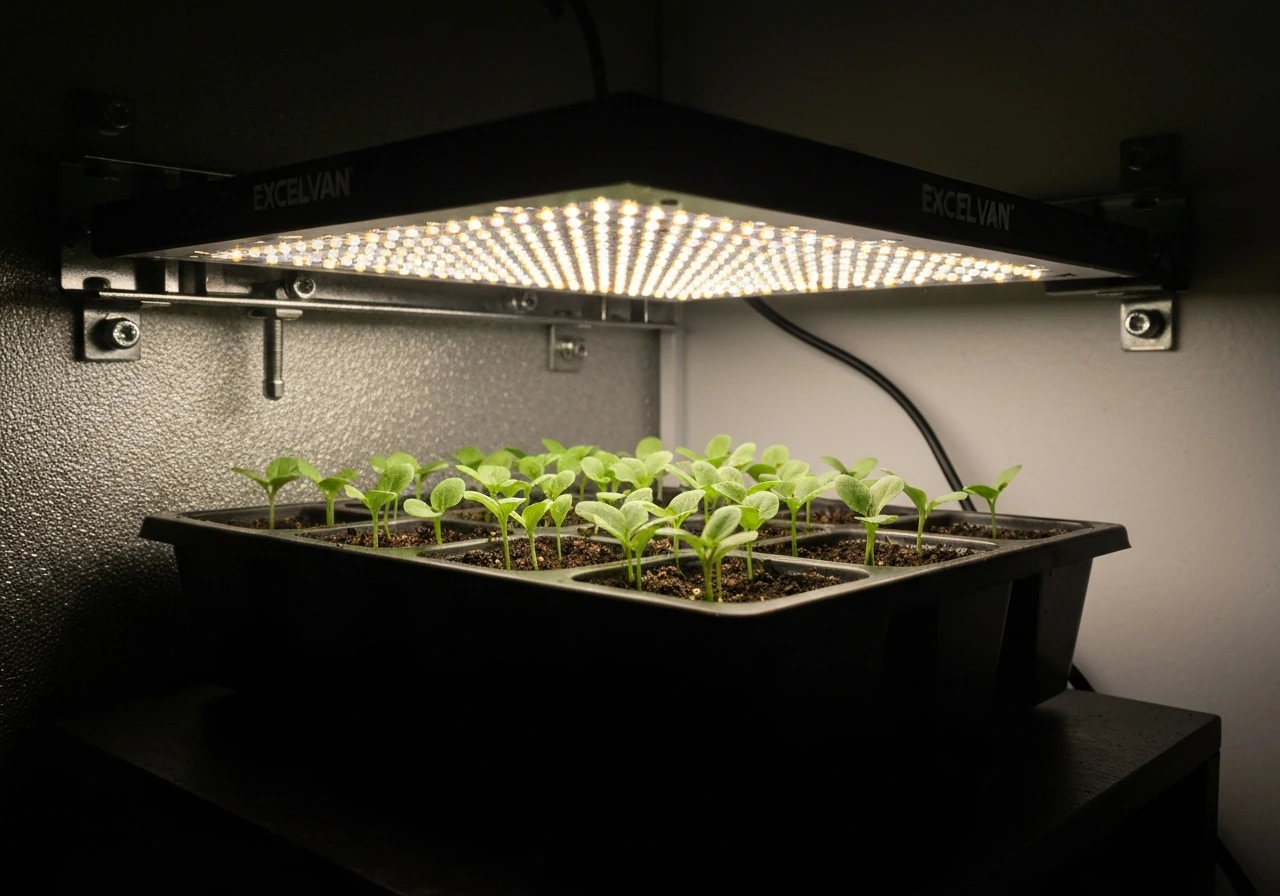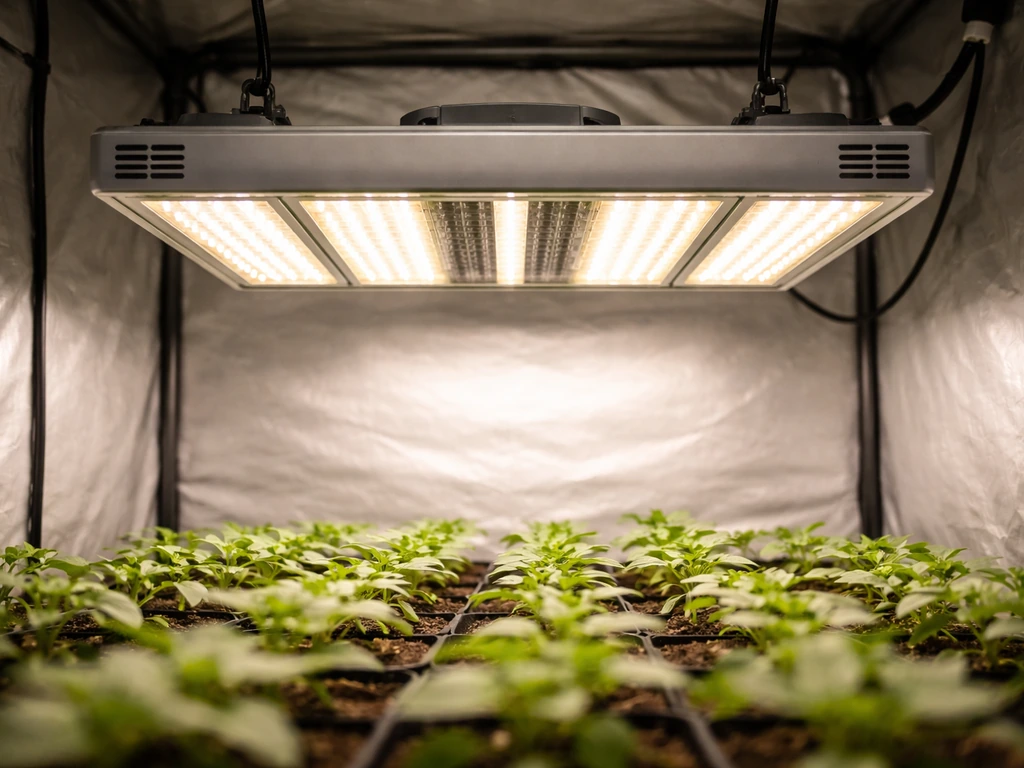
The Excelvan 1200W LED grow light is a low-cost blurple panel that draws somewhere between 120W and 200W from the wall despite the "1200W" label. It can support seedlings and early vegetative growth in a small 2x2 ft area, but it lacks the real photon output to carry heavy-feeding flowering plants through to harvest. If you know what you're actually getting, it can be a reasonable starter light. If you buy it expecting 1200W of performance, you'll be disappointed.
Excelvan 1200W LED Grow Light Review: Worth It?

Marcus Caldwell
12 May 2026
What Excelvan 1200W really means
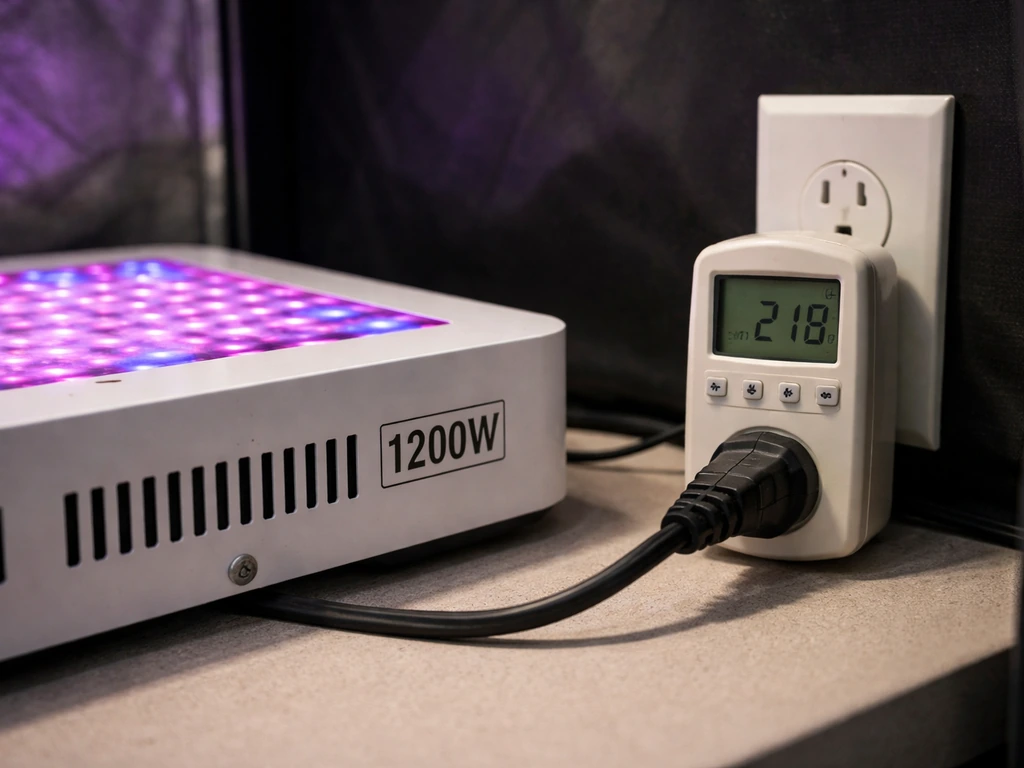
The "1200W" figure on this light is a marketing number, not an electrical measurement. It refers to the combined theoretical maximum wattage of all the individual LED chips on the board if every one of them were driven at full rated power. In practice, LED grow light manufacturers run those chips at a fraction of their rated wattage to extend lifespan and reduce heat. The result: a panel sold as "1200W" may draw only 120W to 200W from your wall outlet.
This isn't unique to Excelvan. It's a widespread practice across budget blurple panels. One commonly cited example is a competing "1200W" listing that openly states "consuming only 165W" in the fine print. The Excelvan 1200W follows the same pattern. If you want to know your unit's real draw, plug it into a kill-a-watt meter or similar power monitor the first time you run it. That single measurement tells you more about what your plants are actually receiving than any wattage claim on the box.
Why does this matter practically? Because plant growth responds to photon delivery (measured as PPFD in micromoles per square meter per second), not to marketing numbers. blank" rel="noopener noreferrer">PPFD (photosynthetic photon flux density) is a measure of photon flux, commonly reported in micromoles per square meter per second, to describe how much light plants receive. A light drawing 150W from the wall will deliver a fraction of the photons that a quality 150W quantum board delivers, because blurple diode efficiency and optical design are both lower than modern full-spectrum boards. So the 1200W label is doubly misleading: the real draw is much lower, and efficiency per watt is also lower.
Spectrum and growth-stage suitability
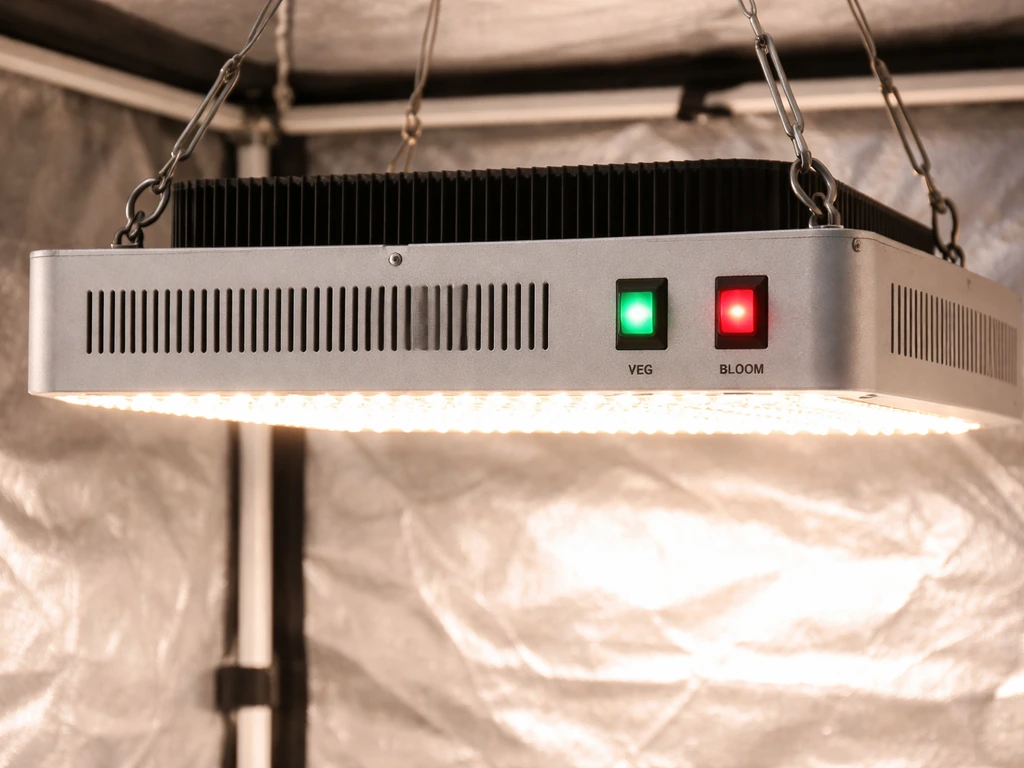
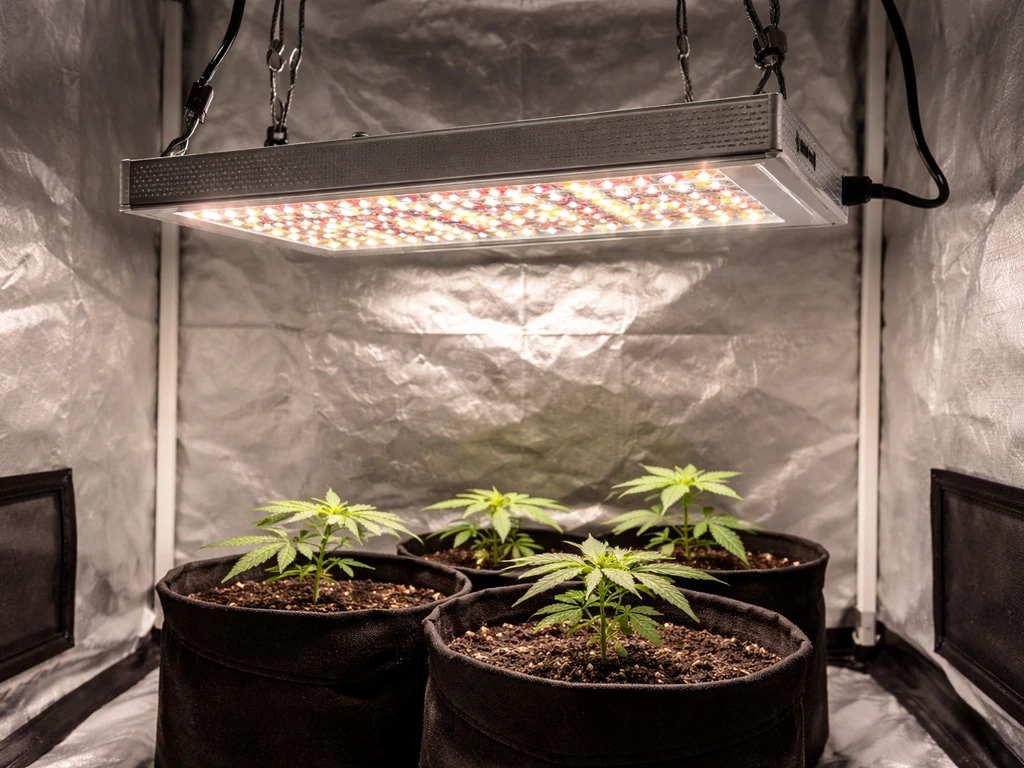
Excelvan's 1200W panel uses a classic blurple spectrum: a mix of red diodes (typically around 630nm and 660nm) and blue diodes (typically around 440nm and 460nm), sometimes with a small number of white or IR/UV chips depending on the specific version. The panel usually has two switch modes, one for vegetative growth (blue-heavy) and one for flowering (red-heavy or combined), though in testing both modes together generally produces the most usable output.
Red and blue wavelengths do drive photosynthesis, so the concept isn't wrong. The limitation is that blurple panels leave large gaps in the green and yellow portions of the spectrum that full-spectrum white LEDs cover. Plants grown under pure blurple can show slightly unusual leaf morphology and growers often find it harder to spot pest or nutrient issues because the pink-purple glow distorts how foliage looks. For seedlings and early veg, this matters less. For flowering crops where you're optimizing canopy development and monitoring plant health closely, it starts to count.
| Growth Stage | Suitability | Notes |
|---|---|---|
| Seedlings / clones | Good | Low intensity requirement; blurple covers germination well |
| Vegetative growth | Moderate | Adequate for small canopy; switch to blue-dominant mode |
| Early flowering | Fair | Run both switches; keep canopy close to light |
| Late flowering / heavy feeders | Poor | Insufficient PPFD for dense bud development or fruiting |
Coverage footprint, intensity, and how high to hang it
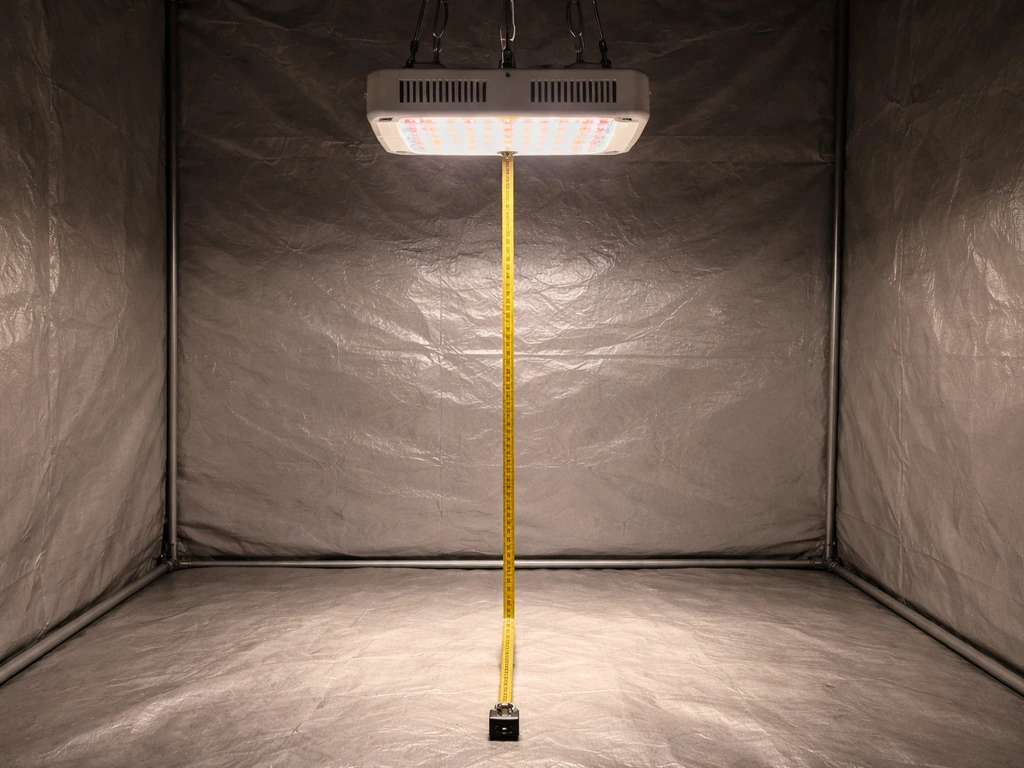
Excelvan's own packaging typically claims coverage of around 3x3 ft for vegetative growth and 2x2 ft for flowering. Those numbers are roughly honest, but only if you interpret "coverage" generously. The center of the footprint gets meaningfully more light than the edges. For a 2x2 ft flowering canopy you're working with, expect solid intensity in the middle 12 to 18 inches and diminishing returns toward the corners.
PPFD at canopy varies with hanging height. At 18 inches above the canopy, you might see 200 to 350 umol/m2/s at center under a light drawing around 150W. That range is workable for seedlings (target: 100 to 300 umol/m2/s) and acceptable for veg (target: 300 to 600 umol/m2/s) if you keep the light close. It falls short for flowering cannabis or tomatoes, which want 600 to 900+ umol/m2/s across the canopy. If you want to verify your specific unit, download a PPFD meter app (the Photon app is one option) and use the diffuser method to get a rough reading at your actual hanging height. It's not lab-grade, but it will tell you whether you're in the ballpark.
| Hanging Height | Estimated Center PPFD | Best Use |
|---|---|---|
| 12 inches | 350–500 umol/m2/s | Veg plants that need intensity, small footprint |
| 18 inches | 200–350 umol/m2/s | Seedlings, clones, leafy greens |
| 24 inches | 120–200 umol/m2/s | Propagation trays, very young seedlings |
| 30+ inches | Below 120 umol/m2/s | Not recommended for active plant growth |
These are estimates based on typical performance for panels in this wattage and efficiency class. Your actual readings may vary. The practical rule of thumb: hang it closer than you think you need to, watch your plants for light stress (bleaching, taco-ing leaves) and back off if you see it. Most growers end up at 16 to 20 inches for veg and 14 to 18 inches for early flower.
Build quality, heat, and day-to-day usability
The Excelvan 1200W is a no-frills panel. The housing is plastic and lightweight, which makes hanging easy but doesn't inspire confidence for long-term durability. The diodes are mounted on a basic aluminum heat spreader rather than a proper heatsink with fins, which means heat dissipation is modest but functional given the actual low draw. At 150W or so of real power, the panel runs warm but not dangerously hot. You can touch the back after an hour of operation and it won't burn you, though it'll be noticeably warm.
The built-in fan (present on most versions) is small and audible. It's not loud enough to matter in a dedicated grow tent, but in a bedroom shelf setup you'll hear it. The fan does keep the diode temperatures in check. Make sure the fan is spinning when you first power the light on. Fan failure is one of the more common failure modes reported for panels in this category, and running without cooling shortens LED lifespan quickly.
Most versions of this panel have two toggle switches for the veg and bloom modes. There is no integrated timer and no dimmer on the standard model. You'll want to add an outlet timer separately, which is a cheap fix but worth knowing upfront. The hanging hardware included in the box (typically a pair of adjustable rope ratchets) is adequate for the light's weight. The power cable is usually around 6 feet, which is enough for most setups.
Setting it up in a typical grow space
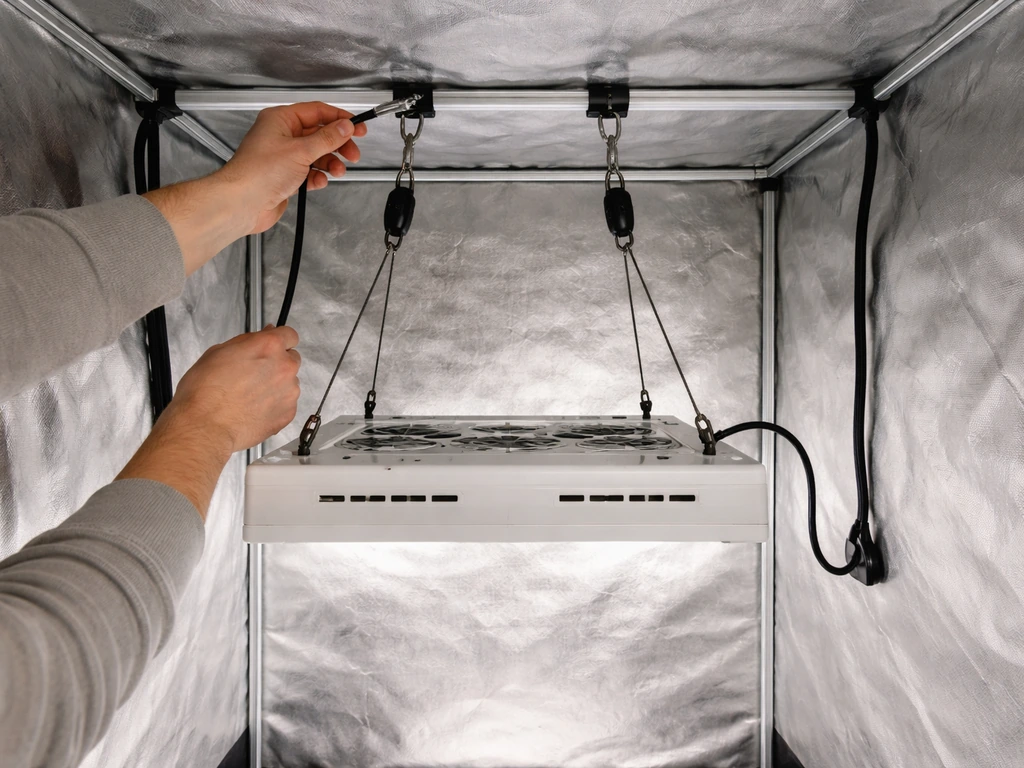
Here's a straightforward walkthrough for getting the Excelvan 1200W running in a 2x2 tent, which is the most sensible application for this light.
- Hang the rope ratchets from the center crossbar of your tent. The light should be centered over your canopy, not pushed to one side.
- Start with the light at 24 inches above your seedling trays or young plants. You can drop it lower as plants establish and you confirm there are no stress signs.
- Plug the light into a mechanical outlet timer set for 18 hours on / 6 hours off for veg, or 12 / 12 for flowering. Do not rely on manually switching it.
- Turn on both the veg and bloom switches for maximum output. There's no meaningful benefit to running just one switch at a time except during the very earliest seedling stage.
- Check the fan is spinning within the first minute of operation. If it isn't, power off and contact the seller before continuing.
- After the first week, measure or visually assess your plants. Stretching (tall, leggy internodes) means drop the light lower. Curling, bleached, or tacoing leaves mean raise it or reduce photoperiod.
- Add a small clip fan inside the tent for airflow. The Excelvan doesn't produce enough heat to require aggressive exhaust, but some air movement prevents moisture buildup and strengthens stems.
One important safety note: do not leave this light running unattended for long periods in the first week without checking that the fan is working and the panel isn't developing unusual heat spots. Budget panels occasionally have soldering or driver quality issues that show up early. Run it supervised for the first few days.
Value: what you get for the money and who it actually makes sense for
The Excelvan 1200W typically sells in the $30 to $60 range. At that price, you're not buying performance, you're buying a functional light that keeps plants alive in a small space at minimal cost. That's a legitimate use case for certain growers.
This light makes sense for: someone starting their first indoor grow who wants to spend the minimum to learn the basics before investing more; someone growing leafy greens, herbs, or microgreens on a small shelf where flowering intensity isn't needed; or someone using it as a supplemental side-light in a larger setup that already has a primary, higher-output fixture.
This light does not make sense for: anyone trying to flower cannabis or fruiting vegetables through to harvest; anyone growing in more than a 2x2 footprint; anyone who wants consistent, predictable results over multiple grows; or anyone who has already graduated past their first grow and knows what adequate PPFD feels like.
The value calculation also depends on electricity cost. At around 150W actual draw running 18 hours a day, you're spending roughly $8 to $12 per month on electricity (at $0.10 to $0.15 per kWh). That's low, but a good quantum board in the same real-wattage range produces significantly more usable light for the same electricity cost, so efficiency per dollar spent on power also favors the upgrade.
Alternatives and how they compare
If you're weighing the Excelvan 1200W against other budget options, here's how it sits in the broader landscape. If you're also comparing brand options, this vander grow light review style breakdown is a useful way to check whether the wattage claims match the real draw Excelvan 1200W.
Other blurple panels in the same price tier, like those from Vogek and Vander, follow essentially the same formula: inflated wattage claims, real draw in the 100W to 200W range, and serviceable performance for seedlings and veg. If you want a similar budget option, a Vogek grow light review can help you compare real watt draw and practical performance side by side.
The Vander 2000W, for example, is another entry in this category worth comparing if you want a slightly larger panel in the same budget range.
The meaningful upgrade path from the Excelvan 1200W is not another blurple panel at a higher fake wattage. It's moving to a full-spectrum quantum board or bar-style LED from brands like Mars Hydro, Spider Farmer, or HLG in the 100W to 200W real-draw tier.
Those lights cost more upfront (typically $80 to $200) but deliver two to three times the usable PPFD per watt, a full spectrum that's easier to work with, and better build quality that lasts multiple grow cycles. Vevor is another brand in the budget-to-mid segment worth investigating if you're looking for that middle ground. If you're also looking at Vevor options, this Vevor grow light review will help you compare real performance, spectrum, and build quality.
| Light Type | Real Draw | Best For | Relative PPFD Efficiency | Approx. Price |
|---|---|---|---|---|
| Excelvan 1200W (blurple) | ~150W | Seedlings, veg, herbs | Low | $30–$60 |
| Vogek / Vander blurple panels | ~100–200W | Seedlings, veg | Low | $25–$70 |
| Budget quantum board (e.g., Mars SP-150) | 150W | Full cycle, small tent | High | $80–$130 |
| Mid-range bar LED (e.g., Spider Farmer SF-1000) | 100W | Full cycle, 2x2 tent | Very High | $100–$160 |
If you're already looking at a broader Excelvan lineup, the general Excelvan grow light range follows the same design philosophy across its models, so the trade-offs described here apply to related panels in the family as well. The 1200W is the most commonly purchased model, but the performance characteristics are consistent across the brand.
Final verdict and a quick buying checklist
The Excelvan 1200W is an honest product if you understand what it actually is: a ~150W blurple panel that costs around $40 and works well for seedlings, clones, and low-demand plants in a 2x2 space. It's not a 1200W light. It won't flower demanding crops effectively. But it will keep your herbs alive, get your seedlings started, and teach you the basics of indoor growing without a painful upfront investment.
Warranty and support expectations should be modest. Budget LED panels in this category typically come with 1-year limited warranties, but customer service response can be slow and replacement parts aren't available. If the fan dies or the driver fails outside the return window, the economics of repairing it don't make sense. Treat it as a consumable rather than a long-term fixture.
Here's a quick checklist to run through before you buy or after you receive it:
- Plug it into a power meter on day one and record the actual watt draw. This is your real baseline.
- Confirm the fan is spinning within 60 seconds of powering on.
- Set a timer immediately. Do not rely on manual on/off switching.
- Hang at 18 to 24 inches to start, then adjust based on plant response over the first week.
- Run both switches (veg + bloom) for maximum output unless growing very young seedlings.
- Plan your grow around a 2x2 ft footprint maximum for any serious production; use it for seedlings in up to 3x3 ft.
- If your plants consistently stretch despite the light being at 16 inches, this light is underpowered for your goals and it's time to look at a quantum board upgrade.
- For flowering crops or anything beyond herbs and leafy greens, budget for a proper full-spectrum fixture instead.
Bottom line: buy it if you want the cheapest possible way to start growing indoors and you're comfortable with its limitations. Skip it and spend $80 to $130 on a real quantum board if you're serious about yield or plan to grow anything through flower. There's no shame in starting with the Excelvan, but go in with clear eyes about what it actually delivers.
FAQ
Is the “1200W” label on the Excelvan grow light safe to ignore completely when planning electricity costs?
Yes for budgeting, but verify using a plug-in meter once you receive it. The real draw can vary by version and by which switch mode you use (veg vs bloom), so your monthly cost should be based on the measured watts, not the box label.
What PPFD reading method should I use, since the article mentions an app with the diffuser method?
Use the diffuser method at your exact hanging height and document one repeatable spot pattern (for example, center plus four corners). Expect app readings to be approximate, so focus on whether you are consistently in the ballpark for seedlings, veg, or early flower, rather than chasing a single exact number.
How close can I hang the Excelvan 1200W without causing light stress?
Start with the higher end of the recommended range (slightly farther) for the first few days, then lower gradually while watching for bleaching, leaf taco-ing, and canopy “cupping” toward the light. If you see stress, raise it immediately rather than assuming the plant will adjust.
Does using both veg and bloom modes at once help, or should I stick to just one switch?
Using the combination mode is usually the most balanced for growth because it increases overall usable output, but it may also increase heat and make stress more likely if you hang too low. If you combine modes, re-check your hanging height by observing the newest growth.
Can I use this light to flower cannabis or tomatoes if I raise the real output some other way?
Not reliably. The main limitation is usable photon intensity and spectrum fit, not just time under light. Even if you run it longer, you still tend to miss the PPFD targets across the canopy, which can show up as airy buds or slower fruit set.
Is it better to run it 18 hours or 24 hours for seedlings under the Excelvan?
For seedlings and clones, longer schedules can increase stress risk if the light is too close. A common starting point is 16 to 18 hours on, then adjust based on plant response. Use a timer, not trial-and-error with manual on/off.
Why do my leaves look odd or pests are harder to spot under blurple lighting?
Burple shifts color perception, which can distort what leaf color and spotting look like to your eyes. Counter this by checking with a neutral LED flashlight or taking photos under neutral white light for pest and deficiency monitoring, especially late in veg and early flower.
How can I tell if the built-in fan is actually working after power-up?
After turning it on, confirm airflow near the exhaust within a minute and listen for consistent fan sound during a short test window. Also do a quick touch test on the back panel temperature after 15 to 30 minutes, it should be warm, not rapidly overheating or developing localized hot spots.
What should I do if the fan fails, can I run the light without it?
Do not. Running without cooling significantly shortens LED lifespan, and driver boards in budget panels can also run hotter than intended. If you suspect fan issues, stop using the unit and consider returning it if you are still within the return window.
Does the Excelvan 1200W include a timer or dimmer I can rely on?
Most standard versions do not have a built-in timer or dimmer. Plan on using a separate outlet timer for photoperiod control, and avoid cheap dimmers not rated for LED drivers, since they can cause flicker or reduced reliability.
Will the center-focused “coverage” mean I need to reposition plants during the grow?
Often yes. Because output drops toward corners, rotate trays or move plants over time so the canopy receives more even exposure. If you keep a single flat canopy, consider adding a small reflective surface around the tent to reduce edge losses.
Is it worth buying for herbs and leafy greens, or can I get a better budget option?
It can be worth it if you mainly need survival-level lighting for a small 2x2 area and want the lowest upfront cost. If you want more consistent results, especially for thicker canopies, consider stepping up to a real 100W to 200W quantum board class instead of another blurple panel.
What warranty expectations should I have, and how do I decide between returning vs keeping it?
Assume limited coverage (often around one year) and slower support in this price tier. If there is a fan, driver, or overheating fault during the first week, return rather than troubleshoot, because repair economics are usually unfavorable and parts may not be available.
What is the safest way to test the Excelvan when it arrives?
Run it supervised for at least a couple of hours the first day, check that the fan spins, monitor for unusual odors or visible heat discoloration, and confirm the switches change behavior. If anything looks abnormal early, don’t wait for a later failure.