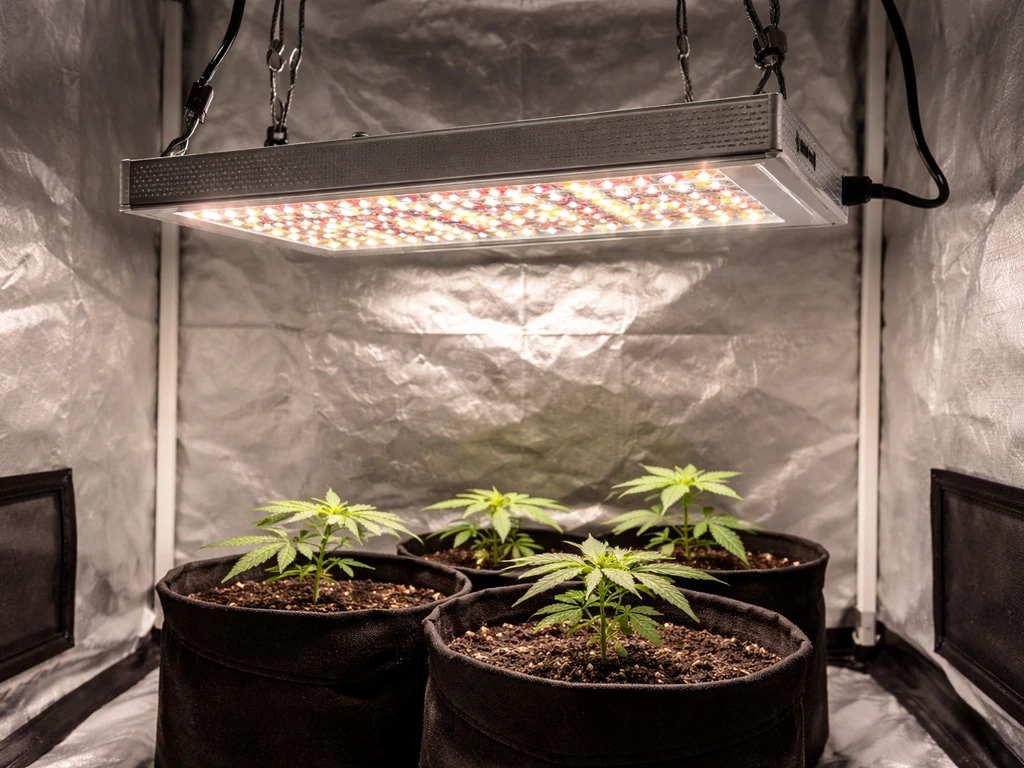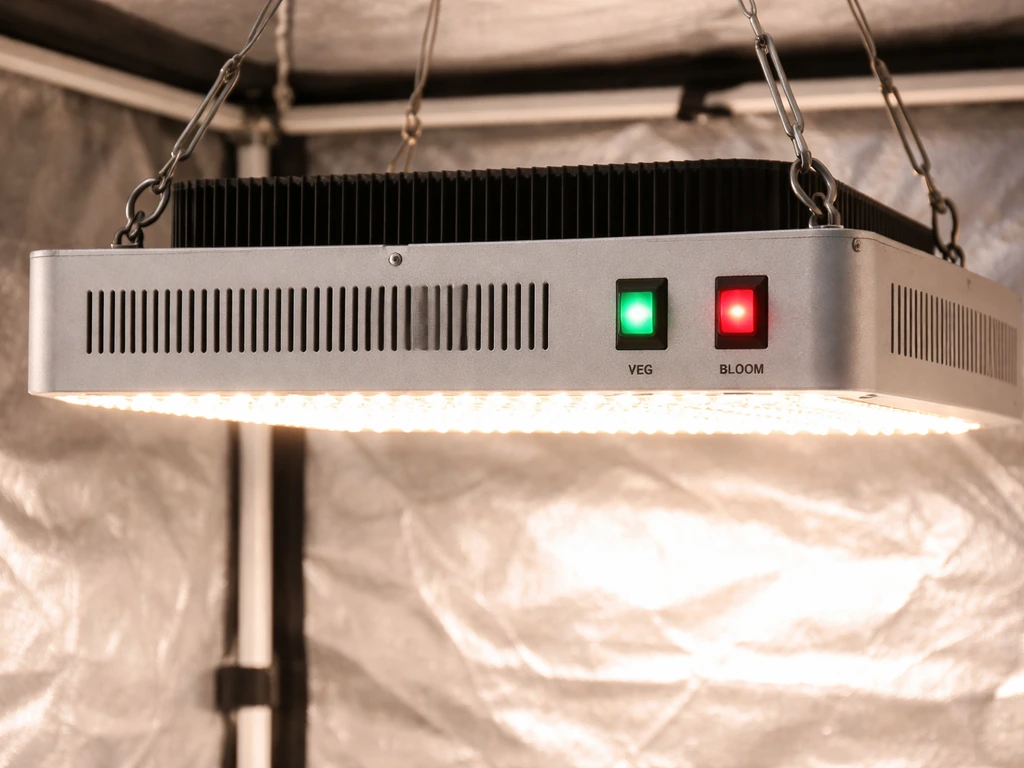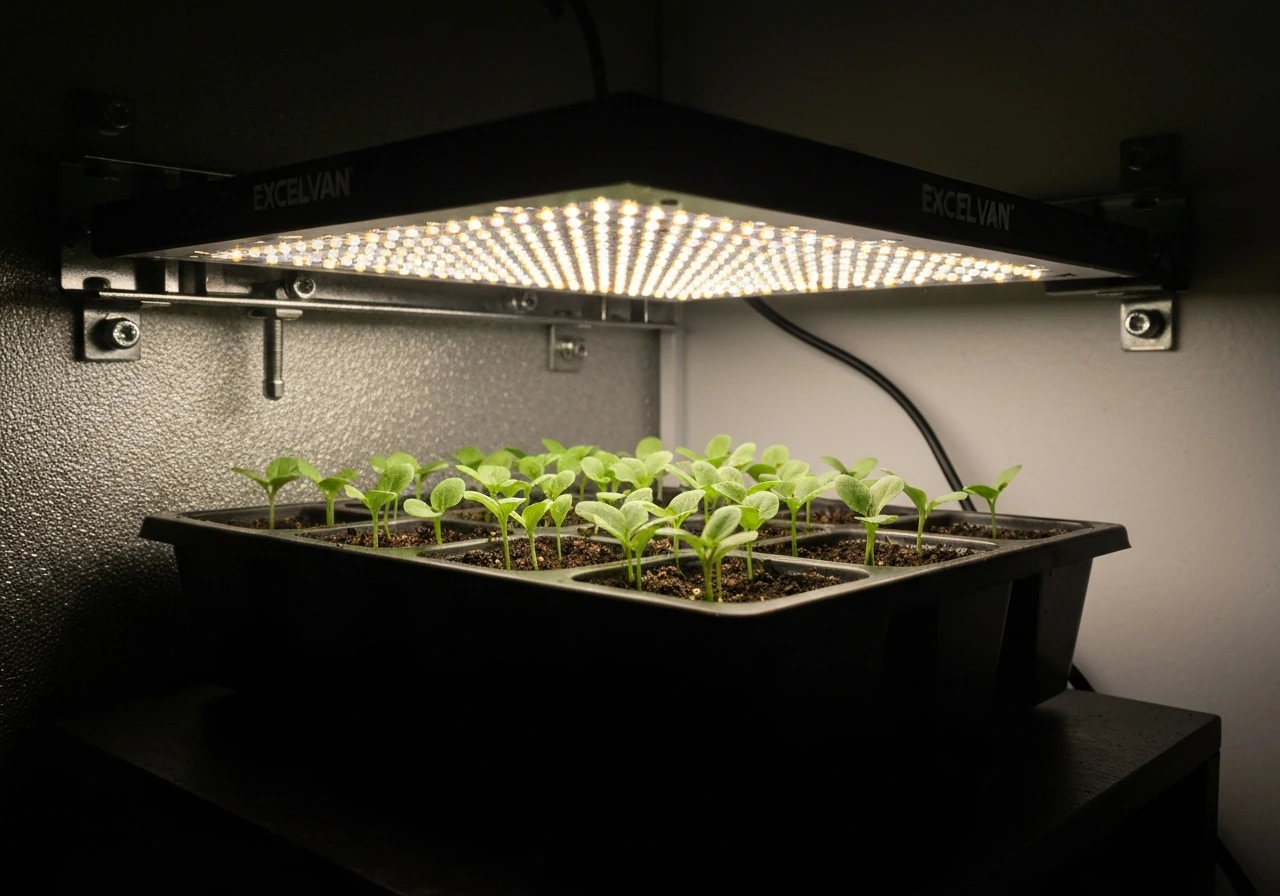
VEVOR grow lights are budget-friendly LED panels using Samsung 281B diodes that perform well enough for seedlings, vegetative growth, and light flowering in small tents, but they sit a tier below purpose-built horticulture brands like HLG or Spider Farmer when you push them hard. For most hobbyists running a 2x4 or 3x3 tent on a tight budget, the 150W or 200W models are genuinely usable. The 400W is the stretch option for a 4x4, but you should go in with realistic expectations about its marketing claims.
VEVOR Grow Light Review: Best Models, Coverage, Value

Marcus Caldwell
15 May 2026
Which VEVOR grow light are we actually talking about?
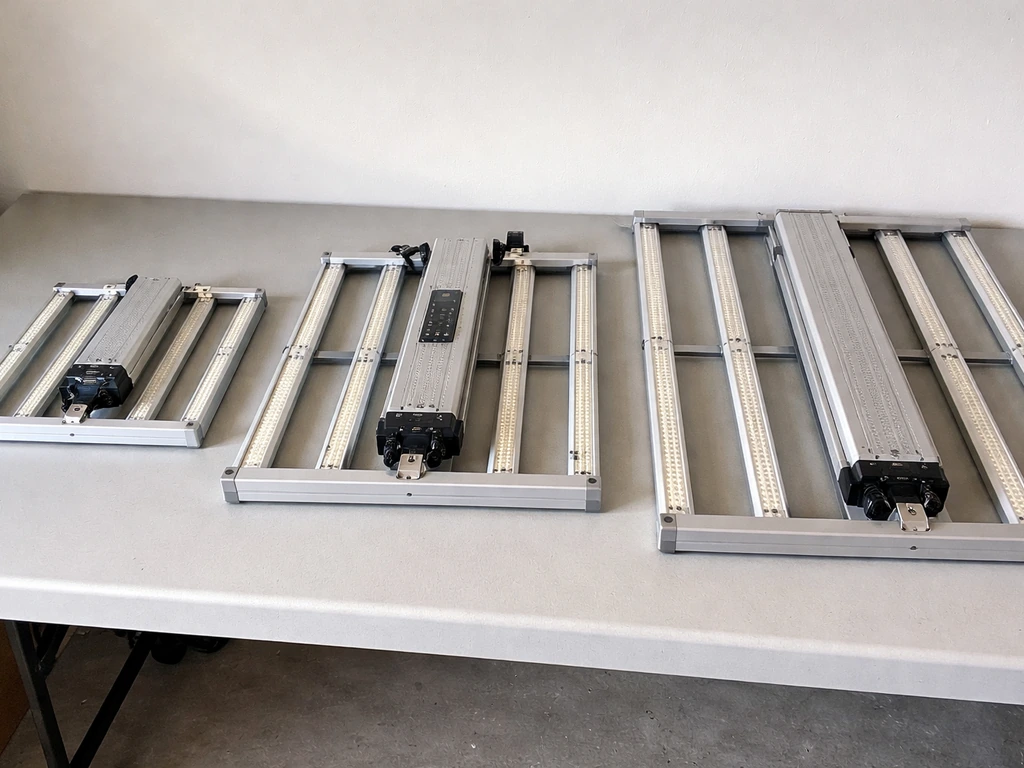
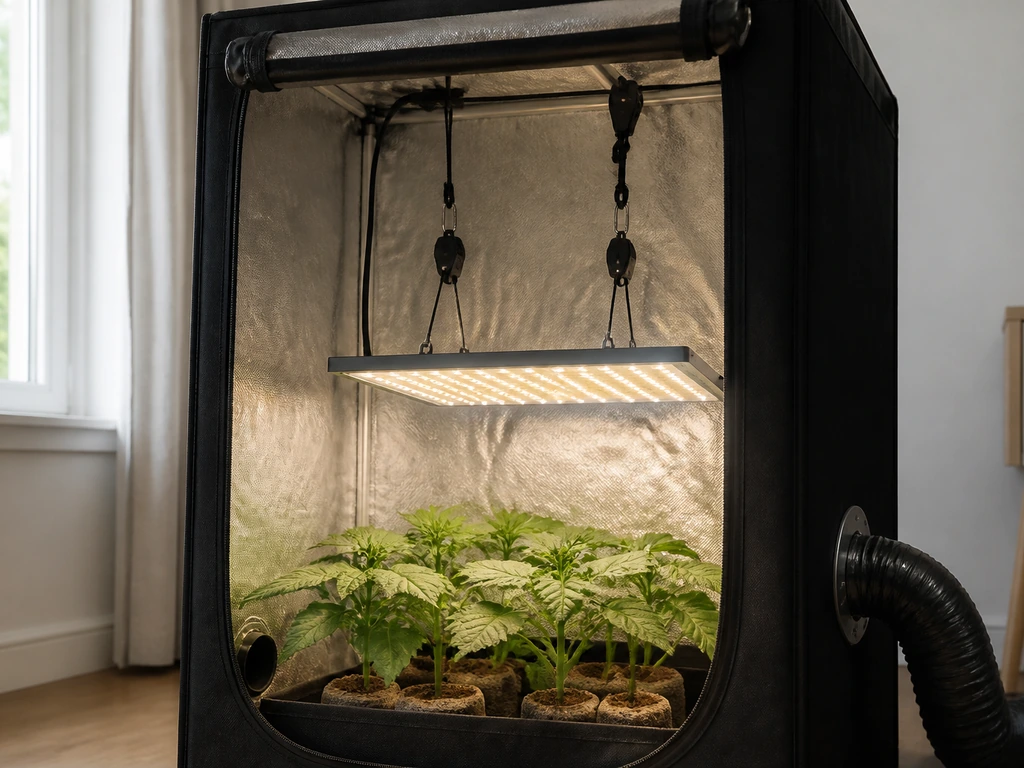
VEVOR sells a fairly wide range of grow lights under their brand, but when people search for a VEVOR grow light review, they're almost always asking about one of three quantum-board-style LED panels: the 150W Samsung 281B+PRO, the 200W Samsung 2B1B, or the 400W Samsung 2B1B. These are the models you'll find on Amazon, Walmart, and VEVOR's own site. The rest of their lineup (bar-style lights, ring lights, seedling strips) exists but rarely comes up in serious grow discussions.
Here's a quick look at the three main models side by side before we get into real-world use:
| Model | Actual Draw | Diodes | Dimming | Advertised Coverage | Certifications |
|---|---|---|---|---|---|
| VEVOR 150W | ~150W | Samsung 281B+PRO | 5-step (0/25/50/75/100%) | 3x3 ft | ETL, CE |
| VEVOR 200W | ~200W | Samsung 2B1B | 0-10V continuous + daisy chain | 1.2x2.4 ft to 3x3 ft | CE |
| VEVOR 400W | ~400W | Samsung 2B1B | 0-10V continuous + daisy chain | 4x4 ft to 5x5 ft | CE |
All three claim full-spectrum output with a combination of 3000K warm white, 6500K cool white, 660nm deep red, and 760nm IR diodes. The 150W and 200W are the sweet spot for most buyers. The 400W covers more ground but its PPFD marketing claim of 1500 µmol/m²/s at 1.2x1.2 meters should be treated as a best-case center-point reading rather than an average across the canopy.
Unboxing, build quality, and getting it running
The packaging is straightforward. You get the light panel, a hanging kit (rope ratchets), a power cord, and a brief instruction sheet. No extra hardware surprises, no missing pieces in the boxes I've handled. The panels feel solid for the price point: aluminum heat sinks with a brushed finish, no flex when you pick them up, and the diode boards are cleanly mounted. The 200W measures 65 x 35 x 14 cm, which gives you a sense of the physical footprint. It's not a tiny light.
The dimming knob on the driver uses a 0-10V system with five preset brightness gears (0%, 25%, 50%, 75%, and 100%), documented in VEVOR's own PMA-24300A driver manual. That's a sensible setup and easy to operate, though the physical knob feels a bit plasticky compared to the drivers on HLG or Quantum boards in the same price tier. Daisy-chaining multiple units through a single controller works as advertised, which is useful if you're scaling up.
Setup time is genuinely short. Most people have a VEVOR light hung and powered on within 20 minutes of opening the box, even without prior experience. The ratchet hangers are functional but not exceptional; I'd recommend picking up a second set of quality rope ratchets if you plan on adjusting height frequently during a grow.
Real-world performance: coverage, spectrum, and plant-stage fit
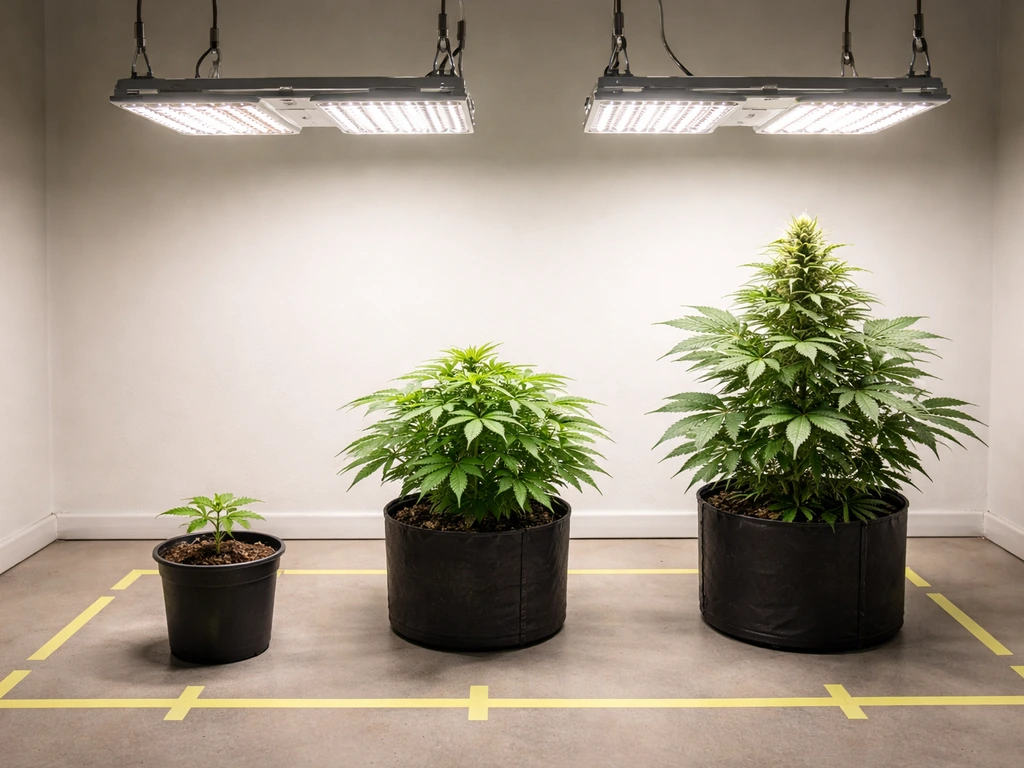
The spectrum mix across all three models (3000K, 6500K, 660nm, 760nm) is a legitimate full-spectrum blend. The warm white handles the red-heavy range that flowering plants want, the cool white covers the blue spectrum for vegetative growth, and the 660nm and 760nm channels add targeted deep red and far-red that influence flowering trigger and stretch. This isn't a gimmick spectrum; it's actually a reasonable recipe.
In practice, the 150W does a competent job covering a 3x3 ft footprint for seedlings and vegetative growth. On its 150W product listing, VEVOR also uses coverage/area language that ties tent sizing to this model’s 3x3 ft footprint claims [covering a 3x3 ft footprint](https://www. vevor. com/grow-light-c10260/vevor-150w-led-grow-light-greenhouse-growing-light-full-spectrum-indoor-plants-p010334019612?
adp=gmc). For flowering, it starts to show limits at the edges of that 3x3 if your plants are light-hungry strains. Think of it as a solid veg light that can push through a modest flower cycle on less demanding plants. The 200W is more versatile for 2x4 or 3x3 spaces and handles both stages with less compromise. The VEVOR 200W is one of the reasons many people end up reading a VEVOR 2000W LED grow light review before buying The 200W is more versatile.
The 400W covers a 4x4 properly for veg and a firm 4x4 for flowering if you're not running very high-demand strains.
The 400W's claimed PPFD of 1500 µmol/m²/s deserves a note. That number is almost certainly a peak center-point reading at minimum hanging distance, not an average across the full 1.2x1.2 meter area. Treat any single-point PPFD claim from a budget brand with skepticism. Effective canopy-average PPFD for this class of light at a useful hanging height (18-24 inches) will be meaningfully lower than that peak figure.
Which plant stage fits which model
- 150W: Seedlings and clones, full vegetative cycle, light flowering in 2x2 to 3x3 spaces
- 200W: Full veg and flowering in 2x4 or 3x3 spaces, good all-rounder for beginners
- 400W: Veg and flowering in a 4x4 tent, best paired with a reflective enclosure to maximize edge coverage
Heat, noise, reliability, and a word on wiring
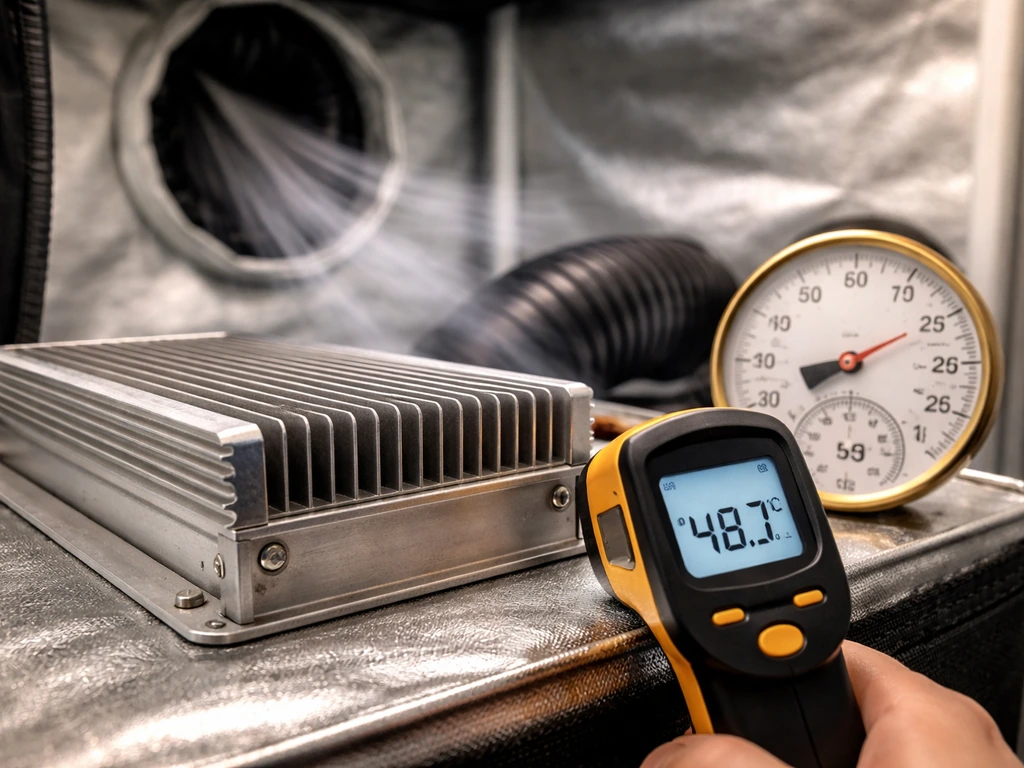
Heat is manageable on the 150W and 200W. The aluminum heat sinks do their job passively; the drivers run warm but not hot enough to be concerning in a properly ventilated tent. The 400W runs noticeably warmer and benefits from active airflow across it. None of these lights have integrated fans, which is a plus for noise. They run silently, which matters if your grow space is in a living area.
Reliability is where budget lights always create anxiety, and VEVOR is no exception. The Samsung diodes themselves are proven technology; the failure risk lives in the driver and connectors. From customer reviews aggregated on Walmart and Amazon, the most common complaints involve drivers failing at or around the 12-18 month mark rather than out of the box. VEVOR offers a warranty but their support process is slower than domestic brands. If you're running a critical crop or commercial operation, that support gap matters more than it does for a casual hobbyist.
On safety: the 150W carries ETL and CE certifications, which is meaningful. The 200W and 400W listings show CE. ETL certification in particular indicates the light has been tested to North American safety standards, so the 150W gets a small trust edge over the 200W/400W for US-based buyers. The 0-10V dimming wire routing in the driver manual (PMA-24300A) is clearly documented, and you should follow those instructions if you're wiring a separate controller; improper dimmer wiring is one of the more common self-inflicted problems with lights in this class.
VEVOR grow tent review: is the tent worth pairing?
VEVOR's grow tents are a natural companion to their lights since they're priced and sold together. The two most relevant sizes are the 2x4 (48x24x72 inches) and the 4x4 (48x48x80 inches). Both use what VEVOR markets as 2000D Mylar liner. That density rating suggests a thicker canvas and better light reflection than entry-level tents, though you should verify reflectivity with a visual check since density ratings are not standardized across brands.
The 4x4 stands at 80 inches tall, which gives you comfortable headroom for taller plants and enough vertical distance to hang a light at the recommended height without cramping. The 2x4 at 72 inches is tighter but workable for most photoperiod plants if you train them. Both tents include an observation window, multiple duct ports, and a floor tray.
Light leaks are the most common complaint with budget tents, and VEVOR tents are not immune. The zipper seams are the typical weak points. In my experience with similarly priced tents, a small amount of light bleed from zipper seams is normal and rarely causes photoperiod issues in practice unless you're running a very light-sensitive strain in a bright room. Check the corners and zipper overlap areas when you first set up and use black electrical tape if you find problem spots.
Ventilation compatibility is solid. The 4x4 tent works with 4-inch, 6-inch, or 8-inch inline fans depending on your heat load and the duct port size you're using. VEVOR's own product page recommends a 4-6 inch fan as a baseline, but the localized listing confirms 6-8 inch compatibility for heavier airflow needs. For a 400W light in a 4x4, a 6-inch inline fan paired with a carbon filter is the right starting point.
Matching your tent size to your light and hanging height
Getting the light-to-tent pairing right is more important than most people realize. A light that's technically rated for a 4x4 doesn't automatically fill that tent evenly at every hanging height. Here's a practical framework:
| Light Model | Tent Size | Hanging Height (Seedling/Veg) | Hanging Height (Flower) | Notes |
|---|---|---|---|---|
| VEVOR 150W | 2x2 or 3x3 ft tent | 24-30 inches | 18-22 inches | Best in 2x2 or compact 3x3 for full coverage |
| VEVOR 200W | 2x4 or 3x3 ft tent | 22-28 inches | 16-20 inches | Good all-purpose pairing for beginners |
| VEVOR 400W | 4x4 ft tent | 24-30 inches | 18-24 inches | Use reflective walls to compensate for edge fall-off |
For runtime, a basic 18/6 schedule (18 hours light, 6 dark) for vegetative growth and 12/12 for flower triggering applies regardless of brand. A mechanical or digital timer is all you need. If you're using the daisy-chain feature to run two VEVOR lights off one controller, make sure the combined wattage stays within the driver's rated capacity and that your dimmer setting is consistent across both units.
One thing people underestimate: the 80-inch height of the VEVOR 4x4 tent matters for the 400W light. More vertical distance gives you more flexibility to raise the light during seedling and early veg stages, reducing the risk of light stress on young plants. Don't buy a tent that caps out at 60-65 inches for a 400W light; you'll regret it.
Is VEVOR actually worth it, or should you look elsewhere?
VEVOR occupy an interesting spot in the market. They're not the cheapest option (there are plenty of no-name panels cheaper than these), but they're also not competing with Spider Farmer, Mars Hydro, or HLG on efficiency or output consistency. What you're getting is a recognizable brand with warranty support, Samsung diodes you can verify, and enough build quality to last a couple of grow cycles with normal use. If you want the bottom-line take before buying, a vander grow light review can help you compare VEVOR against other popular quantum-board style options.
For a first-time grower who wants a complete tent-and-light setup without doing deep research, the VEVOR ecosystem makes sense. The lights, tents, and fans are all sized to work together, the setup is simple, and the price is reasonable. For someone who's already grown a few cycles and wants to optimize yield per watt, brands like Spider Farmer (SF series), Mars Hydro (TSW series), or HLG offer better efficiency ratings and more transparent PPFD data.
Comparing VEVOR to some of the other budget-tier brands reviewed on this site, like Vogek or Excelvan, VEVOR generally comes out ahead on build quality and diode credibility, though Excelvan's 1200W-class panels and Vander's 2000W-marketed lights occupy a similar budget territory with their own trade-offs worth looking at separately. If you're also considering Excelvan, our Excelvan grow light review covers how their higher-watt panels compare for coverage, spectrum, and real-world reliability.
If you are specifically looking for a Vander 2000W LED grow light review, focus on footprint coverage, driver reliability, and whether the PPFD claims match your hanging height Vander's 2000W-marketed lights. If you are specifically hunting for a vander grow light review, it helps to compare claims, diode quality, and real-world coverage against how VEVOR performs in similar tents. If you’re considering alternatives, this Vogek grow light review breaks down how their panels compare for coverage, spectrum, and real-world output. If you’re also curious about Vogek, compare it against VEVOR using the same coverage, spectrum, and PPFD reality checks Vogek grow light review.
The honest bottom line: the 200W VEVOR is the best value in their lineup for most hobbyists. If you're deciding whether the VEVOR lineup is worth buying, this volt king grow light review is a useful comparison point for value-focused shoppers best value. It covers a 3x3 properly, runs the right spectrum for all growth stages, is genuinely easy to set up, and won't break the bank if the driver eventually fails.
The 150W is fine if your space is truly small (2x2 or compact 3x3). The 400W is the one to approach cautiously: verify your tent height is at least 72 inches, expect to supplement with a reflective tent liner to manage edge coverage, and don't take the 1500 µmol/m²/s claim at face value.
If you're spending 400W-tier money, it's worth comparing VEVOR against Spider Farmer SF-4000 or Mars Hydro TSW-2000, which give you better documented efficiency at a modest price premium.
Quick buy guidance summary
- Buy the 150W if: you have a 2x2 or small 3x3 space, you're growing low-light herbs or running seedlings/clones, and ETL certification is important to you
- Buy the 200W if: you want the best all-round VEVOR option for a 2x4 or 3x3 tent, you want daisy-chain flexibility, and you're doing full veg-to-flower grows
- Buy the 400W if: you have a 4x4 tent with at least 72 inches of height, you understand the PPFD claim is a peak figure, and you've compared it against mid-tier alternatives
- Skip VEVOR if: you want the most yield per watt, you need long-term reliable driver performance, or you're running a commercial or near-commercial operation
- Pair with the VEVOR 4x4 tent if: you want a matched ecosystem and a 2000D Mylar-lined tent at a competitive price, and you're running a 200-400W light
FAQ
How do I choose the correct hanging height for VEVOR (especially the 400W) so I don’t stress seedlings?
It’s usually best to hang VEVOR panels a bit higher at the seedling stage, then lower gradually. If you move too fast, the strong blue and red channels together can cause leaf tip curling or bleaching within a week. Practical rule, start toward the upper end of the recommended range (around 24 inches for many setups), then drop a few inches every 5 to 7 days while checking leaf color and stretch.
What’s the safest way to use the 0 to 10V dimming presets, and what changes if I run two lights on one controller?
Because the dimmer uses preset gears (0, 25, 50, 75, 100%), it’s easier to stay consistent than to “hunt” daily. If your plants are showing mild stress, don’t jump between 0% and 100%, move one gear down and hold for several days. Also note that when you daisy-chain two lights, the controller setting applies to both, so you can’t fine-tune one side of the tent independently.
Can I really grow in a tent size that matches the advertised coverage, or do I need to adjust for real canopy uniformity?
Yes, but treat “rated footprint” as an overlap target, not a guarantee of uniform light. For example, a 150W is fine for a 3x3 for many seedlings and veg grows, but the flowering canopy edges can be weaker if plants are light-hungry. A common fix is training to keep the canopy flatter and slightly narrower, or adding reflective surfaces around the edges (with care to avoid creating hot spots).
What ventilation and heat management should I plan for, given that VEVOR panels don’t have integrated fans?
For the fanless light panels, the driver is the main thermal consideration. If the driver enclosure is starved of airflow, reliability tends to drop, even if the LEDs themselves stay cool. Make sure the tent has active airflow, keep the driver area from being pressed against insulation, and avoid restricting the intake side of any tent liner setup you’re using.
What should I do if my VEVOR grow light starts flickering or won’t power consistently?
If a driver fails, the light can become unsafe if it starts to flicker, emit burning smells, or repeatedly trip power. In that case, stop using it immediately, test the outlet and cord separately, and then replace or warranty the driver before powering again. Don’t keep cycling it “to see if it works,” intermittent failure is a sign of underlying driver or connector issues.
Can I use a third-party 0 to 10V dimmer with VEVOR lights, or is the included setup required?
You can, but only if the dimmer/controller wiring matches the manufacturer’s 0 to 10V scheme. The driver manual matters because incorrect wiring is a common failure mode in this class. If you’re using a third-party controller, verify the controller outputs true 0 to 10V and that polarity and terminal mapping are correct, then start at 25% and confirm stable dimming.
How should I interpret VEVOR’s PPFD claims (like the 400W number) in day-to-day grow planning?
Expect less than the best-case peak PPFD across the whole area, especially at the far edges of the coverage zone. The most useful approach is to pick a comfortable hanging height, then measure with a PPFD meter if you have one, or run a “lower light but more even coverage” strategy by flattening the canopy. Without a meter, use plant response, stretch reduction, and consistent leaf color as your feedback loop.
Does changing from 18/6 to 12/12 require changing the dimming level on VEVOR lights?
Light schedule is important, but the dimming level can also change how plants “behave” during the first 7 to 14 days of a new photoperiod. If you switch from veg to flower (12/12), don’t also make a big dimmer jump at the same time. Make only one major change per week so you can tell whether any stretch or leaf change is from photoperiod timing or light intensity.
If drivers commonly fail later (around 12 to 18 months), how can I minimize impact on a serious grow timeline?
For critical or high-value crops, reduce the downside risk by having a backup plan: buy from a seller with an easier return flow, keep proof of purchase for warranty claims, and consider staggering purchases so one failure doesn’t wipe your whole cycle. If you’re running only one panel per tent, a driver failure can halt the grow at the worst time, so “scale with redundancy” matters more than with higher-tier systems.
How do I troubleshoot light leaks in a VEVOR tent so they don’t mess up a photoperiod schedule?
A few zipper leaks are usually manageable, especially if the tent is in a bright room, but strict light discipline matters for photoperiod plants. After setup, do a quick nighttime check with your eyes or a flashlight to spot gaps, then seal only the problem seams. Avoid over-sealing in a way that blocks duct ports or airflow paths.
What’s the biggest mistake people make when using the 400W VEVOR light in a tent?
If you’re using the 400W in a 4x4, the tent height is a real constraint, not a detail. Too-short tents can force you into a hanging height that’s either too close (stress) or too far (edge underlighting). As a decision aid, confirm your usable hanging range (including ratchet hardware) still lets you target the recommended height band before you buy.
What setup mistakes (hanging, wiring, routing) most commonly cause problems with VEVOR panels?
In general, you don’t need specialized power tools beyond basic electrical safety. However, check that your hanging kit can support the panel weight with the height you plan, and route the power cord so it doesn’t pull on the driver during height adjustments. Also keep the dimmer wiring away from sharp tent edges so movement doesn’t damage the cable over time.