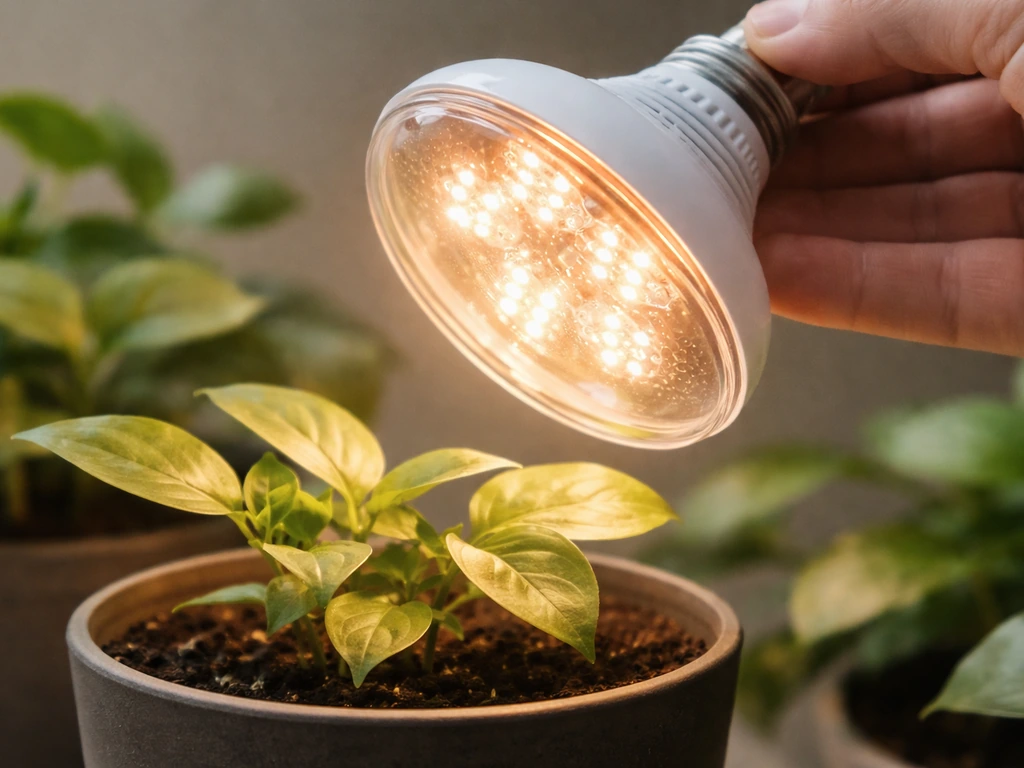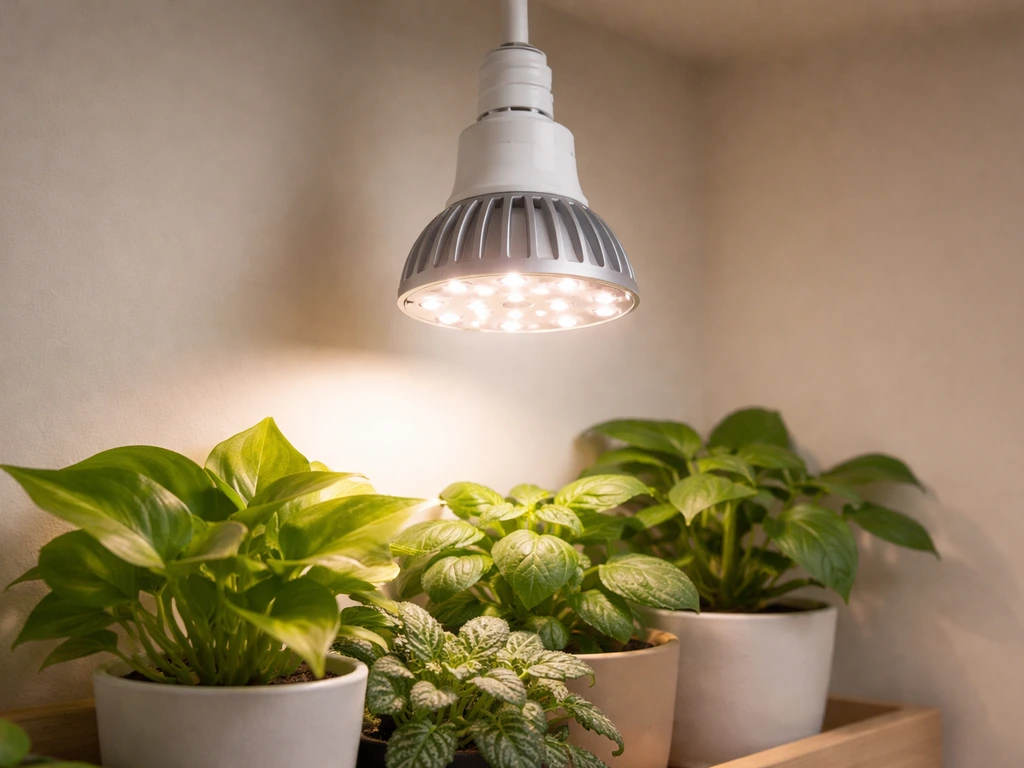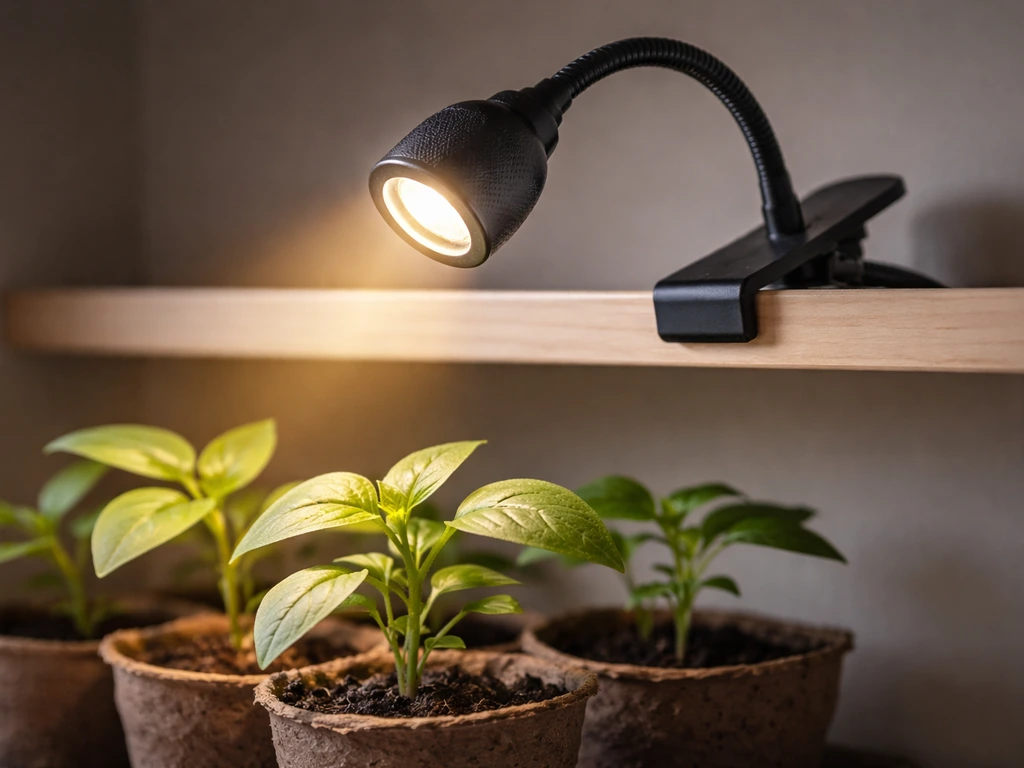
The Sansi 15W grow light (specifically the PAR25 15W LED bulb with an E26/E27 base) is a solid, low-cost option for seedlings, cuttings, small herb pots, and microgreens trays, but only if you keep it within 12 inches of your plants and run it on a proper photoperiod. At 15W and a published PPFD of roughly 153 µmol/s/m² at one foot, it delivers enough light intensity for vegetative growth and propagation, but it won't push fruiting or flowering on its own. If that use case fits what you're trying to do, it's genuinely worth the money. If you need more coverage or light intensity, you're better off looking at the Sansi 24W or 36W models from the start. If you are comparing, this also lines up with what you would typically look for in a Sansi 36W grow light review, especially for larger coverage and higher intensity needs Sansi 36W models.
Sansi 15W Grow Light Review: Worth It for Seedlings?

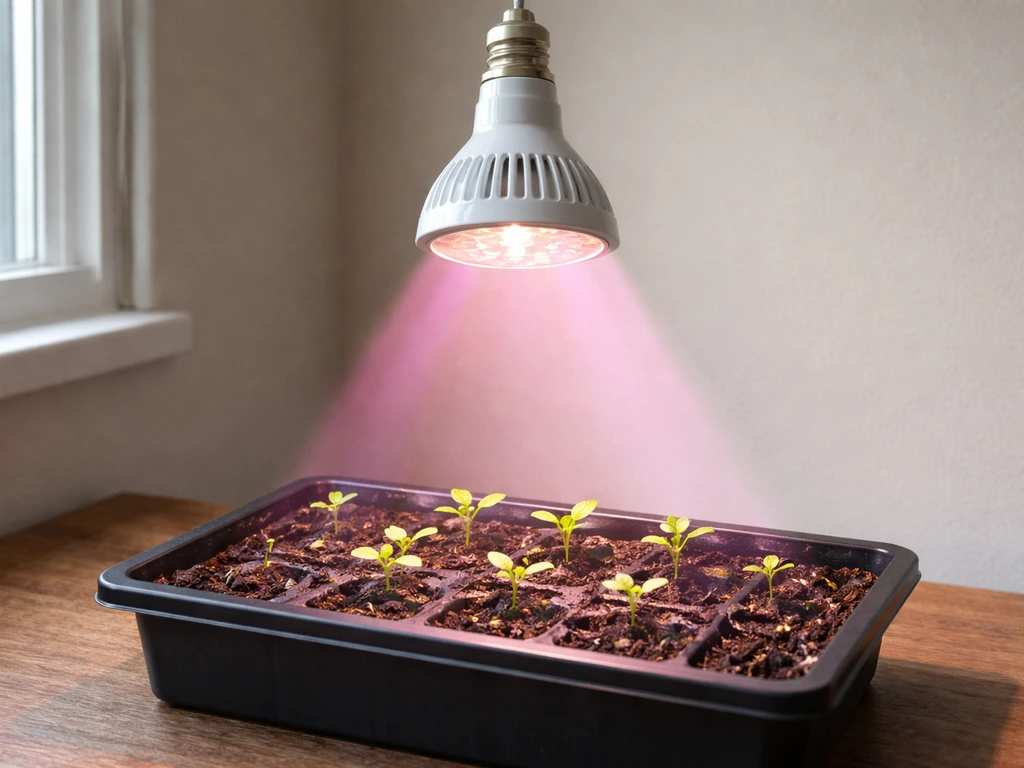
What the Sansi 15W is and who it's actually for
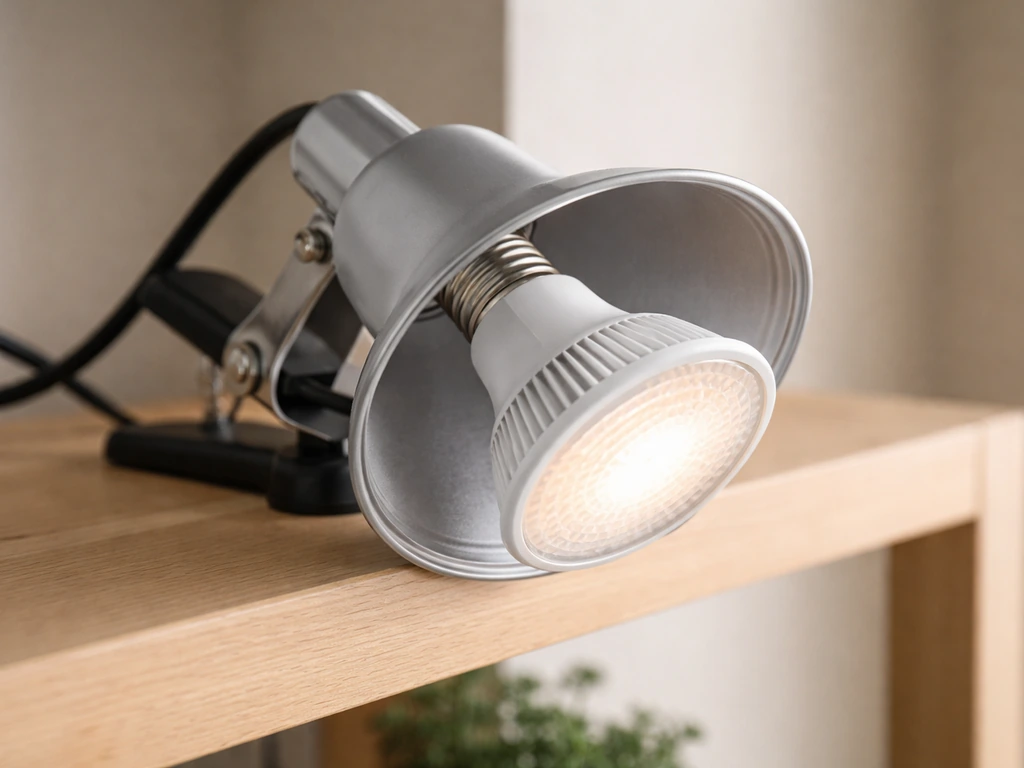
The Sansi PAR25 15W is a screw-in LED grow light bulb, not a bar or panel. It fits a standard E26 or E27 socket, which means you can drop it into a clamp lamp, a gooseneck fixture, or even a standard desk lamp. The bulb itself is compact, 76mm wide and 105mm long, so it's easy to position close to plants without taking up much space. Sansi markets it as a full-cycle grow light suitable for every stage of plant growth, and that's true in a qualified sense: it covers 400nm–780nm, which includes the wavelengths plants actually use. But "every cycle" doesn't mean "optimal for every cycle" at 15W. Think of this as a propagation and maintenance light, not a production light.
The typical buyer for this light is someone with a small indoor shelf, a propagation corner, or a windowsill supplement situation. You're growing a few herb pots, starting seeds under supplemental light in winter, rooting cuttings, or running a small microgreens tray. You're not trying to flower tomatoes or run a cannabis veg tent. If you already own a compatible lamp fixture, this bulb is about as low-friction a grow light as you can buy.
Specs and spectrum: what the numbers actually mean for your plants
Here are the key specs from Sansi's own product listing and certification documentation, all in one place.
| Spec | Value |
|---|---|
| Wattage | 15W |
| Voltage | AC 120V, 50/60Hz |
| Base type | E26 / E27 |
| Color temperature | 4000K (daylight) |
| Spectrum range | 400nm – 780nm (full spectrum) |
| PPF | 27 µmol/s |
| PPFD at 1 ft | 152.83 µmol/s/m² |
| Beam angle | 60° |
| Bulb dimensions | Ø76 × 105 mm |
| Certifications | ETL / CE |
| Model number | C21GL-DE26/27 |
The 4000K color temperature puts this in neutral daylight territory, not the blueish cool white of a propagation-only light, and not the warm red-heavy glow of a flowering light. That's actually a reasonable compromise for a single-bulb grow light. Plants get enough blue spectrum (roughly 400–500nm) to stay compact and stocky, and enough red and far-red (600–780nm) to support photosynthesis efficiently. The 60-degree beam angle is tighter than many competitors at this wattage, which is a double-edged detail: it concentrates light better at close range but reduces spread at distance.
A PPF of 27 µmol/s is modest but not negligible for a 15W bulb. For context, seedlings need roughly 100–200 µmol/s/m² PPFD to grow well, and established leafy herbs want 200–400 µmol/s/m². At one foot, this bulb delivers 153 µmol/s/m² according to Sansi's published data, which puts you squarely in the lower range of what seedlings and low-light herbs need. Push the distance to 18 inches and that number drops considerably, probably into the 60–80 µmol/s/m² range based on the inverse-square relationship, which is marginal for most plants. The takeaway: distance control is everything with this light.
Coverage, mounting height, and how close to keep it
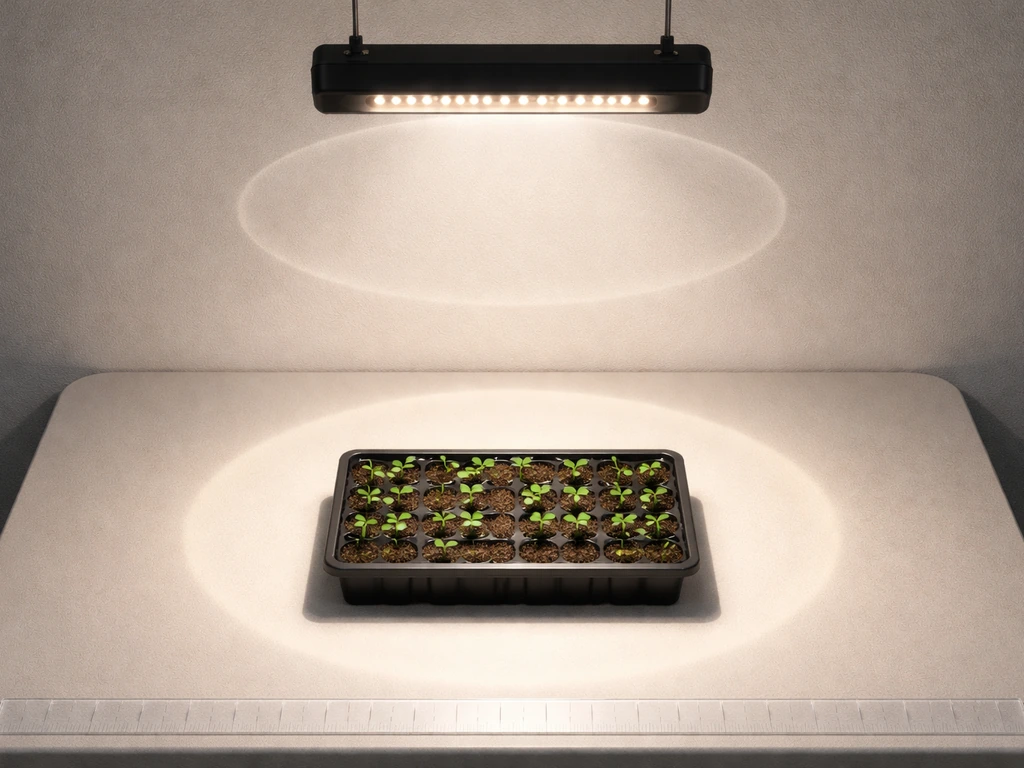
The 60-degree beam angle means the Sansi 15W concentrates its output in a relatively narrow cone. At 12 inches above your plants, you're effectively lighting a circle of around 8–10 inches in diameter at usable PPFD levels. That's enough for a single 4-inch pot, a small cluster of seedling cells, or one medium herb container. Don't expect to cover a full 1020 tray with a single bulb at this wattage.
For seedlings and cuttings, keep the bulb 8–12 inches above the canopy. For established herbs that are more light-tolerant (basil, mint, parsley), 10–14 inches works. If you notice stretching, stems getting long and spindly between nodes, that's a clear signal the light is too far away or the photoperiod is too short. Drop the light a couple of inches and reassess after a week.
- Seedlings and delicate cuttings: 8–12 inches, 14–16 hours per day
- Herbs in active growth (basil, mint, chives): 10–14 inches, 14–16 hours per day
- Low-light houseplants used to indirect sun: 12–18 inches, 12–14 hours per day
- Microgreens: 6–10 inches, 12–14 hours per day until harvest
One practical note on coverage per dollar: if you need to light more than a square foot reliably, you'll get better results running two of these bulbs in adjacent clamp lamps than trying to push one bulb further away. Two bulbs at 12 inches in a V-arrangement cover a small shelf tray with much better uniformity than a single bulb stretched to 24 inches.
Hands-on testing notes: what it's like to actually use this light
Setup and first impressions
Setup is about as simple as a grow light gets. Screw the bulb into a clamp lamp or any compatible E26/E27 fixture, position it above your plants, plug it in, and you're running. There's no driver box, no dimmer, no proprietary hanging hardware. The bulb reaches full brightness almost immediately, no warm-up lag worth mentioning. The 4000K output looks clean and white to the human eye, which is a welcome change from the purple/pink blurple lights that many budget grow lights use. It's much easier to assess your plants' real color and health under this light.
Brightness and uniformity
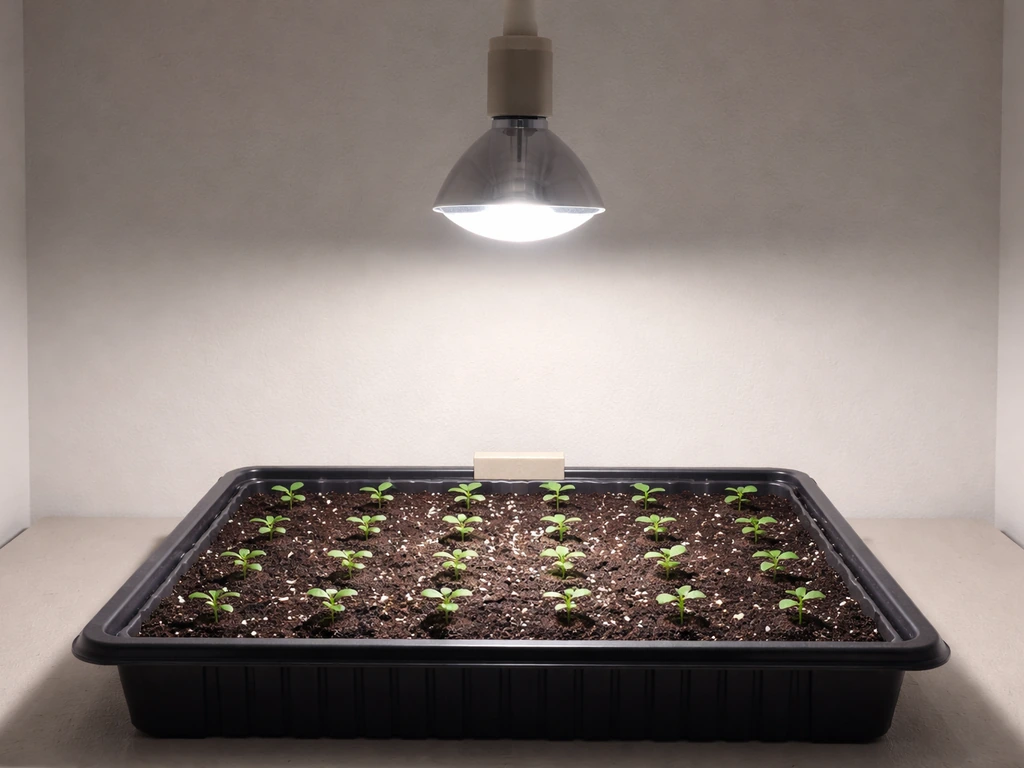
The 60-degree beam angle creates a noticeable hot spot directly below the bulb, with intensity dropping off toward the edges of the coverage zone. At 10 inches distance, the center of the coverage circle is well-lit, but if you're running a tray with multiple plants, the ones at the perimeter get meaningfully less light than the ones directly under the bulb. Rotating pots every few days is a real recommendation here, not just a throwaway tip. Uniformity improves slightly if you move the bulb further away, but then you're sacrificing intensity at center, so it's a trade-off.
Heat output
The bulb runs warm but not hot. After an hour of continuous operation, the ceramic base (which is part of Sansi's heat dissipation design) gets noticeably warm to the touch, but the light itself doesn't radiate enough heat downward to stress plants at 8–10 inch distances. You're not going to burn leaf tips with this bulb the way you might with an old HID setup. That said, don't let the bulb sit enclosed in a fixture with zero airflow, the ceramic body needs some circulation to stay within operating temps over long daily cycles.
Build quality
Build quality feels appropriate for the price point. The ceramic body is more robust than the plastic shells on many competing budget bulbs, and the ETL/CE certifications give some confidence that it's been through basic electrical safety testing. The E26/E27 base is solid, no wobble in a standard socket. There's nothing premium about it, but nothing feels cheap enough to worry about, either.
Best plants and grow setups for the Sansi 15W
This light has a clear sweet spot and a clear limit. Stay in the sweet spot and it performs well above its price. Stray outside it and you'll be disappointed.
| Plant / Use Case | Good fit? | Notes |
|---|---|---|
| Seedling starting (tomatoes, peppers, flowers) | Yes | Keep at 8–10 inches, 16 hours/day; watch for stretch |
| Herbs (basil, mint, chives, parsley) | Yes | Works well for maintenance and growth at 10–14 inches |
| Microgreens | Yes | Excellent; 6–10 inches, short growth cycle, low light needs |
| Cuttings / propagation | Yes | Low intensity is actually ideal here; no leaf stress |
| Succulents and cacti | Marginal | Need high light; supplement only, not sole source |
| Fruiting plants (tomatoes, peppers to fruiting) | No | 15W is not enough intensity for fruit set; upgrade needed |
| Flowering cannabis or similar | No | Far too low wattage; not the right tool |
| Large houseplants (fiddle leaf, monstera) | Marginal | Supplement for winter light loss only; not a replacement for natural light |
The propagation use case is probably where this light earns its keep most reliably. Cuttings need lower light intensity than established plants, and the Sansi 15W at 10–12 inches is almost perfectly calibrated for that stage. Pair it with a humidity dome and a basic timer, and you've got a low-cost propagation station that actually works.
Value and how it stacks up against other 10–20W grow lights
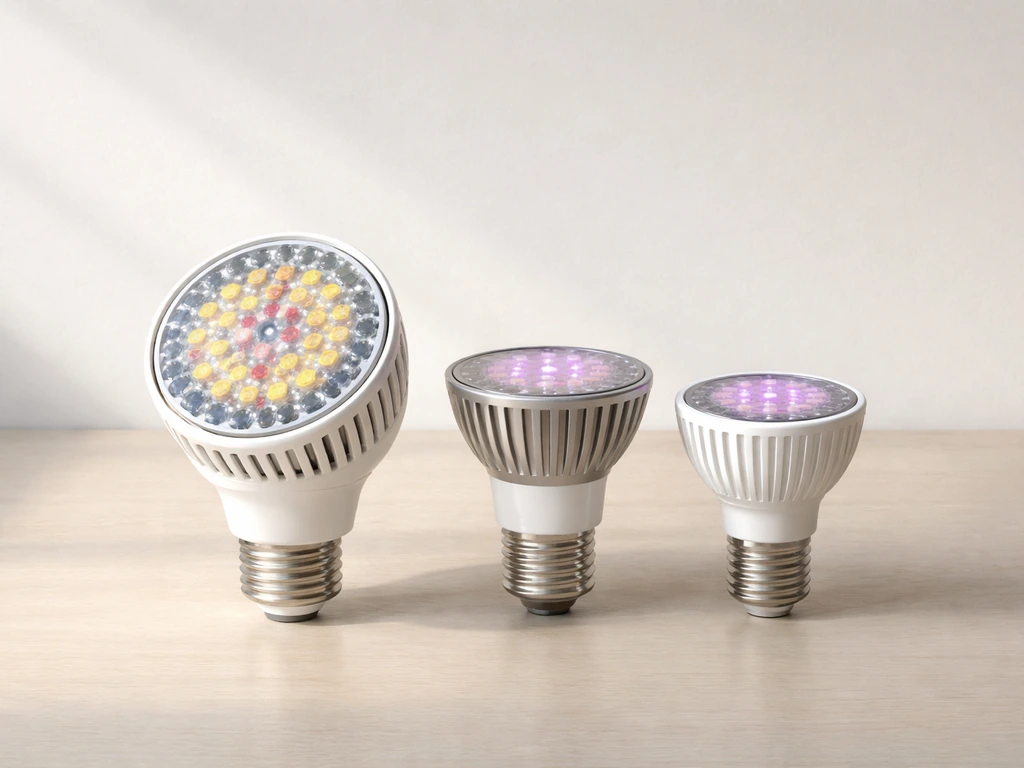
The Sansi 15W sits in a price range (typically $15–$25) where it competes with a lot of generic Amazon grow light bulbs that publish inflated wattage numbers and don't back them with real PPF data. The fact that Sansi publishes an actual PPF figure (27 µmol/s) and PPFD at a stated distance (152.83 µmol/s/m² at 1 ft) immediately puts it a step above most competitors in this bracket, where you're often flying blind on actual light output.
Against the Sansi 10W from the same lineup, the 15W gives you meaningfully more output (roughly 35–40% more PPF in practice) for a small price premium, which makes it the better buy for most users who were considering the 10W. The jump from 15W to the Sansi 24W is more significant: the 24W covers more area and delivers higher PPFD at practical distances, making it the better choice if you're trying to light a full small shelf rather than a single pot. If you’re weighing it against other wattages, the Sansi 24W grow light review is a useful comparison for coverage and intensity differences. And if you're running a dedicated grow shelf with multiple plants and real coverage requirements, the Sansi 36W becomes the more sensible investment. The 15W fits between the 10W (too little for most real use cases) and the 24W (a notable step up in coverage), and it earns its place if your setup is genuinely compact.
| Light | Wattage | PPF (µmol/s) | Best for | Relative price tier |
|---|---|---|---|---|
| Sansi 10W | 10W | ~18 µmol/s (est.) | Supplemental light, single small plant | Budget |
| Sansi 15W (PAR25) | 15W | 27 µmol/s | Seedlings, cuttings, herbs, microgreens | Budget |
| Sansi 24W | 24W | ~43 µmol/s (est.) | Small herb shelf, multi-plant tray | Mid-budget |
| Sansi 36W | 36W | ~65 µmol/s (est.) | Dedicated grow shelf, vegging small plants | Mid |
| Generic 15W Amazon bulb | 15W (claimed) | Unknown (often lower) | Varies widely; no transparency | Budget |
One thing worth flagging: some competing 15W options from brands like GE or Feit Electric are also full-spectrum screw-in bulbs in this range, and a few of them perform comparably. The Sansi differentiates itself primarily through the ceramic body (better thermal management than plastic) and the published photometric data. If you're choosing between a Sansi 15W and a no-name bulb claiming 15W on Amazon, the Sansi is the safer bet by a meaningful margin.
Honest pros and cons, and who should skip it
What it does well
- Transparent, published PPF and PPFD data — rare at this price
- Ceramic body manages heat better than plastic-shell alternatives
- Screw-in E26/E27 format makes it compatible with almost any fixture you already own
- 4000K daylight spectrum is comfortable for plant assessment and looks good in living spaces
- Full-spectrum 400–780nm coverage handles seedling and vegetative growth cleanly
- ETL and CE certified for basic electrical safety confidence
- Low heat output means no leaf burn risk at recommended distances
Real limitations to be honest about
- Coverage area is small — roughly 8–10 inch diameter at 12 inches; not a shelf light
- 60-degree beam creates uneven distribution across wider trays
- PPFD drops off quickly with distance; placement precision matters a lot
- No dimmer, no timer built in — you need to supply your own outlet timer
- Not enough intensity for fruiting, flowering, or high-light plants as a sole source
- At 15W, you may find yourself wanting two of these within a few weeks of starting
Skip this light if...
Don't buy the Sansi 15W if you're trying to light more than about one square foot of canopy, if you're growing fruiting vegetables past the seedling stage, or if you're expecting it to replace a south-facing window for high-light plants like succulents or peppers in full production. It's also not the right tool if you want a bar-style light with adjustable hanging height and wide, even coverage, for that, you'd want to look at actual grow light bars or panels rather than a screw-in bulb format. And if you're comparing several Sansi models specifically for a larger grow, the 24W or 36W will serve you better from the start.
Buy and setup checklist: how to get results fast
If you've decided the Sansi 15W fits your setup, here's exactly how to configure it from day one to avoid the most common mistakes.
- Get a basic outlet timer (mechanical or digital, doesn't matter) — set it for 14–16 hours on / 8–10 hours off for seedlings and herbs; 12–14 hours for low-light plants
- Mount the bulb at 10–12 inches above the canopy for seedlings and cuttings; back off to 12–14 inches for established herb pots
- Confirm the bulb is in a fixture that allows some airflow around the ceramic base — avoid fully enclosed glass globes
- If you're covering more than one plant, rotate pots every 2–3 days to compensate for the hot-spot center coverage pattern
- Check for stem stretching (etiolation) after the first week — if stems are getting leggy, lower the light by 2 inches and reassess
- Don't try to use this as a sole light source beyond 18 inches — if your space forces that, buy the 24W instead
- If after 3–4 weeks your plants are healthy and compact but you're running out of coverage area, add a second bulb in a separate clamp fixture rather than moving the first one further away
- If you eventually need more intensity for fruiting crops or a larger shelf, use this as a propagation station and upgrade the main grow area to a proper wattage light
The Sansi 15W is a genuinely useful tool for what it is: an affordable, transparent, compact screw-in grow light for small propagation and herb-growing setups. It won't outperform its wattage, and you shouldn't ask it to. But within its actual use case, kept at the right distance and on a proper timer, it does exactly what it says. That's more than can be said for a lot of lights in this price range. If you want to see how these real-world results stack up against expectations, check out Sansi grow light reviews for users running similar setups.
FAQ
Can I use the Sansi 15W to cover a full seed-starting tray (like a 1020)?
Yes, but only within the bulb’s light cone. Since the beam is about 60 degrees, you will get uneven PPFD across multi-pot trays. Plan to rotate the pots every few days, and consider two bulbs in adjacent lamps if you need more uniformity across a wider surface.
What photoperiod should I use with the Sansi 15W, and do I need a special timer?
A simple photoperiod timer works best, especially for seedlings and cuttings. The light turns on instantly and runs cool enough for typical indoor use, but the key is consistency, aim for the same daily schedule and adjust height after a week if you see stretching.
How strict is the 8 to 12 inch placement, and what happens if I raise it?
Use a distance-first approach rather than trusting wattage. At about 12 inches you are in a workable range for propagation, but at 18 inches the PPFD drops substantially and many plants become light-stressed. If you cannot keep it under roughly 12 to 14 inches, the 15W usually won’t meet expectations.
My seedlings look leggy under the Sansi 15W. Is it a distance problem or a schedule problem?
If you are seeing long, spindly growth with wider spacing between nodes, shorten the distance by a couple of inches first. If spacing still stays long after a week, increase daily light hours (within your plant’s needs) before switching to a higher-wattage model.
Will a 4000K “full-cycle” bulb make my peppers or tomatoes fruit under indoor conditions?
This bulb is neutral daylight at 4000K, which is generally fine for vegetative growth and maintenance. It is not optimized for fruiting or heavy flowering, so you may still get healthy foliage, but you should not expect consistent results for plants that rely on stronger intensity and stage-specific lighting.
Is it safe to run the Sansi 15W in a closed shade or enclosed planter lamp?
Avoid running it inside an enclosed, poorly ventilated fixture. The ceramic base gets warm, and while it is not likely to overheat plants, trapped heat can push the bulb beyond comfortable operating conditions during long daily cycles.
What should I check about my lamp fixture before screwing in the Sansi 15W?
It will work with standard E26 or E27 sockets, but check your fixture’s max watt rating and make sure the bulb fits without forcing it. Since it is a screw-in bulb, you also want a stable clamp or gooseneck so height does not drift when you adjust plants.
If one Sansi 15W is not enough, is it better to buy another bulb or raise it higher?
Two bulbs in adjacent clamp lamps usually gives better coverage than one bulb placed farther away. Use the same height for both bulbs, and stagger their positions slightly so the overlap area covers the middle of your tray for more even intensity.
Can I dim the Sansi 15W with a standard LED dimmer to reduce intensity?
You can, but it is easy to get wrong when the bulb is not on a dimmable driver. If your fixture does not support dimming compatible with LED loads, you may get flicker or reduced output that is hard to measure. For best results, keep it at full power and use distance and photoperiod to fine-tune.
How do I know when to upgrade from the Sansi 15W to the 24W or 36W?
If you are trying to grow established herbs beyond the “starter” stage or you want to light more than about one square foot reliably, you are often better served by the Sansi 24W or 36W. The 15W sweet spot is close-range propagation and small canopy areas, not broad coverage.