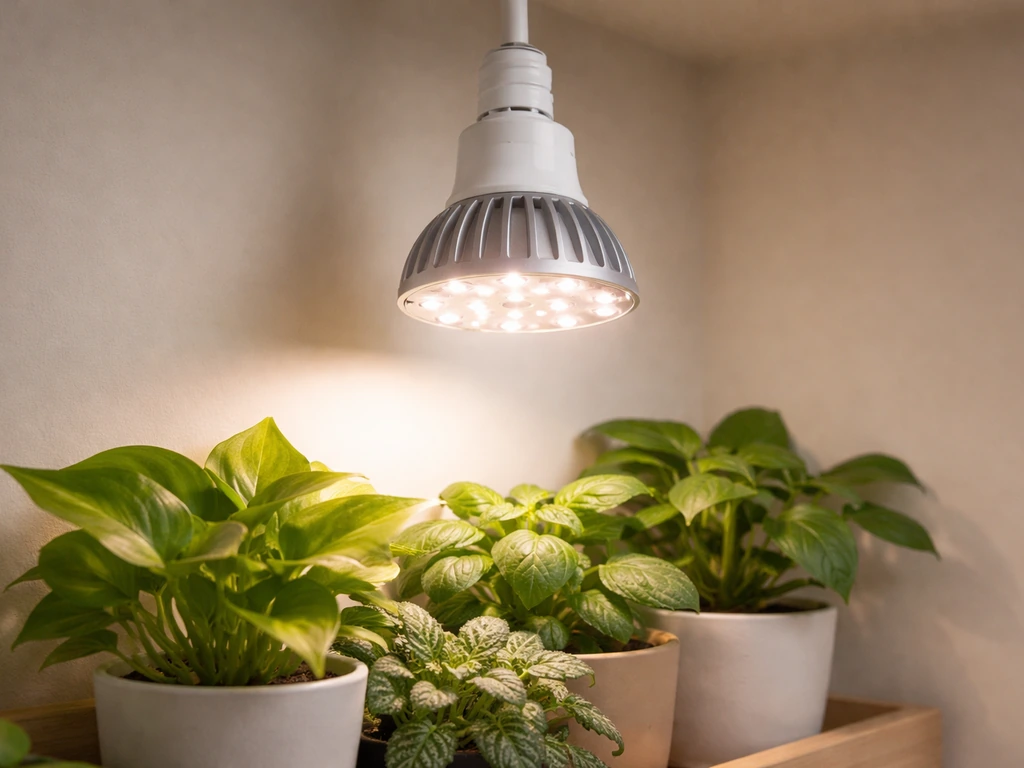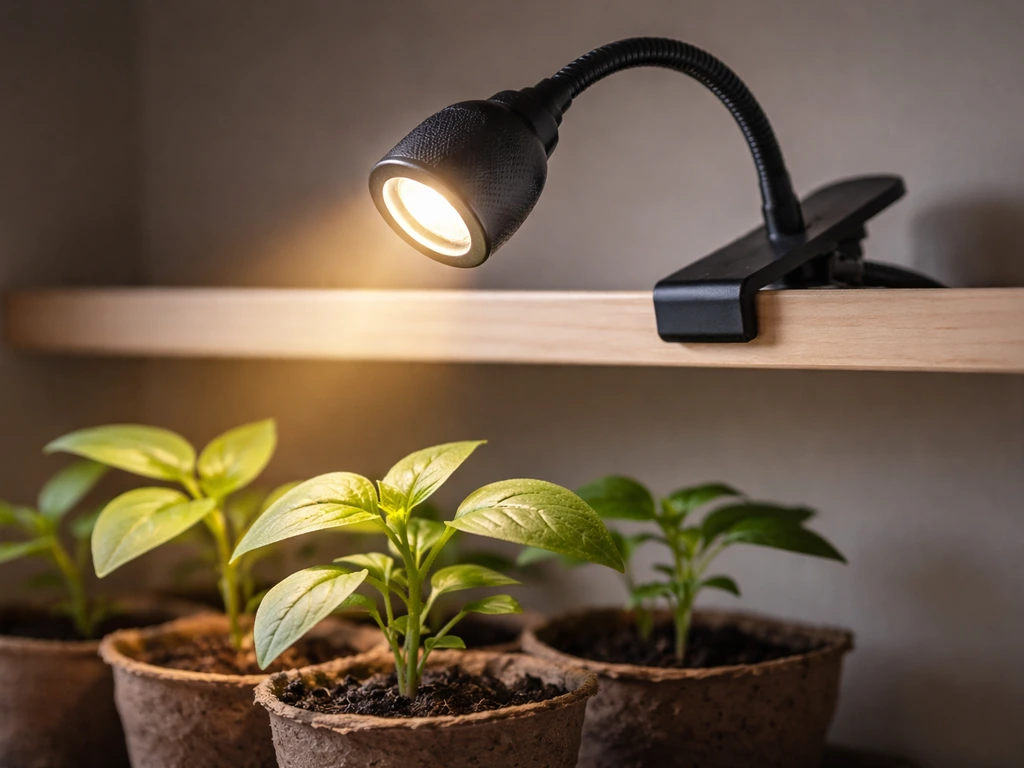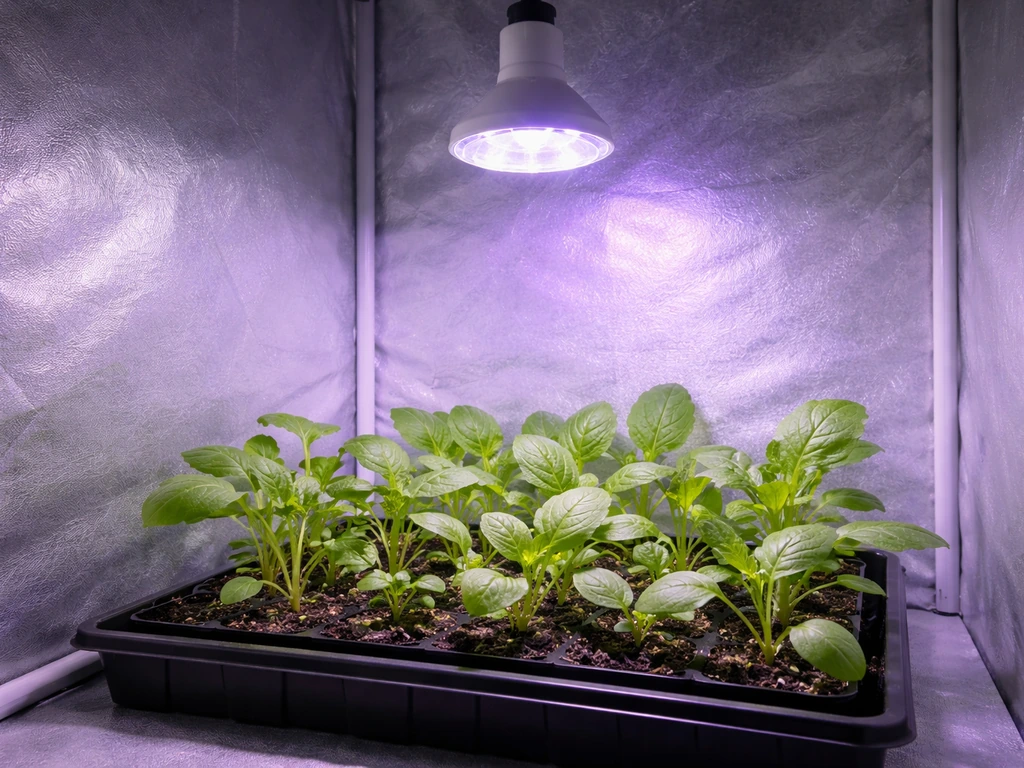
The SANSI 36W grow light most people are searching for is the BR30 36W LED Grow Light Bulb, sold in US E26 and EU/UK E27 base variants at $39.99 for a single unit. It delivers a measured 466 µmol/m²/s at roughly 30 cm directly under the center, draws about 32.4 W at the wall, and covers seedlings and vegetative growth well within a roughly 1–2 square foot zone. It is a solid, low-hassle choice for a single potted plant or a small propagation tray, but it runs hot, has no dimmer or timer built in, and is not the right tool for large canopies or serious flowering.
SANSI 36W Grow Light Review: Coverage, Performance, and Value

Marcus Caldwell
25 Apr 2026
What exactly is the SANSI BR30 36W grow light
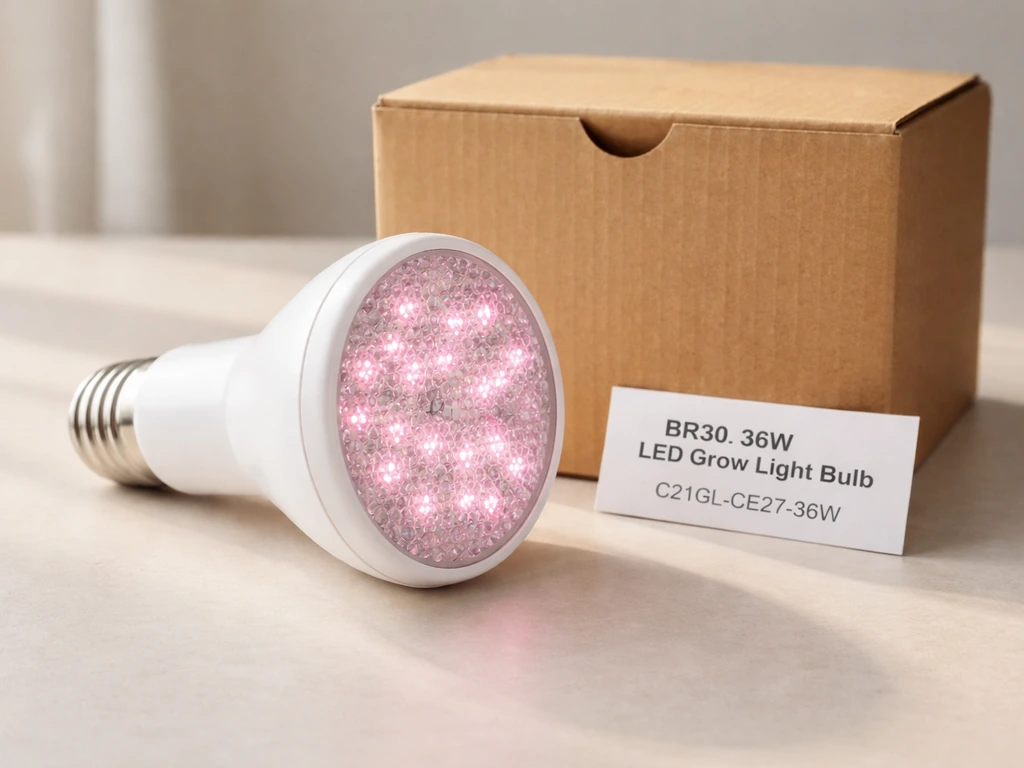
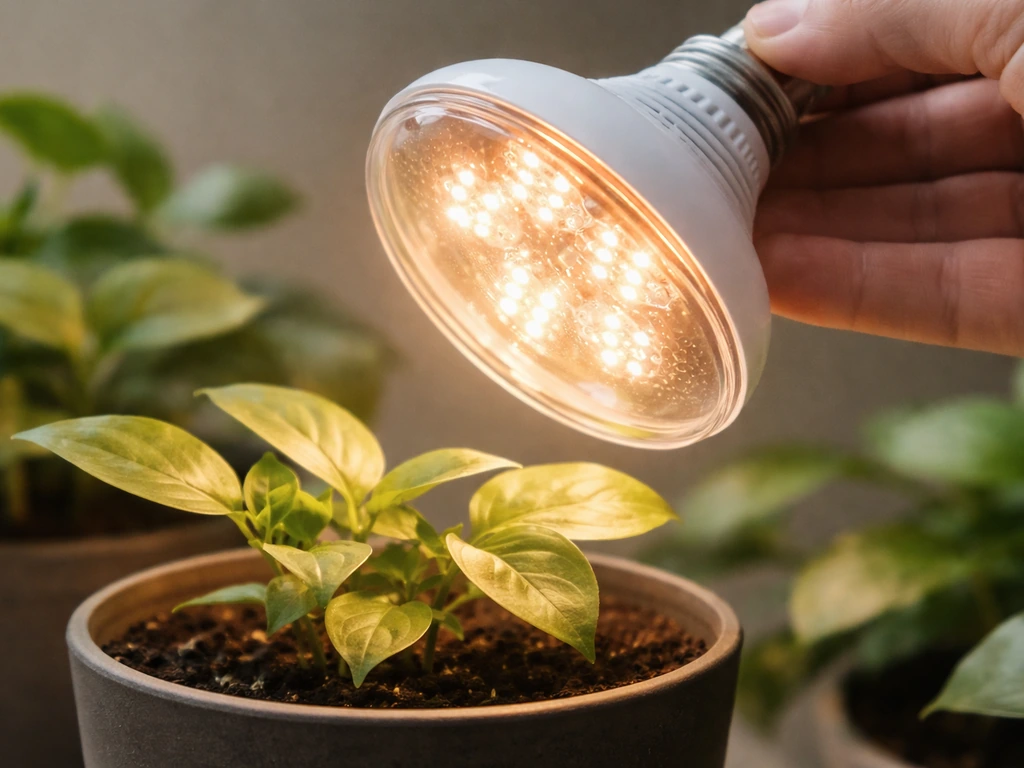
SANSI sells this product under the name "BR30 36W LED Grow Light Bulb" and you will also see the internal model code C21GL-CE27-36W on EU-spec packaging and in lab documentation. The BR30 designation refers to the bulb's reflector shape, identical to the BR30 flood bulbs used in recessed fixtures.
The lamp uses seven clusters of seven individual LEDs each, totaling 49 diodes, all driven to produce a 4000K daylight-style white light with an Ra (CRI) approaching 100. SANSI claims a PPF of 65. 6 µmol/s and a PPFD of 265. 58 µmol/m²/s at 1 foot (roughly 30 cm).
An independent lab report confirms actual wall power draw of approximately 32. 4 W rather than the labeled 36 W, which is normal for LED products marketed by their theoretical maximum. The bulb is ETL listed for the US market and comes with a stated 5-year protection plan from SANSI.
| Spec | Detail |
|---|---|
| Official model name | BR30 36W LED Grow Light Bulb |
| Internal model code | C21GL-CE27-36W |
| Retail price (1-pack) | $39.99 |
| Base types available | US E26, CA E26, EU E27, UK E27 |
| Labeled wattage | 36W |
| Measured wall draw | ~32.4 W |
| Spectrum claim | Full spectrum, 400–780 nm, 4000K Daylight |
| CRI | ~Ra 100 (marketed) |
| PPF | 65.6 µmol/s |
| PPFD at 1 ft (30 cm) | 265.58 µmol/m²/s (manufacturer); ~466 µmol/m²/s center peak (independent lab) |
| PPFD at 4 ft | ~16.60–30 µmol/m²/s (manufacturer table / forum measurement) |
| Certifications | ETL listed |
| Warranty | 5-year protection plan |
Real-world performance: coverage, brightness, and uniformity
SANSI's marketing PPFD of 265.58 µmol/m²/s at 1 foot is an average across the coverage area, not a peak reading. An independent lab measured 466 µmol/m²/s directly under the center at approximately 28.5–30 cm, which is significantly higher. That gap tells you something important: the center of this light is genuinely bright for a single bulb, but intensity drops off fast toward the edges, meaning the uniform usable zone is smaller than the advertised coverage suggests.
At 4 feet, SANSI's own PPFD table lists roughly 16.60 µmol/m²/s, and a community PAR test recorded about 30 µmol/m²/s at the same distance. Both numbers are too low for active plant growth at that height and only work if you are trying to supplement ambient light for low-light houseplants. For any practical growing, you want this bulb within 12–18 inches of your canopy. At 12 inches, you are in a workable range for seedlings and herbs. At 6 inches or closer, the center intensity may be enough to support early vegetative growth in plants with moderate light requirements.
Uniformity is the bulb's main weakness as a grow light. The BR30 form factor produces a cone of light, and because it is a single point source, the edges of even a small tray will receive noticeably less light than the center. For a single 4–6 inch pot, uniformity is fine. For a 1-foot-square seedling tray, you will want to rotate trays regularly or position multiple bulbs to avoid uneven growth on the outer seedlings.
Spectrum breakdown and what to actually grow under it
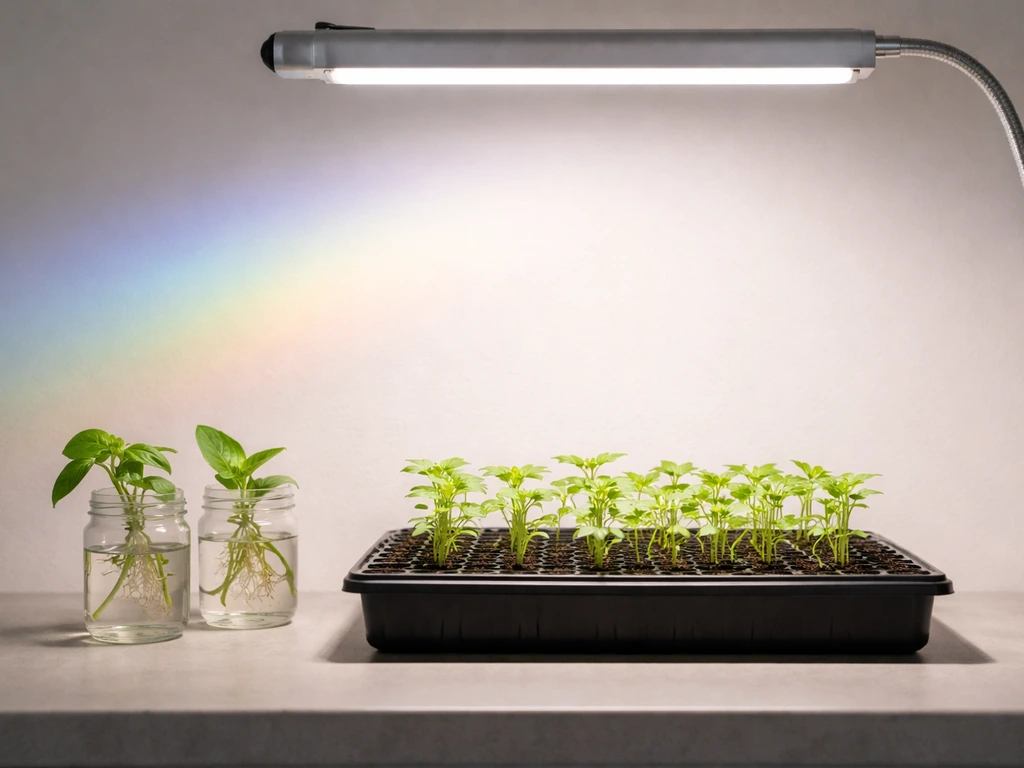
The 4000K white spectrum covers 400–780 nm continuously, with the usual white LED profile: a blue primary peak around 450 nm, then a phosphor-generated curve through green, yellow, orange, and red, plus a stated IR component at 760–780 nm. SANSI emphasizes red (600–699 nm) and blue (400–490 nm) as the most plant-relevant bands, which is accurate. The independent spectral analysis confirmed essentially zero UVB output, which is typical of phosphor-converted white LEDs, and a visible-spectrum fraction (380–780 nm) of around 99.5% of total optical output. In plain terms: this is a quality white-spectrum LED with no meaningful UV, decent red content, and good blue coverage.
For seedlings and cuttings, this light works well. The intensity at 12–18 inches is enough to drive germination and early leaf development without stretching, and the full-spectrum output avoids the color stress some plants show under blurple or narrow-band LEDs. For vegetative growth of herbs, leafy greens, and houseplants, it performs consistently at 8–12 inches. Where it starts to fall short is heavy flowering and fruiting: the red-to-blue ratio and the total photon output are not tuned or powerful enough for high-DLI crops like tomatoes, peppers, or cannabis in flower. You can supplement, but a single 36W bulb is not going to finish a flowering plant by itself in any meaningful way.
- Seedlings and propagation: excellent at 12–18 inches
- Leafy herbs (basil, parsley, mint): strong performer at 10–14 inches
- Low to medium-light houseplants (pothos, snake plant, peace lily): works even at 18–24 inches as a supplement
- Vegetative growth for tomatoes, peppers, cannabis: adequate at close range (6–10 inches) for early veg only
- Flowering and fruiting: not recommended as a sole source; use as a supplement only
Setup, mounting height, and day-to-day tips
Because this is a standard E26/E27 bulb, setup is as simple as screwing it into any compatible socket, pendant fixture, or clamp lamp. That convenience is one of its real selling points over panel-style grow lights, but it also means you have no built-in dimmer or timer. Both are worth adding separately. A basic 24-hour plug-in timer running 14–16 hours per day for seedlings or 12–16 hours for vegetative plants costs a few dollars and makes a meaningful difference in results.
The biggest operational concern is heat. Independent thermal imaging recorded surface temperatures reaching roughly 80°C during operation. That is hot enough to cause burns on contact and hot enough to stress plants if the bulb is hung too close. Keep a minimum of 6 inches between the bulb surface and your plant canopy even if the PPFD numbers suggest you could go closer. Good airflow around the fixture helps, and you should avoid enclosing the bulb in a tight lamp shade or sealed housing.
For multi-bulb setups covering a larger area, space individual bulbs roughly 12–14 inches apart horizontally and hang them all at the same height. This reduces the center-hotspot problem and gives you more overlap coverage. Two bulbs at 14 inches apart covering a 2-foot-square tray at 12 inches of height is a workable configuration for seedlings or herbs.
- Use a clamp lamp or adjustable pendant so you can move the bulb up or down as plants grow
- Start seedlings at 14–16 inches and move the light closer (8–12 inches) as plants establish
- Add a mechanical outlet timer for consistent photoperiods — 16 hours on for seedlings, 14–16 hours for veg
- Ensure the fixture is open enough for airflow; avoid tight enclosed shades
- Rotate trays every 2–3 days if using a single bulb over a multi-plant tray to even out coverage
- Do not touch the bulb surface during or shortly after operation — it reaches ~80°C
How it compares to other SANSI models and competing 36W-class lights
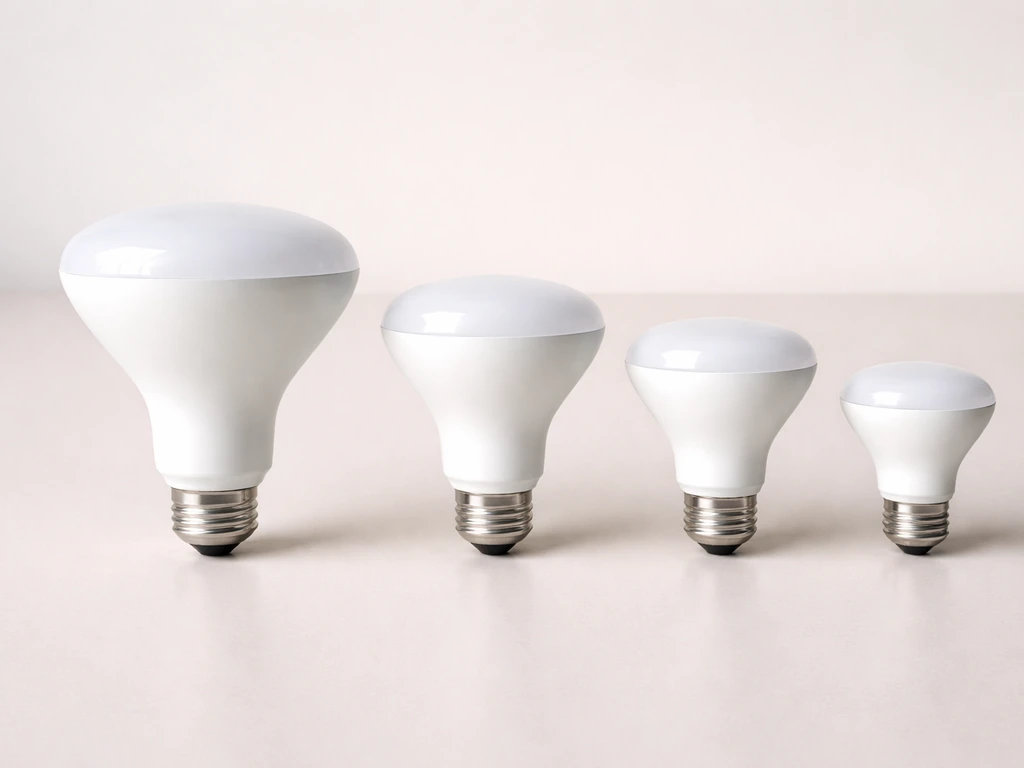
SANSI makes grow bulbs at several wattages below the 36W, including 10W, 15W, and 24W options. The 36W BR30 sits at the top of their bulb lineup and is meaningfully brighter than the 24W, not just by a few percent but by enough that the 36W is noticeably more useful for anything beyond low-light houseplants. If you are comparing within the SANSI family, the 36W is the one to choose if you are doing seedlings or herbs and want a single-bulb solution. The smaller wattage options make sense only for supplementing a single plant that already has decent ambient light.
Against other 36W-class budget grow lights, the SANSI BR30 competes on ease of use and spectrum quality, but panel-style LED grow lights at a similar price point often deliver better uniformity and larger effective coverage. A bar-style or panel LED marketed around 30–40W true draw can cover a 2x2 foot footprint more evenly than any single-point bulb. The trade-off is that panels require a dedicated hanging setup, while the BR30 drops into any standard lamp fixture. If you already own a clamp light or pendant fixture, the SANSI 36W is genuinely convenient. If you are buying a grow light setup from scratch, spending the same $40 on a small panel gives you better coverage geometry.
| Option | True Watt Draw | PPFD at ~12 in | Coverage | Form Factor | Price (approx) |
|---|---|---|---|---|---|
| SANSI BR30 36W | ~32.4 W | ~265–466 µmol/m²/s (center peak) | 1–1.5 sq ft effective | E26/E27 bulb | $39.99 |
| SANSI 24W Grow Bulb | ~22–24 W | Lower than 36W (proportional drop) | 0.5–1 sq ft effective | E26/E27 bulb | ~$30–35 |
| SANSI 15W Grow Bulb | ~13–15 W | Low; supplemental only | Single pot | E26/E27 bulb | ~$20–25 |
| Budget 30–40W LED panel | ~30–40 W | Varies; often 200–400 µmol/m²/s avg | 2x2 ft with uniformity | Panel/bar | $35–55 |
Is it worth the money
At $39.99, the SANSI BR30 36W is priced at the high end of what a single grow bulb should cost, but you are paying for a genuine full-spectrum output, ETL certification, a 5-year warranty, and a measurable center PPFD that holds up in independent testing. Running at 32.4 W, it costs roughly $0.003–0.004 per hour at average US electricity rates, so a 16-hour daily photoperiod adds about $0.05–0.06 per day to your electricity bill, or roughly $1.50–1.80 per month. That is negligible for a single-plant or seedling-tray setup.
The value equation depends heavily on how you plan to use it. For someone who wants to grow herbs on a kitchen counter or keep houseplants alive through winter, the convenience of a screw-in bulb with legitimate plant-spectrum output is worth the price. For someone who wants to maximize yield per dollar spent on equipment, the money is better directed at a panel that covers more area with better uniformity.
Problems to know about and who should skip this light
The most reported real-world failure mode is premature dimming or pulsing output, sometimes appearing around the 2-year mark. Some users have described their bulb going dim and pulsing weakly well within what should be its useful life. SANSI's 5-year protection plan exists to cover this, but the hassle of a warranty claim is real. This failure pattern is not universal, but it is common enough to note before you buy.
Flicker is also worth mentioning. The independent lab measured flicker at 100 Hz with a Flicker Index of 0.033. That is low-risk for plants and for most people, but if you are sensitive to flicker or work near your grow light for extended periods, it is a data point worth knowing.
The 80°C surface temperature is manageable in an open fixture but becomes a real concern in enclosed or poorly ventilated setups. It also means this bulb should not be used in plastic lamp sockets rated below its heat output, and you should check your fixture's max wattage rating before screwing it in.
Buy it if:
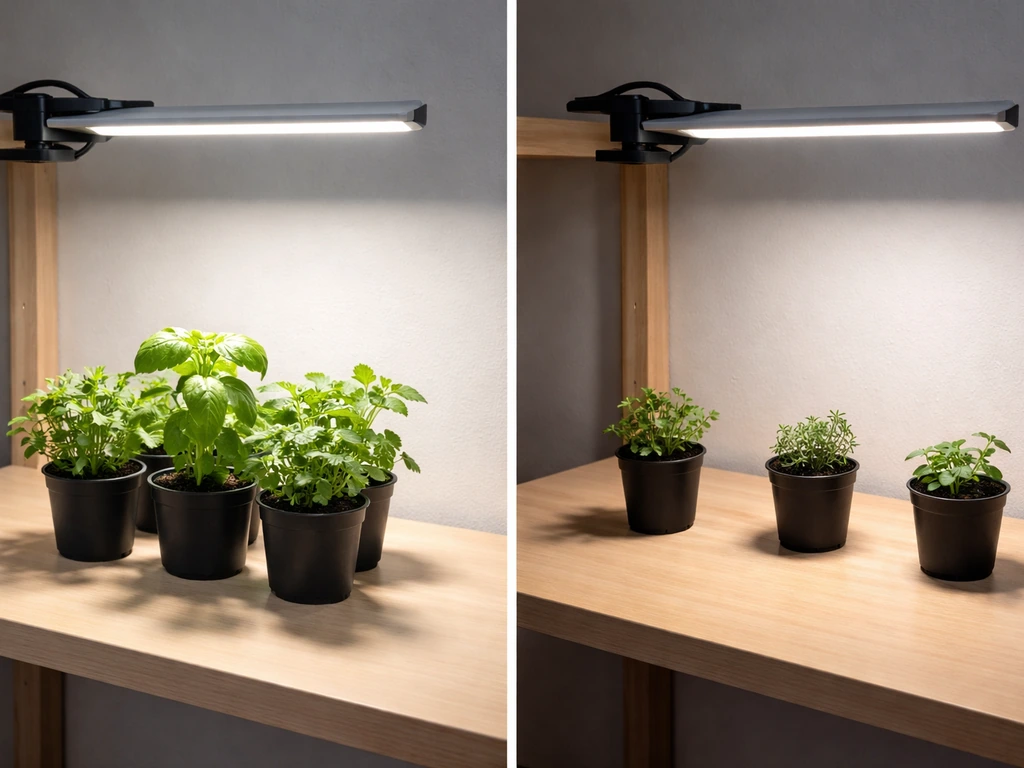
- You want a single, easy-to-install grow light for one to a few small pots or a compact seedling tray
- You already own a clamp lamp, pendant fixture, or gooseneck desk lamp with an E26 socket
- Your plants are herbs, leafy greens, or medium-light houseplants
- You value a genuine warranty and ETL certification over the cheapest possible option
- You need to supplement winter light for houseplants without running a full panel setup
Skip it if:
- You are growing in a 2x2 foot or larger space and need uniform coverage
- Your goal is flowering or fruiting crops that need high DLI (tomatoes, peppers, cannabis)
- You want built-in dimming or a timer — this bulb has neither
- You are comparing cost-per-covered-area against panel lights; panels win that math
- You need a completely silent, flicker-free operation environment
The SANSI BR30 36W is a well-made, genuinely useful grow bulb for the right use case. It is not a replacement for a purpose-built grow panel, but for single-plant and small-tray work where convenience matters, it delivers real photons at a price that is hard to argue with. If you are looking for more detail on what buyers thought, see these SANSI grow light reviews for real-world impressions SANSI BR30 36W.
If you want more opinions from real buyers, check out our detailed SANSI grow light reviews sansi 15w grow light review. If you are also curious about the 10W version, the sansi 10w grow light review covers what to expect for smaller, supplement-style setups. Just add a timer, keep it within 12 inches of your canopy, and make sure your fixture can handle the heat.
FAQ
Can I use the SANSI 36W as the only light source for houseplants?
Yes, but treat it as an indoor lighting fixture, not a plug-and-play grow solution. Because there is no dimmer, timer, or adjustable hanging height built in, you typically get the best results by using a separate plug-in timer and mounting it so the bulb stays within about 12–18 inches of the top growth. If you hang it higher to “spread” the light, the center will be weaker and the usable area shrinks due to rapid intensity falloff.
What’s the safest hanging height if I’m trying to maximize intensity for seedlings?
For most plants, you can start seedlings closer, around 6–12 inches, but you should still protect from heat and avoid contact. The article’s thermal finding (up to roughly 80°C on the surface) means the limiting factor is often fixture heat rather than photometric output. If you notice leaf tip burn, curling, or stressed growth, raise the light a few inches and improve airflow.
Is it safe to use in a covered lamp shade or enclosed fixture?
Use the bulb’s rated socket limits. Even though it is an E26/E27 standard bulb, its surface temperature can get very hot, so a fixture that looks “normal” for LED bulbs may not be rated for the same thermal load. Before installation, confirm the lamp or housing is rated for at least the bulb’s operating wattage and that it allows airflow. Avoid enclosed shades or sealed fixtures.
How do I avoid uneven growth on a seedling tray with a single BR30 bulb?
This bulb is not designed for even canopy coverage because it is a single-point reflector, which creates a bright center and dim edges. For a tray, you will usually need to rotate the tray regularly, or you can use multiple bulbs spaced roughly 12–14 inches apart and mounted at the same height. That multi-bulb approach reduces hotspot effects and improves uniformity.
Should I trust the “36W” label when comparing grow lights?
If you are comparing “36W” grow bulbs, focus on measured draw and real PPFD instead of marketing power. In this case, the wall power measured around 32.4 W, while the labeled rating is higher due to how LED products market theoretical output. So comparing only the watt number can mislead you.
What timer settings should I use since there’s no dimmer built in?
Plan on relying on added controls for consistent schedules. Since there is no built-in dimmer or timer, the most practical setup is a basic plug-in timer set for your photoperiod (seedlings often around the higher end of the ranges you choose, vegetative often slightly lower). This also helps avoid extended on-time that can worsen heat stress.
Can I mount it at 4 feet if I want a more “ceiling” style setup?
Yes, but expect it to be primarily supplement-style. At around 4 feet, the reported PPFD values are far too low for active growth of most crops without additional lighting, so it generally works only if your plants already receive strong ambient light. If you want effective growth at height, switch to a panel or bar that offers better spread.
What failure signs should I look for as the bulb ages?
Watch for flicker and early degradation patterns, especially around the two-year window where some users report dimming or pulsing output. This is not guaranteed for every bulb, but it’s common enough to factor into your risk. If you rely on the bulb for crucial stages, consider keeping a backup bulb or timing your purchases around warranty coverage.
Is flicker a concern for people who spend time near the light?
Keep it, but use it correctly. The measured flicker behavior is generally low risk (the article reports a low flicker index), however people who are sensitive may still notice visual discomfort. If you spend long periods working near the light, try a short exposure first and position the fixture so it is not in your direct line of sight.
Will this bulb finish flowering for tomatoes, peppers, or cannabis?
It can work, but it’s usually not the best single-source choice for fruiting or high-demand flowering. The limiting factor is that the combination of total photon output and spectrum tuning is better suited to seedlings and vegetative growth. If you want to push bloom or heavy fruiting, you typically need additional bulbs or a higher-output panel designed for canopy-level coverage.
Can I combine multiple SANSI BR30 bulbs to cover a larger area?
Yes, and it often lets you build a better coverage geometry than a single bulb. A practical approach is two bulbs over a tray area, spaced and hung so they overlap near the middle and compensate for the center-hotspot effect. If you do this, keep the height consistent across bulbs so you do not create a second intensity gradient.
Can I add a third-party dimmer to reduce power or adjust brightness?
If you are using a dimmer, use one that is compatible with LED lamps and avoid forcing low-end operation. The article notes there is no built-in dimming, so you must add external control carefully. A mismatched dimmer can increase flicker, cause pulsing, or reduce lifespan, so test with a short run before committing to your full photoperiod.