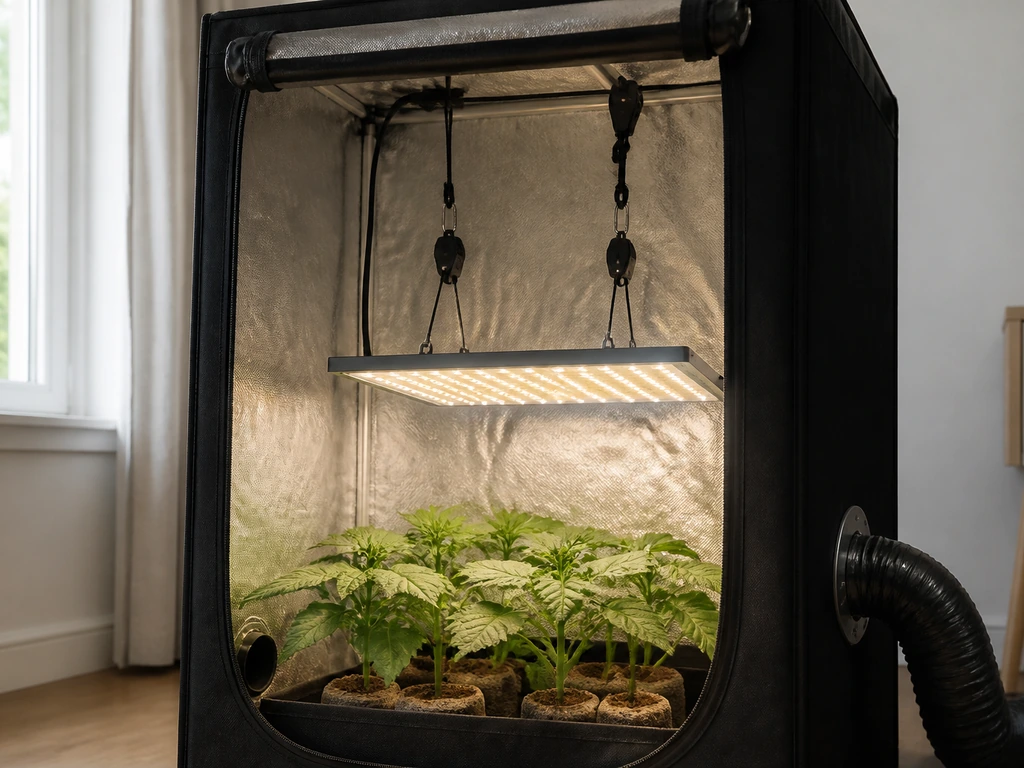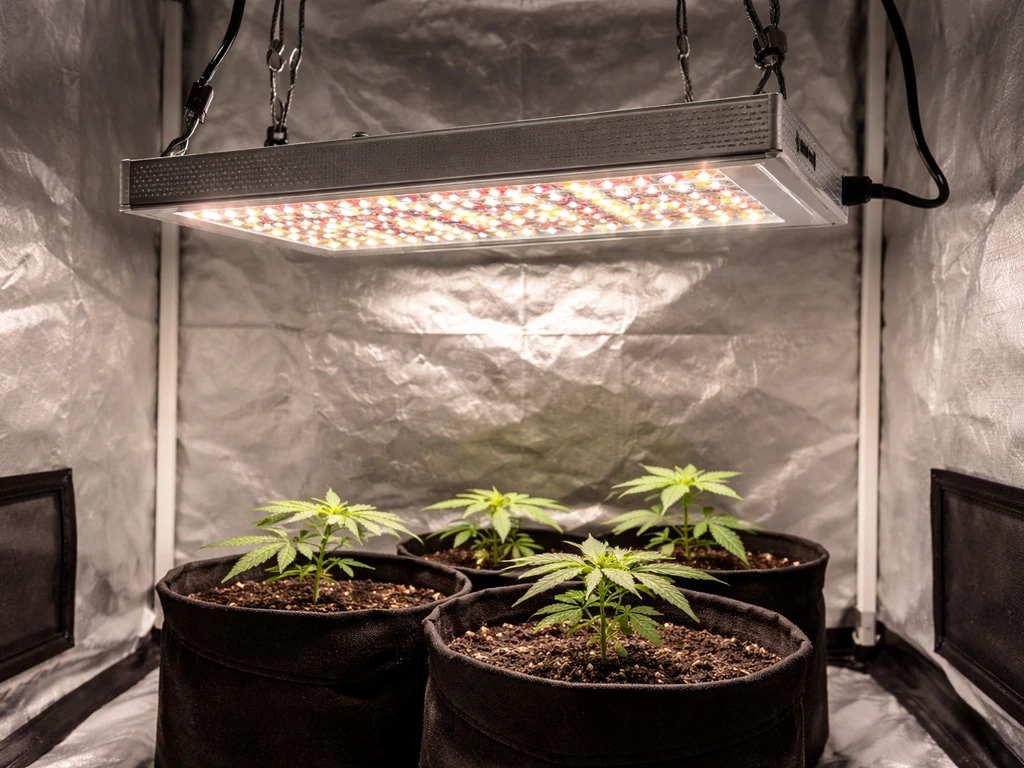
SANSI grow lights are a solid, mid-budget option for indoor gardeners who want real horticultural spectrum output without paying premium fixture prices. Across the 10W, 15W, 24W, and 36W lineup, they deliver measurable PPFD numbers, a genuine full-spectrum (400–780nm) output, and ETL certification that most cheap import bulbs skip entirely. That said, they are bulb-style screw-in lights, not panel arrays, so they come with real coverage constraints you need to understand before buying. If you go in with the right expectations, SANSI is genuinely good value. If you expect a 36W bulb to flower a 4x4 tent, you will be disappointed.
Sansi Grow Light Reviews: Honest Performance vs GE

Marcus Caldwell
2 Apr 2026
Quick take: who SANSI grow lights are actually for
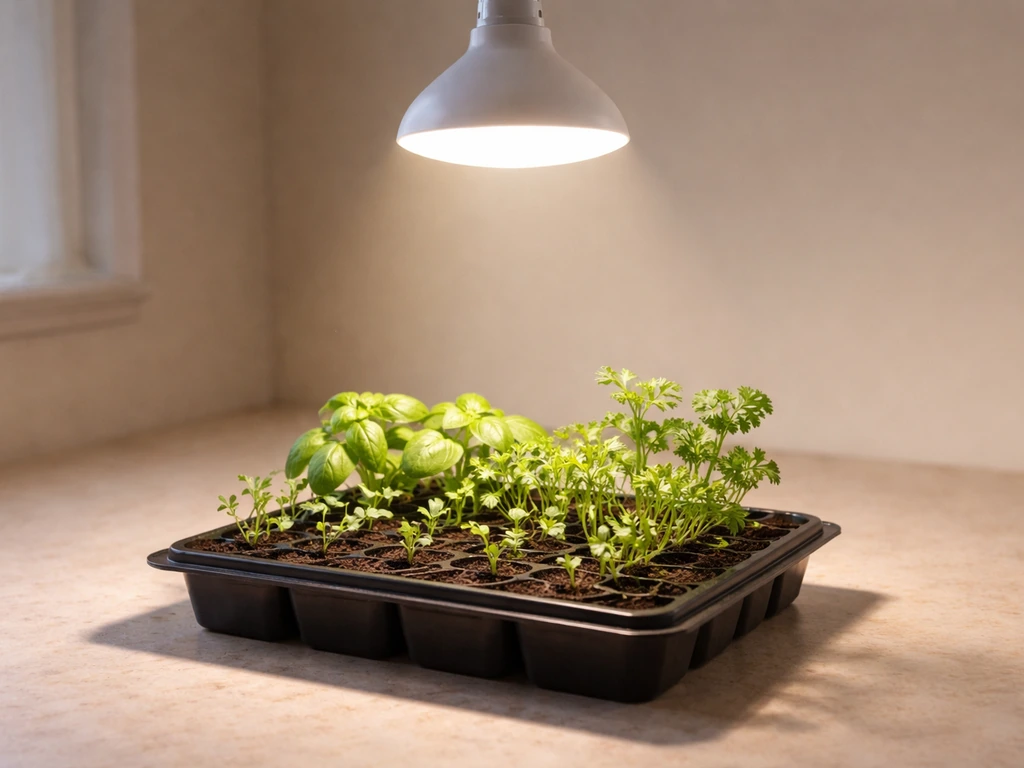
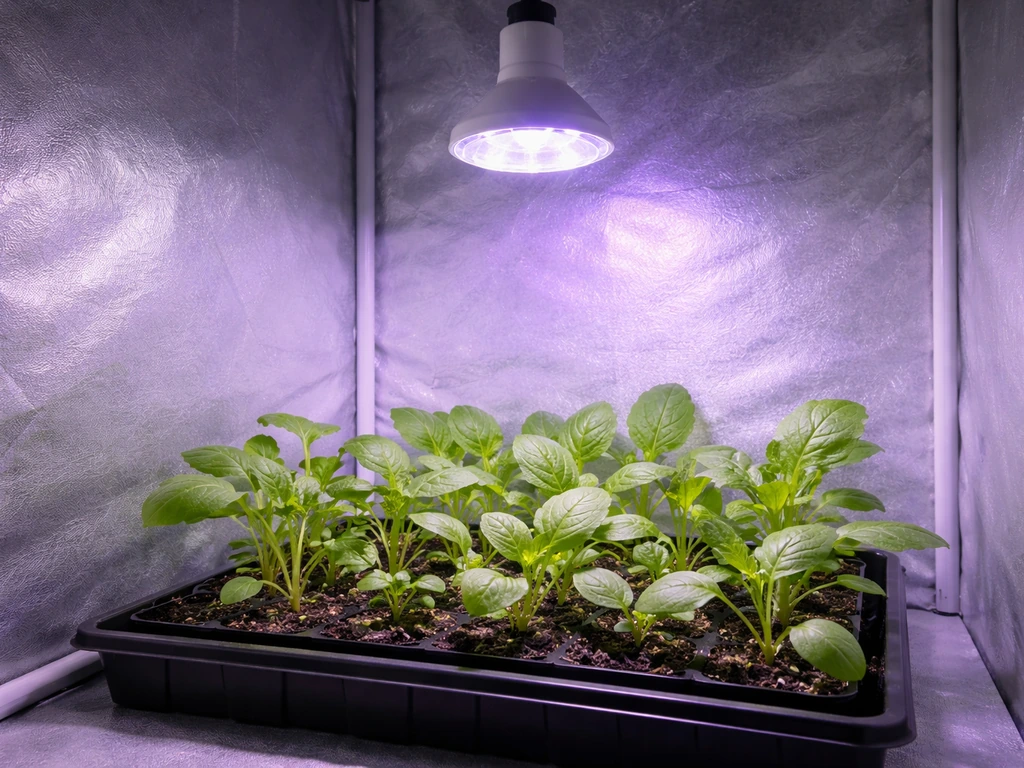
SANSI bulbs are best suited for small-scale indoor growers: seedling trays, single houseplants, herb gardens on a countertop, succulent shelves, and small propagation setups. The screw-in E26/E27 form factor means you can drop one into an inexpensive clamp lamp or pendant fixture without buying a dedicated grow light housing. That flexibility is one of the strongest arguments for the lineup. They are not a great fit for high-light flowering crops that need sustained 600–900+ μmol/s/m² across a multi-square-foot canopy.
- Best for: seedlings, herbs, leafy greens, succulents, small houseplants, propagation
- Workable for: low-to-medium-light fruiting plants at close range (under 12 inches)
- Not ideal for: flowering cannabis, large fruiting plants, grow spaces bigger than roughly 2x2 ft per bulb
- Buyer profile: hobbyist gardeners, apartment growers, people supplementing natural light in winter
SANSI vs GE grow lights: the honest comparison
GE does make a BR30-style grow bulb, and it is widely available at hardware stores, which is its main advantage. In Reddit discussions about GE grow bulbs, users generally describe them as serviceable for very low-light plants but note that output data is thin and independently measured PPFD numbers are hard to find. There are no published lab PPFD uniformity maps for GE's grow bulbs, and the brand does not prominently list photometric data the way SANSI does. Community tests in challenging setups (like a low-light bathroom) suggest GE bulbs can keep easy houseplants alive, but that is a low bar. One important caution across both brands: as pointed out by independent horticultural lighting commentators, advertised 'equivalent watts' and even listed wattages on grow bulbs can be misleading, so always verify the actual electrical draw and real output metrics rather than relying on marketing numbers.
| Feature | SANSI (36W BR30) | GE BR30 Grow Bulb |
|---|---|---|
| Actual wattage | 36W | ~9W (typical retail version) |
| PPFD at 1 ft | 265.58 μmol/s/m² | Not published |
| Full spectrum (400–780nm) | Yes | Partial (mostly red/blue blend) |
| 660nm red + 730nm far-red | Yes | Not specified |
| ETL / safety certification | Yes (ETL listed) | UL listed |
| 5-year warranty | Yes | Standard 1-year |
| Dimmable | No (most models) | No |
| Beam angle | 60° | ~40° typical |
| Price range | $20–$45 per bulb | $8–$15 per bulb |
| Independent PPFD data available | Yes (manufacturer + third-party) | Minimal |
The bottom line on this comparison: GE wins on price and availability at the hardware store. SANSI wins on everything else that actually matters for plant growth: documented output, broader spectrum including far-red at 730nm, higher wattage options, and a 5-year warranty. If you are shopping at Home Depot and need something today for a struggling pothos, the GE bulb will do the job. If you are setting up an intentional grow space and want to know what your plants are actually getting, SANSI is the more defensible choice.
Performance testing: coverage, PPFD, and uniformity
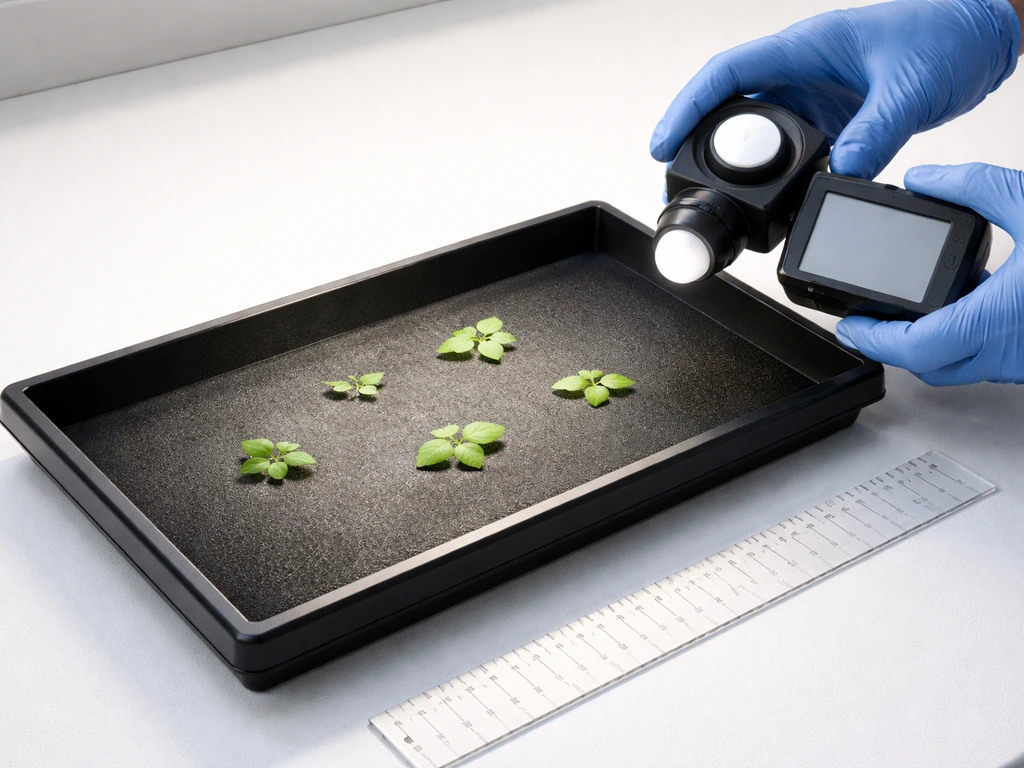
SANSI publishes PPFD-at-distance data for their lineup, which is more than most bulb-style grow light brands bother to do. Here is what the numbers look like across the range, with the important caveat that real-world readings from app tools like Photone often come in somewhat lower than manufacturer charts, especially if your reflector or fixture is not optimized.
| Model | Wattage | PPFD at 1 ft | PPFD at ~20 in (est.) | Practical coverage |
|---|---|---|---|---|
| PAR20 / E26 | 10W | ~130–150 μmol/s/m² | ~70–90 μmol/s/m² | 1 small plant or seedling tray |
| E27 grow bulb | 15W | ~111–140 μmol/s/m² | ~70–100 μmol/s/m² | 1–2 small plants |
| PAR25 / PAR30 | 24W | 227.5 μmol/s/m² | ~120–150 μmol/s/m² | 2–3 plants, ~1 sq ft canopy |
| BR30 | 36W | 265.58 μmol/s/m² | ~140–180 μmol/s/m² | Up to ~2 sq ft at moderate intensity |
The 60-degree beam angle on the 36W BR30 (confirmed in technical spec documentation) means the light concentrates intensity in a tighter cone than a flood-style fixture. That is good for getting high PPFD directly under the bulb and bad for coverage uniformity at the edges. Community users testing the 36W at close distances (around 6 inches for succulents, for example) report usable readings, but users running the Photone app at standard mounting heights sometimes find the numbers still fall short of their target intensity. The practical takeaway: mount SANSI bulbs closer than you think you need to, and do not expect uniformity beyond the central footprint. Multiple bulbs spaced across a shelf is a far better setup than one bulb trying to cover a wide area.
Spectrum and which growth stage each model supports
SANSI uses a full-spectrum output spanning 400nm to 780nm across the lineup. The 24W model is specifically described as combining 3000K warm white, 5000K cool white, 660nm red, and 730nm far-red wavelengths. That combination is worth paying attention to. The 660nm peak hits the primary chlorophyll A absorption band, driving photosynthesis efficiently during both vegetative and flowering stages. The 730nm far-red component activates the Emerson enhancement effect, boosting photosynthetic efficiency when combined with the red channel, and it also influences phytochrome-mediated responses that help trigger flowering in photoperiod-sensitive plants.
For vegetative growth specifically, the 5000K cool white component provides good blue-range output that promotes compact, stocky growth rather than the stretchy, etiolated stems you get from purely red-heavy spectra. This means the SANSI 24W and 36W are genuinely usable across both veg and flowering stages for small plants, not just seedlings. The 10W and 15W models still cover the full 400–780nm range but at lower intensities that are better suited to low-light or shade-tolerant plants in any growth stage.
A note on Samsung LM301B diodes
Some SANSI 24W listings reference Samsung LM301B diodes, which are among the most efficient white LEDs used in horticultural lighting. Not all SANSI models or batches use them, so if diode quality matters to you, check the specific listing you are buying from rather than assuming all models in the lineup are identical in this regard.
Build quality, thermals, and how long they last
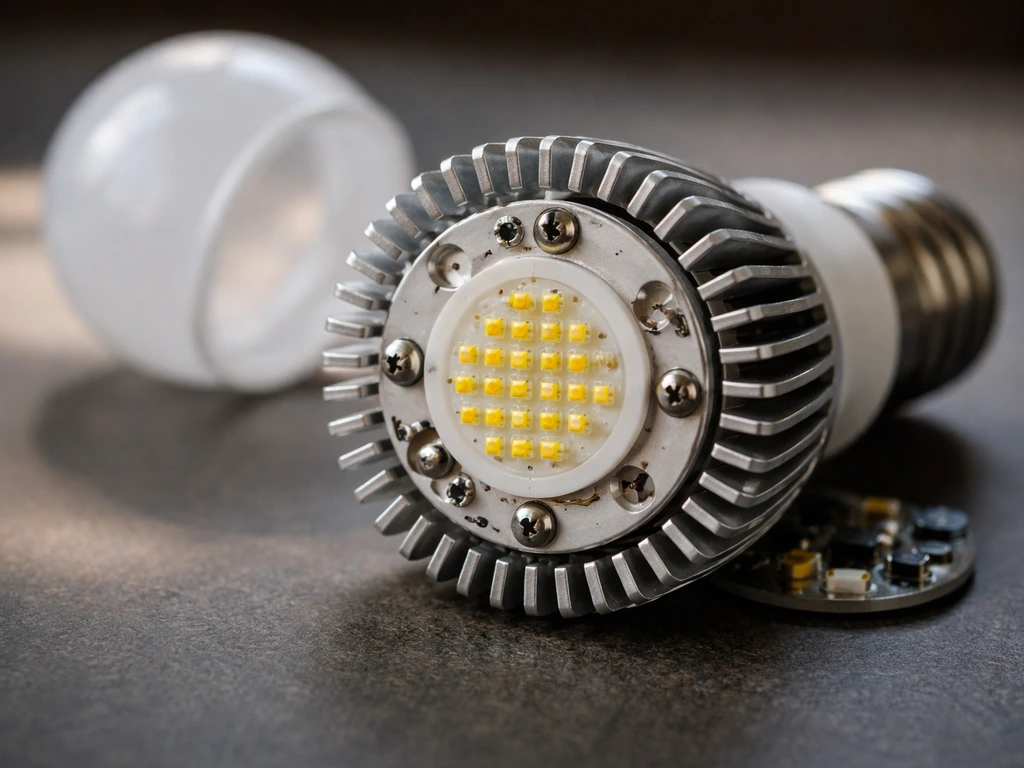
SANSI uses a chip-on-ceramic (COC) construction in several models, which is a genuine thermal advantage over chip-on-board designs on a standard aluminum PCB. Ceramic is a better heat conductor and more durable under sustained thermal cycling, which matters when a grow bulb is running 12–18 hours a day. SANSI rates the lineup at 25,000 hours of lifespan, which translates to roughly 4–5 years of daily 16-hour use. The 5-year warranty backs that up.
In practice, most users report solid longevity with SANSI bulbs. There are community anecdotes of units exhibiting dimming or pulsing behavior (weak output) that some users have attributed to early electronic component failure, and a small number of Reddit reports describe bulbs stopping normal operation within the warranty period. This is not unusual for LED grow bulbs in general, and SANSI's 5-year warranty coverage means early failures should be addressable. The ETL listing is worth highlighting here: ETL certification means the product has been independently tested for electrical safety, which is not a given in the budget grow light space. Year-long daily use anecdotes from Reddit's houseplant community generally describe SANSI bulbs as reliable, with the ETL certification noted as a reason for trust.
Value for money: what you actually get per dollar
At roughly $20–$25 for the 10W and 15W models and $30–$45 for the 24W and 36W, SANSI sits in a reasonable value position for what it delivers. The cost-per-watt is not exceptional compared to panel-style grow lights, but panel fixtures require a dedicated hanging setup that is not always practical for a windowsill or shelf. The screw-in form factor removes that barrier entirely. You are paying a modest premium over a generic LED bulb for a documented horticultural spectrum, measurable PPFD output, safety certification, and a multi-year warranty. For a houseplant grower or small herb setup, that is a fair trade.
For anyone scaling up beyond a few plants, the economics shift. At that point, a dedicated panel or strip light system will almost always give you better coverage uniformity and lower cost per μmol. SANSI bulbs are not a cost-effective way to light a 2x4 grow tent. But for single-fixture applications, the ROI is solid: one 36W bulb in an appropriate clamp lamp can support a 2-square-foot seedling or herb setup for years without replacement costs.
Choosing the right SANSI for your grow space
The right way to approach SANSI selection is to start with the PPFD your plants need at the leaf surface, then work backwards to which model and mounting distance gets you there. SANSI's own published guides frame selection this way, with PPFD-by-distance tables for each model. Here is a practical breakdown by plant type and space.
| Use case | Target PPFD | Recommended model | Mounting height |
|---|---|---|---|
| Low-light houseplants (pothos, snake plant) | 50–150 μmol/s/m² | 10W or 15W | 12–24 inches |
| Herbs and leafy greens (basil, lettuce) | 150–300 μmol/s/m² | 24W or 36W | 10–18 inches |
| Seedlings and propagation | 100–250 μmol/s/m² | 15W or 24W | 8–14 inches |
| Succulents and cacti | 200–400 μmol/s/m² | 36W at close range | 6–12 inches |
| Small fruiting plants (cherry tomato, pepper) | 300–500 μmol/s/m² | 36W, multiple bulbs | 8–12 inches, 2+ bulbs |
For a more granular look at each model's specific performance profile, the individual reviews in this series are the best next step. The SANSI 10W grow light review covers the entry-level PAR20 bulb in detail, including real-world use cases and who it actually makes sense for. If you are considering the mid-range option, the SANSI 15W grow light review digs into how that extra 5 watts changes the practical coverage picture. The two most capable bulbs in the lineup each have dedicated coverage as well: the SANSI 24W grow light review breaks down the 3000K+5000K+660nm+730nm spectrum in depth, and the SANSI 36W grow light review is where to go if the BR30 format and its 265+ μmol/s/m² output figure are what you are evaluating.
Practical setup tips before you buy
A few things worth checking before you commit to a SANSI bulb for your setup. First, measure your actual mounting height above the canopy now, not after you buy. The difference between 10 inches and 18 inches can cut your PPFD roughly in half, so knowing your fixture constraints up front tells you whether you need a 24W or 36W to hit your target. Second, if you are using a Photone app or quantum meter to validate output, expect real-world readings to run 10–20% below manufacturer charts in a typical non-reflective setup. That gap is normal and not a sign of a defective bulb, just the difference between ideal measurement conditions and your actual grow space. Third, check the screw base spec on your fixture before ordering: SANSI bulbs come in both E26 (standard US) and E27 (European/international) bases depending on the model, and these are not interchangeable in all sockets. Finally, since SANSI grow bulbs are non-dimmable on most models, intensity control means adjusting height rather than dialing down a knob, so a fixture with height adjustability is worth the minor extra investment.
FAQ
Can I dim a SANSI grow light bulb to reduce intensity for seedlings?
Yes, but only indirectly. Most SANSI grow bulbs are not dimmable, so “controlling intensity” usually means changing the distance to the canopy (mount higher for less light, lower for more). If your goal is gentle intensity tuning, prioritize a clamp lamp or hanging fixture with height adjustment, because once the bulb is fixed in place you cannot dial it down electronically.
How many SANSI bulbs do I need to cover a shelf evenly?
For a BR30-style bulb, coverage drops off quickly because the beam is narrower than a flood-style fixture. A practical rule is to test for uniformity at the edge of where plants will sit, then plan on multiple bulbs spaced across the area rather than one bulb trying to cover the whole footprint. Even if the center looks strong, edge PPFD can be much lower at typical mounting heights.
Why do my Photone or quantum meter PPFD numbers come out lower than the SANSI chart?
If you are using a quantum meter or Photone, expect readings to be lower than the charted values in many real setups. Also verify you are matching the measurement geometry, such as sensor tilt, distance, and whether you are measuring at leaf height directly under the brightest axis. Re-check after you adjust any reflectors, because even a simple reflective surface can change readings significantly.
What’s the biggest mistake people make when choosing the wrong SANSI wattage?
Your mounting height and reflector choice matter as much as wattage. Before buying, measure from the bulb’s base to the canopy and confirm the effective distance you will actually have in your setup. If you are near the margin of your target PPFD, consider stepping up one model, because small height differences can cut PPFD drastically with narrow-beam bulbs.
Do SANSI bulbs work with both E26 and E27 sockets?
Screw-in sockets are the common gotcha. SANSI bulbs may be E26 or E27 depending on the model, and you cannot assume they fit every lamp. Confirm the exact socket marking on your fixture before ordering, and if you are in a non-US setup check whether you need the E27 version or a socket adapter.
If my plants are getting leggy, should I switch spectrum or adjust mounting?
If your plants are “stretching,” it often means light is not intense enough at the leaf surface or the distance is too high, not that the spectrum is missing. With SANSI’s mixed spectrum (including blue-range output in the warm/cool white components), stretching typically improves when you lower the bulb or add a second bulb to increase effective PPFD at canopy level.
Are SANSI grow bulbs safe to use in enclosed fixtures or globes?
It can, but it depends on your heat tolerance and how long the bulb runs. SANSI’s COC construction is designed for better thermal handling under long daily use, yet most bulb sockets still have limits. Ensure your fixture provides adequate ventilation, avoid enclosed fixtures that trap heat, and confirm the socket rating is appropriate for the bulb’s operating temperature.
Will the 730nm far-red help with flowering, or do I still need a strict light schedule?
Yes, but treat that “3000K plus 5000K” description as part of the output profile, not a guarantee for every crop. For flowering or photoperiod-sensitive plants, far-red at 730nm can help trigger certain phytochrome responses, but you still need the correct photoperiod schedule. Spectrum alone will not replace proper day length control.
What should I do if my SANSI bulb starts pulsing or dimming during the warranty period?
If the bulb fails or becomes unstable like dimming or pulsing, collect quick evidence before shipping anything back. Take photos or a short video showing the behavior, note the purchase date and hours of use, and keep the product packaging or order info. Because there is a 5-year warranty, documenting the issue early usually makes the replacement process smoother.
Are SANSI bulbs worth it for a larger tent, or should I use a panel?
Generally, they are easiest to fit into existing clamp lamps or pendant setups, but you should check beam angle and mounting height to avoid overestimating usable coverage. For a tight cone bulb, you may need closer mounting and more bulbs to avoid low-light corners. If your space demands even coverage across multiple square feet, panel or strip systems usually outperform screw-in bulbs for cost-per-area.