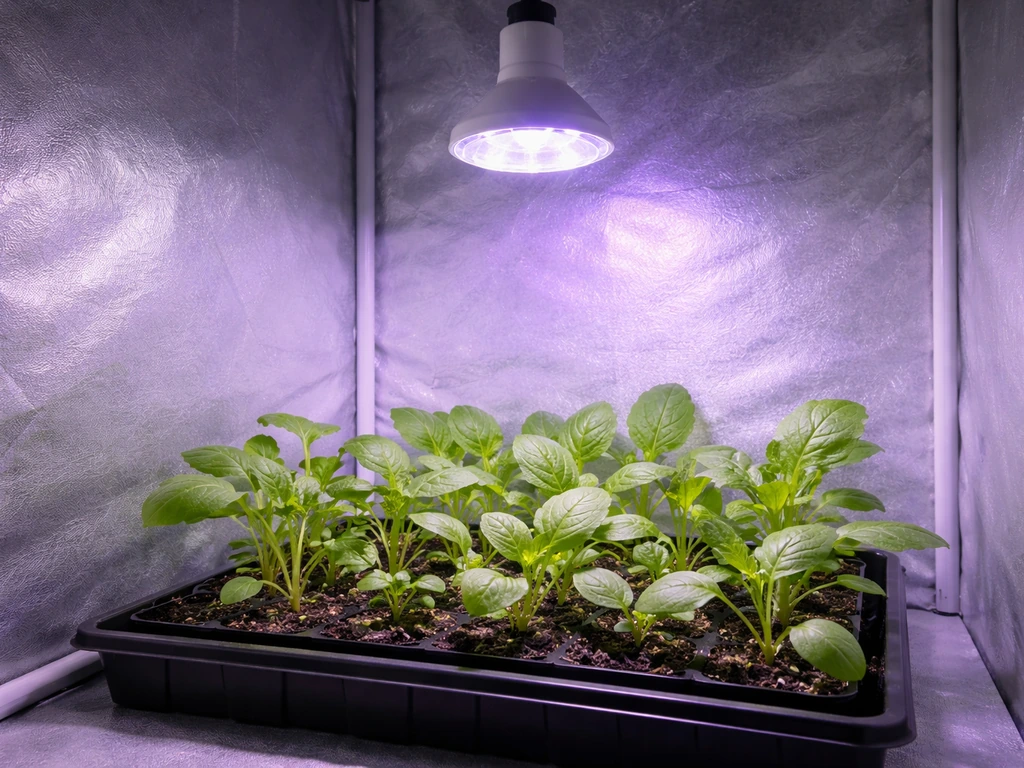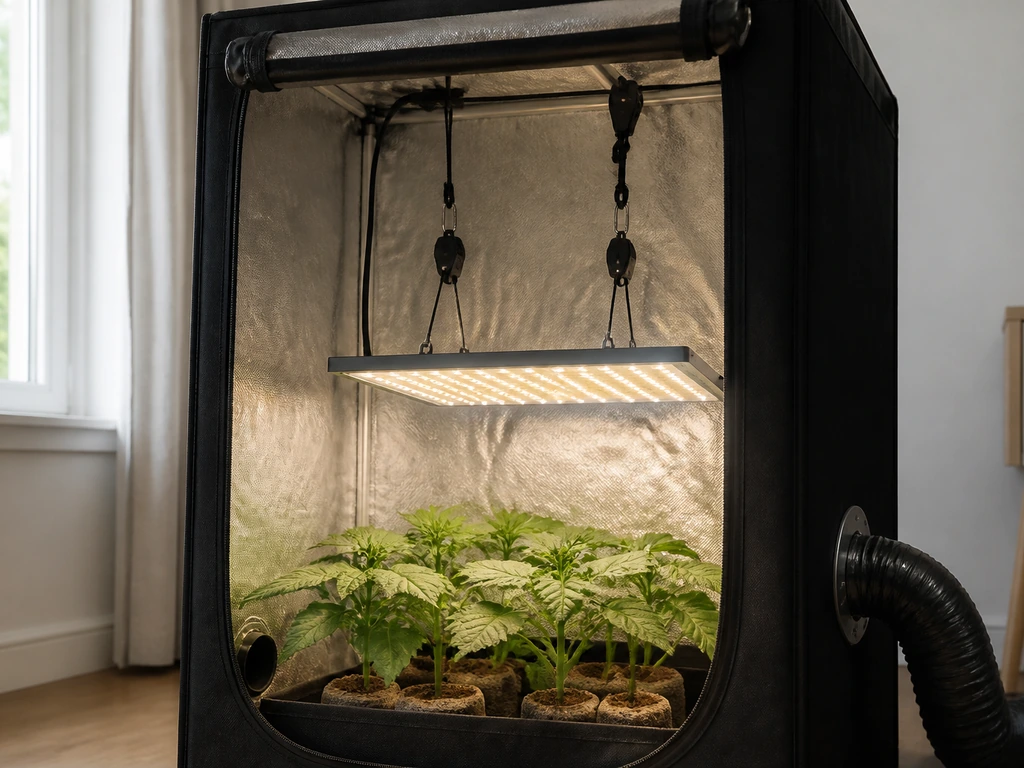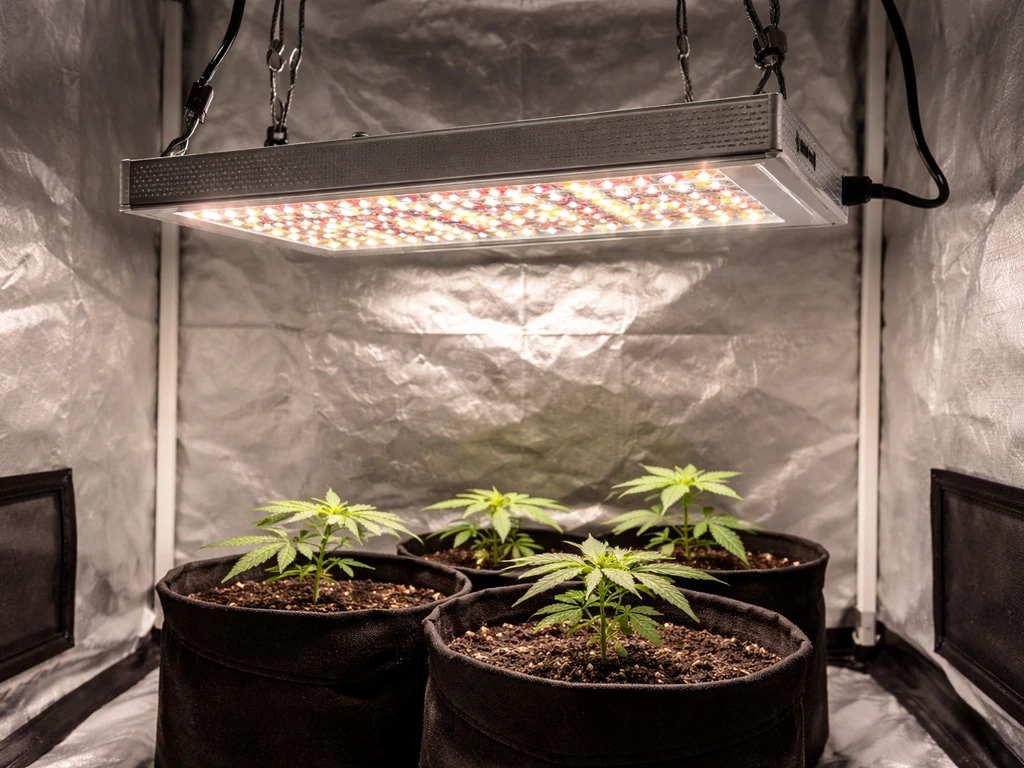
The short answer: the SANSI 10W grow light is a legitimate, well-built little clip-on fixture that does exactly what it promises for a single plant or a very small seedling container, as long as you keep it close to the canopy. It is not a tray light, not a shelf filler, and not a replacement for a higher-wattage panel if you're running more than one or two pots. But for what it is, it's a solid buy. Here's everything you need to know to decide whether it fits your setup.
Sansi 10W Grow Light Review: Performance, Coverage, Worth It

Marcus Caldwell
19 Apr 2026
Which SANSI 10W are we actually talking about?
Before getting into the review, it's worth clearing up a real source of confusion: SANSI sells multiple products under the "10W" label. There's the pot-clip/gooseneck model (C23ZW024-V0010A27), a 2-head puck-style 10W fixture, and a single-head adjustable clip-on variant. They look different, mount differently, and have slightly different PPFD claims across marketing materials. This review focuses on the C23ZW024-V0010A27, the clip-on gooseneck pot light that's the most commonly purchased SANSI 10W. If you picked up a 2-head puck version, most of the spectrum and power-draw notes still apply, but the mounting and coverage geometry will differ.
What the SANSI 10W is and who it's actually for
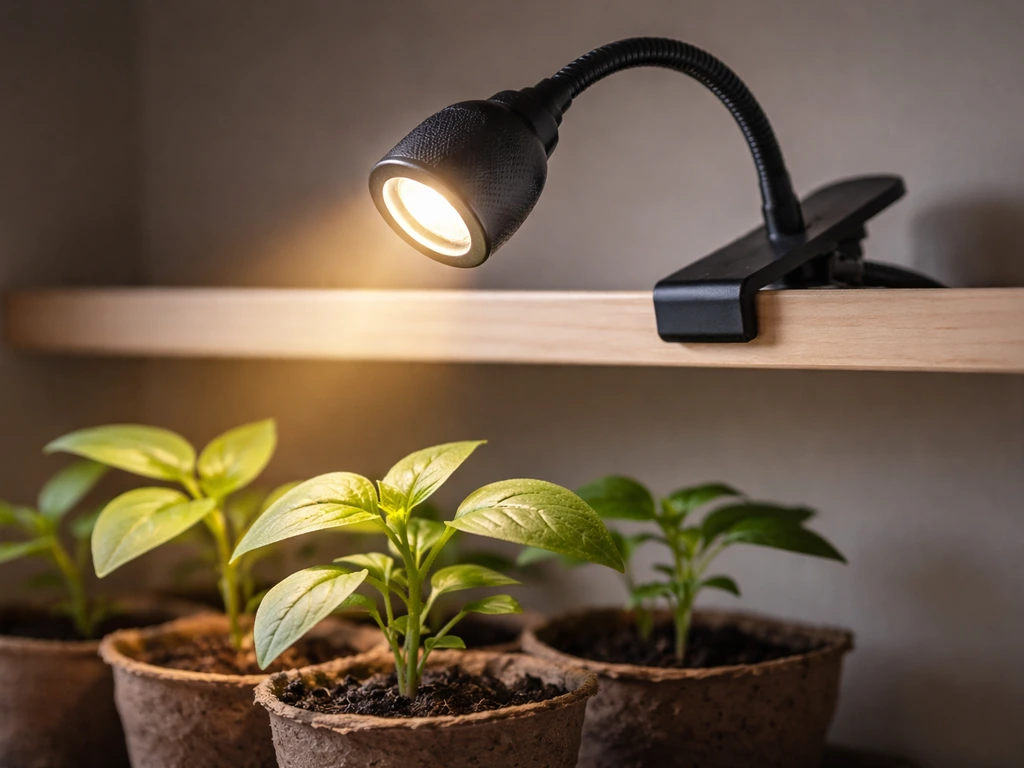
The C23ZW024 is a 10W full-spectrum clip-on grow light with a flexible gooseneck arm and a small control box. It runs on standard 100-240V AC, which means it works anywhere in the world without an adapter swap. SANSI rates it at a 25,000-hour lifespan and 4000K color temperature, putting it in warm-white territory rather than the harsh blue-white you get from some budget grow lights.
This light is designed for indoor gardeners who want a dedicated, low-fuss grow light for a single potted plant, a small herb pot on a windowsill, or a propagation cup where they need a bit of supplemental light. It is not designed for a 2x2 tent, a seed-starting flat with 72 cells, or anything that requires even canopy coverage across more than roughly one square foot. If you're a cactus collector, a small-herb grower, or someone nursing one or two houseplants through a dim winter, this is built for you.
Unboxing and build quality
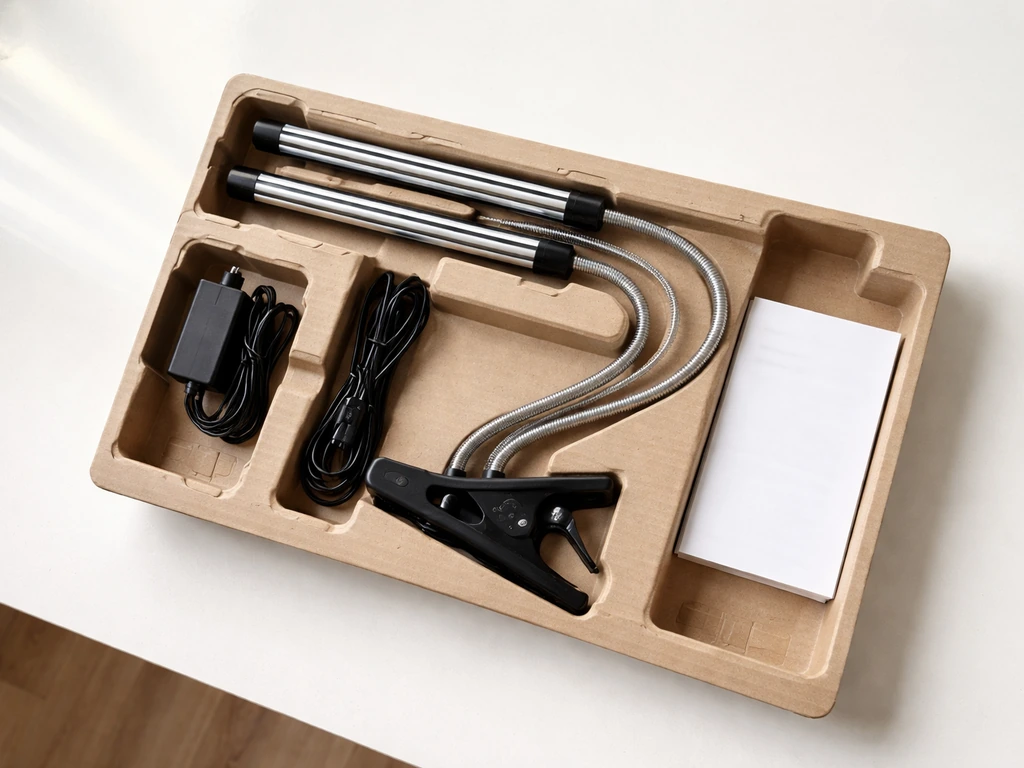
The box contains three items: the clip-on grow light itself, a power adapter, and a user manual. That's it. No extra mounting hardware, no zip ties, no instructions that require a degree to parse. The manual is straightforward and covers installation in a few illustrated steps.
The fixture itself feels more solid than you'd expect at this price point. The gooseneck has enough resistance to hold a set position without drooping over time, which is a genuine quality-of-life detail that cheaper clip lights get wrong. The clip mechanism grips pot rims and shelf edges firmly. The control box sits on the power cord between the plug and the fixture, housing the timer and brightness buttons.
One thing to flag honestly: the user guide explicitly states that neither the light source nor the power supply driver is user-replaceable. When this unit eventually fails, you're buying a new one rather than swapping an LED board or driver. That's not unusual at this price and form factor, but it's worth knowing upfront, especially if you're planning long-term continuous use.
Build certification: a third-party listing for the C23ZW024 shows ETL certification, which at minimum confirms the unit has passed electrical safety testing. That matters for a product you might leave running on a 12-hour timer.
Light output, coverage, and how far the PPFD actually reaches
SANSI publishes a PPF of 14.07 µmol/s for this model, and a PPFD figure of 169.7 µmol/s/m² at 6 inches. That 6-inch number is important context. It's the peak intensity at very close range, directly under the fixture. For comparison, the 2-head puck variant markets a PPFD of 170 µmol/s/m² at 1 foot, which is a different form factor delivering roughly similar center intensity at a greater distance.
In practical terms: at 4-5 inches directly under the head, this light delivers enough intensity to support seedling germination and early vegetative growth for small plants. That's confirmed by real-user experience from hobbyist communities growing cacti and herbs with these units. Drop to 8-10 inches, and the PPFD falls off significantly. The beam angle is relatively tight, and PPFD drops quickly as you move away from center. This isn't a flaw specific to SANSI, it's just physics for a small single-emitter fixture. The practical takeaway is that this light is genuinely most effective as a one-plant, close-proximity fixture rather than anything you're trying to spread across a shelf.
For seedling light requirements as a rough benchmark: most vegetable seedlings need at least 100-200 µmol/s/m² for healthy early growth, and herbs like basil or parsley can get by on the lower end of that range. At 6 inches, the SANSI 10W clears that threshold for a single small pot. Scale up to a 6-inch tray or try to cover multiple pots and you'll likely fall short at the edges.
Spectrum, modes, and what it actually grows well
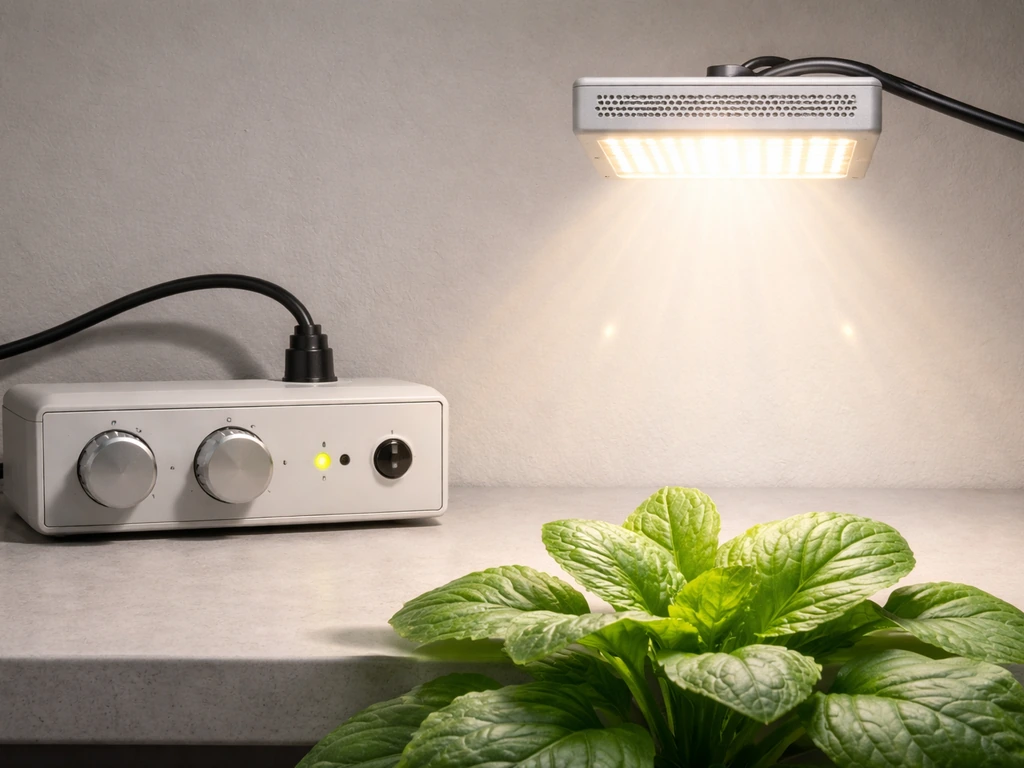
The C23ZW024 uses a white-LED full-spectrum design rated at 4000K. This is a meaningful distinction from older red/blue "blurple" grow lights. There are no separate red or blue modes to toggle, no spectrum-switching controls. What you get is a single white-light output that includes useful wavelengths across the PAR range. SANSI markets this as "closer to sunlight" than discrete-color grow lights, and while that's a marketing claim, the 4000K color temperature does mean the light is reasonably balanced across the visible spectrum rather than heavily skewed.
The control box gives you brightness cycling (multiple levels) and timer options at 3, 6, and 12 hours. There's no dawn/dusk ramping or programmable scheduling beyond those three presets, which is fine for most hobby use cases. You pick your photoperiod, set it, and leave it.
For seedlings and leafy herbs (basil, parsley, mint, chives), the full-spectrum 4000K output is genuinely well-suited. These plants aren't particularly demanding about red/far-red ratios during vegetative growth, and the balanced spectrum encourages compact, stocky growth rather than the stretch you sometimes get under a more blue-dominant light. For flowering plants, the story is less clear: a 4000K full-spectrum emitter provides some red wavelengths, but growers chasing optimized flowering (peppers, tomatoes, cannabis) typically want a higher ratio of deep red (around 660nm). A single 10W fixture in any spectrum isn't going to power heavy fruiting, but for flowering houseplants like African violets or keeping succulents compact, it's adequate.
Heat, power draw, and real-world reliability
SANSI specifies a working temperature range of -10 to 40°C for the C23ZW024, and the user guide includes safety warnings about the risk of burns from the fixture housing under operation. That confirms the unit does generate noticeable surface heat, though SANSI doesn't publish a specific measured casing temperature for this model.
At 10W rated draw, actual wall-socket consumption is low, typically 10-12W in real use. That's negligible on an electricity bill even running 16 hours a day. The tradeoff is that the driver and LED are integrated into a compact form factor without active cooling, so heat management relies on passive dissipation and adequate airflow. SANSI's own support guidance advises against using the fixture in enclosed spaces without airflow, which is practical advice for any passively cooled LED.
For continuous-use reliability, the 25,000-hour rated lifespan is the published figure. At 12 hours per day, that's roughly 5-6 years of operation before hitting the rated end-of-life hours. User reports don't indicate widespread premature failure for this fixture, though as noted earlier, when it does fail the whole unit needs replacing rather than just a component.
Installation, mounting height, and fitting it into your space
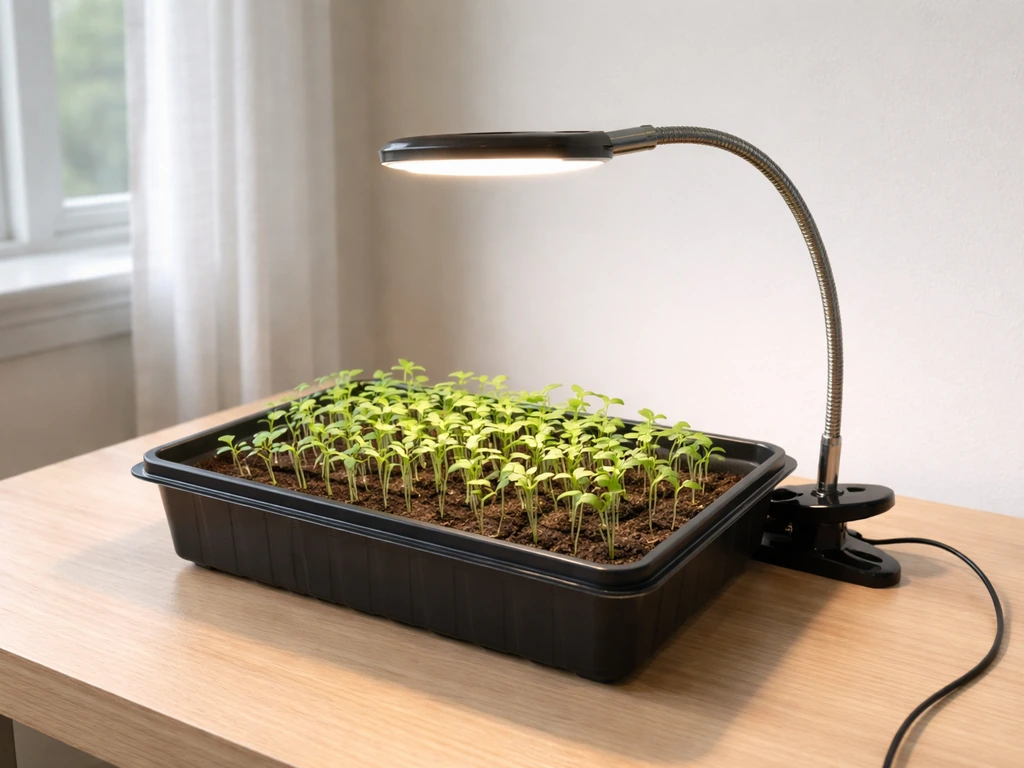
Setup is as simple as grow lights get. Clip it to the pot rim or a nearby shelf edge, bend the gooseneck to position the head directly above your plant, plug in the adapter, and set your timer. The 360-degree adjustable gooseneck gives you a lot of flexibility in positioning, and the resistance is stiff enough that it stays where you put it.
The practical mounting height guidance based on the PPFD data: 4-6 inches for seedlings needing maximum intensity, 6-8 inches for established herbs or leafy plants where you want good coverage without risk of light burn on tender new growth. If you're growing succulents or cacti that want high intensity, push it down toward the 4-inch end. If you're keeping tropical foliage plants happy through winter, 8-10 inches is fine and reduces any heat stress risk.
The clip-on form factor means this fits almost anywhere: a windowsill pot, a bookshelf plant, a propagation station on a kitchen counter. It doesn't need a dedicated grow space or mounting hardware. The one spatial limitation is cord management: the power adapter cord is a fixed length, so placement depends on proximity to an outlet.
How it compares to other compact grow lights
If you're deciding between the SANSI 10W and other small-wattage options in the same category, the choice comes down to how many plants you're running and what flexibility you need. If you are curious how the 15W compares in coverage and output, check the sansi 15w grow light review for the practical distance and results. The SANSI 15W and 24W models in the same line-up step up meaningfully in coverage area and total PPF, making them better fits for small seed-starting trays or multiple pots. The SANSI 36W is a different product class entirely, suited for a shelf or small growing station rather than a single pot. If you're considering a SANSI 36W instead, the beam spread and coverage expectations are very different from this 10W clip-on model.
| Model | Wattage | Best use case | PPFD claim | Form factor |
|---|---|---|---|---|
| SANSI C23ZW024 (this review) | 10W | Single pot, 1 plant, propagation cup | 169.7 µmol/s/m² @ 6 in | Clip-on gooseneck |
| SANSI 15W | 15W | Small pots, 1-2 plants, compact herbs | Higher than 10W at same distance | Clip-on / standalone |
| SANSI 24W | 24W | Small trays, herb garden, 3-4 plants | Wider effective coverage | Panel / standalone |
| SANSI 36W | 36W | Small grow shelf, seed-starting trays | Broader canopy coverage | Panel / bar style |
Against non-SANSI competitors at the 10-15W clip-on price point, the C23ZW024 holds up well on build quality and spectrum. Budget clip lights from generic brands often use older red/blue diode configurations that produce that purple glow and have less even coverage. The 4000K full-spectrum design on the SANSI is a genuine advantage if you care about seeing your plant under natural-looking light and want a more balanced spectrum for vegetative growth. Where cheaper alternatives sometimes win is raw intensity at a given distance, so if PPFD numbers are your primary metric, it's worth comparing spec sheets directly before buying.
Should you buy it? Here's the honest recommendation
Buy the SANSI 10W if: you have one pot or one small propagation setup, you want a clean full-spectrum light without fussing with red/blue mode switches, and you plan to keep the light close (4-8 inches from the canopy). It's a well-made, ETL-listed fixture with a sensible timer, decent build quality for the price, and a spectrum that genuinely suits seedlings and leafy herbs.
Skip it (or step up) if: you're starting a tray of 20 seedlings, you want to cover a shelf, or you're growing anything that requires high intensity at more than 8 inches. If you need more coverage than the 10W can deliver at typical mounting heights, the sansi 24w grow light review is a helpful next comparison. In those cases, look at the SANSI 24W or 36W, or consider a purpose-built bar light with a wider beam spread. Pairing two or three of these 10W units across a wider planter is also an option, and some hobbyists do exactly that, using one clip light per individual pot in a larger collection.
At its price point, the SANSI 10W is not trying to be something it isn't, and that's actually its strongest quality. It's a focused, single-plant tool that does that job reliably. Know what you're buying it for, keep it close to your plant, and it'll earn its place on your windowsill. If you want a deeper look at whether this kind of compact 10W setup is actually worth it, you can compare it with other takes in sansi grow light reviews. If you want to dig deeper, you can also find more detailed sansi grow light reviews that cover performance, coverage, and real-user setups.
FAQ
Is the SANSI 10W gooseneck clip light bright enough for germination and early seedlings?
For most hobby seed starting, yes, if you place it very close, about 4 to 6 inches above the canopy. At roughly 8 to 10 inches, intensity drops quickly because the beam is tight, so if you see leggy, pale seedlings, the first fix is lowering the light rather than increasing timer hours.
How many hours per day should I run the SANSI 10W grow light?
A practical starting point is 12 to 16 hours for seedlings and leafy herbs, then adjust based on plant response. Since the timer only offers fixed 3, 6, or 12 hour options, many users stack two timer cycles or choose 12 hours and supplement with natural daylight when available.
Does the 4000K full-spectrum mean it will flower well?
It can support flowering for ornamental houseplants, but it is not an optimized flowering setup for fruiting crops. If you grow tomatoes, peppers, or cannabis and want stronger flowering results, you typically need more deep red emphasis or higher total light, so you would generally step up in wattage or use a spectrum-focused flowering light.
Will running it on a timer cause heat issues?
Heat is real for this form factor, the housing can feel hot, and it relies on passive cooling. Keep it off enclosed, airflow-restricted surfaces (like snug plastic sleeves or tight cabinet corners), and avoid placing it where heat buildup would raise the surrounding temperature, especially for long 12-hour runs.
Can I leave the light on continuously (24/7) instead of using the timer?
You should not assume continuous operation is the best plan. The unit is rated for long service hours, but continuous lighting increases heat exposure and can stress some plants. Start with a photoperiod, check for leaf tip burn or bleaching, then adjust the height and hours.
Is it safe to clip the light to a shelf edge or pot rim that gets damp?
Treat it like any plug-in electrical device around moisture. Don’t let the power adapter or control box sit where water can splash or pool, and avoid using it in trays that regularly overflow. If your setup is humid, route the cord so the adapter and controls stay above splashes.
What’s the best way to position it to avoid uneven growth?
This light is effectively a single-plant, close-proximity tool. If you try to cover multiple pots in one wider area, edge plants will receive less intensity. For best uniformity, use one fixture per pot or keep a single container centered directly under the head.
Why do my plants look stretched even though the light is on?
Most stretching with this style of lamp is from mounting height being too high or the plant being off-center. Lower the light toward the 4 to 6 inch range, ensure the head is aimed at the canopy center, and confirm you are using the full-spectrum output (there are no red/blue modes to adjust on this model).
Can I replace the LED board or driver if it fails?
No. The user guide states the light source and the power supply driver are not user-replaceable, so you would replace the whole unit rather than swapping parts. If long-term maintenance is a priority, that is a key reason to consider a higher-tier fixture with user-serviceable components.
Is the ETL listing the same as being waterproof or suitable for bathrooms?
No, ETL is about electrical safety testing, not water resistance. This light should not be treated as splash-proof or damp-rated. If you want to grow in a humid room, focus on keeping electrical components dry and providing ventilation around the fixture.
Will two of these 10W lights eliminate the coverage limits?
It can help, especially if you place one per pot or use them with careful spacing for a narrow area. Keep each lamp close to its target canopy, and expect better results than one lamp trying to cover a wide tray, but total efficiency is still limited by the small beam and rapid PPFD falloff with distance.
What cord-length planning should I do before buying?
The power adapter cord length is fixed, so your outlet proximity matters. Before purchase, check whether you can mount the clip location without forcing the control box or cable to sit under the plant or across pathways where it could get tugged, since that increases the risk of damage over time.