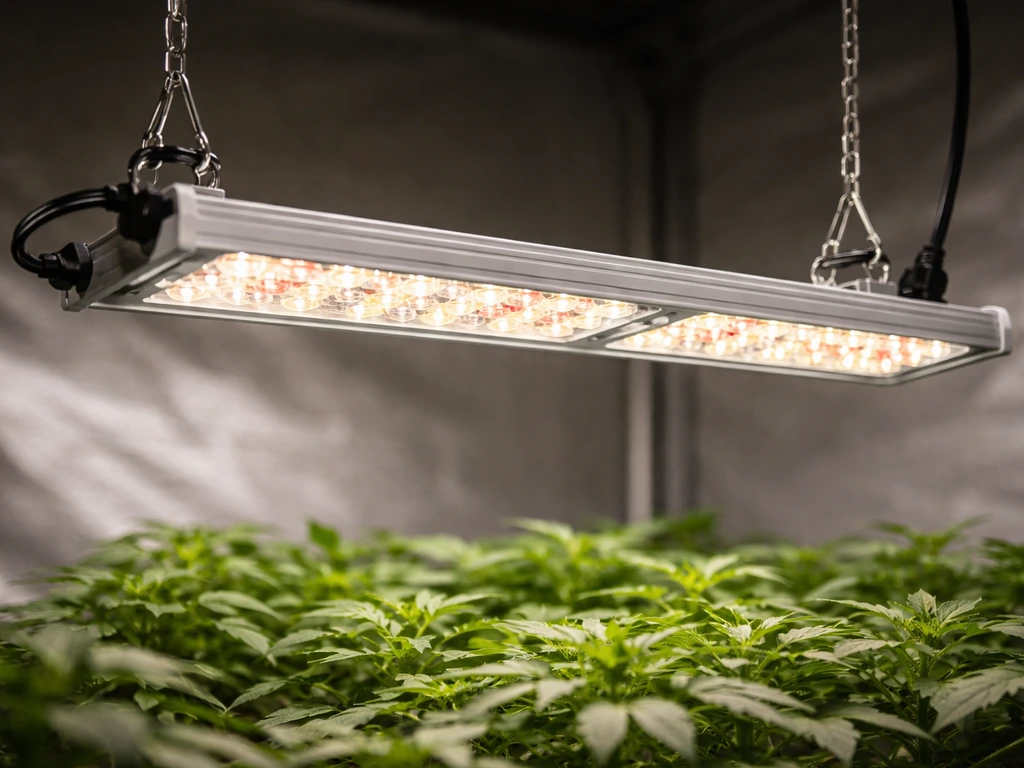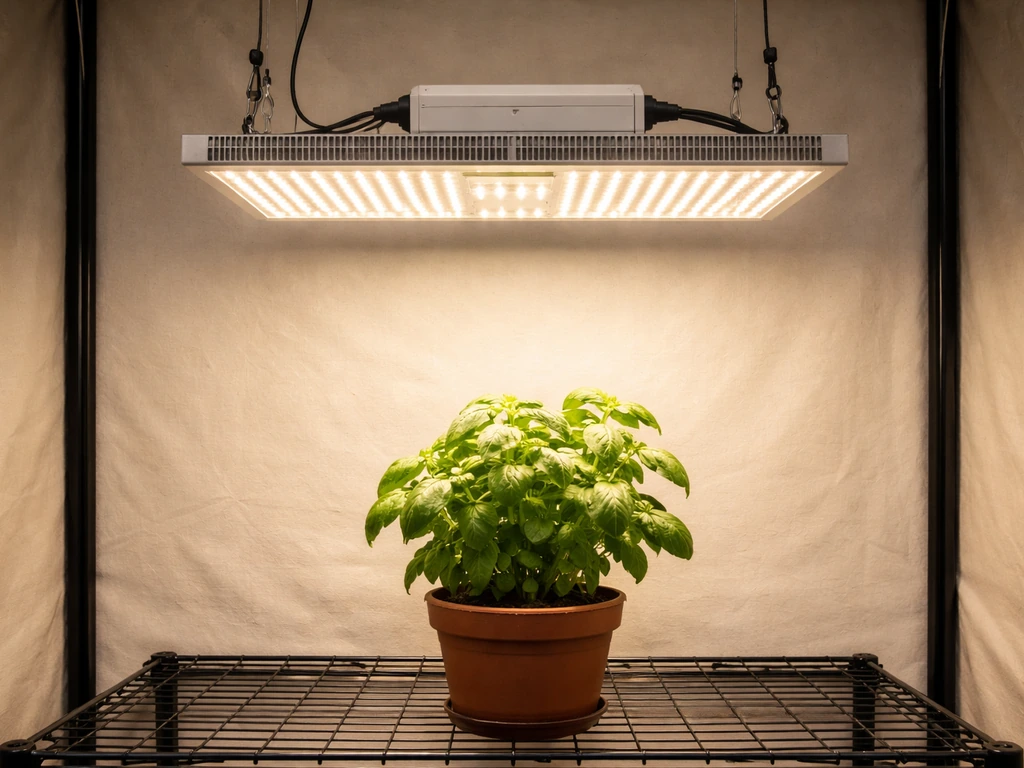
The Creativity Grow Light is actually the Cretivity CTII series, a line of passive-cooled LED bars from the brand Cretivity (the name gets misspelled constantly). The CTII lineup covers 640W, 720W, 1000W, and larger wattages, all claiming 2.6–2.9 µmol/J efficacy, full-spectrum output with boosted 660nm red, and a 5-year warranty. For the price, especially the CTII640W at $269 and CTII1000W at $489, these are competitive specs on paper. Whether they hold up in practice is the real question, and the honest answer is: they're a reasonable choice for small-to-medium grows if you go in with clear expectations, but there are a few things to verify before you commit.
Creativity Grow Light Review: Is It Worth It for Your Grow?

Marcus Caldwell
29 Apr 2026
What the Cretivity CTII Line Is and Who It's Actually For
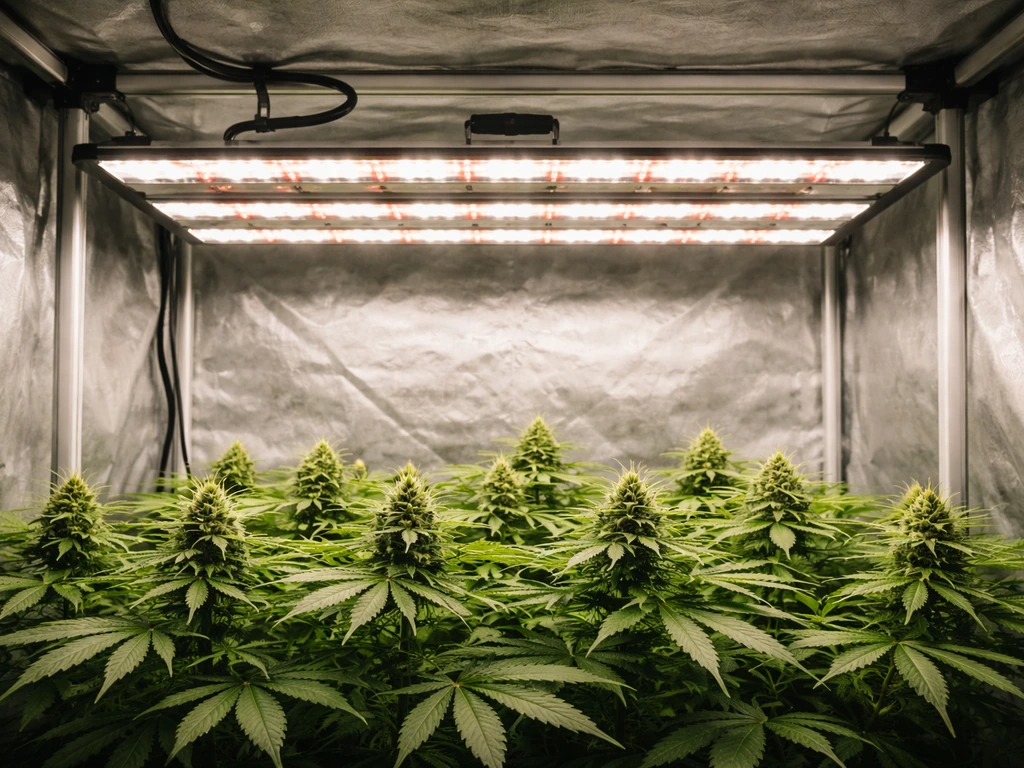
Cretivity markets the CTII series as full-cycle LED grow lights built for commercial-style performance at a hobbyist price point. The brand sells direct from their website with US and international warehouse options, and they position the lights for anyone from seed-starting through flowering. The most commonly searched models are the CTII640W (4x4ft flowering footprint) and the CTII1000W (5x5 to 6x6ft flowering footprint), and that sizing tells you the target audience pretty clearly: people running one or two tents at home, small-scale cultivators, and serious hobbyists who want something better than a budget panel but aren't ready to spend $800+ on a top-tier fixture.
These are not beginner gimmick lights, but they're also not in the same league as brands with years of independent test data behind them. If you're growing herbs on a windowsill, these are overkill. If you're running a 4x4 or 5x5 tent through veg and flower, the CTII series is squarely aimed at you.
Key Specs and Spectrum Breakdown
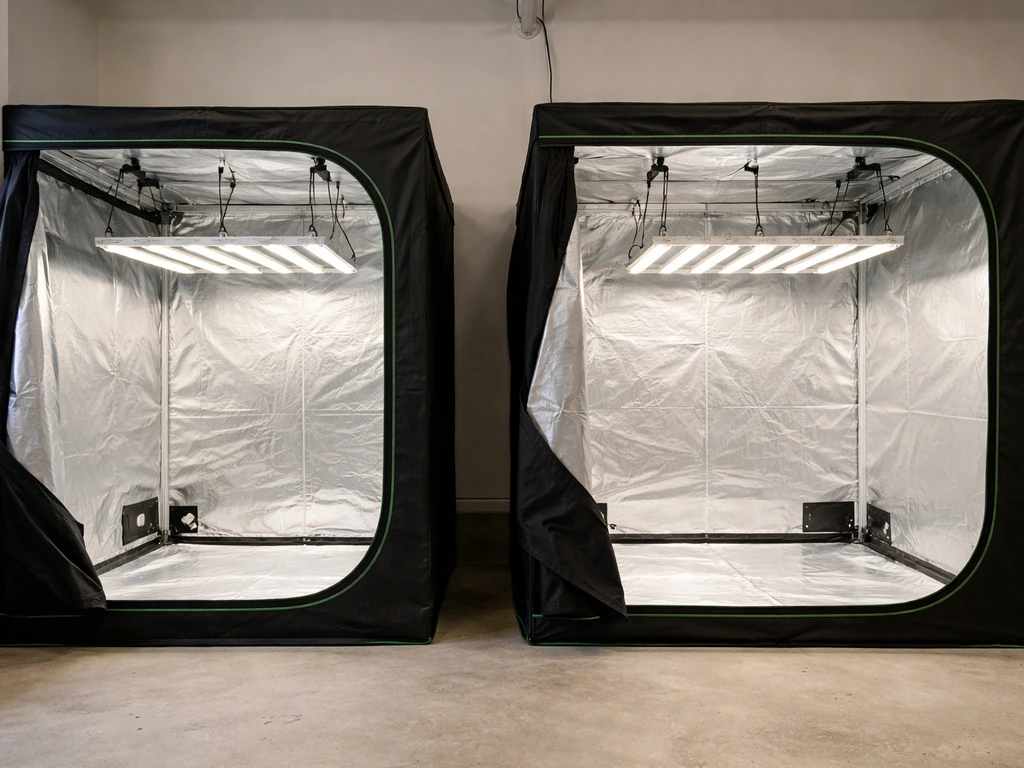
Here's a quick look at the core models across the CTII range so you can compare wattages side by side:
| Model | Input Power | PPF (µmol/s) | Efficacy (µmol/J) | Claimed Coverage (Flower) | Price (US) |
|---|---|---|---|---|---|
| CTII640W | 640W | 1,728 | 2.7 | 4x4 ft | $269 |
| CTII720W | 720W | 1,944 | 2.7 | ~4x5 ft (est.) | Not listed |
| CTII1000W | 1,000W | 2,700 | 2.6–2.7 | 5x5 to 6x6 ft | $489 |
| CTII1000W PRO | 1,000W | 2,898 | 2.9 | 5x5 to 6x6 ft | Not listed |
| CTII1200W PRO MAX | 1,200W | ~3,100 (est.) | 2.9 | Large/commercial | Not listed |
All models run on 100–277V, making them compatible with both standard US 120V outlets and commercial 240V setups without any adapter. Power factor is listed at 0.95 on the models where it's published, which is solid. Cooling is entirely passive across the whole line: no fans, no moving parts, just aluminum housing doing the thermal work via convection.
Spectrum: Full-Spectrum White Plus 660nm Red
The CTII series uses a white-dominant full-spectrum approach with discrete 660nm red LEDs added for flowering support. The CTII720W listing is the most explicit about this, describing it as 'Full Spectrum White + 660nm Red. ' This is a common and effective design: the white LEDs cover the full photosynthetic range from blue through green to red, while the 660nm addition pushes the red peak that drives flowering and fruit set.
Cretivity does not publish UV or far-red (730nm) specific percentages in their standard listings, so if you're chasing a specific far-red ratio for photoperiod manipulation, you'd want to ask them directly or look at their spectrum charts before buying. For most growers running photoperiod or auto-flowering strains through a normal cycle, the white-plus-red approach works well from seedling through harvest.
Real-World Performance: Coverage, PPFD, Heat, and Build
Coverage and PPFD
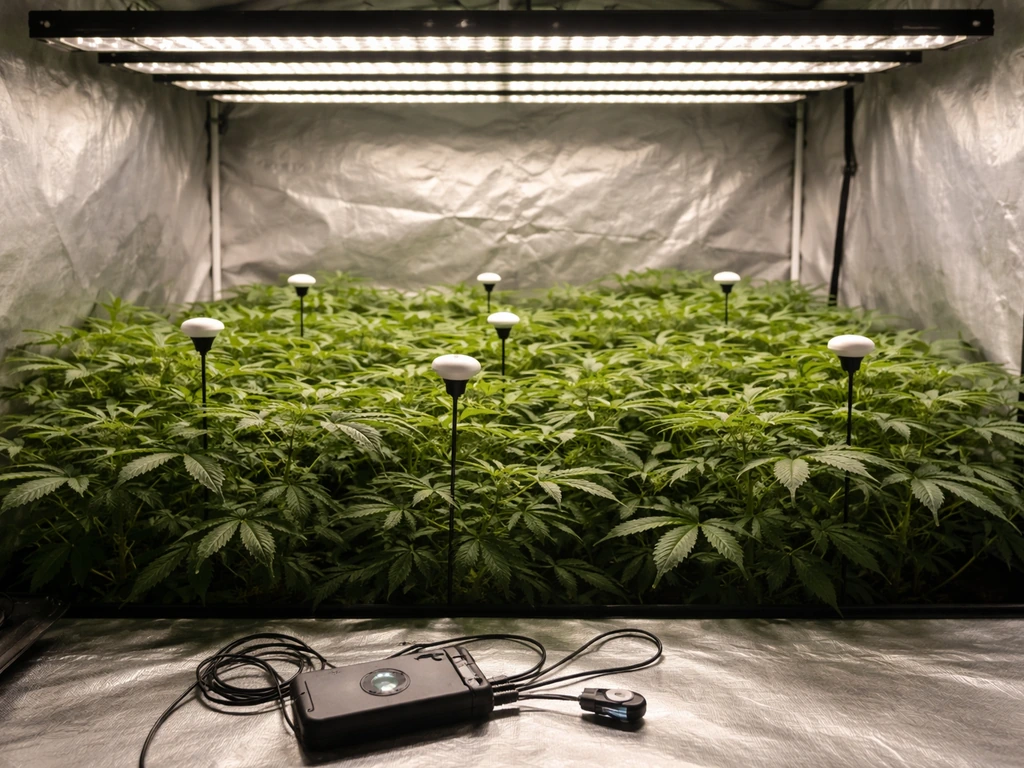
Cretivity's own listing for the CTII640W claims PPFD of 1,625 µmol/m²/s at 12 inches above canopy, with a PPE of 2. Cretivity’s CTII640W product listing also specifies 1728 µmol/s PPF and highlights the 2. 7 µmol/J efficacy figure along with a 4x4 ft flowering footprint [Cretivity's own listing for the CTII640W claims PPFD of 1,625 µmol/m²/s at 12 inches above canopy, with a PPE of 2. ](https://cretivitygrowlight.
com/products/usa-warehouse-cretivity-ctii640w-led-grow-light-2-7umol-j). 9 µmol/J at that measurement point. That's a center-point reading, not an average across the footprint, so it will be higher than what you'll see at the edges of a 4x4. The CTII1000W references a PAR chart from laboratory test data, but the full PPFD map isn't fully extractable from the standard listing.
In practical terms: center-of-footprint intensity looks strong on paper, but edge uniformity is the number that matters for canopy-wide consistency, and that data isn't clearly published.
The bar-style array design helps here. The CTII640W uses a 6-bar configuration and the CTII1000W uses a 12-bar arrangement, both intended to spread light more evenly than a single-panel design. User reports from real growers (not meter-tested) describe the footprint as 'good,' and passive-cooled bar arrays generally do better than blurple panels for edge-to-center uniformity. But without a published, independently verified PPFD map, I'd treat the uniformity claim as plausible rather than confirmed. For third-party PPFD reference points and verification-style cross-checking, Crescience maintains a PPFD database with tested fixtures and PPFD maps that you can cite without a published, independently verified PPFD map.
Heat and Noise
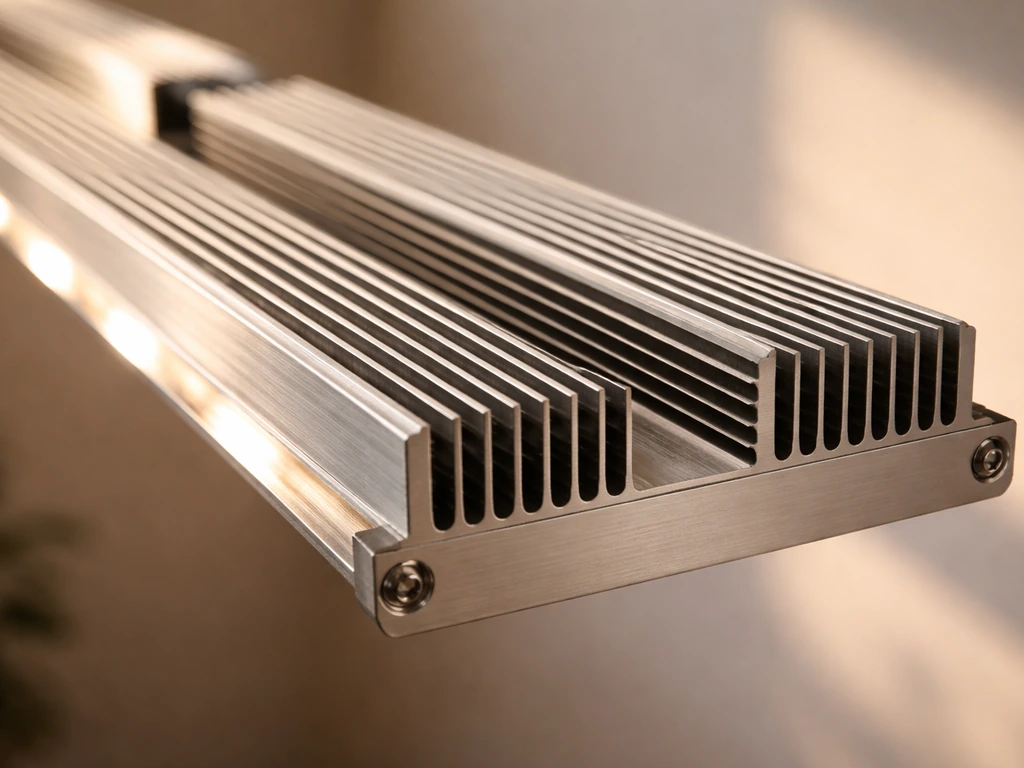
Passive cooling means zero fan noise, which is a real advantage if you're growing in a room where noise matters. On the thermal side, users report the fixture doesn't run excessively hot, which makes sense: spreading the load across multiple bars gives each section more surface area to dissipate heat. That said, passive cooling in a warm environment (above 30°C ambient) puts more stress on the LEDs and drivers than an actively cooled fixture would. The listed operating range is -20°C to 45°C, so it's not fragile, but keep your grow room ventilated regardless.
Build Quality
This is where I'd add a caution flag. MigroLight's independent review of a related Cretivity model (the CF7000) flagged a specific build concern: multiple drivers bolted to a plate with loose power cables connecting them. That's a workmanship issue worth noting even if it doesn't apply to every CTII unit.
Cretivity's warranty response for the CTII1200W PRO MAX involves shipping replacement LED PCB boards or drivers during the warranty period rather than full fixture replacements, which is a reasonable policy but does mean you're doing some assembly if something fails. The claimed defect rate is under 0. 2%, and the 5-year warranty covers the whole CTII line, so the brand is at least backing their product.
Just inspect your unit when it arrives and check that all cable connections are seated properly.
Setup and Use Guide
Mounting Height by Growth Stage
Cretivity lists a mounting range of 6 to 24 inches above canopy across all CTII models. In practice, you'd never run a 640W or 1000W fixture at 6 inches unless you're specifically doing a close-range intensity measurement. Here's a practical guide for each stage:
| Growth Stage | Target PPFD (µmol/m²/s) | Suggested Mounting Height | Dimmer Setting |
|---|---|---|---|
| Seedling / Clone | 100–250 | 24 in | 20–30% |
| Early Veg | 250–400 | 20–24 in | 40–50% |
| Late Veg | 400–600 | 16–20 in | 50–70% |
| Early Flower | 600–900 | 12–18 in | 70–85% |
| Peak Flower | 900–1,200+ | 10–14 in | 85–100% |
These are starting points based on the fixture's claimed intensity curve, not meter-verified readings for each specific CTII wattage. If you own a PAR meter or can borrow one, take readings at your planned canopy height before locking in your schedule. You want to dial PPFD to your target range, not just set a height and hope.
Dimming and Timing
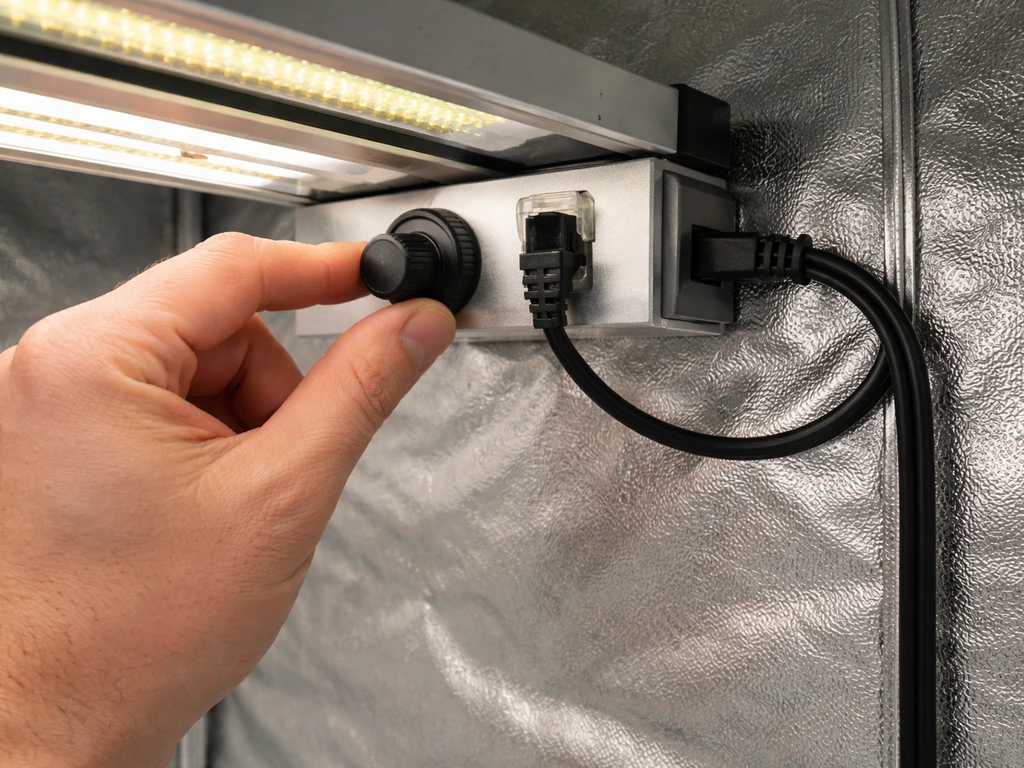
Every CTII model includes a knob-style dimmer for manual control and an RJ14 port for connecting to Cretivity's EC2821 controller. The controller adds a built-in clock, timer, temperature-based dimming, and scheduling features, which lets you automate sunrise/sunset ramps and light cycles without a separate timer. If you're running multiple fixtures, the RJ14 daisy-chain setup means you control them all from one unit. For a single tent, the manual knob works fine. For two or more tents with coordinated lighting schedules, the controller is worth adding.
Troubleshooting Common Setup Issues
- Light too intense for seedlings: raise to 24 inches and dim to 20–25%; seedling tip burn is almost always a distance and intensity problem, not a spectrum problem.
- Uneven canopy growth: check that the fixture is centered over your tent and that all bars are at the same height; bar arrays can sag slightly if not hung with multiple support points.
- Driver or LED failure under warranty: contact Cretivity directly; per their warranty policy they ship replacement driver or LED PCB boards rather than full fixture swaps, so be prepared to do a component swap.
- Overheating concerns in warm climates: add a clip fan for air circulation around the fixture even though it's passively cooled; ambient temps above 35°C will shorten LED lifespan regardless of driver quality.
- RJ14 controller not responding: check that the cable is fully seated at both ends; the RJ14 connector is the same form factor as an older phone cable and can look plugged in without being fully locked.
Pros, Cons, and What to Watch For
What Works
- Strong efficacy claims (2.7–2.9 µmol/J) at a price point well below premium brands with similar numbers.
- Passive cooling means zero fan noise and no moving parts to fail.
- Wide voltage range (100–277V) makes these usable in almost any electrical environment.
- 5-year warranty is longer than most competitors in this price range.
- RJ14 controller integration gives real scheduling and temperature-triggered dimming capability.
- Bar-array design distributes light more evenly than single-panel designs at similar wattages.
- ETL and UL certifications listed, which matters for safety and insurance in a home grow space.
What to Watch Out For
- No independently verified PPFD maps from a third-party tester for the CTII series specifically; all coverage claims come from manufacturer data or retailer copy.
- Build quality concerns flagged on a related Cretivity model (loose driver cable connections); inspect your unit carefully on arrival.
- Warranty service involves component replacement rather than full fixture swap, which requires some DIY comfort.
- No published far-red (730nm) or UV percentage data, which limits advanced photoperiod optimization.
- The brand name 'Creativity/Cretivity' gets misspelled constantly, which makes it harder to find real user reviews; fewer third-party verified test reports exist compared to more established brands.
- PPFD claims cite center-point measurements; edge uniformity across a full 4x4 or 5x5 footprint may be meaningfully lower at the corners.
How the CTII Stacks Up Against Similar Lights
To give this an honest benchmark, here's how the CTII640W and CTII1000W compare against other full-spectrum bar-style lights in the same wattage and price range. Brands like Bloom Plus, Briignite, and similar mid-tier competitors are playing in the same arena with broadly similar specs. If you're also comparing against a Bloom Plus grow light, a Bloom Plus grow light review can help you weigh its spectrum and verified performance data against the CTII series. If you're considering a Briignite grow light review too, compare its spectrum and real-world PPFD consistency against the CTII before you buy.
| Light | Power | Efficacy | Coverage (Flower) | Cooling | Warranty | Price Range |
|---|---|---|---|---|---|---|
| Cretivity CTII640W | 640W | 2.7 µmol/J | 4x4 ft | Passive | 5 years | $269 |
| Cretivity CTII1000W | 1,000W | 2.6–2.7 µmol/J | 5x5–6x6 ft | Passive | 5 years | $489 |
| Cretivity CTII1000W PRO | 1,000W | 2.9 µmol/J | 5x5–6x6 ft | Passive | 5 years | Not listed |
| Mid-tier competitor (similar 640W class) | 640W | 2.5–2.7 µmol/J (typical) | 4x4 ft | Passive | 3–5 years | $220–$320 |
| Premium bar light (similar wattage) | 640W | 2.8–3.1 µmol/J (published, tested) | 4x4 ft | Passive | 5 years | $450–$600 |
The CTII series lands in a competitive middle ground: better efficacy claims than budget options, priced below the premium tier, but with less independent test verification than brands like those reviewed in more established independent test ecosystems. The CTII640W at $269 is genuinely well-priced if the specs hold up. The CTII1000W at $489 is fair but starts to get close to proven premium fixtures where you're paying for verified performance data, not just listed specs.
Other lights worth comparing in this wattage range include the Bloom Plus and Briignite lineups, which compete directly on the full-spectrum bar-light segment. Each has its own tradeoffs on spectrum design, dimming implementation, and warranty service. If you've been looking at those options alongside the Cretivity, the CTII640W and CTII1000W hold their own on specs, but the same caveat applies: verify coverage maps for your specific tent size before assuming the claimed footprint is fully usable.
Who Should Buy Which Model, and When to Pass
Buy the CTII640W if:
- You're running a 4x4 tent through veg and flower and want a passive-cooled, full-spectrum fixture under $300.
- Noise is a concern and you don't want a fan-cooled light.
- You're comfortable with a mid-tier brand and its DIY warranty service model.
- You want RJ14 controller capability for future expansion.
Buy the CTII1000W if:
- You're running a 5x5 or 6x6 tent and need a single fixture to cover it.
- You want to stay under $500 for a 1000W-class light with documented efficacy claims.
- You plan to use the Cretivity EC2821 controller for automated scheduling across multiple fixtures.
Consider a different option if:
- You need independently verified PPFD maps before purchase (look at brands with MigroLight or University-tested data).
- You want a straightforward full-replacement warranty rather than component-level repair.
- You're growing in a warm environment above 35°C ambient and need active cooling for thermal safety.
- You're doing advanced far-red or UV photoperiod work and need documented spectrum percentages.
Before You Buy: Measure This First
- Measure your grow space in square feet. A 4x4 (16 sq ft) is the target for the CTII640W; a 5x5 (25 sq ft) or 6x6 (36 sq ft) is the target for the CTII1000W. Don't try to push either model beyond its stated flowering footprint.
- Set your target PPFD by crop: leafy greens and herbs do well at 200–400 µmol/m²/s; fruiting plants in veg want 400–600; in flower, most growers target 800–1,100 depending on CO2 supplementation.
- Calculate your DLI: multiply your target PPFD by your daily light hours, then multiply by 0.0036. A 12-hour photoperiod at 800 µmol/m²/s gives you a DLI of about 34.6 mol/m²/day, which is appropriate for most flowering crops.
- Confirm your mounting height clearance. You need at least 10–14 inches from fixture to canopy at peak flower and additional headroom above that for the fixture itself. Measure your tent's usable interior height before ordering.
- Decide if you need the controller. If you're running one tent, the knob dimmer is sufficient. If you're scaling to two or more tents or want temperature-responsive dimming, factor in the EC2821 controller cost.
Bottom Line: Is the Creativity Grow Light Worth It?
For the price, the Cretivity CTII series is a legitimate option, not a gimmick. If you want to cross-check expectations with other user experiences, these garland grow light garden reviews are a useful starting point before you buy Cretivity CTII series. The CTII640W at $269 for a 640W passive-cooled bar light with 2. 7 µmol/J claimed efficacy and a 5-year warranty is genuinely competitive in today's market.
If you want the short answer, this Creativity Grow Light review frames the CTII as a strong value option, as long as you confirm real coverage and PPFD for your tent. The CTII1000W at $489 is solid but faces stiffer competition from proven fixtures in the $500–$600 range with more third-party test data behind them.
The honest caveat throughout this review is the same: Cretivity's claims are plausible and their specs are in line with what the technology can deliver, but independent meter-verified PPFD maps for the specific CTII models are limited. If you're the type of grower who wants to trust the data you can see, the CTII is worth buying with a PAR meter in hand during your first run so you can confirm what you're actually delivering to your canopy.
If you're a more hands-off grower who wants a reliable full-cycle light without the verification step, the CTII series will very likely do the job for a 4x4 or 5x5 tent. Just inspect the unit on arrival, run it through a test cycle before committing your plants, and you'll have a clear picture of whether it's right for your setup.
FAQ
How can I tell if the CTII640W or CTII1000W will cover the whole tent evenly, not just the center?
Not exactly. Cretivity publishes a center-point PPFD claim for the CTII640W, but the article notes that the edge-to-edge PPFD map is not clearly provided. If your tent has thick canopy, curtains, or you tend to run lights close to the maximum height, uniformity matters more than the middle reading. The practical fix is to use a PAR meter (or borrow one) to check at least 5 points (center, four corners) at your final mounting height.
Do I need the EC2821 controller, or is the built-in dimmer enough for most grows?
If you want to automate schedules with the least hassle, the EC2821 controller is the cleaner route. The lights have a knob dimmer for manual control, but automation features (clock/timer, temperature-based dimming, scheduling) only come with the controller. For one tent, the knob is usually enough. For multiple tents that need synced sunrise and sunset ramps, the RJ14 daisy-chain setup can save you from running multiple separate timers.
Will the lack of published far-red (730 nm) details make the CTII a poor choice for photoperiod or morphology tricks?
It depends on your strategy. The CTII series is intended for full-cycle production (seedling through flowering), but it does not provide specific far-red (730 nm) percentages in standard listings. If you are using photoperiod timing or trying to manipulate morphology with a precise far-red ratio, you may need spectrum charts from Cretivity or you may have to treat the red-plus-white design as a general flowering aid rather than a targeted far-red program.
What’s the biggest mistake people make when setting the CTII mounting height?
You should verify your mounting height and then verify your PPFD, because the review emphasizes that the stated mounting range (6 to 24 inches) is based on claimed intensity curves, not meter-verified output for your exact unit. A common mistake is setting a height that seems reasonable without checking edge PPFD. If you do not have a PAR meter, start with a conservative height and gradually adjust after observing canopy response (stretch, leaf angle, and uniformity).
Are passive-cooled bar lights like the CTII safe to run at full power in a hot grow room?
The combination of passive cooling and a dimmer means you should be mindful when running high output in hot rooms. The review notes an operating range down to -20°C and up to 45°C, but warm ambient temperatures increase stress on LEDs and drivers compared with actively cooled fixtures. If your grow space regularly exceeds about 30°C ambient, prioritize ventilation and consider dialing output slightly lower during the hottest part of the day.
Will the CTII work on standard US 120V, or do I need special wiring?
Yes, the CTII series is built for 100–277V operation, so it works on both 120V household power and 240V commercial setups without an adapter. The practical check is not the voltage range, it is electrical capacity and outlet quality: ensure your circuit can handle the total load if you run more than one fixture, especially during peak brightness.
Does the bar design automatically guarantee uniform canopy coverage?
Often, but not always. The bar-style array design is meant to improve uniformity versus single-panel designs, and the review notes that user reports describe the footprint as good. However, it also states that without an independently verified PPFD map for your model, uniformity is best treated as plausible. If you grow a canopy with uneven height, uniformity gaps can show up as patchy bud development, so meter checks matter most for dense canopies.
What should I inspect or test when the CTII arrives to avoid potential build issues?
Inspect the unit on arrival for cable seating and workmanship, then run it empty for a short test cycle before introducing plants. The review mentions a related Cretivity model where loose power cables were a build concern, and it suggests that even if it does not apply to every CTII, checking connections is a smart low-effort step. This is especially important if you plan to keep the light running continuously during flowering.
How should I use the dimmer in practice to dial in the right intensity?
If you want to use dimming to maintain target PPFD, treat dimming as part of your calibration, not a substitute for it. The CTII has a manual knob and can be controlled via the EC2821, but output at a given knob position can vary with mounting height and room conditions. The best workflow is: set a starting height, measure PPFD at canopy, then use dimming to hit your target range rather than changing both height and dimming at the same time.
Do I really need a PAR meter to decide if it’s worth buying the CTII?
A PAR meter is the most direct way to confirm performance, but it is not the only approach. If you cannot measure PPFD, you can still reduce risk by choosing the correct tent size for the model footprint, starting at a mid-height, and observing canopy response over 1 to 2 weeks before pushing intensity hard. Still, the article’s core caveat is that independent meter-verified maps for these specific models are limited, so you are taking on more uncertainty if you skip measurement.