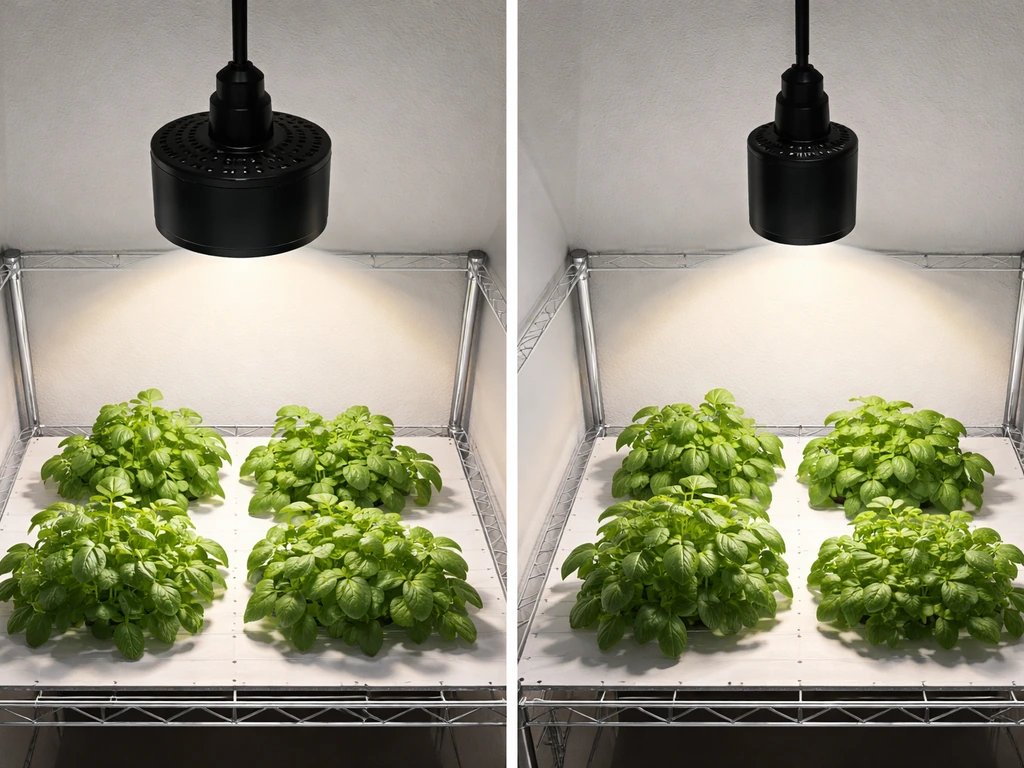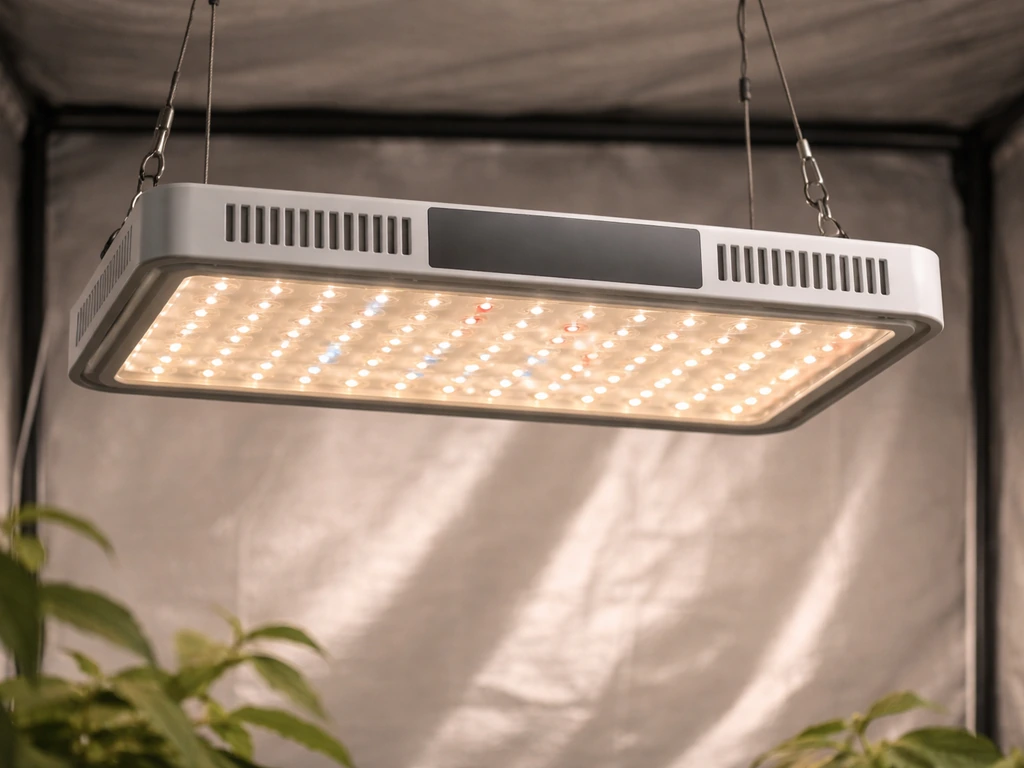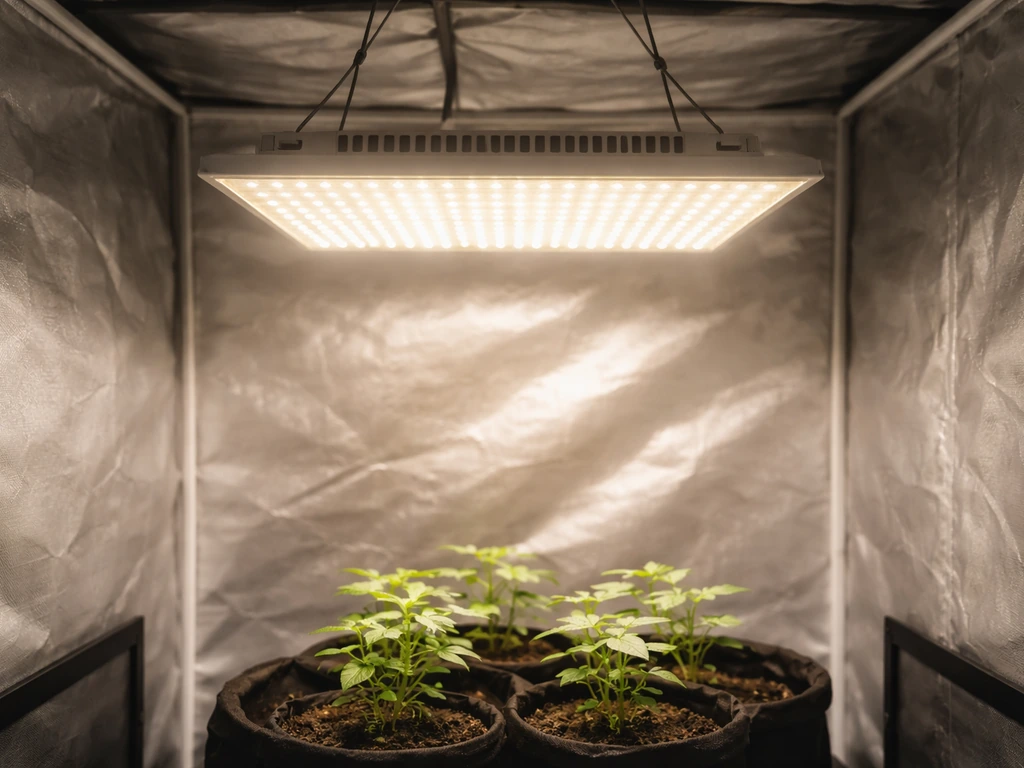
The Honorsen grow light is a budget-tier, double-switch LED fixture that comes in two main variants: a "1000W" and a "1500W" model. Both use the old-school "blurple"-adjacent approach of 10W Epistar dual-chip LEDs with separate veg and bloom switches. The 1000W is the one with most of the real-world data attached to it, drawing roughly 100W actual power despite the inflated headline wattage. It can hit a peak PPFD of around 1203 µmol/m²/s at 12 inches from the center, covers a 3x3 ft footprint for veg and a tighter 2.5x2.5 ft zone for flowering. For seedlings, herbs, and early vegetative growth in a small tent, it can work. For serious flowering or larger canopies, it starts to show its limits fast.
Honorsen Grow Light Review: Specs, Test Results, Worth It?

Marcus Caldwell
1 May 2026
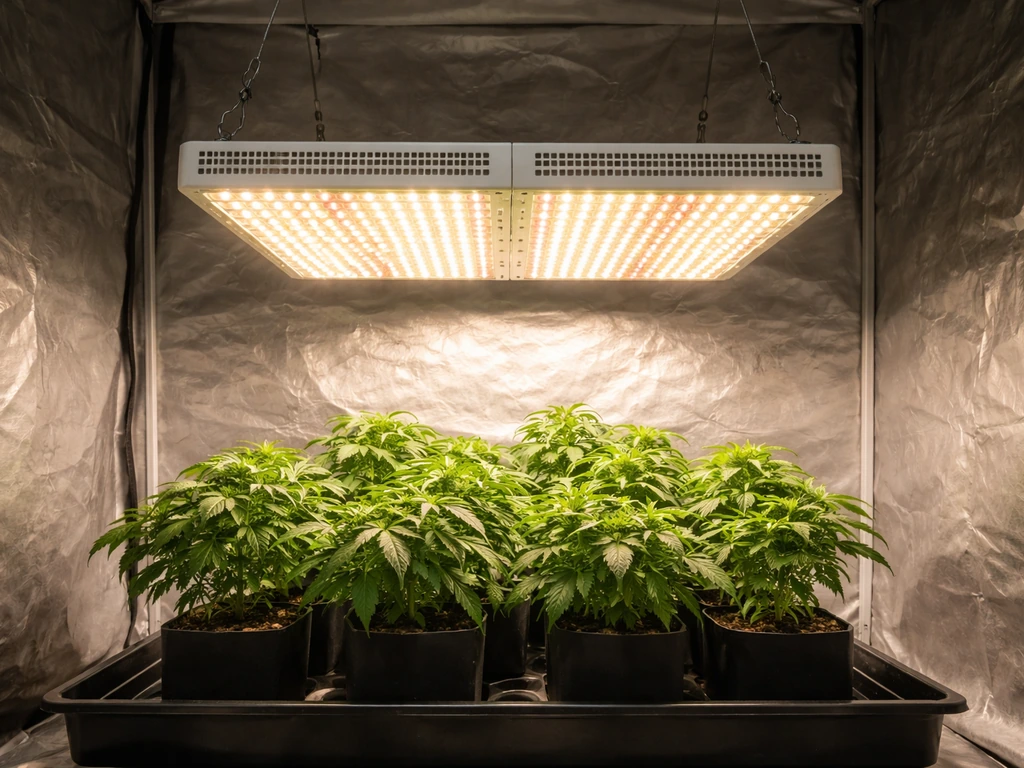
Which Honorsen model are you actually looking at?
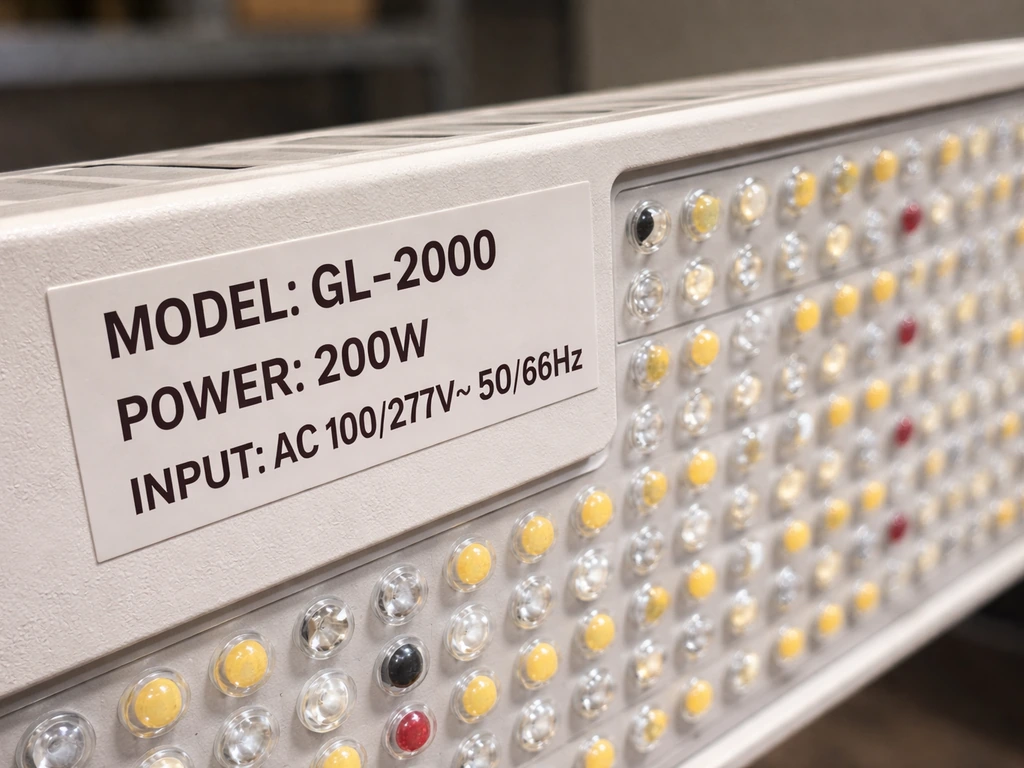
Before anything else, check the listing title carefully. The two models circulating under the "Honorsen grow light" search term are the HONORSEN 1000W (100 LEDs, 10W chips each) and the HONORSEN 1500W (150 LEDs, 10W chips). Some listings also show a board-style SKU with the model number GL-BOARD-150-DIM, which is a different design claiming 4x4 ft coverage. These are meaningfully different products, even if they share the brand name and similar marketing language.
The important check: blank" rel="noopener noreferrer">look for the actual power draw, not the headline wattage. A "1000W" LED panel drawing 100W actual is not the same as a 1000W fixture. For “1000W” grow-light titles, consumers should verify the fixture’s actual power consumption because the marketing wattage is often just an equivalent rather than true wall draw blank" rel="noopener noreferrer">drawing 100W actual is not the same as a 1000W fixture. Honorsen follows a common budget-LED naming convention where the listed wattage reflects the theoretical maximum of all the LED chips if they were run at full rated power, which they never are. The actual draw for the 1000W model is around 100W. The 1500W model scales proportionally. That context matters a lot when you're comparing value or sizing a light for your space.
Key specs that actually matter for growing
The HONORSEN 1000W draws approximately 100W at the wall. It uses 100 dual-chip 10W Epistar LEDs packed into a panel chassis, and the efficiency rating comes in at around 2.6 µmol/J, which is reasonable for this class of fixture but not exceptional by 2026 standards. The full-spectrum output covers the wavelengths plants need, but the dual-switch design (separate veg and bloom buttons) means you're toggling between a blue-dominant or a red-dominant channel rather than running a continuously tunable spectrum. That's an older design philosophy, and it does limit how finely you can dial things in.
The 1500W model simply adds more of the same: 150 chips, roughly 150W actual draw, and a proportionally larger footprint claim. For a closer look at the full specs, setup, and real-world performance, see this yehsence 1500w led grow light review. The board-style variant (GL-BOARD-150-DIM) takes a different form factor, adds a dimmer, and claims 4x4 ft coverage. If your listing includes "DIM" or mentions a dimming dial, you have that newer variant. If it only shows two rocker switches, you have the classic dual-switch panel.
| Spec | HONORSEN 1000W | HONORSEN 1500W |
|---|---|---|
| Actual power draw | ~100W | ~150W |
| LED count / chip type | 100 x 10W Epistar dual-chip | 150 x 10W Epistar dual-chip |
| Efficiency | ~2.6 µmol/J | Comparable (proportional) |
| Switch design | Dual switch (veg/bloom) | Dual switch (veg/bloom) |
| Veg coverage claim | 3 x 3 ft | ~4 x 4 ft |
| Flower coverage claim | 2.5 x 2.5 ft | ~3 x 3 ft |
| LED lifespan (listed) | 50,000 hours | 50,000 hours |
| Warranty (retailer language) | 2 years + 30-day return | 2 years + 30-day return |
What the testing data actually shows
PPFD and light output
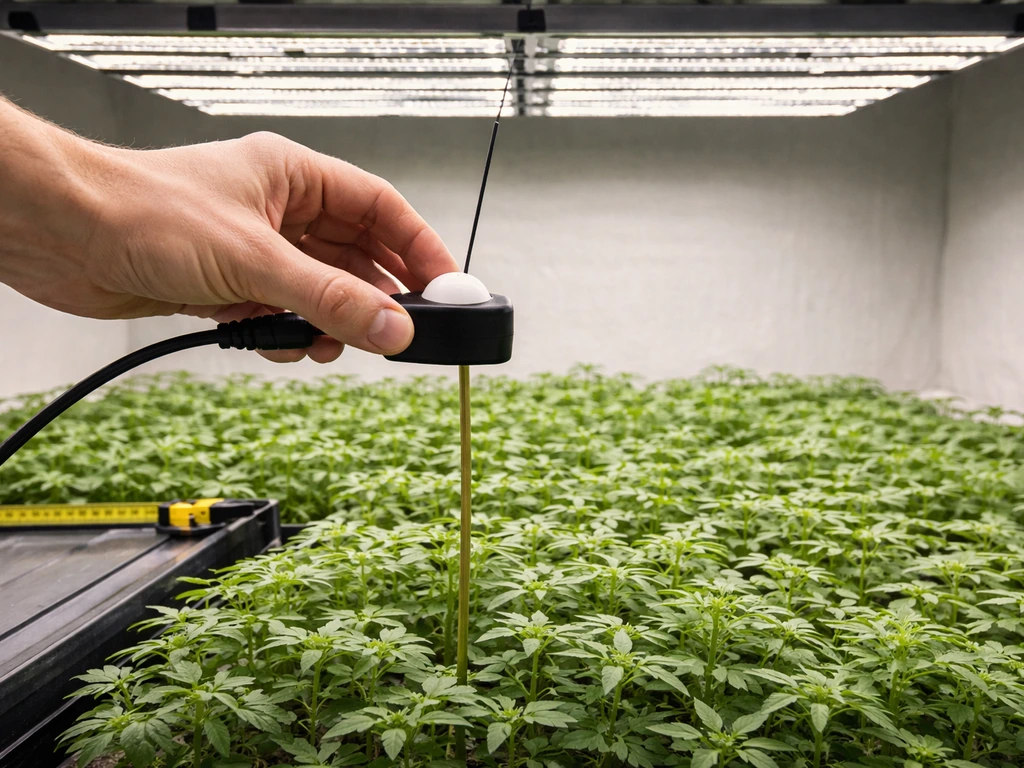
The most concrete number floating around for the Honorsen 1000W is a peak PPFD of 1203 µmol/m²/s at 12 inches. That is a center-point figure, not a canopy average. The distinction is critical. In practice, LED panels of this chip-array design tend to have a notable center-to-edge falloff, which means the edges of your claimed coverage area are receiving significantly less light than the center value implies. Without a full PPFD map showing readings at multiple points and multiple heights, you can't take 1203 µmol/m²/s as representative of what your whole canopy is getting.
At 12 inches the center intensity is high enough to support flowering if you're sitting directly underneath, but that mounting height is quite close for most plants (especially taller ones in late flower). If you're targeting the more practical 18 to 24 inch range where most growers end up, expect the center PPFD to drop substantially. A rough rule of thumb: doubling the distance quarters the intensity. So at 24 inches from a source showing 1203 at 12 inches, you're likely in the 300 µmol/m²/s ballpark at the center, which is adequate for veg but borderline for dense flowering.
Heat and distribution
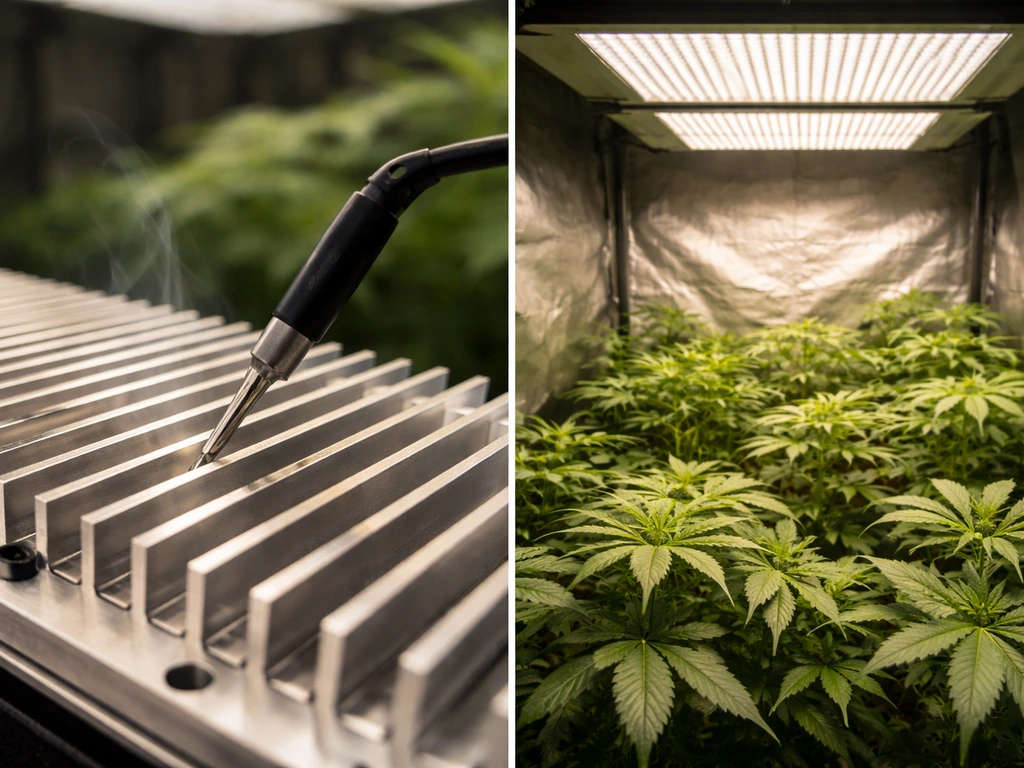
The dual-chip LED design on these panels produces some heat, and the fixtures use passive aluminum heatsinks rather than active fans in most configurations. That means thermals depend heavily on ambient temperature and airflow in your tent. In a well-ventilated grow space, the 1000W panel handles heat adequately. In a sealed, warm environment without good circulation, the chips can run warm enough to affect efficiency and longevity. There's no robust teardown or failure-mode documentation publicly available for these models, so long-term reliability is harder to gauge with confidence. The 50,000-hour LED lifespan claim is common marketing language for Epistar chips at rated power, but how the driver holds up over years of daily cycling is a different question.
Light distribution uniformity is the bigger practical concern. The fixed-array panel design concentrates intensity at the center and softens toward the edges. If you're filling a 3x3 ft tent with this light, plants in the corners will be getting meaningfully less PPFD than the plant directly below center. For veg, that's usually tolerable since plants at 300 to 600 µmol/m²/s still grow. For flowering, it means your corner plants won't perform the same as your center plant, and you'll want to rotate pots regularly to equalize exposure.
How to set it up correctly
Start with the light at 20 to 24 inches above the canopy for seedlings and early veg. Observe for 48 to 72 hours. If you see stretching toward the light, drop it closer in 2-inch increments. If you see leaf curl, bleaching, or tacoing at the tips, raise it. For mature vegetative plants, 16 to 20 inches is a reasonable working range. For flowering, 14 to 18 inches tends to work if your plants aren't showing stress, but never go below 10 inches: the spectrum and intensity at that distance can cause heat stress and bleaching, and the guidance circulating with similar 1000W-class fixtures explicitly warns against going below 10 inches.
For the dual-switch model, run both switches (veg and bloom) together during flowering. Running just the bloom switch alone cuts total output and is generally only useful if you're trying to reduce intensity for very young seedlings. During the vegetative phase, running both switches also works; the veg-only setting is more blue-dominant and theoretically supports compact growth, but in practice for most home growers, both switches at once is the standard approach throughout the grow.
Photoperiod recommendations don't change just because of the light brand. Seedlings and veg do well at 18 hours on / 6 hours off. Flowering plants that require a light-triggered transition need 12/12. If you're growing auto-flowering varieties, 18/6 or 20/4 works throughout.
- Hang at 20 to 24 inches for seedlings; lower gradually as plants mature and tolerate intensity.
- Use both switches together for most growth stages rather than relying on a single channel.
- Rotate pots every few days if filling a 3x3 ft area to equalize center vs. edge light exposure.
- Make sure your tent has adequate airflow across the heatsink surface to manage passive cooling.
- If you have a PAR meter, measure PPFD at canopy level before assuming peak specs represent your actual grow zone.
Which plant stages and grow spaces it suits best
The Honorsen 1000W is a reasonable fit for seedlings and vegetative growth in a 2x2 to 3x3 ft space. At veg-friendly PPFD targets of 400 to 600 µmol/m²/s, the fixture at a practical 18 to 22 inch hanging height delivers enough intensity over a 3x3 area to support solid leafy growth. For herbs, microgreens, leafy greens, and vegetative cannabis or tomatoes, it can do the job.
For flowering, treat it as a borderline option. Dense, heavy-flowering plants (cannabis, peppers in bloom, tomatoes setting fruit) want 600 to 900 µmol/m²/s across the canopy. The Honorsen 1000W can hit those numbers at the center at close range, but uniformity across a 2.5x2.5 ft zone is likely uneven given the panel design. If you're running a single plant in a 2x2 ft tent or a small shelf, it's more viable. Trying to flower a full 3x3 canopy with this as the only light is where you'll start noticing the limitations.
| Use Case | Verdict | Notes |
|---|---|---|
| Seedlings / clones | Good fit | Use at 20-24 inches; gentle output at practical heights |
| Vegetative (herbs, greens) | Good fit | Works well in 3x3 ft with both switches on |
| Vegetative (cannabis / tomatoes) | Good fit | Stay within 3x3 ft; rotate pots for edge uniformity |
| Flowering (single plant, 2x2) | Adequate | Manage height carefully; measure PPFD at canopy |
| Flowering (full 3x3 canopy) | Borderline | Center plants perform better than corners; rotation essential |
| Flowering (4x4 or larger) | Not recommended | Insufficient coverage and output for this footprint |
Value for money and what you're actually betting on
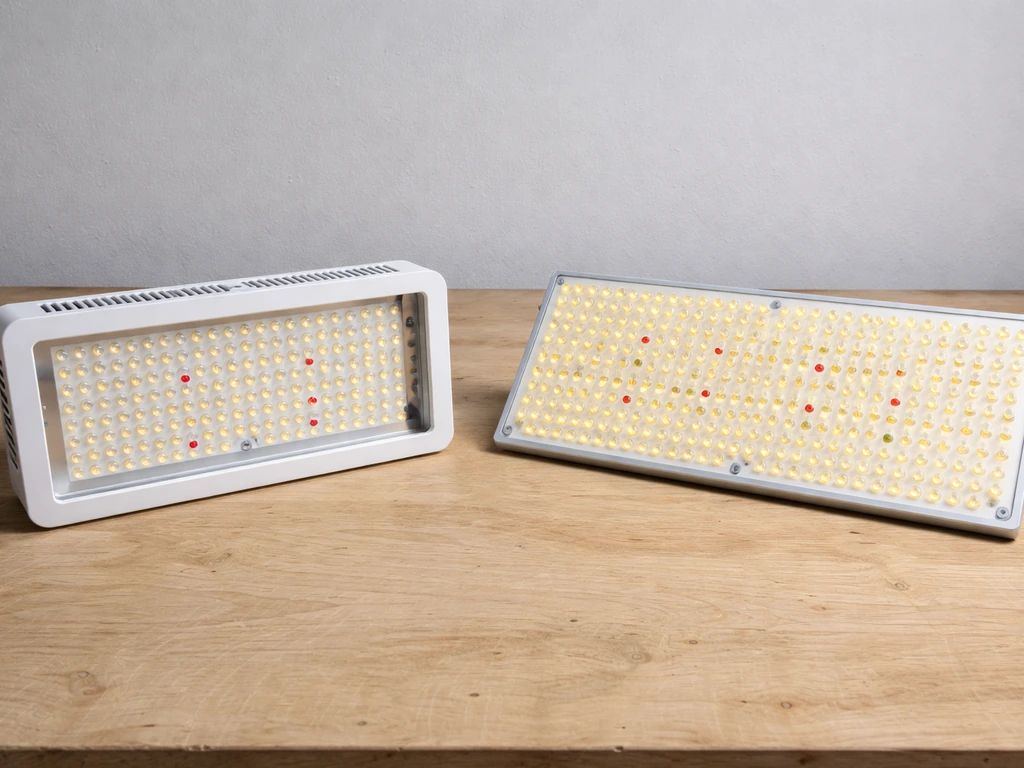
The Honorsen 1000W sits in a price bracket where you're paying for a functional light, not a premium one. At current street prices in this category, you're getting roughly 100W of real draw for the headline number, which puts the cost per actual watt in a range that is competitive among older-style dual-chip LED panels but less efficient than newer quantum board designs in the same or slightly higher price range. The 2.6 µmol/J efficiency figure is passable but not impressive against modern Samsung LM301-based boards that commonly reach 2.7 to 2.9 µmol/J or better.
Build quality is where the honest trade-off sits. The dual-chip Epistar panel chassis is not a premium construction, and the passive heatsink design means thermal performance depends on your environment. The 2-year warranty (plus 30-day return) offered in retailer listings is a reasonable backstop if you're buying from a reputable platform, but warranty fulfillment on budget Chinese-brand lights varies by seller. There's no strong public failure-mode record to evaluate, which means you're taking the usual budget-LED reliability bet: it may run for years without issue, or the driver may fail earlier than the chip lifespan would suggest.
How Honorsen stacks up against the competition
The Honorsen 1000W and 1500W compete in a crowded space that includes brands like Vivosun, ViparSpectra, Missyee, Koscheal, and Sayhon. If you want a clearer picture of how Missyee performs versus the Honorsen chip-array approach, see the Missyee grow lights review for a related comparison. If you want a deeper look at this exact fixture, see the full Kessil grow light review for testing context and real-world performance. If you're also looking at Sayhon grow light reviews, the biggest thing to compare is whether the brand publishes real PPFD maps and actual power draw instead of headline wattage. If you want a direct read on a Koscheal option, check out this Koscheal grow light review for testing-focused takeaways. These brands have been reviewed across this site and the patterns are consistent: the dual-chip blurple-adjacent panel design that Honorsen uses is an older technology tier compared to quantum board or COB designs. Vivosun's VS1500 and ViparSpectra's P1500 both use newer board-style LEDs with better uniformity and comparable or better efficiency figures at similar price points. The ViparSpectra P1500, for example, has publicly available PPFD maps at multiple heights showing more even canopy coverage than what a chip-array panel design typically delivers.
If you're choosing between the Honorsen 1000W and a board-style competitor at a similar price, the board-style fixture almost always wins on uniformity and efficiency. The Honorsen's dual-switch design does give you some rudimentary spectrum control that single-channel boards lack, but most growers running basic grows don't need it, and the uniformity trade-off isn't worth it for most use cases.
| Light | Actual Draw | Design Type | Coverage (Flower) | Key Advantage |
|---|---|---|---|---|
| Honorsen 1000W | ~100W | Dual-chip panel (blurple-style) | 2.5 x 2.5 ft | Separate veg/bloom switches; low entry price |
| Honorsen 1500W | ~150W | Dual-chip panel | ~3 x 3 ft | More output, same design |
| ViparSpectra P1500 | ~150W | Quantum board (Samsung/Epistar blend) | 3 x 3 ft | Better PPFD uniformity, full-spectrum white |
| Vivosun VS1500 | ~150W | Quantum board | 3 x 3 ft | Even canopy coverage, dimmable |
| Koscheal / Sayhon class | Varies (~45-100W) | Board or strip | 2 x 2 to 3 x 3 ft | Compact form factor; newer chip designs |
The honest buying verdict
If you already own an Honorsen 1000W and you're growing seedlings, herbs, or leafy greens in a 2x2 to 3x3 ft space, use it and don't stress. It works for those stages. For vegetative cannabis or tomatoes in a 3x3 tent, it's functional with the right technique (both switches, proper height, pot rotation). For serious flowering canopies, especially if you want consistent results across a full 3x3 ft zone, you're going to run into its limitations.
If you're deciding whether to buy it today, here's the practical guidance: at the price point where Honorsen sits, quantum board alternatives from ViparSpectra, Vivosun, and similar brands offer better canopy uniformity, newer LED technology, and comparable or lower prices. Unless the Honorsen is meaningfully cheaper than those alternatives right now, or you specifically want the dual-switch channel control for a niche reason, the board-style competitors are a better default choice for most growers.
Before you finalize any decision, do three things: measure (or confirm) the actual power draw from the listing, check the coverage claim against your specific tent size, and look for a PPFD map rather than a single center-point figure. If you want a deeper, numbers-focused yehsence grow lights review, compare their reported PPFD maps and coverage claims side by side with what your tent actually needs. The Honorsen 1000W's 1203 µmol/m²/s at 12 inches sounds impressive, but that's a peak center number at an impractically close distance for most plants. What you want to know is what you're getting at 18 to 24 inches across your entire canopy. If the brand or seller can't provide that, budget an inexpensive PAR meter reading session or comparison-shop against a brand that has posted full PPFD maps before committing.
FAQ
How can I verify the Honorsen “1000W/1500W” claim before buying?
If your listing shows “1000W” or “1500W” but the wall draw is much higher than about 100W or 150W, that’s a red flag that the wattage claim is being marketed as theoretical rather than measured. The safest move is to confirm with a plug-in watt meter on the exact model number you’re buying (including whether it has DIM or only two rocker switches).
Why can’t I rely on the peak PPFD number in the product photos?
A center-point PPFD number at a single height does not tell you how much the corners get. For this panel style, ask for a PPFD map at multiple points across the footprint, ideally at your intended hanging height (often 18 to 24 inches). If the seller only provides one figure, treat the usable area as smaller than the marketing footprint.
What’s the best way to dial in the mounting height if I don’t have a PPFD meter?
It’s safer to start higher and move gradually because these panels can overshoot intensity quickly when you drop too close. A practical approach is 22 to 24 inches first, adjust by 2-inch steps after 48 to 72 hours, and stop lowering if you see bleaching (whitish patches), tacoing, or persistent tip burn.
Should I use veg-only or bloom-only on the dual-switch Honorsen during flowering?
For flowering, running only the bloom switch is usually a way to reduce output, not a better spectrum for heavy bud production. If your plants are stretching or staying dim green, try both switches together first, then fine-tune by raising the light or adding distance rather than under-driving the LEDs.
How do I handle heat and longevity with the Honorsen’s passive cooling?
These fixtures are typically fanless, so airflow matters as much as the light. If your tent is warm or humid, thermal throttling and faster driver wear become more likely, even if the LEDs “run” at first. Make sure you have steady intake and exhaust, and avoid aiming the light at a stagnant, heat-trapped canopy.
Does using a hood, shelf, or reflective tent setup change performance with this panel?
If you’re using a reflector hood, glass, or anything that blocks airflow, expect a drop in real output and a rise in temperatures. Even small obstructions can alter the spacing to the canopy and worsen the center-to-edge falloff, especially for tent corners.
What can I do to compensate for the Honorsen’s non-uniform coverage?
Yes, uniformity can be improved with technique. If you’re flowering more than a single plant, rotate pots regularly (for example, every few days) and consider training to keep the canopy even height across the coverage zone. This reduces how much the corners suffer relative to the center.
If my plants stretch under the Honorsen, what should I troubleshoot first?
If you can see stretching, it can be two different problems: too little intensity or photoperiod issues. Confirm your timer schedule first, then increase light intensity by lowering in small steps, and only after that adjust nutrition, humidity, or plant temperature. The light should be the last variable you “guess” if your clock is correct.
Why does the 10-inch minimum matter, and when might 10 to 14 inches still be too close?
The guidance “never below 10 inches” is a safety and stress guideline. In practice, for late-stage plants with denser canopies, you should often choose a higher range (around 14 to 18 inches) and manage intensity through both switches and training, because going very close increases the odds of heat stress and bleaching at the tips.
How do I make sure I’m comparing the right Honorsen model when shopping?
Different SKUs can have different coverage claims and layouts, so your tent sizing should be based on the exact model shown. Check whether the listing is the classic dual-switch panel (two rocker switches) or the board-style dim variant (often described with a DIM model number).
Is the Honorsen “1000W” realistic for 3x3 flowering, or is it better for smaller setups?
For a small single-plant or a tight footprint (like a 2x2 area), you can often hit acceptable flowering results by keeping the canopy uniform and staying closer to the effective intensity range. For a full 3x3 canopy, expect corner under-lighting and plan either for more plants per square inch with training, or accept that yields may be noticeably lower than a uniform board setup.
How can I evaluate whether a seller’s numbers are trustworthy for this specific fixture?
If the listing does not provide measured power draw, PPFD maps, or a credible test method, assume you may be buying marketing numbers. A good decision aid is to compare the total wall watts and ask whether the efficiency figure aligns with the measured draw. If the seller cannot answer either, it’s usually not worth paying for headline wattage.