Kessil makes genuinely good grow lights, but they are not the right buy for everyone. If you want dense, targeted light over a small canopy with precise spectrum tuning, the H160 Tuna Flora is hard to beat in its class. If you are chasing maximum PPFD per dollar over a 4x4 or larger footprint, a modern quantum board will outperform any Kessil at nearly half the price. The honest answer is that Kessil excels as a specialist tool, not a one-size-fits-all solution.
Kessil Grow Light Review: Which Model to Buy for Your Setup

Marcus Caldwell
1 May 2026
Which Kessil grow light are we actually talking about?
Kessil runs two main product families that come up in grow light searches, and they are quite different in intent. The H-Series (H150, H160, and the H350) is designed for terrestrial plants and is what most indoor gardeners mean when they search for a Kessil grow light. The A-Series (A360X Tuna Sun being the flagship) is technically an aquarium light but crosses over into planted tank and low-intensity grow use. Knowing which series fits your goal changes the entire purchase calculus.
H-Series: the dedicated grow light line
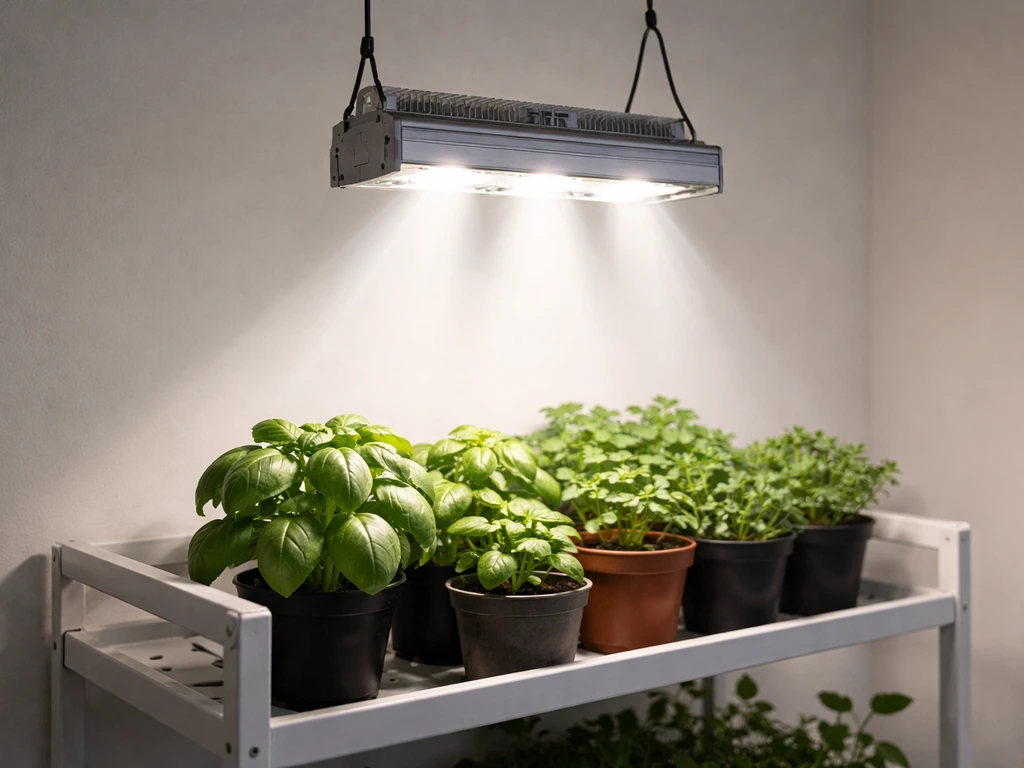
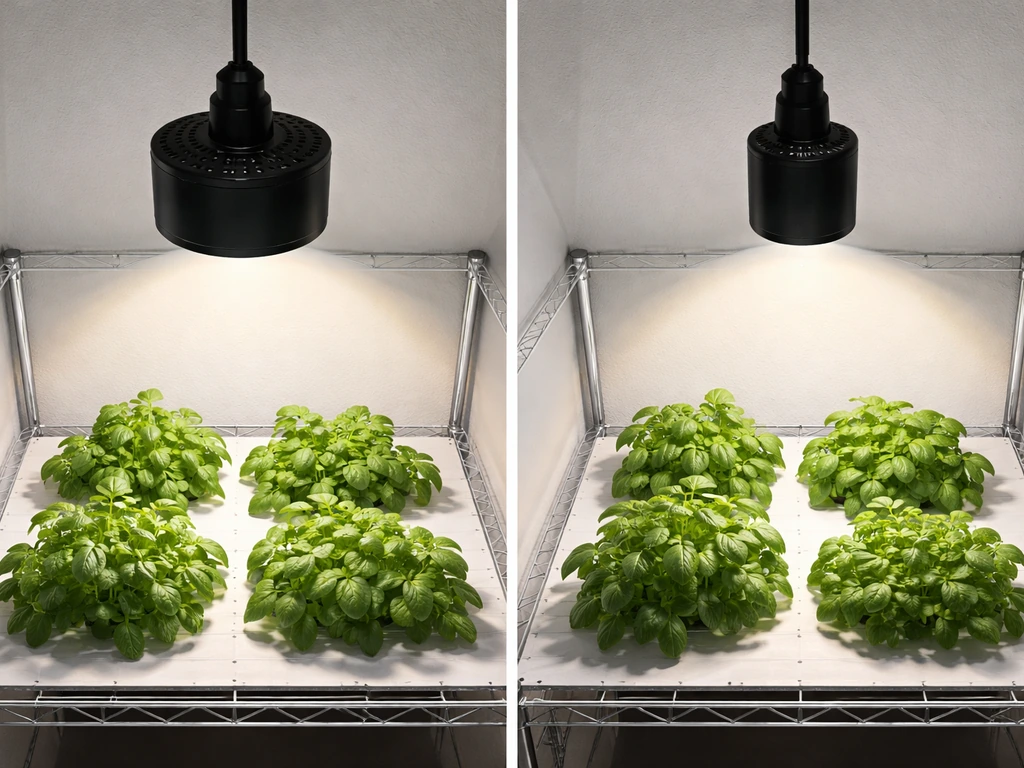
The H160 Tuna Flora is the most commonly purchased H-Series unit for home growers. It runs a multi-spectrum design that covers UV-A through far-red (380 to 780 nm), with four distinct spectrum modes: UV and Far Red, Blue, Grow, and Bloom. Kessil uses what it calls Dense Matrix LED technology, which packs multiple chips (21 chips in the H150, similarly dense in the H160) into a cluster smaller than a dime. The result is an intense, focused beam rather than the broad flood you get from a quantum board. Coverage is rated at 24 by 24 inches, the fixture weighs under a pound (0.88 lb), and the physical footprint is tiny at 4 inches tall by 2.48 inches deep. The H-Series mounts via a dedicated 24-inch gooseneck arm that attaches to standard grow tent poles, which makes repositioning quick and non-destructive to your setup.
A-Series: aquarium crossover with serious spectral control
The A360X Tuna Sun draws 90W AC, weighs 0.8 lb, and is rated for a 24 by 24 inch coverage area in mixed reef or moderately planted environments. It includes Kessil Logic, K-Link networking for daisy-chaining multiple units, and full compatibility with the Spectral Controller X and the AP9X WiFi dongle for app-based scheduling and dimming. It is a genuinely capable light for low-to-medium light plants and propagation, but its spectrum is tuned toward aquatic systems first. For flowering herbs, cannabis, or vegetables that need high intensity, the H160 or H350 is the better fit.
| Model | Wattage | Coverage | Key Feature | Best For |
|---|---|---|---|---|
| H160 Tuna Flora | ~40W (LED) | 24" x 24" | 4-spectrum modes, Dense Matrix LED | Herbs, clones, veg, low-to-mid light plants |
| H350 Tuna Sun | ~90W (LED) | Up to 3x3 ft | Higher intensity, same spectrum approach | Heavier veg, light flowering |
| A360X Tuna Sun | 90W AC | 24" x 24" | K-Link, WiFi, Spectral Controller X compatible | Aquatic plants, propagation, supplement lighting |
Who should buy a Kessil, and who should skip it
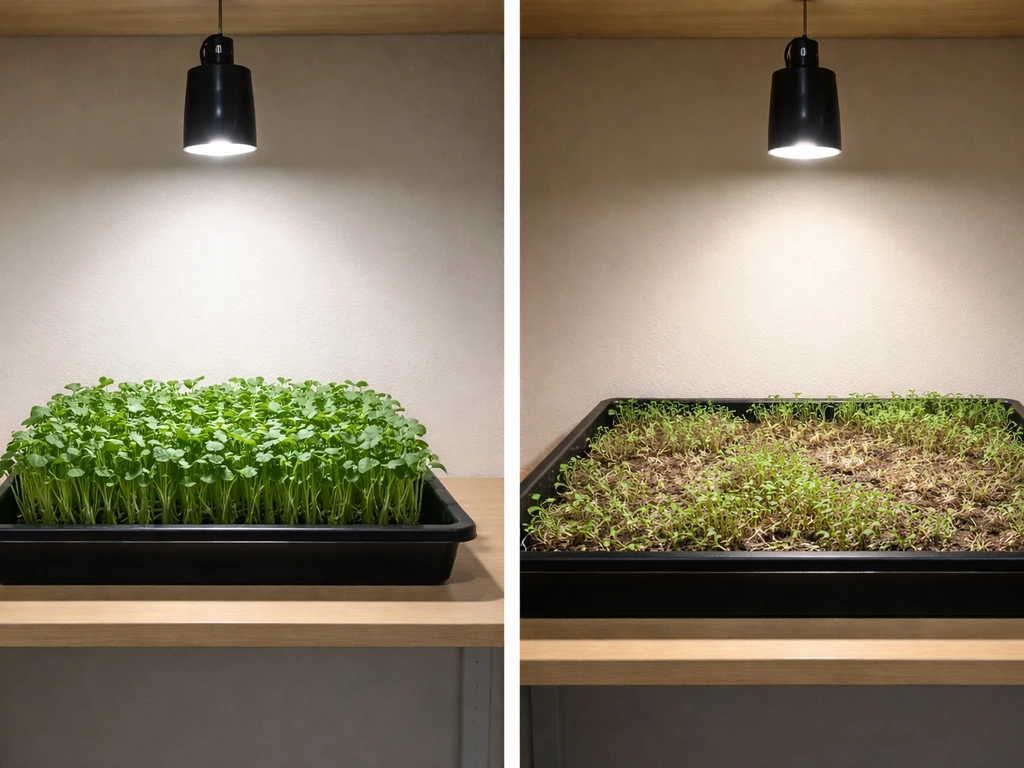
Kessil lights make the most sense in specific scenarios. They are not built to flood a large canopy with raw PPFD; they are built to deliver precise, tunable light into a compact zone with excellent penetration. If your grow matches any of the profiles below, Kessil deserves serious consideration.
- You are growing herbs, microgreens, or low-to-medium light houseplants in a 1x1 to 2x2 area
- You run a propagation or clone station and want spectrum control over individual stages
- You want supplement lighting alongside a primary fixture to fill in edges or a side canopy
- You value a compact, clean aesthetic and silent operation over raw photon output
- You are running an aquatic or semi-aquatic planted system (A360X is ideal here)
- You want a light you can reposition on a gooseneck without dismantling your entire setup
Skip Kessil if your primary goal is maximum yield over a 3x3 or larger footprint on a budget. At around $200 to $250 for the H160, you are paying a significant premium for build quality and spectral flexibility rather than raw PPFD per dollar. A comparable-wattage quantum board from a reputable brand can cover more area with higher average PPFD for considerably less. Kessil is not a cost-efficient choice for filling a large flower tent.
Setting it up: hanging height, spacing, and first-run calibration
The gooseneck mount for the H-Series is one of the more practical design choices Kessil makes. The 24-inch arm clips onto a standard tent pole and lets you angle the head precisely without tools. For the H160, start with the light positioned roughly 18 to 24 inches above the canopy for seedlings and early veg. Once plants are established and you are running the Grow or Bloom spectrum modes at higher intensity, you can bring it down to 12 to 18 inches depending on plant response. Watch for leaf cupping or bleaching near the center of coverage, which signals the light is too close or intensity is too high for that stage.
Because Kessil uses a dense, focused beam, the edges of a 24 by 24 inch coverage zone will receive noticeably less light than the center. For a single-plant setup or a tightly packed herb shelf, this is fine. For a full 2x2 multi-plant grow, position the light directly centered above the canopy and consider supplementing the perimeter with a secondary source or rotating plants weekly to even out exposure. On first run, set intensity at 50 percent and let plants acclimate for three to five days before stepping up to full power.
Spectrum and dimming: getting the most from the controls
The H160's four spectrum modes are genuinely useful once you understand what each is doing. The Blue mode is designed to encourage compact stem extension and is well suited for seedlings or any stage where you want to discourage stretching. The Grow mode is the everyday vegetative spectrum, balancing blue and red for general plant development. Bloom mode shifts the ratio toward red wavelengths to support flowering and yield. The UV and Far Red mode adds wavelengths at both ends of the visible spectrum (near UV-A and far red) and is best used as a supplement for short periods during flower rather than as a full-cycle mode.
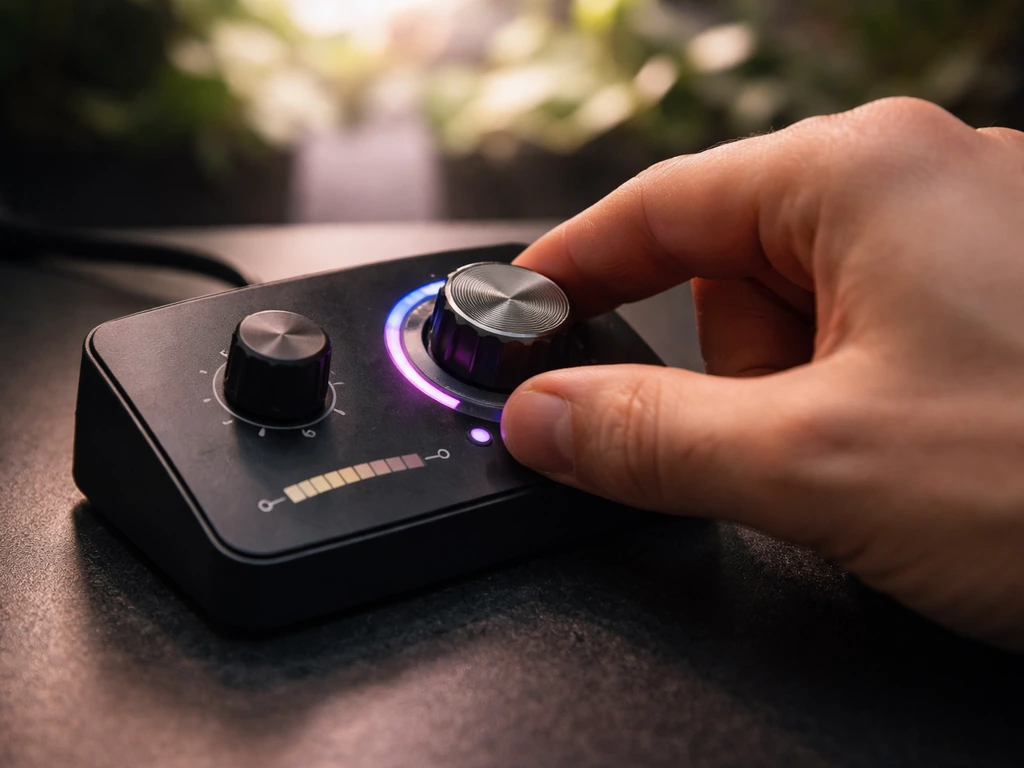
For dimming, the H160 has a dial-style intensity control built into the fixture. A practical starting protocol: run seedlings at 30 to 40 percent intensity under Blue mode for 18 hours per day. Transition to Grow mode at 60 to 70 percent during vegetative growth. Move to Bloom mode at 80 to 100 percent when you flip to flower. Add 30-minute UV and Far Red periods at the start and end of your photoperiod during late flower if you want to push resin development without running the mode all day. This is not guesswork; it mirrors how commercial facilities use extended spectrum LEDs.
The A360X adds a further layer of control through Kessil's ecosystem. Paired with the Spectral Controller X or the AP9X WiFi dongle, you can schedule sunrise and sunset ramps, adjust spectral balance remotely, and network multiple A360X units together via K-Link. One important note from Kessil's own documentation: do not run the WiFi dongle and the Spectral Controller X simultaneously on the same fixture. Pick one control method and stick with it to avoid conflicts.
Performance and value: what the numbers actually tell you
Kessil does not publish official PPF or PPFD maps for the H160 on its product pages, which is a frustration for anyone trying to do a precise apples-to-apples comparison. Based on the fixture's Dense Matrix design and 40-watt draw, real-world PPFD at the center of a 24 by 24 inch footprint at 18 inches is approximately 200 to 350 micromoles per square meter per second depending on mode and intensity setting. That is more than adequate for most herbs, leafy greens, and propagation, and borderline sufficient for light-to-medium flowering plants. It is not enough to push heavy-feeding flowering plants like cannabis through a full productive flower cycle as a standalone light over a 2x2.
Heat management is a real Kessil strength. The Dense Matrix approach spreads thermal load across the fixture body rather than concentrating it, and the aluminum housing conducts heat away effectively. In practice, the H160 runs warm to the touch but does not create the hotspot zone above the canopy that some COB-style lights do. This matters in small or poorly ventilated spaces where heat management is already a challenge. The A360X at 90W AC produces more heat but still runs cooler per watt than many comparable single-COB fixtures.
Efficiency-wise, the H160 sits in acceptable but not exceptional territory. Rough estimates put it around 1.5 to 1.8 micromoles per joule, which lags behind modern quantum boards that routinely achieve 2.3 to 2.8 micromoles per joule. You are paying for spectral flexibility and build quality, not efficiency leadership.
Kessil vs quantum boards, LED bars, and COBs
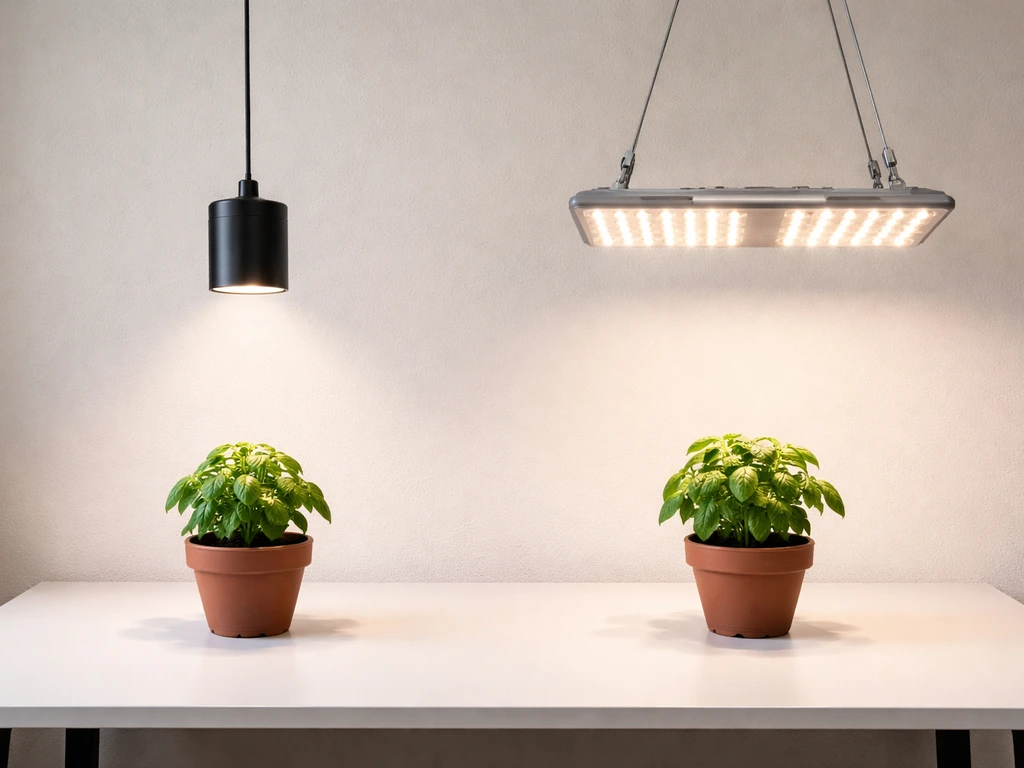
This is where honest context matters most. Kessil sits in a different category than most of the budget-to-mid-range LED grow lights you will find reviewed elsewhere, including brands like Yehsence, Missyee, or Koscheal. If you are looking specifically for an honorsen grow light review style breakdown, this article’s Kessil vs options section helps frame what to expect from different light categories. If you want to compare Kessil against alternatives, a Koscheal grow light review can help you judge value and performance for the money. If you are also comparing budget-to-mid-range options like the Yehsence 1500W LED grow light, focus on coverage, average PPFD, and overall value. If you are also looking at budget options, this Yehsence grow lights review can help you compare value and real-world performance against the Kessil approach. If you are comparing Kessil with Missyee grow lights, a Missyee grow lights review can help you judge value and performance side by side. Those lights compete on coverage and PPFD per dollar. Kessil competes on build quality, spectral precision, and durability.
| Light Type | PPFD Efficiency (approx.) | Coverage per Dollar | Spectrum Control | Best Use Case |
|---|---|---|---|---|
| Kessil H160 (Dense Matrix) | 1.5–1.8 µmol/J | Low | Excellent (4 modes + dimming) | Targeted, small-space, specialty grows |
| Quantum Board (mid-range) | 2.3–2.8 µmol/J | High | Limited (some have dial dimming) | Full-tent veg and flower, cost efficiency |
| LED Bar (multi-bar) | 2.0–2.5 µmol/J | High | Moderate (some programmable) | Even canopy coverage, large tents |
| COB LED | 1.6–2.2 µmol/J | Moderate | Low (fixed spectrum common) | Penetration into deep canopies |
| Kessil A360X (aquarium/cross) | ~1.5 µmol/J est. | Low | Excellent (K-Link, app control) | Planted aquatics, propagation, supplement |
The clearest tradeoff is this: if you buy a Kessil H160 for $200 to $250, you are getting a light that will last years, throw precise and tunable spectrum into a small canopy, and look and feel premium. If you spend the same money on a quality quantum board, you get a light that covers twice the area with more raw output per watt. The Kessil is the better tool for its specific job; the quantum board is the better tool for a different job. Neither is universally superior.
Putting it all together: buying checklist and recommended configurations
Before you buy, work through these questions. They will tell you in five minutes whether Kessil is actually the right call for your situation.
- What is your canopy size? If it is larger than 2x2 feet and you are growing anything that needs high light, a quantum board or LED bar will serve you better on value.
- What are you growing? Herbs, leafy greens, clones, propagation trays, and low-to-medium light ornamentals are ideal Kessil applications. Heavy-feeding flowering plants need more raw PPFD than the H160 alone provides over a full 2x2.
- Do you want spectrum control? If tuning between veg and bloom spectrums matters to you, Kessil's four-mode system is genuinely more flexible than a simple white quantum board.
- Do you need a clean, repositionable mount? The gooseneck arm is one of the best mounting solutions in compact grow lighting. If you regularly adjust your light position, this saves real time.
- Is heat a concern? In micro-grows, closets, or small tents with limited airflow, Kessil's thermal efficiency and low heat footprint are meaningful advantages.
- Is budget the primary driver? If yes, skip Kessil and look at mid-range quantum boards. You will get more light per dollar.
Recommended configurations by grow space
- 1x1 to 2x2 herb shelf or propagation station: One H160 Tuna Flora centered above the canopy at 18 inches, running Blue mode for seedlings and Grow mode for established plants at 60 to 80 percent intensity. This is the sweet spot for Kessil.
- 2x2 tent for light flowering plants: One H160 at full intensity in Bloom mode, supplemented by a small quantum board or LED strip on the perimeter to fill PPFD at the edges. A single H160 alone will be marginal for heavy-feeding flower.
- Propagation tray or clone dome: H160 at 30 to 40 percent intensity, Blue mode, 18 hours on. Perfect application.
- Planted aquarium or aquatic system: A360X Tuna Sun paired with the Spectral Controller X or AP9X dongle for sunrise/sunset scheduling. This is genuinely one of the best compact fixtures available for this use case.
- Supplemental side lighting for a larger tent: One or two H160 units mounted on the tent walls via gooseneck arms to improve light penetration on lower and side canopy. Works well alongside a primary quantum board or LED bar.
Kessil is a brand that rewards growers who know exactly what they need from a light. It is not a shortcut to maximum yields on a budget, and it is not trying to be. If your grow space is compact, your plants are in the low-to-medium light demand range, and spectral flexibility or clean aesthetics matter to you, the H160 Tuna Flora is one of the most well-built and practical options in its size class. If you are weighing it against a full-featured quantum board for a 3x3 or 4x4 flower tent, the math almost certainly points you elsewhere.
FAQ
Is the Kessil H160 strong enough to run a full flower cycle for demanding crops like cannabis?
If you are growing cannabis or other high-light, heavy-feeding plants, a Kessil H160 can work for early stages or limited canopy sections, but it is unlikely to be a full-cycle standalone solution for a whole 2x2. Plan on supplementing with another light, or use the H160 closer to the canopy and stay conservative because the dense beam creates a strong center hotspot.
How should I set intensity if Kessil does not publish PPFD maps for the H160?
Because the fixture does not provide published PPFD/PPF maps, your safest method is to measure at canopy height with a PAR meter (or borrow one) and then dial intensity in small steps over several days. Start at about 50 percent intensity, observe leaf response for cupping or bleaching, and treat the center reading as what you should aim for, not the edge.
Does the 24 by 24 inch coverage mean I’ll get equal light everywhere in my 2x2 grow?
Do not assume the rated 24 by 24 inch coverage means uniform light across the entire area. With Kessil’s focused beam, the center is significantly higher than the edges, so in a multi-plant 2x2 you can either center the light and accept gradient effects, add a second light for perimeter balance, or rotate the plants weekly to even exposure.
What’s the right way to control the A360X, can I use the WiFi dongle and Spectral Controller X together?
If you are using the A360X with external controllers, pick one control path per fixture. Running both the WiFi dongle and the Spectral Controller X at the same time can create conflicting settings, so decide whether you prefer app scheduling or the dedicated controller workflow and keep that consistent.
What should I check before mounting the H160 gooseneck in a grow tent?
The gooseneck arm changes your usable mounting options, but you still need to account for cable strain and clearance in a tent. Leave enough slack for height adjustments, and confirm your final canopy height allows the lamp to be lowered to 12 to 18 inches during higher intensity stages without bumping plants or trimming foliage.
Will adding UV and far red longer each day improve results, or is there a limit?
UV and far-red are most helpful when used briefly, during late flower, and when you keep total photoperiod consistent. If you add UV/Far Red for 30-minute blocks at the beginning and end, avoid raising overall intensity at the same time, since the stress response can look like light overdose and can slow recovery.
How do I avoid stress when switching from veg to flower with the H160?
Kessil’s Dense Matrix beam can make it easier to manage penetration, but it can also cause canopy stress if you treat it like a floodlight. A practical rule is to adjust by plant stage first (seedlings lower, veg moderate, flower higher) and only then fine-tune by observing the outer canopy, where bleaching or color shifts often show up first.
When does Kessil’s focused beam become a drawback instead of a benefit?
For very small, single-plant, or herb-shelf setups, the H160’s focused beam is often an advantage because you can concentrate light where the plant is. For larger tents, you will typically need more units to avoid low edge PPFD, which reduces the value case compared to spreading a quantum board across the same area.