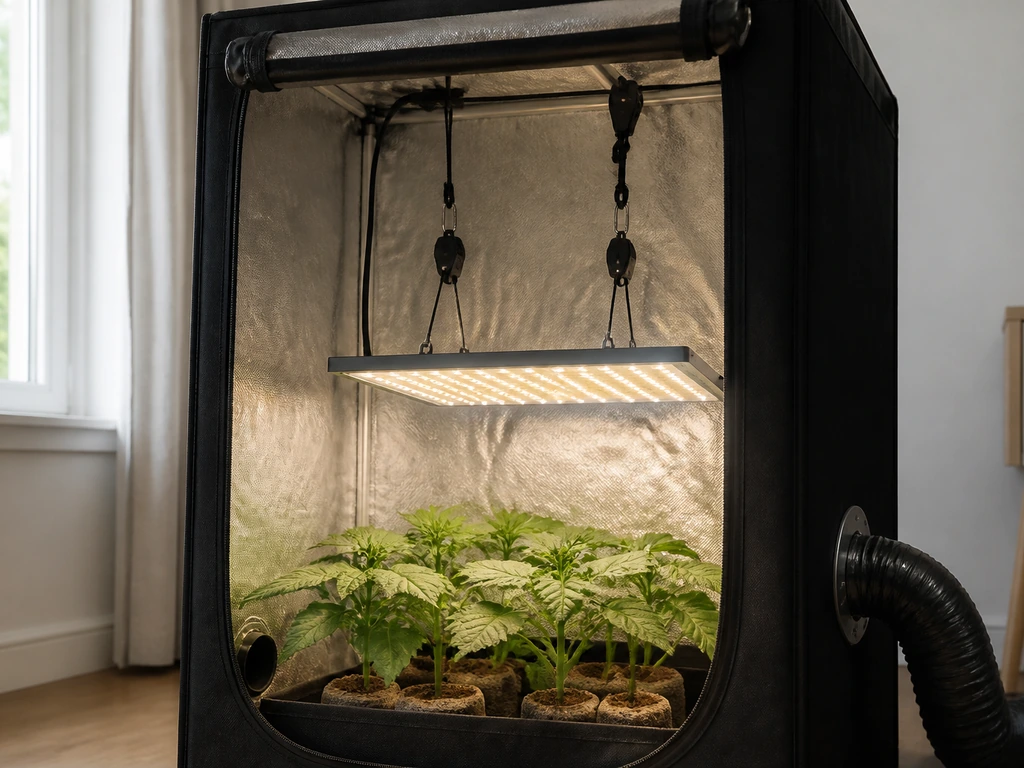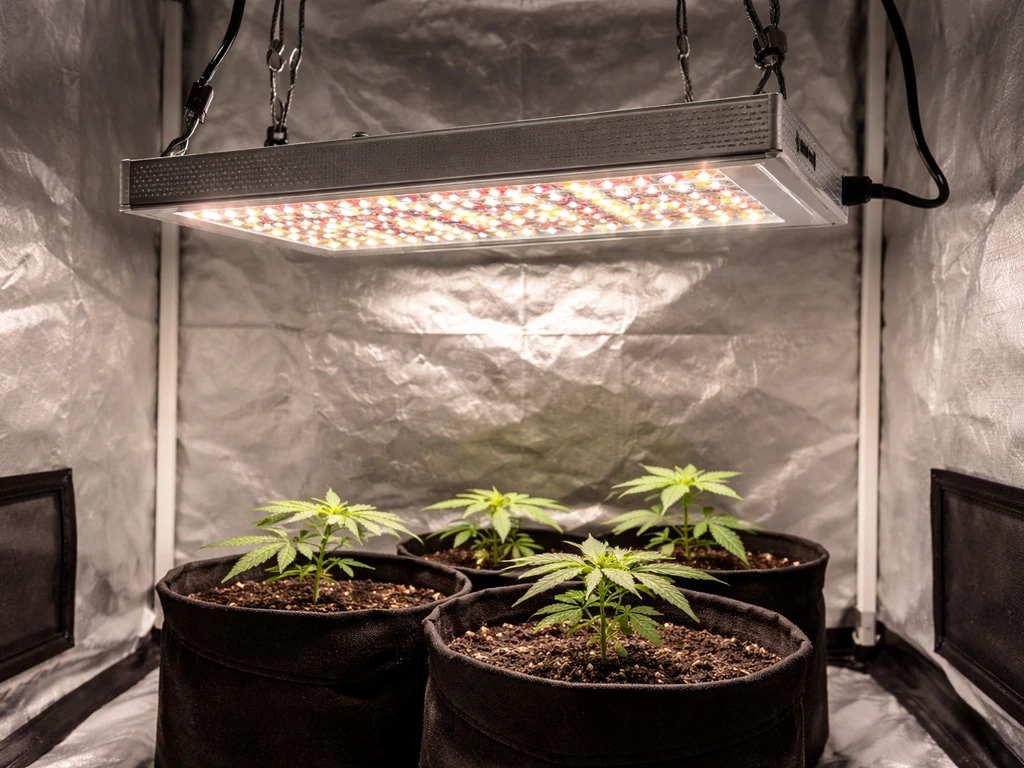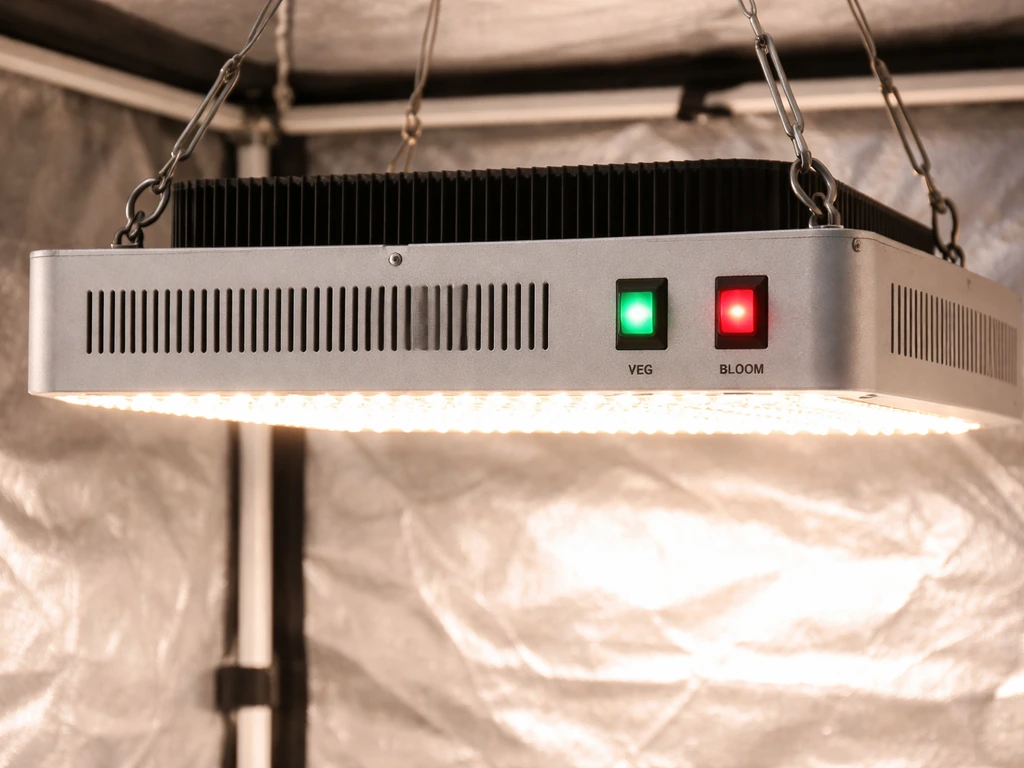
The Yehsence 1500W LED Grow Light is a budget-friendly, triple-chip LED panel aimed at hobbyist indoor growers who want a full-cycle light without spending serious money. It pulls 265 actual watts from the wall, covers a stated core footprint of 64"×64" and a maximum of 78"×78", and comes with a two-stage Veg/Bloom switch instead of a dial or app control. If you are shopping for a sub-$150 grow light and wondering whether this one can actually carry plants through veg and flower, the short answer is: it can, with realistic expectations about its output class and coverage. This review covers the 1500W-class SKU (part number 705111316728) specifically, the version with the Bloom and Veg Switch and Daisy Chained Design. That is the model you will most commonly encounter under the Yehsence name.
Yehsence Grow Lights Review: Best Model, Specs, Pros and Cons

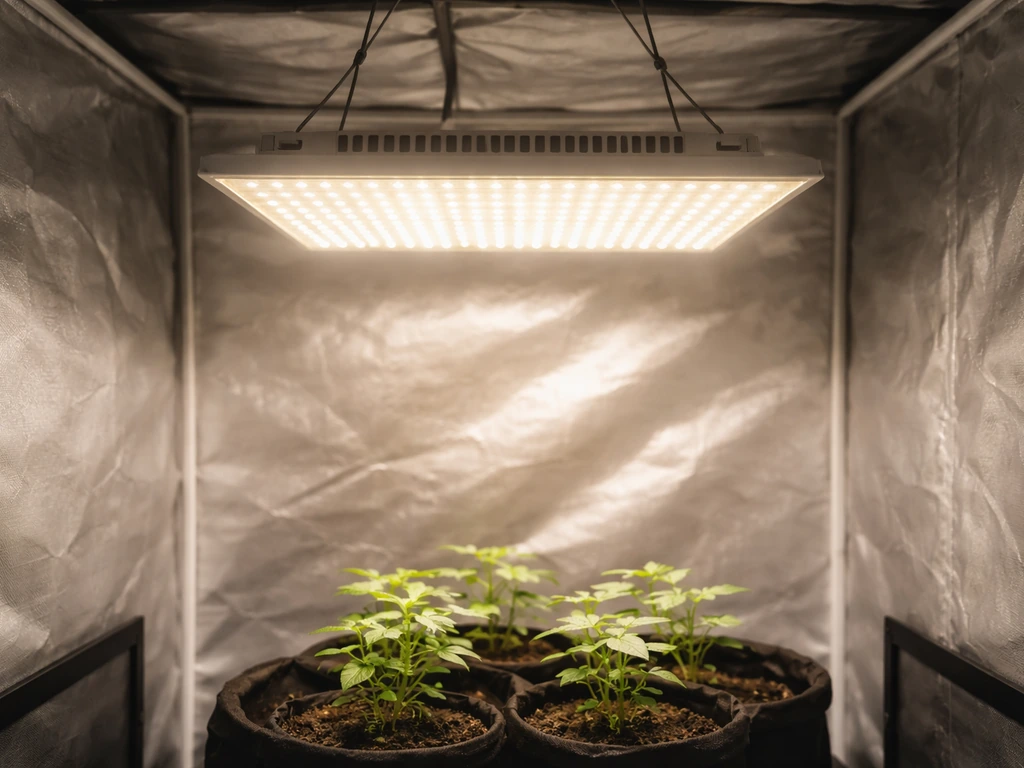
What Yehsence Makes and Which Model This Covers
Yehsence is a Chinese LED grow light manufacturer that sells several wattage tiers, including a 1000W and the 1500W unit reviewed here. The "1500W" label is a marketing equivalency claim, not the actual power draw, which we will get into shortly. Canopy Lumen discusses the “true wattage” concept and notes that an “LED 1500W” label is not the same as wall draw when actual-draw specs are missing blank" rel="noopener noreferrer">“1500W” label is a marketing equivalency claim. The 1500W SKU comes as a single panel and supports daisy-chaining, though Yehsence's own documentation recommends connecting no more than three units together. The light is intended for full-cycle use across seedlings, vegetative growth, and flowering, with the two-stage switch giving you some control over spectrum emphasis depending on growth stage. For a different angle on this specific panel, the yehsence 1500w led grow light review on this site goes deeper on the individual unit's output metrics if you want a straight product breakdown alongside this guide.
Key Specs in Plain English
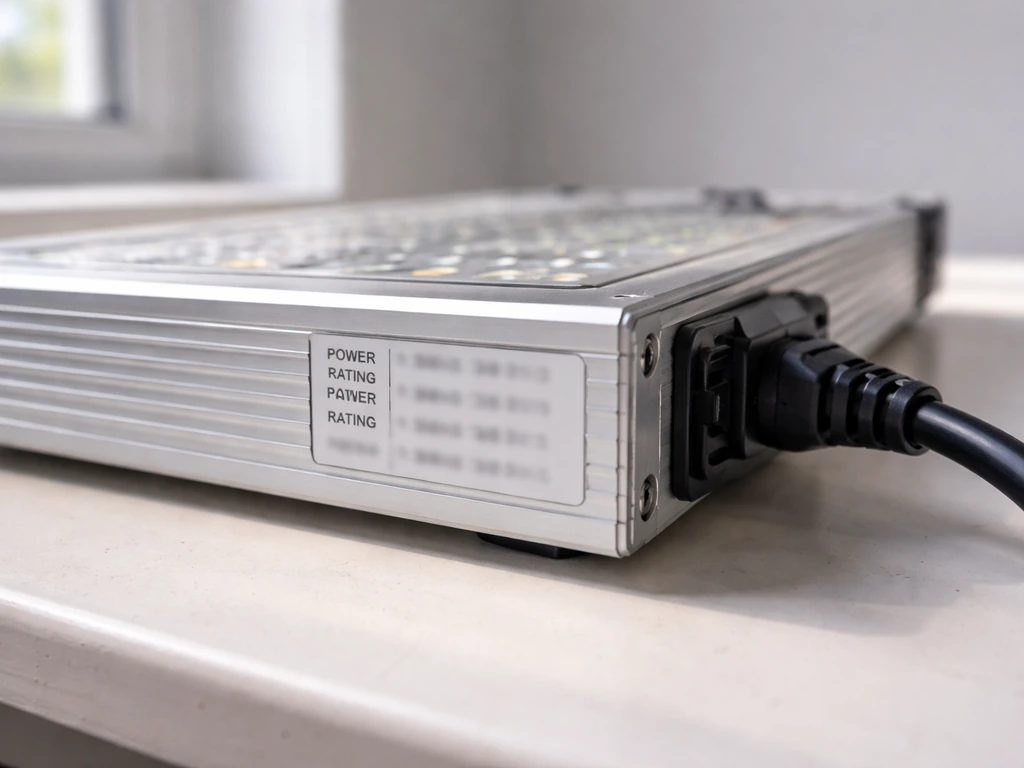
Understanding what you are actually buying with this light means cutting through the marketing wattage number immediately. Here is what the specs actually tell you.
| Spec | Yehsence 1500W Claim | What It Means in Practice |
|---|---|---|
| Marketed wattage | 1500W | Marketing equivalency, not wall draw |
| Actual power draw | 265W (manufacturer-stated and user-measured) | Closer to ~250-265W with both switches on |
| LED architecture | 100 x 15W triple-chip LEDs (3×5W per chip) | More LEDs at lower per-chip stress; heat spread out |
| Input voltage | AC 85-265V | Works on both US and international power |
| Coverage (core) | 64"×64" (~5.3ft × 5.3ft) | Realistic for veg at appropriate height |
| Coverage (maximum) | 78"×78" (~6.5ft × 6.5ft) | Peripheral; intensity drops toward edges |
| Best hanging height | 24"–48" | Lower for flowering, higher for seedlings/veg |
| Controls | Veg switch + Bloom switch | Two-stage; no continuous dimming or app |
| Cooling | Two fans + heat sink | Passive + active; runs warm but manageable |
| Warranty | 36-month warranty, 90-day money-back | Solid for the price tier |
The triple-chip LED design is worth pausing on. Each LED module is rated at 15W but is actually built from three 5W chips bonded together. The theory is that running three chips at lower individual stress reduces heat per chip and extends lifespan. It also allows the total array to deliver a broader light footprint than the same number of single-chip LEDs would. In practice, the 100-LED array delivering 265W of real draw lands this light in a similar class to other 200-300W true-watt LED panels, which is a useful reference point when you are comparing it to competitors.
Real-World Performance: Coverage, Uniformity, and Heat
In actual use, the Yehsence 1500W performs reasonably well for its price tier when expectations are calibrated to its true wattage class. The core coverage claim of 64"×64" is achievable for vegetative growth, where plants tolerate lower PPFD levels. For flowering, where you want higher light intensity at the canopy, pulling that coverage area down to something closer to a 4×4 footprint (48"×48") is more realistic and will give you meaningfully better results in the bloom zone.
Uniformity is one of the common weak points in blurple-adjacent panels like this one. The center of the coverage zone gets noticeably more intensity than the edges, which means plants at the periphery of a wide tent will grow slower and stretch more than plants directly under the panel. This is not unique to Yehsence, but it is more pronounced here than in bar-style LED fixtures that distribute light more evenly. If you are running a 4×4 tent, keeping plants in the central two-thirds of the footprint will give you more consistent growth.
Heat management is better than older single-chip blurple panels. The two cooling fans and aluminum heat sink keep the fixture from becoming dangerously hot, though you will feel noticeable warmth from the fans' exhaust. In a sealed or small tent with poor airflow, this can raise ambient temperature by a few degrees, so plan your ventilation accordingly. It is not a silent light: the fans are audible in a quiet room, comparable to a desktop computer under moderate load.
What Plants Actually Do Under This Light
Seedlings and Early Veg
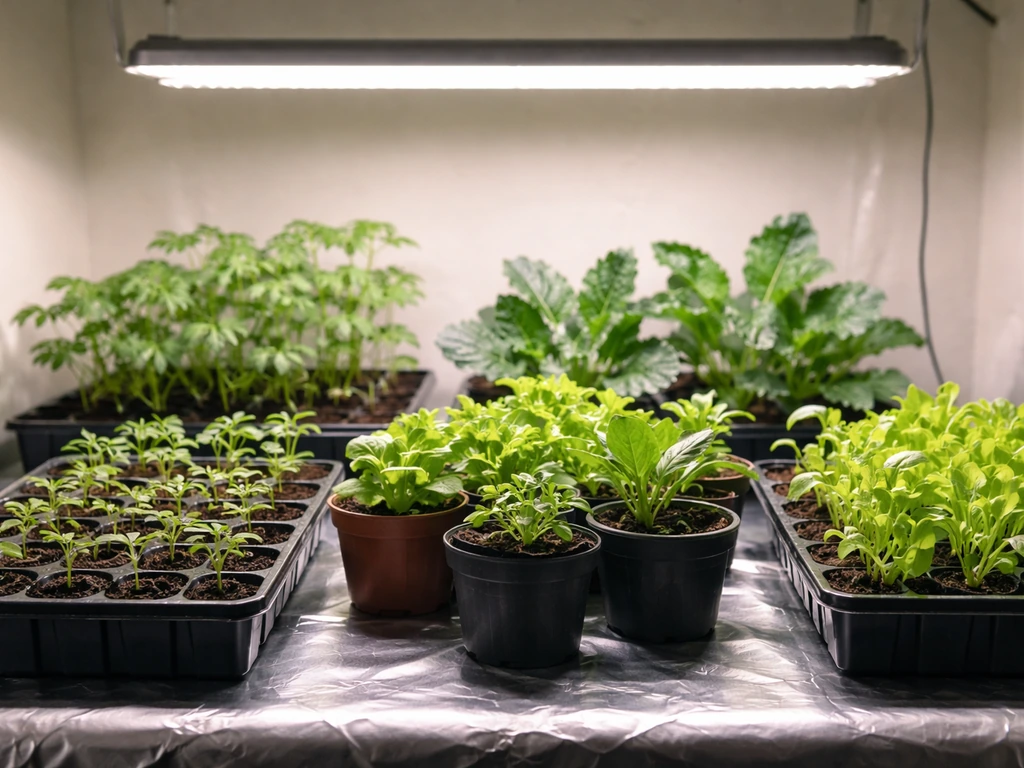
For seedlings, run only the Veg switch and hang the light at the higher end of the recommended range, around 36"–48". At that distance, intensity is low enough that you will not bleach tender seedlings, and the blue-weighted spectrum from the Veg switch supports compact, healthy early growth. Germination trays and propagation flats respond well here. This is genuinely one of the stronger use cases for this light.
Vegetative Growth
Veg performance is solid for herbs, leafy greens, and cannabis or tomato plants in the early-to-mid vegetative stage. Running both switches during mid-veg gives the plants a fuller spectrum and pushes growth noticeably faster than the Veg switch alone. Keep the light at 24"–36" for established veg plants. Node spacing looks normal, and leaf development is healthy at this stage without obvious deficiencies caused by light quality.
Flowering and Fruiting
This is where the Yehsence 1500W shows its limits most clearly. Flowering plants, especially high-demand crops like cannabis, tomatoes, or peppers, need higher PPFD values at the canopy than this light delivers across a wide area. You can get acceptable flowering results in a 3×3 footprint or smaller, with the light hung around 18"–24" and both switches on. Expect lighter, airier buds or fruit sets compared to what a true 400-600W quantum board would produce over the same area. For herbs and low-demand houseplants going through a flowering phase, the results are much more satisfying.
Setup, Mounting, and Daily Use
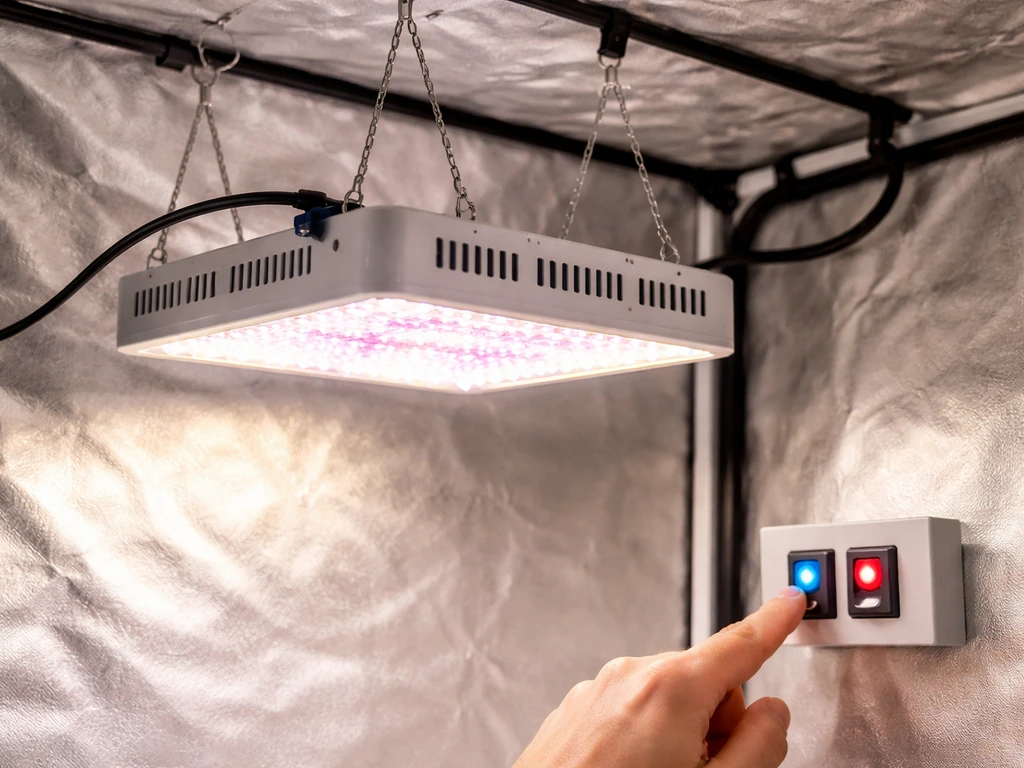
The Yehsence 1500W ships with hanging hardware and is straightforward to get into a tent. The panel itself is not lightweight: budget for the weight when choosing your hanging point or tent bar. Daisy-chaining is a useful feature if you are running multiple units across a longer grow space, though the three-unit maximum from Yehsence's own guidance is worth respecting to avoid overloading the chain.
The two-stage switch setup is simple but limiting. You flip the Veg switch during early growth, add the Bloom switch for flowering, and that is essentially the full extent of your control. There is no continuous dimmer, no scheduling timer built in (bring your own), and no app or remote. For growers who want that kind of precision, this light is not the right tool. For growers who want to plug it in, flip a switch, and walk away, the simplicity is actually a feature.
Day-to-day, the light is undemanding. The fans run continuously when the light is on, the heat output is manageable with basic tent ventilation, and the AC 85-265V input range means it handles power fluctuations without issue. If you are also considering simpler panel options from other brands, the honorsen grow light review covers a comparable budget-tier panel that takes a similar design approach and is worth reading side by side.
Value, Running Cost, and How Long It Lasts
Pricing on the Yehsence 1500W varies considerably depending on where you find it. One major storefront lists it at $129, while another has it at $270 for what appears to be the same unit. If you are paying above $150 for this light, you are overpaying relative to its competition in the 265W true-watt panel category. The sweet spot is the $100-$140 range, where it represents reasonable value.
At 265W actual draw, running this light for 18 hours a day (a common seedling/veg schedule) costs roughly 4.77 kWh per day. At a US average electricity rate of about $0.16 per kWh, that comes to around $0.76 per day or about $23 per month during full veg cycles. Drop to a 12-hour flowering schedule and you are looking at closer to $15-$16 per month. Those are manageable numbers for a hobbyist grower.
The 36-month warranty and 90-day money-back are genuinely solid terms for a light in this price bracket. Triple-chip LED arrays at lower per-chip stress do tend to have reasonable longevity, though the cooling fans are the most likely failure point over time. Budget LED panel fans typically show wear after 2-3 years of continuous use, and replacing them is possible but requires some technical comfort.
Pros, Cons, and Who Should Buy This
- Actual 265W draw is documented and consistent with manufacturer claims, a rarity in this marketing-watt tier
- Triple-chip LED design distributes heat across more chips, which helps longevity
- Daisy-chain capability is genuinely useful for multi-panel setups in longer spaces
- 36-month warranty provides meaningful protection for the investment
- AC 85-265V input handles variable power without additional equipment
- Simple Veg/Bloom switch system is easy for beginners to use correctly
- "1500W" label is misleading: true draw is 265W, and new buyers frequently over-estimate coverage based on the marketing number
- No continuous dimming: spectrum control is binary, not graduated
- Uneven light distribution favors the center of the coverage area; edge plants underperform
- Fan noise is noticeable in quiet environments
- Flowering performance over large areas is underwhelming compared to modern quantum bar LED fixtures at similar price points
- Reseller pricing varies wildly: the same unit can be found at over 2x the lowest available price
Buy this light if you are growing herbs, leafy greens, or low-to-medium-demand houseplants in a 3×3 to 4×4 space and want a simple, affordable full-cycle option with a good warranty. It also works well as a seedling and veg light even in larger grows, supplemented by higher-output fixtures at flowering. Skip it if your primary goal is maximizing flowering yield in cannabis, tomatoes, or other high-demand fruiting crops across a 4×4 or larger tent: a quantum board in the same price range will outperform it significantly in that use case.
Yehsence vs. the Competition: How It Stacks Up
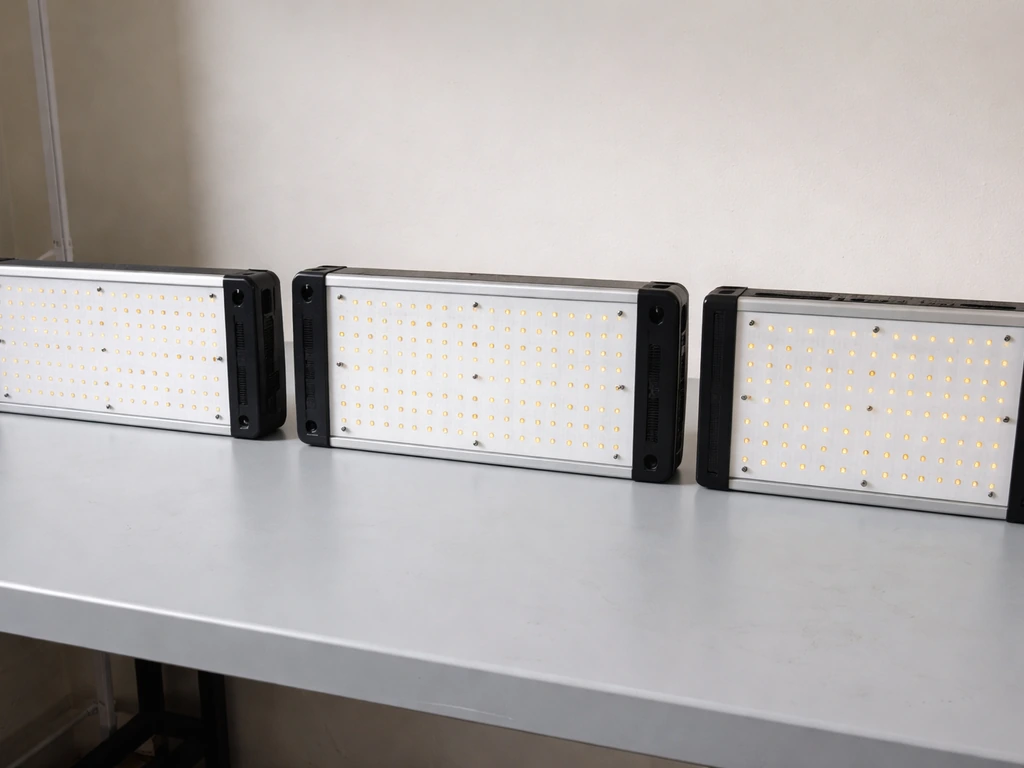
Context matters when evaluating budget LED panels. The Yehsence 1500W sits in a crowded market segment where several brands offer similar triple-chip or SMD-style panels with comparable actual wattages. Brands like Missyee and Koscheal play in the same space, and how they compare to Yehsence on specific metrics is useful to understand before committing.
| Brand/Model | Actual Draw | Controls | Coverage Claim | Warranty | Approx. Price |
|---|---|---|---|---|---|
| Yehsence 1500W | 265W | Veg/Bloom switch (2-stage) | 64"×64" core | 36 months | $129-$270 |
| Missyee comparable tier | Similar ~200-300W | Varies by model | Similar footprint | Varies | Similar range |
| Koscheal comparable tier | Similar ~200-300W | Varies by model | Similar footprint | Varies | Similar range |
| Quantum bar LED (same price tier) | ~200-300W | Dimmer knob or app | 3×3 to 4×4 optimized | Typically 3-5 years | $120-$200 |
For the Missyee side of this comparison, the missyee grow lights review on this site is a useful read if you are deciding between the two brands at a similar price point. Similarly, if you are drawn to Koscheal's offering, checking the koscheal grow light review will give you a direct comparison for the same shopper profile. The core takeaway from any of these comparisons is that the technology generation matters more than the brand: a modern quantum board or bar-style LED at 250W of true draw will generally outperform any triple-chip panel at the same wattage because of more efficient driver technology and better light distribution geometry.
If you are open to stepping up in quality and budget, the kessil grow light review shows what a more premium fixture looks like in practice, and it is a useful reference for understanding what you are trading away by staying in the sub-$150 tier. On the other end, if you are comparing against other straightforward panel designs at a similar price, the sayhon grow light review covers another panel in this competitive bracket that is worth considering.
Height, Spacing, and Whether You Need More Light
Getting the hanging height right with the Yehsence 1500W is more important than it is with more powerful lights, because the intensity range is narrower. Follow these guidelines based on growth stage:
- Seedlings and clones: 36"–48" from the canopy, Veg switch only. Watch for any upward stretching (too far) or bleaching/curling (too close).
- Vegetative growth (established plants): 24"–36" from the canopy, both switches on or Veg switch only depending on growth rate.
- Flowering: 18"–24" from the canopy, both switches on. This is the minimum recommended distance to protect plants and the maximum useful distance for adequate flowering intensity.
- Seedling trays or propagation: 40"–48" is safe and effective; drop to 30" once cotyledons are fully open and first true leaves appear.
For spacing multiple Yehsence 1500W units, overlap the coverage zones by about 20-30% to reduce the intensity drop-off between panels. In a 4×8 tent, two units placed approximately 36"–40" apart center-to-center will give more even coverage than two units at opposite ends of the space.
The question of supplemental light comes down to what you are growing. For herbs, greens, and low-demand houseplants in a 4×4 or smaller space, one Yehsence 1500W is sufficient. For flowering cannabis, tomatoes, or peppers in a 4×4, you will get noticeably better results adding a second unit or pairing the Yehsence panel with a small quantum bar to fill in the red spectrum and boost canopy intensity. If supplemental lighting feels complicated, it may be worth considering a higher-output single fixture from the start rather than building a multi-light patchwork setup.
Finally, if your grow space or plant goals are evolving and you want to see what a slightly different design philosophy looks like at a comparable price, the sayhon grow light review and the broader budget LED panel landscape both point toward the same conclusion: the Yehsence 1500W is a competent, honest-performing entry-level light as long as you buy it at the right price and match your expectations to its actual 265W output class rather than its marketing name.
FAQ
Can the Yehsence 1500W really carry plants through both veg and flowering, or is it mostly a veg light?
Yes, but only if you run it in the right footprint and height. For flowering with this 265W-class panel, expect more manageable results in a 3×3 or smaller, or be prepared for smaller yields and airier buds in a full 4×4. In a 4×4, the fastest way to improve outcomes is adding a second fixture or pairing with a small supplemental light at canopy height.
What’s the biggest mistake people make when choosing the Yehsence 1500W based on the marketing number?
A key risk is buying it for the “1500W” label and then under-lighting the canopy. Use the real draw reference (265W) to judge whether your tent size matches the light’s likely usable PPFD range. If you plan to flower in a larger tent than 4×4, budget for extra fixtures rather than relying on distance alone.
How should I use the Veg/Bloom switch to avoid over-lighting or under-lighting?
The two-stage switch is useful, but it is not the same as true dimming. You generally get best control by switching Veg for propagation and early growth, then turning on Bloom for flowering once plants are established. If you need to fine-tune intensity week to week, you will likely have to manage height changes or add external dimming controls via your timer or dimmable driver (if compatible), since the light itself does not offer a continuous dimmer.
What distance should I start with for seedlings if my tent is very reflective or my plants are sensitive?
For seedlings, the article’s height guidance (about 36 to 48 inches) helps avoid bleaching, but distance still depends on your grow space reflectivity and your tent’s airflow. If your canopy is close to reflective walls, you may get higher effective intensity, so start at the higher end of the recommended hanging height and then lower gradually after you confirm plant response.
What should I do if plants at the edges of the tent grow slower with this panel?
This light has a known uniformity weakness for wide coverage, meaning edge plants will often lag. If you see slower peripheral growth, a practical fix is to keep plants within the central portion of the footprint, or reposition taller plants toward the center while using training to spread canopy evenly. Rotating pots weekly can also help even out the center-to-edge intensity differences.
Is daisy-chaining multiple Yehsence 1500W panels safe, and what should I watch for?
Daisy-chaining is supported, but the practical edge case is overloading the chain beyond the manufacturer’s maximum. Stick to Yehsence’s stated cap (three units) and ensure your wiring and extension cords are properly rated for the total amperage and distance. If you have a long run, add slack for strain relief and avoid using thin, unverified extension cords.
Does the Yehsence 1500W support timers or automation so I can schedule veg and bloom?
No, it does not include scheduling or smart controls. The most reliable approach is using a plug-in timer or controller you already trust, then set the Veg and Bloom switches manually when you change growth stages. If you want consistent daily light cycles, ensure your timer and any “light on” delays are aligned with your switch position changes.
How loud are the fans in real life, and can the heat build-up be a problem?
Yes, fan noise can be noticeable in quiet rooms, especially at night when ambient background noise is low. If noise is a concern, consider keeping the driver and light in a ventilated but acoustically managed space, or verify that your exhaust fan and ducting do not add additional rattles. Also plan airflow so the exhaust warmth does not build up in a poorly ventilated tent.
If I want better results in a 4×4 flowering tent, should I add a second Yehsence panel or switch to a different type of light?
In a 4×4 flower plan, the most cost-effective upgrades are usually either adding a second Yehsence unit or supplementing with a higher-intensity bar or quantum-style light. The article’s point is to avoid expecting a single triple-chip panel to match a true 400 to 600W class performance over the same area. If you want one simple fixture instead of patchwork, stepping up to a higher-output unit from the start will generally simplify canopy management.
What’s the most likely part to fail over time, and how can I extend the lifespan?
Expect fan wear to be your highest-likelihood failure point over years of continuous use. Since this light is designed for continuous fan operation while powered, treat it like a consumable-support system: plan for periodic cleaning of intake and heat-sink fins, and keep humidity and dust controlled. If you run it 18+ hours daily, you may need earlier fan replacement than the warranty duration implies.