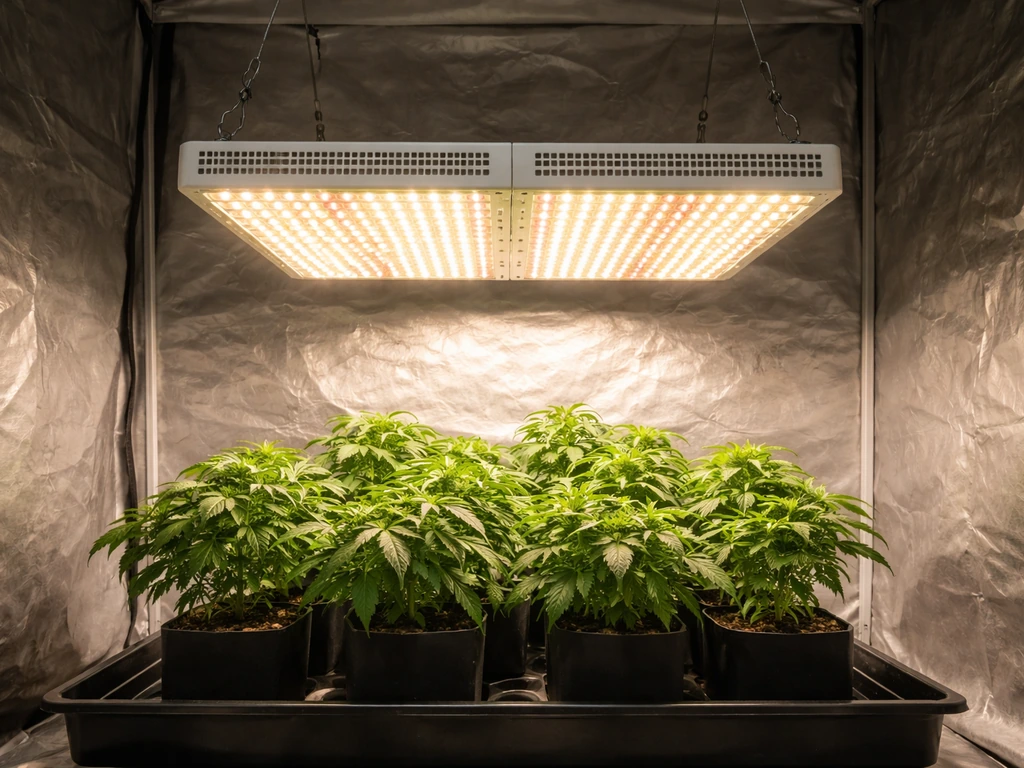
Missyee is primarily a stage and party lighting brand, not a horticultural grow light manufacturer. As of mid-2026, their official product lineup centers on RGB DJ and event lights, and there is no clearly documented, model-numbered grow light line sold under the Missyee name. If you searched for 'Missyee grow lights' expecting to find a dedicated indoor gardening product with PPFD specs, dimming modes, and coverage charts, you are likely looking at a misattributed listing, a rebranded unit, or a product that has since been discontinued. That matters a lot before you spend any money.
Missyee Grow Lights Review: Which Models to Buy in 2026

Marcus Caldwell
2 May 2026
Quick verdict: who Missyee grow lights are best for
Given the brand's unclear horticultural identity, Missyee grow lights are best suited for casual, low-stakes growers: someone starting a few herb seedlings on a windowsill, or experimenting with a small propagation tray who just needs any supplemental light source. If that's you and you already own one, it can work in a pinch. But if you are about to buy, there is almost no reason to choose this brand over established grow light manufacturers who publish real PPFD data, offer proven warranty support, and have a track record with indoor gardeners. Experienced growers chasing vegetative density or heavy flower yields should skip Missyee entirely and look at purpose-built alternatives.
What's in the box: specs, dimensions, coverage, and setup
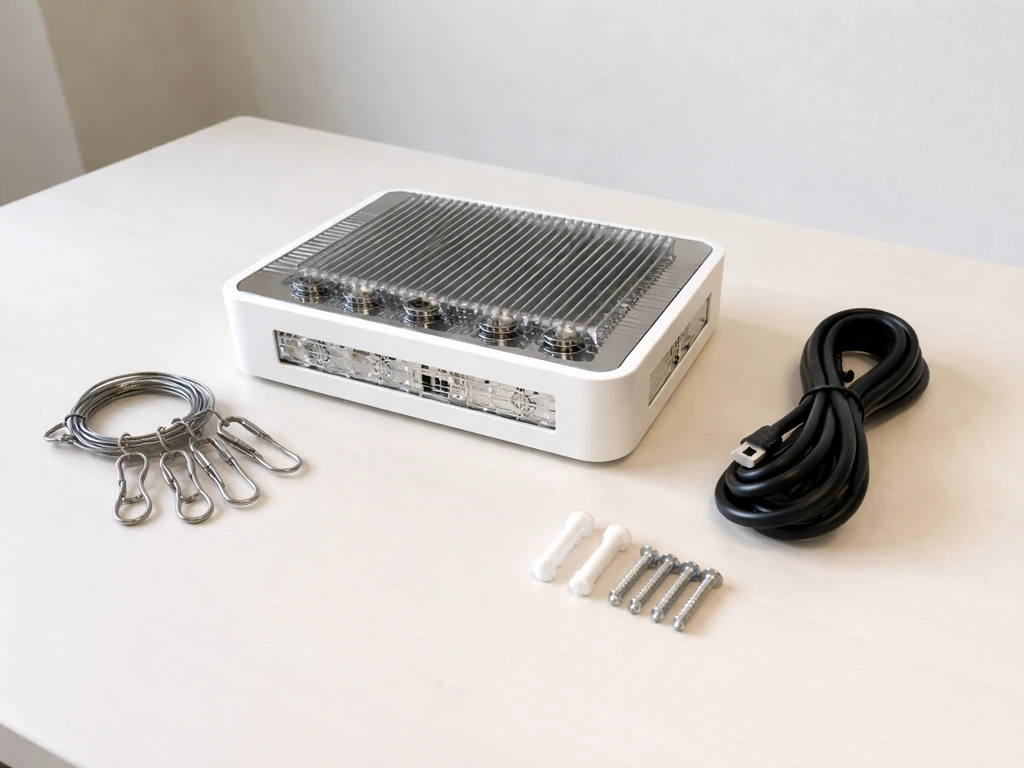
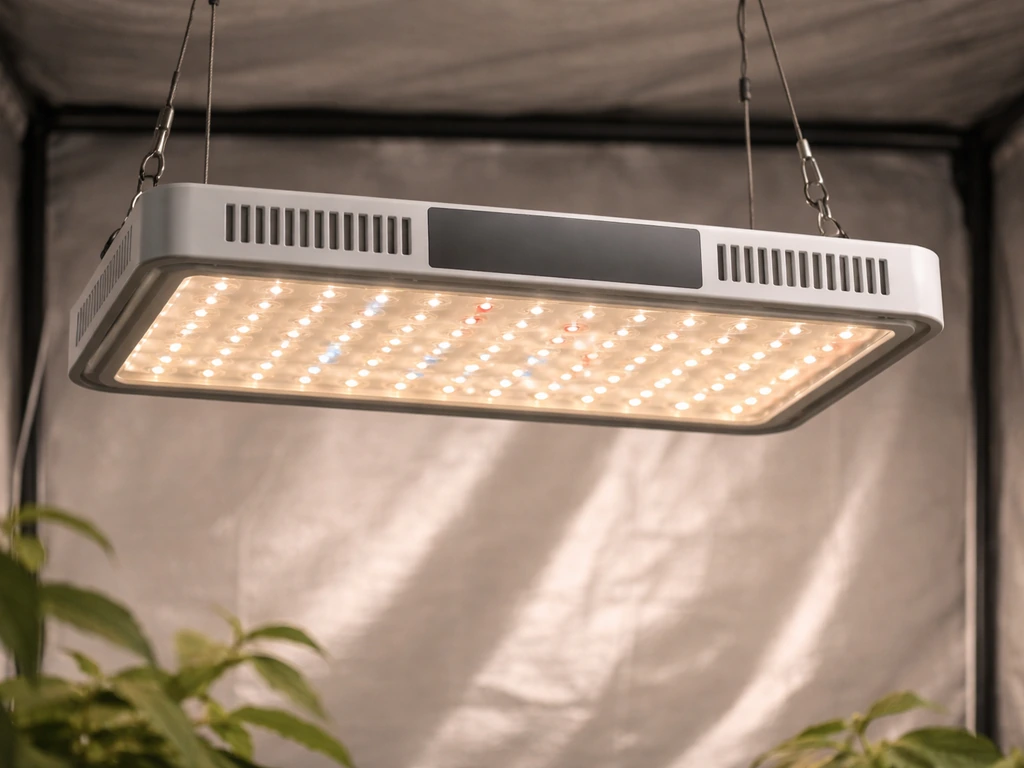
Because Missyee does not publish a dedicated grow light product page or model numbers, exact specifications vary by the specific unit you may have seen on Amazon or third-party marketplaces. Units sold under the Missyee name in the grow light category tend to be small-panel RGB or blurple-style LED bars in the 10W to 45W actual draw range, with physical dimensions typically around 10 to 14 inches long. Coverage claims on the packaging often read '2x2 ft vegetative, 1.5x1.5 ft flowering,' but these figures reflect marketing estimates, not measured PPFD targets.
Setup is straightforward: most units come with a hanging kit, a basic power cord, and in some cases a short daisy-chain cable if you are stacking multiple panels. There is no app, no Bluetooth, and no advanced controller. You plug it in, hang it, and set a manual timer if you own one separately. That simplicity is the one genuine upside for true beginners who are intimidated by more complex systems.
Light spectrum, modes, and what the claims actually mean
Missyee-branded grow light units on the market typically use a mixed-diode panel combining red (around 630-660nm) and blue (around 440-460nm) LEDs, the classic 'blurple' combination. Some models add a small number of white or UV diodes. The brand may advertise 'full spectrum' in the product title, but a true full-spectrum LED produces a continuous, white-light-like output that covers green and far-red wavelengths plants actually use. A mostly-red-and-blue panel is not full spectrum in any horticultural sense, even if it technically covers both ends of the visible range.
Dimming, if available at all on these units, is usually a single-button toggle between two or three brightness levels rather than a smooth 0-100% dial. There are no separate veg and bloom mode switches on most models. What this means practically: you cannot dial in optimal light intensity for different plant stages without simply raising or lowering the fixture manually.
Claimed vs. measured performance
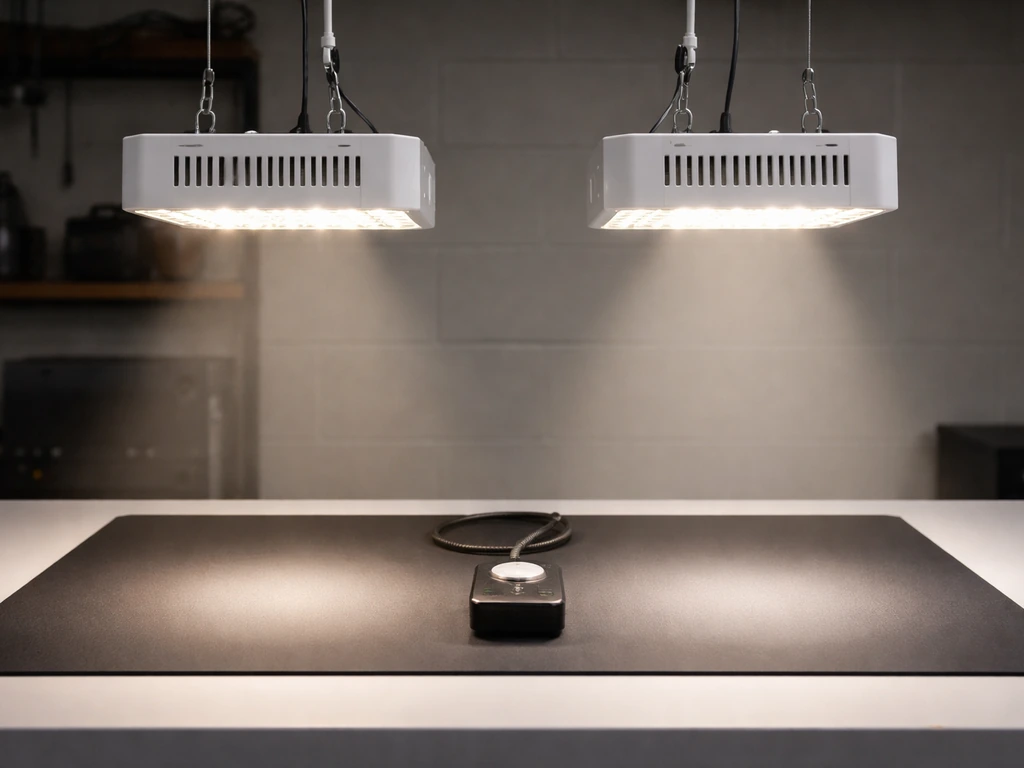
No independent PPFD (photosynthetic photon flux density) data exists for Missyee grow lights in published horticultural testing. The brand does not publish PAR maps, efficacy ratings (micromoles per joule), or light distribution charts. For context: seedlings need roughly 100-300 PPFD, vegetative plants need 400-600 PPFD, and flowering plants need 600-900+ PPFD for meaningful yield. A 30W actual-draw blurple panel at 18 inches suspension is unlikely to exceed 200-250 PPFD at the center of a 1x1 ft footprint, and intensity drops sharply toward the edges. That is fine for seedlings, inadequate for flowering.
Real-world results by crop stage
Seedlings and propagation
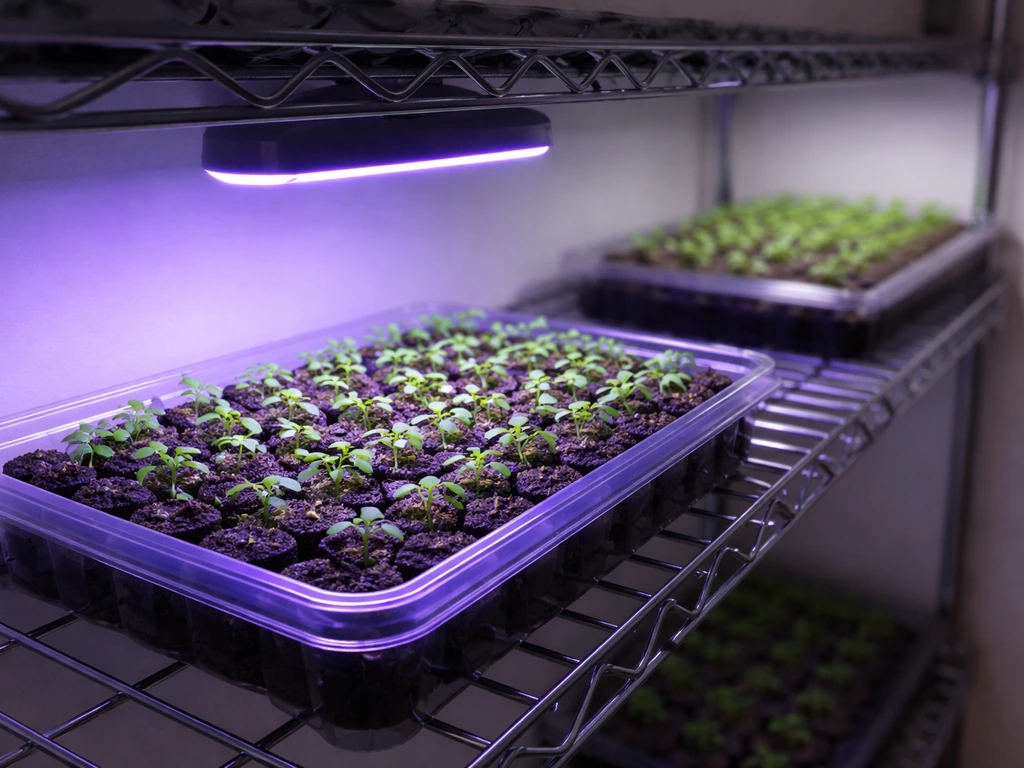
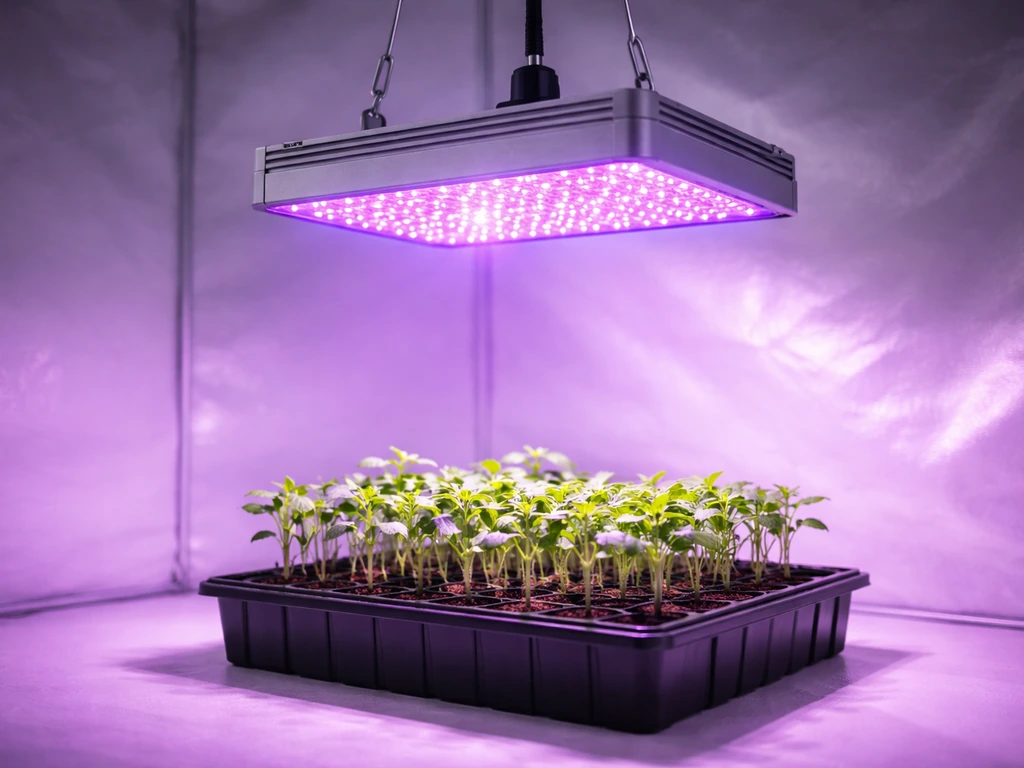
This is where a low-wattage Missyee panel is least likely to disappoint. Seedlings are forgiving: they need modest, consistent light rather than high PPFD. Running the light 16-18 hours per day at 6-10 inches above a seed tray can germinate herbs, lettuce starts, and tomato seedlings reasonably well. Do not expect zero stretch, especially near the edges of the panel's footprint, but center-positioned seedlings under a fresh unit should establish without major issues.
Vegetative growth
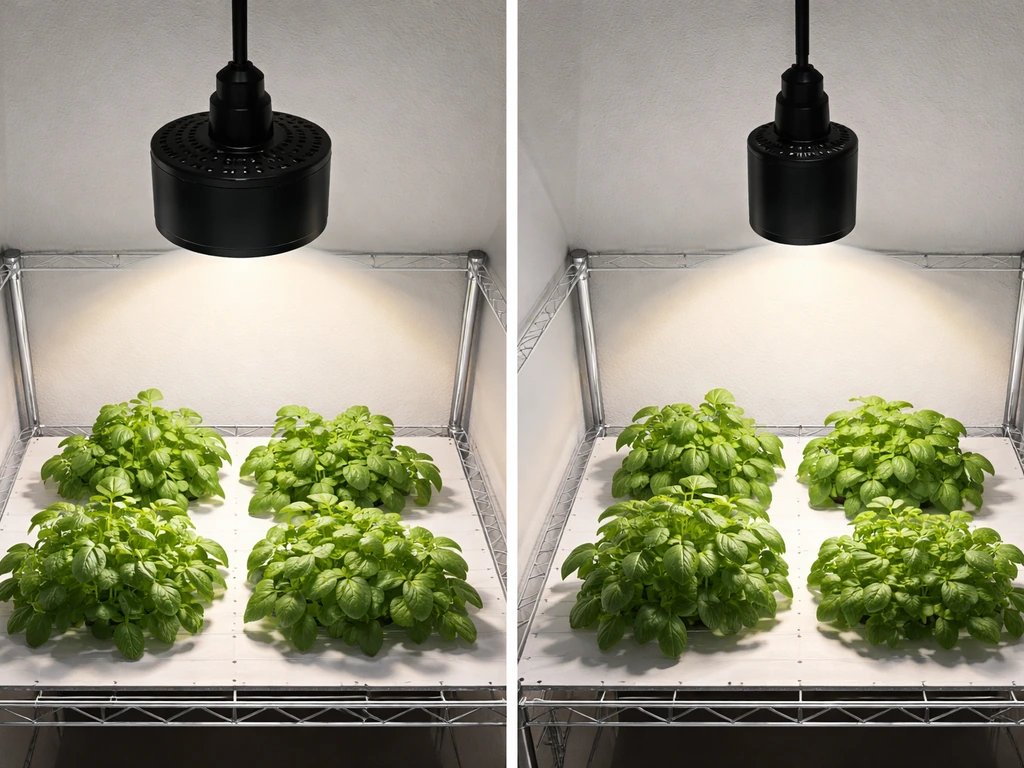
Results drop off noticeably in veg. Leafy greens like lettuce and spinach can complete a full growth cycle under a small blurple panel if the plant count is low (four to six heads in a tight footprint) and the canopy stays close to the light. Larger, faster-growing veg crops like basil, peppers, or cannabis will show elongated internodes, pale color, and slow canopy development within two to three weeks. That is light stress from insufficient intensity, not a nutrient problem. Raising the light to improve canopy coverage only makes the intensity problem worse.
Flowering and fruiting
Skip it for flowering if yield matters to you. Fruiting crops (tomatoes, peppers, cannabis) need sustained high PPFD across the full canopy during the bloom phase. A low-wattage blurple panel cannot deliver that, and the red-heavy spectrum, while theoretically useful for flowering, cannot compensate for raw photon deficiency. You will get flowers, but set and density will be disappointing compared to what a proper 100W+ quantum board produces in the same space.
Power draw, heat, build quality, and safety
Actual power consumption on Missyee grow light units is low by default: a 30-45W draw draws less than 0.5 kWh over a 12-hour photoperiod, so electricity cost is negligible. Heat output is also low, which is genuinely useful in tight, enclosed spaces like a small propagation dome or cabinet shelf. The panels do not require active cooling fans, which means quieter operation.
Build quality is the weak point. The housing is typically thin plastic with exposed diode boards and minimal heat-dissipation finning. The hanging hardware (usually thin wire or a basic clip) feels lightweight. Internal driver quality is unknown because no teardowns or certifications are publicly documented for grow-specific Missyee units.
On safety: Missyee lists standard Amazon FBA shipping and a 12-month warranty with email support at support@missyee. com, but there is no publicly available UL, ETL, or CE certification data specific to their grow light SKUs.
UL Solutions lists common lighting safety and certification standards for lighting equipment, such as UL 1598 for luminaires and UL 8750 for LED equipment, which helps explain how certification mappings are typically grounded in defined standard test requirements no publicly available UL, ETL, or CE certification data specific to their grow light SKUs. For a light running 12-18 hours daily over plants and potentially over soil with irrigation, certification matters more than most buyers realize.
How Missyee stacks up against real alternatives
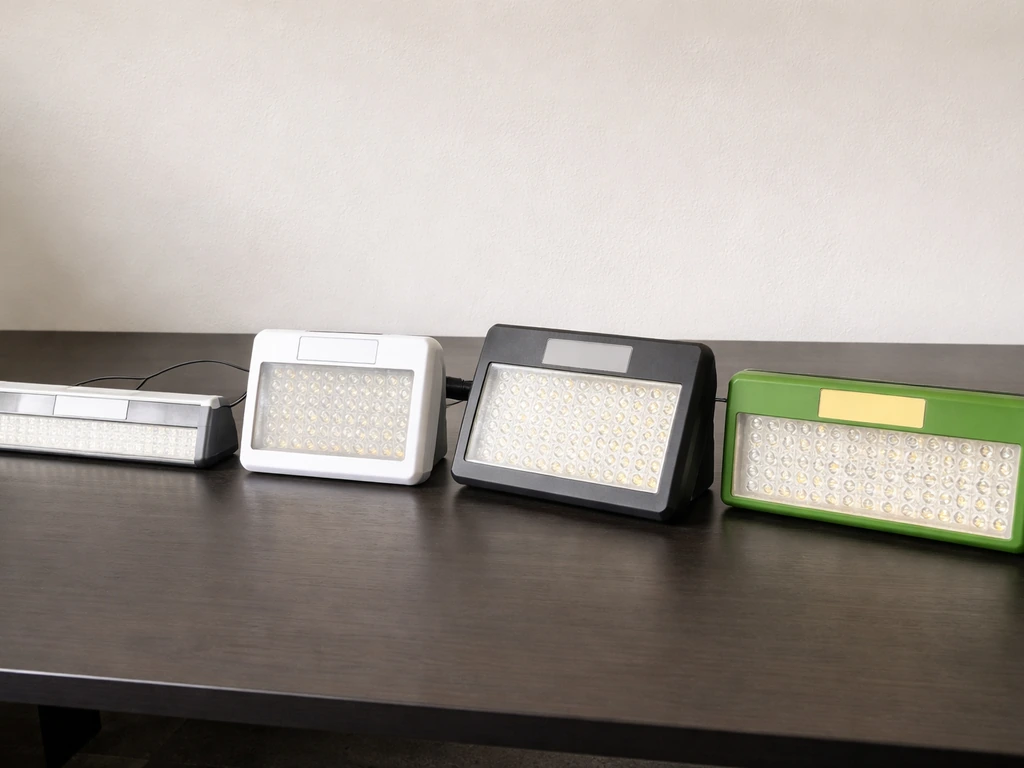
To put Missyee in context, here is how it compares against more established options you will find at similar or slightly higher price points. Brands like Yehsence, Koscheal, and Sayhon all operate in the budget-to-mid-range grow light segment with more documented horticultural pedigrees, published specs, and wider user communities. At the premium end, Kessil produces highly respected, measurably efficient fixtures used by serious cultivators. Even within the budget tier, purpose-built grow light brands consistently outperform ambiguous rebrands.
| Brand / Unit | Actual Wattage | Spectrum Type | PPFD Data Published | Warranty | Best For |
|---|---|---|---|---|---|
| Missyee (grow light SKUs) | 10-45W est. | Blurple / mixed RGB | No | 12 months | Seedlings only, casual use |
| Yehsence budget panel | 45-150W | Blurple / white hybrid | Partial | 12-24 months | Veg and light flowering |
| Koscheal quantum board | 100-200W | Full spectrum white | Yes (some models) | 24 months | Veg through flower |
| Sayhon panel | 50-100W | Full spectrum white | Partial | 12 months | Seedling to veg |
| Kessil flagship | 90-360W | Tunable full spectrum | Yes | 24 months | All stages, serious grows |
| Honorsen bar light | 100-200W | Full spectrum white | Partial | 12-24 months | Veg and flower, medium tents |
The pattern is clear. Even budget-tier alternatives from Yehsence or Sayhon come with more documented specs and a clearer horticultural focus. Sayhon grow lights are more likely to include clearer grow specifications and a more horticulture-focused design. If you are specifically considering a Yehsence 1500W LED grow light, make sure you check the published PPFD, coverage, and certification details before buying Even budget-tier alternatives from Yehsence or Sayhon.
Koscheal and Honorsen move further up the value chain with quantum board technology and better efficacy per watt. And Kessil sits at the top for growers who want measurable, dialed-in performance and do not mind paying for it. Missyee simply does not have a competitive position in any of those tiers for grow light applications.
Value for money: price, warranty, and running costs
Missyee grow light units typically sell between $15 and $40 on Amazon, which makes them look attractive at first glance. But value is never just about sticker price. At $30, you are buying a light with unverified PPFD output, no published PAR map, no certification data, and a brand whose core business is party lighting. For $10-20 more, you can buy a Sayhon or entry-level Koscheal panel that has at least some horticultural spec documentation and a user community you can learn from.
Running costs are low because wattage is low: a 30W unit running 16 hours daily at $0.13/kWh costs roughly $2.25 per month. That is not a meaningful advantage because the light it produces at that wattage is insufficient for most serious growing tasks anyway. Spending twice as much on a proper 100W quantum board and paying $7-8/month in electricity gives you a light that actually finishes a crop. For a comparison point on budget grow light value, see this [koscheal grow light review](/small-watt-grow-lights/koscheal-grow-light-review) covering real-world performance and more documented specs than Missyee.
The 12-month warranty sounds reasonable, but warranty value depends on who honors it. Missyee's customer support email is listed, and the brand ships via Amazon FBA, so returns through Amazon's standard process are likely your most reliable recourse. Direct warranty claims through the brand itself are harder to evaluate without independent reports from growers who have tested that process.
Buy or skip: the direct answer
Skip it if you are buying new and have any other option at or near the same price. The lack of published horticultural specs, uncertain certification status, and the brand's primary focus on stage lighting make this a poor choice for any grower who wants predictable results. UL’s code-authorities content explains that the NEC requires lighting equipment identified for horticultural use to be Listed. The low price does not compensate for the performance and transparency gaps compared to purpose-built grow light brands.
Buy it (or keep it if you already own one) only in these narrow cases: you need the cheapest possible light for a seed tray or propagation dome with no ambitions beyond germination, you already have it and want to get some utility out of it before upgrading, or you are doing a school science project and need any light source with a plug. In those situations it will not hurt anything. Just do not expect it to take a cannabis plant from seed to harvest or push a pepper plant into heavy fruit set.
What to check before buying any budget grow light
- Look for a published PPFD or PAR map, ideally from an independent test rather than the brand's own marketing sheet.
- Check the actual wattage draw (not 'equivalent' wattage) and calculate whether it is enough for your canopy size.
- Verify ETL, UL, or CE certification, especially for lights running long photoperiods near water and soil.
- Search for the brand name plus 'grow light' on gardening forums to find real user reports, not just Amazon reviews.
- Confirm the coverage footprint matches your grow space at the correct hanging height for each plant stage.
- Calculate your total 12-month electricity cost and compare it to the light's purchase price to understand true cost of ownership.
FAQ
How can I tell if a specific Missyee listing is actually suitable for plants, not just stage lighting?
Look for any published horticultural metrics (PPFD at distance, PAR maps, or efficacy in micromoles per joule). If the listing only shows wattage, a vague “full spectrum” title, and marketing coverage claims without measured light output, treat it as a low-confidence fit for anything beyond seedlings and expect weak edge performance.
What PPFD should I target if I plan to grow herbs from seed and then keep them growing under the same light?
Use a tiered expectation. Seedling-style targets are roughly 100 to 300 PPFD, but once you move into true vegetative growth you are usually in the 400 to 600 PPFD range. With Missyee-style blurple panels, the practical risk is that the light may manage germination but will slow canopy development after the first few weeks.
Can I force a Missyee light to work for flowering by raising wattage or lowering the height?
You cannot reliably fix it by height alone because intensity drops off quickly toward the edges and “closer” can also mean uneven coverage and heat-related stress on seedlings. The bigger limitation is photon output, so for meaningful bloom results you need a fixture type with documented PPFD and broad canopy coverage, not just a smaller blurple panel.
What are the most common mistakes people make with blurple or red-blue panels like these?
The usual mistake is buying for a larger footprint than the light can truly cover. Another common error is assuming “full spectrum” in the title means horticultural full spectrum, when it often just means red-blue plus a few extra diodes. Finally, people expect smooth dimming and stage-specific modes, but many of these units only offer stepped brightness.
If I only need germination, how high should I hang a Missyee panel and how long should I run it?
For germination-only use, start with a close, consistent setup, typically within about 6 to 10 inches over the tray, then adjust if you see severe stretching or bleaching. Run around 16 to 18 hours per day. The goal is stable light for emergence, not maximizing density at the edges of the footprint.
Will a Missyee grow light be safe to use near wet soil or in a propagation dome?
It can be safer if it is kept dry and the wiring and socket are protected from splashes, but the key point is that you should not assume grow-specific electrical certification for the exact SKU. If you use it in a humid cabinet, prioritize drip protection and keep the driver area away from condensation, since thin housing and minimal heat shielding can be a concern.
Do Missyee grow lights ever include UV or white diodes, and does that make them more effective?
Some listings may add a small number of white or UV diodes, but effectiveness still hinges on total photon delivery to the canopy. Extra diodes do not automatically raise PPFD where you need it, especially across the full coverage area, so you should judge by measured output or credible horticultural specs rather than diode labels.
What should I check about warranties and returns before buying if the brand’s grow-light identity is unclear?
Treat Amazon returns as your primary safety net. Before purchase, verify that the listing is eligible for returns under Amazon’s policy, confirm the warranty terms apply to that exact model number, and note whether warranty support requires shipping the unit back. If certification or test data are missing, it is smarter to rely on return eligibility rather than expecting rapid manufacturer troubleshooting.
How do I estimate electricity cost correctly for a small Missyee panel?
Use actual draw, not the marketing “equivalent” numbers if present. If the fixture is around 30 to 45W, then on a 12-hour photoperiod it is roughly 0.36 to 0.54 kWh per day. Multiply by your local $/kWh rate, and remember that electricity is usually not the deciding factor here, light performance is.
Is there any scenario where keeping a Missyee grow light longer than seedlings makes sense?
It can make sense for short, low-stakes cycles where you do not need high density or fast growth, for example keeping a small number of starts compact close to the panel. If you need quicker vegetative canopy expansion or any meaningful bloom yield, plan to upgrade once you outgrow the seedling stage.