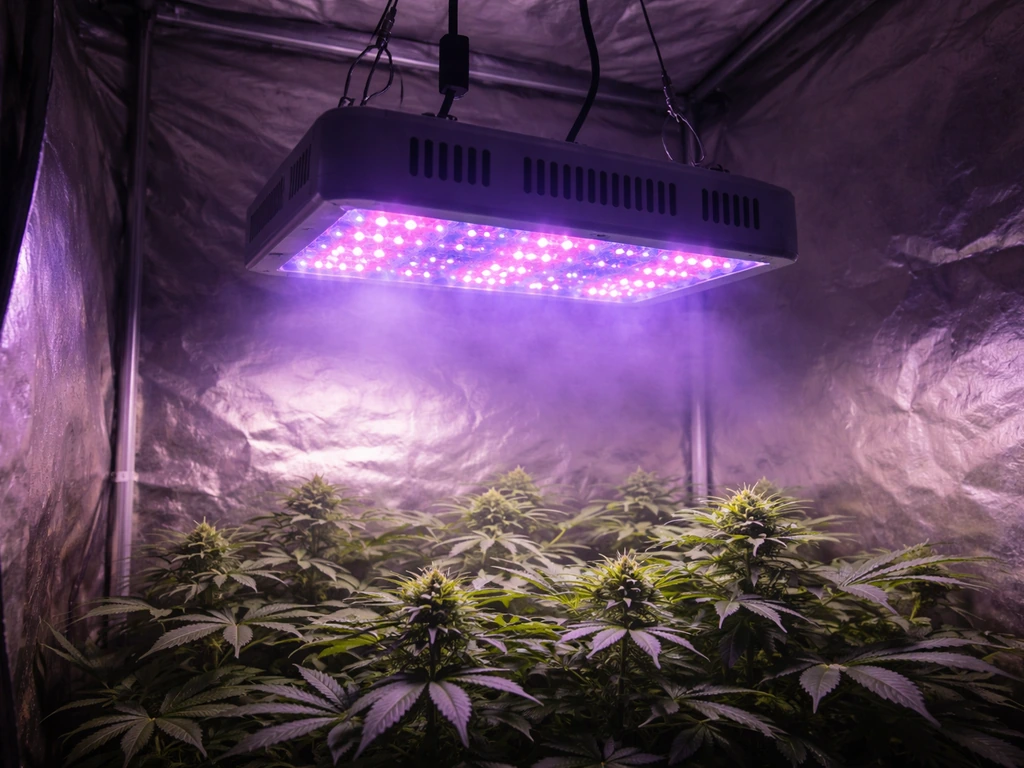
The Yehsence 1500W LED grow light is a blurple-style panel that draws about 265 actual watts, covers a realistic 3x3 to 4x4 ft flowering footprint, and costs well under $100. If you are also considering the Sayhon grow light, this sayhon grow light review can help you compare performance and value before you buy. It will grow plants, but it is not a 1500W light in any meaningful sense, it lacks the efficiency of modern white-spectrum LEDs, and the coverage claims on the box are optimistic. If you already own one, you can get decent results with the right setup. If you are shopping right now, there are better options in the same price range.
Yehsence 1500W LED Grow Light Review: Worth Buying?

Marcus Caldwell
16 May 2026
Quick verdict and who this light is actually for
The Yehsence 1500W is a budget entry-level panel aimed at hobbyists who want a low-cost way to get started indoors. It is fine for seedlings and early veg in a 2x2 to 3x3 tent. For full-cycle grows including flowering, it can work in a 3x3 but expect modest yields compared to what a comparable spend on a modern quantum-board light would get you. The 36-month warranty and 90-day return window are genuinely good for a budget product and reduce the risk of trying it out.
Who should skip it: anyone growing in a 4x4 tent expecting serious flower density, anyone who wants energy efficiency close to modern white-LED panels, and anyone put off by the older blurple aesthetic (the red/blue spectrum makes it hard to spot plant health issues visually). If you are comparing it to options like the Spider Farmer SE1500 or Mars Hydro FC1500 Evo, both of which also draw around 150W and use Samsung-style white LEDs, this Yehsence panel delivers less useful output per dollar spent on electricity over time.
Key specs that actually matter
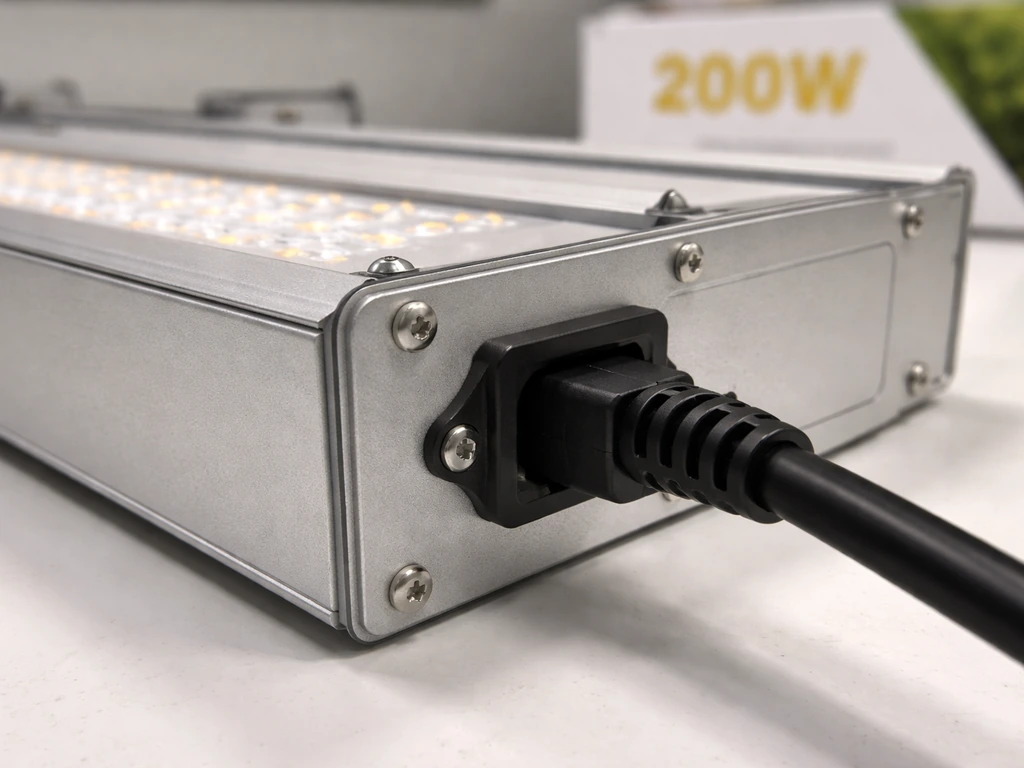
Yehsence lists this light as a "1500W" model, but the number that matters is the actual power consumption: 265 watts at the wall. That is the real energy budget your plants are working with. The panel uses 150 Triple-Chip Bridgelux LEDs rated at 15W per LED chip, with a breakdown of 102 red, 23 blue, 11 white, 10 warm white, 1 UV, and 3 IR diodes. Input voltage is AC 85-265V so it works anywhere, and it comes with a US plug power cord.
| Spec | Yehsence 1500W (B07FN3X6H7) |
|---|---|
| Actual power draw | 265W |
| LED type | Triple-Chip Bridgelux, 15W per LED |
| Total LEDs | 150 |
| LED spectrum mix | Red 102, Blue 23, White 11, Warm White 10, UV 1, IR 3 |
| Spectrum range (VEG) | 430-660nm |
| Spectrum range (BLOOM) | 430-740nm |
| Claimed core coverage | 64" x 64" (approx 5.3 x 5.3 ft) |
| Claimed max coverage | 78" x 78" (approx 6.5 x 6.5 ft) |
| Recommended hang height | 24" to 48" |
| Controls | VEG and BLOOM switches, daisy chain support |
| Input voltage | AC 85-265V |
| Warranty | 36 months + 90-day money-back |
The VEG and BLOOM switches are a useful feature at this price point. VEG activates the blue-dominant spectrum (430-660nm) suited to leafy growth. BLOOM adds the IR and warm-white diodes to push toward 740nm, which is relevant for flowering response. Yehsence recommends running both switches together during flower and fruit stages, which makes sense since you want the full output then. The daisy-chain port lets you run multiple units from one power outlet connection, which is handy if you are building out a multi-light setup.
What to expect from real-world performance
Manufacturer-provided PAR figures and independently reported numbers vary quite a bit for this light. The GrowYour420 review citing manufacturer data puts the PAR value at around 756 µmol/m²/s at 18 inches, which is a reasonable flowering-range number at close range. A third-party roundup claims 1,230 µmol/m²/s at 18 inches for a Yehsence 1500W panel, but that figure is not from a verified lab test and should be taken skeptically. The more conservative 756 µmol figure at 18 inches is plausible given the 265W draw and is actually a workable number for flowering if your canopy is right underneath it.
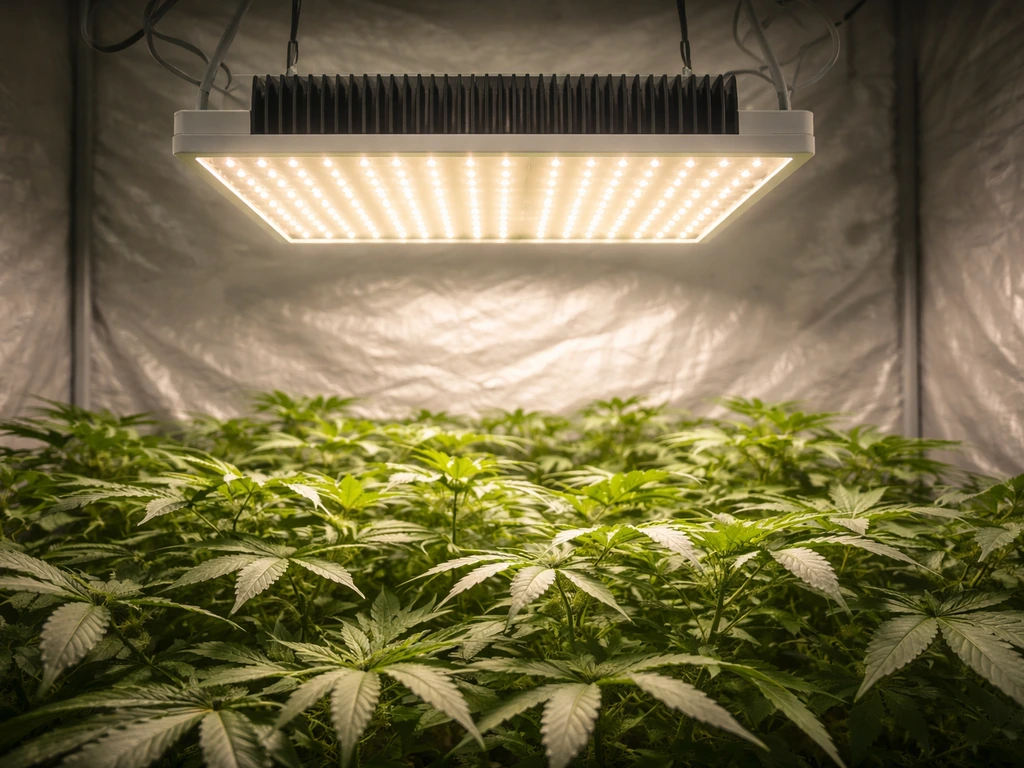
The bigger issue is uniformity. Blurple panels with a grid of individual LEDs tend to create hotspots directly under the array and fall off quickly toward the edges. The claimed 64x64 inch core coverage area is almost certainly measured at a low threshold, not at flowering-intensity PPFD. Realistically, expect useful flowering coverage over about a 3x3 ft (9 sq ft) area when hung at 24 inches. Push it to a 4x4 and the edges will be noticeably dimmer. One grower on THCFarmer ran this light in a 3x3 at 24 inches above canopy during flower and reported leaf issues, which points to the importance of dialing in height and environment together rather than assuming coverage alone is the problem. In that THCFarmer forum report, the grower described yellowing and browning or spotty leaves while running a Yehsence 1500W at 24 inches above the canopy ran this light in a 3x3 at 24 inches above canopy during flower.
For a frame of reference: the ViparSpectra XS-1500 draws only 150W but averages around 777 µmol/m²/s across a tested 2x2 footprint using more efficient white LEDs. The Yehsence draws 265W to deliver a similar or lower center-point PPFD across a slightly larger area, which tells you something about efficiency. You are burning more electricity for comparable or slightly lower usable light.
Build quality, heat output, and safety
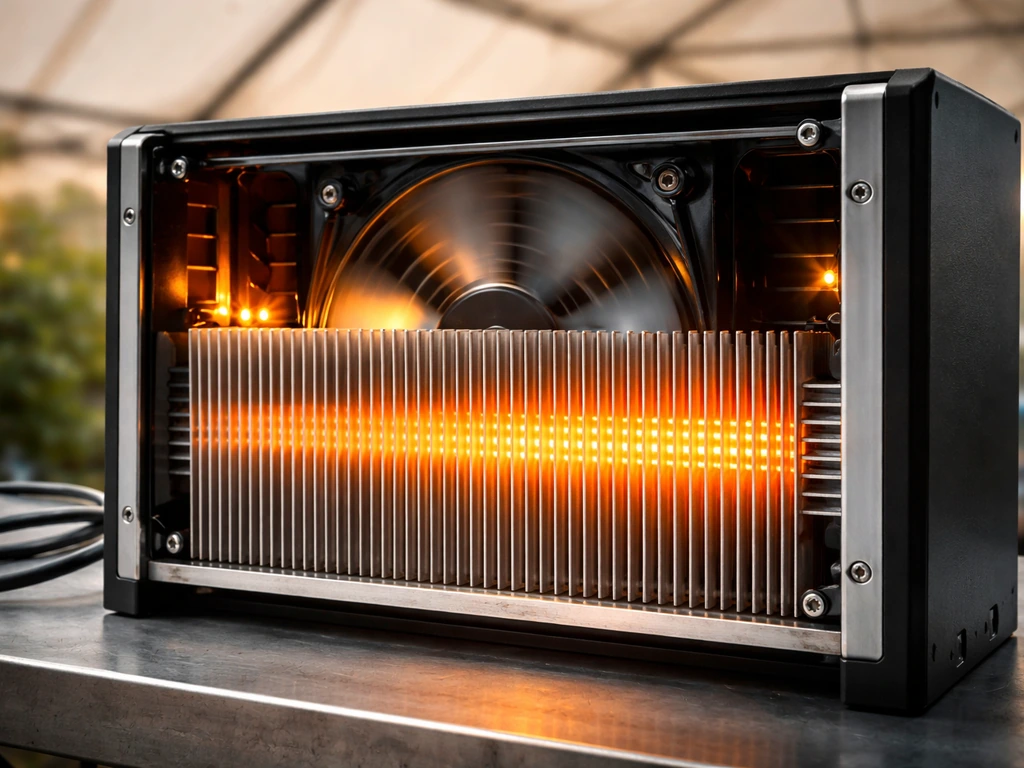
The Yehsence 1500W has a passive heat-sink design with a finned aluminum back plate and an active cooling fan. The fan is audible but not loud. In a well-ventilated tent it keeps operating temperatures reasonable, but like any fan-cooled panel, the fan is also a potential failure point over time. For troubleshooting, focus on intensity, spectrum, heat management, and electrical integrity, since these are the most common failure-mode areas for LED grow lights troubleshooting should focus on intensity, spectrum, heat management, and electrical integrity. Driver and capacitor heat is a known long-term reliability issue in LED grow lights generally: heat cycling inside the enclosure degrades capacitors and drivers faster than the LEDs themselves. At $60-80, this is a consumable product for many growers rather than a long-term asset, which is why the 36-month warranty matters more than it might seem.
The certification situation is worth a note. A Chinese manufacturer/supplier catalog page for this product claims CE, ETL, RoHS, FCC, and UL certifications. ETL and UL are meaningful safety marks for electrical products sold in North America, but you should verify the certification marks physically on the product label and driver when the unit arrives, not just trust the listing copy. If those marks are present on the unit itself, that is a reasonable safety indicator. If they are only on the Amazon listing text, treat it as unverified.
How it performs at each grow stage
Seedlings and germination
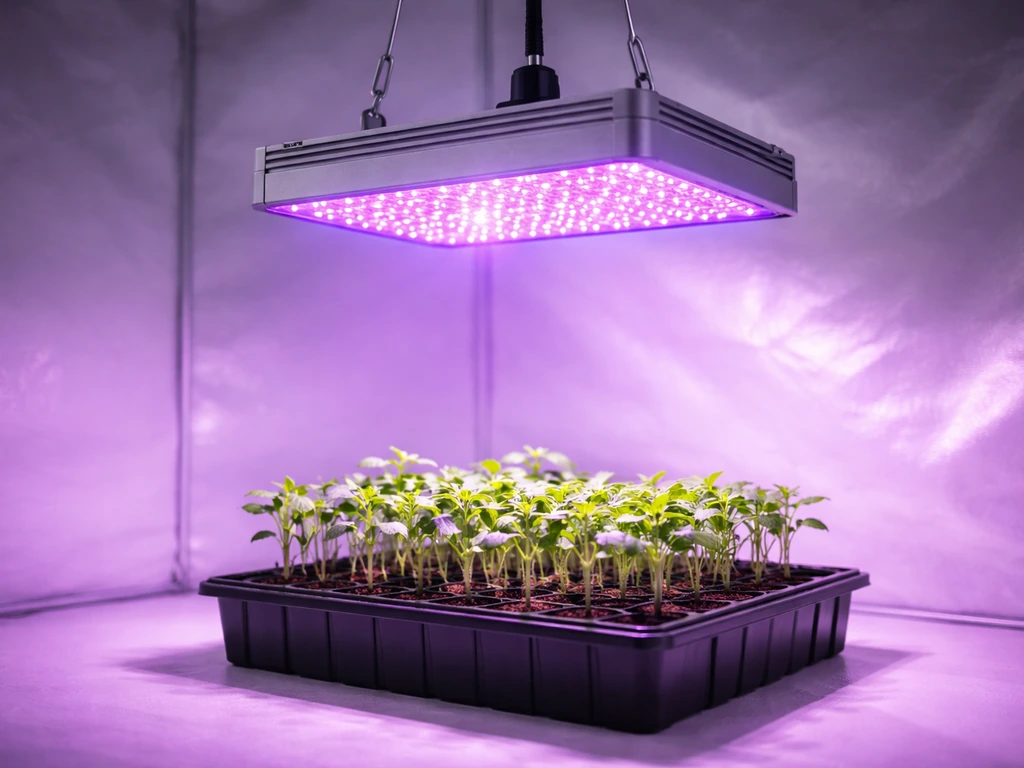
This is where the Yehsence does its best work. For germination and early seedling development, you want lower intensity and the blue-spectrum range, which the VEG switch handles well. Start with the light at 36 inches above the seedling tray and only the VEG switch on. Watch the plants: if they stretch toward the light, bring it down a few inches. If leaf edges look stressed or bleached, raise it back up. Yehsence recommends 12-14 hours on during the vegetative stage, and that is a solid baseline.
Vegetative growth
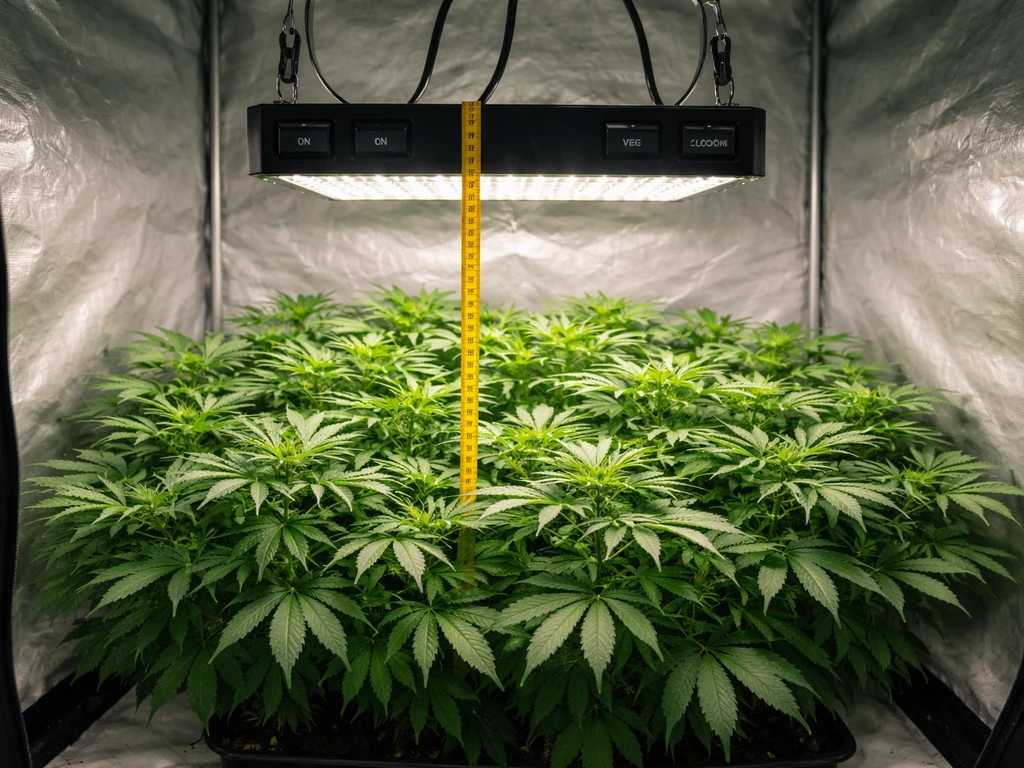
For established veg, keep both switches on and lower the light to around 24-30 inches depending on how the canopy responds. The blue-heavy spectrum promotes compact, bushy growth. The Yehsence handles a 3x3 canopy reasonably well in veg because the intensity requirements are lower and the plants fill in under the panel uniformly enough. Keep your 12-14 hour schedule through veg.
Flowering and fruiting
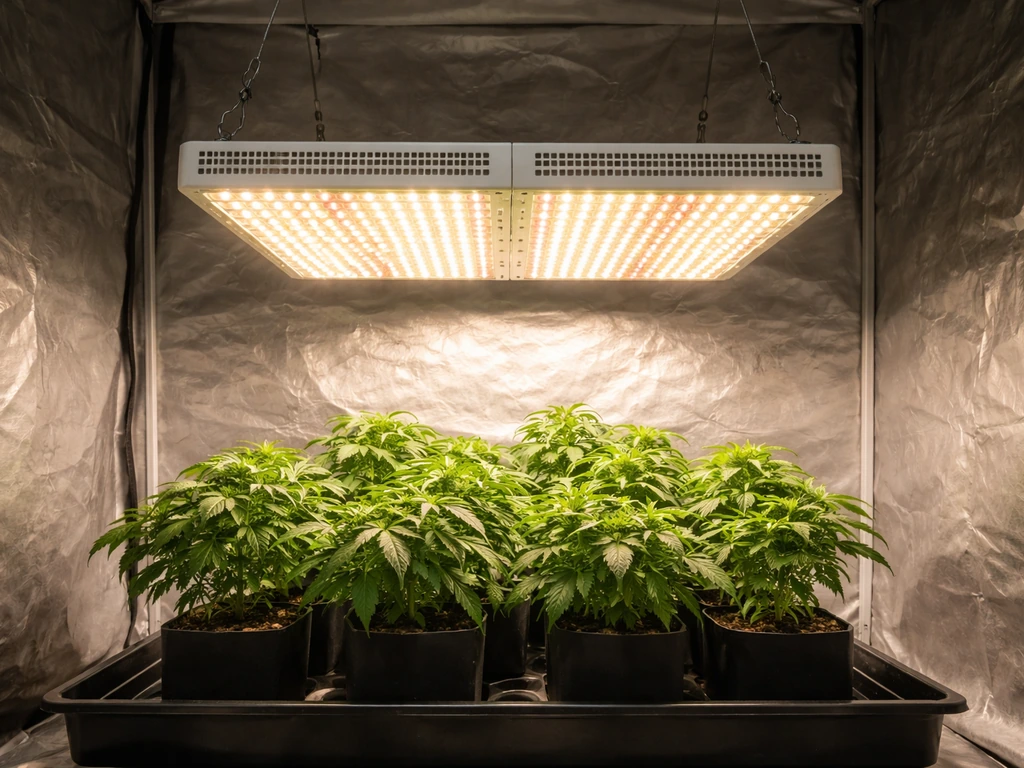
Flowering is where this light is most limited. Run both VEG and BLOOM switches together for full output. Hang between 18-24 inches above the canopy for adequate PPFD at flower sites. Yehsence recommends 9-12 hours on for flowering. The red-dominant spectrum does support flowering response, but the lack of efficiency means the peripheral parts of a 3x3+ canopy will get meaningfully less light than the center. Training techniques like LST (low-stress training) or SCROG help spread the canopy more evenly under the light. Yehsence's own recommended fruiting schedule drops to 7-8 hours of light, which is unusually low and not standard practice for most flowering crops; stick with the 9-12 hour recommendation for most grows unless you have a specific reason to reduce it.
Setup guide and daily operating tips
- Hang the light using the included adjustable hangers. Start at 36 inches above the canopy for seedlings, 24-30 inches for veg, and 18-24 inches for flowering.
- Plug into a mechanical or digital timer. Set 18 hours on / 6 hours off for seedlings and veg, then switch to 12 hours on / 12 hours off to trigger flowering in photoperiod plants.
- For seedlings and early veg, run only the VEG switch to reduce intensity and power draw.
- Once plants are established in veg (3-4 weeks in), turn on both VEG and BLOOM switches for full spectrum output.
- In flowering, keep both switches on for the full output. Lower the light toward the 18-inch range if you are not seeing dense bud development and temperatures allow it.
- Use the daisy-chain port if adding a second unit. Connect the second light's input cord to the first unit's daisy-chain output so both run from one outlet.
- Check the fan vents weekly. Dust buildup on the fan and heat-sink fins reduces cooling efficiency and can shorten driver life.
- If plants stretch (elongated internodes, reaching toward the light), lower the light by 2-3 inches. If you see bleaching or heat stress at leaf tips, raise it.
- Keep ambient tent temperature below 85°F (29°C) at canopy level. This light adds heat to the space, so ventilation is important.
How it compares to other "1500W" LED lights
The "1500W" label on budget LED panels is almost entirely a marketing figure referencing the theoretical maximum output if every LED were driven at full rated power, which they never are. What matters is actual watts drawn at the wall, PPFD at your canopy, and efficiency (µmol per joule). Here is how the Yehsence 1500W stacks up against commonly compared options.
| Light | Actual Draw | LED Type | Realistic Flowering Coverage | Efficiency / Notes |
|---|---|---|---|---|
| Yehsence 1500W | 265W | Blurple triple-chip (Bridgelux) | 3x3 ft | Older technology, lower efficiency, blurple spectrum |
| ViparSpectra XS-1500 | 150W | White quantum board | 2x2 to 2.5x2.5 ft | ~777 µmol avg in 2x2 test, better efficiency per watt |
| Spider Farmer SE1500 | 150W | Samsung white diodes | 2x2 to 2.5x2.5 ft | Modern quantum-board style, high efficiency |
| Mars Hydro FC1500 Evo | 150W | Samsung white diodes | 2x2 to 2.5x2.5 ft | Bar-style design, excellent uniformity |
| Generic "1500W" blurple panels | 200-300W | Blurple triple-chip | 2x2 to 3x3 ft | Wide variation in quality and actual output |
The honest comparison is this: the Yehsence draws nearly twice the electricity of the modern 150W white-LED panels and delivers roughly similar or lower usable light at the canopy. Over a growing season that electricity cost difference adds up. The Yehsence is cheaper upfront (often $60-80 vs $100-150 for the quantum-board options), but the running cost gap closes the price difference within a few months of use. If you are buying new today, a Spider Farmer SE1500 or Mars Hydro FC1500 Evo is a better investment for a 2x2 tent, and for a 3x3 tent you would want two of them or a larger single panel anyway.
That said, if you already own the Yehsence and it is working, there is no urgent reason to replace it. Understand its limitations, manage your grow space accordingly, and you can get a functional harvest from it. It fits the same category of lights reviewed elsewhere on this site in the budget blurple class, where brands like Honorsen and Missyee compete with similar specs and similar caveats. If you are trying to decide whether the Yehsence model is worth it, read this Kessil grow light review next to compare real-world performance reviewed elsewhere on this site. If you want more details before buying, check out our Missyee grow lights review for how that budget blurple category compares.
Troubleshooting common problems
Plants stretching toward the light
Stretching (etiolation) means the plant is not getting enough light intensity. Lower the light by 3-4 inches and confirm both switches are on. If you are in a 4x4 tent with one Yehsence 1500W, the intensity at the outer edges is likely too low and adding a second unit or switching to a more efficient panel is the real fix.
Yellowing or browning leaves
Yellowing has many causes, but if it appears alongside the Yehsence running at 24 inches or less in flower (as one grower reported on THCFarmer), check whether the canopy is getting too much heat or if the issue is nutrient-related. Raise the light to 30 inches and see if new growth comes in healthier. Blurple lights can make it hard to read leaf color accurately under the red/blue cast, so use a white light source (a phone flashlight works) to check true leaf color.
Uneven canopy coverage or hotspots
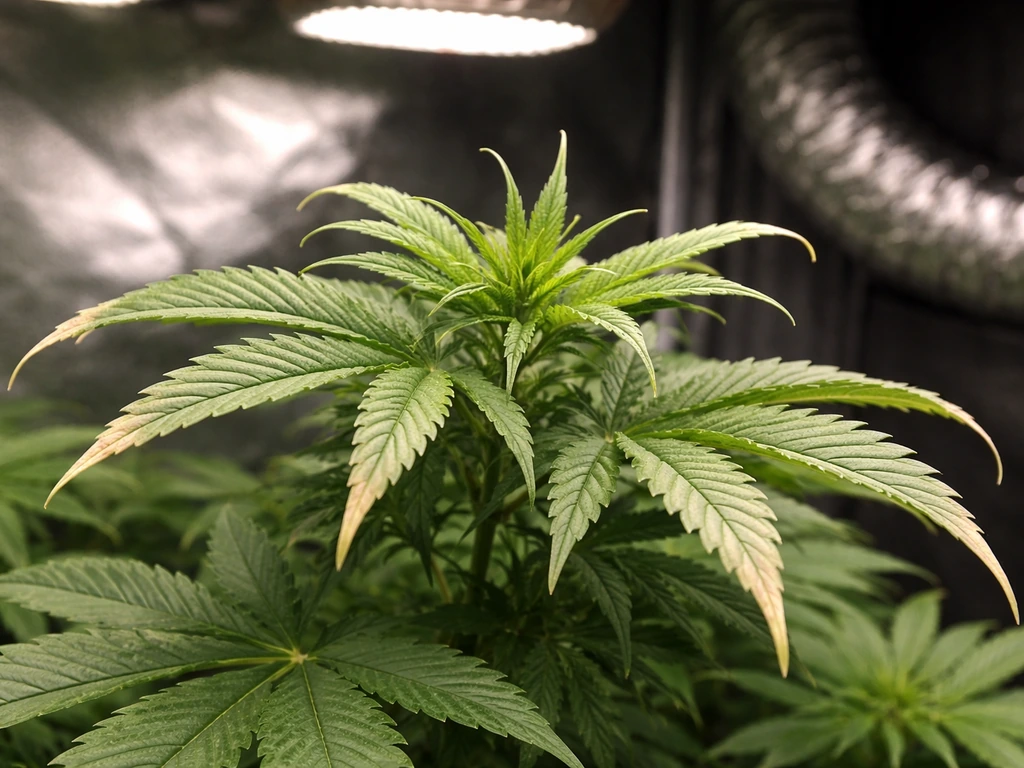
Hang the light higher (36-40 inches) to increase uniformity at the cost of some peak intensity. This works well in veg where you can sacrifice a bit of intensity for even coverage. In flower, consider using LST or a SCROG net to bring peripheral growth up closer to the center of the canopy and reduce the effective area the light needs to cover.
Heat stress symptoms (leaf curl, bleaching at tips)
Raise the light and improve tent ventilation first. The Yehsence adds meaningful heat to the grow space at 265W. If your tent runs above 85°F at canopy level, that is the priority issue before adjusting light height. Add an exhaust fan if you do not have one, or increase fan speed.
Light not turning on or partial LED failure
Check the power cord connection and the rocker switches on the unit. If individual LEDs are out but the majority work, that is a driver or LED failure. Because the 36-month warranty is the strongest feature of this product, contact Yehsence support with your order details before spending time on DIY repairs. Document the failure with a photo when you contact them.
Inadequate results despite correct setup
If your plants are healthy but yields are underwhelming, the most likely culprit is that 265W of blurple light is genuinely not enough for the canopy size you are trying to fill. This is not a fixable problem with height or schedule adjustments; it is a wattage and efficiency ceiling. Either reduce your canopy size to match what the light can actually support (a solid 3x3 for flowering) or supplement with a second light or a more capable replacement.
What to check before you buy (or before you keep it)
- Verify the ASIN B07FN3X6H7 matches the listing you are ordering from to ensure you are getting the specific model reviewed here, not a rebranded variant with different specs.
- When the unit arrives, check the driver label and product label physically for ETL, UL, CE, or RoHS marks. Do not rely only on the listing description for safety certification confirmation.
- Test the fan noise in your space before committing to a permanent install. It is audible and may matter in a quiet room.
- Register your purchase or save your order confirmation for warranty claims. The 36-month warranty and 90-day return are the strongest consumer protections this product offers.
- If you are on the fence between this and a quantum-board alternative at slightly higher upfront cost, factor in electricity cost over 6-12 months of growing. At 265W versus 150W for a comparable output, the operating cost difference is real.
FAQ
Is “Yehsence 1500W” the real power my plants get?
No. The practical metric is the watts drawn at the wall (about 265W for this model). The “1500W” label is a marketing figure, so measure your electricity if you need the most accurate budget, and size your canopy based on PPFD patterns rather than the name.
What height should I use in veg and in flower for best results?
For veg, start around 36 inches above the plants and adjust based on stretch or bleaching. For flower, most results come from about 18 to 24 inches above canopy, but if you see edge fading or leaf stress, raise height slightly for uniformity or lower it if the canopy center is weak.
Should I run both the VEG and BLOOM switches in flowering, or only one?
Use both during flowering if you want the light’s full available spectrum mix. Running only one switch usually reduces the effective spectrum intended for bloom, which can slow flower development even if total brightness seems okay.
Does this light work for a full 4x4 grow?
It can cover a 4x4 for survival, but flowering performance will be noticeably uneven at the edges. If you insist on a 4x4 with one panel, expect dim peripheral buds, so plan on training (LST or SCROG) or plan on multiple lights.
Why are my plant leaves yellowing under this light, even if my nutrients seem right?
Two common causes to check first are canopy heat (raise the light and improve exhaust if canopy temps are high) and “false readings” from blurple color. Use a white flashlight or phone light to confirm true leaf color, then revisit feeding based on the corrected diagnosis.
Is it safe to daisy-chain multiple Yehsence panels on one outlet?
Only if the combined load stays within the safe current rating for your outlet, cord, and any power strip you use. Also consider thermal stress on the strip, and avoid daisy-chaining more units than necessary since cheap power accessories can become the failure point.
How much does the fan noise and fan reliability matter?
The fan is audible, and fan-cooled panels can fail over time due to driver and capacitor heat cycling. If you plan a long run, reduce dust intake, keep airflow unobstructed, and treat this as a budget unit where warranty coverage matters.
What certification should I verify when my light arrives?
Look for the certification marks printed on the product label and on the driver or internal components, not just on listing text. ETL and UL are meaningful for North America, but unverified listing claims should be treated cautiously until you see the marks on the actual unit.
If I see stretching (etiolation), should I lower the light or change the switch settings?
Lower the light a few inches first and confirm the correct switches are on for the stage. If stretching persists after adjusting height, the likely issue is insufficient intensity at the canopy due to distance or an oversized canopy, which usually requires training or an additional light.
Is using 7 to 8 hours of light in flowering a bad idea with this model?
It can be, unless you have a specific reason. Most flowering crops respond better with the 9 to 12 hour range. If you shorten hours, do it consistently with your strain plan, and monitor flower development rather than relying on the recommendation alone.
Will raising the light to 36 to 40 inches always improve results?
It can improve uniformity, but it reduces peak intensity. In veg this tradeoff is often workable, while in flower it can leave the center underpowered. If your center buds look weak, try lowering slightly and instead use LST or SCROG to even out the canopy.
If my yields are low, what should I check first before blaming the light?
Verify canopy size and real intensity first. If the canopy is larger than what a single 265W blurple panel can effectively light, height and schedules will not fix the wattage ceiling. Then check temps, airflow, and training, because those affect how evenly the light is used.
How do I troubleshoot if some LEDs stop working but the rest still operate?
If most of the panel lights up but certain sections do not, it often points to a driver issue or localized LED failure. Before DIY repair, document with photos and contact support, since this model’s warranty is one of its strongest advantages.