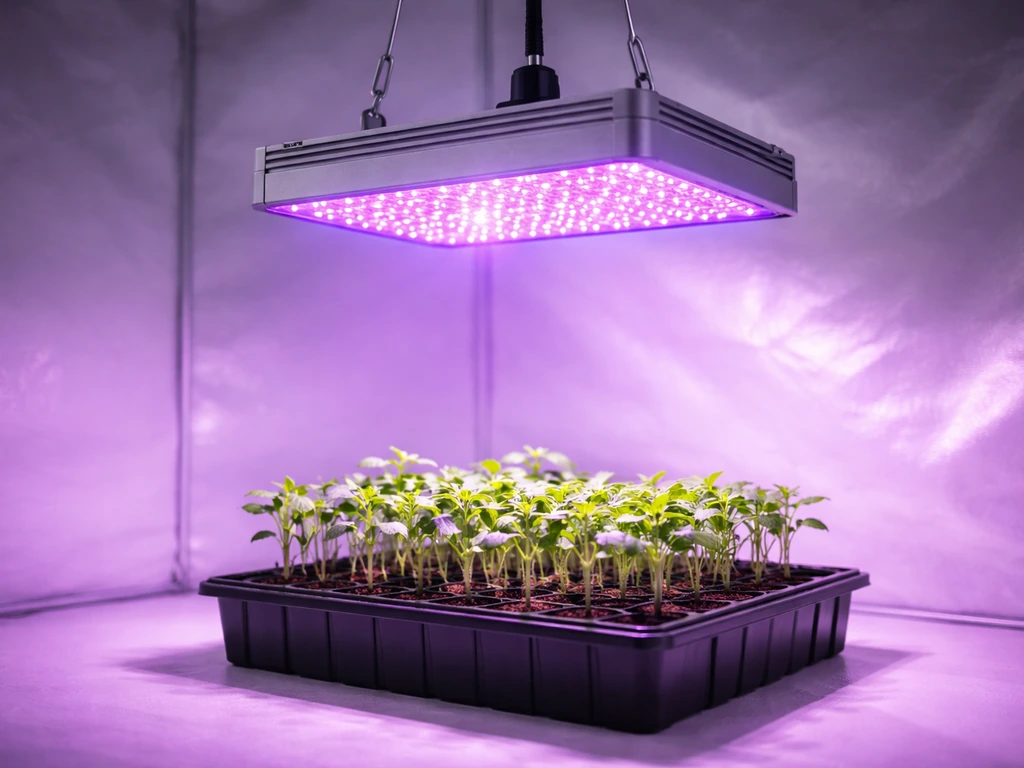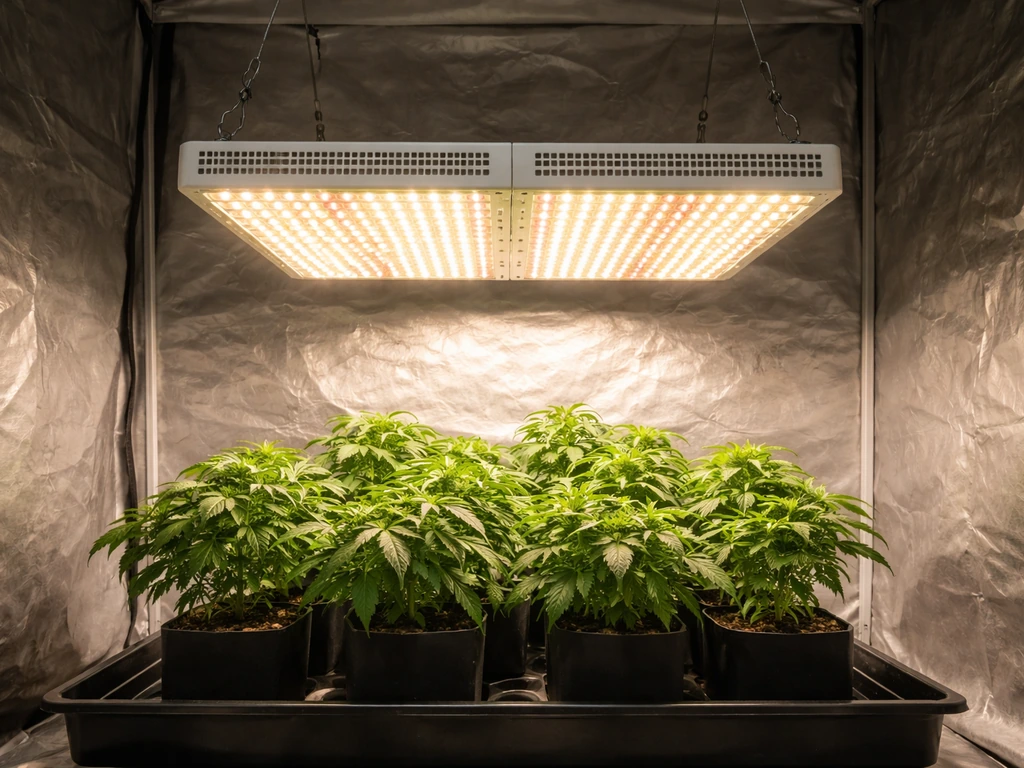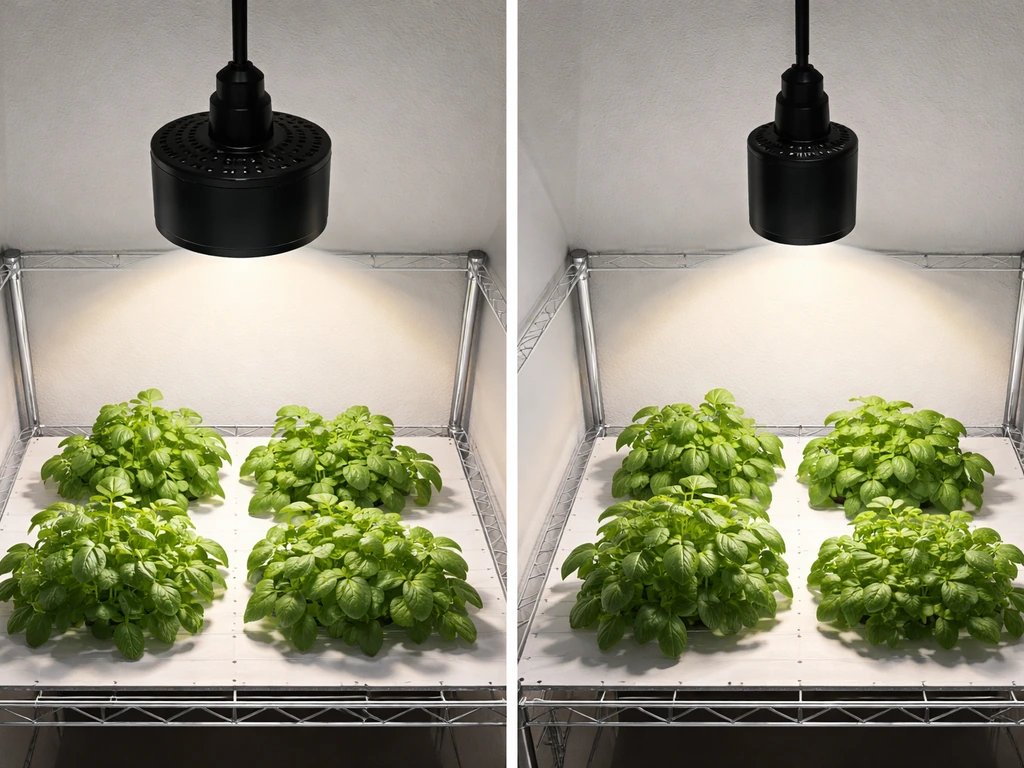
Sayhon's LED grow lights, specifically the SH1200, SH2000, and SH4000, are passively cooled, full-spectrum fixtures built around OSRAM chips with a rated efficiency of 2.7 µmol/J across the entire line. They're a reasonable pick for beginners and hobbyists running a single tent who want a quiet, low-maintenance light at a mid-range price. That said, the PPFD numbers on the product pages are peak center figures, not average canopy values, and the coverage claims are optimistic. If you know what you're actually buying, there's real value here. If you take the marketing at face value, you'll probably end up disappointed with edge coverage and control ergonomics.
Sayhon Grow Light Review: Real Results, Coverage, Value

Marcus Caldwell
11 May 2026
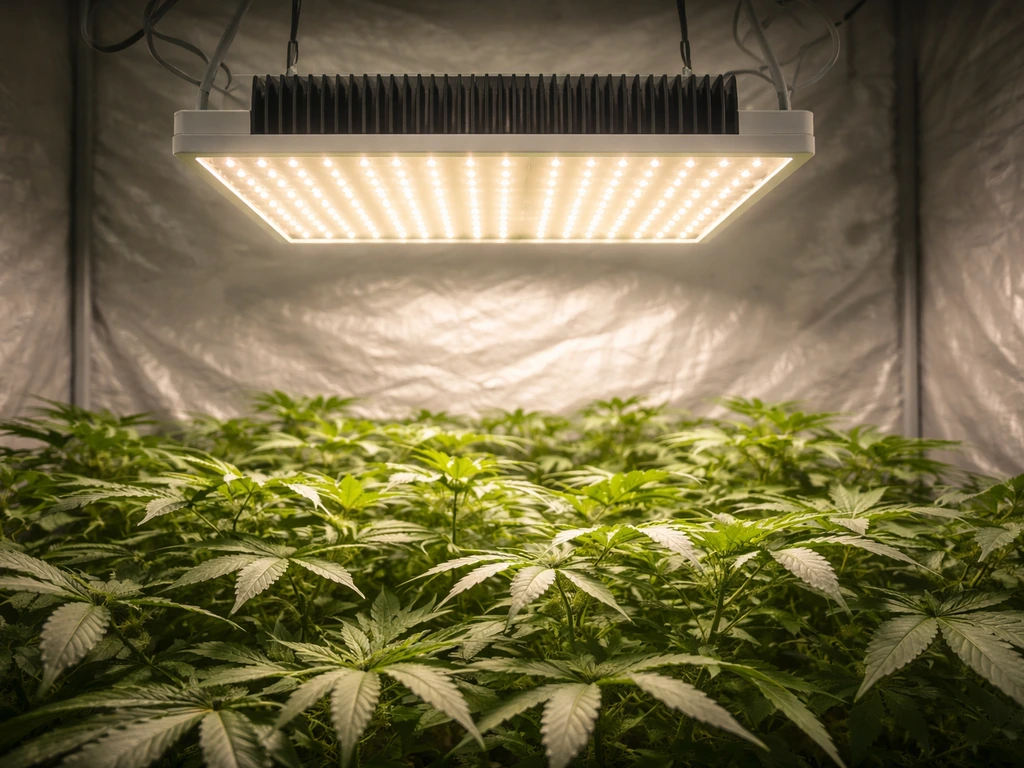
The Sayhon lineup: models, specs, and what you're actually getting
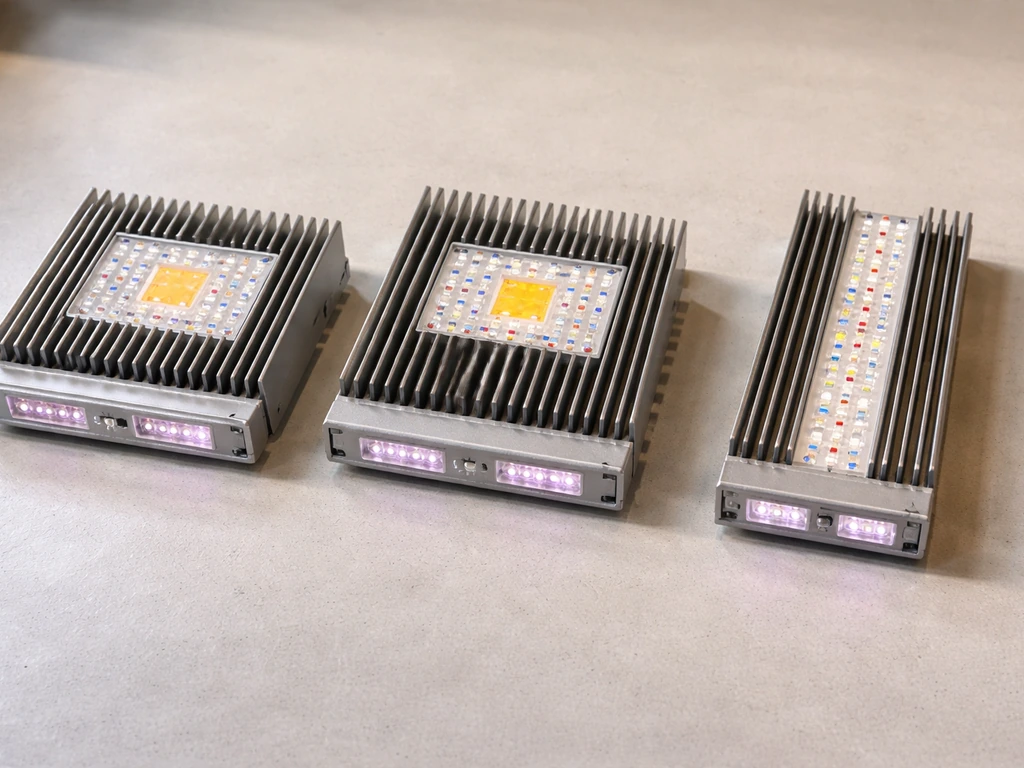
Sayhon currently offers three main models that share the same design philosophy: passive cooling, OSRAM diodes, a UL Listed driver, and a switchable supplement bar carrying UV (390nm), IR (730nm), and Blue (460nm) LEDs on top of the main board's red/white spectrum. Here's the quick spec breakdown.
| Model | Avg Power Draw | PPE | Advertised PPFD | Coverage Claim | Dimming Range | LED Count |
|---|---|---|---|---|---|---|
| SH1200 | 108W ±3% | 2.7 µmol/J | 1120 µmol/m²/s (center) | 3 x 3 ft | 0–100% | 296 total |
| SH2000 | 208W ±3% | 2.7 µmol/J | 1710 µmol/m²/s (center) | 4 x 4 ft | 5–100% | 592 total (approx.) |
| SH4000 | 410W ±5% | 2.7 µmol/J | 2258 µmol/m²/s (center) | 5 x 6 ft | 5–100% | 1568 total |
All three run on global voltage (AC 100–277V), so they'll work without a converter anywhere in the world. The SH1200's LED board has 296 diodes: 160 at 2700K, 96 at 5000K, 24 red at 660nm, plus the supplement bar's 10 blue (460nm), 4 IR (730nm), and 2 UV (390nm). The SH2000 and SH4000 scale that same ratio up, with the SH4000 running 1,056 diodes at 2700K and 352 at 5000K. The white-dominant mix (2700K and 5000K combined make up the majority of every board) is what gives these fixtures a sunlight-like character, which matters for full-cycle growing.
Sayhon positions each model as an HPS replacement. The SH1200 is pitched against a 250W HPS, the SH2000 against a 600W HPS, and the SH4000 against a 1000W HPS. Those comparisons hold up on paper from an efficiency standpoint since 2.7 µmol/J is genuinely competitive, but the actual delivered light over a full footprint is the more important number for your buying decision.
Real-world performance: output, coverage, and uniformity
The advertised PPFD numbers are center-point measurements, not averages across the stated footprint. That distinction is critical. The official manual is more honest: it lists PPFD at 18 inches as 538 µmol/m²/s for the SH1000 class, 893 µmol/m²/s for the SH2000, and 1,166 µmol/m²/s for the SH4000. Compare those manual figures to the product-page peaks (1,120, 1,710, and 2,258 respectively) and you can see the real-world center reading at 18 inches is roughly half the advertised peak. That's not unusual in this product category, but it's worth internalizing before you buy.
Coverage uniformity is where the trade-offs become most visible. A 3x3 ft claim for the SH1200 running at 108W is achievable for vegetative growth where you can tolerate PPFD dropping below 400 µmol/m²/s at the corners. For flowering, you'd realistically treat this as a 2.5x2.5 ft light to keep edge canopy in the 600+ µmol/m²/s range. The SH2000 at 208W covers a genuine 3x3 ft footprint in flower and can push into a 4x4 in veg. The same edge-drop logic applies to every fixture in this price tier, and it isn't unique to Sayhon: comparable fixtures from other brands show the same fall-off at coverage edges.
User-reported observations back this up directionally. SH2000 growers note that plants at canopy center show strong phototropic response (leaves angling upward, sometimes called praying), which is a reliable visual indicator of adequate PPFD at the sweet spot. One grower who switched from a 3500K Samsung quantum board with 660nm supplementation at the same hanging height reported noticeably stronger canopy response under the SH2000, which suggests the broader spectral coverage and slightly higher output are producing a real difference at plant level. On the SH1200, two units used side-by-side for vegetable seedlings kept plants compact, green, and vigorous, with no signs of light starvation or stretch.
Build quality, heat, and efficiency
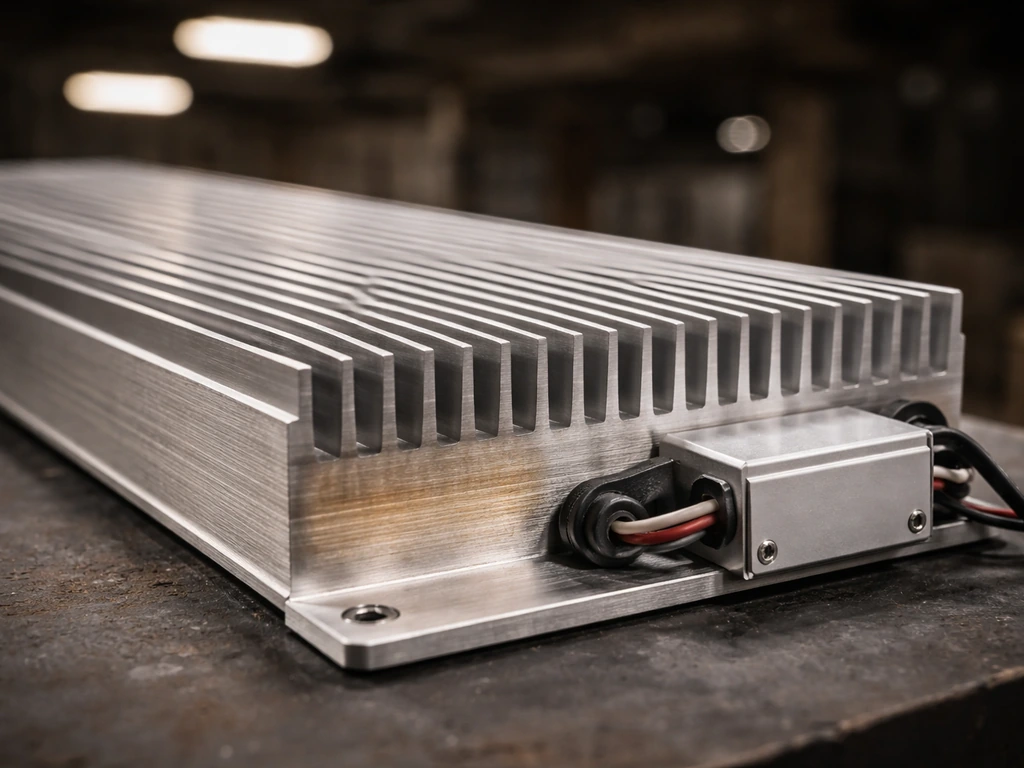
All three models are passively cooled, meaning no fans and no moving parts. The aluminum heatsink chassis handles thermal dissipation entirely. In practice this means the fixture runs silently, which matters if your grow space is in a bedroom, office, or living area. The tradeoff is that the chassis does get warm to the touch after a few hours at full power. Reviewers consistently describe it as 'warm but not scorching,' and ambient tent temperatures stay lower compared to fan-cooled lights that push heat outward more aggressively. The manual specifies an operating temperature range of 14–113°F (-10–45°C) and requires at least one inch of clearance between the fixture and the top of the grow space to allow airflow over the heatsink.
The power factor is listed above 0.92, which is solid and means the fixture is drawing close to its rated wattage in usable power rather than wasting it as reactive current. The IP67 rating is genuinely useful in a grow tent environment where humidity, misting, and condensation are real factors. UL Listed drivers on all three models provide a baseline of electrical safety assurance. On the quality control side, there are a small number of reported issues worth knowing: one buyer received a unit with loose driver mounting screws (a packaging/assembly problem, not electronic), and at least one report of uneven brightness across the LED board on arrival. These are minority-case reports but suggest incoming inspection when your unit arrives is worthwhile.
Which plants and growth stages get the best results
The broad-spectrum white-dominant output (2700K plus 5000K) combined with supplemental red 660nm makes Sayhon's lineup genuinely full-cycle capable. You're not locked into veg-only or bloom-only use. The UV (390nm) and IR (730nm) supplement bar adds useful extras for triggering secondary metabolites and improving cell elongation response, particularly during transition and late flower. Here's how each stage maps to the lineup practically.
- Seedlings and clones: SH1200 at 30–50% dimming, mounted at 24 inches. The gentle output avoids light stress on tender tissue while keeping seedlings from stretching.
- Vegetative growth: SH1200 covers up to a 2.5x2.5 ft canopy comfortably; SH2000 covers 3x4 ft in veg. Run the supplement bar on for added blue and UV. Both produce compact, stocky internodal spacing according to user reports.
- Flowering: SH2000 is the sweet spot for a 3x3 ft tent; SH4000 is designed for 5x6 ft. For dense, resinous flowering crops, you want center PPFD above 800 µmol/m²/s, which the SH2000 delivers at 18 inches with a power factor above 0.92.
- Herbs and leafy greens: The SH1200 is more than adequate. Crops like basil, lettuce, and spinach thrive at 200–400 µmol/m²/s, well within this fixture's even-coverage zone.
- Fruiting vegetables (tomatoes, peppers): The SH2000 or SH4000 is a better fit. These crops benefit from sustained high PPFD during fruit set, and the SH1200 runs thin at the edges of its claimed coverage during the critical fruiting period.
How to set up a Sayhon grow light correctly
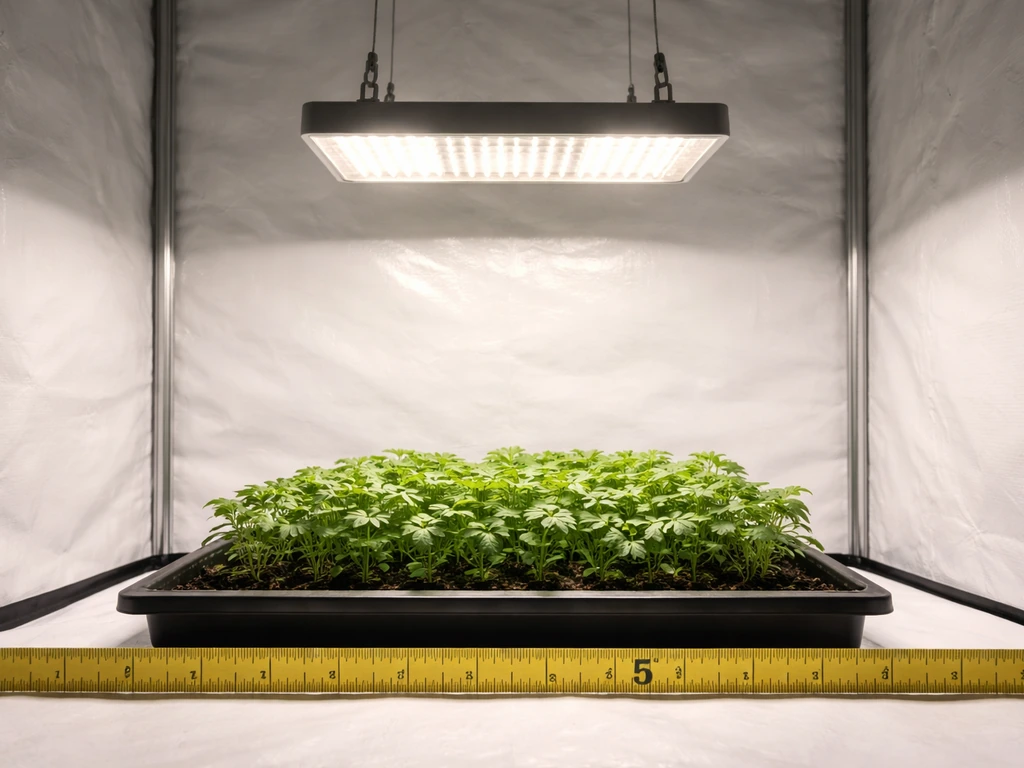
The official manual recommends mounting 5 inches from the top of the plant canopy as the starting point for optimal uniformity, with a note that even a 1-inch variation can meaningfully shift both PPFD and coverage uniformity. That's tighter than most growers expect. Stage-specific guidance from the manual translates to the following starting heights, which you then adjust based on observed plant response.
| Growth Stage | Recommended Height Above Canopy | Photoperiod |
|---|---|---|
| Germination | 24–30 inches | 18 hours on / 6 off |
| Seedling | 24 inches | 18 hours on / 6 off |
| Vegetative | 18–24 inches | 18 hours on / 6 off |
| Flowering | 12–18 inches | 12 hours on / 12 off |
A few practical setup points that the manual makes explicit but growers often skip: leave at least one inch of air gap between the fixture top and your tent roof so the passive heatsink can breathe. Use an extension cord rated for the fixture's amperage if your outlet is far from the tent. Do not look directly at the LED array without eye protection, particularly when the supplement bar is active since UV output at 390nm is in the near-UV range. Allow the fixture to cool for 15–20 minutes before repositioning or handling after an extended run.
The dimming controls are functional but the SH1200's interface is a known friction point. It uses two toggle switches and a separate dimming knob, and the interaction between them is not immediately intuitive. One switch position enables the knob, another bypasses it to full power, and a third controls the supplement bar. Spend 10 minutes with the manual before your first grow rather than learning through trial and error mid-cycle.
How Sayhon compares to the alternatives
Sayhon sits in a growing field of white-LED, OSRAM or Samsung-based fixtures at the 100–400W range. The 2.7 µmol/J efficiency is competitive but not class-leading. Some alternatives with Samsung LM301H diodes push 2.8–3.0 µmol/J at similar price points. Where Sayhon earns its place is the combination of OSRAM chips, IP67 rating, a UL Listed driver, passive cooling, and global voltage compatibility in a single package. That bundle is harder to find consistently at this price tier.
| Factor | Sayhon SH2000 | Comparable Mid-Range Competitor |
|---|---|---|
| Chip source | OSRAM | Often Samsung LM301B/H or generic |
| Efficiency (PPE) | 2.7 µmol/J | 2.5–3.0 µmol/J depending on model |
| Cooling | Passive (fanless) | Mix of passive and active (fan) options |
| IP rating | IP67 | Varies; often IP65 or unlisted |
| Driver certification | UL Listed | Often CE/RoHS only |
| Dimming | 5–100% | 0–100% on some competitors |
| Supplement bar | UV + IR + Blue (switchable) | Not always included at this price |
| Control ergonomics | Two switches + dimmer knob (awkward) | Often single dial or app-based |
| Warranty | 3 years | Typically 2–3 years |
Brands like Koscheal, Honorsen, and Missyee occupy a similar tier, and the comparison between them often comes down to which specific diode spec and driver brand they're running at a given price point. If you're specifically comparing Missyee grow lights, it helps to check a Missyee grow lights review for measured output, coverage, and driver/build quality differences. Kessil, at the premium end, uses a fundamentally different multi-chip LED architecture and is in a different performance and price category entirely. If you're cross-shopping actively, it's worth reading evaluations of those specific models in their respective reviews to see how their measured output and build quality stack up against the Sayhon numbers here.
Buy the Sayhon if...
- You're growing in a 3x3 or 4x4 tent and want a fanless, quiet fixture for a bedroom or home environment.
- You want a full-cycle light that handles seedling through flower without swapping fixtures.
- IP67 moisture resistance matters to you, such as in a humid basement or greenhouse setting.
- You want UV and IR supplementation included at the base price rather than as an add-on.
- You're a beginner who wants a reliable, low-maintenance setup without dealing with active cooling and fan noise.
Skip the Sayhon if...
- You need precise, programmable control via app or digital dimmer. The physical toggle/knob interface on the SH1200 especially is clunky.
- You're filling a 4x4 with high-demand flowering plants and need truly even coverage across the full footprint. The SH2000's real 4x4 coverage in flower is marginal at the edges.
- You're an experienced grower who tracks PPFD maps closely and will be frustrated by the gap between marketed and actual average coverage values.
- You're already running a high-efficiency Samsung-based QB at 2.8+ µmol/J and looking for a direct upgrade. The efficiency gap doesn't justify switching.
Final verdict and buying checklist
Sayhon's SH series is a solid, honest mid-tier option when you treat the product-page PPFD claims as peak center numbers rather than canopy averages. If you’re specifically looking for a 1500W-class option, a dedicated yehsence 1500w led grow light review can help you compare output and coverage head-to-head mid-tier option. If you want a deeper, model-by-model look at performance and value, see our yehsence grow lights review guide next. The actual output at 18 inches from the manual is the more useful figure for sizing your purchase. At 2.7 µmol/J with OSRAM diodes, a UL Listed driver, IP67 sealing, and no-fan passive cooling, these lights are genuinely well-specced for the price. The build is not flawless, the controls are clunky, and the coverage claims are generous, but the core light output does what it needs to do for the plants that matter to most hobbyists.
The SH1200 is the pick for seedlings, herbs, and single-plant grows in a 2.5x2.5 to 3x3 space. The SH2000 is the workhorse of the line, covering a genuine 3x3 in flower and 4x4 in veg, and it's the model most growers will want. The SH4000 is for growers who need to fill a 5x6 footprint without fan noise and without stacking two smaller units. If you're still deciding between brands, compare this SH2000 verdict with the honorsen grow light review to see which full-spectrum approach fits your tent and goals better.
Before you buy: quick checklist
- Measure your actual tent footprint. Match the model to the flowering coverage column, not the advertised claim: SH1200 for up to 2.5x2.5 ft in flower, SH2000 for 3x3 ft, SH4000 for 4x5 ft.
- Check your ceiling clearance. You need at least 12–18 inches of hanging distance above canopy in flower plus the fixture height plus 1 inch of heatsink clearance at the top. Low-ceilinged spaces can make this tight.
- Download the PDF manual before your first run. The PPFD table at 18 inches and the hanging height guide in the manual are the numbers you should use for dialing in your setup.
- Test the dimmer controls before your plants are in the tent. The SH1200 especially has a non-obvious toggle interaction. Confirm all three switch positions and the knob behavior before your seeds go in.
- Inspect the unit on arrival. Check driver mounting screws and scan the LED board for any visibly dark or dim sections before the return window closes.
- Plan your photoperiod before Day 1. Seedlings at 18h on, veg at 18h on, flower at 12h on. If your light doesn't have a built-in timer, add an outlet timer to your order.
FAQ
What PPFD number should I use when sizing an SH1200, SH2000, or SH4000 for my tent, the product-page peak or the manual value?
Use the manual PPFD at 18 inches (the one tied to canopy sizing), because the product-page figures are center peaks and tend to be roughly double the average canopy result in this category. Then plan for edge loss by treating flowering coverage as smaller than the marketing footprint.
How high should I hang the Sayhon light if I want consistent coverage, not just strong center output?
Start with the manual’s mounting height around 5 inches from the canopy, and do not freestyle it by more than about 1 inch. Passive-cooled boards can shift their hotspot noticeably when the bar is active, so adjust in small increments and recheck plant response over a few days.
Does the supplement bar (UV 390nm, IR 730nm, Blue 460nm) require turning it on for every stage?
No, you should treat it as a tool rather than a default. If you are running dimming low or you notice tip stress or excessive stretch control is off, keep the supplement bar off for mid-cycle and only use it during transition and late flower where the manual’s stage guidance is most relevant.
Can I use these lights safely in a humid grow tent, and what does IP67 actually mean for day-to-day use?
IP67 helps with splashes and condensation, but it does not make the fixture safe to spray directly with water. Wipe off external moisture after misting sessions, keep electrical connections dry, and avoid letting runoff collect on the driver housing.
Do I need eye protection because of the UV (390nm) LEDs, even if the light is in a tent?
Yes. Near-UV can be uncomfortable even without direct staring, and the supplement bar increases the risk. Use proper grow eye protection when adjusting height or when the bar is on, especially during setup when you may be close to the array.
What’s the biggest real-world reason growers feel disappointed with Sayhon coverage claims?
They expect the stated footprint to include the corners at flowering-quality PPFD. In practice, the corners drop below your target sooner than the marketing implies, so you either reduce plant spacing or accept a smaller flowering area per unit.
Are these lights safe to run near walls or inside tight tents without extra clearance?
You still need at least about 1 inch of clearance above the heatsink to let passive airflow work. If the tent roof fabric or reflective surfaces press too close, the heatsink runs hotter and you lose thermal headroom, which can shorten long-term stability.
What should I do if my Sayhon unit arrives with uneven brightness across the board?
Document it with quick photos before first run, then check that the fixture sits level and the internal board is seated correctly. If the unevenness persists after confirming setup and power settings, contact the seller for a replacement, since one reported case suggests an arrival QC issue rather than a configuration problem.
The SH1200 dimming feels confusing, what’s the safest way to avoid accidentally blasting power during setup?
Before connecting everything to your plants, cycle through the dimming knob and switches with the light off the canopy area. Set the supplement bar state first, then set dimming to a known low point, and only then raise to your target PPFD height.
Do I need a voltage converter because Sayhon uses AC 100 to 277V input?
No converter should be required as long as your outlet is within the 100 to 277V global range. Still confirm your local mains rating, and use the correct extension cord gauge if the tent power run is long.
If I want one fixture without fans, what ventilation or temperature targets should I keep in mind?
Because it is passive-cooled, the fixture’s chassis will get warm to the touch after a full run. Keep tent temperatures within the manual’s operating range and avoid blocking the heatsink, and consider improving room ventilation rather than adding a fan to the fixture.