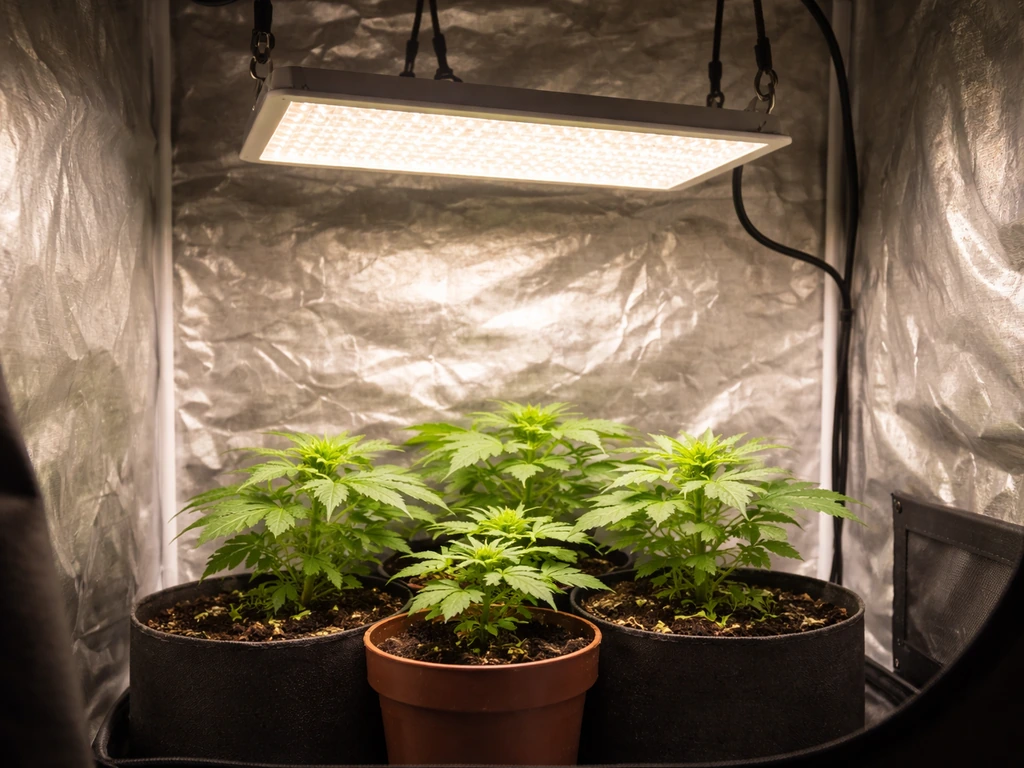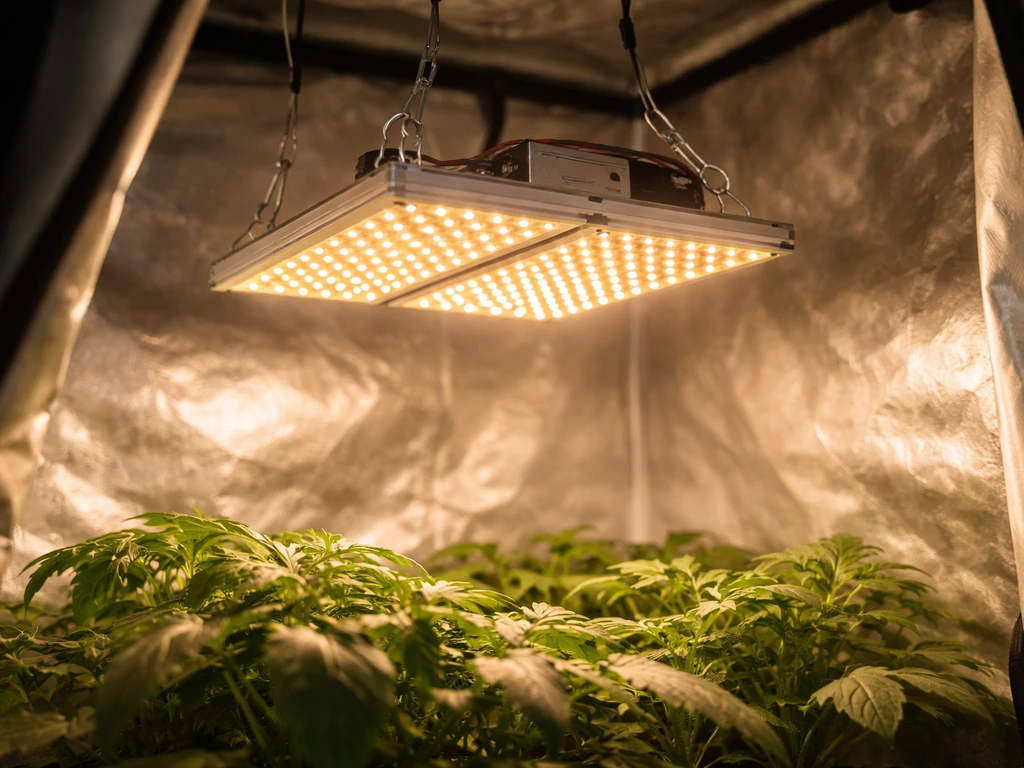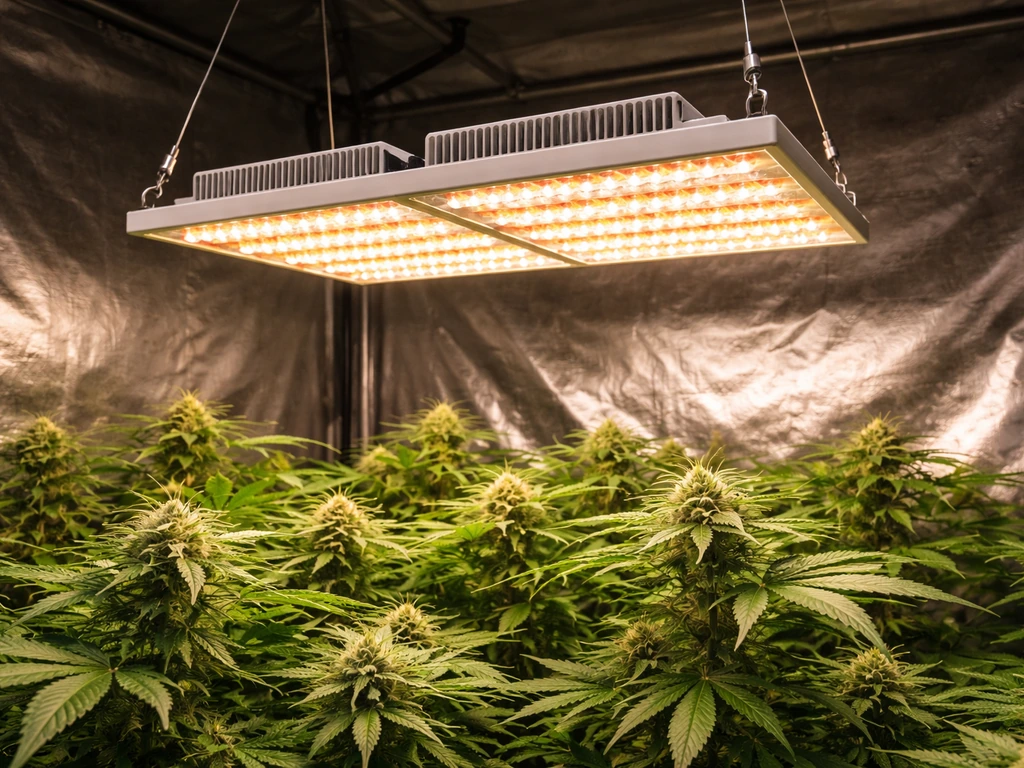
Fluence's SPYDR series (yes, spelled with a Y) is a line of commercial-grade, bar-style LED top-lights built for high-PPFD cultivation. The three current variants are the SPYDR 2x, SPYDR 2p, and SPYDR 2i, each targeting a different output tier and grow stage. These are not hobbyist grow lights you pick up for a 2x4 tent. They are designed for serious indoor cultivators running CO2-enriched rooms, and the price reflects that. If you're coming from a search for a mid-range or budget LED, these probably aren't your answer. But if you're scaling up and want to know exactly what you're getting, read on.
Spydr LED Grow Light Review: Spyder Models Compared

Marcus Caldwell
15 May 2026
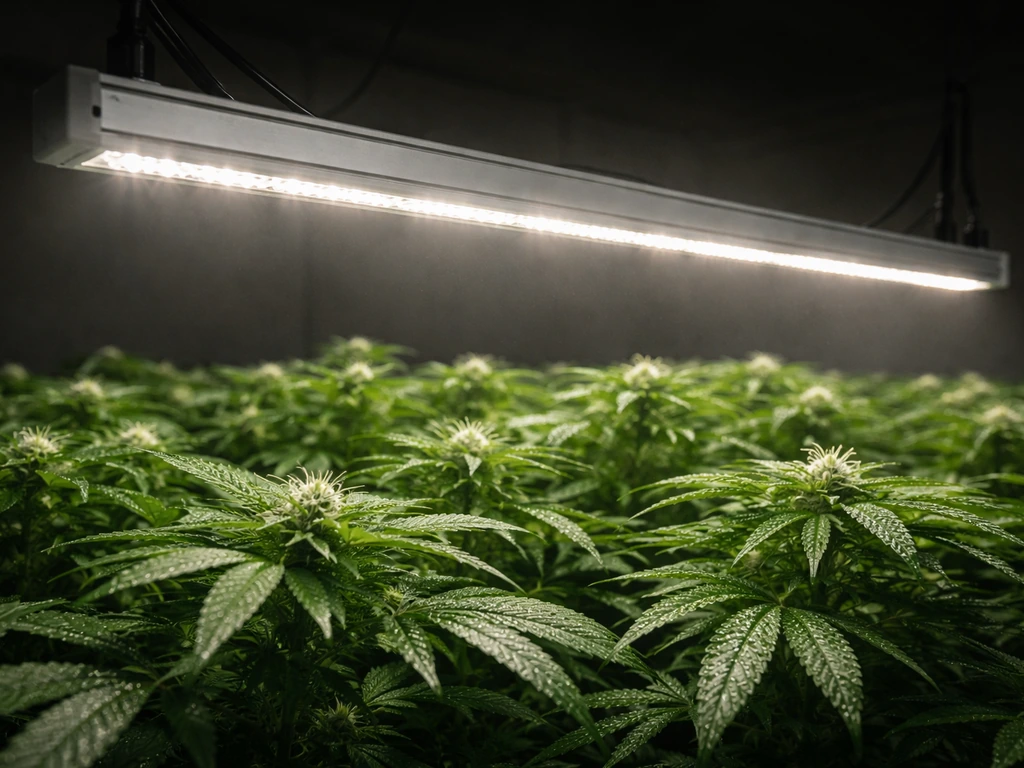
Which SPYDR models this actually covers
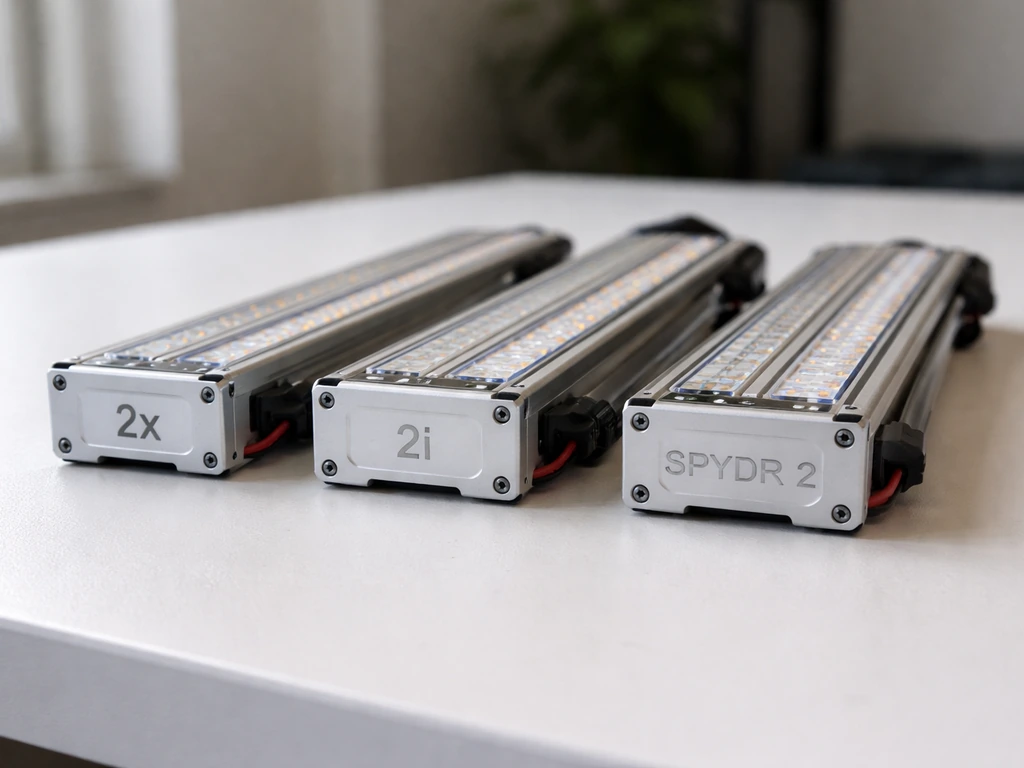
The "spydr" spelling trips people up constantly. Just to clear it up: SPYDR is Fluence by Osram's branded spelling, not a typo. Fluence is the horticultural lighting division of Osram, and the SPYDR name has been their flagship top-light fixture line for years. You might also see it written as "Spyder" in search queries or casual conversations, but the product itself is always SPYDR.
The SPYDR 2 generation breaks into three distinct models. The SPYDR 2x sits at the lower output end of the family and is positioned for early-development or vegetative-stage work. The SPYDR 2p is the full-cycle workhorse, designed to handle both veg and bloom at higher PPFD. The SPYDR 2i sits at the top of the line with the highest output and efficacy, aimed squarely at high-PPFD reproductive growth. Fluence also publishes individual spec sheets for specific sub-variants like the SPYDR 2i47 and SPYDR 2p47, which refer to specific configurations within each model family.
If you've seen wattage figures like 390W, 500W, or 620W attached to SPYDR listings online, those correspond to the different models and configurations in the family. The SPYDR 2i in its 630W configuration is the most commonly referenced spec in North American retail listings.
Who each model is actually best for
| Model | Best Grow Stage | Ideal Space | Notes |
|---|---|---|---|
| SPYDR 2x | Seedlings / Veg | Larger multi-fixture veg rooms | Lower output tier; good for early development without light stress |
| SPYDR 2p | Full-cycle (Veg + Bloom) | 4x4 to 5x5 per fixture in a multi-light room | The most versatile of the three; dimmable for stage flexibility |
| SPYDR 2i | Bloom / High-PPFD Flower | 4x4 canopy per fixture | Highest output and efficacy; demands CO2 enrichment to use effectively |
The honest takeaway here is that none of these are great standalone tent lights for a casual grower running ambient CO2. The SPYDR 2p is the most flexible if you want one light to handle multiple stages, but even that model performs best when CO2 is dialed in during flower. The SPYDR 2i, with its 630W draw and 1700 µmol/s PPF, is genuinely overkill for anyone not running enriched environments. If you're a hobbyist growing in a 4x4 tent without CO2, you'd be overpaying for intensity you can't actually use.
Real-world output, coverage, and spectrum performance
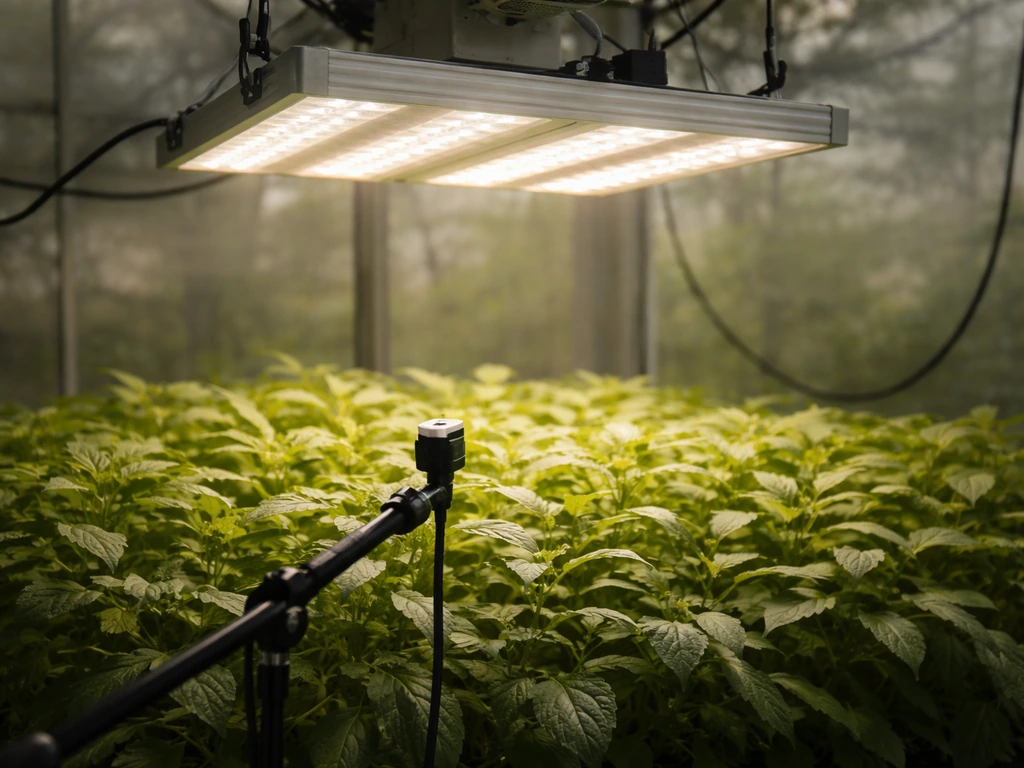
Output and PPFD numbers that matter
The SPYDR 2i puts out 1700 µmol/s PPF at 630W, which works out to roughly 2.7 µmol/J efficacy. That's a legitimate spec, not marketing fluff, and it's been independently corroborated by retailer measurement data. For context, that efficacy figure puts it in the top tier of commercially available fixtures. At 6 inches above the canopy over a 4x4 footprint, you're looking at average PPFD values measured in independent analysis of around 958 µmol/m²/s, dropping slightly to around 912 µmol/m²/s at 12 inches of hang height. The comparison matrix from Fluence's own documentation points to roughly 990 µmol/m²/s as an average target, which lines up reasonably well with those third-party measurements.
What's worth flagging is that older units don't always hold those numbers over time. There are user reports of SPYDR 2p fixtures in their third year of use measuring only around 800 µmol/m²/s at 100% power, which suggests driver degradation is a real concern at the high end of the product's lifecycle. It's not unusual for high-output commercial LEDs to lose output over time, but it's something to account for in your long-term cost planning.
Canopy uniformity
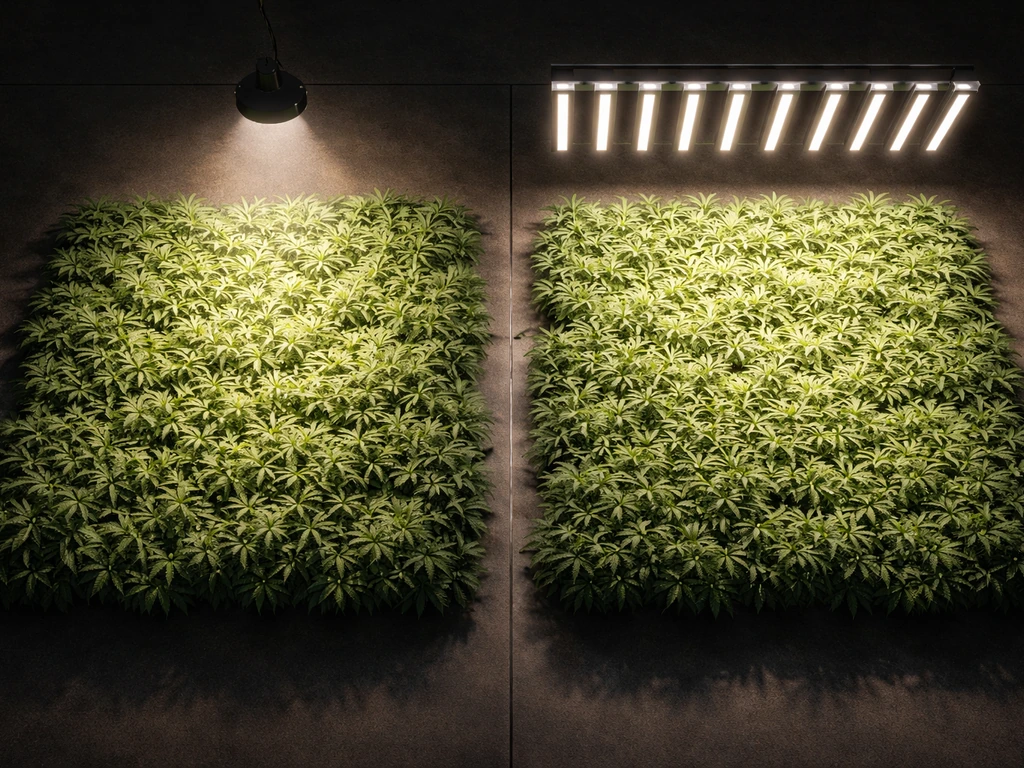
Bar-style top-lights are generally better at uniformity than single-point fixtures, and the SPYDR lineup benefits from that design. Fluence's bar array spreads light across the canopy more evenly than a puck-style or spider LED. That said, there are documented hotspotting issues when these are hung too low or used at full power without CO2. At the intensity these lights operate, the center of the canopy will consistently read higher PPFD than the edges, which matters if you're trying to maintain even growth across a dense canopy. The 6-inch-above-canopy recommendation is the sweet spot for both uniformity and flux density over a 4x4 area.
Spectrum and growth stage suitability
Fluence designed the SPYDR spectrum around broad-spectrum white light with targeted red and far-red content, which is well-suited for both vegetative and reproductive stages. The full-cycle spectrum approach means you're not swapping lights between veg and bloom, which is a practical advantage. Spectrum effectiveness is genuinely good here, and the photon output is weighted toward usable PAR wavelengths rather than blue-heavy efficiency padding you see in some budget fixtures.
Build quality, heat, and real-world reliability
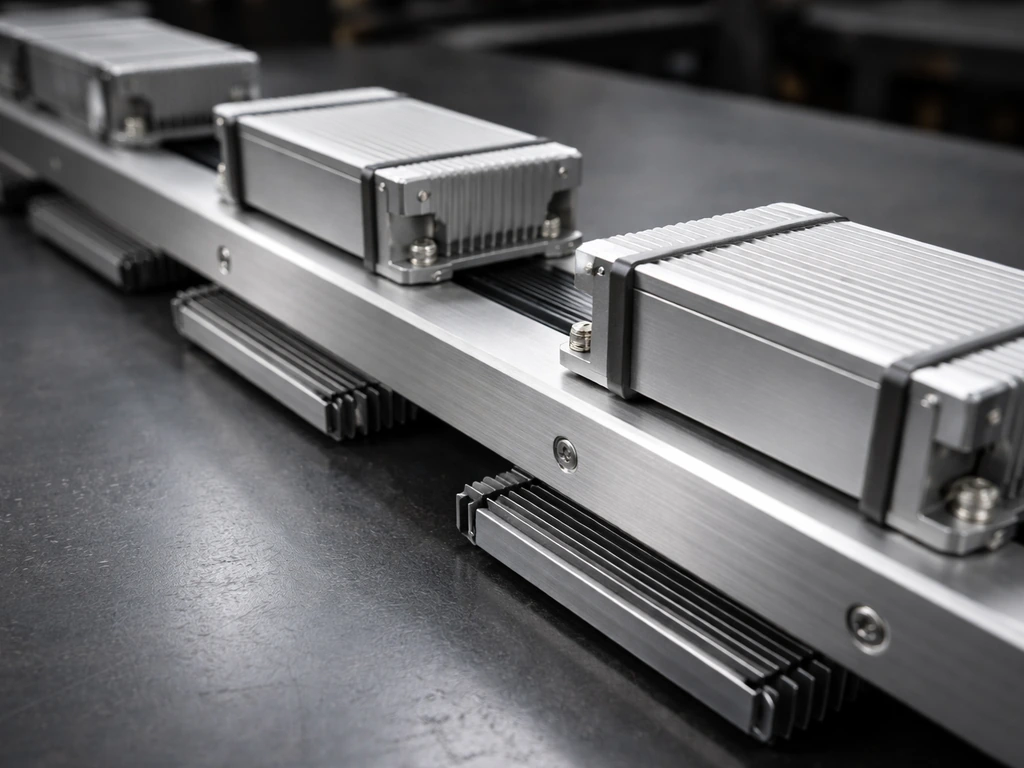
Fluence builds these to a commercial standard. The bar-style chassis is solid aluminum, the drivers are housed separately in some configurations, and the overall construction feels like something you'd expect from an Osram-backed brand. These aren't flimsy units. That said, "commercial grade" doesn't mean trouble-free. Driver issues on older SPYDR 2p units have surfaced in grower communities, and at the price point these carry, that's a harder pill to swallow than a driver failure on a $200 fixture.
Thermal management is decent for the wattage class. The aluminum bar design dissipates heat passively across a large surface area, and because there's no enclosed housing trapping heat, the fixtures run reasonably cool relative to their output. That said, a 630W fixture is still putting significant heat into your grow space. In a sealed room with CO2, this is manageable with proper HVAC. In an open tent or ambient-air grow, you'll feel it.
Dimming is supported across the SPYDR 2 family via dimmer accessories and DC dimming control cables, which is confirmed in Fluence's own manuals and retailer listings. That flexibility is useful for adapting intensity to growth stage or dialing back if your plants show stress. Just note that the dimmer is typically a separate purchase, which adds to the real cost of a full setup.
Value for money: does the price justify the specs?
This is where the SPYDR line gets complicated for most readers. These are commercial-tier fixtures priced accordingly. The SPYDR 2i in particular is not a light you're picking up for a few hundred dollars. For a well-capitalized commercial or semi-commercial operation, the 2.7 µmol/J efficacy and 1700 µmol/s PPF genuinely justify the investment, especially when you factor in long-term energy savings from that efficiency over thousands of operating hours.
For a hobbyist or small-scale cultivator, the value proposition is harder to defend. You're paying a premium for output you can't fully utilize without CO2 enrichment, which is its own infrastructure cost. And if you're comparing on raw efficacy, there are alternatives in the 2. If you're instead deciding between this commercial SPYDR approach and a consumer-style option, the vs1000 led grow light review is a useful comparison point. 5 to 2.7 µmol/J range at significantly lower price points. The SPYDR's edge is in brand reputation, build quality, and the Fluence/Osram support infrastructure behind it, not in being uniquely affordable.
One cost item many buyers miss: the dimming accessory and any control cables are typically sold separately. Factor those in before comparing sticker prices to competing fixtures that include integrated dimming controls out of the box.
How to set these up for best results
Mounting height and coverage
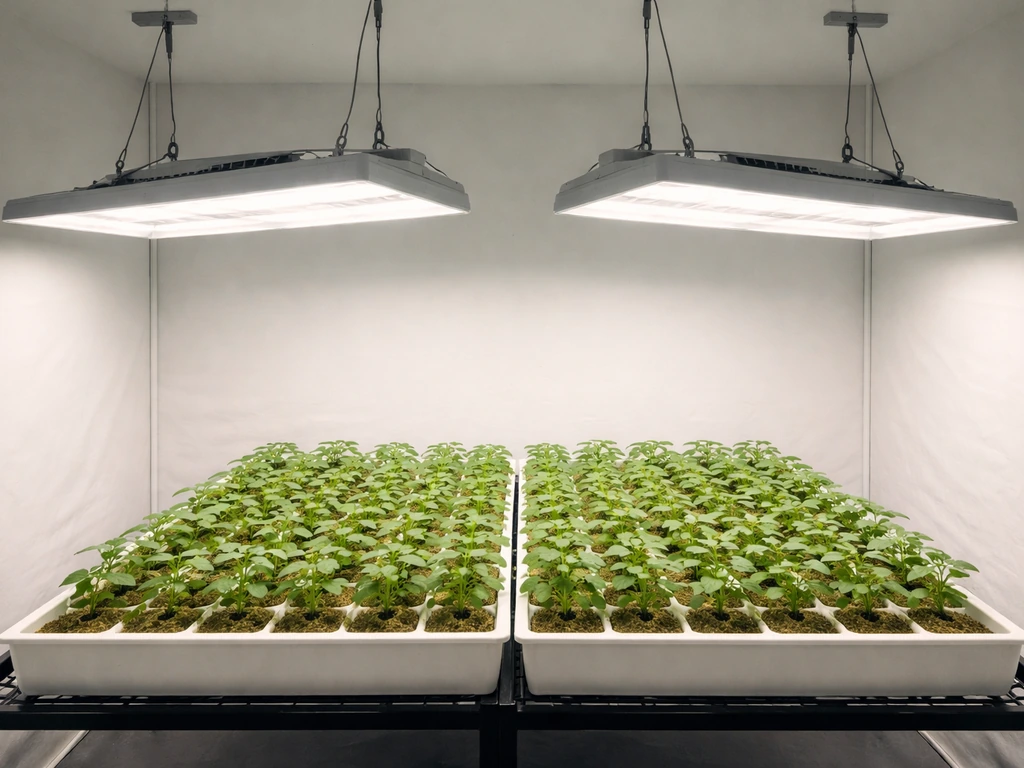
Fluence's official guidance, echoed by distributors, is to hang SPYDR 2i fixtures approximately 6 inches above the top of the canopy to hit optimal uniformity and flux density over a 4x4 footprint. At 12 inches, you get slightly lower average PPFD but marginally better edge uniformity. For the SPYDR 2p in a full-cycle setup, most growers run it a bit higher during veg (10 to 14 inches) and bring it down as the canopy fills in during flower.
Coverage mapping and plant placement
Plan each SPYDR 2i for roughly one 4x4 canopy area. If you're running a larger room, you'll tile fixtures. Because bar-style lights have directional output along the bar, orient the bars perpendicular to your rows if possible to get better lateral spread. Don't crowd plants into the edges expecting the same output as the center, because you won't get it. For a single-fixture tent setup, center your canopy directly under the light and train plants outward to keep the canopy flat and close to that optimal 6-inch hang distance.
Dimming and photoperiod guidance
Use the dimmer during seedling and early veg stages, running the fixture at 40 to 60 percent to avoid light stress before your plants can handle high PPFD. Ramp up through veg and hit full power during late flower when CO2 is dialed in. Standard photoperiods apply: 18/6 for veg, 12/12 for flower. The SPYDR series doesn't have any proprietary scheduling built in, so you'll manage timers externally.
What to buy instead, depending on your situation
The SPYDR series isn't the right tool for every grower, and being honest about that is more useful than pushing a premium fixture on someone who doesn't need it. Here's how to think through the alternatives:
| Your Situation | Better Alternative | Why |
|---|---|---|
| Hobbyist in a 2x4 to 4x4 tent, no CO2 | Mid-range spider-style LED (e.g., Spider Farmer SF or VS series) | Full output utilizable without enrichment; lower cost; sufficient for home grows |
| Full-cycle 4x4 grow, moderate budget | VS4000 or VS2000 class fixtures | Strong efficacy, integrated dimming, fraction of SPYDR cost |
| Small tent or seedling/clone station | Spider Farmer SF1000 or VS1000 class | Right-sized output; no wasted intensity or cost |
| Commercial room, CO2 enriched, scale matters | SPYDR 2p or 2i | This is exactly what these are built for; efficacy and build quality justify cost at scale |
| High-output single fixture, tighter budget | ROI-E720 class alternatives | Competitive efficacy at lower price; worth comparing PAR distribution maps directly |
If you've been looking at Spider Farmer's lineup alongside the SPYDR series, it's worth knowing they're entirely separate brands with different target customers. If you want something in the consumer tier, check out our Spider Farmer SF1000 LED grow light review for a direct comparison Spider Farmer's lineup. If you're specifically after a Spider Farmer grow light review, it helps to compare the SF and VS lines against what you actually need for your tent size and budget.
Spider Farmer's SF and VS series are consumer-focused LEDs built for home tent grows, and they represent solid value at that level. The SPYDR name is Fluence's commercial product, and the gap in price, output, and target use case between the two is significant. For most hobbyists reading this, a VS2000 or VS4000 is going to serve you better than a SPYDR 2i at a fraction of the cost.
So, should you buy a Fluence SPYDR?
Buy a SPYDR if you're running a commercial or semi-commercial space, you already have CO2 dialing in your environment, and you're making a long-term infrastructure investment where the per-fixture cost amortizes over thousands of run hours. The 2.7 µmol/J efficacy is real, the build quality is legitimate, and the Fluence name carries genuine credibility in the commercial horticulture space.
Skip the SPYDR if you're growing in a home tent, you're not running CO2, or you're working with a budget under a few thousand dollars for lighting. The intensity these fixtures deliver goes to waste in ambient CO2 conditions, you'll overpay for output you can't use, and you'll get more practical value from a well-specced consumer LED that fits your actual grow environment.
Before you pull the trigger on any fixture in this class, map out your grow space in square feet, decide whether CO2 enrichment is part of your setup now or realistically in the near future, and price out the full cost including any dimmer accessories. That exercise will tell you quickly whether the SPYDR series is your next investment or whether a more accessible fixture gets you where you want to go for less. If you're specifically shopping for the VS4000, you may also want a detailed VS4000 LED grow light review for how it performs in real setups.
FAQ
Is the SPYDR 2x, 2p, or 2i the right choice if I want one light for both veg and flower?
If you truly want one fixture to cover everything, the SPYDR 2p is the most logical starting point because it is the family’s full-cycle option. That said, you still want CO2 in flower to avoid underutilizing its higher-intensity output, and you should be ready to change hang height across the canopy filling phase (rather than expecting the same PPFD everywhere at all times).
What’s the practical difference between the SPYDR 2i “630W” configuration and lower watt configurations I might see listed?
Listings often vary by configuration, so treat watt draw and PPF as the real decision inputs, not just the model name. If you see a 2i listed under a different watt tier than the common 630W reference, double-check the PPF at that wattage and confirm whether the fixture is still rated for the same performance expectations at your target hang height.
How do I confirm I can dim a SPYDR in my setup if I do not want to buy extra accessories?
Even though dimming is supported, the dimmer control hardware and cables are commonly sold separately. Before purchasing, verify you have the correct dimming accessory model and that your controller output matches what the fixture expects (DC dimming control cables are not always interchangeable across brands and generations).
Do SPYDR lights fit standard grow tents, or do I need a specific mounting setup?
They are bar-style commercial top-lights, so you generally need a secure overhead mount rated for the fixture’s weight and length, not just standard hobby tent hangers. Also plan for airflow clearance, because a high-watt bar fixture can create hot spots around the chassis even if the fixture runs relatively cool compared with enclosed units.
If my room does not have CO2, can I still use a SPYDR by lowering power and hang height?
You can reduce power, and that may help avoid light stress, but you still risk paying for intensity and efficiency you cannot fully exploit without enriched CO2 in flower. In practice, many non-CO2 growers find consumer fixtures closer to their usable PPFD needs, especially because reducing power frequently means the fixture no longer operates in the same performance sweet spot.
What should I do if I measure much lower PPFD after a year or two, especially on older SPYDR units?
Expect that output can decline over time, and reports of reduced PPFD at full power on older units point to driver or system degradation as a real possibility. If you suspect drift, measure PPFD at a consistent hang height and location, compare to the original configuration’s expected mapping, then decide whether replacement or service is more cost-effective than continuing to compensate with higher intensity (which can also increase heat and stress).
How strict do I need to be about the recommended 6 inches versus 12 inches hang height?
It matters because uniformity and average PPFD shift with height, and canopy density changes what “adequate” looks like. If you place it at 12 inches you can gain slightly better edge uniformity, but you may need to run higher intensity to maintain the same canopy-level PPFD, which can magnify the downsides if you are not using CO2.
Can I assume the center of the canopy will match the edges with a SPYDR?
No, even with improved uniformity from bar-style design, intensity distribution can still show a center bias when hung low or operated at full output. If your canopy management is difficult (uneven plant heights, dense foliage), plan on training and keep plants close to the same height, because you cannot fully “fix” distribution just by swapping hang height once the canopy is uneven.
How many square feet should one SPYDR 2i cover in real-world terms?
A reasonable planning assumption is one SPYDR 2i per one 4x4 footprint, but only if your hang height and canopy management match the intended configuration. If your plants are taller, the canopy is thicker, or your environment is turbulent, you may need either more fixtures or more conservative intensity targets to avoid under-lighting the perimeter.
What row orientation should I use when my plants are not arranged in a single flat grid?
If possible, orient the bar direction perpendicular to your plant rows to improve lateral spread. If your layout is irregular, prioritize consistent distances from canopy to fixture and avoid placing plants at the far ends of the bar’s effective coverage, because output directionality can make “edge plants” materially dimmer.
Does the SPYDR spectrum remove the need for separate veg and bloom lighting?
The full-cycle spectrum is designed to support both veg and reproductive growth without swapping fixtures, which simplifies scheduling. However, you should still dial intensity and environment (especially CO2) by stage, because spectrum coverage does not replace the need to adjust PPFD as the crop’s light demand and canopy thickness change.
Will the SPYDR work well with my existing timers and controllers?
The fixtures do not provide proprietary scheduling, so you should plan to control photoperiod with external timers. Also, if you use smart controllers, confirm they control only the on/off function, while dimming control (if used) is handled through the correct dimmer accessory and cabling.
Are the 18/6 veg and 12/12 flower schedules always appropriate with a SPYDR?
Those schedules are common, but you may need to adjust if your canopy is maturing faster or if you are running at lower PPFD due to non-ideal CO2 or spacing. If you reduce intensity to protect plants, you might not need a longer photoperiod, but you should monitor plant response and keep PPFD and DLI targets consistent rather than relying on a fixed timer schedule.
What’s the most common “hidden cost” mistake when budgeting for a SPYDR?
For many buyers, the biggest miss is not including the dimmer accessory and required control cables in the upfront budget. If you are comparing prices against consumer LEDs that bundle dimming, you should compare total cost for the same control capability, not just the fixture sticker price.