The Luminar Everyday Grow Light is a budget-tier, full-spectrum LED fixture sold by Harbor Freight under SKU 59250. If you're trying to decide right now whether it's worth the ~$23 price tag for your indoor garden, the short answer is: it's a decent supplemental or seedling light for very small spaces, but it's not a workhorse for serious vegetative growth or flowering. Here's everything you need to know to make that call for your specific setup.
Luminar Everyday Grow Light Review: Worth It for Indoor Plants?

Marcus Caldwell
18 Apr 2026
What the Luminar Everyday Grow Light is (and who it's for)
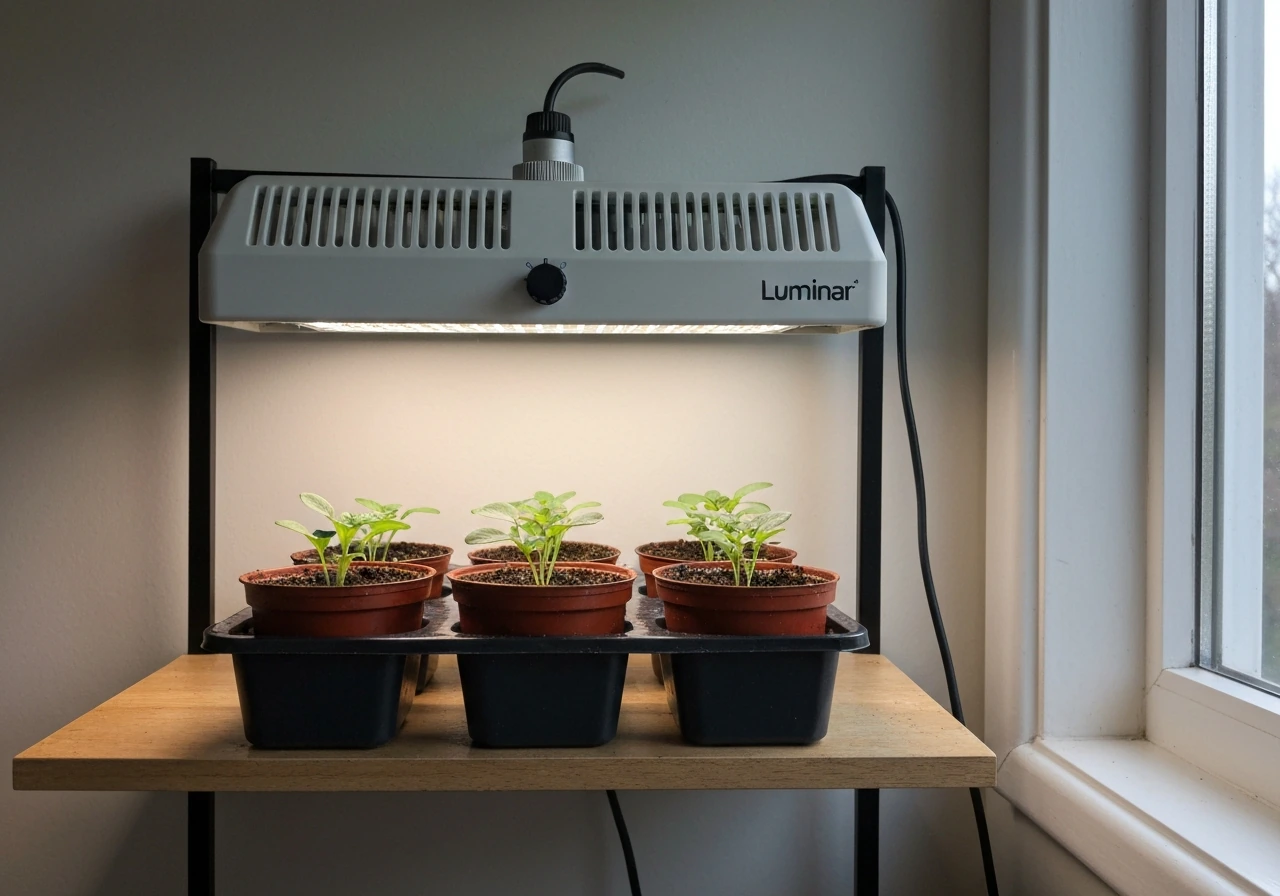
Harbor Freight markets this as a "Full-Spectrum LED Plant Grow Light" intended for all stages of growth, including seedlings, vegetative growth, and flowering. The full name on the box is the LUMINAR EVERYDAY 2 ft. Linkable 2-Light Full-Spectrum LED Plant Grow Light, and it's positioned as an easy, affordable entry point for indoor gardeners who don't want to spend big. Harbor Freight describes it as suitable for greenhouse-style damp conditions and rates it for high-humidity environments, which is a practical plus for anyone growing herbs in a humid kitchen or a small greenhouse tent.
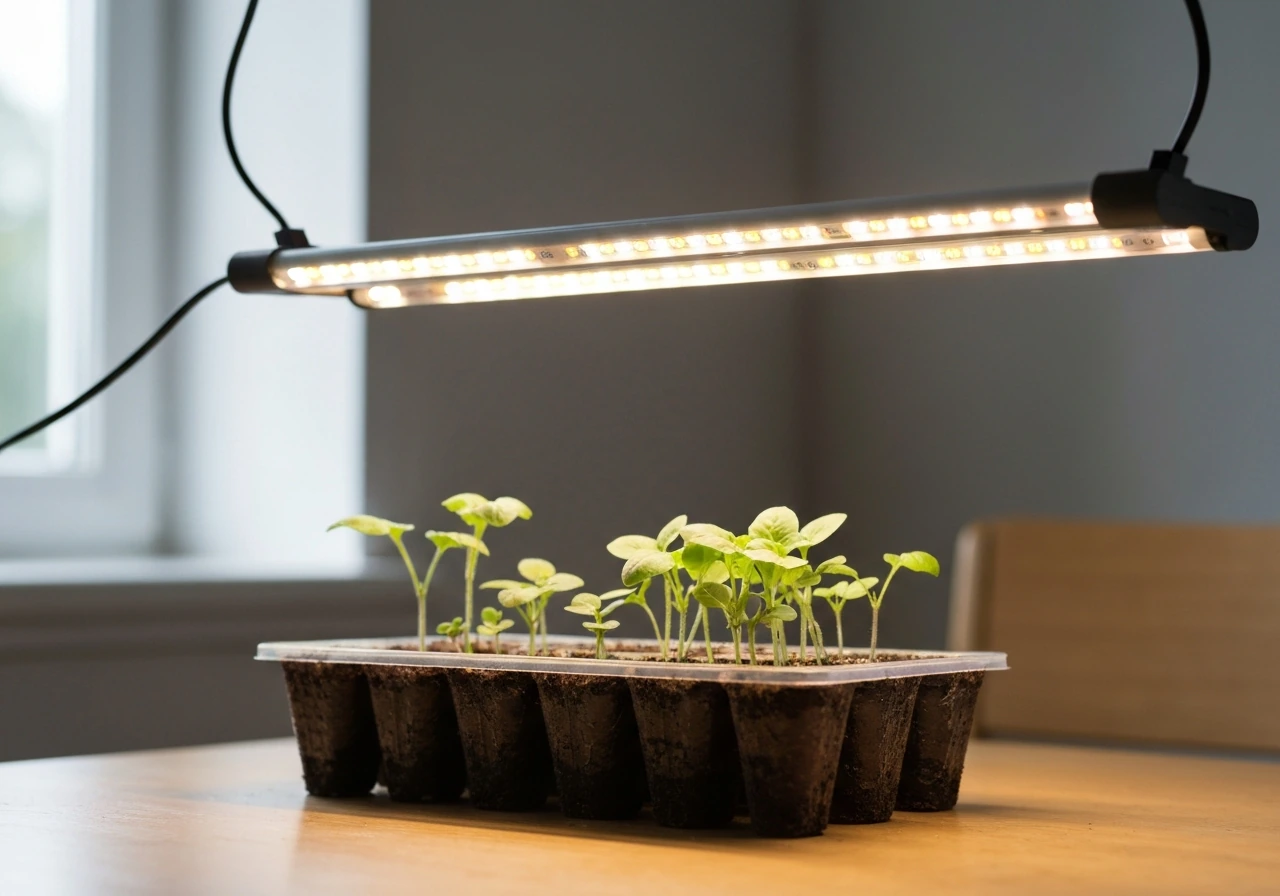
The target buyer is someone who wants a simple plug-and-go solution for a window shelf, a seed-starting tray, or a small herb rack. It's not aimed at experienced growers running PPFD-optimized setups. If you're growing tomatoes through full flower and fruit development, this fixture alone won't cut it. But for a first-time indoor gardener starting seeds or keeping low-light herbs alive through winter, it sits in a reasonable spot.
Key specs that matter
Before getting into how it actually performs, here are the numbers Harbor Freight publishes. These are the specs you should use to evaluate coverage, efficiency, and lifespan honestly.
| Spec | Value |
|---|---|
| Wattage | 19W |
| Input voltage | 120VAC / 60Hz |
| Lumen output | 2,600 lm |
| LED type | Integrated LED (no replaceable bulbs) |
| Rated lifespan | 25,000 hours |
| Fixture length | 2 ft |
| Power cord length | 5 ft |
| Coverage claim | 2 ft x 2 ft (4 sq ft) per fixture |
| Max linked fixtures | 8 |
| Certifications | ETL, FCC |
| Humidity rating | Suitable for damp locations (GFCI required) |
| Warranty | 90 days from purchase |
A few of those specs deserve a closer look. At 19W drawing 0. 172A, this is a low-power fixture by any measure. The 2,600 lumen figure sounds reasonable for a 2-foot bar light, but lumens measure light as human eyes perceive it, not as plants use it.
There's no published PAR (photosynthetically active radiation) or PPFD (photosynthetic photon flux density) data from Harbor Freight, which is a real gap. Full-spectrum "cool-white" LEDs do cover the 400-700nm range plants need, but without PPFD numbers at a specified hanging distance, you're estimating. The 25,000-hour rated lifespan is a genuine selling point: at 16 hours per day of use, that's roughly 4. 2 years of continuous operation before the LEDs start degrading meaningfully.
The integrated design means no bulb replacements, but it also means when the driver or LEDs fail, you replace the whole unit.
The linkable design is one of the more useful practical features here. You can chain up to 8 units together from a single outlet, which means if you're covering a longer shelf or propagation rack, you don't need to run separate power cords for every strip. The fixture ships with chain hangers and all the hardware needed for either hanging or flush-mounting directly to a shelf.
How it actually performs in real use
Brightness and coverage
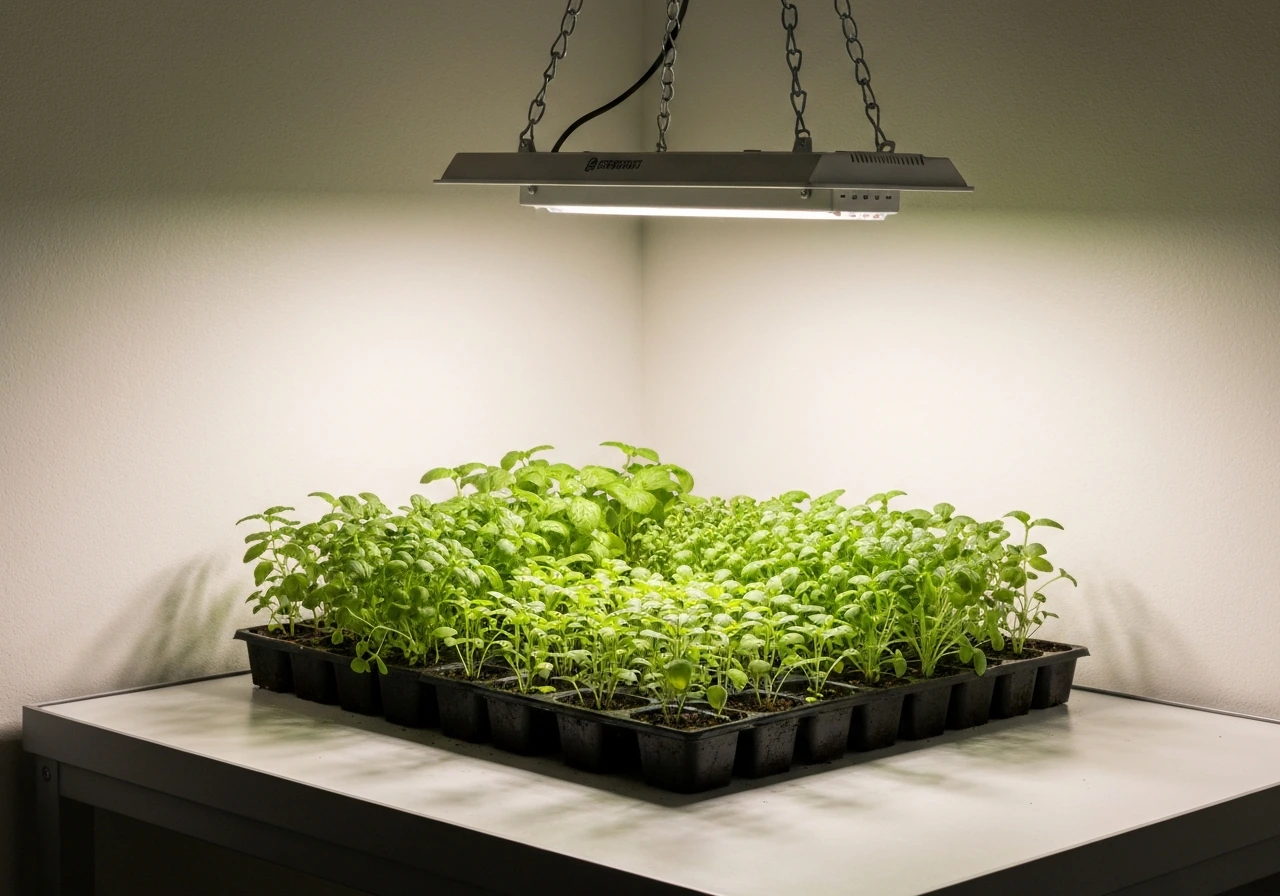
Harbor Freight claims one fixture covers a 2x2 ft footprint. In practice, that coverage claim is only accurate when the light is hung quite close to the canopy, somewhere in the 6-12 inch range. At 18-24 inches of hanging height (which is more typical for a shelving unit), the usable light footprint drops off significantly at the edges. The 2,600 lumens output is spread across the full 2-foot length, so you're working with roughly 1,300 lumens per linear foot. That's adequate for germination and seedlings, where light demands are lower, but it's thin for plants in active vegetative growth, especially anything that needs high daily light integrals.
For context: seedlings and young herbs typically need 20-40 DLI (daily light integral) to thrive under artificial light alone. At 19W with no published PPFD data, I'd estimate this fixture delivers somewhere in the 80-150 µmol/m²/s range at 12 inches, which is on the low end for sustaining anything beyond low-light greens and herbs. Running it 14-16 hours per day helps compensate for the lower intensity.
Real plant outcomes
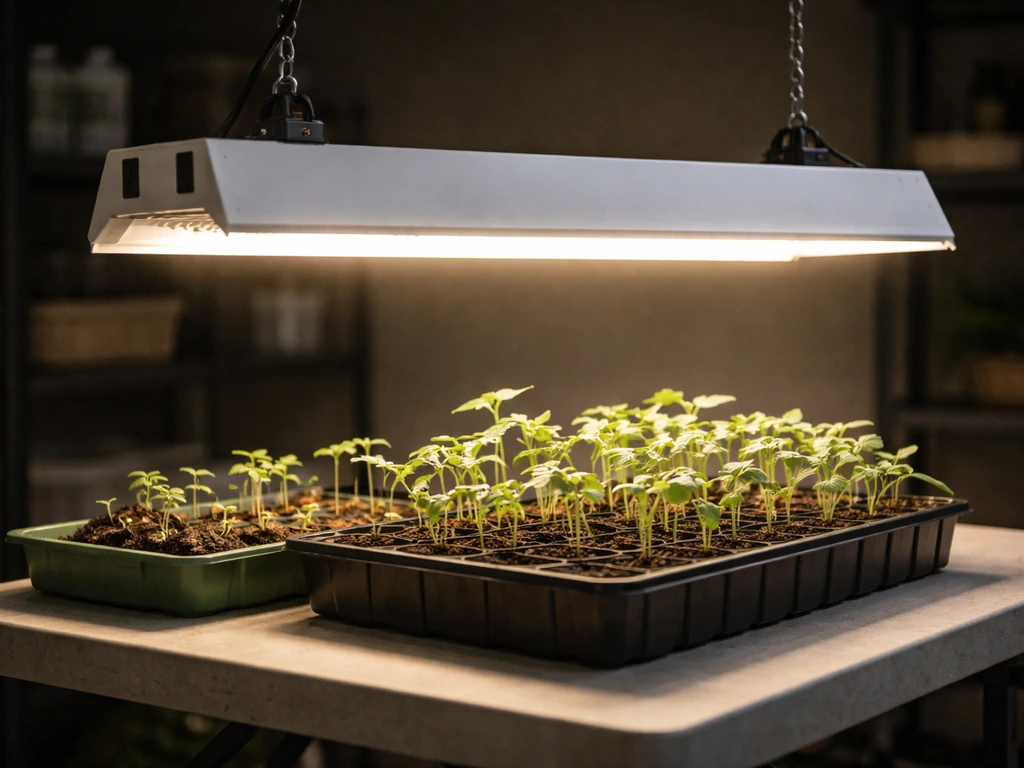
For seed starting, the Luminar Everyday performs well enough. Germination rates are not affected by light intensity during the pre-emergence stage, and once seedlings emerge, the close-hanging proximity keeps leggy stretching to a minimum. Herbs like basil, cilantro, and parsley grow acceptably under this fixture when kept 6-8 inches below the strip. Leafy greens like lettuce and spinach can complete a full growth cycle under it, though growth rate is slower compared to higher-wattage options. Where it struggles is with fruiting plants and anything classified as high-light: tomatoes, peppers, and cannabis will show clear signs of light stress and stretching within a few weeks, even with extended photoperiods.
Harbor Freight claims this light will help plants "produce more desirable flowers and fruit," which is marketing language that needs to be taken with skepticism at 19W. For flowering and fruiting stages, you really need a light with a meaningful red spectrum component and substantially higher PPFD. This fixture's cool-white spectrum bias means it skews toward the blue end, which is fine for vegetative growth and seed starting but suboptimal for triggering and supporting flowering.
Build quality, heat, and day-to-day usability
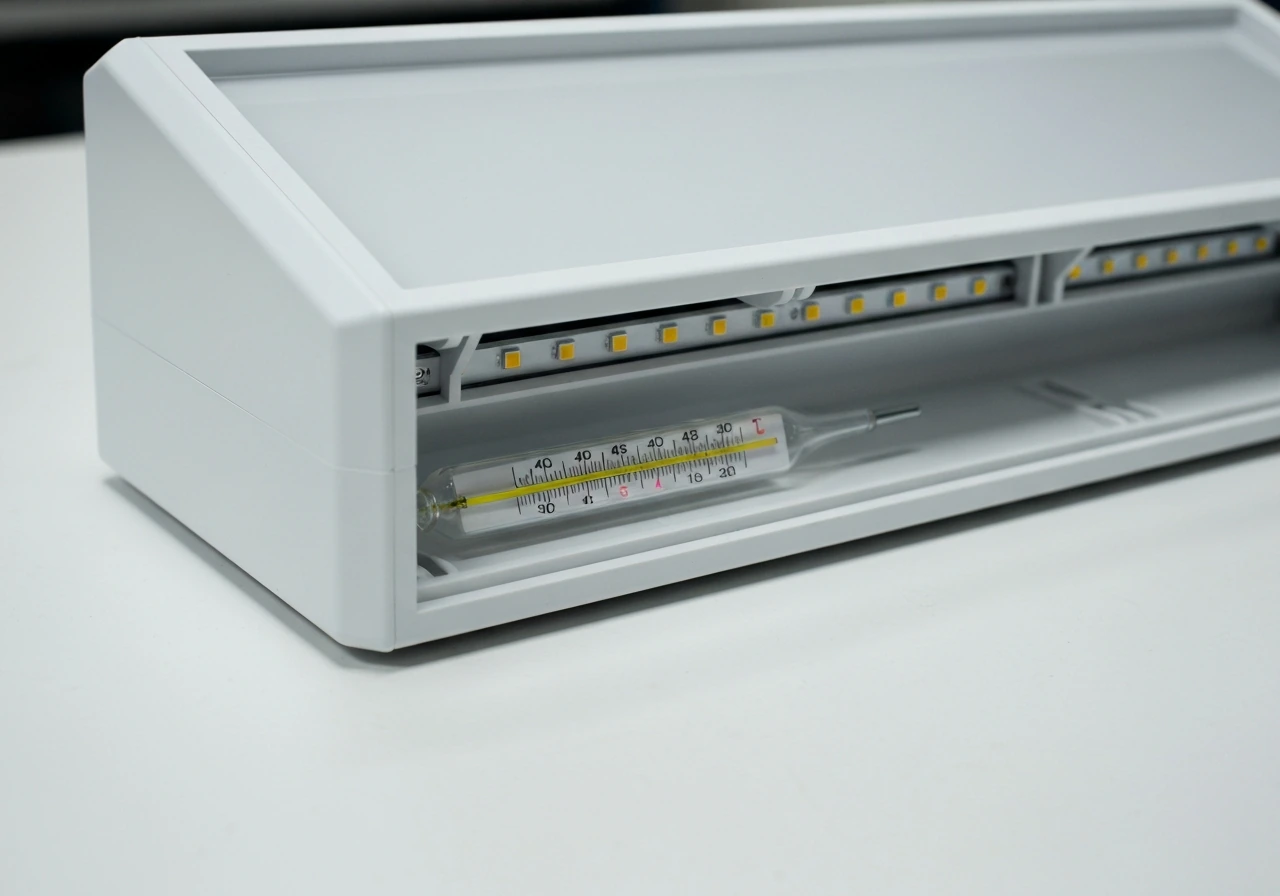
The fixture is a lightweight plastic housing with an integrated LED strip. It feels like what it is: a Harbor Freight product at a Harbor Freight price. The plastic housing is not premium, but it doesn't need to be for this use case. The ETL and FCC certifications provide at least a baseline of safety assurance, and the GFCI requirement noted in the manual is standard for any moisture-adjacent electrical device.
Heat output is minimal. At 19W, this fixture runs barely warm to the touch after extended operation. That's genuinely useful: you can hang it close to plants without heat stress, and it won't meaningfully raise ambient temperature in a grow tent or enclosed shelf. There's no fan and no noise, which is a real quality-of-life advantage over older HID or even some higher-powered LED fixtures. Setup takes less than 15 minutes: attach the chain hangers, plug in the 5-foot power cord, and you're growing. Linking multiple units is straightforward with the included hardware.
The 90-day warranty is the weakest part of the ownership experience. The Harbor Freight TM 59250 owner’s manual includes a “Limited 90 Day Warranty” that covers defects in materials and workmanship from the date of purchase. For a light rated at 25,000 hours, a 90-day guarantee is minimal protection. Most reputable grow light brands offer 2-5 year warranties on comparable products. If the driver fails at month 4, you're out of luck. That's a real risk to factor into the value calculation.
Is the value actually there? Power use, lifespan, and cost per output
At roughly $23 per fixture (Harbor Freight has shown this at a regular sale price from a listed retail of $43.97), the upfront cost is very low. Running one fixture at 19W for 16 hours per day costs approximately $0.033 per day at the U.S. average electricity rate of ~$0.12/kWh, or about $12 per year per fixture. That's genuinely cheap to operate. If you chain 4 units together to cover an 8-square-foot shelf, you're at 76W total, about $48/year in electricity, and $92 in fixture cost. That's a reasonable total cost of ownership for a seed-starting or herb shelf.
The 25,000-hour LED lifespan claim, at 16 hours per day, puts theoretical end-of-life at just over 4 years. In practice, LED output degrades gradually (typically to 70% output, the L70 rating) rather than failing suddenly, so expect meaningful dimming before outright failure. The integrated design means there's no cost-effective way to replace just the LEDs or driver. For a $23 fixture, that's acceptable, but it does mean this is more of a disposable-tier product than a long-term infrastructure investment.
Where the value story gets complicated is efficiency. More established grow light brands offer fixtures with substantially higher PPFD per watt, meaning you get more usable plant light per dollar of electricity. For a casual seed-starter, that efficiency gap doesn't matter much. For anyone running lights 12-18 hours daily year-round, the efficiency difference between a $23 Harbor Freight strip and a $60-80 mid-tier grow bar starts to add up in electricity costs over a 2-year period.
Who should buy it and who should skip it
The Luminar Everyday Grow Light is a good fit for a specific type of grower and a specific type of setup. Here's a plain breakdown:
- Good fit: Seed starting trays (germination and early seedling stages where intensity requirements are lower)
- Good fit: Low-light herbs (basil, mint, parsley, cilantro) on a kitchen counter or shelf
- Good fit: Supplemental lighting for a windowsill setup that needs a boost in winter months
- Good fit: Budget-limited beginners who want to test indoor growing before committing to a more expensive setup
- Good fit: Propagation stations where cuttings need gentle, consistent light during rooting
- Skip it: Fruiting vegetables (tomatoes, peppers, squash) that need high PPFD and red-spectrum support
- Skip it: Full-cycle cannabis grows where flowering intensity and spectrum tuning matter
- Skip it: Anyone expecting this to replace a window for full-light plants in a windowless space
- Skip it: Growers who need reliability guarantees beyond 90 days
Coverage-wise, one fixture covers a 2x2 ft area when hung at 6-12 inches. For a standard 4-shelf baker's rack, you'd need 2-3 linked units per shelf to get reasonable coverage. At that scale, the total cost stays manageable, but you should factor in whether the combined wattage (38-57W per shelf) will actually meet your plants' needs at your preferred hanging height.
How it compares to other grow light options
The Luminar Everyday sits in the low-cost strip/bar LED category. To put it in honest context, here's how it stacks up against the main alternatives most indoor gardeners are likely to consider: If you want more options beyond the Luminar Everyday, a master garden grow light review can help you compare brands and find a model with the right intensity for your plants.
| Light Type / Option | Approx. Cost | Wattage | Best Use | Key Advantage | Key Weakness |
|---|---|---|---|---|---|
| Luminar Everyday (SKU 59250) | $23 | 19W | Seedlings, herbs, supplemental | Lowest upfront cost, linkable, cool running | No PAR data, short warranty, limited intensity |
| Mid-tier LED bar/strip (e.g., T5-style full spectrum) | $40-80 | 24-45W | Seedlings through vegetative | Better efficiency, longer warranty (1-3 yr) | Higher cost per fixture |
| Quantum board LED panel (100W+) | $80-200+ | 100-240W | Full cycle, fruiting plants | High PPFD, tunable spectrum options | Significant heat, higher electricity cost |
| Traditional T5 fluorescent | $30-60 | 24-54W | Seedlings, clones, herbs | Proven, widely available | Lower efficiency than LED, bulb replacement needed |
| Full-spectrum LED garden systems (integrated) | $50-150 | 20-60W | Compact indoor garden stations | All-in-one convenience | Fixed form factor, less flexible coverage |
If you're comparing the Luminar Everyday to similar bar-format grow lights from other brands, the honest summary is that you get what you pay for. Spending $40-60 on a comparable fixture from a dedicated grow light brand typically gets you published PPFD data, a 1-3 year warranty, and meaningfully better light efficiency. For someone doing serious year-round indoor growing, that upgrade is worth it. For a seasonal seed-starter or a casual herb grower, the Luminar Everyday is defensible at $23.
If you're curious how retailers with broader garden product lines position fixtures like this, it's worth looking at how Sharper Image's grow light garden lineup approaches the same compact, plug-and-go market segment. Similarly, globe-format grow lights offer a different form factor for small decorative plant setups and are worth considering if your aesthetic matters as much as your grow results. For more dedicated indoor growing setups, the Master Garden grow light is a fixture that targets a similar hobbyist audience but with more rigorous performance specs. And if you're building out a more complete propagation station, the Mother grow light is specifically designed for clone and seedling work at a higher performance tier.
Next steps before you buy
Before ordering, run through this quick compatibility check to make sure the Luminar Everyday actually fits your situation:
- Measure your grow space: If you're covering more than 4 sq ft per fixture, plan to link multiple units. Two linked fixtures covering a 2x4 ft shelf is a practical minimum for even herb growing.
- Confirm your hanging height: For maximum output, you need to hang this 6-12 inches above the canopy. Check that your shelf or rack allows that clearance with room to adjust as plants grow.
- Check your outlet situation: The manual requires a GFCI-protected circuit for this fixture. Most modern kitchens and bathrooms have these, but verify before you install.
- Match spectrum to plant stage: Cool-white full-spectrum LEDs work for seedlings and vegetative growth. If you're growing flowering or fruiting plants through their full cycle, plan to supplement with a red-spectrum source or upgrade to a higher-output fixture.
- Consider your warranty needs: If you're installing this in a setup you depend on (commercial microgreens production, year-round herb supply), the 90-day warranty is a real limitation. Budget for a backup unit or choose a brand with longer coverage.
- Calculate your link configuration: At 19W per unit, linking 8 units maxes out at 152W from one circuit. Make sure your outlet and wiring can handle the combined load, especially if other devices share the circuit.
The Luminar Everyday Grow Light is not a bad product. It does what it says for the right use case, runs cool and quiet, and costs almost nothing to buy and operate. The honest limitation is that it's a low-intensity fixture with minimal warranty support and no published PAR data, which makes it hard to optimize seriously. If your plants are seeds or herbs and your budget is tight, it's a reasonable choice.
If you need reliable, measurable light output for anything beyond that, invest the extra $20-50 in a fixture from a brand that publishes real photometric data and backs its product for longer than 90 days. If you want a quick shortcut before buying, this mother grow light review summary can help you compare performance, coverage, and value.
FAQ
How close do I actually need to hang the Luminar Everyday for decent results?
For most successful use cases, plan on hanging it around 6 to 12 inches above the plant canopy. If you go higher, especially past roughly 18 inches, the usable coverage drops at the edges and you may see stretching on seedlings or low-light herbs, even if you leave the light on longer.
Does the lack of published PPFD or PAR mean I should skip using this light entirely?
Not necessarily for germination and low-light herbs, but it does mean you should treat it as an estimate-based setup. Use plant response as your feedback loop, watch for leggy growth, and adjust height rather than assuming the marketing “full-spectrum” wording matches your needed intensity.
What photoperiod should I use if I’m growing only with this fixture?
A practical starting point is 14 to 16 hours per day for seedlings and herbs, since the fixture is low power. If you see slow growth or light stress, shorten height (bring it closer) before you jump to very long daily schedules.
Can I use it for flowering plants like peppers or tomatoes?
You can try it, but expect limited success unless you add more light or lower the effective plant distance. In most cases the cool-white biased spectrum and low intensity will lead to stretching and weak flowering or poor fruit set, so it is not a reliable single-fixture solution for high-light fruiting crops.
Is it safe to use in a humid kitchen or greenhouse tent area?
The product is marketed as suitable for high-humidity conditions, but you should still keep the electrical plug and power connection away from direct splash and condensation. Use a drip loop on the cord and ensure the mounting hardware is secure so moisture does not pool around the fixture.
How should I space or link multiple units on a shelf?
Linking lets you chain fixtures, but do not assume one long bar evenly covers a larger area. Overlap or stagger only if you have a clear view of where plants are getting light, and keep hanging distance consistent across the shelf to avoid uneven growth from one side to the other.
What plants are the best match for this light?
The strongest fit is seed starting, seedlings in propagation trays, and herbs like basil, cilantro, and parsley kept close to the strip (often around 6 to 8 inches). Leafy greens can work for full cycles, but growth rate will typically be slower than with higher-PPFD grow bars.
Why do my seedlings get tall and thin even though I left the light on longer?
That usually points to insufficient intensity, not insufficient duration. Adjust the light height first (move it closer), ensure the plants are not farther than your effective coverage range, and verify you are not accidentally placing taller seedlings out of the main illumination band.
Does the 25,000-hour lifespan mean my light will stay equally bright for years?
No. The rated lifespan is based on gradual LED degradation, and output can meaningfully drop before failure. With extended daily use, you should expect noticeable dimming over time, and you may need to lower the fixture or replace it once growth slows.
What is the real operating cost if I use several fixtures year-round?
Electricity is cheap because the wattage is low. For planning, multiply total watts by hours used per day and your local $/kWh rate, then add the fixture cost. However, efficiency matters, because more intense lights can reduce runtime for the same results.
Is the 90-day warranty enough for this kind of product?
It is comparatively weak, so treat this as a lower-risk purchase only if you can tolerate early replacement. If the driver fails after a few months, you may pay out of pocket, so consider testing early and keeping proof of purchase.
Should I flush-mount it to a shelf or hang it?
Hanging is usually easier to dial in canopy distance and get uniform coverage. Flush-mounting can work, but you may end up with plants too far from the LEDs if your shelf height is fixed, which increases the chance of edge dimming and stretching.