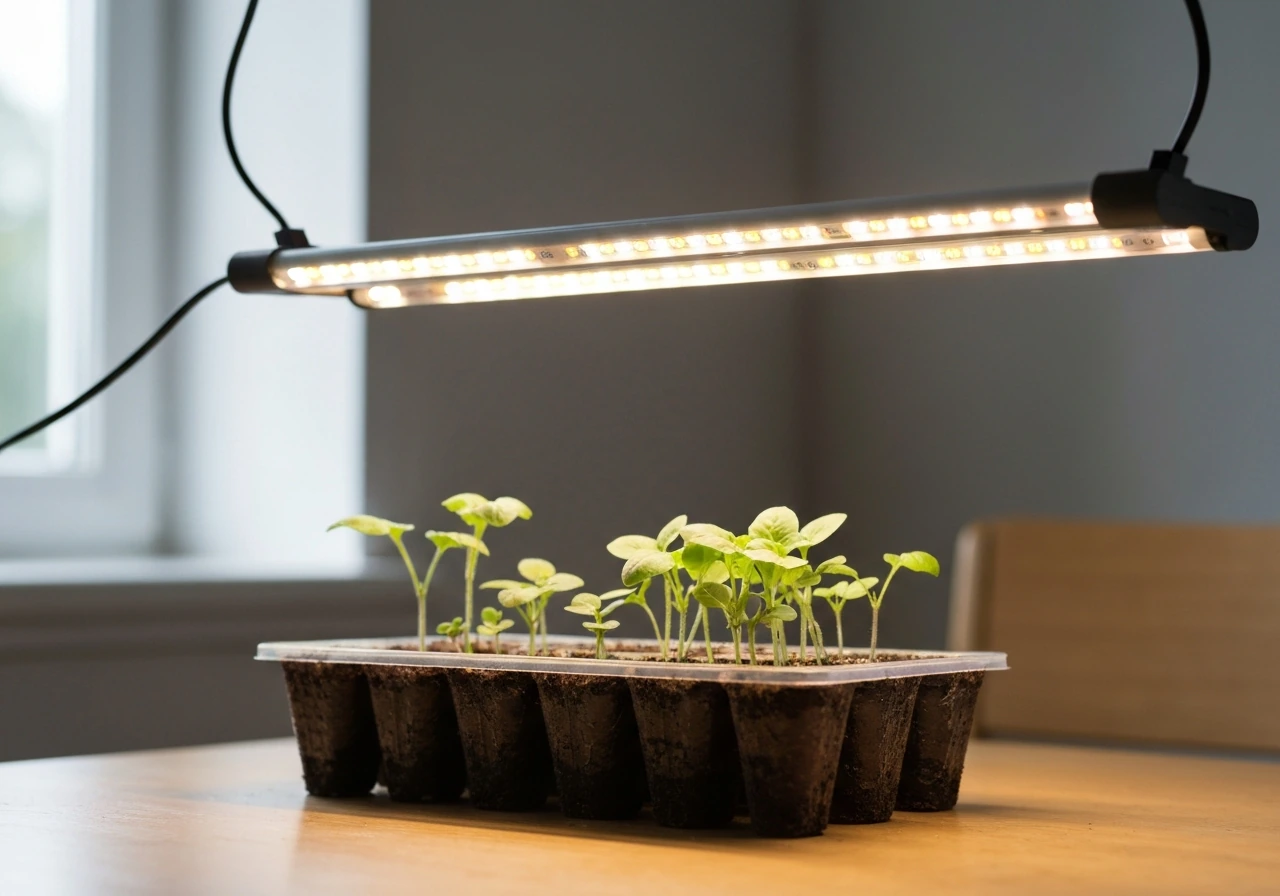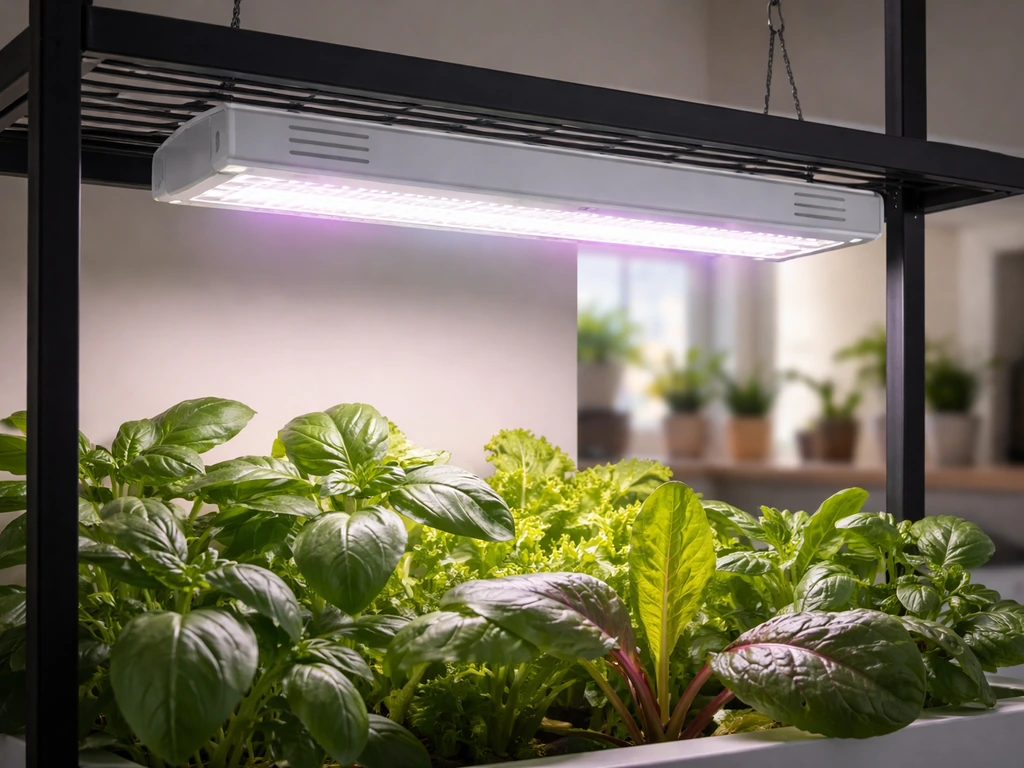
If you searched 'Sharper Image grow light garden' or 'Sharper Image glow grow garden,' there are actually two separate products floating around under very similar names, and the confusion is understandable. If you want to compare how these countertop herb-garden style lights stack up, a mother grow light review can give you a broader benchmark alongside this Sharper Image model. One is a compact hydroponic herb kit (Model 1015191), the other is a standalone grow light garden unit (Model 1015200). Knowing which one you're actually looking at changes the buying decision completely, so let's get that sorted first before anything else.
Sharper Image Grow Light Garden Reviews and Buying Guide

Marcus Caldwell
21 Apr 2026
Which exact model are you looking at?
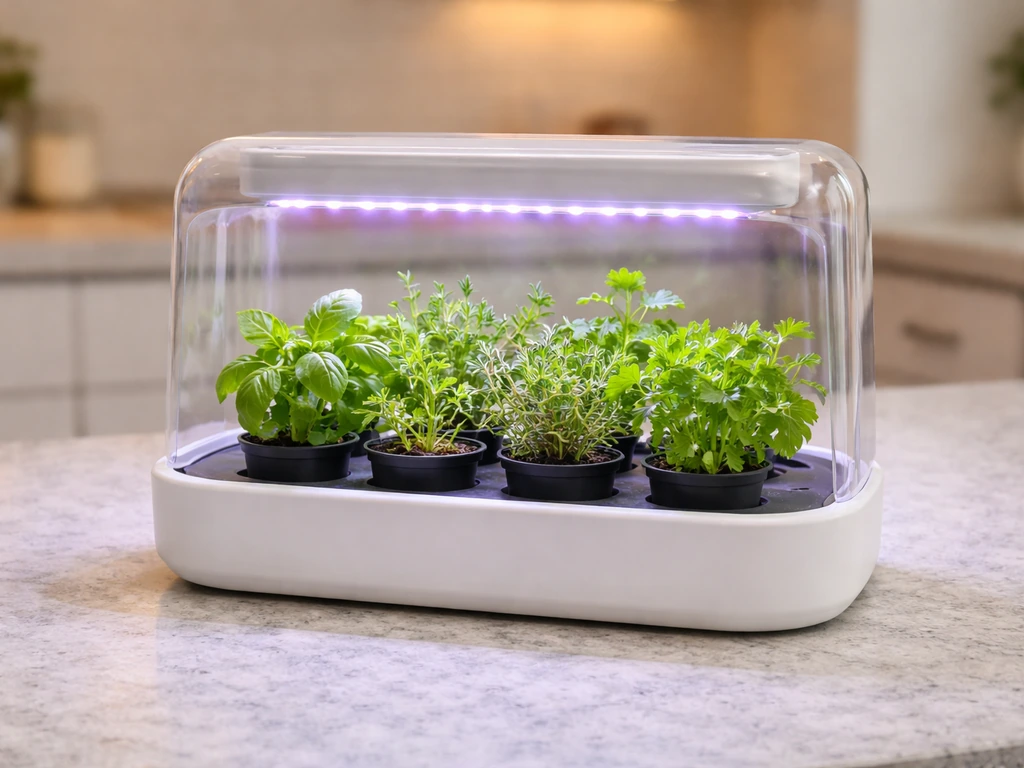
The two products share the 'Sharper Image' branding and similar garden-themed naming, but they serve different purposes. Model 1015191 is the 'Sharper Image LED Glow Grow Indoor Water Herb Garden Kit' sold primarily through Walmart. It's an all-in-one hydroponic-style system where the LED is built directly into the unit. Model 1015200 is the 'Sharper Image Grow Light Garden,' listed through JCPenney, and appears to be a grow-light-forward garden setup rather than a complete hydroponic kit. Publicly visible retailer data doesn't expose full LED specs for the 1015200, so most of what can be verified and tested comes from the 1015191 kit, which is the more widely distributed and reviewed of the two.
| Attribute | Model 1015191 (Walmart) | Model 1015200 (JCPenney) |
|---|---|---|
| Full name | LED Glow Grow Indoor Water Herb Garden Kit | Grow Light Garden |
| Retailer | Walmart | JCPenney |
| Grow method | Hydroponic (water-based, no soil) | Not fully specified in available listings |
| LED type | Built-in LED (integrated) | Not specified in available data |
| Assembled height | 5.1 inches | Not specified in available data |
| Manufacturer | MerchSource (licensed Sharper Image) | Not specified in available data |
| Warranty | Not Applicable | Not specified in available data |
| What's included | Everything except seeds and water | Not specified in available data |
It's worth flagging that 'Sharper Image' here is a licensed brand name. The actual manufacturer on the 1015191 listing is MerchSource, a consumer goods company that licenses well-known brands for mass-market products. This matters when you're evaluating build quality and after-sales support, because you're not buying from an LED lighting specialist. The warranty section on the Walmart listing literally reads 'NOT APPLICABLE,' which tells you a lot about what to expect if something goes wrong.
What's in the box, setup, and day-to-day usability
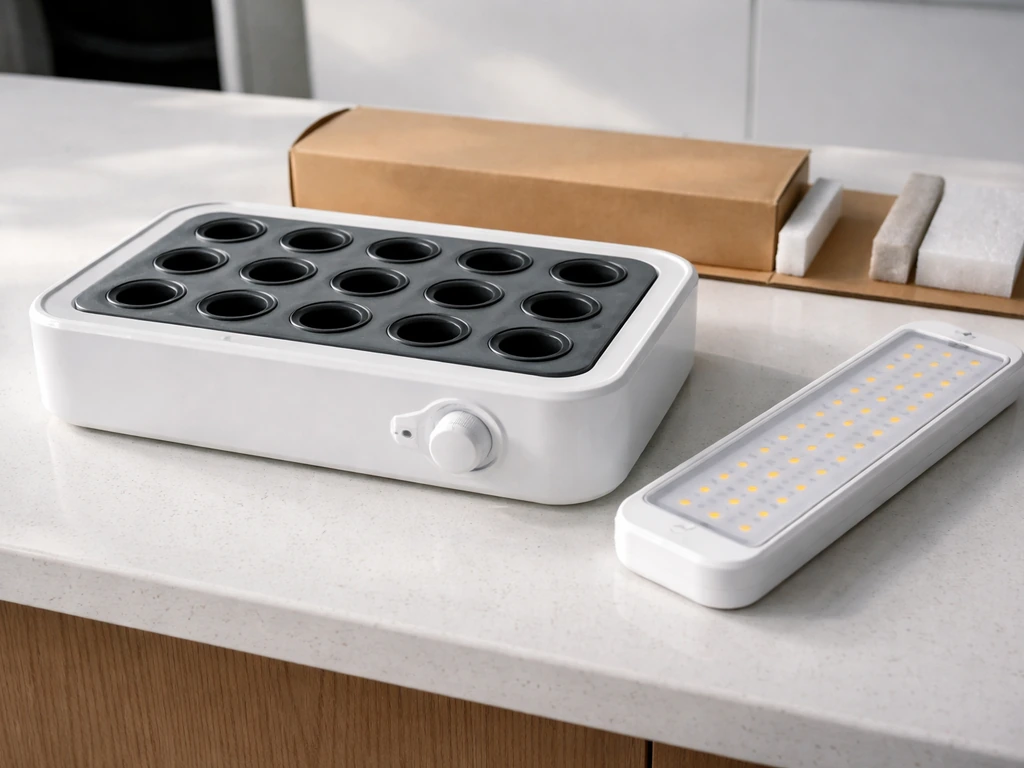
For the 1015191 kit, the packaging promise is 'everything included except seeds and water.' In practice that means the hydroponic tray or pod system, the LED grow light integrated into the unit, a pump or aeration mechanism, and a step-by-step instruction manual that also includes seed recommendations. The setup is genuinely beginner-friendly. You're not dealing with separate hanging hardware, driver units, or spectrum controllers. You add water, drop in seeds, plug it in, and the system handles the rest.
The built-in timer is one of the more useful real-world features. User reports confirm that after 12 hours, both the light and the oxygen/aeration system automatically shut off. That's a reasonable photoperiod default for herbs and leafy greens, and not having to set a separate outlet timer is a genuine usability win for a beginner. The flip side is that you can't adjust the photoperiod if your plants need a different schedule. You're locked into 12 hours on, 12 hours off.
The physical footprint is compact. At 5.1 inches assembled height, this isn't a unit you raise and lower as plants grow. The LED-to-plant distance is fixed, which means the system is optimized for low-growing herbs that stay within the unit's designed canopy range. If you're thinking about growing anything that gets tall, that fixed geometry will be a problem.
Performance testing: light output, coverage, and spectrum
Here's where the honest assessment gets a little uncomfortable. Sharper Image's retailer listings don't publish wattage, PPFD (photosynthetic photon flux density), or color temperature data for either the 1015191 or 1015200. There are no PAR maps, no spectrum charts, and no independently verified output numbers available from the manufacturer or its licensed producer. SharperImage.com’s product description also references PAR by describing how it uses specific wavelengths known as PAR to stimulate photosynthesis PAR (photosynthetic active region). That's a significant red flag for anyone trying to make an informed comparison.
What we can infer from the product category and form factor: this is a low-wattage, integrated LED designed primarily for compact herb and leafy green cultivation at the consumer/novelty end of the market. The LED is not a separate, high-output grow bar or panel. Based on the 5.1-inch product height and the hydroponic kit design, the light source sits very close to the plant canopy, which is how small integrated systems compensate for limited raw output. Think of it like a desk lamp grow kit rather than a horticultural-grade grow light.
For herbs like basil, mint, or cilantro that have relatively low light requirements (DLI targets of roughly 12 to 20 mol/m²/day), a low-output integrated LED at close range can technically work if the spectrum is reasonably balanced. Without published spectrum data, the safest assumption is a generic white LED or blended white/red LED, which is common in this product tier. That's adequate for vegetative growth of low-light herbs but not suitable for fruiting plants, flowering stages, or anything with higher light saturation points.
Build quality, heat, efficiency, and reliability
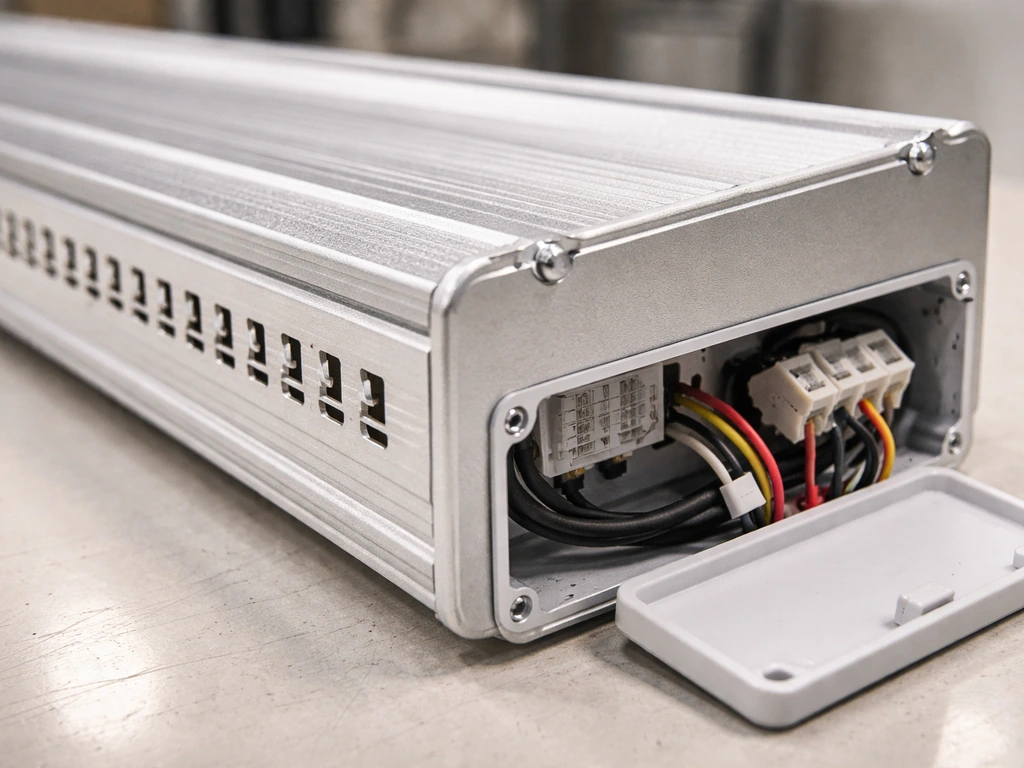
The MerchSource manufacturing background positions this as a consumer lifestyle product, not an agricultural tool. The build quality reflects that. The materials are lightweight plastic with an integrated LED board, designed for countertop aesthetics rather than durability or repairability. Low-wattage integrated LEDs in this form factor typically run cool (minimal heat output), which is genuinely fine for a compact herb setup and eliminates any heat-stress concern for plants sitting close to the light.
Reliability is where the 'Warranty: NOT APPLICABLE' clause becomes a real concern. If the LED fails or the pump stops working after a few months, there's no documented warranty path. User-reported experiences on retail listings don't surface a pattern of early failure specifically, but the absence of a formal warranty combined with a licensed-brand structure means your recourse is essentially retailer return policy only. For a product in this price range, that's probably acceptable, but it's worth knowing going in.
Efficiency is hard to quantify without wattage data. At the low end of consumer grow kits, efficiency (measured in micromoles per joule) tends to be poor compared to dedicated horticultural LEDs. You're not buying this for energy efficiency. You're buying it for convenience and simplicity.
What to grow, which growth stage, and how to position it
This unit is genuinely best suited for compact, low-light culinary herbs: basil, parsley, chives, cilantro, mint, and similar kitchen staples that stay small and don't need high-intensity light to produce harvestable leaves. It also works for leafy salad greens like lettuce or arugula, which have some of the lowest DLI requirements of any edible crop.
In terms of growth stage, it's most appropriate for seedling establishment through vegetative growth. Fruiting and flowering stages demand significantly higher light intensity and often a spectrum shift toward red wavelengths. Nothing in the available specs suggests this unit can support those stages. Don't attempt to flower tomatoes, peppers, or anything similar in this kit.
Plant placement is handled for you by the kit's fixed design. The integrated LED sits above the hydroponic pods at a set distance, so there's no height adjustment to make. The instruction manual includes seed recommendations, which should be your main guide for what belongs in the system. Stick to those recommendations. Trying to push the system with high-light or tall-growing plants will result in poor yields, not because of something wrong with your technique, but because the hardware is simply not designed for that.
- Best plants: basil, cilantro, parsley, mint, chives, lettuce, arugula, small leafy herbs
- Best growth stages: germination, seedling, early-to-mid vegetative
- Avoid: fruiting plants (tomatoes, peppers), flowering crops, tall-growing varieties
- Photoperiod: fixed 12-hour on/off timer, not adjustable
- Placement: countertop use only, no mounting or height adjustment
How it compares to other grow lights: spectrum type, wattage, and who should buy what
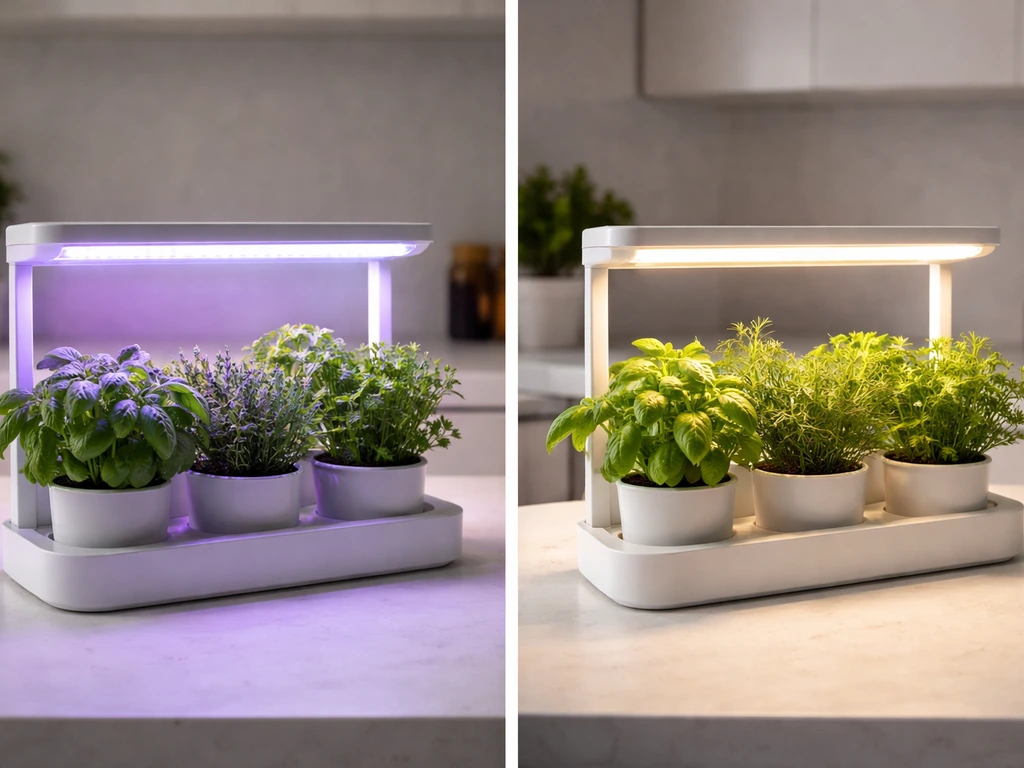
The Sharper Image grow light kit isn't really competing with dedicated horticultural LED panels. It's competing with other consumer-grade herb garden kits: the kind of product you find in kitchen lifestyle sections at big-box retailers. Within that category, the comparison points are convenience, aesthetics, and whether the herb growing actually works. Outside that category, it falls well short of what even an entry-level dedicated grow light delivers.
| Product type | Wattage class | Spectrum | Coverage area | Best for | Price range |
|---|---|---|---|---|---|
| Sharper Image 1015191 (herb kit) | Very low (est. under 10W) | Generic white/blended LED (unspecified) | Single kit footprint only | Countertop herbs, leafy greens | Budget/novelty tier |
| Consumer herb garden kit (e.g., competitors) | 5W to 20W | White or red/blue blend | Small tray footprint | Herbs, seedlings | Budget tier |
| Entry-level dedicated LED panel | 20W to 45W | Full spectrum white or red/blue/IR | 1 to 3 sq ft | Herbs, veg starts, seedlings | Low-mid tier |
| Mid-range full-spectrum LED bar/panel | 50W to 100W | Full spectrum + far red | 3 to 6 sq ft | Veg through early flower | Mid tier |
| High-output horticultural LED | 150W+ | Full spectrum, tunable or fixed | 6+ sq ft | Full cycle, fruiting crops | Mid-high tier |
If you're cross-shopping dedicated grow lights rather than all-in-one kits, there are several alternatives worth considering. Brands reviewed in this same category (including models like the Globe grow light and Luminar Everyday grow light) offer standalone LED fixtures that give you more control over placement, spectrum, and photoperiod than an integrated kit can. If you want a standalone option to compare against, a Globe grow light review can help you judge how much more control you get over spectrum and placement. Those options are better if you already have containers or a grow space and just need the light component.
Who should buy the Sharper Image grow kit
- Complete beginners who want a countertop herb garden with zero setup complexity
- Gift buyers looking for a functional kitchen gadget with visual appeal
- People with no existing grow space who want to grow 3 to 6 herb varieties simultaneously
- Anyone who specifically wants a hydroponic, no-soil approach to herbs
Who should skip it
- Anyone growing plants beyond compact herbs and leafy greens
- Gardeners who want to adjust photoperiod or light intensity
- Anyone prioritizing energy efficiency or documented light output specs
- Growers who want a scalable system they can upgrade over time
- Anyone who needs a manufacturer warranty for peace of mind
Sizing checklist: matching the light to your space, budget, and goals
Before deciding whether the Sharper Image kit (or any grow light) is the right buy, run through these questions. The answers will tell you more than any single product review.
- How much space are you working with? The 1015191 kit covers its own small countertop footprint only. If you need to light a shelf, a tent, or multiple containers, you need a standalone grow light, not a kit.
- What are you growing? Herbs and leafy greens: the kit can work. Anything fruiting, flowering, or tall: skip it and look at dedicated panels with published PPFD data.
- Do you need spectrum control? If you're cycling plants through seedling, vegetative, and flowering stages, you need a light with documented spectrum and ideally a dimmer or spectrum switch. The Sharper Image kit offers none of that.
- What's your real budget tolerance? If the kit costs roughly the same as an entry-level 20W full-spectrum panel, the panel gives you far more flexibility. The kit's value is in the all-in-one convenience, not the light output.
- Are you OK with no warranty? If hardware reliability matters to you, look for brands with documented warranties and customer service. 'Not Applicable' is not a warranty.
- Do you already have growing containers or a hydroponic setup? If yes, you don't need the kit form factor. A standalone grow light bar or panel is more useful and typically better performing per dollar.
- What minimum specs should you require from any grow light alternative? Look for published PPFD at canopy distance (at least 200 to 400 µmol/m²/s for herbs, 400 to 600+ for veg), color temperature in the 3000K to 6500K range for full-spectrum coverage, and efficiency ratings above 1.5 µmol/J for anything calling itself a horticultural LED.
The bottom line is straightforward. The Sharper Image grow light kit is a fine, low-commitment way to grow a handful of herbs on a countertop without needing any prior gardening knowledge. It is not a grow light you'd choose if you cared about measurable performance, plant-stage flexibility, or long-term reliability. If your goal is specifically a tidy, self-contained herb garden for the kitchen, it delivers on that promise. If your goal is serious indoor growing, even at a small scale, put your money toward a dedicated grow light where specs are published, warranties exist, and the hardware was designed for plants rather than shelf appeal.
FAQ
How can I tell whether I’m comparing Model 1015191 (hydroponic herb kit) or Model 1015200 (grow light garden)?
Look at the model number on the listing and the form factor. Model 1015191 is a complete hydroponic herb kit with an LED built into the unit, while Model 1015200 is a standalone “grow light garden” unit without exposed LED specs. If you cannot find the model number or photos that show a hydroponic tray/pod system, treat it as uncertain and verify before buying.
Without wattage or PPFD listed, how do I judge if the light is strong enough for my plants?
Because the product tier does not publish wattage or PPFD, you cannot rely on spec sheets to predict outcomes. Instead, check for operational indicators like whether the integrated timer consistently cycles and whether seedlings look compact with healthy green color within the first 1 to 2 weeks. If growth is spindly or leaves pale early, it is a sign the light level and fixed distance are not working for your crop.
Can I change the photoperiod if my herbs need more than 12 hours of light?
The 12 hours on, 12 hours off timer is described by user reports for the hydroponic kit, and it is effectively fixed. If you need a different schedule, you can only change it by using an external outlet timer in the power path, but that may conflict with the built-in cycle. Test carefully (for example, run for a full 24 hour period once) before committing.
Will it work for taller plants like leafy greens that grow up quickly or long-stem herbs?
Yes, but expect limitations. This kit is designed around a fixed LED-to-canopy distance and low, countertop growth. If you try taller plants, you will not be able to raise the light as they grow, so expect uneven growth, lower leaf performance, and poor yields. Stick to compact herbs and salad greens that stay within the built-in canopy range.
Can I use the kit to grow fruiting plants like tomatoes or peppers?
Don’t assume fruiting or flowering is possible. The article emphasizes that vegetative growth is the realistic target, and the lack of exposed spectrum information makes it risky to try to push into flowering. If you want tomatoes, peppers, strawberries, or any flowering stage, plan on a dedicated grow light with published intensity and wavelength control.
What should I do if I want to use different seeds than the ones recommended in the manual?
The instruction manual seed recommendations should be your primary guide. If you want to experiment, keep the experiment to similar light-needs crops and avoid swapping to seeds that require higher light intensity or longer photoperiods for robust leaf mass. If you try other seeds, monitor early setbacks, since you cannot easily correct for insufficient light intensity.
Which specific herbs or salad greens are the best match for this type of integrated countertop kit?
Choose plants that match low-light requirements and crop form. Basil, mint, cilantro, parsley, chives, and lettuce-type greens are the best fit. If you see the plant naturally spreading or staying low at harvest height, it is more likely to fit the fixed geometry than compact herbs that elongate.
What should I check about warranty or returns before buying if the listing says warranty is not applicable?
The main risk area is warranty coverage. The listing for the hydroponic kit shows “NOT APPLICABLE,” which means you may rely on retailer return policy rather than manufacturer support. Before purchase, check your retailer’s return window and whether they offer replacements for failures like pump stoppage or LED board failure.
What are the most common failure points, and what should I troubleshoot first if growth stalls?
If the pump or aeration system fails, seeds and roots can stall quickly because there is no ability to compensate with light intensity. Troubleshoot first by confirming the unit is getting power, then inspect for clogged components or incorrect water level. If it fails repeatedly, treat it as a support/return issue since there is no clear warranty path.
How can I estimate electricity cost if wattage isn’t published?
Since the LED output is not independently specified, energy-use estimates are uncertain. Practically, the kit is low-wattage by category, and it is mainly about convenience. If you care about running cost, measure actual power with a plug-in watt meter during a normal cycle and compare it to any alternative lighting you are considering.
Can I use the Sharper Image light with my own planters instead of the included hydroponic pods?
If you already own a container, use the kit only if you can keep the plant at the fixed distance and still fit within the designed pod or tray area. Otherwise, you risk reduced performance because you cannot adjust height, and most “grow light” alternatives you have containers for are better served by standalone fixtures with adjustable mounting.