If you searched for "Mother grow light review" hoping to find a well-known LED panel brand with years of third-party PPFD data and independent testing, you're going to need a little context first. "Mother" in the grow light space refers to Mother (mother.life), a brand built around a modular indoor gardening system rather than a conventional grow light panel. Their flagship lighting product is PlantSpectrum™, a swappable-module LED system designed to integrate with their broader plant-growing ecosystem. That's what this review is about.
Mother Grow Light Review: Worth It for Indoor Plants?

Marcus Caldwell
9 Apr 2026
What exactly is the Mother PlantSpectrum grow light?
Mother's PlantSpectrum™ is not a standalone hang-and-plug LED bar or quantum board in the traditional sense. It's a purpose-built light module designed to slot into the Mother smart garden system. The headline feature is the replaceable LED board design: when the LED chips degrade over time (which they all do), you're supposed to be able to swap the light board rather than toss the whole fixture. Mother markets this as a sustainability play, and it's a genuinely interesting idea if the ecosystem sticks around long enough to support it.
Specific published specs for the PlantSpectrum are limited compared to what you'd expect from an established grow light brand. Mother does not publicly list PPFD maps, beam angles, driver efficiency ratings, or wattage breakdowns in the way that brands like Spider Farmer or Mars Hydro do. What they do claim is full-spectrum output intended to support plants across growth stages. That lack of published photometric data is worth keeping in mind as you read through this review.
Build quality, features, controls, and safety
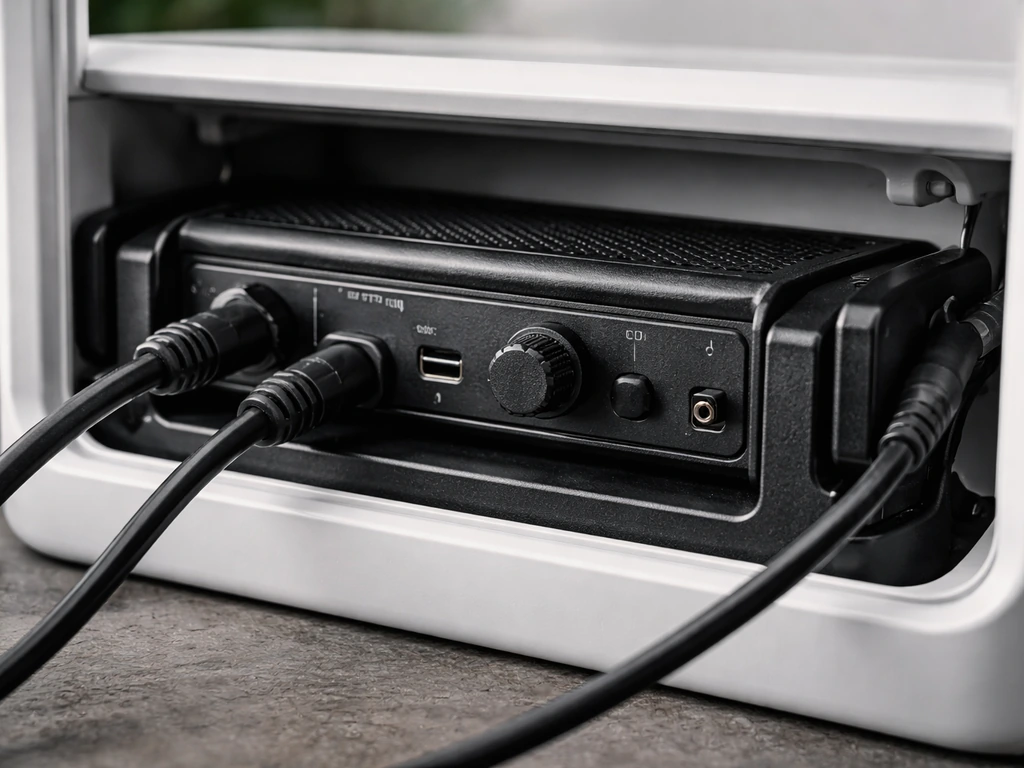
The PlantSpectrum module is built to fit the Mother ecosystem's form factor, which means it's compact and relatively lightweight. The modular design is the real differentiator here: the replaceable LED board concept means the housing and driver circuitry are meant to outlast the LEDs themselves, which is the right engineering philosophy. Whether Mother actually delivers on that long-term support promise is a different question, and one that's hard to answer in 2026 for a brand that's still relatively new to the space. On the PlantSpectrum product page for Canada, Mother advertises a 50,000-hour lifetime for the PlantSpectrum LED boards, framed as roughly 8 to 10 years of daily plant lighting advertised lifetime of 50,000 hours.
Controls are handled through the Mother app ecosystem rather than physical dimmers or buttons on the fixture itself. That's fine if you're already bought into smart home or app-based plant management, but it does mean you're dependent on the app staying updated and the company staying in business. There's no standalone controller option published that I can find. For safety and electrical specs, Mother targets standard household voltage, but granular details like driver specs, flicker performance, or third-party certifications (UL, CE, ETL) are not prominently disclosed in their marketing materials, which is a gap worth noting before buying.
Light spectrum and how it works across grow stages
Mother describes PlantSpectrum as full spectrum, meaning it's designed to cover the photosynthetically active radiation (PAR) range of roughly 400 to 700 nanometers, with likely some near-infrared output. A full-spectrum white LED approach (common in modern grow lights) tends to perform well across both vegetative and flowering stages without needing separate blue-heavy or red-heavy modes. If Mother's implementation follows standard practices, you'd expect a color temperature somewhere in the 3000K to 5000K range, blended to hit the chlorophyll absorption peaks around 450nm (blue) and 660nm (red).
The problem is that without a published spectral power distribution (SPD) chart, you're taking their word for it. For seedlings and vegetative growth, a bluer spectrum helps (5000K and above tends to work well), while flowering and fruiting stages benefit from warmer, redder light. Whether PlantSpectrum allows you to shift the spectrum for different stages, or whether it's a fixed output, isn't clearly documented. If you need stage-specific spectrum control, that's a real limitation to be aware of.
Actual performance: PPFD, coverage, efficiency, and heat
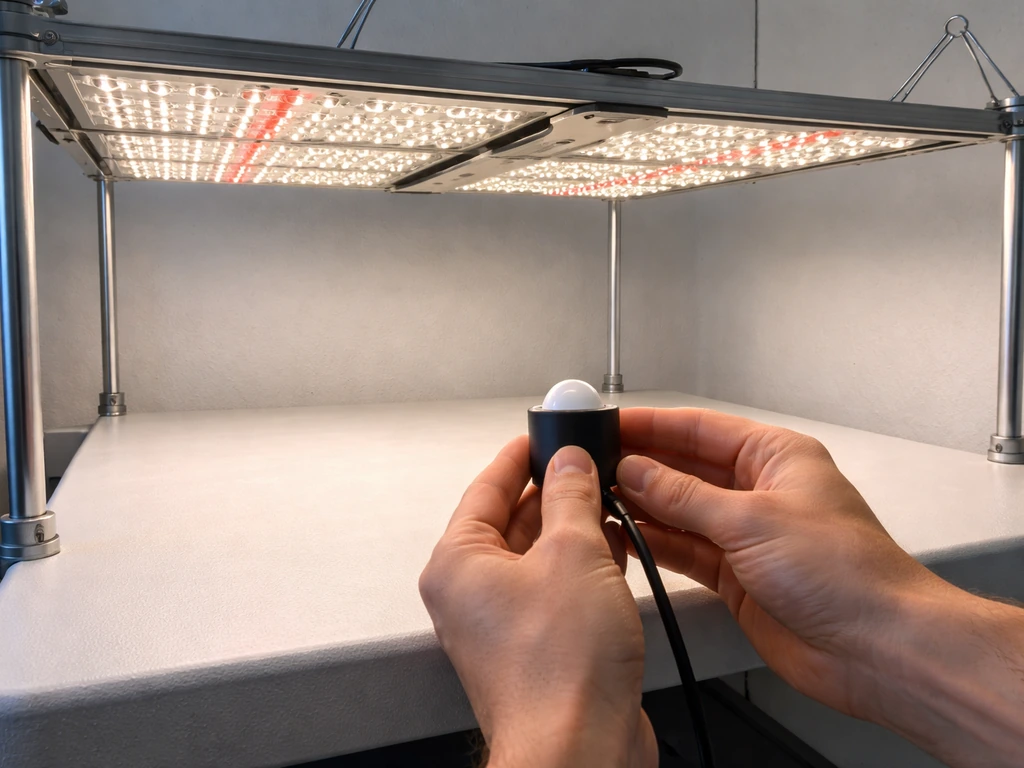
This is where the Mother PlantSpectrum review gets honest and a little frustrating. Mother does not publish PPFD maps or PAR values for the PlantSpectrum. For context, a serious grow light review relies on measurements like micromoles per square meter per second (µmol/m²/s) at a given mounting height across the canopy, along with coverage area claims tied to actual photon flux data. Without that, any performance claim is essentially marketing copy.
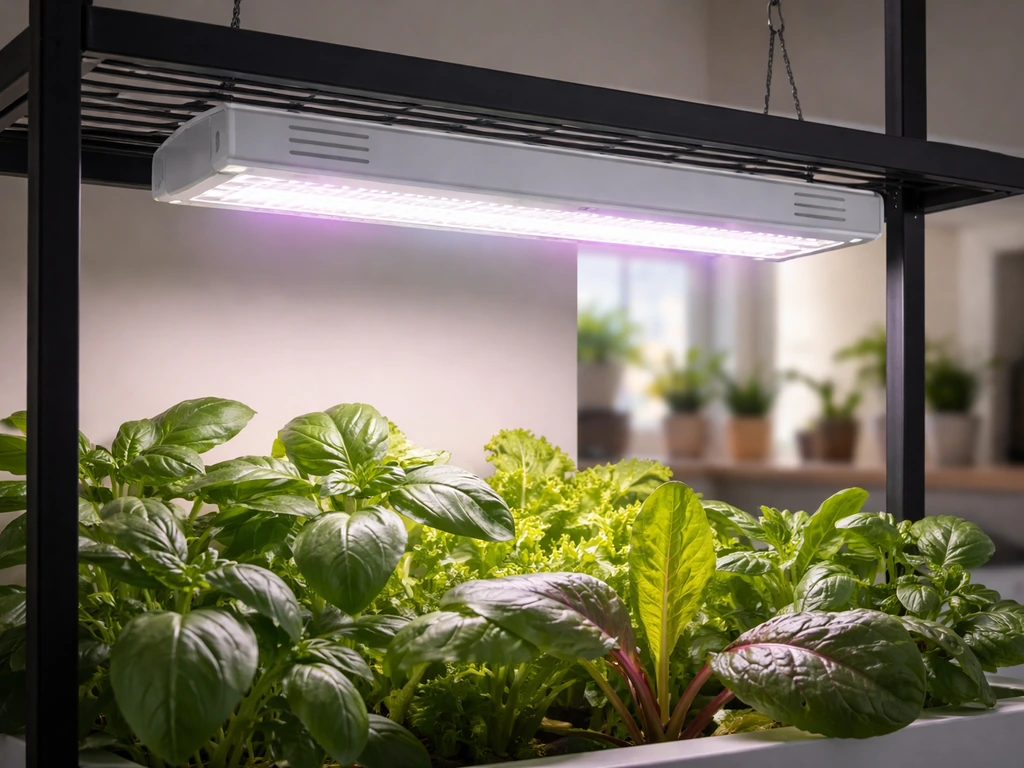
Based on the physical size and design of the PlantSpectrum module, it's clearly sized for compact indoor garden setups rather than full-tent cultivation. You should not expect this light to replace a 200W or 400W quantum board over a 4x4 foot grow tent. It's more realistically suited to countertop herb gardens, propagation trays, or small shelving setups where the canopy is close to the light source and the footprint is under one to two square feet per module. Heat output appears to be low given the compact LED module design, and it's likely passively cooled (no fans), which is a real plus for noise-sensitive indoor spaces.
Coverage planning: sizing the light for your grow space
Because Mother doesn't publish PPFD maps, here's a practical way to think about coverage. For seedlings and herbs that need roughly 200 to 400 µmol/m²/s, a compact LED module like the PlantSpectrum placed 6 to 12 inches above the canopy can likely deliver adequate light for a footprint of about one square foot per module. For vegetative growth that demands 400 to 600 µmol/m²/s, you'd either need to reduce mounting height or add modules. Flowering plants that want 600 µmol/m²/s or more are probably outside the realistic range of this system.
Mounting height in the Mother system is constrained by the fixture's design rather than a free-hanging adjustable rope ratchet setup. That's typical for integrated garden systems and fine for the intended use case, but it does limit flexibility if you want to dial in a specific PPFD target. As a general rule for compact grow modules: start with the light as close as manufacturer guidelines allow for seedlings, and watch for bleaching or stretching as your guide to adjust.
How it compares to alternatives
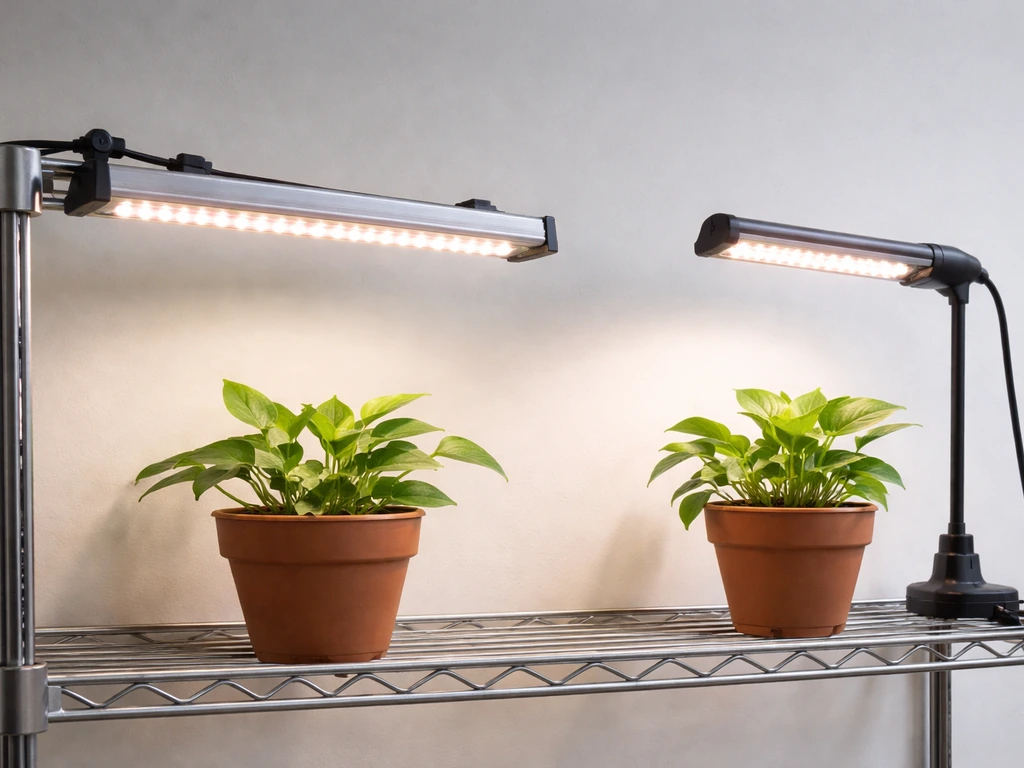
This is where context matters a lot. The Mother PlantSpectrum is not really competing with mid-range horticultural LED panels from established grow light brands. It's competing with other smart garden integrated lighting systems, like the kind you'd find reviewed alongside it. For example, if you've looked at the Luminar Everyday grow light, you'll notice a similar pattern: small-footprint, consumer-friendly lights that prioritize ease of use over raw photon output. Those comparisons are more apples-to-apples than stacking PlantSpectrum against a 480W commercial LED bar.
| Feature | Mother PlantSpectrum | Typical Compact LED Bar | Smart Garden Integrated Light |
|---|---|---|---|
| PPFD Data Published | No | Often yes | Rarely |
| Replaceable LED Board | Yes (claimed) | No | No |
| App Control | Yes | Sometimes | Sometimes |
| Coverage Area | ~1 sq ft per module | 1–4 sq ft | 1–2 sq ft |
| Tent/Room Use | Not suited | Yes | No |
| Noise (fan) | Likely fanless | Often fanless | Usually fanless |
| Price Positioning | Premium for ecosystem | Budget to mid-range | Mid to premium |
If you're looking at grow lights with more transparency around specs and independent reviews, it's worth checking out how purpose-built brands approach the category. The Master Garden grow light is one option worth considering if you want a more traditional panel-style light for shelving setups, and it has published specs you can actually evaluate. Similarly, the Globe grow light takes a different approach to compact indoor gardening lighting that's worth a look if you're comparing consumer-friendly options.
Who should buy the Mother PlantSpectrum
- You're already invested in or seriously interested in the Mother smart garden ecosystem and want the lighting to integrate natively
- Your grow goals are herbs, salad greens, or seedlings in a compact countertop or shelf setup
- You value the replaceable LED board concept and plan to use the system for several years
- App-based controls and a clean aesthetic matter to you as much as raw light output
Who should skip it
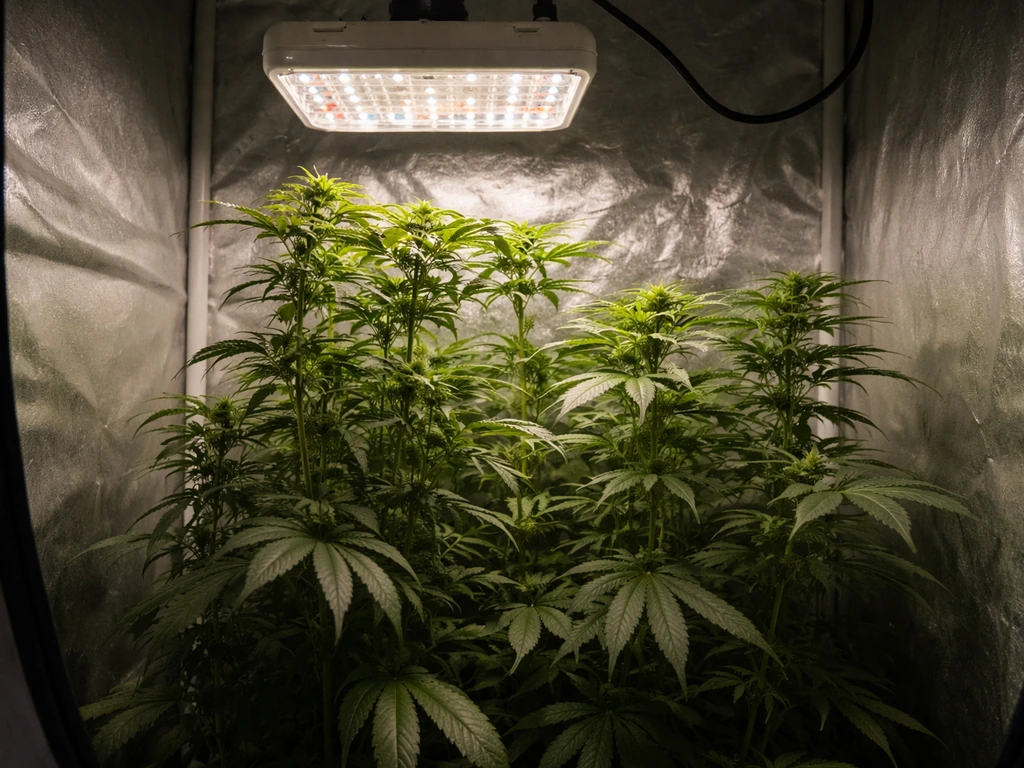
- You want published PPFD data and third-party testing before spending money
- You're growing cannabis, tomatoes, or other high-light-demand plants that need serious photon density
- You need a light that works independently of an app or ecosystem
- You're comparing on raw cost-per-photon efficiency, where dedicated horticultural LEDs will win every time
Real-world feedback and buying tips
User feedback on Mother's grow light system is still relatively thin compared to established brands, which is partly a function of the brand's age and niche positioning. Reviews that do exist tend to praise the design aesthetic and the integrated ecosystem experience, while criticism focuses on price relative to output and the dependency on the Mother app ecosystem. A legitimate concern that shows up repeatedly: if the company discontinues the product line or the app stops being supported, the replaceable LED board promise becomes meaningless. That's a real risk with any brand building proprietary ecosystem products.
On the buying side, be cautious about third-party sellers or bundled deals that aren't coming directly from Mother's official channels. The modular system design means compatibility matters, and a mismatched module bought from a grey-market seller could be a problem. If you're looking at bundles, verify that the light module version matches your garden unit version. Pricing tends to be on the premium side relative to the raw horticultural output you're getting, so go in knowing you're partly paying for the ecosystem design rather than pure photon efficiency.
One practical tip: before committing, look at what other users in the same ecosystem are growing successfully with the PlantSpectrum. Herbs and leafy greens that tolerate lower light (under 400 µmol/m²/s) are well-represented in positive reviews. Anyone pushing the system for fruiting plants tends to report mixed results, which aligns with the expected output range of a compact module. If your grow ambitions are closer to what you'd find reviewed at a resource like the Sharper Image grow light garden, where the focus is consumer-friendly herb and greens cultivation rather than high-output horticulture, then the Mother system's niche makes more sense as a comparison point.
Bottom line
The Mother PlantSpectrum is a thoughtfully designed product for a specific use case: compact, app-managed indoor herb and greens growing within their ecosystem. The replaceable LED board concept is genuinely forward-thinking. But the lack of published photometric data, the ecosystem dependency, and the premium price relative to horticultural output make it a hard recommendation for anyone outside that target use case. If you want a light you can evaluate on specs before buying, or one that scales to real vegetative and flowering demands, look at dedicated grow light brands where PPFD maps and efficiency ratings are part of the standard product listing. If you want a clean, integrated countertop garden experience and you're growing herbs, the Mother system might be exactly what you're after. On its PlantSpectrum product page, Mother markets the light as a “true full-spectrum” LED and claims 97+ CRI and “92% PAR” for the system.
FAQ
Is the Mother PlantSpectrum good enough for herbs, or is it mainly for seedlings?
It can work for mature herbs if your canopy stays close and you accept lower light than high-output panels. Reviews tend to be strongest for leafy greens and herbs that tolerate roughly under 400 µmol/m²/s, with placement (about 6 to 12 inches from the canopy) doing most of the heavy lifting.
Can you use PlantSpectrum for flowering, or will it underperform?
If you want reliable flowering output, you should assume performance will be limited compared with larger grow lights because PPFD maps and wattage breakdowns are not published. For fruiting and heavy flowering, you would likely need either multiple modules, lower mounting height within the system’s limits, or different lighting to avoid slow or weak bud development.
Does PlantSpectrum let you change the spectrum by growth stage (more blue for veg, more red for bloom)?
The documentation in the article indicates stage-specific spectrum adjustment is not clearly provided. If your strategy depends on shifting spectrum by stage, treat PlantSpectrum as likely fixed-spectrum and validate that through product settings in the Mother app before buying.
How do I estimate coverage if there are no PPFD or PAR values listed?
Use the mounting height and expected target lux-free metric logic: for compact modules, assume about 1 square foot per module as a starting point for lower-demand greens, and increase modules or reduce height for higher targets. Then confirm with plant response (no bleaching, minimal stretching) since you do not have photon measurements to calibrate against.
What happens to the replaceable LED board promise if the company or app gets discontinued?
That is a real risk with proprietary ecosystems. Even if boards can technically be swapped, the bigger dependency is ongoing compatibility with the garden unit and app features, plus availability of replacement parts. Before purchasing, check whether replacement modules are stocked reliably and whether the app has a history of updates for your device type.
Is it safe to buy PlantSpectrum modules from third-party sellers or bundled deals?
Be cautious. Because the system uses proprietary compatibility, a grey-market or mismatched module can cause installation issues or may not integrate correctly with the garden unit version. If buying outside official channels, verify the exact module version and compatibility notes before you pay.
Will PlantSpectrum cause bleaching or stretching, and how should I adjust mounting height?
Without published photon maps, you must use visual feedback. Start at the closest height allowed by the system guidance for seedlings, then adjust upward if you see bleaching or downward if plants are stretching. The article notes that flexible adjustment is limited by the integrated design, so plan for that constraint.
Does the app requirement create a control problem if I lose access to the account or phone?
Yes, it can. Since controls are handled via the Mother app rather than on-fixture dimmers, losing access or having app instability can limit your ability to fine-tune schedules and intensity. If you rely on strict photoperiods, confirm whether the system supports offline scheduling or robust timer behavior through the Mother ecosystem.
How does PlantSpectrum compare to a traditional quantum board or LED panel for a 4x4 tent?
It is not intended to replace mid-range or high-output tent lighting. The module is designed for compact setups, and the lack of published PPFD data plus its size suggests you should not expect it to cover a 4x4 at meaningful intensities. Use it for countertop herb gardens, propagation, or small shelves where the canopy is close.
What certifications or driver quality details should I look for before buying, given the missing specs?
Since granular driver and safety certification details are not prominently disclosed, look for evidence of standard electrical safety marks, third-party testing, and clear power input specs for your region. If the listing is vague, treat it as a due-diligence flag rather than a reason to assume performance.