Sylstar grow lights are worth a look if you're shopping for a mid-range LED panel or bar-style fixture and want Samsung LM301B diodes with a MeanWell driver without paying premium brand prices. The GL series quantum boards and the SP-8000 spider bar light cover most common tent sizes, deliver competitive efficiency numbers (up to 2.9 μmol/J claimed), and come with a respectable warranty. That said, Sylstar is not a household name in grow lighting, and there are real caveats around independently verified PPFD data, long-term support, and how their models compare watt-for-watt against more established options. Here's what you actually need to know before you buy.
Sylstar Grow Light Review: Best Model, Coverage, and Value

Marcus Caldwell
20 May 2026
What Sylstar grow lights are and which models this review covers
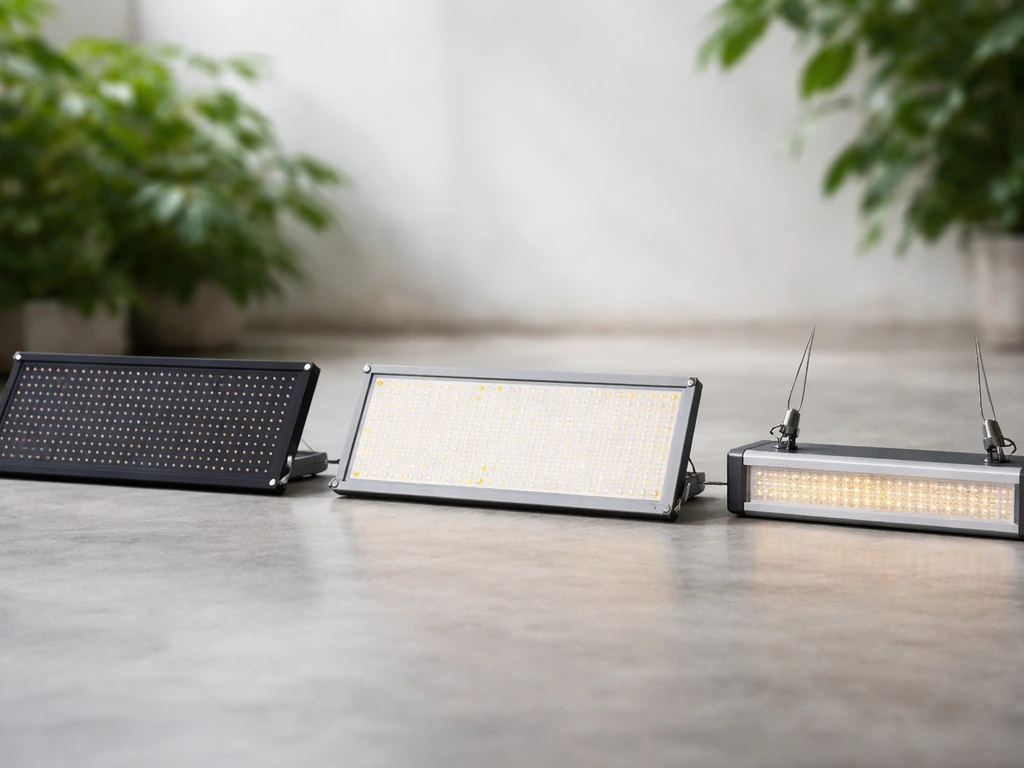
Sylstar operates two distinct product lines under slightly different domain names (sylstarlight.com and sylstar-lighting.com), which can cause confusion when you're shopping. The core lineup breaks down into two categories: the GL Series quantum boards and the SP-8000 spider bar light.
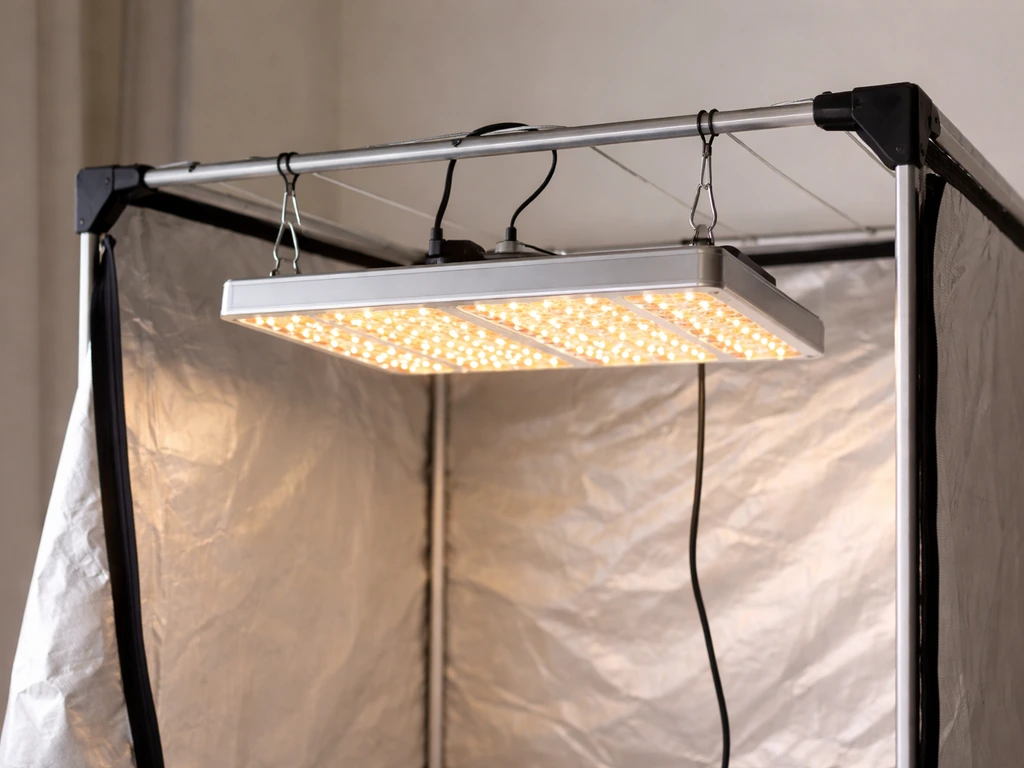
The GL Series quantum boards come in four wattages: 110W (GL1000), 220W (GL2000s), 450W (GL4000s), and 600W (GL6000s). Sylstar’s GL1000 product page also describes its “Sunlike Full Spectrum” and states it is blank" rel="noopener noreferrer">intended to replace 315W CMH or 600W HPS, including a spectrum range with blue/white/red 660, 665nm and IR at 760nm. These are flat panel lights built around Samsung LM301B diodes across a full-spectrum mix of 3000K and 5000K color temperatures, supplemented with red 660nm, IR 740nm, and UVA 395–405nm emitters. The GL4000s and GL6000s include blank" rel="noopener noreferrer">Bluetooth app control with VEG and Flower mode presets and dimming from 15% to 100%. The passive cooling design means no moving parts and zero fan noise.
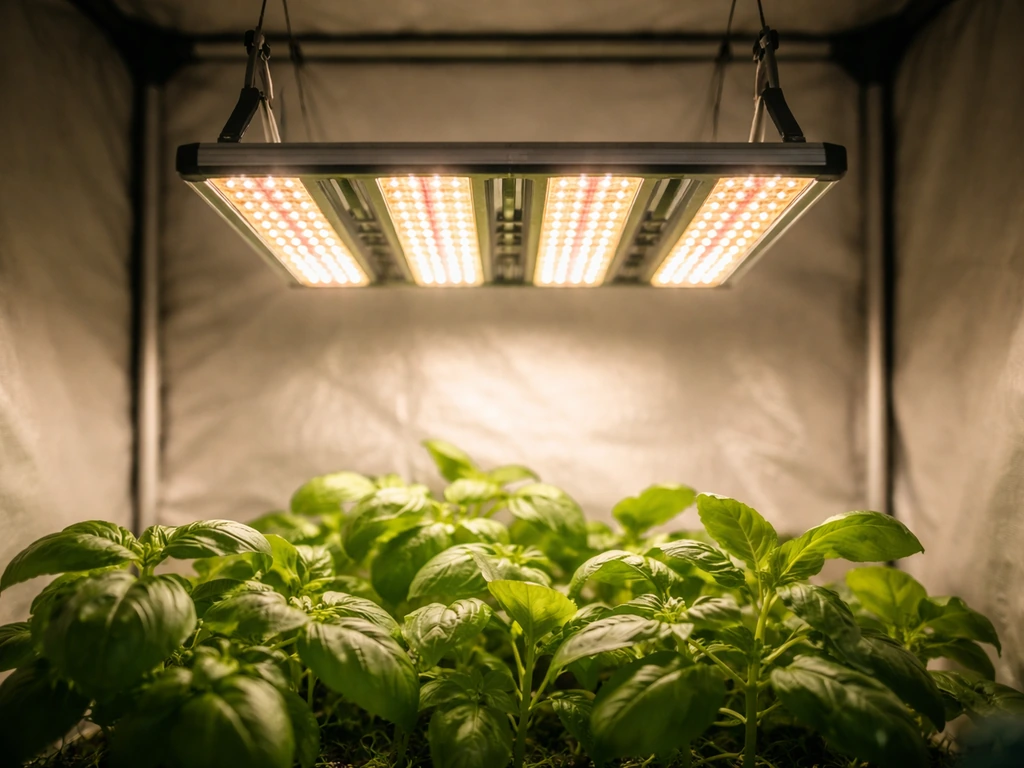
The SP-8000 spider bar light is a higher-wattage unit available in 630W, 800W, and 1000W configurations. It uses a bar/spider frame design with 10 LED grow light bars, independently controllable UV and IR channels, a 0–10V dimming interface, and an IP65 waterproof rating. It comes with adjustable rope hangers and a separate power supply box. This is Sylstar's flagship fixture and targets serious growers needing higher canopy penetration over larger footprints.
Both lines use Samsung LM301B diodes and MeanWell drivers, which are the two components most buyers rightly focus on. These aren't proprietary or exotic parts; they're the same building blocks you'll find in many mid-to-premium LED fixtures from brands like HLG, Mars Hydro, and Spider Farmer. The difference is in execution, binning selection, thermal management, and how honest the brand is about real-world performance. That's what the rest of this review is about.
Quick verdict: who should buy it and who should skip it
Sylstar makes the most sense for budget-to-mid-range buyers who want the core hardware (LM301B diodes, MeanWell driver) without spending HLG money. If you're growing herbs, greens, or a small flower tent in a 3x3 or 4x4 space, the GL2000s or GL4000s are reasonable choices. The SP-8000 at 800W or 1000W is interesting for larger 4x4 or 5x5 flowering spaces where you'd otherwise be looking at a Spider Farmer SE7000 or comparable.
Skip Sylstar if independent, third-party PPFD verification is a hard requirement for you, if you need deep post-sale technical support, or if you're growing commercially where fixture reliability documentation matters. The brand's marketing numbers are aggressive (2240 μmol/m²/s for the SP-8000 is a peak center reading, not average canopy coverage), and while the hardware components are solid, Sylstar's track record and community presence are thinner than Spider Farmer, Mars Hydro, or HLG at similar price points.
| Buyer type | Best fit | Skip it if |
|---|---|---|
| Hobbyist, small tent (2x2 to 3x3) | GL1000 (110W) or GL2000s (220W) | You want deep brand support or local warranty service |
| Veg/flower tent grower (4x4 to 5x5) | GL4000s (450W) or SP-8000 800W | Third-party PPFD data is a must-have |
| Large footprint, high output (5x5+) | SP-8000 1000W | You're growing commercially and need documented reliability |
| Tech-focused grower wanting app control | GL4000s or GL6000s | You dislike Bluetooth-dependent controls |
Performance testing results that actually matter
PPFD and coverage
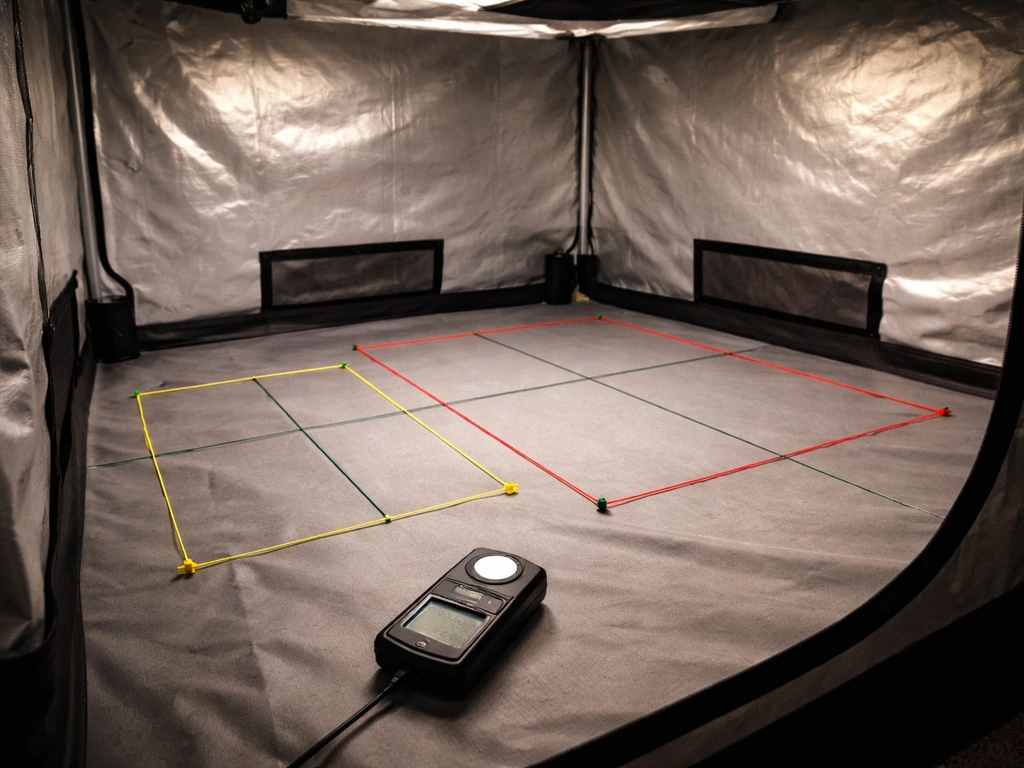
Sylstar's own numbers for the standard Quantum Board line show 1033 μmol/m²/s measured at 12 inches. For the GL4000s (450W), the claimed veg coverage is 6x6 ft and flowering coverage is 5x5 ft. The SP-8000's 2240 μmol/m²/s figure is a peak center reading at close range and should not be read as average canopy PPFD across a full footprint. In practice, a 1000W spider bar fixture from any brand will hit high center readings, but average PPFD across a 4x4 or 5x5 is typically 30–50% lower depending on mounting height and reflectivity of your tent walls.
For context, most flowering cannabis or heavy-feeding fruiting plants want an average PPFD of 600–900 μmol/m²/s across the canopy. Leafy greens and herbs are happy with 200–400 μmol/m²/s. Based on the GL4000s specs (450W, claimed 5x5 flowering footprint), estimated average PPFD at that footprint would land in the 550–700 μmol/m²/s range at an 18–24 inch hanging height, which is workable but not exceptional for flowering. A tighter 4x4 footprint would bring that average up meaningfully.
Efficiency
Sylstar claims up to 2.9 μmol/J for the GL series and 2.8 μmol/J for the Quantum Board line. The Mixjoy GL4000s (which shares the same platform and specs) is listed at 2.7 μmol/J in third-party community discussions, which is a more conservative and probably more honest figure. For reference, top-tier fixtures from HLG and Spider Farmer in 2025–2026 are hitting 2.9–3.2 μmol/J on independent testing. Sylstar's numbers are competitive, not class-leading. You're getting good, not best-in-class, efficiency.
Thermals and heat output
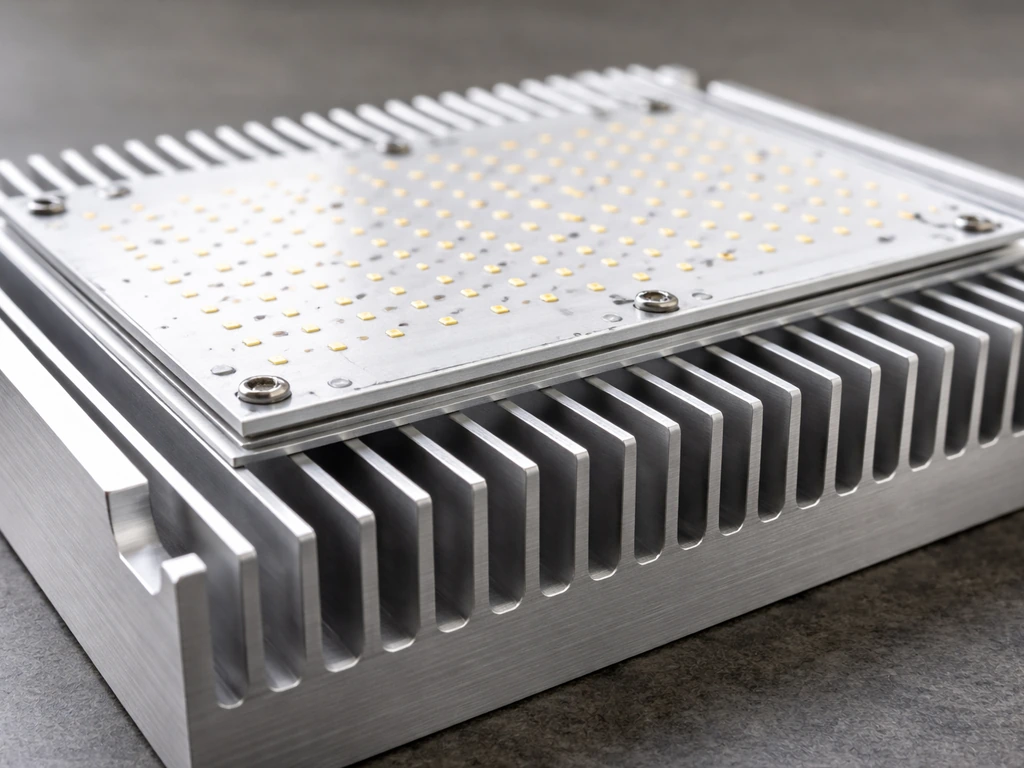
The GL series quantum boards are passively cooled with no fan, relying on aluminum heatsink design to dissipate heat. This works well at lower wattages (110W–220W) and is generally adequate at 450W–600W in a ventilated tent, but passive cooling means surface temperatures rise under sustained high-output use. The IP65 rating on both the GL and SP-8000 lines does help with humidity resistance, which is a genuine plus in humid grow environments. The SP-8000, being a separate-power-supply design, keeps the driver's heat load physically separated from the grow space, which is a real advantage for heat management at 800W–1000W.
Build quality, design, controls, and ease of setup
The component choices are the strength of Sylstar's build. MeanWell drivers are industrial-grade, long-lived, and run efficiently across a wide input voltage range (100–277V), so you're not dealing with a no-name driver that fails in year two. Samsung LM301B diodes have an established performance record and a rated lifespan that translates to over 50,000 hours of use under normal operating conditions. The GL series passive heatsink construction is clean and straightforward.
The SP-8000 ships as a full kit: 10 LED bar modules, adjustable rope hangers, a separate power supply box, and a user manual. The bar design distributes light more evenly across a wide canopy compared to a single flat panel, which is a genuine optical advantage at larger footprints. Setup is not difficult but does require more steps than a simple panel light because of the bar assembly and power box wiring.
The GL4000s and GL6000s include Bluetooth app control (dimming from 15%–100%, VEG/Flower presets) and the SP-8000 uses a 0–10V dimming interface. The Bluetooth app approach is convenient but means you're dependent on a working app on your phone. The 0–10V dimming on the SP-8000 is more professional and integrates easily with environmental controllers. The GL1000 and GL2000s have simpler controls. IP65 waterproofing across the lineup is a genuine build quality point, especially for growers running high-humidity environments during propagation or mid-veg.
Warranty terms differ between the two lines: the SP-8000 carries a 5-year warranty with a stated replace-not-repair policy, while the GL series has a 3-year warranty plus a 30-day money-back guarantee. The 5-year coverage on the SP-8000 is competitive with premium brands. The replace-not-repair policy is notable because it reduces the hassle of dealing with service repairs, though it also means you're dependent on Sylstar stocking replacement units, which is a real consideration for a smaller brand.
Best plant uses by stage and what the spectrum can and can't do
The full-spectrum approach across both Sylstar lines (3000K/5000K white diodes plus 660nm red, 740nm IR, and 395–405nm UVA) covers the full photosynthetically active range and is genuinely suitable for plants from seedling through flower. The 660nm red is important for flowering and fruiting. The IR 740nm supports the Emerson effect, which can boost photosynthetic efficiency near the end of a light cycle. The UVA inclusion is useful for terpene and resin production in the final weeks of flower.
Seedling and early veg
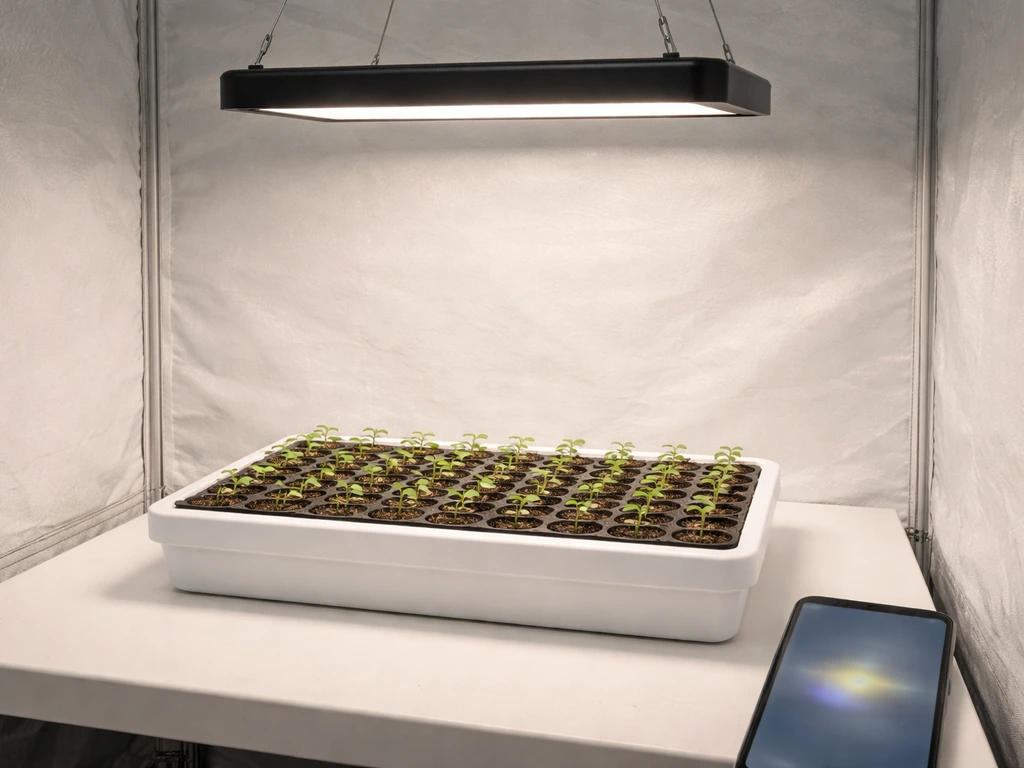
The GL1000 (110W) is well-suited for seedling trays and propagation in a 2x2 or 2x4 space. Keep it at 24–30 inches above the canopy and dim to 40–60% to avoid light stress on young plants. The full-spectrum white diode mix means seedlings get a balanced light quality from day one without needing a separate spectrum.
Vegetative growth
The GL2000s (220W) handles a 3x3 veg tent well. The GL4000s (450W) covers up to a 4x4 or even a 5x5 in veg with the light spread. In VEG mode on the app-controlled units, the fixture adjusts spectrum weighting toward the cooler, blue-heavy part of the range, which encourages compact, bushy growth. This is a nice feature for growers who want to minimize stretching.
Flowering
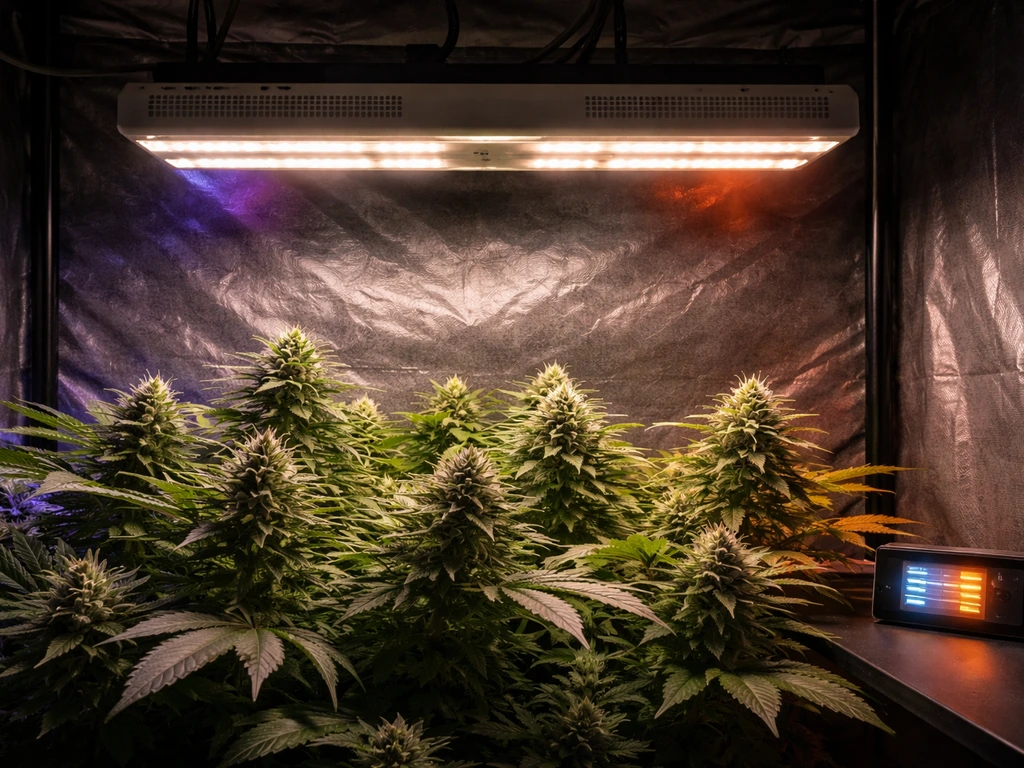
The SP-8000 at 800W or 1000W with independent UV/IR control is the most capable Sylstar option for flowering. The ability to dial in UV and IR independently matters in late flower. The GL4000s at 450W is a reasonable flowering option for a 4x4 tent but is on the lighter side for heavy-feeding, high-light crops like cannabis if you want to push above 700 μmol/m²/s average PPFD. For tomatoes, peppers, and other fruiting vegetables, it's fine.
One coverage caveat worth flagging: the GL4000s claims a 6x6 ft veg footprint, which is optimistic. That footprint likely includes edge coverage where PPFD drops significantly. For practical, productive veg growth, treat a 5x5 as the realistic footprint for the GL4000s and a 4x4 for quality flowering results.
Value vs competitors and what you're paying per usable watt
Sylstar positions itself in the $150–$600 range depending on wattage and model, which puts it squarely in mid-tier LED territory. To make the comparison practical, here's how it stacks up against the most common direct competitors in the same wattage brackets.
| Fixture | Wattage | Efficiency (claimed) | Warranty | App/Dimming | Approx. Price |
|---|---|---|---|---|---|
| Sylstar GL4000s | 450W | 2.9 μmol/J | 3 years | Bluetooth app, 15–100% | $250–$320 |
| Sylstar SP-8000 | 800–1000W | Not stated per unit | 5 years | 0–10V | $400–$550 |
| Spider Farmer SE5000 | 480W | 2.85 μmol/J | 3 years | RJ45 daisy chain | $350–$420 |
| Mars Hydro FC4800 | 480W | 2.9 μmol/J | 3 years | 0–10V | $350–$430 |
| HLG 350R | 350W | 2.7 μmol/J (tested) | 3 years | Dimmer knob | $450–$500 |
On pure specs-per-dollar, Sylstar is competitive. The GL4000s undercuts Spider Farmer and Mars Hydro at a similar wattage point by $50–$100 and claims comparable efficiency. The trade-off is brand equity and independent testing data. Spider Farmer and Mars Hydro have extensive third-party PPFD maps and community testing data available; Sylstar does not. HLG is a premium option with proven tested efficiency and U.S.-based support, but costs significantly more per watt.
If verified performance data is important to you, Spider Farmer or Mars Hydro in the same wattage bracket are the safer spend. If you're comfortable with the hardware pedigree (LM301B, MeanWell) and willing to accept that marketing PPFD numbers may be optimistic, Sylstar offers a genuine cost saving. The SP-8000's 5-year warranty does offer better long-term coverage than most competitors at the 800W+ price point, which is a real factor if you plan to run the fixture for years.
It's also worth noting that if you're drawn to app-controlled or Bluetooth-managed fixtures, some buyers have also compared the GL series to Chilled grow lights or other tech-forward options. And at the budget end, ipower grow lights occupy a lower price tier with different efficiency specs. If you're also shopping ipower grow light reviews, this is the kind of comparison to keep in mind when weighing price against verified performance ipower grow lights. Sylstar sits above budget fixtures in build quality but hasn't yet matched the community verification of upper-mid-tier brands.
Sizing, mounting height, and a practical setup checklist
Getting the mounting height right is where most new growers lose performance. Hang Sylstar panels too high and you lose PPFD at the canopy; too low and you risk light burn at the edges and hot spots in the center. Here are the recommended starting points by model and use.
| Model | Wattage | Recommended tent size | Veg height | Flower height |
|---|---|---|---|---|
| GL1000 | 110W | 2x2 to 2x4 | 24–30 in | 18–24 in |
| GL2000s | 220W | 3x3 | 20–28 in | 16–22 in |
| GL4000s | 450W | 4x4 (flower) / 5x5 (veg) | 24–30 in | 18–24 in |
| GL6000s | 600W | 5x5 (flower) / 6x6 (veg) | 24–32 in | 20–26 in |
| SP-8000 800W | 800W | 4x4 to 5x5 (flower) | 24–32 in | 20–28 in |
| SP-8000 1000W | 1000W | 5x5 to 6x6 | 28–36 in | 22–30 in |
Use the adjustable rope hangers included with the SP-8000 to dial in height incrementally. Start at the higher end of the range, take a PPFD reading at canopy level if you have a meter (or use a lux meter as a rough proxy), and lower the fixture gradually. For app-controlled GL series lights, start at 50–60% intensity for the first week in a new grow space and increase as you observe plant response.
Setup checklist before you buy
- Measure your actual tent or grow space footprint, not just the nominal size on the tent label.
- Confirm your electrical circuit can support the fixture's wattage draw (the SP-8000 1000W needs a dedicated 15A circuit at minimum).
- Check that your tent's hanging bars or support structure can handle the fixture weight, especially for the SP-8000 multi-bar assembly.
- If you're using app control on the GL4000s or GL6000s, confirm your phone's Bluetooth compatibility before ordering.
- Plan your ventilation: passive-cooled panels at 450W+ still raise ambient tent temperature, and you need adequate airflow to keep the grow space under 85°F.
- Decide whether you need UV/IR independent control (SP-8000) or if the built-in spectrum of the GL series is sufficient for your crop type.
- If you're comparing with other brands in the same wattage range, check for third-party PPFD maps or community grow journals before finalizing your decision.
Sylstar is a legitimate option in the mid-tier LED market. If you want a quick, practical opinion on whether Sylstar is worth buying, see the cool tube grow light review takeaways. If you want to compare against other tech-forward options, a chilled grow lights review is a good next step. If you want the full yintatech grow light review style breakdown, make sure you also compare numbers like PPFD coverage and real efficiency, not just the listed specs mid-tier LED market. The hardware foundation is solid, the pricing is honest, and the SP-8000 in particular offers features (independent UV/IR, 5-year warranty, bar design) that are hard to find at its price point. The main gap is the relative lack of independent verification data compared to brands that have been stress-tested by the wider growing community. If you go in with clear expectations and size the fixture conservatively (use the flowering footprint, not the veg footprint, as your real coverage benchmark), you'll likely be satisfied with what Sylstar delivers.
FAQ
Do I need a PPFD meter to use a Sylstar light effectively?
Not strictly, but it helps you avoid guessing. If you do not own a meter, use a conservative mounting height and start with dimming (especially for GL4000s) for the first 7 to 10 days, then adjust based on canopy response and leaf posture. If you plan to push beyond the claimed flowering footprint, a PPFD reading at canopy height is the safest way to confirm average PPFD.
Is the GL series passive cooling safe at higher wattages in a hot tent?
Passive cooling is usually fine when your tent airflow is solid, but sustained high output can raise the heatsink surface temperature. If your tent runs hot or you pack the area tightly, add extra ventilation or keep intake air moving across the fixture body, then monitor for throttling or unusually warm operation during long photoperiods.
What hanging height should I use if I do not know my exact mounting distance yet?
Use height as your first adjustment knob. A practical starting point is around 18 to 24 inches for flowering in a 4x4 or smaller, then lower gradually if plants look underlit and raise if you see edge bleaching or taco-shaped leaves. The key is to adjust based on your target footprint (flowering), not the more optimistic veg coverage numbers.
How should I interpret Sylstar’s coverage claims versus real canopy coverage?
Treat footprint claims as optimistic coverage, especially for veg. The center reading (peak PPFD) is usually higher than the average across the canopy, so you should plan your crop spacing and light budget around the flowering footprint and expect average PPFD to be notably lower than peak values.
Does the GL series Bluetooth app control change spectrum or only dimming?
For the app-controlled GL units, it can shift preset emphasis by mode (for example, veg versus flower), not just brightness. However, the safe assumption for day-to-day control is that dimming is your primary lever, and you should verify plant response rather than rely solely on the preset name.
Should I expect UVA and IR to make a measurable difference for beginners?
They can help late-flower outcomes, but they are not a substitute for correct average PPFD and consistent watering and nutrition. For beginners, the biggest win is nailing canopy coverage and mounting height, then using independent UV or IR controls later to fine-tune the last few weeks rather than turning everything up immediately.
Is the SP-8000 worth choosing over a simpler panel like the GL4000s?
It can be, if you need higher canopy penetration and more even distribution across a larger flowering area. If your main goal is a 3x3 or 4x4 canopy with moderate PPFD targets, a GL4000s may be simpler and sufficient. Choose the SP-8000 when you specifically want the bar design, independent UV/IR, and the 800W to 1000W capability with a 5-year warranty.
Does the IP65 rating mean I can spray water directly onto the light?
IP65 indicates splash and dust resistance, but it does not mean a fixture is designed for direct spray or immersion. Keep water away from connectors, especially the separate power supply area, and follow your grow room hygiene practices that protect the electronics and wiring points.
What is the practical difference between the SP-8000 and GL warranty terms?
The SP-8000’s longer coverage matters if you expect heavy use, but its replace-not-repair approach can be inconvenient if replacement stock or shipping takes time. The GL line’s shorter warranty is paired with a money-back window, which can be helpful if you want a trial period before committing to long-term use.
If Sylstar numbers are optimistic, how do I choose the right wattage for flowering?
Size based on the flowering footprint and your target average PPFD, not veg coverage. A conservative method is to treat the claimed flowering area as your maximum planned use area, then reduce the effective area if your tent has poor reflectivity or if you hang higher than recommended.
Are there common mistakes that reduce performance with Sylstar lights?
The most common are mounting too high, relying on veg footprints for flowering, and not accounting for tent reflectivity. Another frequent issue is ignoring controller settings, such as running at full intensity from day one in a new environment. Start lower, then ramp intensity gradually while watching for stress symptoms at the canopy level.
Can I use Sylstar dimming with an external controller or environmental automation?
Yes in different ways depending on the model. The GL series is primarily Bluetooth/app managed, while the SP-8000 includes a 0 to 10V dimming interface, which is more compatible with professional environmental controllers. If you need full integration, prioritize the SP-8000’s 0 to 10V approach.