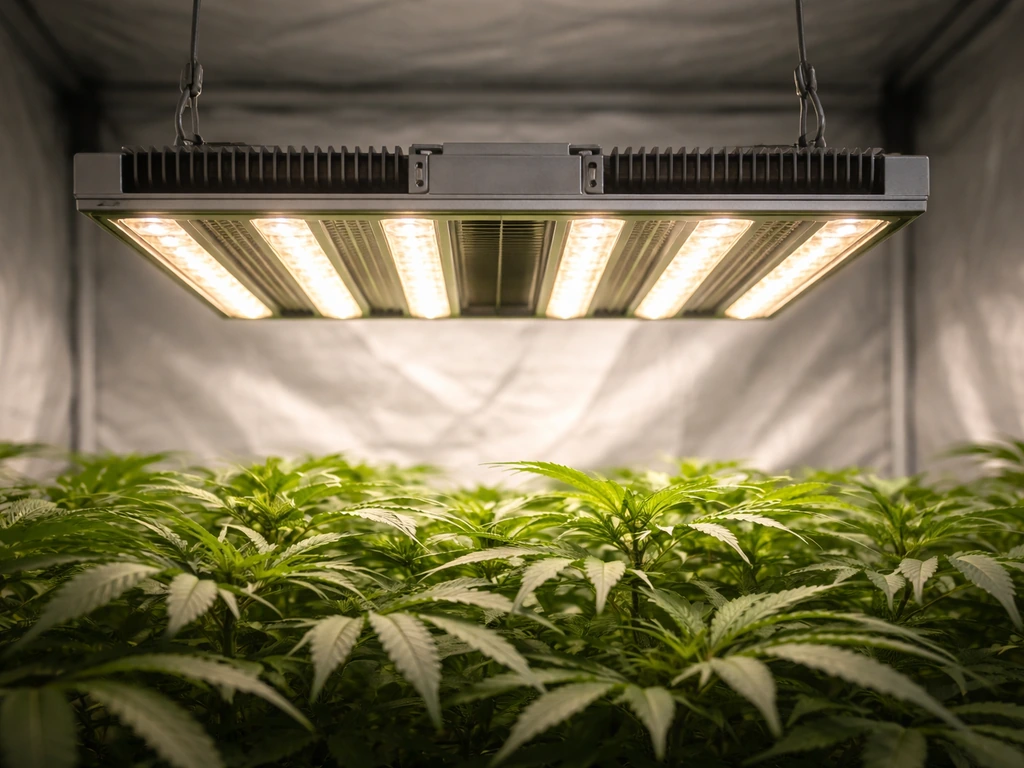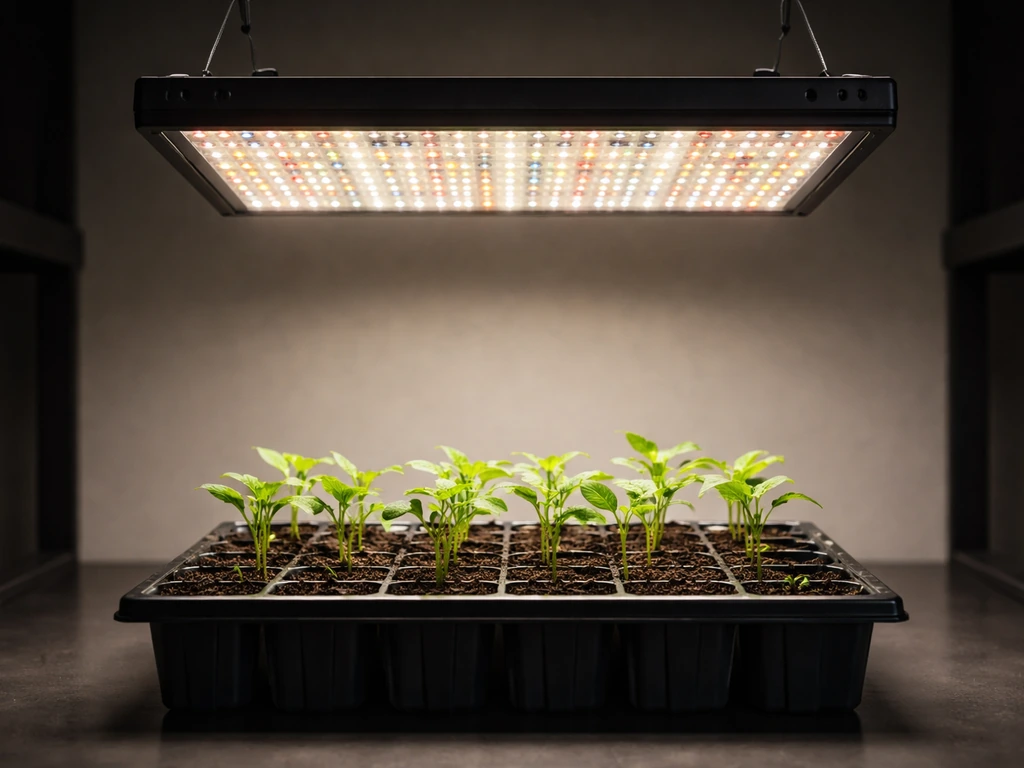
Delponting makes a solid range of commercial-leaning LED grow lights built around Osram LEDs, IP65 waterproofing, and genuine full-spectrum output (white + 660nm + 450nm + 730nm on most models). Their lineup spans everything from a 40W strip light up to a 1200W high-power panel, and the better units in the DL and MTL series land at PPE ratings of 2. 8 to 3. 0 μmol/J, which is competitive with mid-to-upper-tier brands.
Delponting Grow Light Review: Buying Guide and Tests

Marcus Caldwell
5 May 2026
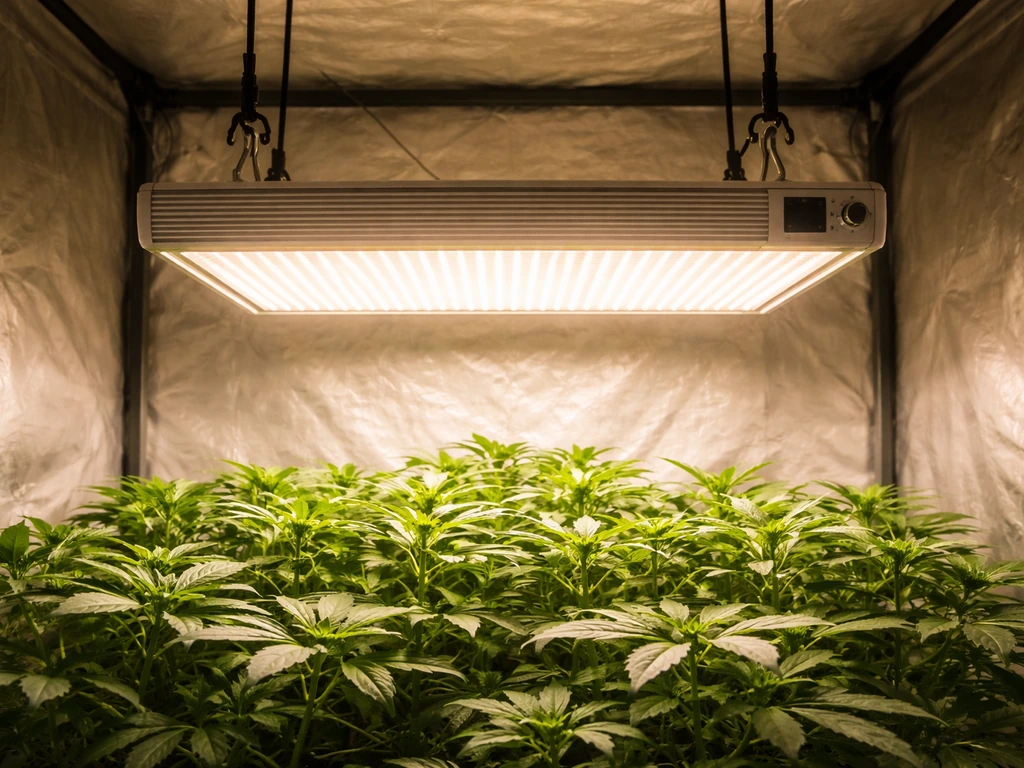
For most home growers running a 3x3, 4x4, or 5x5 tent, there's a Delponting model sized for that space. The question is whether the performance and build quality justify the price compared to other lights at the same wattage, and whether the model you're eyeing is actually matched to your grow stage and canopy.
The Delponting lineup: what models actually exist
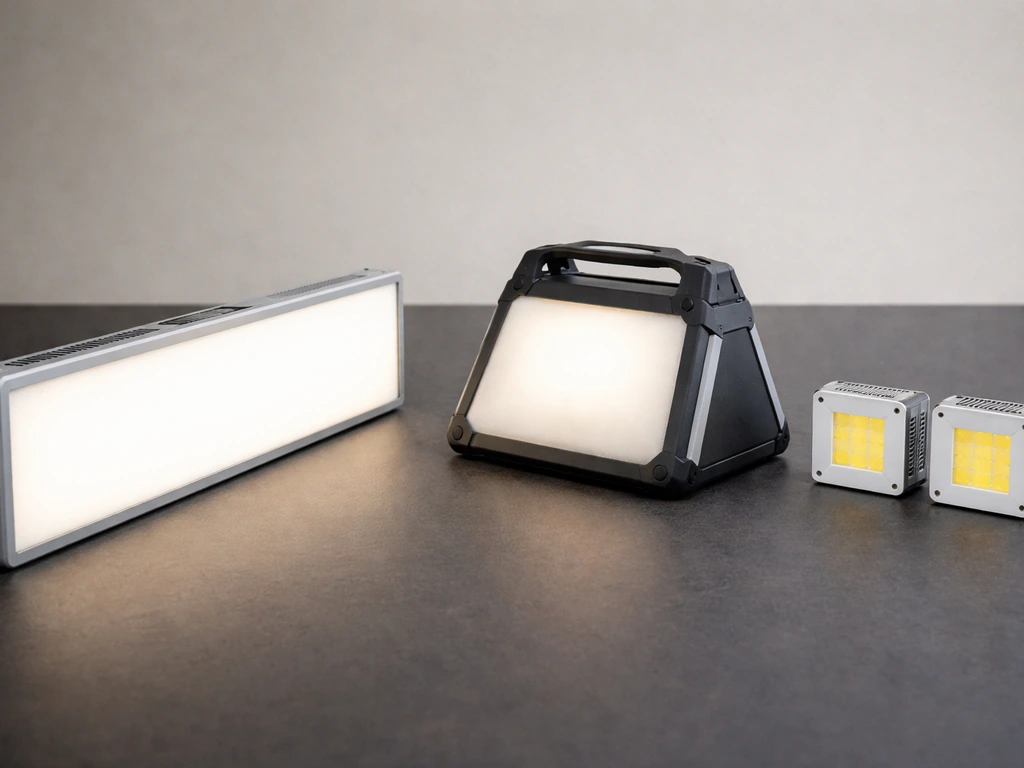
Delponting organizes their products into a few distinct families, and the differences between them matter when you're trying to match a light to your setup. Here's how the product lines break down.
DL series (high-power panels)
The DL series covers 600W, 800W, 1000W, and 1200W. These are the flagship units, built for serious coverage and yield-focused grows. The DL600W and DL800W are both listed as designed for a 5x5 footprint, which is notable since most brands target a single wattage per tent size. The DL800W is the one I'd call the sweet spot of this series: it offers the choice between PPE 2.
8 or PPE 3. 0 μmol/J, carries a UL-listed driver, uses Osram LEDs, and comes with IP65 protection. Its thermal spec at 25°C ambient shows a heat sink surface temperature of around 45°C (max 50°C) and LED core around 49°C (max 57°C), which is well within safe operating range. The DL600W follows a similar spec sheet and also offers the PPE 2.
8 or 3. 0 choice, priced around $338 for the PPE 2. 8 variant. The DL1000W and DL1200W are listed but targeted at commercial or multi-light tent setups where you're pushing canopy density hard.
MTL series (tent-specific lights)
The MTL series is explicitly designed for tents and comes in 400W (MTL600400E29, for 3x3), 650W (MTL900650E30, for 4x4, around $447), and 730W (MTL900730E30, for 4x4). All three use Osram LEDs, carry IP65, run on 100–277VAC, and include the same full spectrum plus 660nm, 450nm, and 730nm wavelengths. The 730nm far-red is worth flagging: it triggers the Emerson effect, accelerating flowering response, which makes the MTL series particularly useful for cannabis and flowering crops. Dimming is 0–100% via internal control, with optional external or network group control.
DLHS, QB, SQB, and smaller units
The DLHS series (800W and 1200W) sits alongside the DL panels but appears aimed at higher-output commercial applications. The QB100W and QB200W are quantum board-style lights for seedling and veg stages. The SQB150W and SQB300W are fixture-style boards. For seedling work, the U200W is an interesting spec: it's a 200W unit using Osram LEDs with full spectrum plus 660nm and 450nm, IP65, 0–100% dimming, and a listed 50,000-hour LED driver lifetime. Its heat sink surface temperature runs around 65°C at 25°C ambient (max 70°C), which is higher than the DL800W but still within normal operating parameters. The MTL60040E25 at 40W covers a 23.6-inch strip with 395nm UV in place of 730nm, making it a niche option for supplemental UV exposure.
Quick verdict: who should buy Delponting and who should skip it
Delponting is worth serious consideration if you're running a 3x3 to 5x5 tent, want Osram LEDs without paying flagship brand premiums, and care about IP65 protection (useful in humid grow environments). The PPE 3.0 option on the DL series puts them in the same efficiency bracket as lights costing significantly more. The 2-year light warranty and 5-year ballast warranty are also better than the industry standard for lights in this price range.
Skip Delponting if you need deep third-party testing data (independent PPFD maps and spectral analysis from labs aren't widely available for this brand yet), if you're buying through a local retailer who needs to stock replacement parts, or if you want a large user community for troubleshooting. They're a smaller brand and support runs through email rather than phone or chat. If brand recognition and community support matter to you, options like the lights reviewed in the broader comparison landscape may suit you better.
How Delponting lights actually perform for plant growth
Light output and PPFD
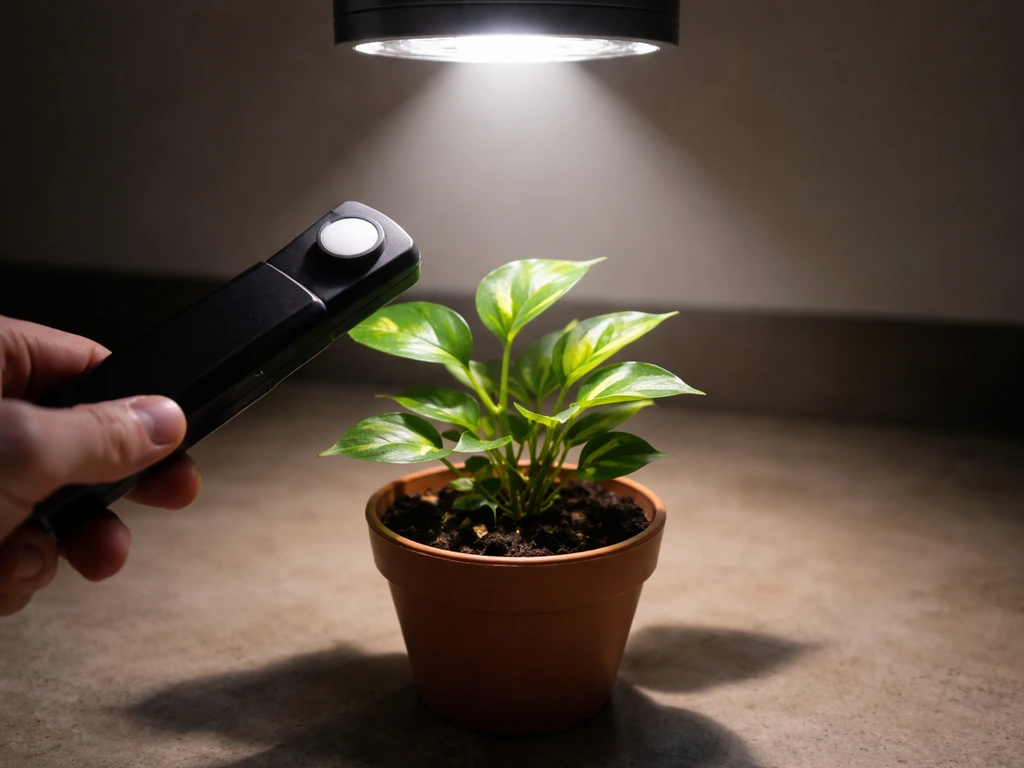
The PPE (photosynthetic photon efficacy) rating is the most honest performance number on a grow light spec sheet because it measures how efficiently the fixture converts electrical watts into plant-usable photons (μmol/J). In the PAR versus PPE terminology context, PPE is closely related to photosynthetically active radiation concepts, and Wikipedia summarizes how PAR and PPE are defined and connected PPE (photosynthetic photon efficacy) rating.
At PPE 2. 8, Delponting's DL series delivers solid mid-tier performance. At PPE 3. 0, they're pushing into territory that serious growers typically pay a premium for.
For context, a 600W light at PPE 3. 0 is producing 1,800 μmol/s total output, which is more than enough to saturate a 5x5 canopy for flowering if distributed evenly. The key caveat is that manufacturer-stated PPE numbers are measured under ideal lab conditions. Real-world PPFD at canopy level depends on hanging height, reflective walls, and light distribution pattern, all of which you control.
Spectrum breakdown
The full-spectrum white base on every Delponting model covers the broad photosynthetic range (roughly 400–700nm) effectively. The added 660nm red accelerates photosynthesis and is particularly important during flowering. The 450nm blue drives compact vegetative growth and stomatal opening. The 730nm far-red, present on the DL800W, MTL series, and larger units, is the most practically valuable addition: it extends the red spectrum into the Emerson effect range, which can reduce the time plants need to transition into flowering and improve overall yield. The U200W and QB/SQB seedling lights skip the 730nm, which makes sense since seedlings don't benefit from flowering triggers. The MTL60040E25 substitutes 395nm UV instead, which can thicken trichome production but isn't a primary growth driver.
Coverage and footprint
Delponting's published coverage targets are straightforward: the 400W MTL for 3x3, the 650W and 730W MTL for 4x4, and the 600W and 800W DL for 5x5. Those are reasonable flower-stage footprints. For vegetative growth, where plants can tolerate lower PPFD (400–600 μmol/m²/s), you can typically push the same light to cover a larger area or run it at lower power. One thing to watch: a single panel over a 5x5 at 600W or 800W will almost always show some edge falloff relative to center PPFD. If you're running a perimeter row of plants that need consistent light, supplement the corners or consider whether a double-panel setup over a larger space makes more sense.
Build quality, controls, and day-to-day usability
Thermals
The DL800W thermal targets are genuinely impressive for the price tier. A heat sink surface sitting around 45°C at 25°C ambient means the light is running cool enough to not stress the LEDs or driver over long cycles, and that directly correlates to longevity. The stated 50,000-hour LED driver life on the U200W is a marketing claim, but achieving it depends on operating temperatures staying within spec. Running the light in a hot, unventilated tent is the fastest way to kill that number. In a well-ventilated grow space with ambient temps under 80°F (27°C), Delponting's thermal margins look comfortable.
Dimming and controls
Every Delponting model includes 0–100% dimming via an internal control. That's a genuine full-range dial, not a three-step switch, which gives you actual flexibility across seedling (25–40%), veg (50–75%), and flower (80–100%) stages. The DL and MTL series also offer optional external dimmer control and network group dim control, which is useful if you're running multiple lights in the same space and want to adjust them all from one controller. That kind of feature usually shows up only on lights aimed at commercial operations, so it's a nice inclusion for serious hobbyists scaling up.
Mounting and physical build
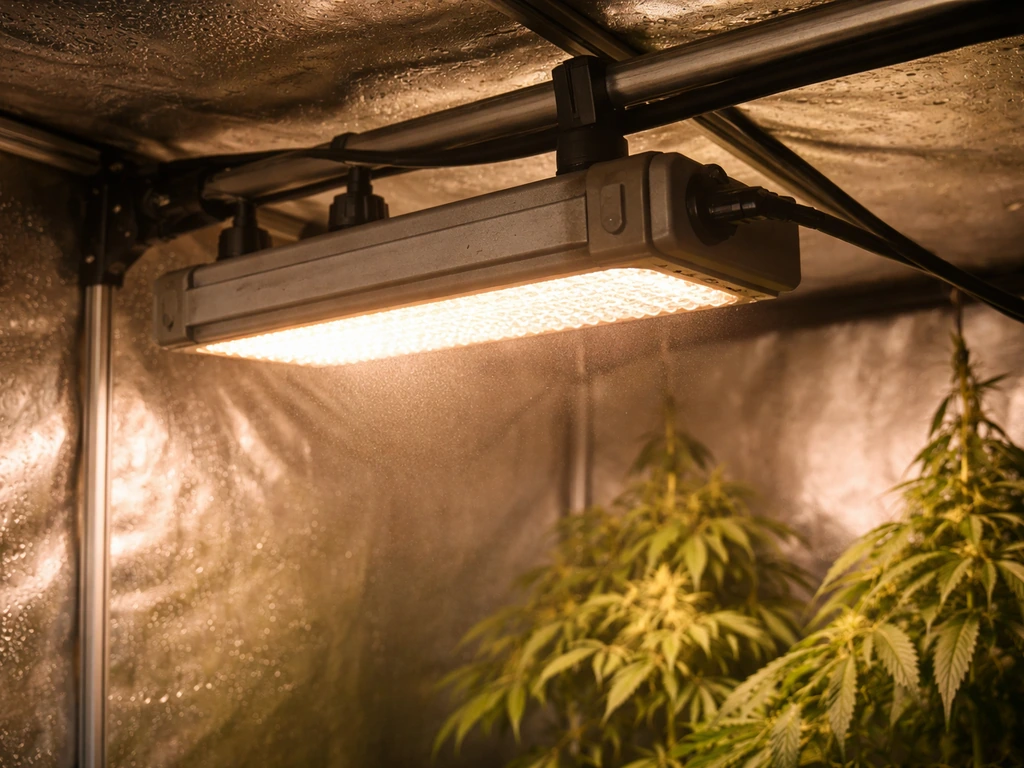
IP65 waterproofing across the lineup means moisture from misting, humidity, or condensation won't penetrate the casing, which is a real practical advantage in a grow tent over time. Mounting hardware specifics aren't detailed on the product pages beyond the standard cable-and-ratchet-hanger setup common to most tent lights. The MTL series names include cable length details (e.g., MTL600400E29 lists a 10FT cable in the selector), which matters for tent height. The 100–277VAC universal input means you can run these in North America or Europe without an adapter.
Value vs alternatives: how Delponting compares
| Light | Wattage | PPE (μmol/J) | Target Tent | Osram LEDs | IP Rating | Approx. Price |
|---|---|---|---|---|---|---|
| Delponting DL600W (PPE 2.8) | 600W | 2.8 | 5x5 | Yes | IP65 | ~$338 |
| Delponting DL800W (PPE 3.0) | 800W | 3.0 | 5x5 | Yes | IP65 | N/A listed |
| Delponting MTL900650E30 | 650W | Not specified | 4x4 | Yes | IP65 | ~$447 |
| Delponting MTL900730E30 | 730W | Not specified | 4x4 | Yes | IP65 | N/A listed |
| Typical mid-tier 600W competitor | 600W | 2.5–2.8 | 4x4–5x5 | Varies | Varies | $280–$400 |
On a pure spec-per-dollar basis, Delponting's PPE 3. 0 option is competitive with anything in the $300–$500 range. The DL600W at $338 for PPE 2. 8 is priced in line with comparable wattage mid-tier lights; the PPE 3.
0 upgrade adds cost but moves it into a higher-efficiency bracket. The MTL900650E30 at $447 for a 650W 4x4 light is slightly higher than some competitors at that wattage, but the Osram LED spec and IP65 build justify some of that premium. Where Delponting doesn't have a clear edge is in brand recognition and third-party review depth.
Lights from other brands reviewed on this site, including options in similar tent-size categories, have more publicly available PPFD maps and community testing data to cross-reference. That doesn't make Delponting worse on paper, but it does mean you're trusting the spec sheet more than with a more heavily documented competitor.
How to set up a Delponting light correctly from day one
Hanging height by plant stage
Hanging height directly controls how much PPFD hits your canopy. For Delponting's higher-wattage lights, starting too close is a common mistake that causes light stress or bleaching, especially with the DL800W or DL1000W at full power. Use these guidelines as a starting point and adjust based on how your plants respond.
| Plant Stage | Target PPFD (μmol/m²/s) | Suggested Height Above Canopy | Dimmer Setting |
|---|---|---|---|
| Seedling / Clones | 100–300 | 24–36 inches | 20–35% |
| Early Veg | 300–500 | 18–24 inches | 40–60% |
| Late Veg | 500–700 | 16–20 inches | 60–75% |
| Flowering | 700–1000+ | 14–18 inches | 80–100% |
These ranges apply to the DL and MTL series running at their rated wattages. If you're using a QB or U200W for seedlings, those are lower-output units designed to run closer without stress, around 12–18 inches at full power during early veg.
Photoperiod and run-time
For vegetative growth, 18 hours on and 6 hours off is the standard. For flowering on photoperiod-sensitive plants, drop to 12/12. If you're growing autoflowering strains, 18/6 or even 20/4 works through the full cycle. Delponting lights don't have a built-in timer, so use a plug-in mechanical or digital timer. This is not optional: consistent photoperiod is as important as PPFD for triggering and maintaining flowering cycles.
Airflow and heat management
Even though the DL800W runs cool at 25°C ambient, grow tents can easily hit 80–90°F (27–32°C) without active ventilation. At those temperatures, the thermal margins shrink and driver longevity can be affected. Run an inline fan that exchanges the tent air volume at least once per minute. If you're running a 4x4x6.5 tent (approximately 104 cubic feet), a 4-inch inline fan rated at 200+ CFM is the minimum. For a 5x5, step up to a 6-inch fan. Position the exhaust at the top of the tent near the light, since heat rises.
Spacing multiple lights
If you're running two MTL 650W lights in a 4x8 tent rather than one light per 4x4, hang them evenly spaced so each covers its half. Overlapping coverage zones in the center will create a hot spot. Use a PAR meter or a PPFD meter app (with appropriate skepticism about smartphone sensor accuracy) to check center versus edge readings at canopy level and adjust height until the spread looks even.
Pros, cons, and buying checklist
What Delponting gets right
- Osram LEDs across the lineup, which are a proven and reliable LED source rather than generic chips
- IP65 waterproofing on every model, adding real durability in humid grow environments
- PPE 3.0 option available on the DL series, placing them in high-efficiency territory
- Universal 100–277VAC input means no adapter needed for North American or European use
- Full 0–100% dimming on all models, with optional external and network control on larger units
- 2-year light warranty and 5-year ballast warranty, which is better than many competitors
- 730nm far-red included on DL800W and MTL series, useful for flowering acceleration
- 30-day return window with provided return shipping label
Where to be cautious
- Limited independent third-party PPFD testing data publicly available, so you're relying more on manufacturer specs
- Support is email-only ([email protected]), with no phone or live chat option
- Smaller brand community means fewer forum posts, YouTube grow journals, or peer comparisons to reference
- PPE values are manufacturer-stated and should be treated as targets rather than guaranteed real-world figures
- No built-in timer or scheduling function on any model
- Edge falloff on larger footprint claims (5x5 with a single panel) is a realistic concern at lower hanging heights
Pre-purchase checklist
- Confirm your tent size and match it to the correct model: 3x3 needs the 400W MTL, 4x4 needs the 650W or 730W MTL, 5x5 needs the 600W or 800W DL
- Decide between PPE 2.8 and PPE 3.0 based on your budget; PPE 3.0 costs more but pays back in lower electricity cost per gram of yield over time
- Check your electrical circuit: the DL800W at 800W draws significant load; confirm your outlet and circuit can handle it alongside other tent equipment
- Plan your ventilation before the light arrives; the light's thermal performance depends on ambient temperature staying under about 80°F
- Decide if you need network or external dim control before ordering, as it's an optional add-on rather than standard
- Verify the coverage claim matches your actual growing style: the 5x5 DL800W rating assumes a dense, well-managed canopy, not a single tall plant in a corner
- Have a timer ready before the light ships; you'll want it set up from day one
- For seedling-only grows, consider the QB or U200W rather than running a 600W+ unit at 20% constantly
Bottom line: if you're in the market for a 400W to 800W grow light, want Osram LEDs and IP65 durability, and are comfortable with a newer brand that publishes solid specs but doesn't have years of independent testing on record, Delponting is a legitimate option. The DL800W at PPE 3. 0 is the most technically impressive unit in their lineup for serious flower-stage grows.
The MTL series is the cleaner choice for growers who want a tent-specific light with a matched footprint guarantee. If you want more documented real-world data before committing, comparing Delponting against similarly spec'd lights from other brands in this wattage range is a worthwhile step before purchase. If you want a quick direct comparison, check the tmlapy grow light review to see how a different model stacks up on spectrum and practical PPFD.
If you want a wider buying decision, check our lonwon grow light review for how it stacks up on performance, efficiency, and build.
FAQ
Is the delponting grow light review conclusion the same for all tent sizes, or do you need to change models as you move from 3x3 to 5x5?
You generally need to change models, not just wattage. Delponting’s published footprints map cleanly to 3x3 (MTL 400W), 4x4 (MTL 650W or 730W), and 5x5 (DL 600W or 800W). If you try to cover a larger tent with a smaller unit, edge falloff becomes more noticeable, so you may need higher hanging height adjustments or perimeter supplementation.
What PPE number should I choose on the DL800W, PPE 2.8 or PPE 3.0?
Choose PPE 3.0 if you want more delivered photons per watt at the same electrical draw, especially for flowering where you run closer to full output. Choose PPE 2.8 if your budget is tight or if you plan to run lower intensity more often (for example early veg or shorter photoperiod schedules), since you can dim but you cannot easily “upgrade” efficiency later.
Do I need a PPFD meter to buy Delponting, or can I rely on the spec sheet?
A PPFD meter is not mandatory, but it reduces risk. Delponting’s PPE is helpful, yet real canopy PPFD depends on reflector design, hanging height, and tent reflectivity. If you do not own a meter, at least do step-wise height adjustments and watch for symptoms like bleaching (too close) or stretching (too far).
How high should I hang the DL800W or MTL lights to avoid bleaching?
Start farther than you think, then dial in. For the higher output DL and 730W-class units, beginning too close is the most common mistake and can trigger bleaching, especially at full power. Use a conservative initial height, run at reduced dimming if available, then raise or lower after a few days based on leaf color and internode spacing.
Does the IP65 rating mean I can run the lights in standing water or during heavy direct misting?
No. IP65 helps with moisture ingress from humidity and condensation, but it does not make the fixture a substitute for waterproof housing rated for immersion. Avoid directing pressurized water at the driver area or connections, and keep cables draped so water does not pool at strain points.
If Delponting has weaker independent testing visibility, how can I sanity-check performance before paying?
Cross-check three things: claimed efficiency (PPE), coverage footprint, and thermal behavior at your expected tent ambient temperature. You can also compare wattage and dimming range against how you plan to run your crop, then look for consistent power delivery across the grow area rather than just center brightness.
Is 730nm far-red actually necessary, or can I skip it for good results?
It is not strictly required for all grows, but it can be beneficial for flowering-phase management on photoperiod crops. Delponting’s Emerson-effect angle is most relevant when you run flowering consistently and want help shortening the transition. Seedlings and early veg typically do not benefit much from far-red emphasis, so the QB and U200W design choice to omit 730nm is reasonable.
How should I use dimming across seedling, veg, and flower with Delponting?
Use dimming to match crop stress tolerance and target intensity instead of always running 100%. A practical approach is to use lower settings early (when plants are small and light is more easily “too much”), then increase gradually as the canopy fills. If you share a controller across multiple fixtures, confirm each light is dimmed consistently so you do not create uneven hotspots.
What ventilation rate should I plan for if my tent gets to 85 to 90°F (29 to 32°C)?
At higher ambient temperatures, thermal margins tighten and driver longevity can be affected. Plan on an active exhaust that exchanges tent air at least about once per minute, and size the inline fan upward if your tent has limited passive intake. Position exhaust near the top, close to where heat accumulates.
If I run two lights in one larger tent, how do I prevent a center hotspot?
Space the lights so their coverage zones overlap only where you want higher intensity, not where both are peaking at the same central location. For a 4x8 arrangement with two fixtures, hang them evenly so each half is responsible for its side. After setup, confirm center versus edge readings at canopy height with a PAR or PPFD measurement method.
Do Delponting lights include a timer, and what happens if I miss photoperiod timing?
Delponting fixtures do not include a built-in timer, so you must use an external mechanical or digital timer for photoperiod crops. Missing timing or causing frequent on off drift can interrupt flowering signaling. For consistent results, plug the light into a reliable timer and avoid manual day-to-day “oops” adjustments.
Can I run Delponting lights in countries with different voltage standards?
The MTL and DL families listed with universal 100 to 277VAC input are designed to work across common North American and European voltage ranges without an adapter. Still confirm the specific model’s input spec before purchase, especially for any niche variants or board-style models.
What warranty should I expect, and how does that matter for planning?
Plan around warranty coverage timing because it affects risk if something fails early in a project. The article notes a 2-year light warranty and a longer ballast or driver warranty, so keep proof of purchase and note installation conditions like ambient temperature and ventilation. If you operate in very hot tents, you may unintentionally increase the chance of early component stress.